
Understanding how criminals use stolen personal information can help you recognize threats before they become bigger problems. From opening credit cards to taking over accounts and impersonating you, criminals have many ways to misuse exposed data.
This guide explains 11 ways your information can be used, warning signs to watch for, and free steps to reduce your risk. You’ll also learn how to compare identity theft protection services and decide whether paid monitoring and recovery support are worth the cost.
Table of Contents
Understanding How Criminals Use Stolen Personal Information
Understanding how criminals use stolen personal information helps you recognize the risks and decide which identity theft protection features are worth paying for. Criminals may use stolen details to access existing accounts, apply for credit, impersonate you, or sell your information to other scammers. The Federal Trade Commission (FTC) explains that identity theft occurs when someone uses your personal or financial information without your permission.
Think of your personal information as pieces of your identity. Your name and email address reveal some details; your Social Security number, account passwords, and financial information can expose much more. What someone can do with your personal information depends on which details they have and the security measures protecting your accounts.
For example, criminals may use stolen information to:
- Misuse existing accounts: Access an online account or make unauthorized purchases using stolen credentials or payment details.
- Create new financial obligations: Attempt to open credit cards, obtain loans, or establish utility accounts in your name.
- Impersonate you: Seek medical services or other benefits using your identity.
- Make scams more convincing: Include familiar personal details in messages designed to win your trust.
Unfamiliar charges, unexpected bills, and accounts you do not recognize can be warning signs that your information is being misused. IdentityTheft.gov’s warning signs guide explains several ways these problems can surface. Having information exposed does not automatically mean someone has successfully used it, but it gives you a reason to review your security.

When comparing identity theft protection services, look beyond the number of features advertised. Check which credit bureaus the plan monitors, what identity alerts it provides, and whether recovery assistance is included. Credit monitoring can flag certain changes in your credit file, but it does not prevent identity theft or detect every type of misuse.
The value of a paid plan is in the monitoring and support you will actually use. Choose protection based on the information you want monitored, the help available if something goes wrong, and the ongoing price—not a promise that your identity will become impossible to steal.
1. Open Credit Cards And Take Out Loans In Your Name
One example of how criminals use stolen personal information is applying for credit in someone else’s name. With details such as your name, Social Security number, and date of birth, an identity thief may attempt to open a credit card or take out a loan without your permission.
If the application succeeds, the criminal gets access to money or purchasing power while the account is associated with your identity. This type of financial identity theft can leave fraudulent accounts on your credit reports and create problems when you apply for legitimate financing.
Your existing bank account does not have to be hacked for this to happen. Opening accounts with stolen information involves creating a new account rather than accessing one you already own.
If you discover an unfamiliar account, follow our guide on how to recover from identity theft to begin addressing the fraud and organizing your recovery steps.
Watch for these warning signs:
- Credit inquiries from lenders you never contacted.
- New credit cards or loan statements you were not expecting.
- Accounts on your credit reports that you did not open.
- Collection notices for unfamiliar debts.
The Consumer Financial Protection Bureau (CFPB) recommends checking your credit reports for unfamiliar inquiries and accounts that could indicate identity theft.

Start with a free credit freeze at all three major credit bureaus: Equifax, Experian, and TransUnion. A freeze restricts access to your credit report, making it harder for criminals to open new credit accounts. You must contact each bureau separately. The FTC’s credit freeze guide explains how this protection works.
If you also want automated alerts and help resolving fraud, compare identity theft protection services with three-bureau credit monitoring and recovery assistance. Before subscribing, check:
- Bureau coverage: Does the specific plan monitor all three bureaus?
- Alert coverage: Which inquiries, new accounts, and other changes trigger notifications?
- Recovery support: Will a specialist help you address fraudulent accounts?
- Ongoing cost: What will you pay after the introductory offer ends?
Credit monitoring can alert you to changes that appear in the credit files it monitors, but it does not block fraudulent applications.
Consider paying for added detection and recovery support—not for a guarantee that fraud cannot happen.
👉 Want help keeping watch for suspicious credit activity? Check Aura’s plans and pricing to see whether its monitoring and recovery features fit your needs.
2. Take Over Your Bank And Online Accounts
Another example of how criminals use stolen personal information is account takeover fraud—gaining unauthorized access to accounts you already own. Targets can include your online banking, email, shopping accounts, payment apps, and social media profiles.
Stolen passwords are especially dangerous when you reuse them. A password exposed through one service could put other accounts at risk if you use the same login details elsewhere.
Your email account is particularly important because it often receives password-reset links. Someone who gains access to your inbox may use those messages to attempt to take over additional accounts. The FTC’s account security guide explains why protecting your email and using different passwords matter.
Once inside an account, a criminal may attempt to:
- Move money or make purchases using available funds or saved payment methods.
- Change your password or recovery details to lock you out.
- Read private messages to gather more personal information.
- Impersonate you to target your contacts with scams.
Unexpected login alerts, unfamiliar transactions, and account settings you did not change deserve attention. An unrequested verification code can signal an attempted login, although it does not automatically mean someone successfully accessed your account.

Start by strengthening your logins. Use a unique password for every account, enable two-factor authentication, and turn on available login and transaction alerts. A password manager can help you create and store different passwords. Where supported, choose an authenticator app or security key for stronger protection than text-message codes.
To make unique passwords easier to manage, compare the best password managers and choose an option that fits your devices and daily routine.
If you notice an unauthorized bank transaction, contact your bank immediately through its official app or a trusted phone number. Do not wait for an identity monitoring service to flag it. The CFPB recommends promptly reporting suspicious debits or charges.
When comparing paid protection, look for features relevant to existing-account security: a password manager, exposed-credential alerts, and clearly defined recovery assistance. Check which features the specific plan includes and whether its support covers account takeovers.
Credit monitoring alone is not a complete solution for hacked online accounts. A paid plan may add useful alerts and assistance, but strong login protection and your bank’s own security notifications remain essential. Choose a service that fills a specific gap in your protection rather than paying for features you already have.
👉 Ready to stop reusing passwords? Explore NordPass plans and check the device support and features that would make unique passwords easier to manage.
3. File Fraudulent Tax Returns To Claim Refunds
Tax refund fraud is another example of how criminals use stolen personal information. An identity thief may use your Social Security number and other identifying details to file a fraudulent tax return in your name, hoping to collect a refund before you file your legitimate return.
This is called tax-related identity theft. The criminal does not need access to your bank account to attempt it—they are misusing your identity to request money from the government.
You might discover the problem when:
- Your electronic return is rejected because another return already used your Social Security number.
- You receive an unexpected IRS letter about a tax return you did not file.
- The IRS asks you to verify a suspicious return submitted under your identity.
These situations deserve attention, but an unexpected notice or rejected return does not automatically prove identity theft. Filing errors and other issues can also require follow-up.

A practical free safeguard is an IRS Identity Protection PIN, or IP PIN. This six-digit number helps the IRS verify your identity when you file. Eligible taxpayers who can verify their identity can enroll proactively—you do not have to wait until someone misuses your information. Learn how to request one through the official IRS IP PIN page.
The IRS generates a new IP PIN each year. Keep yours secure and share it only when necessary with the tax professional preparing your return. It is separate from your Social Security number and the five-digit PIN you may use to sign an electronic return.
If you suspect tax identity theft, follow the instructions in verified IRS correspondence and use official IRS channels to determine your next steps.
When comparing identity theft protection services, check whether recovery assistance specifically includes tax-related identity theft. Ask whether a specialist helps you organize documentation and navigate the recovery process, and review any insurance exclusions before subscribing.
Do not assume credit monitoring will alert you to a fraudulent tax return or that a paid service can guarantee a faster IRS resolution. The strongest reason to consider paid protection here is clearly defined recovery support, alongside the free safeguards available directly from the IRS.
4. Obtain Medical Care Using Your Identity
Medical identity theft is another example of how criminals use stolen personal information. Someone may use your name, health insurance number, Medicare number, or other identifying details to receive treatment, obtain prescriptions, or submit fraudulent insurance claims.
The consequences can go beyond unexpected bills. Someone else’s health information could become mixed with your medical records, potentially affecting your future care or insurance benefits. The FTC’s medical identity theft guide explains these risks.
Watch for warning signs such as:
- Bills for appointments or treatments you never received.
- Insurance statements listing unfamiliar services or prescriptions.
- Collection calls about medical debts you do not recognize.
Review your insurer’s Explanation of Benefits (EOB) statements, even when you do not owe a payment. Compare the listed providers, dates, and services with your actual care. An unfamiliar entry could be a billing mistake, but it deserves investigation.

If something looks wrong, contact your insurer and the provider using verified contact information. Request the relevant records and submit corrections in writing. You can also report the theft and create a recovery plan at IdentityTheft.gov.
Before purchasing identity theft protection, ask whether the plan specifically includes medical identity theft recovery assistance. Useful questions include:
- Will a specialist help me dispute fraudulent medical bills?
- Does support include guidance on correcting inaccurate medical records?
- Which recovery expenses, if any, qualify for reimbursement under the policy?
Do not assume a service monitors every insurance claim or medical record simply because it advertises identity monitoring. Ask what it can actually detect and what you must review yourself.
Look for clearly defined recovery help rather than a broad promise of protection. A paid service may be worth considering if you want assistance handling disputes, but reviewing your medical statements remains an important part of spotting misuse.
5. Create Synthetic Identities With Your Stolen Data
Criminals do not always need to impersonate you completely to misuse your information. One example of how criminals use stolen personal information is combining a real identifying detail—such as a stolen Social Security number—with a fictitious name or date of birth to create a new identity.
This is a form of synthetic identity fraud. The resulting profile mixes real and invented information rather than matching one actual person. The Federal Reserve explains that this misuse can leave affected consumers dealing with the difficult task of correcting their credit records.
For example, your Social Security number could become part of a fabricated identity used to seek credit. You might not recognize the name attached to that identity, even though an important piece of the information belongs to you.
For a closer look at this type of fraud, read our guide explaining what synthetic identity theft is and how it differs from someone directly impersonating you.
The fraud may develop gradually. Some criminals build a payment history under the fabricated identity before borrowing larger amounts and abandoning the accounts without repayment. This can make the accounts appear legitimate for a time.
Protect your Social Security number, review your credit reports for unfamiliar information, and investigate identity alerts that connect your details to activity you do not recognize. If you discover misuse, IdentityTheft.gov provides reporting and recovery guidance.
When comparing identity theft protection services, ask specific questions about synthetic identity fraud:
- What does Social Security number monitoring actually check? Ask which sources it monitors and what triggers an alert.
- Does recovery assistance cover synthetic identity misuse? Confirm whether specialists help address unfamiliar identities or records linked to your information.
- What are the detection limits? Do not assume a plan can find every fabricated identity containing your data.
A service advertising “SSN monitoring” is not a guarantee that synthetic identity fraud will be detected. Before subscribing, compare the monitoring scope, recovery support, and renewal price. The value lies in useful alerts and practical assistance if your information is misused—not a promise of complete protection.
6. Sell Your Personal Information On Criminal Marketplaces
Your stolen data can become a product for someone else to buy. Understanding how criminals use stolen personal information means recognizing that the person who steals it may sell it instead of committing identity fraud directly.
Criminal marketplaces allow stolen information to reach other scammers. For example, the U.S. Department of Justice documented how Genesis Market sold stolen login credentials, including email addresses, usernames, and passwords packaged together from infected computers.
Buyers may use those details to attempt account takeovers, make fraudulent transactions, or resell the information. The same stolen credentials can pass between criminals, extending the risk beyond the original theft. A separate Justice Department case involved a buyer who used stolen account information for financial fraud and offered some of it for resale.
Although people often associate this activity with the dark web, stolen-data markets are not limited to it. Authorities reported that Genesis Market operated on both the dark web and the ordinary web.
Dark web monitoring services may help by alerting you when information matching your details appears in sources they monitor. However, an alert does not necessarily mean someone successfully accessed your accounts, and no alert should be treated as proof that your information is safe.
If you receive an unexpected message claiming your data is for sale, verify it through the monitoring provider’s official website or app. The FTC warns against trusting unsolicited dark web alerts without checking the source. If a password was exposed, change it wherever you reused it and enable multifactor authentication.
Before paying for monitoring, compare:
- Information covered: Which email addresses, identity details, and financial identifiers can you enroll?
- Useful alerts: Does the service explain what was found and what action to take?
- Recovery assistance: Is help available if exposure leads to identity theft?
- Renewal pricing: Is the ongoing cost reasonable for the coverage you receive?
Compare the best dark web monitoring services to evaluate the information they monitor, the alerts they provide, and the support included in each plan.
Monitoring does not erase stolen information from criminal marketplaces or guarantee complete detection. Choose a plan for actionable alerts and support, and do not confuse data-broker removal with deleting stolen copies held by criminals.
Want to evaluate monitoring for exposed personal information? Review Identity Guard’s plans and confirm which details, alerts, and recovery services are included before you enroll.
7. Send Personalized Phishing Messages And Scams
A scam can feel convincing when the sender knows your name, address, or a company you use. This is another example of how criminals use stolen personal information: they include familiar details in messages to make you trust an unfamiliar request.
These targeted phishing attempts may arrive by email, text, or social media. The goal is to persuade you to reveal more information, enter your password on a fake website, download a harmful attachment, or send money.
Knowing something about you does not prove the sender is legitimate. Personal details may come from stolen records, public profiles, or other exposed information.
For example, a scammer might send:
- A fake bank warning using your name and claiming your account needs immediate verification.
- A delivery message mentioning your address and requesting a payment to release a package.
- A fraudulent security alert displaying an exposed password to frighten you into following instructions.
The FTC explains how phishing messages impersonate trusted organizations and use stories about account problems, payments, or suspicious activity to encourage a response.

Verify the request through a separate, trusted channel. Open the company’s official app, type its known website address yourself, or call the number on your card or statement. Avoid using links or phone numbers supplied in the suspicious message. The FTC’s text-message guidance recommends contacting the company through information you already know is genuine.
If you are comparing paid cybersecurity tools or identity theft protection services, look for features that address different parts of this risk:
- Phishing protection: Check whether suspicious-link warnings work on the devices and browsers you actually use.
- Exposed-credential alerts: Look for notifications that help you identify passwords needing replacement.
- Recovery assistance: Confirm what support is available if a scam leads to account takeover or identity theft.
These features serve different purposes. Dark web monitoring may flag exposed information, but it does not determine whether every message in your inbox is safe.
Choose protection that adds useful security to your daily routine. Compare device coverage, included features, and renewal costs—and keep verifying unexpected requests, even when the message includes accurate personal details.
8. Impersonate You To Scam Friends And Family
Your identity can become a tool for targeting people who trust you. Another example of how criminals use stolen personal information is pretending to be you and asking friends or relatives for money, account access, or sensitive details.
A criminal might use a compromised social media account, copy your public profile, or combine exposed information with details about your relationships. A copied profile does not necessarily mean your original account was hacked, but it can still convince someone they are communicating with you.
Common impersonation scams include:
- Fake emergencies: Claiming you are stranded, injured, or urgently need financial help.
- Requests from a “new number”: Pretending your phone was lost and asking a relative to send money.
- Messages from a hijacked account: Contacting friends through your real profile with a fabricated request.
- Requests for verification codes: Asking someone to forward a code that could help the scammer access their account.
Some scammers also use AI to imitate a familiar voice. The FTC’s guide to fake emergency scams warns that a recognizable voice is not enough to confirm who is calling. Pressure to act immediately or keep the situation secret should prompt extra caution.

Make independent verification a family habit. Before sending money, call the person using a number you already had saved—not a replacement number provided in the suspicious message. If you cannot reach them, check with another trusted person who can help confirm the story. This is the approach recommended by the FTC.
If someone impersonates you, warn your contacts through a separate, trusted channel and report the fake profile or compromised account to the platform. For an account takeover, secure your login and review active sessions and recovery settings.
When comparing identity theft protection for families, check exactly what the plan offers:
- Social media features: Does it address impersonation, account compromise, or only specific account activity?
- Recovery assistance: Will a specialist help you navigate reports and account recovery?
- Family eligibility: Which household members can enroll, and are separate accounts required?
A family plan does not automatically protect every relative or reimburse every scam payment. Read its eligibility rules and coverage exclusions before subscribing. Choose a service for clearly defined support, while keeping direct verification at the center of your family’s protection routine.
9. Open Utility And Mobile Phone Accounts In Your Name
Opening everyday service accounts is another example of how criminals use stolen personal information. An identity thief may use your identifying details to apply for electricity, gas, water, internet, or mobile phone service without your permission.
The criminal receives the service while the account is linked to your identity. You might discover the fraud through an unexpected bill, a collection notice, or a problem when applying for your own service.
These accounts may not immediately appear on your standard credit reports. The Consumer Financial Protection Bureau explains that utility payment histories generally are not routinely reported to the three major credit bureaus, although unpaid accounts sent to collections may appear. Some providers share information through specialty consumer reporting companies instead.
Watch for signs such as:
- Welcome messages or bills from a provider you never signed up with.
- Service addresses you do not recognize on account documents.
- Collection notices for unfamiliar phone or utility balances.
- An unexpected past-due account discovered when you apply for service.
If you suspect someone opened an account in your name, contact the provider’s fraud department through its official website or verified phone number. Ask it to investigate, close the fraudulent account, and confirm the outcome in writing. IdentityTheft.gov provides a sample dispute letter you can use to challenge a new account opened without your permission.
You may also want to review your National Consumer Telecom & Utilities Exchange (NCTUE) report. The CFPB’s NCTUE information page explains that this exchange collects account and payment information from participating telecommunications and utility companies. It does not represent every provider or every account.
When comparing identity theft protection services, check whether utility and telecom monitoring is specifically included. Ask which activity can trigger an alert, what reporting sources the service uses, and whether recovery specialists help dispute fraudulent service accounts.
Three-bureau credit monitoring alone should not be assumed to detect every utility or mobile account opening. A plan with clearly defined monitoring beyond credit reports and practical recovery assistance may offer more relevant support for this risk. Compare those features with the renewal price before deciding whether the added coverage is worth paying for.
10. Apply For Government Benefits Using Your Identity
Government benefits fraud is another example of how criminals use stolen personal information. A criminal may use your Social Security number and other identifying details to submit a benefits application in your name and attempt to collect payments.
Unemployment identity fraud is one documented example. You do not have to be unemployed—or have applied for benefits yourself—to become a victim. Criminals may also take over an existing unemployment account and redirect payments intended for the legitimate recipient. The U.S. Department of Labor explains these forms of unemployment identity fraud.
The first clue may arrive in your mailbox rather than your bank account. Warning signs include:
- A benefits notice about an application you never submitted.
- An unexpected payment or benefits card from a state unemployment agency.
- A Form 1099-G reporting unemployment compensation you never received.
An unexpected document does not automatically prove fraud, but it should be checked directly with the agency that issued it.
If you discover an unauthorized claim, report it to the agency responsible for that benefit through its official website or verified phone number. For unemployment fraud, the Department of Labor’s guide links to state reporting channels. Keep copies of notices, confirmation numbers, and correspondence so you can track your case.
You can also use IdentityTheft.gov to report identity theft and get a personalized recovery plan. Reporting to the FTC does not replace notifying the agency handling the fraudulent claim.
When comparing identity theft protection services, ask whether recovery assistance specifically covers government benefits fraud. Check whether a specialist can help you organize documentation, understand reporting steps, and follow up on identity-related errors.
Do not assume credit monitoring will detect a fraudulent benefits application. Before paying for a plan, confirm its monitoring limits, recovery services, and exclusions. For this risk, clearly defined help resolving identity misuse may be more useful than a long list of unrelated features—and no provider can guarantee an agency’s resolution timeline.
11. Use Your Identity To Apply For Jobs
Employment-related identity theft is another example of how criminals use stolen personal information. Someone may use your Social Security number and other identifying details to obtain a job, potentially causing their wages to be associated with your records.
You might not notice an unfamiliar charge or a new credit account. Instead, the problem can surface through employment documents, tax correspondence, or earnings you do not recognize. The IRS explains employment-related identity theft and provides guidance based on the notice or situation involved.
Someone else’s work history should not become your recordkeeping problem. Warning signs worth investigating include:
- A W-2 from an employer you never worked for.
- An IRS notice concerning wages you did not earn.
- Unexpected earnings on your Social Security record.
An unfamiliar employer name can sometimes reflect a payroll company or a business name you do not recognize, so verify the details before assuming fraud.
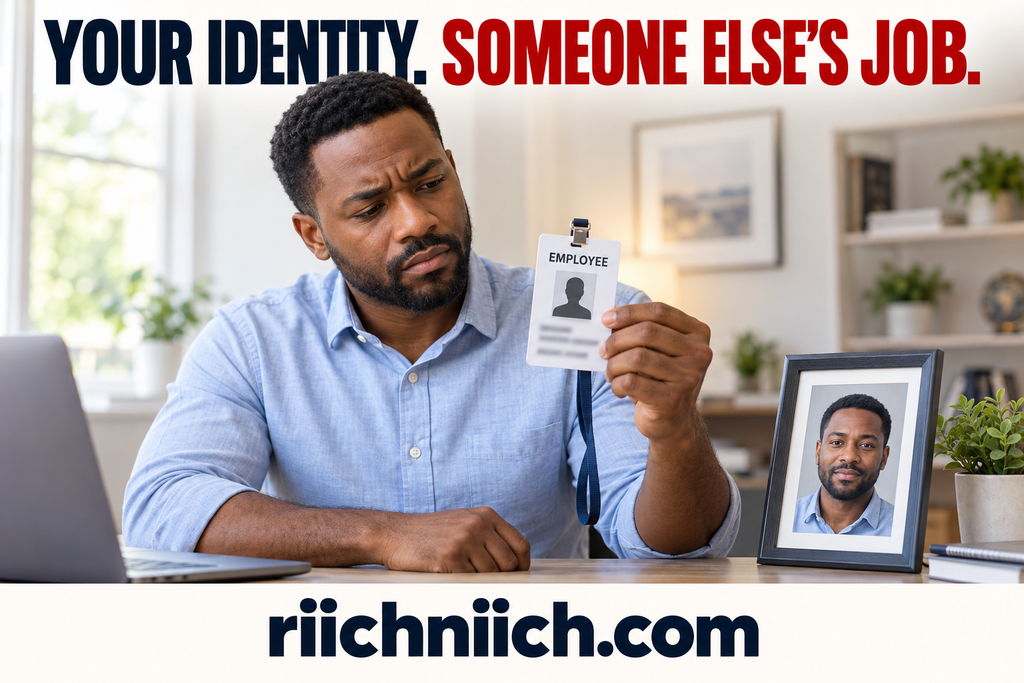
Review your earnings through your personal my Social Security account and compare them with your own employment records. The Social Security Administration recommends checking for earnings inconsistencies when you suspect someone is using your Social Security number. Report unfamiliar earnings to SSA and follow the instructions in any verified IRS notice.
Keep copies of relevant documents and correspondence. SSA may request supporting information to investigate and correct earnings that do not belong to you.
For additional precautions against employment and other identity misuse, learn how to protect your Social Security number.
Before buying identity theft protection, ask whether recovery assistance covers employment-related identity theft. Find out whether a specialist can help you organize evidence, navigate reporting procedures, and follow up on inaccurate records.
Also ask what “Social Security number monitoring” actually includes. Do not assume it checks every employment application or gives the provider access to your complete government earnings history.
For this risk, compare the quality of recovery support—not just the number of advertised alerts. A paid plan may provide useful assistance, but reviewing your earnings records remains a practical way to spot problems that credit monitoring alone may miss.
Which Types Of Personal Information Put You At The Greatest Risk?
Understanding how criminals use stolen personal information helps you decide what to protect first—and which security services may be worth paying for. The greatest risk often comes from information that can unlock accounts, authorize payments, or establish an identity.
There is no single risk ranking that fits every situation. An exposed bank password may require immediate action, while a stolen Social Security number can create an ongoing identity theft concern. The combination of details exposed also matters.
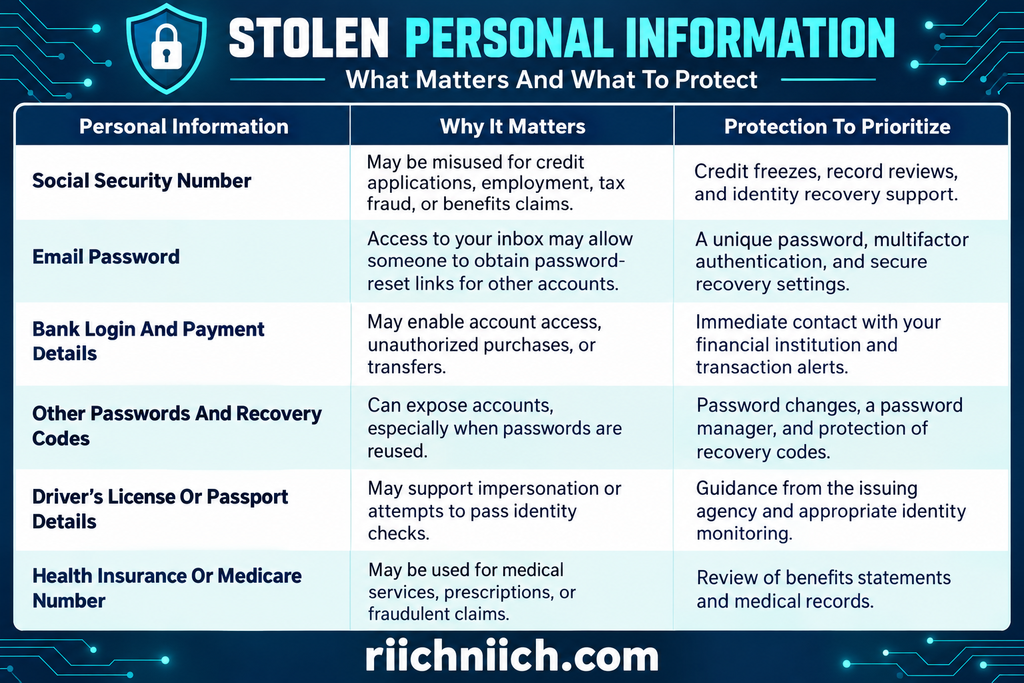
Your email deserves particular attention because it can connect many parts of your digital life. The FTC’s account security guide explains how access to your inbox can expose password-reset messages for other services. Protecting your email helps protect the accounts connected to it.
Names, birthdays, home addresses, and phone numbers also matter. These details alone generally do not give someone the same access as a password, but they can make impersonation and personalized scams more convincing. Combined with other stolen information, they may create a more useful profile for a criminal.
If you know what was exposed, use the IdentityTheft.gov lost-or-stolen information guide to find relevant next steps. Your response should match the information involved rather than treating every breach the same way.
Choose paid protection around the gaps you need to fill. A password manager can help with unique logins; credit monitoring can flag covered credit-file changes; broader identity monitoring may check additional sources; and recovery assistance may help resolve misuse.
Before subscribing, confirm which details the plan monitors, what triggers an alert, and what assistance it provides. The best fit is a service that addresses your actual exposure at a sustainable price—not simply the plan with the longest feature list.
Warning Signs Your Stolen Personal Information Is Being Used
Knowing how criminals use stolen personal information helps you recognize suspicious activity before it becomes a bigger problem. The clues may appear in your bank account, credit reports, email, medical statements, or government correspondence.
Look for activity you cannot explain—not just a notification that your data was exposed. A breach alert means information may be at risk; an account you never opened is a more direct sign of possible misuse.
Watch for these warning signs:
- Unfamiliar charges or withdrawals: Even a small transaction deserves investigation if you did not authorize it.
- New accounts or credit inquiries you do not recognize: These may indicate someone applied for financing using your identity.
- Bills or collection notices for unknown debts: Pay attention to unfamiliar lenders, mobile providers, utilities, or medical services.
- Unexpected account changes: Password, recovery-email, or phone-number changes may signal account takeover fraud.
- Missing statements or address-change notices: Someone may have altered your contact information.
- Medical claims for care you never received: Review insurance statements for unfamiliar appointments, prescriptions, or providers.
- Tax, benefits, or employment documents that do not match your records: These can point to identity misuse beyond your financial accounts.
The FTC’s identity theft warning signs guide explains how unexpected bills, account activity, and other irregularities can reveal a problem. Credit reports are another useful checkpoint: the CFPB recommends reviewing unfamiliar inquiries and accounts.
Some signals need context. A credit-score drop can have legitimate causes. An unexpected verification code may indicate an attempted login without proving that access succeeded. A dark web alert may concern an older exposure. Investigate the details rather than assuming every alert confirms identity theft.
For more examples to check against your own accounts and records, review these 13 warning signs someone stole your identity.
When something looks suspicious, open the provider’s official app or website independently. Check the activity and contact its support or fraud team through verified channels. Do not rely on links or phone numbers supplied in an unexpected alert.
If you want help keeping track of these warning signs, compare identity theft protection services by the alerts and assistance they actually provide. Check credit-bureau coverage, monitored information, notification options, and access to recovery specialists.
A useful paid plan should help you understand what happened and what to do next. It should complement your own account reviews, because no monitoring service can detect every type of identity misuse.
What To Do If Criminals Are Using Your Personal Information
Once you discover misuse, understanding how criminals use stolen personal information becomes a guide to taking action. Start with the affected accounts, then address the records and security gaps involved. You do not need to purchase a protection plan before beginning recovery.
1. Contact The Affected Company Immediately
Call the bank, lender, service provider, or other organization through a verified number. Explain that you suspect identity theft and ask its fraud team to investigate unauthorized activity. If money is missing, report it immediately rather than waiting for a monitoring alert.
2. Secure Compromised Accounts
From a trusted device, change affected passwords and any reused passwords. Prioritize your email because it can receive reset links for other accounts. Review recovery details, sign out unfamiliar sessions, and enable multifactor authentication.
3. Freeze Your Credit And Consider A Fraud Alert
Place a free credit freeze separately with Equifax, Experian, and TransUnion to restrict access to your credit reports and make fraudulent new credit accounts harder to open. A freeze does not stop misuse of existing accounts.
You can also place a free initial fraud alert by contacting one bureau, which must notify the other two. The FTC explains credit freezes and fraud alerts, including how they differ.
4. Create An Identity Theft Report And Recovery Plan
Visit IdentityTheft.gov to report the misuse and receive tailored recovery steps. Save your report and use the available forms and letters to help document disputes. You still need to contact the companies or agencies involved.
5. Dispute Fraudulent Accounts And Incorrect Records
Review your credit reports and relevant medical, employment, tax, or benefits records. Report errors to the organization responsible. Keep copies of disputes, case numbers, dates, and written confirmations so you can follow up.
6. Check Your Recovery Support Before Paying For More
If you already have identity theft protection, contact its recovery team and confirm what your plan covers. If you are considering a new service, ask specifically whether it assists with identity theft that occurred before enrollment.
Recovery assistance and insurance reimbursement are different benefits. Do not assume a new subscription will cover existing losses. Request clear terms on eligibility, exclusions, specialist assistance, and fees before buying.
A paid recovery service may be useful when you want help coordinating multiple disputes. Choose it for clearly defined assistance while continuing the immediate steps that protect your accounts and document the fraud.
Free Ways To Reduce Your Risk Of Identity Theft
Understanding how criminals use stolen personal information can help you take useful precautions without adding another monthly bill. Several important protections are free, and they provide a foundation whether or not you later choose a paid identity theft protection service.
Freeze Your Credit At All Three Major Bureaus
Place a credit freeze separately with Equifax, Experian, and TransUnion. It restricts access to your credit reports, making it harder for someone to open new credit accounts using your identity. Placing or lifting a freeze is free and does not affect your credit score. The FTC’s credit freeze guide explains the process. Remember that a freeze does not protect existing accounts from unauthorized activity.
Use Unique Passwords And Multifactor Authentication
Give every important account a different password, especially your email and financial accounts. A reputable free password manager or your device’s built-in password tool can help you avoid reuse. Turn on multifactor authentication wherever available to add protection beyond a password.
Turn On Available Account Alerts
Check your bank, credit card, email, and mobile-provider settings for free notifications. Enable relevant alerts for transactions, new logins, and changes to account details. These can help you notice activity that needs investigation.
Review Your Credit Reports And Statements
Use AnnualCreditReport.com to access your free credit reports. Look for unfamiliar accounts and inquiries, and regularly review your financial and health insurance statements. Monitoring your credit alone will not reveal every type of identity misuse.

Protect Your Documents And Limit Unnecessary Sharing
Store identity documents securely, shred sensitive paperwork before disposal, and ask why an organization needs your Social Security number before providing it. Review public profile details and avoid sharing information that could help someone impersonate you.
Keep Devices Updated And Verify Unexpected Requests
Enable automatic security updates where available. Before responding to an urgent request for money or personal information, contact the organization or person through a trusted channel. Accurate personal details in a message do not establish that the sender is legitimate.
Consider A Free IRS Identity Protection PIN
An IRS IP PIN adds identity verification to your federal tax return. Eligible taxpayers who can verify their identity can enroll before becoming victims of tax-related identity theft.
Turn these precautions into a repeatable routine with our identity theft prevention checklist, including a printable version you can use to track your progress.
Pay for additional help only when you understand what it adds. Identity theft protection services may offer broader monitoring, organized alerts, and recovery assistance, but you do not need a subscription to freeze your credit or strengthen your logins. Compare paid plans against the protections you already use, and prioritize support that fills a specific gap in your routine.
How Identity Theft Protection Services Can Help—And What They Cannot Prevent
Understanding how criminals use stolen personal information makes it easier to evaluate identity theft protection services realistically. A paid plan may help you spot certain problems and get assistance resolving them, but no service can guarantee that your identity will never be misused.
The value depends on what the specific plan monitors, how useful its alerts are, and what help you receive when something goes wrong.
What These Services Can Do
Depending on the subscription, identity theft protection may include:
- Credit monitoring: Alerts about covered changes at one, two, or all three major credit bureaus.
- Broader identity monitoring: Checks for suspicious uses of your information in selected databases, public records, or other sources.
- Dark web monitoring: Notifications when matching personal details appear in monitored sources where stolen information circulates.
- Recovery assistance: Access to specialists who help organize disputes, prepare correspondence, or work with institutions when authorized.
- Identity theft insurance: Reimbursement for eligible expenses, subject to the policy’s terms.
The CFPB’s explanation of identity monitoring services emphasizes that services vary, so you should understand what you are purchasing before enrolling.

What These Services Cannot Guarantee
Monitoring does not automatically block fraud. Credit monitoring alone does not alert you to every bank withdrawal or fraudulent tax filing, and broader identity monitoring can still miss benefits-related misuse. The FTC’s consumer guide explains these coverage gaps.
A subscription also cannot guarantee the removal of every stolen copy of your data, prevent every phishing attempt, or make an agency resolve your case by a particular date. You still need secure passwords, multifactor authentication, credit freezes, and regular account reviews.
Insurance Limits Are Not Guaranteed Payouts
A large advertised coverage amount is a policy ceiling—not money every victim receives. Check eligible expenses, deductibles, exclusions, and whether stolen-funds reimbursement is specifically included. Also confirm how the policy treats incidents that began before enrollment. Consumer Advice
Buy The Support You Would Actually Use
Before subscribing, compare the exact plan’s monitoring scope, recovery assistance, renewal price, and cancellation terms. Check whether similar benefits are already available through your employer, financial institution, or insurance policy.
A worthwhile plan should make suspicious activity easier to understand and recovery easier to manage. Choose clearly defined assistance that complements your existing safeguards, with a price you can justify beyond the introductory offer.
Credit Monitoring Vs Dark Web Monitoring: Which Protection Do You Need?
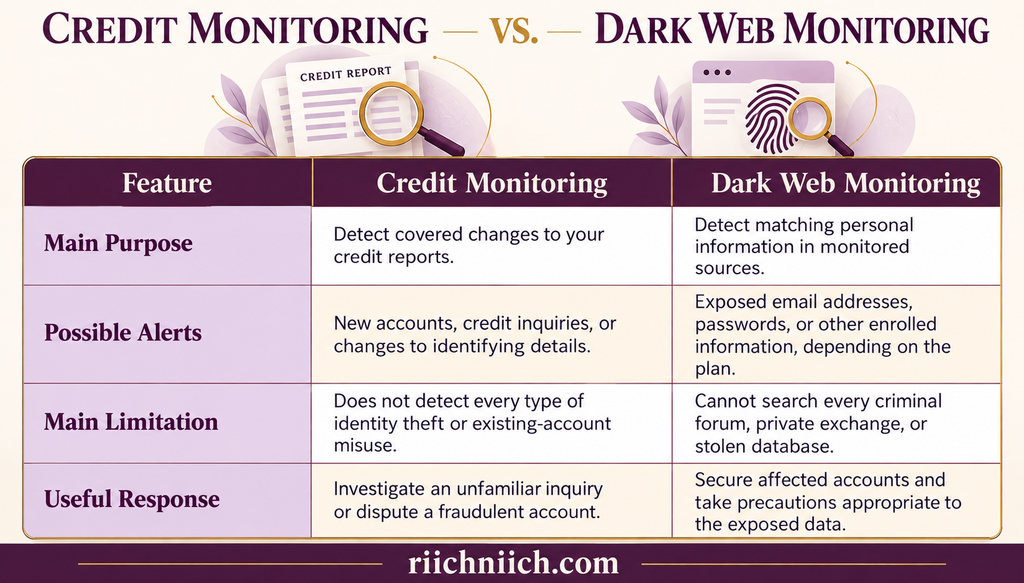
Understanding how criminals use stolen personal information helps explain why credit monitoring and dark web monitoring serve different purposes. Credit monitoring watches for changes in your credit files. Dark web monitoring looks for exposed information in selected sources where stolen data circulates. Neither provides a complete picture on its own.
When Credit Monitoring May Be More Useful
Credit monitoring is relevant when you want notifications about potential financial identity theft involving credit applications or accounts. Before paying, confirm whether the plan monitors Equifax, Experian, and TransUnion, since coverage varies.
The CFPB explains how credit monitoring works, including its role in alerting you to credit-file changes. An alert can help you investigate, but monitoring does not block an application or replace a credit freeze.
When Dark Web Monitoring May Be More Useful
Dark web monitoring may be useful when you want notifications about exposed credentials or other personal details. For example, an alert about a compromised password can prompt you to replace it anywhere you reused it.
However, an exposure alert is not proof that someone successfully used your identity. It may concern an older breach, and receiving no alerts does not establish that your information is safe. Verify unexpected notifications through your provider’s official app or website, as the FTC recommends in its guidance on dark web alert messages.
Should You Pay For Both?
A combined plan may be worth considering if you want credit-file alerts, exposure notifications, and recovery assistance in one service. Check whether you already receive similar monitoring through an existing benefit before adding another subscription.
If you are deciding between basic alerts and a broader service, our credit monitoring vs identity theft protection comparison explains the differences to consider before paying.
Compare the actual coverage—not just the feature names. Ask which bureaus are monitored, which personal details you can enroll, what guidance accompanies an alert, and whether recovery help costs extra.
Choose the combination that fills your protection gaps at a reasonable ongoing price. Broader monitoring can add convenience and visibility, but strong account security, credit freezes, and prompt action remain essential.
Is Paid Identity Theft Protection Worth It For Your Situation?
Paid identity theft protection may be worth considering if you want automated monitoring and professional help resolving identity misuse. Understanding how criminals use stolen personal information helps you decide whether those benefits address your concerns—or duplicate protections you already have.
The strongest reason to pay is useful support at a price you can sustain. A subscription should make it easier to notice covered activity, understand alerts, and respond when something goes wrong.
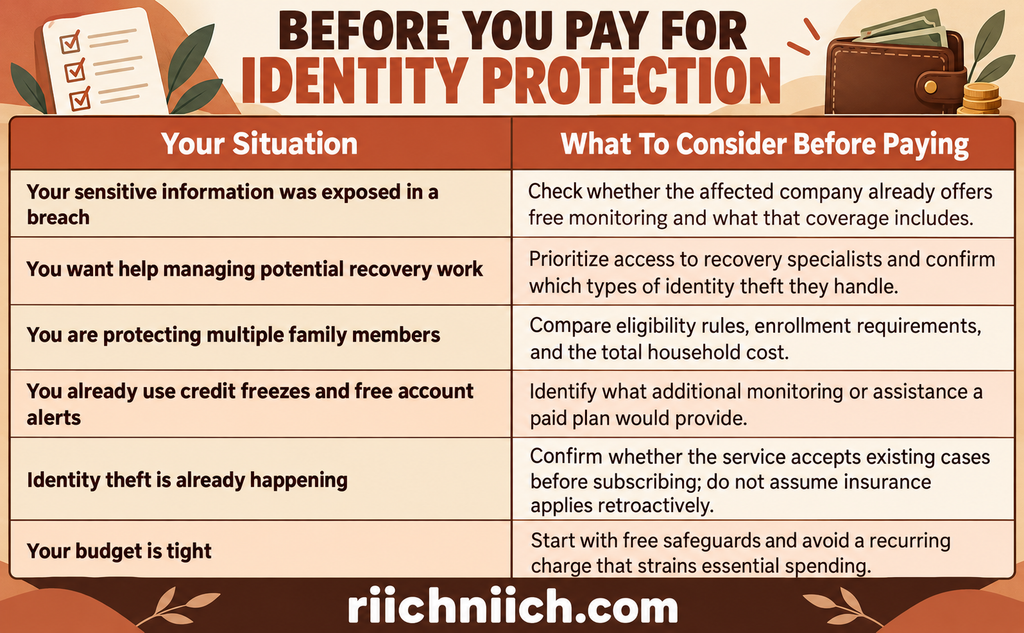
The CFPB advises reviewing what an identity monitoring service actually provides, including trial conditions, fees, and cancellation requirements. A low introductory price does not tell you the full cost of keeping the service.
When Free Protection May Be Enough For Your Needs
If you regularly review your accounts, keep your credit frozen, use unique passwords, and respond promptly to suspicious activity, you may prefer handling monitoring yourself. Free recovery guidance is also available through IdentityTheft.gov, which provides personalized steps and supporting forms.
That approach still requires attention and follow-through. Consider whether you are comfortable managing disputes and contacting several organizations if your information is misused.
When A Paid Plan May Add Value
A paid plan may be a better fit if you want broader alerts in one place or help navigating recovery. Before buying, confirm whether specialists only provide instructions or can contact institutions on your behalf with authorization. Ask which features require separate activation or enrollment.
Compare the renewal price, monitoring scope, and recovery assistance together. If a plan fills a clear gap and fits your budget, it may be a worthwhile addition. If its benefits overlap with what you already receive, paying more may add little practical value.
How To Compare Identity Theft Protection Plans Before You Buy
Knowing how criminals use stolen personal information helps you compare identity theft protection plans by what they actually cover. Start with the risks you want help managing, then examine the specific subscription tier—not just the provider’s advertising.
A useful plan should clearly explain what it monitors, what happens after an alert, and what you will pay over time.
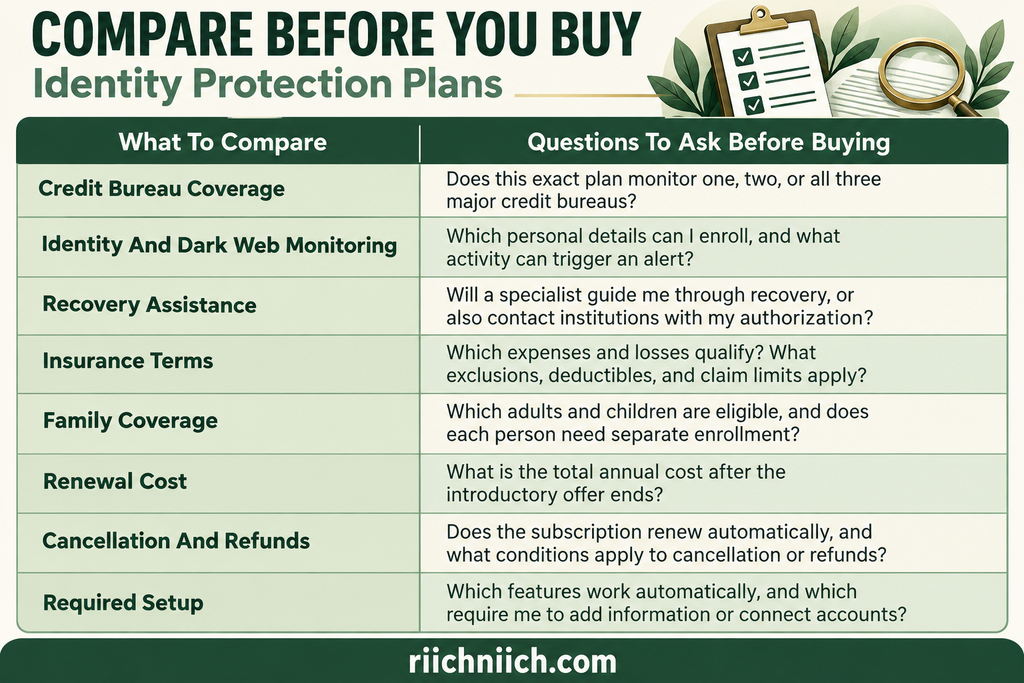
The CFPB’s identity monitoring guide recommends understanding the service and checking trial periods, fees, and cancellation requirements before enrolling.
Look Closely At Recovery Assistance
An alert tells you something may be wrong. Recovery support determines how much help you receive afterward.
Ask whether assistance covers the situations that concern you, such as fraudulent credit accounts, medical identity theft, or employment-related misuse. If you already have a problem, request confirmation that the service will help with an existing case before paying.
Read Beyond The Insurance Headline
An advertised coverage limit does not mean every loss qualifies for reimbursement. Look for the actual policy or certificate of insurance and review the covered events, expense categories, exclusions, and documentation requirements. Treat insurance and recovery assistance as separate benefits when comparing value.
Check For Benefits You Already Have
Review any monitoring or recovery support available through your employer, bank, credit card, insurance policy, or a breach notification. Free credit freezes also remain available independently of a paid subscription; the FTC explains how to place them.
Choose The Plan You Can Justify At Renewal
Narrow your options to plans that meet your core needs, then compare their ongoing annual costs. A monthly equivalent billed annually still means paying the annual amount upfront.
Choose clearly documented coverage and practical recovery help over a longer feature list. Before subscribing, save the plan details, renewal price, and applicable terms so you know exactly what you purchased.
Frequently Asked Questions About Stolen Personal Information

These questions address practical concerns about how criminals use stolen personal information, including older breaches, replacement documents, and getting value from paid protection.
Can Information From An Old Data Breach Still Put Me At Risk?
Yes. An old password can still create problems if you continue using it elsewhere. Other details, such as your date of birth, may remain unchanged long after a breach.
The FTC recommends taking old-account breach notices seriously and changing exposed passwords wherever you reused them or used similar versions. When reviewing a monitoring alert, check what information was exposed and whether it is still relevant.
Does Replacing My Social Security Card Stop Someone From Using My Number?
No. Replacing the physical card generally does not change your Social Security number or invalidate stolen copies of it.
Receiving a different number is a separate process with specific eligibility requirements. The Social Security Administration explains when a number change may be considered, including certain cases of ongoing harm after attempts to resolve identity theft. A replacement card is not a substitute for addressing misuse.
Will Deleting An Old Online Account Erase Information Already Stolen From It?
No. Closing an unused account does not retrieve copies criminals already obtained. It can reduce the number of accounts you maintain, but you should still replace exposed passwords on other services and review connected accounts.
If you use dark web monitoring, an older exposure may remain visible even after you close the original account. That alone does not prove a new breach occurred.
Do I Need Two Identity Theft Protection Subscriptions For Better Coverage?
Not necessarily. Two plans may monitor many of the same sources and generate duplicate alerts. Before adding another subscription, compare the actual differences in credit-bureau coverage, enrolled information, family eligibility, and recovery assistance.
Pay for a meaningful coverage gap—not simply a second brand name. Also check whether an employer benefit or existing insurance policy already provides similar support.
Can I Switch Monitoring Providers Without Removing My Credit Freezes?
Yes. Credit freezes placed directly with the bureaus are separate from a monitoring subscription. However, a provider’s enrollment or identity-verification process may require additional steps while your files are frozen.
Check the new provider’s instructions, and distinguish a statutory credit freeze from a subscription-linked credit lock. Do not assume the two have identical terms.
What Happens To My Recovery Case If I Cancel My Subscription?
That depends on the service agreement. Before canceling during an active case, ask whether specialist assistance continues, how long you can access case documents, and whether cancellation affects any insurance claim.
Get the answer in writing and save your records first. This detail can matter more than a small price difference when you are choosing identity theft recovery services.
Conclusion: Learn How Criminals Use Stolen Personal Information and Choose the Right Protection
Understanding how criminals use stolen personal information helps you protect more than your credit score. Stolen details can fuel account takeover fraud, fraudulent loans, medical identity theft, personalized scams, and misuse of government benefits. Your response should match the information exposed and the activity you discover.
Start with the protections you can put in place today: freeze your credit, secure your email, use unique passwords, enable multifactor authentication, and review important accounts. The FTC’s credit freeze guidance explains a free way to make fraudulent new credit accounts harder to open.
If you want additional support, compare identity theft protection services by three practical benefits:
- Relevant monitoring: Credit-file changes, exposed credentials, and other covered activity that matters to your situation.
- Useful alerts: Clear information about what was detected and what action to take.
- Recovery assistance: Clearly defined help addressing fraudulent accounts and inaccurate records.
Look beyond promotional pricing and large insurance limits. Confirm the renewal cost, eligibility rules, exclusions, and services included in the exact plan you are considering. The right protection is a plan that fills a real gap at a price you can maintain.
Ready to compare your options? Explore our guide to the best identity theft protection services to assess monitoring, recovery assistance, and ongoing costs before choosing a plan.

If your information is already being misused, begin recovery immediately through the affected organizations and IdentityTheft.gov. You can access a personalized recovery plan without purchasing a subscription.
Take one protective step today, then compare paid support based on what you still need. Monitoring and recovery services can add value, but their strongest role is supporting the security habits you already practice.