

Choosing the best identity monitoring service means looking beyond promotional prices and long feature lists. You need coverage that fits your concerns, alerts you can act on, and useful help if your identity is misused.
This guide compares leading credit and identity monitoring services, their plan differences, recovery support, and ongoing costs—so you can decide which subscription is worth paying for.
Table of Contents
🔥 Quick Answer: What Is the Best Identity Monitoring Service?
The best identity monitoring service combines broad personal information monitoring, three-bureau credit monitoring, clear alerts, and practical identity recovery assistance at a price you can comfortably maintain.
Aura is a strong starting point for buyers who want those features in one subscription. Its advertised coverage includes monitoring at Equifax, Experian, and TransUnion, dark web monitoring, address and public records monitoring, and fraud remediation assistance. That combination makes it worth considering if you want alerts about both credit activity and potential misuse of your personal information.
Before choosing a plan, look for:
- Monitoring that fits your needs: Check which personal details and records the service monitors.
- Three-bureau credit coverage: Confirm that the specific plan includes all three major credit bureaus.
- Identity recovery assistance: Look for hands-on help resolving fraud, beyond notifications alone.
- A sustainable subscription price: Compare renewal costs, billing terms, and cancellation requirements.
- Suitable household coverage: If you need identity monitoring for families, check adult and child coverage separately.

Keep expectations realistic. The Federal Trade Commission’s identity theft guide explains that identity monitoring can flag information that may never appear on a credit report. However, no service catches every instance of identity theft, and monitoring does not guarantee prevention.
When comparing credit and identity monitoring services, prioritize the coverage and recovery help you will actually use. The best identity monitoring service for you should offer useful protection at its ongoing price—not simply an attractive introductory deal.
Best Identity Monitoring Service: Compare Your Top Options
Choosing the best identity monitoring service starts with comparing the specific plans you would buy. A provider may offer broad identity monitoring while reserving three-bureau credit coverage, financial account alerts, or additional recovery benefits for a higher-priced subscription.
The following identity monitoring service comparison highlights reasons to shortlist each provider. These are buying considerations based on advertised features, rather than ratings from hands-on testing.
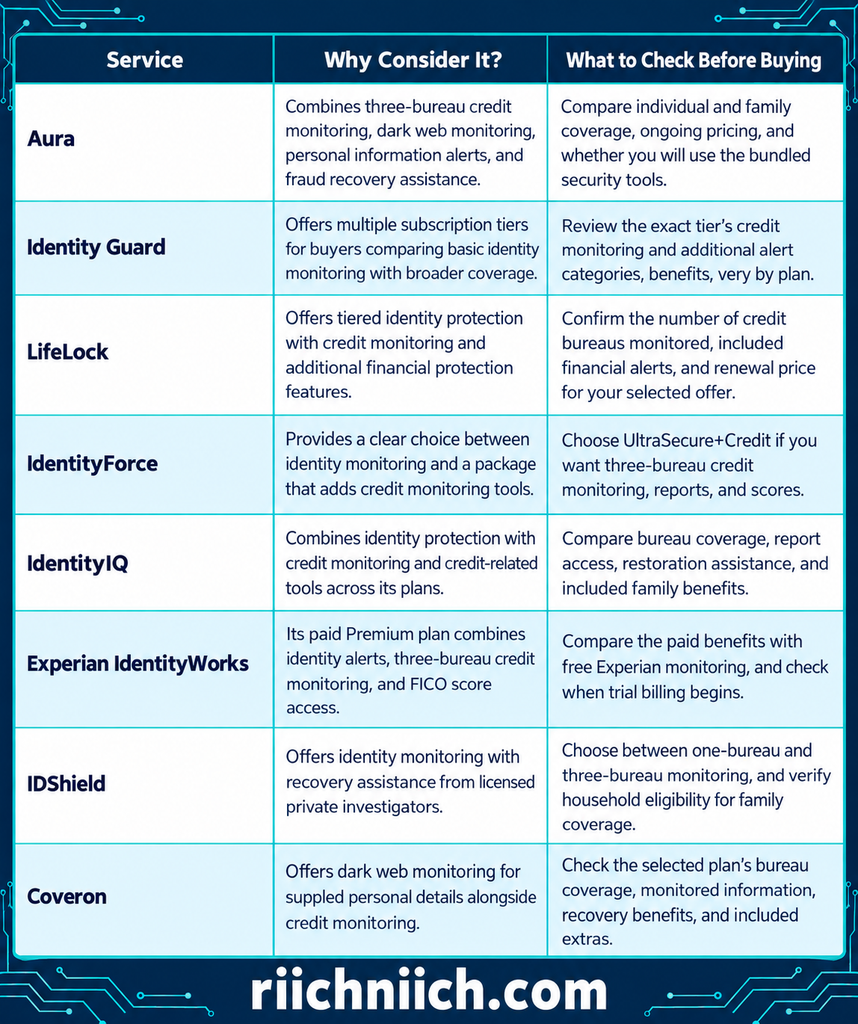
Which options should you compare first?
Based on their advertised features, Aura is a practical starting point for a combined monitoring package, Experian IdentityWorks deserves a closer look if FICO score access matters to you, and IDShield is worth comparing if investigator-led recovery assistance is a priority. These choices help narrow your shortlist; they do not establish that one provider delivers better alerts or customer service in practice.
Before paying, separate features you need from extras you already have. For example, a bundled VPN or password manager may add little value if you already subscribe to those tools.
The Federal Trade Commission also recommends checking whether monitoring or recovery services are available through your employer, bank, credit card provider, or insurer. Existing benefits can affect whether a separate subscription is worth the cost. consumer.ftc.gov
To find the best identity monitoring service for your budget, shortlist two or three plans and compare their full renewal cost, monitoring coverage, and recovery assistance side by side. Buy the plan that fills meaningful gaps in your current protection—not simply the one advertising the largest feature count.
What Does an Identity Monitoring Service Actually Monitor?
An identity monitoring service checks selected databases, records, and sources of exposed information for details connected to you. Depending on the plan, it may flag leaked credentials, unfamiliar records, or activity that suggests someone is misusing your identity.
When shopping for the best identity monitoring service, look beyond the phrase “identity monitoring.” Check exactly which information the subscription monitors and what you must register or connect to activate those features.
Personal information exposed in breaches or on the dark web
Identity monitoring with dark web alerts may search supported sources for your email addresses, Social Security number, phone numbers, and financial account details. Coverage depends on the provider and the information you supply. An alert means your details were detected in a monitored source; it does not automatically prove someone has used them fraudulently.
Credit report activity
Credit and identity monitoring services may alert you to new accounts, credit inquiries, or changes to identifying information on your credit reports. Check whether your selected plan monitors one, two, or all three major credit bureaus. Credit monitoring and broader identity monitoring cover different sources, so one does not replace the other.
For a closer look at those differences, read our guide to credit monitoring vs identity theft protection.
Public records and address changes
Some plans monitor court records, criminal records, sex offender registries, or changes to your mailing address. These alerts can help you spot unfamiliar information associated with your identity, although an incorrect record may also result from an error rather than fraud.

Financial accounts and certain applications
Some subscriptions monitor transactions in financial accounts you connect or provide alerts involving certain non-credit loans and identity verification activity. These features are separate from credit report monitoring. Confirm which accounts are supported and whether linking them is required.
Children’s personal information
Identity monitoring for families may include children’s Social Security numbers or other supported information. Child benefits can differ substantially from adult coverage, so check what each enrolled child actually receives.
The Federal Trade Commission’s guide to identity monitoring explains why these services can identify issues that never appear on a credit report. It also makes clear that the databases and records monitored vary by service.
Before subscribing, ask: “Does this plan monitor the information I’m concerned about, and have I completed the setup needed for that coverage?” The best identity monitoring service should make those answers easy to find, helping you pay for relevant coverage and put it to use.
What Identity Monitoring Can—and Cannot—Protect You From
Identity monitoring can help you discover potential problems and respond to them. It cannot guarantee that your information stays private or prevent every fraudulent transaction. When choosing the best identity monitoring service, understand whether you are paying for detection, recovery assistance, or additional security tools.
What identity monitoring can help you do
- Discover possible exposure: Identity monitoring with dark web alerts can notify you when registered information appears in sources the provider monitors. This gives you an opportunity to change an exposed password or take other protective steps.
- Spot possible misuse: Credit and identity monitoring services may flag unfamiliar accounts or records associated with your information.
- Get help addressing detected fraud: A subscription that includes identity recovery assistance may provide specialists who help you contact companies, dispute fraudulent activity, and organize recovery steps. The amount of assistance varies by service.
For example, a notification about an exposed password can prompt you to secure the affected account. However, receiving that notification does not mean the service changed the password or removed an intruder for you.

What identity monitoring cannot guarantee
It cannot stop every attempt to use your identity. Monitoring generally identifies information or activity within covered sources. It does not require every lender, business, or government agency to obtain your permission before processing an application.
It cannot watch every database or corner of the internet. A clean dashboard means the service has not detected a covered issue. It does not establish that your information has never been exposed or misused.
It cannot automatically secure all your accounts. Monitoring alone does not replace unique passwords, two-factor authentication, or careful handling of unexpected messages. If a plan includes security software, those tools serve a separate purpose from identity alerts.
It cannot promise reimbursement for every loss. Identity theft insurance has covered events, limits, conditions, and exclusions. An advertised coverage amount is a maximum subject to the policy—not a guaranteed payment after fraud. The Federal Trade Commission’s consumer guide explains the differences between monitoring, recovery services, and identity theft insurance.
What this means before you buy
If you mainly want notifications, compare monitoring coverage and alert delivery. If you also want help dealing with fraud, prioritize identity monitoring with recovery assistance and examine what the specialists actually handle.
The best identity monitoring service should give you useful warnings and a clear path to help. Its value comes from making potential problems easier to discover and manage, alongside the protective steps you take yourself.
How to Choose the Best Identity Monitoring Service for Your Needs
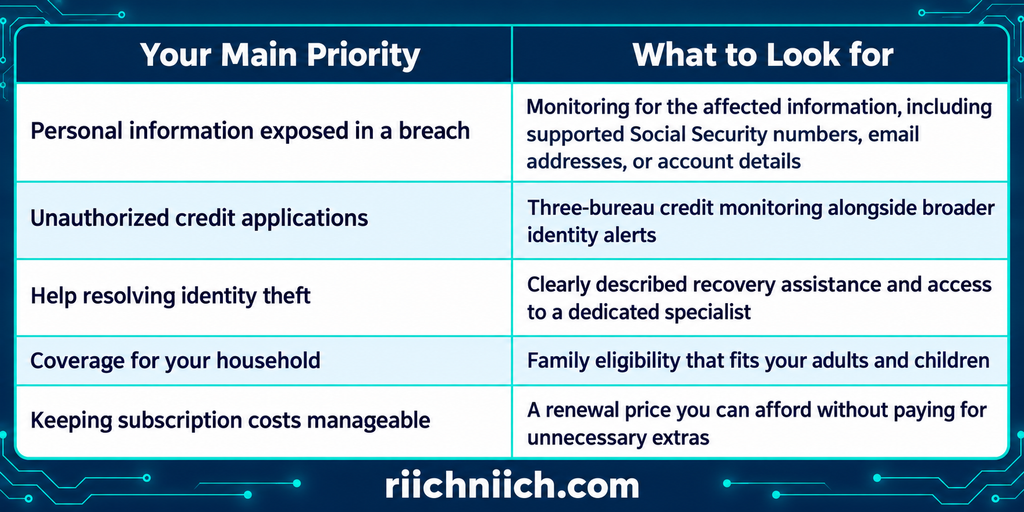
Choose the best identity monitoring service by matching the subscription to your main concerns, your household, and your budget. Start with the features you need, then compare the specific plans that provide them.
Identify your main reason for subscribing
Are you concerned about exposed personal information, unfamiliar credit accounts, or getting help if identity theft happens? Your answer should guide your shortlist.
Compare the actual plan—not just the provider
A brand’s most comprehensive features may belong to its highest tier. In your identity monitoring service comparison, record the exact plan name beside each benefit you need.
Also distinguish credit monitoring from credit report access. Receiving reports or scores from three bureaus does not, by itself, establish that the service continuously monitors all three.
Find out what recovery assistance includes
“Recovery support” can describe anything from general instructions to specialists who help communicate with creditors and address fraudulent records. Ask what the service handles, what remains your responsibility, and when that assistance is available.
The Federal Trade Commission’s guide recommends checking the scope of recovery services and whether you already receive protection through an employer, financial institution, or insurance policy.
Check household eligibility before choosing a family plan
When comparing identity monitoring for families, verify who qualifies. Look at the number of covered adults, children’s age limits, residency requirements, and the monitoring available to each person. Do not assume every household member receives identical benefits.
Calculate the cost you will actually pay
Compare the total first-year charge with the renewal charge. A monthly equivalent advertised for annual billing may require the full amount upfront.
Before subscribing, confirm:
- Whether the advertised price requires annual payment.
- When a trial converts to a paid subscription.
- Whether optional features cost extra.
- How cancellation and refunds work.
Use reviews to investigate practical details
Identity monitoring service reviews are most useful when they explain setup, alert clarity, customer support, and cancellation. Give more weight to reviews that identify the tested plan and distinguish firsthand experience from a summary of advertised features.
Finally, shortlist two plans that meet your essential requirements. If the more expensive option adds benefits you are unlikely to use, the lower-priced plan may offer better value. The best identity monitoring service should fit your needs well enough to justify its ongoing cost.
Aura: Who Should Consider It?
Aura deserves a place on your shortlist if you want credit alerts, broader identity monitoring, and recovery assistance in one subscription. For buyers searching for the best identity monitoring service, its main appeal is the combination of coverage rather than a single monitoring feature.
Buyers who want more than credit alerts
Aura advertises three-bureau credit monitoring alongside dark web, identity verification, address, and public records monitoring. This makes it worth considering if you want notifications about potential personal information misuse beyond changes to your credit reports.
People who want assistance if fraud happens
Aura includes fraud remediation assistance. Its specialists can help develop a recovery plan and facilitate calls with banks or credit bureaus. If you are comparing identity monitoring with recovery assistance, this is a reason to examine Aura’s service terms—not just its list of alerts.
Households needing coverage for several people
Aura’s advertised family plan covers up to five adults and unlimited children, with child identity protection that includes Social Security number alerts. That makes it an option to compare for larger households seeking identity monitoring for families.
👉 Compare Aura’s individual, couple, and family plans to find the coverage that fits your household and budget.
Confirm eligibility and the benefits available to each member before enrolling.

Buyers who will use the bundled security tools
Aura also advertises a VPN, antivirus, and password manager. These extras may strengthen its value if you need those tools. If you already have subscriptions you prefer, give greater weight to Aura’s monitoring and recovery benefits when comparing the cost.
Before choosing a plan, explore whether Aura is worth it for the features and support you need.
When to compare other options more closely
Aura may be less compelling if you only need basic credit notifications or want specific credit-analysis tools. Its advertised monthly credit score uses VantageScore, so buyers who specifically want FICO score access should account for that difference.
Before paying, check existing benefits. The Federal Trade Commission notes that monitoring, recovery services, or insurance may already be available through your employer or financial providers.
Consider Aura if you will use both its broader monitoring and its recovery support. Compare the appropriate individual, couple, or family subscription, then verify the total charge and renewal terms at checkout. The best identity monitoring service for your household should justify its ongoing cost through benefits you actually need.
Identity Guard: Who Should Consider It?
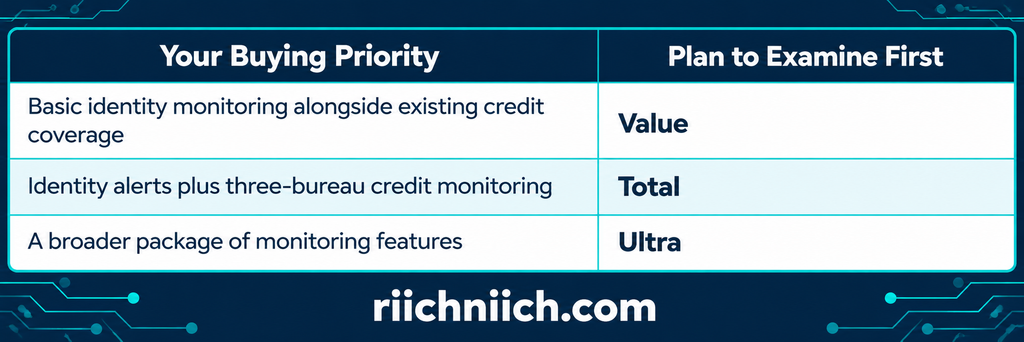
Identity Guard is worth considering if you want a choice between basic identity monitoring and more extensive credit and identity coverage. For buyers searching for the best identity monitoring service, its tiered plans offer a way to match your subscription to your priorities.
Budget-conscious buyers who already have credit monitoring
The entry-level Value plan may suit someone who wants identity monitoring with dark web alerts while using separate credit-monitoring benefits. However, Value does not include credit monitoring, so it should not be your choice if you expect credit report alerts in the same subscription.
Buyers who want credit and identity monitoring together
Identity Guard’s Total and Ultra plans include three-bureau credit monitoring. These are the tiers to compare if you want coverage at Equifax, Experian, and TransUnion alongside identity monitoring. Start with Total, then examine whether Ultra’s additional benefits justify the higher ongoing cost.
👉 Check Identity Guard’s Total and Ultra plans side by side to see which gives you the features you need at a price you can maintain.
Families seeking coverage for multiple members
Identity Guard offers family subscriptions, but check the benefits for adults and children separately. Its plan disclosures state that child members receive online account monitoring and Social Security number monitoring. Those benefits differ from adult coverage, which matters when comparing identity monitoring for families.
What could make another option a better fit?
If your main concern is hands-on recovery assistance, examine the exact service terms before enrolling. Confirm what specialists will handle under your selected plan and whether assistance applies to an existing identity theft problem.
The Federal Trade Commission recommends asking recovery services which tasks they perform and which you must complete yourself. That distinction helps you evaluate the support you are buying.
Also compare the renewal charge carefully. Identity Guard’s advertised offers can have a lower first-year price followed by a higher annual renewal cost. Use the renewal amount when assessing long-term affordability.
Consider Identity Guard if its plan choices let you buy the coverage you need at a sustainable price. For shoppers who want credit alerts included, compare Total and Ultra directly. The best identity monitoring service for you should deliver meaningful benefits without requiring an upgrade for features you assumed were already included.
LifeLock: Who Should Consider It?
LifeLock is worth considering if you want identity alerts and restoration support, with plan choices based on the complexity of your finances. For buyers comparing the best identity monitoring service, the key is choosing the right LifeLock tier rather than assuming every subscription provides identical coverage.
Buyers who want three-bureau credit monitoring
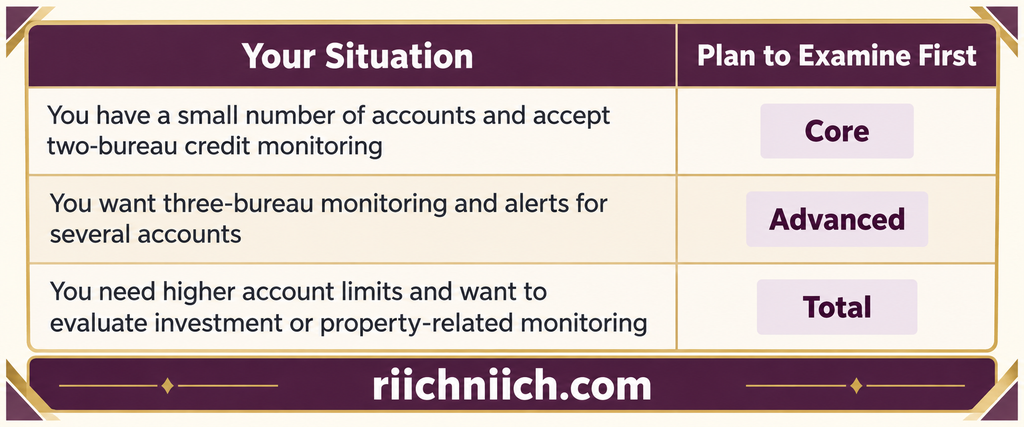
LifeLock’s current Core plan includes two-bureau credit monitoring, while Advanced and Total include three-bureau monitoring. If coverage at Equifax, Experian, and TransUnion is essential, begin your comparison with Advanced. You do not need the highest tier solely to receive three-bureau monitoring.
If both providers are on your shortlist, our LifeLock vs Identity Guard comparison can help you weigh their plan differences.
People managing several financial accounts
LifeLock advertises credit, checking, and savings activity alerts for two accounts with Core, five with Advanced, and unlimited accounts with Total. These limits make a difference if you want to monitor multiple eligible accounts. Check account compatibility and connection requirements before buying.
Buyers who value identity restoration assistance
LifeLock lists identity restoration specialists across its current Core, Advanced, and Total plans. This makes it worth comparing if you want identity monitoring with recovery assistance alongside notifications. Review what specialists handle and the conditions that apply to your membership.
People considering a Norton security bundle
LifeLock also offers options that combine identity protection with Norton device security. If you need both, compare the bundle’s total cost with separate subscriptions. Existing Norton customers should check their current benefits before purchasing overlapping coverage.
What should you check carefully?
Pay attention to the reimbursement categories. An advertised total can combine separate limits for stolen funds, personal expenses, and legal assistance; it is not necessarily the amount available for stolen money alone. Coverage remains subject to policy terms and exclusions. The Federal Trade Commission’s identity theft guide explains why insurance benefits should be assessed separately from monitoring and recovery services.
Consider LifeLock when its account coverage and restoration support match your needs. Compare Advanced with Total before paying for the higher tier, and verify the renewal charge for your specific offer. The best identity monitoring service should justify its price through coverage you will use.
IdentityForce: Who Should Consider It?
IdentityForce is worth considering if you want identity monitoring with recovery assistance and the option to add detailed credit-report access. For buyers searching for the best identity monitoring service, its main buying decision is straightforward: choose identity-focused coverage or pay more for the package that includes credit monitoring.
People who already have credit monitoring
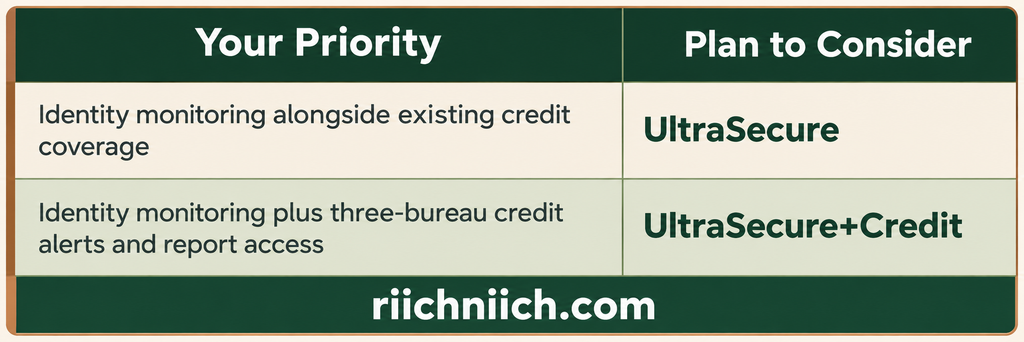
UltraSecure includes dark web monitoring, advanced fraud monitoring, and a dedicated restoration specialist. It may suit buyers who already receive satisfactory credit alerts elsewhere and want additional identity coverage without purchasing another credit-monitoring package.
Buyers who want monitoring and credit reports together
UltraSecure+Credit adds three-bureau credit monitoring, quarterly three-bureau credit reports, and daily TransUnion credit reports and scores. This makes it worth comparing if you want to investigate credit changes as well as receive alerts. Its advertised scores use VantageScore 3.0, which may differ from the score a lender uses.
Buyers who prioritize restoration support
Both plans list a dedicated restoration specialist. IdentityForce also advertises lost-wallet assistance to help cancel and replace affected cards. These benefits deserve attention if you want practical support addressing fraud or lost documents.
What should you check before subscribing?
Complete the required identity verification after enrollment. IdentityForce states that creating an account alone does not activate enhanced services, including credit services, and that the package price does not decrease if those services remain inactive. Confirm activation so you receive the coverage you purchased.
Also distinguish paid monitoring from free report access. The Federal Trade Commission explains that you can review free credit reports yourself. When comparing credit and identity monitoring services, assess whether ongoing alerts and restoration support justify the subscription cost.
Consider IdentityForce if you value dedicated recovery support and will use its selected plan’s monitoring tools. UltraSecure+Credit deserves a closer look when regular credit-report access matters to you; UltraSecure may be sufficient when credit monitoring is already covered. The best identity monitoring service should fill a meaningful gap in your protection at a price you can maintain.
IdentityIQ: Who Should Consider It?
IdentityIQ is worth considering if you want identity alerts alongside credit reports and score-tracking tools. For buyers searching for the best identity monitoring service, its appeal is the ability to choose different levels of credit access and monitoring.
Buyers who want regular access to credit reports
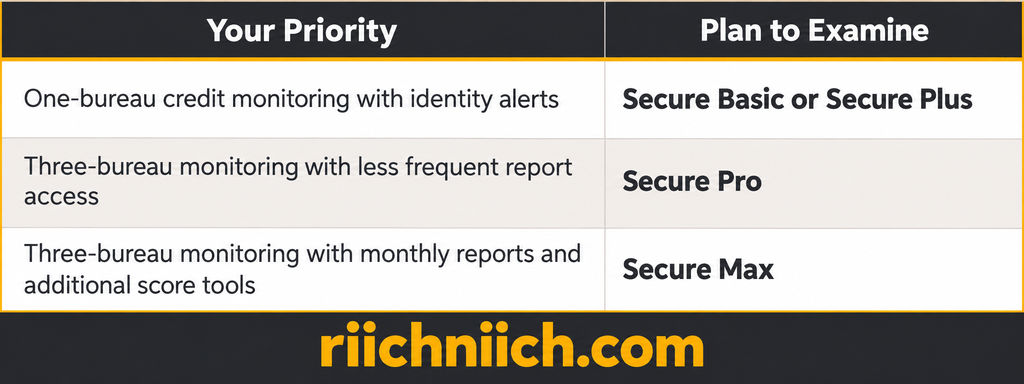
IdentityIQ’s advertised Secure Pro plan includes three-bureau credit monitoring and credit reports and scores twice a year. Secure Max increases report and score access to monthly and adds a score simulator and tracker. These options may suit people who want to review their credit regularly while watching for potential fraud.
👉 Compare IdentityIQ’s Secure Pro and Secure Max plans to decide whether monthly credit reports and additional score tools are worth the upgrade.
People comparing lower-cost monitoring with broader coverage
Pay attention to the distinction between report access and ongoing monitoring. Secure Plus advertises annual three-bureau reports and scores but monitors only one bureau. Secure Pro and Secure Max include three-bureau monitoring. Receiving reports from all three bureaus does not mean all three are monitored continuously.
Buyers who want assistance handling identity theft
IdentityIQ advertises U.S.-based restoration services, with Secure Max listing fraud restoration through a limited power of attorney. That authorization can allow specialists to perform certain recovery tasks on your behalf. Confirm the scope of assistance under the exact subscription you are considering.
What should you check before buying?
Compare the complete identity monitoring service cost, including optional VPN and antivirus extras. Also verify household benefits individually rather than assuming family protection gives everyone the primary subscriber’s coverage.
Credit tools alone should not drive the purchase. The Federal Trade Commission notes that you can review free credit reports yourself. A paid subscription should provide additional value through ongoing alerts, broader identity monitoring, or useful recovery assistance.
Consider IdentityIQ if you will use both its identity protection and its credit-report tools. Start by comparing Secure Pro with Secure Max: more frequent reports may justify the upgrade for some buyers, while others may prefer the lower cost. The best identity monitoring service should match how you manage your credit and the support you want if fraud occurs.
Experian IdentityWorks: Who Should Consider It?
IdentityIQ is worth considering if you want identity alerts alongside credit reports and score-tracking tools. For buyers searching for the best identity monitoring service, its appeal is the ability to choose different levels of credit access and monitoring.
Buyers who want regular access to credit reports
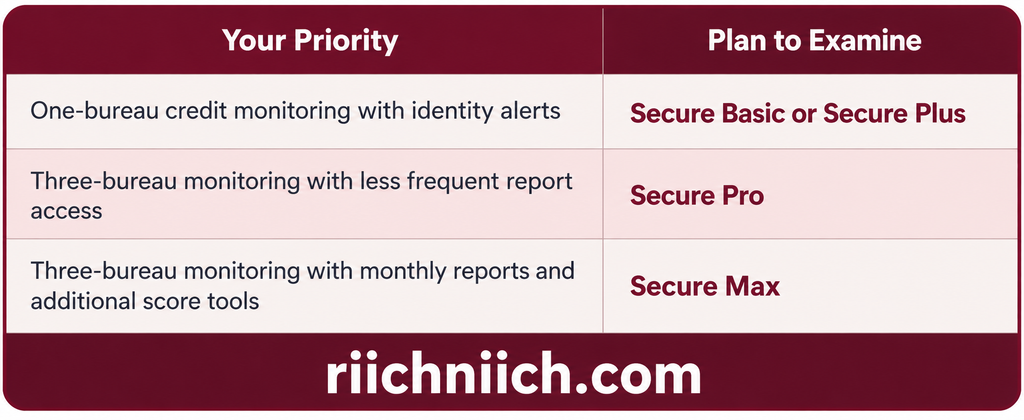
IdentityIQ’s advertised Secure Pro plan includes three-bureau credit monitoring and credit reports and scores twice a year. Secure Max increases report and score access to monthly and adds a score simulator and tracker. These options may suit people who want to review their credit regularly while watching for potential fraud.
People comparing lower-cost monitoring with broader coverage
Pay attention to the distinction between report access and ongoing monitoring. Secure Plus advertises annual three-bureau reports and scores but monitors only one bureau. Secure Pro and Secure Max include three-bureau monitoring. Receiving reports from all three bureaus does not mean all three are monitored continuously.
Buyers who want assistance handling identity theft
IdentityIQ advertises U.S.-based restoration services, with Secure Max listing fraud restoration through a limited power of attorney. That authorization can allow specialists to perform certain recovery tasks on your behalf. Confirm the scope of assistance under the exact subscription you are considering.
What should you check before buying?
Compare the complete identity monitoring service cost, including optional VPN and antivirus extras. Also verify household benefits individually rather than assuming family protection gives everyone the primary subscriber’s coverage.
Credit tools alone should not drive the purchase. The Federal Trade Commission notes that you can review free credit reports yourself. A paid subscription should provide additional value through ongoing alerts, broader identity monitoring, or useful recovery assistance.
Consider IdentityIQ if you will use both its identity protection and its credit-report tools. Start by comparing Secure Pro with Secure Max: more frequent reports may justify the upgrade for some buyers, while others may prefer the lower cost. The best identity monitoring service should match how you manage your credit and the support you want if fraud occurs.
IDShield: Who Should Consider It?
IDShield deserves a closer look if professional help restoring your identity is a major buying priority. For shoppers searching for the best identity monitoring service, its investigator-led restoration support is a reason to put it on the shortlist.
People who want help managing identity recovery
IDShield advertises access to a dedicated, licensed private investigator following an identity theft event. This may appeal to buyers who want identity monitoring with recovery assistance and someone assigned to help address the problem. Review the membership terms to understand the investigator’s responsibilities and any authorization you must provide.
The Federal Trade Commission’s guide recommends asking recovery services exactly which tasks they perform and which remain your responsibility. That is a useful question when evaluating the practical value of restoration support.
Buyers choosing between one-bureau and three-bureau monitoring
IDShield offers plans with Experian-only credit monitoring or monitoring at Experian, Equifax, and TransUnion. Choose the three-bureau option if you want alerts across all three credit files. The one-bureau option may be worth comparing if you already have other credit coverage and are primarily interested in restoration assistance.

What should families check?
For identity monitoring for families, confirm household eligibility before paying. IDShield’s advertised family coverage includes a spouse or domestic partner and dependents under 18 living with you. Buyers needing coverage for adult children or relatives in another home should verify whether the membership accommodates them.
When might another service fit better?
If your main priority is frequent credit reports, score simulators, or detailed credit-analysis tools, compare those features separately. Investigator-led restoration does not establish how much credit-report access a subscription provides.
Consider IDShield if you value having a professional assigned to help with identity restoration. Compare the one-bureau and three-bureau subscriptions, check household eligibility, and read the recovery terms before enrolling. The best identity monitoring service for you should provide the level of assistance you want at an ongoing price you can justify.
Coveron: Who Should Consider It?
Coveron is worth considering if you want personal information alerts, credit monitoring, and access to identity recovery benefits in one subscription. If you recognize its former name, our guide explains why NordProtect changed to Coveron. For buyers searching for the best identity monitoring service, its appeal depends on whether that combination fits your needs and whether you will use any bundled privacy tools.
People concerned about exposed personal information
Coveron offers identity monitoring with dark web alerts for information you register, including supported email addresses, Social Security numbers, U.S. phone numbers, and credit or debit card numbers. It may suit someone who wants notifications about exposure involving several types of personal information. Adding your details is an important part of setting up that coverage.
Buyers who do not require three-bureau credit monitoring
Coveron’s credit monitoring uses TransUnion. That is an important distinction when comparing credit and identity monitoring services: buyers who want ongoing alerts from all three major bureaus should examine other options or account for the gap in their existing coverage.

People considering bundled privacy services
Coveron advertises access to NordVPN and Incogni. Check the specific offer’s inclusions before purchasing, especially if you already pay for either service. A bundle offers better value when it replaces subscriptions you need rather than adding tools you rarely use.
👉 Check Coveron’s current plans and included benefits to see whether its monitoring and privacy tools offer good value for your needs.
What should you understand about recovery assistance?
Coveron states that access to an identity restoration case manager requires filing a claim with its insurance partner, HSB. Buyers seeking identity monitoring with recovery assistance should understand that process before subscribing.
The Federal Trade Commission’s consumer guide explains why monitoring, recovery services, and insurance should be evaluated separately. Compare the assistance available—not simply the advertised insurance maximum.
Consider Coveron if its personal information monitoring and bundled benefits match your priorities. Before enrolling, confirm the credit coverage, recovery process, location eligibility, and renewal cost. The best identity monitoring service for you should provide useful coverage with terms you understand and a price you can maintain.
Which Services Include Three-Bureau Credit Monitoring?
Several providers in this comparison offer monitoring at Equifax, Experian, and TransUnion, but some reserve it for specific plans. If credit alerts are a priority when choosing the best identity monitoring service, compare the exact subscription you intend to buy.
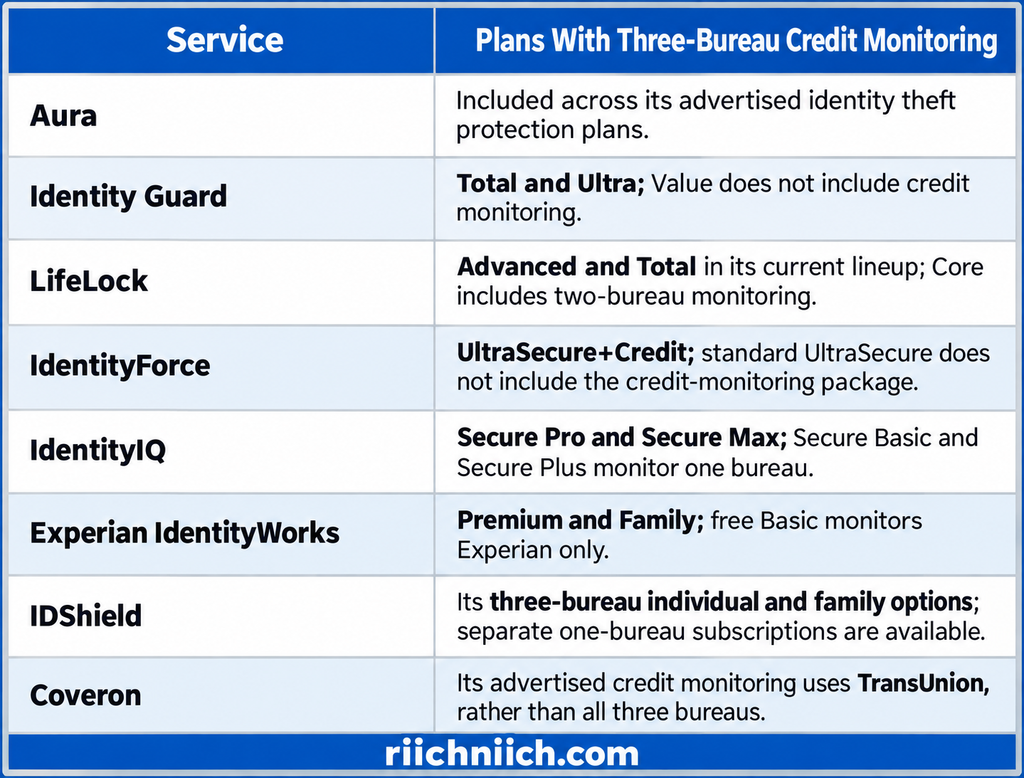
Why does monitoring all three bureaus matter?
Your credit reports can contain different information because creditors do not necessarily report to every bureau. Three-bureau monitoring gives you broader coverage for reported changes than monitoring a single credit file. The Consumer Financial Protection Bureau explains why credit reports and scores can differ.
Do not confuse reports with monitoring
A plan may provide occasional reports or scores from all three bureaus while continuously monitoring only one. IdentityIQ Secure Plus illustrates this distinction: it advertises annual three-bureau reports and scores alongside one-bureau monitoring. Look specifically for “three-bureau credit monitoring” in the benefits list.
Which plan should you buy?
Start with the lowest-priced tier that includes all three bureaus and your essential identity features. For example, compare Identity Guard Total before upgrading to Ultra, or LifeLock Advanced before choosing Total solely for credit coverage.
Also confirm that monitoring has activated after enrollment. Identity verification may be required, and coverage can take time to begin.
The best identity monitoring service should combine the bureau coverage you want with useful identity alerts and recovery assistance. Three-bureau monitoring is a valuable comparison point, but it should be assessed alongside the subscription’s full ongoing cost.
Which Services Offer Broader Personal Information Monitoring?
All eight services discussed offer some monitoring beyond credit reports, but the types of information and activity covered differ by plan. When choosing the best identity monitoring service, compare the specific alert categories that matter to you rather than relying on a claim of “comprehensive protection.”
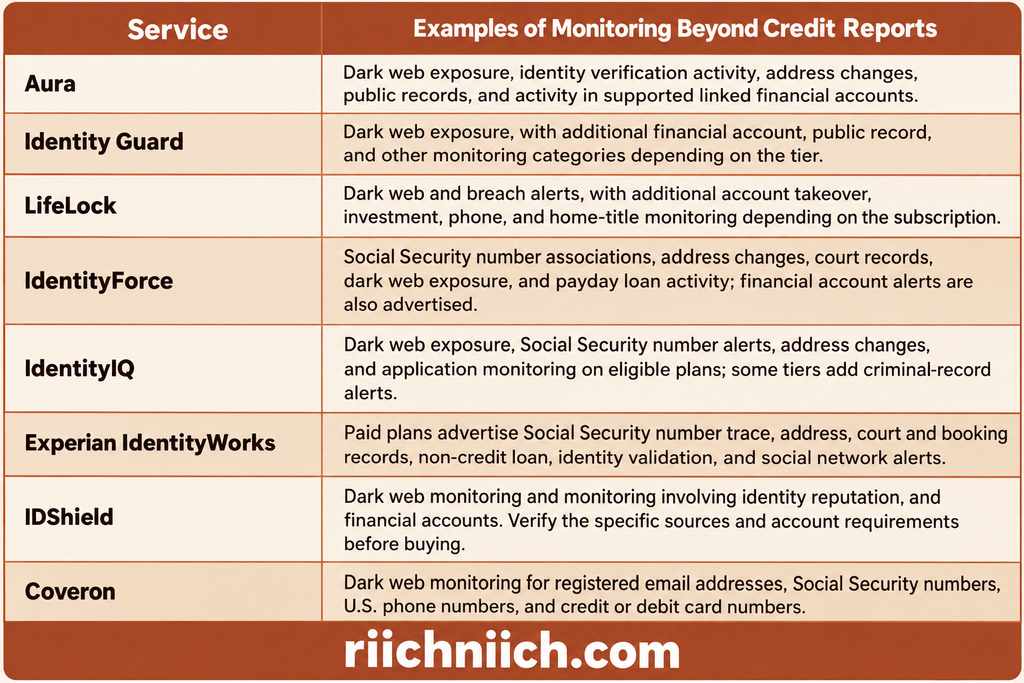
Which services should you shortlist for your concerns?
If you want public-record and non-credit activity alerts, examine IdentityForce and Experian IdentityWorks closely. Their advertised categories include records or applications that extend beyond conventional credit monitoring.
If you want financial account activity alerts, compare eligible Aura, LifeLock, Identity Guard, and IdentityForce plans. Check which institutions are supported, how many accounts you can connect, and whether alerts depend on spending thresholds you set.
For identity monitoring with dark web alerts, compare the personal details each service accepts. Coverage for one email address is different from coverage for several emails, your Social Security number, and supported financial details.
Broader coverage still needs careful comparison
Similar feature names can describe different services. “Social media monitoring,” for example, might concern risky posts, reputation issues, or signs of account compromise. Ask what triggers an alert before treating those features as equivalent.
The Federal Trade Commission’s identity monitoring guide explains that providers check different databases for information that may not appear on your credit report. That makes the actual coverage list more useful than the number of features advertised.
The best identity monitoring service should cover your most important gaps. Prioritize relevant records, supported accounts, and personal details you can register—then decide whether the broader coverage is worth the additional subscription cost.
How Do Alerts and Identity Recovery Support Compare?
Alerts tell you that something needs attention. Recovery support helps you address suspected or confirmed identity theft. When comparing the best identity monitoring service, evaluate both: a useful notification should explain the issue, and recovery assistance should make the next steps easier to manage.
Compare alert usefulness—not just advertised speed
A provider’s claim of “instant” or “real-time” alerts does not establish that it detects every problem faster than another service. Detection depends on the monitored source, when information becomes available, and your account setup.
In identity monitoring service reviews, look for examples showing whether an alert answers these questions:
- What happened? Does it identify the account, record, or exposed information?
- Why does it matter? Does it explain whether the issue suggests exposure, a routine change, or possible fraud?
- What should you do? Does it provide clear instructions and a way to contact support?
- How will you receive it? Can you use the notification channels you regularly check?
Identity monitoring with dark web alerts is more useful when notifications identify the affected information and explain an appropriate response. A vague warning can leave you unsure which account needs attention.
Compare what recovery specialists actually handle
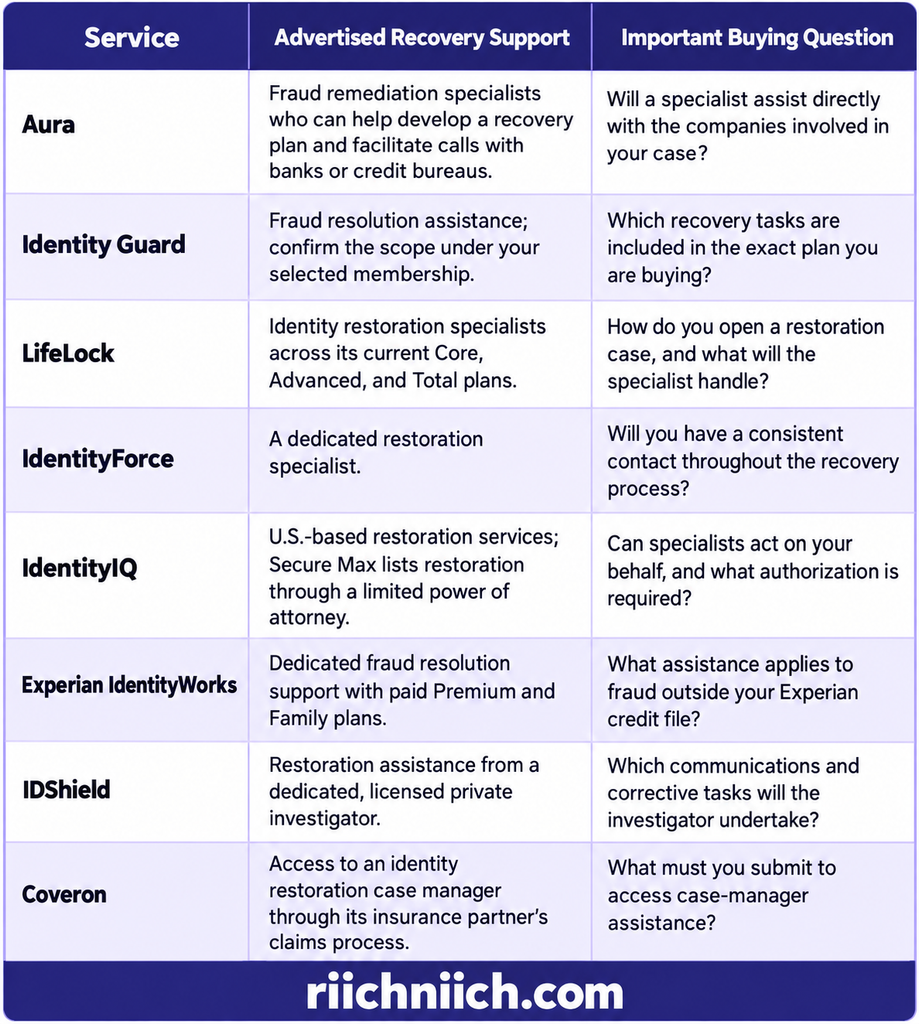
These descriptions compare advertised assistance, not independently tested service quality. To understand the work recovery assistance may involve, review our step-by-step guide on how to recover from identity theft. “Dedicated specialist” or “full-service restoration” should prompt you to examine the membership terms rather than assume every provider performs the same tasks.
Ask about availability and existing problems
Check whether around-the-clock availability means general customer support or access to restoration specialists. Also ask whether the service helps with identity theft discovered before enrollment; do not assume a new subscription covers an existing case.
The Federal Trade Commission recommends finding out which recovery tasks a provider performs and which remain your responsibility. This helps distinguish hands-on assistance from a service that primarily supplies instructions.
If you are buying identity monitoring with recovery assistance, prioritize clear alerts, a straightforward case-opening process, and a defined scope of help. The best identity monitoring service should make it easier to understand a warning and get appropriate support when action is needed.
Identity Theft Insurance: What Coverage Should You Check?
An advertised insurance limit can make a subscription look attractive, but the coverage terms matter more than the headline amount. When choosing the best identity monitoring service, check which losses qualify, how much each category pays, and what you must do to file a claim.
Separate recovery expenses from stolen money
Identity theft insurance may reimburse eligible expenses involved in reclaiming your identity, such as document costs, lost wages, or legal fees. Stolen-funds reimbursement is a separate benefit that you should confirm explicitly.
The Federal Trade Commission cautions that identity theft insurance generally does not reimburse stolen money. Some monitoring subscriptions advertise that additional coverage, so examine the policy attached to your specific plan.
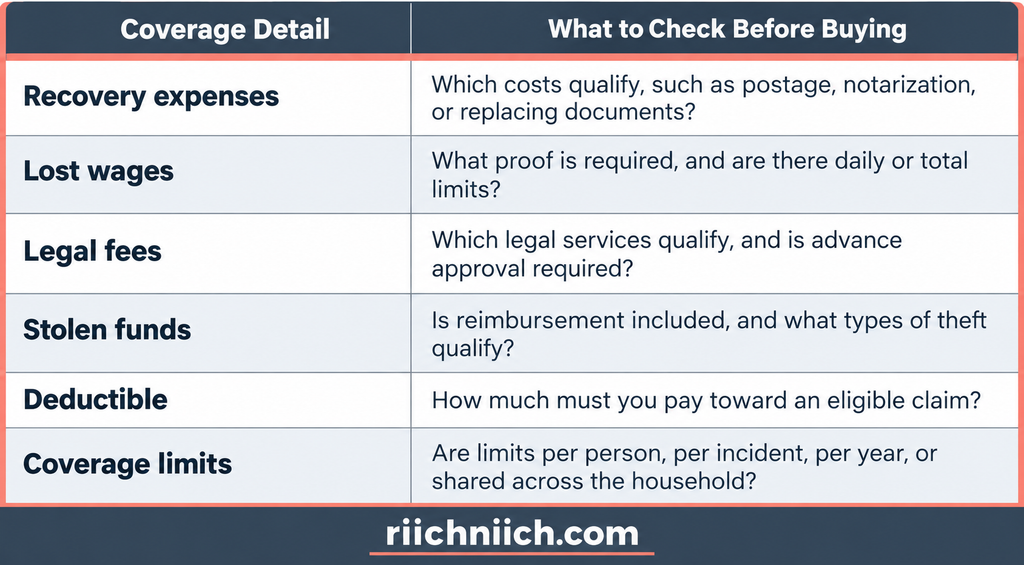
Look for smaller limits within the advertised total
A large combined benefit may include separate amounts for stolen funds, personal expenses, and lawyers or experts. One category’s unused allowance may not be available for another.
For example, LifeLock’s current plans advertise different stolen-funds limits within their larger reimbursement packages. Compare the category relevant to your concerns rather than treating the total as a single unrestricted payment.
Review exclusions and eligibility
Before subscribing, check how the policy treats:
- Identity theft that began before coverage started.
- Money you sent voluntarily after being deceived by a scammer.
- Business-related losses.
- Losses already reimbursed by a bank or another insurer.
- Household members and residents of your state.
These are questions to verify in the policy, not assumptions that every provider applies identical exclusions. Identity theft, online fraud, and cyber extortion may have different coverage requirements.
Understand the claims process
Read the summary of benefits and the applicable insurance terms. Confirm reporting deadlines, required documents, and whether you must seek reimbursement elsewhere first. Ask how to contact the insurer and whether the monitoring provider helps organize your claim.
Also keep insurance separate from identity monitoring with recovery assistance. A specialist may help resolve fraudulent records even when a particular expense does not qualify for reimbursement.
The best identity monitoring service should offer insurance that complements useful monitoring and practical support. Pay more for coverage only when its eligible benefits address your needs—not simply because the advertised maximum is larger.
How Much Does Identity Monitoring Cost After Promotional Pricing Ends?
Identity monitoring costs depend on the plan, household coverage, and billing schedule. Your renewal price may be higher than the introductory rate, so evaluate the ongoing charge when choosing the best identity monitoring service.
A discounted first year can provide good value, but it does not establish that the subscription will remain affordable.
Compare the first-year and renewal totals
For every plan on your shortlist, record three figures:
- Initial charge: What you pay when the subscription begins.
- Renewal charge: What you will pay after the promotion ends.
- Billing period: Whether that charge covers one month, one year, or a longer term.
Here is a hypothetical example—not a provider’s current offer:
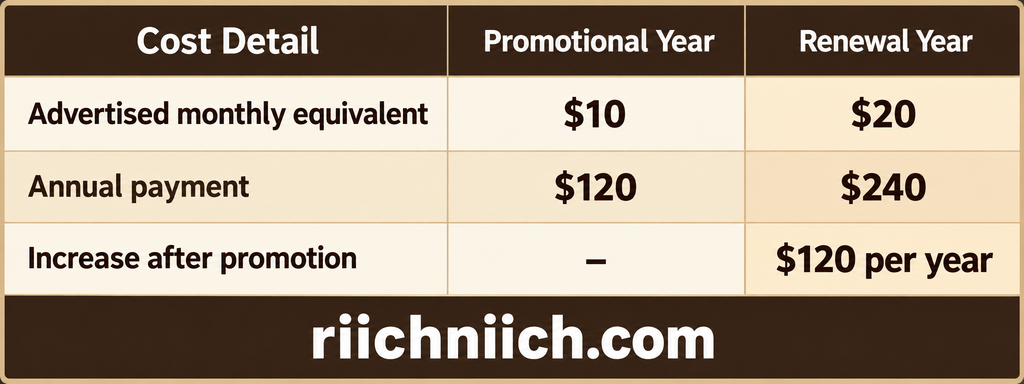
In this example, keeping the subscription for two years costs $360 before taxes or extras. Comparing that total with another plan’s two-year cost gives you a more useful buying comparison than looking only at the introductory discount.
Check whether “per month” means monthly payments
An offer advertised at $10 per month may require a $120 annual payment upfront. A separate month-to-month subscription can have a different rate.
When comparing identity monitoring service cost, put competing offers on the same basis: annual total against annual total, with equivalent household coverage and essential features.
Include extras in your calculation
Check whether optional security tools, additional household members, or upgraded monitoring change the final charge. Also consider whether a bundle lets you cancel an existing subscription you no longer need.
For example, paying more for credit and identity monitoring services may be worthwhile if the upgrade adds three-bureau coverage you want. Paying more for duplicate tools may offer little additional value.
Read trial and cancellation terms
The Federal Trade Commission’s subscription guidance recommends checking when billing begins, what you will be charged, and how to cancel. It also warns that automatic renewal can cost more than the previous subscription period.
Save your checkout confirmation and set a reminder before the trial or renewal deadline. Check whether cancellation stops the next charge, ends access immediately, or qualifies for a refund under the provider’s terms.
Would you buy the plan at its renewal price?
That is the most useful question before subscribing. Compare the ongoing cost with the monitoring coverage and recovery assistance you expect to use. The best identity monitoring service should remain a worthwhile purchase after the introductory savings disappear.
Individual vs Family Plans: Which Offers Better Value?
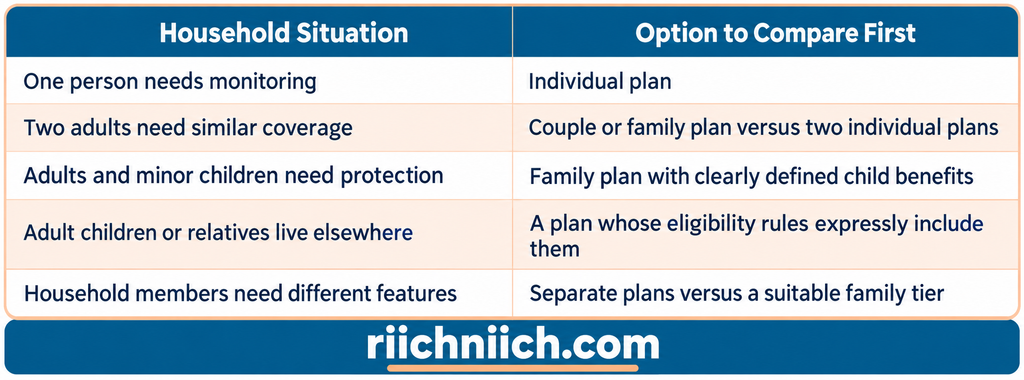
An individual plan usually makes sense when only one person needs coverage. A family plan can offer better value when several eligible people need protection—but only if its benefits fit each person. When choosing the best identity monitoring service, compare the cost of covering your actual household rather than the maximum number of people advertised.
When an individual plan is the better purchase
Consider an individual subscription if you live alone, only need coverage for yourself, or other household members already receive suitable benefits elsewhere. It may also fit when you need advanced credit tools that others would not use.
Buying a larger package does not automatically improve your protection. Compare equivalent monitoring and recovery benefits before paying for additional memberships.
When a family plan can save money
A family subscription may cost less than separate individual plans for two or more adults. Our guide to the best identity theft protection for families offers another way to compare household coverage before choosing a subscription. It can also provide child identity monitoring without requiring a separate purchase for each child.
Use this calculation:
Family plan’s annual renewal cost ÷ number of people you will actually enroll
Then check whether those people receive the benefits they need. A lower cost per person is useful only when the coverage is relevant.
Check child coverage separately
Identity monitoring for families does not necessarily give children the same features as adults. Depending on the service, child benefits may include Social Security number monitoring, dark web alerts, credit activity checks, or restoration assistance.
The Federal Trade Commission’s child identity theft guide explains why children’s information deserves attention: misuse may remain unnoticed until they later apply for credit or other services.
Confirm eligibility and privacy controls
Before buying, verify adult limits, children’s age limits, residency requirements, and whether extended family qualifies. Also ask who can view each member’s alerts. A shared subscription should provide appropriate privacy for enrolled adults.
Check insurance limits separately, too. A household total may combine individual allowances, while children may have different benefits.
Choose based on enrolled people and usable coverage
Compare the family plan’s renewal cost with the individual subscriptions you would otherwise purchase. If the family option costs less and covers everyone appropriately, it may be the stronger choice. The best identity monitoring service should make household protection affordable without leaving important eligibility or coverage gaps.
Free vs Paid Identity Monitoring: When Is Upgrading Worth It?
Upgrading is worth considering when a paid plan fills a specific gap in your free coverage. The best identity monitoring service for your needs should add useful monitoring or recovery assistance—not simply charge for notifications you already receive.
Start by identifying what you get free
Your bank, credit card provider, employer, or a company affected by a data breach may provide monitoring benefits. Check the actual coverage and its expiration date before buying another subscription.
The Federal Trade Commission notes that monitoring, recovery services, and insurance may be available through existing financial relationships or benefits programs. Free coverage can therefore be more substantial than a basic credit-score notification.
When free monitoring may be enough
Keeping your existing coverage can make sense if it addresses your main concerns and you are comfortable investigating alerts yourself. For example, someone primarily interested in credit changes may already have suitable notifications and regularly review their reports.
Check whether “free dark web monitoring” means ongoing alerts or a one-time scan. Similarly, access to a credit score does not necessarily include monitoring for changes.
When a paid upgrade deserves a closer look
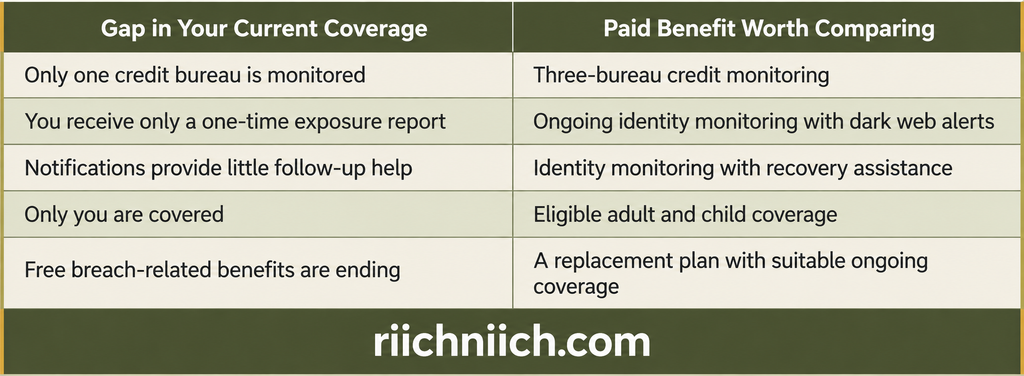
These are reasons to investigate an upgrade, rather than guarantees that every paid subscription provides all those benefits.
Avoid paying twice for the same benefits
Compare the paid plan against everything you already have. A subscription that adds a VPN, password manager, or bank transaction alerts may provide limited additional value if those needs are already covered.
Prioritize the benefits that change what you can detect or how much assistance you can receive. If recovery support is your reason for upgrading, examine what specialists actually handle before purchasing.
Remember that protective steps do not require a subscription
You can review free credit reports, freeze your credit, and strengthen account security without buying identity monitoring. Follow our guide on how to freeze your credit to place a freeze with each of the three major credit bureaus. A paid service should complement those steps rather than become a reason to postpone them.
Before upgrading, finish this sentence: “I am paying for this plan because it adds ______.” If you can identify a meaningful benefit and afford the renewal cost, the upgrade may be worthwhile. The best identity monitoring service should earn its place in your budget through coverage or assistance you would otherwise lack.
What to Check Before Signing Up for an Identity Monitoring Service
Before paying for the best identity monitoring service on your shortlist, make sure the checkout offer matches the coverage you researched. This final review helps you avoid buying the wrong tier, overlooking billing terms, or leaving important features inactive.
Confirm the exact plan and benefits
Check the subscription name, household option, and included monitoring. Promotional links may lead to a different package than the one described in an identity monitoring service comparison.
Save a copy of the offer showing:
- The credit bureaus monitored.
- The personal information and records covered.
- The recovery assistance included.
- Any optional extras added to the purchase.
Review the full payment terms
Verify the amount charged today, when the next payment occurs, and the stated renewal price. If the offer includes a trial, confirm the cancellation deadline and whether the first payment will be monthly or annual.
The Federal Trade Commission’s subscription guide recommends understanding automatic billing and cancellation terms before enrolling. Keep your confirmation so you can refer back to the offer you accepted.
Understand what personal information you must provide
Read the privacy policy before submitting sensitive details. Check how the provider uses your information, which partners receive it to deliver services, and what happens to your data after cancellation.
For financial account monitoring, determine whether linking accounts is optional, which institutions are supported, and what permissions you authorize. Only connect accounts through the provider’s verified setup process.

Check eligibility and activation requirements
Confirm that the service and its insurance benefits are available where you live. For family coverage, verify each person’s eligibility and how they accept an invitation or complete registration.
Ask whether identity verification is required and how you will know monitoring has started. For example, IdentityForce states that creating an account alone does not activate enhanced services, including credit services.
Find the support and cancellation options
Locate the process for reporting suspected fraud, contacting a recovery specialist, and canceling membership. If you already have an identity theft problem, ask whether assistance applies before paying.
Distinguish a refund guarantee from a free trial: a guarantee may require an upfront payment and a refund request under specified conditions.
Complete setup after purchasing
Register the information you want monitored, enable available account security, and choose notification channels you regularly check. Confirm that credit monitoring and any linked-account features are active.
The best identity monitoring service should be a purchase you understand and can put to use. Finish enrollment only when the coverage, billing terms, and setup requirements match your expectations.
Frequently Asked Questions About Identity Monitoring Services
Does checking my credit through an identity monitoring service lower my credit score?
Checking your own credit does not lower your score. The Consumer Financial Protection Bureau explains that reviewing your report is different from applying for new credit. You can use included credit-report access without avoiding it out of concern about score damage.
Should I register an old email address I no longer use?
If the service supports additional addresses, consider registering an old email that remains connected to accounts or contains sensitive correspondence. First check whether you still control that mailbox and secure it if necessary.
When comparing the best identity monitoring service, look at how many email addresses you can register. Coverage for your current address alone may leave older accounts outside your selected monitoring.
Can two identity monitoring services send alerts about the same event?
Yes. Services that monitor overlapping sources can notify you about the same credit change or exposed information. Two notifications do not necessarily represent two separate incidents.
Compare the affected details before responding. If you are considering a second subscription, identify the additional coverage it provides rather than assuming more alerts mean better protection.
How can I verify that an identity monitoring alert is genuine?
Open the provider’s app directly or visit its website using a saved bookmark. Check whether the notification appears in your account before following instructions from an unexpected email or text.
The Federal Trade Commission’s phishing guidance recommends contacting a company through a website or phone number you know is genuine. Avoid using contact details supplied in a suspicious message.
Will resolving an alert remove inaccurate information from my credit report?
Do not assume that closing or dismissing an alert corrects the underlying record. Ask whether you are simply changing the notification’s status or starting a formal dispute.
You can dispute inaccurate credit information with the relevant credit reporting company and the business that supplied it. Recovery specialists may help, but confirm that the correction process has actually begun.
Should I update my monitoring profile after changing my legal name?
Yes—review your registered name, contact details, and other relevant information after a legal name change. Ask the provider whether it can continue monitoring previous names or aliases and whether another identity-verification step is required.
The best identity monitoring service should make it clear how to keep your profile current, so your subscription continues covering the information relevant to you.
Conclusion: Choosing the Best Identity Monitoring Service
The best identity monitoring service should combine coverage relevant to you, understandable alerts, and recovery assistance at a sustainable renewal price. Choose based on the specific plan’s benefits—not the largest insurance figure or introductory discount.
Aura is a strong starting point for buyers who want a combined package. Its advertised features bring together three-bureau credit monitoring, broader personal information monitoring, and fraud remediation assistance. That makes it worth shortlisting for individuals and households seeking several benefits in one subscription.
Other services deserve consideration when your priorities differ:
- Experian IdentityWorks Premium: Compare it if FICO score access matters alongside credit and identity monitoring.
- IDShield: Examine it if investigator-led identity restoration is a major buying priority.
- Identity Guard Total: Consider it if you want three-bureau monitoring without automatically choosing the highest tier.
These recommendations reflect advertised coverage and suitability, rather than a claim that one provider consistently detects fraud faster or delivers better support.

Before subscribing, check existing benefits. The Federal Trade Commission notes that monitoring or recovery services may already be available through your employer, financial providers, or insurance. Use that coverage as your starting point when deciding whether a paid upgrade adds value.
Your next step is to compare two suitable plans at their renewal prices. For another view of the available options, explore our guide to the best identity theft protection services. Confirm the monitored information, household eligibility, and scope of recovery help, then choose the subscription that fills your most important gaps.
The best identity monitoring service is the one whose ongoing benefits justify its ongoing cost—and whose alerts and assistance you are prepared to use.