

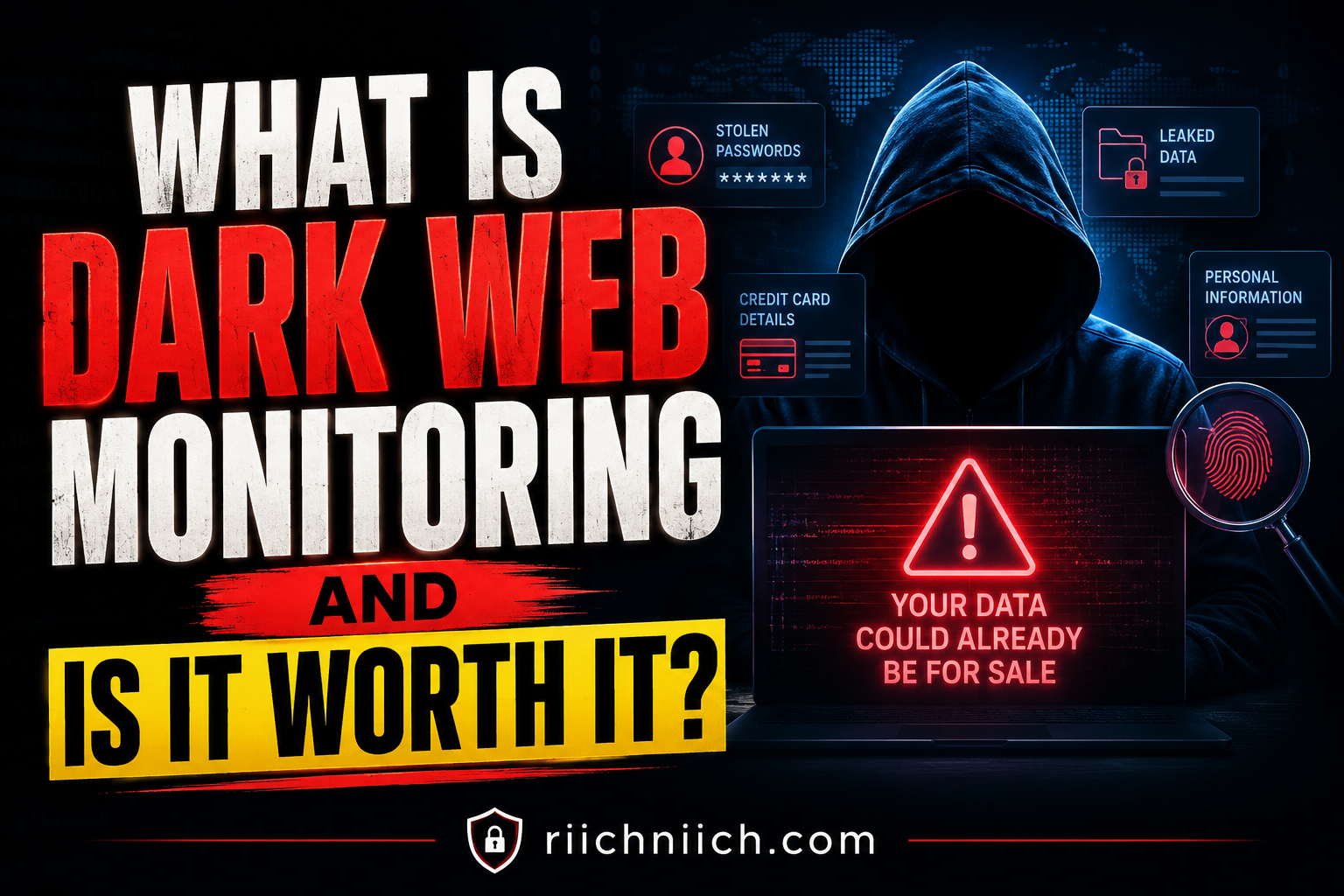
What is dark web monitoring and is it worth it is a question more people are asking as data breaches and identity theft continue to rise. Every year, millions of email addresses, passwords, Social Security numbers, and other sensitive details are exposed online, often without victims realizing it until it’s too late.
In this guide, you’ll learn how dark web monitoring works, what information it can detect, its advantages and limitations, and whether paying for a dark web monitoring service is actually worth it. By the end, you’ll have the information you need to decide if dark web monitoring is the right choice for protecting your identity and personal information before cybercriminals can take advantage of it.
Table of Contents
🔥 Quick Answer: What Is Dark Web Monitoring and Is It Worth It?
If you’re wondering what is dark web monitoring and is it worth it, the short answer is yes—for many people, it’s a worthwhile investment, especially if you want to reduce your risk of identity theft after a data breach or protect your personal information before criminals can misuse it.
Dark web monitoring is a security feature that continuously scans hidden areas of the internet where cybercriminals buy, sell, and trade stolen personal information. If you’re curious whether your personal information may already be exposed, our guide on How to Check If Your Information Is on the Dark Web explains several ways to find out before criminals can misuse your data. If your email address, Social Security number, passwords, phone number, credit card information, or other sensitive data appears on the dark web, you’ll receive an alert so you can take immediate action.
According to the Cybersecurity and Infrastructure Security Agency (CISA), stolen credentials are commonly used in account takeover attacks, making it important to secure your accounts as soon as you learn your information has been exposed. That’s where dark web monitoring becomes valuable—it provides an early warning instead of leaving you to discover the problem after fraudulent activity has already occurred.
While dark web monitoring cannot prevent a data breach or remove your information from the dark web, it can help you respond much faster. Receiving an alert early allows you to change compromised passwords, enable multi-factor authentication, freeze your credit if necessary, and monitor your financial accounts before criminals can do more damage.
Many of the best identity theft protection services combine dark web monitoring with additional security features, including:
- Continuous identity monitoring
- Three-bureau credit monitoring
- Real-time fraud alerts
- Identity restoration assistance
- Identity theft insurance
- Password security monitoring
👉 If you want an all-in-one solution that combines dark web monitoring, identity monitoring, credit monitoring, fraud alerts, and identity theft insurance, Aura is one of the best services to consider. Check today’s pricing and features here.
These features work together to provide a much stronger defense than dark web monitoring alone, helping you detect suspicious activity before it turns into identity theft.

If you’re still asking what is dark web monitoring and is it worth it, consider how often you use online services. People who shop online, use online banking, have received data breach notifications, or reuse passwords across multiple accounts face a higher risk of having their personal information exposed.
The Federal Trade Commission (FTC) recommends acting quickly whenever your personal information may have been compromised because early action can significantly reduce the chances of fraud and identity theft. By notifying you as soon as your information is discovered on the dark web, dark web monitoring gives you valuable time to secure your accounts before criminals can take advantage of the exposure.
For most people, what is dark web monitoring and is it worth it ultimately comes down to one question: would you rather find out your information has been exposed before criminals use it, or only after you’ve become an identity theft victim? For anyone serious about protecting their personal information, dark web monitoring is an important layer of modern identity protection.
How Does Dark Web Monitoring Work?
If you’re researching what is dark web monitoring and is it worth it, understanding how the process works can help you decide whether it’s a feature worth paying for. In simple terms, dark web monitoring continuously searches known dark web sources for your personal information and alerts you if it finds a match.
Unlike the websites you visit every day through search engines like Google, the dark web contains hidden forums, marketplaces, chat rooms, and databases that are intentionally difficult to access. Cybercriminals often use these hidden networks to buy, sell, and exchange stolen personal information obtained from data breaches, phishing attacks, malware, and other cybercrimes.
To better understand where this stolen information comes from, read How Hackers Get Your Personal Data, which explains the most common ways criminals collect sensitive information.
When you sign up for a dark web monitoring service, you’ll typically register pieces of personal information that you want monitored, including:
- Email addresses
- Phone numbers
- Social Security numbers
- Credit and debit card numbers
- Bank account numbers
- Driver’s license numbers
- Passport numbers
- Usernames
- Passwords
The monitoring service then continuously compares this information against newly discovered stolen databases and known dark web marketplaces. If your information appears, you’ll receive an alert explaining what was found and what steps you should take next.
For example, suppose an online retailer experiences a major data breach that exposes millions of customer accounts. Weeks later, hackers upload that stolen database to a dark web marketplace. If your email address and password are included in the leaked data, a dark web monitoring service can detect the exposure and notify you before criminals have the opportunity to reuse those credentials on other websites.
This early warning is important because many people unknowingly reuse the same password across multiple accounts. According to the National Institute of Standards and Technology (NIST), using unique passwords for every account is one of the most effective ways to reduce the impact of compromised credentials. If you receive a dark web alert, changing your password immediately can help prevent credential stuffing attacks and unauthorized account access.
It’s also important to understand what dark web monitoring doesn’t do. It cannot remove your information from the dark web, prevent future data breaches, or stop hackers from stealing information in the first place. Instead, it acts as an early detection system that gives you valuable time to respond before identity theft or financial fraud occurs.
After receiving an alert, most identity protection providers recommend taking several immediate actions, including:
- Changing compromised passwords.
- Enabling multi-factor authentication on affected accounts.
- Reviewing recent account activity.
- Monitoring your bank and credit card statements.
- Freezing your credit if highly sensitive information was exposed.
- Watching for phishing emails that may target your leaked information.
The Cybersecurity and Infrastructure Security Agency (CISA) also recommends enabling multi-factor authentication and using strong, unique passwords to protect online accounts after learning your credentials may have been compromised. These security practices work especially well when combined with continuous dark web monitoring.
When deciding what is dark web monitoring and is it worth it, remember that its biggest advantage isn’t preventing cybercrime—it’s giving you an opportunity to act quickly. The faster you’re notified that your personal information has appeared on the dark web, the sooner you can secure your accounts, protect your identity, and reduce the chances of becoming an identity theft victim.
What Information Can Dark Web Monitoring Find?
One of the biggest questions people have when researching what is dark web monitoring and is it worth it is what kind of personal information these services can actually detect. The answer depends on the monitoring provider, but the best dark web monitoring services can scan for many types of sensitive information that criminals commonly buy and sell after a data breach.
Some of the most commonly monitored information includes:
- Email addresses
- Usernames
- Passwords
- Phone numbers
- Social Security numbers
- Credit and debit card numbers
- Bank account numbers
- Driver’s license numbers
- Passport numbers
- Medical identification numbers
- Insurance information
If any of this information appears in a newly discovered dark web database or marketplace that your monitoring service tracks, you’ll typically receive an alert explaining what information was found and what actions you should take to secure your accounts.
For example, if your email address and password are discovered together, you should immediately change that password and any other accounts where you’ve reused the same login credentials. If you’re unsure whether your email address has already been exposed, our guide on How to Know If Your Email Was Leaked walks you through the warning signs and what to do next. If your Social Security number or financial information is exposed, you may also want to freeze your credit, monitor your financial accounts more closely, and watch for signs of identity theft.

Many people assume hackers only want credit card numbers, but that’s rarely the case. According to the Federal Bureau of Investigation (FBI), cybercriminals often combine multiple pieces of stolen personal information to commit identity theft, open fraudulent financial accounts, conduct phishing attacks, or take over existing online accounts.
For instance, your email address alone may not seem valuable. However, when it’s combined with a leaked password, date of birth, phone number, or Social Security number, it becomes much easier for criminals to impersonate you or bypass account security measures.
It’s also common for stolen information to come from multiple unrelated data breaches over several years.
👉 If you’re concerned about discovering exposed personal information sooner, Coveron continuously monitors for new data breaches and dark web exposure, helping you respond before criminals can take advantage of your information. Learn more here.
One breach may expose your email address, another may reveal your password, and another may contain your home address or phone number. Criminals often combine these separate leaks to build a more complete identity profile that can be used for fraud.
This is one reason what is dark web monitoring and is it worth it has become an increasingly important question. Rather than relying on a single breach notification from a company, dark web monitoring continuously checks for newly discovered information that may appear months or even years after the original breach occurred.
The Cybersecurity and Infrastructure Security Agency (CISA) recommends monitoring your online accounts and responding quickly if your personal information is exposed. Receiving an early alert allows you to secure compromised accounts before stolen information can be used against you.
Although no monitoring service can guarantee it will find every piece of stolen data, the best identity theft protection providers continuously update the dark web sources they monitor. This increases the chances of discovering exposed personal information early, giving you more time to protect your identity, strengthen your account security, and reduce the risk of financial fraud.
What Dark Web Monitoring Cannot Do
Understanding the limitations of dark web monitoring is just as important as understanding its benefits. If you’re deciding what is dark web monitoring and is it worth it, it’s essential to know that dark web monitoring is an early warning tool—not a complete identity theft prevention solution.
Many people mistakenly believe that once they subscribe to a dark web monitoring service, they’re automatically protected from hackers and identity theft. Unfortunately, that’s not how it works.
Here are some important things dark web monitoring cannot do.
It Cannot Prevent Data Breaches
Dark web monitoring cannot stop companies from being hacked or prevent your personal information from being exposed during a data breach.
Whether a retailer, healthcare provider, bank, or online service suffers a cyberattack, your information may still be stolen before anyone realizes a breach has occurred. Dark web monitoring simply helps notify you if that stolen information later appears in places the service monitors.
It Cannot Remove Your Information from the Dark Web
Once your personal information has been posted or sold on the dark web, dark web monitoring cannot erase or delete it.
Instead, the service alerts you that your information has been found so you can take steps to protect yourself, such as changing passwords, freezing your credit, or monitoring your financial accounts more closely.
If your goal is to reduce how much personal information is available online before it reaches cybercriminals, removing your information from data broker websites can also help reduce your digital exposure.
It Cannot Stop Identity Theft by Itself
Receiving an alert is only the beginning. Dark web monitoring doesn’t automatically lock your accounts, freeze your credit, dispute fraudulent charges, or recover stolen funds.
You’ll still need to take action yourself or rely on an identity theft protection service that offers identity restoration specialists and fraud recovery assistance.
According to the Federal Trade Commission (FTC), acting quickly after discovering your information has been exposed can significantly reduce the damage caused by identity theft. The faster you respond to a dark web alert, the better your chances of preventing criminals from successfully using your information.
It Cannot Detect Every Piece of Stolen Information
No dark web monitoring provider can guarantee it will find every stolen record.
Some criminals trade stolen information privately through encrypted messaging platforms or invite-only forums that monitoring services cannot access. Other stolen databases may never become publicly available on the dark web at all.
This means dark web monitoring should be viewed as an important layer of protection—not a guarantee that every leak will be discovered.
It Cannot Replace Good Cybersecurity Habits
Even the best dark web monitoring service cannot protect someone who uses weak passwords, ignores software updates, or falls for phishing scams.
The Cybersecurity and Infrastructure Security Agency (CISA) recommends combining security tools with good cybersecurity practices, including:
- Using strong, unique passwords.
- Enabling multi-factor authentication.
- Keeping devices updated.
- Avoiding suspicious emails and links.
- Monitoring financial accounts regularly.
Want to strengthen your overall online security? Our guide on How to Protect Your Personal Data Online covers additional steps you can take to reduce your exposure before your information ever reaches the dark web.
These habits work together with dark web monitoring to create much stronger protection against identity theft.
Why This Matters
When evaluating what is dark web monitoring and is it worth it, it’s important to set realistic expectations. Dark web monitoring isn’t designed to stop cybercrime—it helps you discover potential problems sooner so you can respond before criminals have more time to exploit your personal information.
For most people, the greatest value isn’t that dark web monitoring eliminates risk. It’s that it provides timely alerts, giving you an opportunity to secure your accounts, protect your identity, and minimize financial damage before a small problem becomes a much larger one.
Signs You Should Consider What Is Dark Web Monitoring and Is It Worth It?
Not everyone faces the same level of risk online. However, if any of the situations below apply to you, it’s a strong indication that what is dark web monitoring and is it worth it deserves serious consideration. The more your personal information is exposed online, the greater the chance that it could eventually appear on the dark web.
You’ve Received a Data Breach Notification
One of the clearest warning signs is receiving an email or letter informing you that a company you do business with has experienced a data breach.
If you’ve recently received one of these notifications, our article What Happens After a Data Breach explains what typically occurs behind the scenes and why your information may remain at risk long after the breach is announced.
Even if the company says there’s “no evidence of misuse,” your personal information may still end up being sold or shared months later. According to the Cybersecurity and Infrastructure Security Agency (CISA), stolen data is often exploited long after the initial breach is discovered, making ongoing monitoring an important part of protecting your identity.
You Reuse Passwords Across Multiple Accounts
If you use the same password for more than one website, a single leaked password can put dozens of accounts at risk.
Cybercriminals frequently use automated credential stuffing attacks, where they test stolen usernames and passwords across banking, shopping, email, and social media accounts. Dark web monitoring can alert you if your login credentials have been exposed, giving you the opportunity to change them before criminals gain access.
You Shop, Bank, or Pay Bills Online
Every online account you create stores some type of personal information. The more online services you use, the larger your digital footprint becomes.
If you regularly:
- Shop online
- Use online banking
- Pay bills electronically
- Store payment methods with retailers
- Subscribe to online services
your information may be included in future data breaches. Continuous dark web monitoring helps you discover potential exposure sooner rather than waiting until fraudulent activity appears.

You’ve Been the Victim of Identity Theft Before
Past victims of identity theft are often targeted again because criminals know previously stolen information may still be valuable.
If your identity has ever been compromised, adding dark web monitoring provides another layer of protection by continuously checking whether your personal information is circulating in newly discovered dark web databases.
You Have Sensitive Personal Information Online
Today, almost everyone has sensitive information stored somewhere online, including:
- Social Security numbers
- Driver’s license information
- Tax records
- Medical records
- Banking information
- Insurance information
- Employment records
The more sensitive information connected to your identity, the greater the potential consequences if that information is stolen.
You Want Early Warning Instead of Late Discovery
Many people don’t discover identity theft until:
- A credit card application is denied.
- A debt collector calls.
- Unauthorized bank transactions appear.
- Tax returns are rejected.
- New accounts are opened in their name.
The Federal Trade Commission (FTC) recommends responding quickly whenever personal information may have been exposed because early action can significantly reduce financial losses. Dark web monitoring helps provide that early warning before these problems escalate.
You Want Greater Peace of Mind
For many people, the biggest benefit isn’t just detecting stolen information—it’s knowing someone is continuously watching for it.
Instead of manually checking for new data breaches or wondering whether your information has been exposed, dark web monitoring provides ongoing alerts if monitored information appears in the dark web sources it tracks.
When evaluating what is dark web monitoring and is it worth it, the answer often comes down to your personal risk tolerance. If your life depends on online accounts—which is true for most people today—having an additional layer of identity monitoring can provide valuable peace of mind and allow you to respond quickly if your personal information is ever compromised.
Benefits of What Is Dark Web Monitoring and Is It Worth It?
If you’re still deciding what is dark web monitoring and is it worth it, understanding the benefits can help you determine whether it’s a worthwhile investment for your personal security. While dark web monitoring isn’t a replacement for good cybersecurity habits, it can significantly improve your ability to detect potential threats before they become costly identity theft problems.
Here are some of the biggest advantages of using a dark web monitoring service.
Early Detection of Exposed Personal Information
The greatest benefit of dark web monitoring is receiving an alert as soon as your monitored information is discovered in the dark web sources the service tracks.
Instead of finding out months later through fraudulent charges or unauthorized accounts, you can respond immediately by changing passwords, securing affected accounts, and monitoring your financial activity.
The sooner you know your information has been exposed, the more opportunities you have to prevent criminals from taking advantage of it.
Continuous Monitoring Without Manual Searches
Checking every new data breach or searching hidden online marketplaces yourself isn’t realistic.
Dark web monitoring works continuously in the background, automatically scanning for your monitored information and notifying you if a match is found. This ongoing protection saves time while providing greater confidence that you’ll be informed if your personal information is discovered.
Faster Response to Potential Identity Theft
When you receive an alert quickly, you can immediately take important security steps, including:
- Changing compromised passwords.
- Enabling multi-factor authentication.
- Reviewing recent account activity.
- Contacting your financial institutions.
- Freezing your credit if necessary.
According to the Federal Trade Commission (FTC), acting quickly after discovering exposed personal information can help reduce the likelihood of identity theft and financial fraud.
Protection Across Multiple Types of Personal Information
Many dark web monitoring services don’t just monitor your email address. Depending on the provider, they may also monitor:
- Social Security numbers
- Phone numbers
- Usernames
- Passwords
- Credit and debit card numbers
- Bank account information
- Passport numbers
- Driver’s license numbers
This broader coverage helps identify multiple types of compromised information that criminals commonly use for fraud.
Greater Peace of Mind
One of the most overlooked benefits is peace of mind.
Rather than constantly wondering whether your information has been exposed, you’ll know that your monitored information is being checked on an ongoing basis. If something is discovered, you’ll receive an alert so you can take action before the situation becomes more serious.
For many families, this reassurance alone makes identity monitoring services worth considering.
Works Alongside Other Security Tools
Dark web monitoring becomes even more effective when combined with other cybersecurity tools.
For example, many identity theft protection services also include:
- Credit monitoring
- Identity monitoring
- Password security tools
- Fraud alerts
- Identity restoration support
- Identity theft insurance
Together, these features create multiple layers of protection instead of relying on a single security feature.
The Cybersecurity and Infrastructure Security Agency (CISA) recommends using layered security practices—including strong passwords, multi-factor authentication, and continuous account monitoring—to reduce the risk of cybercrime. Dark web monitoring complements these recommendations by providing timely alerts when your personal information may have been exposed.
Helps You Stay Ahead of Criminals
Cybercriminals often wait weeks or even months before using stolen information. In some cases, personal data changes hands multiple times before it’s eventually used to commit fraud.
This delay means you may have an opportunity to secure your accounts long before criminals act—if you’re notified early enough.
When evaluating what is dark web monitoring and is it worth it, this is one of its biggest advantages. Instead of reacting after fraudulent activity appears, you gain valuable time to strengthen your security, protect your identity, and reduce the chances of becoming an identity theft victim.
Who Should Use What Is Dark Web Monitoring and Is It Worth It?
The truth is that almost everyone has some level of personal information online. Whether you’ve signed up for social media, shopped online, used online banking, or created an email account, your information could eventually be exposed in a data breach. That’s why what is dark web monitoring and is it worth it has become an increasingly common question.
While dark web monitoring can benefit many people, some individuals have a much greater need for it than others.
People Who Have Experienced a Data Breach
If you’ve ever received a notification that one of your online accounts was involved in a data breach, you’re one of the strongest candidates for dark web monitoring.
Stolen information doesn’t always get used immediately. According to the Cybersecurity and Infrastructure Security Agency (CISA), cybercriminals may hold onto stolen data or sell it multiple times before attempting fraud. Continuous monitoring helps alert you if that information later appears in dark web sources.
Frequent Online Shoppers
Every online purchase requires sharing personal information such as your name, email address, payment details, or shipping address.
The more retailers and websites you use, the larger your digital footprint becomes. If even one of those companies suffers a security breach, your information could be exposed without your knowledge.
Dark web monitoring provides ongoing alerts that can help you respond quickly if your information is discovered.
People Who Use Online Banking
Online banking is convenient, but it also makes your financial accounts attractive targets for cybercriminals.
If criminals obtain your login credentials through a data breach or stolen password database, they may attempt to access your accounts or launch phishing attacks designed to steal even more information.
Receiving an early alert allows you to update your passwords and strengthen your account security before unauthorized access occurs.
Families Protecting Multiple Identities
Parents often focus on protecting their own information but forget that children can also become victims of identity theft.
A child’s Social Security number can remain undetected for years because they usually don’t apply for credit until adulthood. Some family identity protection services include dark web monitoring for multiple household members, making it easier to monitor everyone under one account.

Remote Workers and Business Professionals
If you regularly work from home or access company systems online, you likely manage multiple accounts containing sensitive information.
Business email addresses, work passwords, and personal credentials can all become valuable targets for cybercriminals. Monitoring these accounts helps reduce the risk of account takeovers and credential-based attacks.
Anyone Who Reuses Passwords
Although security experts recommend using a unique password for every account, many people still reuse passwords across multiple websites.
According to the National Institute of Standards and Technology (NIST), unique passwords are one of the most effective ways to reduce the impact of credential theft. If a reused password appears in a dark web database, receiving an alert allows you to change it before criminals attempt to access your other accounts.
People Who Want Ongoing Identity Protection
Some people simply want greater confidence that someone is watching for signs of trouble.
Instead of manually checking breach notifications or wondering whether your personal information has been exposed, dark web monitoring works continuously in the background and alerts you when monitored information is discovered.
For many users, this proactive approach provides reassurance and makes it easier to stay ahead of potential identity theft.
Is It Right for You?
If you regularly use the internet—which includes shopping, banking, streaming, working, or communicating online—you already have a digital footprint that could become a target for cybercriminals.
When deciding what is dark web monitoring and is it worth it, ask yourself a simple question: Would you rather learn that your personal information has been exposed before criminals use it, or after you’ve already become a victim of fraud?
For most people, receiving an early warning provides valuable time to secure accounts, protect sensitive information, and reduce the risk of identity theft, making dark web monitoring a smart addition to a broader identity protection strategy.
Is Free Dark Web Monitoring Enough?
Many people researching what is dark web monitoring and is it worth it also wonder whether a free service provides enough protection. The answer depends on your personal risk, but for most people, free dark web monitoring is better than having no monitoring at all—yet it often falls short of providing comprehensive identity protection.
Free services typically monitor only a limited amount of information, such as a single email address or a small number of exposed credentials. If your information is detected, you’ll usually receive a basic notification that your data has appeared in a monitored breach or dark web source.
While that’s certainly helpful, it leaves several important gaps.
What Free Dark Web Monitoring Usually Includes
Depending on the provider, free dark web monitoring may offer:
- Monitoring for one email address
- Basic breach notifications
- Limited credential monitoring
- Occasional security alerts
- Basic account recommendations
For someone who simply wants to know if their primary email address has been exposed, these features may provide a useful starting point.
What Free Services Often Don’t Include
Most free dark web monitoring services do not include the broader protections found in premium identity theft protection plans, such as:
- Monitoring multiple email addresses
- Social Security number monitoring
- Bank account monitoring
- Credit card monitoring
- Driver’s license and passport monitoring
- Three-bureau credit monitoring
- Identity restoration assistance
- Identity theft insurance
- Dedicated fraud specialists
- Continuous identity monitoring
If your information is exposed, a premium service often helps you respond—not just notify you that something happened.
Free Alerts Still Require You to Do the Work
Whether you use a free or paid monitoring service, you’ll still need to take action after receiving an alert.
That may include:
- Changing compromised passwords.
- Enabling multi-factor authentication.
- Reviewing recent account activity.
- Contacting financial institutions.
- Freezing your credit.
- Monitoring your credit reports for suspicious activity.
The difference is that many premium identity protection services also provide step-by-step guidance, restoration specialists, and additional monitoring tools that make the recovery process much easier.
Consider the Value of Your Personal Information
Your identity is connected to far more than a single email address.
Most people have online banking accounts, retirement accounts, shopping accounts, healthcare portals, tax records, insurance accounts, and dozens of other online profiles containing sensitive information.
If any of this information is compromised, recovering from identity theft can require significant time and effort. According to the Federal Trade Commission (FTC), victims often spend months resolving fraud, disputing unauthorized accounts, and restoring their identities after serious identity theft.
Free vs. Paid: Which Is Better?
Free dark web monitoring is a good first step if you’re on a tight budget or simply want to know whether your email address has appeared in a known breach.
However, if you’ve previously experienced a data breach, frequently shop or bank online, have sensitive financial information to protect, or want ongoing identity monitoring, a premium service generally offers much broader protection.
Is Paying for Dark Web Monitoring Worth It?
When evaluating what is dark web monitoring and is it worth it, think beyond the alert itself. The real value of many paid services isn’t simply finding your information on the dark web—it’s everything that comes afterward.
If your goal is basic awareness, a free service may be enough.
If your goal is comprehensive identity protection, faster fraud detection, and expert assistance if your identity is ever compromised, a premium dark web monitoring service is usually the better long-term investment.
Best Services for What Is Dark Web Monitoring and Is It Worth It?
If you’ve decided what is dark web monitoring and is it worth it makes sense for your situation, the next step is choosing a service that offers more than just basic alerts. The best providers combine dark web monitoring with identity monitoring, credit monitoring, fraud alerts, and recovery support to give you multiple layers of protection.
Here are some of the best identity theft protection services that include dark web monitoring.
For a complete breakdown of features, pricing, and recommendations, see our guide to the Best Identity Theft Protection Services before choosing a provider.
1. Aura – Best Overall Dark Web Monitoring
Aura is one of the most comprehensive identity protection services available. In addition to continuous dark web monitoring, it offers three-bureau credit monitoring, near real-time fraud alerts, identity theft insurance, VPN access, antivirus protection, password management, and identity restoration support.
Aura is an excellent choice for individuals and families who want an all-in-one security solution instead of managing multiple separate tools.
Best for: Overall identity protection and comprehensive digital security.
2. Identity Guard – Best for Identity Monitoring
Identity Guard combines dark web monitoring with AI-powered identity monitoring and risk alerts. The service monitors a wide range of personal information and provides alerts when suspicious activity is detected.
Its easy-to-use dashboard makes it a good option for users who want ongoing visibility into their identity protection without overwhelming technical details.
Best for: Continuous identity monitoring and fraud detection.
3. Coveron – Best for Data Breach Monitoring
Coveron focuses heavily on helping users respond to data breaches by monitoring exposed personal information and notifying customers when new breaches may affect them.
For people who frequently receive breach notifications or want additional visibility into exposed credentials, Coveron can be a valuable addition to their cybersecurity strategy.
Best for: Data breach and credential exposure monitoring.
4. LifeLock – Best for Identity Recovery Support
LifeLock combines dark web monitoring with identity alerts, credit monitoring on eligible plans, and access to identity restoration specialists who can assist if your identity is stolen.
Its long-standing reputation makes it a popular choice for users looking for professional recovery assistance in addition to monitoring.
Best for: Identity restoration and recovery support.
5. IdentityForce – Best for Families
IdentityForce offers dark web monitoring alongside identity monitoring, fraud alerts, and family-focused protection plans.
Households looking to monitor multiple family members under one account may find IdentityForce particularly appealing.
Best for: Family identity protection.

What Should You Look for in a Dark Web Monitoring Service?
Not every provider offers the same level of protection. Before choosing a service, consider whether it includes:
- Continuous dark web monitoring
- Monitoring for multiple types of personal information
- Three-bureau credit monitoring
- Identity monitoring
- Real-time fraud alerts
- Identity restoration services
- Identity theft insurance
- Mobile app notifications
- Family protection options
The more comprehensive the protection, the easier it becomes to detect suspicious activity early and respond quickly.
Which Service Is Right for You?
When deciding what is dark web monitoring and is it worth it, the best service depends on your individual needs.
- If you want the most complete all-around protection, Aura is an excellent choice.
- If identity monitoring is your top priority, Identity Guard is a strong option.
- If you’re primarily concerned about data breaches and exposed credentials, Coveron is worth considering.
- If you value professional recovery assistance after identity theft, LifeLock stands out.
- If you’re protecting multiple family members, IdentityForce offers family-friendly monitoring plans.
Ultimately, the best dark web monitoring service is the one that fits your budget while providing the level of protection you need. Since identity theft can happen long after a data breach, choosing a service that offers continuous monitoring and timely alerts can help you stay one step ahead of cybercriminals.
What to Do If Your Information Is Found on the Dark Web
Discovering that your personal information has been found on the dark web can be alarming, but it’s important not to panic. If you’re researching what is dark web monitoring and is it worth it, this is exactly where the value of dark web monitoring becomes clear. An early alert gives you the opportunity to protect yourself before cybercriminals have a chance to misuse your information.
The faster you respond, the better your chances of preventing identity theft and financial fraud.
You can also follow our complete guide on How to Stop Identity Theft Before It Happens to strengthen your security and reduce the chances of future identity theft.
1. Determine What Information Was Exposed
Start by reviewing the alert carefully. Not every exposure carries the same level of risk.
For example:
- A leaked email address usually presents a lower risk.
- A leaked username and password require immediate action.
- A leaked Social Security number or financial information demands a much stronger response.
Understanding exactly what information was compromised helps you prioritize your next steps.
2. Change Compromised Passwords Immediately
If your password was exposed, change it immediately.
Even if the alert only mentions one account, update any other accounts where you’ve used the same or a similar password. Reused passwords are one of the primary reasons criminals successfully take over multiple accounts after a single data breach.
3. Enable Multi-Factor Authentication (MFA)
Adding multi-factor authentication creates an additional layer of protection.
Even if someone knows your password, they’ll usually need a second verification method—such as a code sent to your phone or an authentication app—to access your account.
Whenever possible, enable MFA on:
- Email accounts
- Banking accounts
- Shopping websites
- Social media accounts
- Investment accounts
- Cloud storage services
4. Review Your Financial Accounts
Carefully review your:
- Bank accounts
- Credit card statements
- Investment accounts
- Payment apps
Look for unfamiliar transactions, login attempts, or account changes. Reporting suspicious activity early can significantly reduce financial losses.

5. Freeze Your Credit If Sensitive Information Was Exposed
If your Social Security number, driver’s license number, or other highly sensitive information was compromised, consider placing a credit freeze with the major credit bureaus.
A credit freeze helps prevent criminals from opening new credit accounts in your name without your permission.
The Federal Trade Commission (FTC) recommends considering a credit freeze whenever sensitive personal information may have been exposed through identity theft or a serious data breach.
6. Watch for Phishing Attempts
After your information appears on the dark web, you may become the target of phishing emails, scam text messages, or fraudulent phone calls.
Be cautious of messages that:
- Ask you to verify account information.
- Request passwords or security codes.
- Create a false sense of urgency.
- Include unexpected links or attachments.
Even legitimate-looking messages should be verified before responding.
7. Continue Monitoring Your Identity
Finding your information once doesn’t necessarily mean the risk has passed.
Criminals may hold stolen information for months or even years before attempting fraud. Continuing to monitor your identity, financial accounts, and dark web alerts can help you detect suspicious activity sooner.
Many identity protection services provide continuous monitoring so you’re notified if additional personal information appears in newly discovered dark web databases.
Why Acting Quickly Matters
When evaluating what is dark web monitoring and is it worth it, this is where its greatest benefit becomes obvious. The alert itself isn’t the solution—it’s the opportunity it creates.
Without dark web monitoring, many people don’t realize their information has been exposed until fraudulent accounts are opened, unauthorized charges appear, or debt collectors begin calling. With early notification, you can secure your accounts, strengthen your security, and greatly reduce the chances of becoming an identity theft victim before criminals have the opportunity to exploit your personal information.
Common Mistakes People Make About Dark Web Monitoring
When deciding what is dark web monitoring and is it worth it, many people misunderstand what dark web monitoring can—and cannot—do. These misconceptions often lead to a false sense of security or cause people to ignore valuable alerts that could help prevent identity theft.
Here are some of the most common mistakes to avoid.
Believing Dark Web Monitoring Prevents Data Breaches
One of the biggest misconceptions is that subscribing to a dark web monitoring service prevents your personal information from being stolen.
In reality, dark web monitoring does not stop companies from experiencing data breaches or hackers from stealing information. Instead, it helps notify you if your monitored information is later discovered in the dark web sources the service tracks.
Think of it as a smoke detector—it doesn’t prevent the fire, but it gives you an early warning so you can respond quickly.
Ignoring Dark Web Alerts
Some people assume that receiving an alert isn’t a big deal because they haven’t noticed any suspicious activity.
Unfortunately, cybercriminals don’t always use stolen information immediately. According to the Federal Bureau of Investigation (FBI), stolen personal information may be sold multiple times before it’s eventually used for fraud.
If you receive a dark web alert, don’t ignore it. Take immediate action by changing passwords, enabling multi-factor authentication, and reviewing your financial accounts.
Reusing the Same Password After an Alert
Changing one password isn’t enough if you’ve reused it across multiple websites.
Credential stuffing attacks rely on people using identical login credentials on different accounts. If one password is exposed, criminals will often test it on banking websites, email accounts, streaming services, shopping sites, and social media platforms.
Updating every affected account with a unique password is one of the most important steps you can take.
Assuming Your Information Will Be Removed Automatically
Many people believe dark web monitoring services will remove their personal information from the dark web once it’s detected.
That’s not how these services work.
Dark web monitoring identifies exposed information and alerts you—it does not delete stolen databases or erase information already circulating among cybercriminals.
Thinking Email Addresses Aren’t Valuable
It’s easy to assume that a leaked email address isn’t a serious problem.
However, your email address is often the gateway to your digital life. Criminals can use it to launch phishing attacks, attempt password resets, perform credential stuffing attacks, or combine it with other leaked information from separate data breaches.
Even seemingly harmless information can become dangerous when combined with additional personal data.

Relying Only on Dark Web Monitoring
Dark web monitoring is most effective when it’s part of a broader cybersecurity strategy.
The Cybersecurity and Infrastructure Security Agency (CISA) recommends combining multiple security practices, including:
- Using strong, unique passwords.
- Enabling multi-factor authentication.
- Keeping devices and software updated.
- Monitoring financial accounts regularly.
- Staying alert for phishing attempts.
These additional layers of protection help reduce the likelihood that exposed information will be successfully exploited.
Waiting Until After Identity Theft Happens
Perhaps the biggest mistake is waiting until you’ve already become an identity theft victim before taking security seriously.
Many people don’t consider identity protection until unauthorized charges appear, loans are opened in their name, or debt collectors begin calling. By that point, recovery can be time-consuming and stressful.
When evaluating what is dark web monitoring and is it worth it, remember that its primary purpose is to help you act before identity theft occurs—not after the damage has already been done.
Using dark web monitoring alongside good cybersecurity habits and comprehensive identity protection gives you a much better chance of detecting threats early, securing your accounts quickly, and minimizing the impact of stolen personal information.
Is Dark Web Monitoring Worth Paying For?
For many people, the answer is yes. If you’re asking what is dark web monitoring and is it worth it, paying for a quality service can be a smart investment—especially if you have sensitive personal information online, frequently shop or bank online, or have previously been affected by a data breach.
👉 If you’re ready to upgrade from basic breach alerts, Identity Guard offers continuous dark web monitoring, identity monitoring, and fraud alerts that help you stay ahead of potential identity theft. See the latest plans here.
The biggest advantage of a paid service isn’t simply that it tells you your information has been exposed. It’s that many premium identity protection services combine dark web monitoring with additional features that help you detect, respond to, and recover from identity-related threats more effectively.
For example, many paid plans include:
- Continuous dark web monitoring
- Identity monitoring
- Three-bureau credit monitoring
- Real-time fraud alerts
- Identity restoration specialists
- Identity theft insurance
- Password security tools
- Financial account monitoring
These features work together to provide a much more complete level of protection than basic dark web alerts alone.
Consider the Cost of Identity Theft
While paying for a monitoring service involves a monthly subscription, it’s worth comparing that cost to the potential consequences of identity theft.
If criminals gain access to your personal information, you could spend weeks or even months:
- Disputing fraudulent charges.
- Closing compromised accounts.
- Replacing stolen identification.
- Restoring your credit.
- Contacting financial institutions.
- Filing fraud reports.
- Monitoring your identity for ongoing misuse.
According to the Federal Trade Commission (FTC), recovering from identity theft can require significant time and effort, depending on the type of fraud involved. Detecting problems early often makes the recovery process much easier.
Who Gets the Most Value?
A paid dark web monitoring service is often worth the investment if you:
- Have received one or more data breach notifications.
- Store sensitive financial information online.
- Shop online frequently.
- Use online banking or investment accounts.
- Manage multiple email addresses.
- Want continuous identity monitoring.
- Prefer expert assistance if identity theft occurs.
The more online accounts you have, the greater your digital footprint—and the more opportunities there are for your personal information to be exposed.
When a Free Service May Be Enough
If your primary goal is simply finding out whether your email address appears in a known data breach, a free monitoring service may provide enough basic protection.
However, free services often monitor fewer types of personal information and typically don’t include identity restoration support, credit monitoring, or identity theft insurance.
For people with greater exposure or higher security concerns, these additional protections can make a meaningful difference.
Think of It as Part of a Larger Security Plan
The Cybersecurity and Infrastructure Security Agency (CISA) recommends using multiple layers of protection rather than relying on a single security tool. Dark web monitoring works best when combined with strong passwords, multi-factor authentication, regular software updates, and careful monitoring of your financial accounts.
A paid service helps bring many of these protective measures together into one convenient platform, making it easier to stay informed and respond quickly if your personal information is compromised.
The Bottom Line
When deciding what is dark web monitoring and is it worth it, the answer depends on how much you value early detection and ongoing identity protection.
If you’re looking for the lowest-cost option, free monitoring may provide basic awareness of certain data breaches.
But if you want broader monitoring, faster alerts, expert recovery assistance, and additional identity protection features, paying for a reputable dark web monitoring service is often well worth the investment. For many people, the monthly subscription cost is small compared to the time, stress, and financial impact that identity theft can cause.
Pros and Cons of What Is Dark Web Monitoring and Is It Worth It?
Like any cybersecurity tool, dark web monitoring has both strengths and limitations. If you’re deciding what is dark web monitoring and is it worth it, weighing the pros and cons can help you determine whether it’s the right investment for your personal security needs.
Pros
✅ Provides Early Warning of Exposed Personal Information
One of the biggest advantages of dark web monitoring is that it can alert you when your personal information is discovered in the dark web sources the service monitors.
Receiving an early notification allows you to secure your accounts before criminals have a greater opportunity to misuse your information.
✅ Helps Reduce the Risk of Identity Theft
While dark web monitoring cannot stop identity theft, it can help reduce your risk by giving you time to:
- Change compromised passwords.
- Enable multi-factor authentication.
- Monitor financial accounts.
- Freeze your credit when appropriate.
- Watch for phishing attempts.
The sooner you act, the more likely you are to prevent further damage.
✅ Monitors More Than Just Email Addresses
Many premium services monitor multiple types of personal information, including:
- Email addresses
- Passwords
- Phone numbers
- Social Security numbers
- Credit card information
- Bank account information
- Driver’s license numbers
- Passport numbers
This broader coverage helps identify different types of exposed information that could be used for fraud.
✅ Continuous Monitoring Provides Ongoing Protection
Unlike manually checking for data breaches, dark web monitoring works continuously.
As new stolen databases become available, your monitored information is automatically checked, helping you stay informed about newly discovered exposures.
✅ Often Includes Additional Identity Protection Features
Many paid identity protection services bundle dark web monitoring with:
- Identity monitoring
- Credit monitoring
- Fraud alerts
- Identity restoration services
- Identity theft insurance
If you’re unsure how dark web monitoring compares to other security features, read Identity Monitoring vs Credit Monitoring to understand what each service monitors and why many providers include both.
These additional features provide multiple layers of protection instead of relying on dark web monitoring alone.

Cons
❌ Cannot Prevent Data Breaches
Dark web monitoring cannot stop hackers from stealing personal information or prevent companies from experiencing data breaches.
It simply alerts you after your monitored information has been discovered.
❌ Cannot Remove Information from the Dark Web
If your information has already been stolen and shared, dark web monitoring cannot erase it.
You’ll still need to secure your accounts and take appropriate protective actions after receiving an alert.
❌ No Service Can Monitor Everything
Some cybercriminals exchange stolen information through private channels or encrypted communications that monitoring providers cannot access.
As a result, no dark web monitoring service can guarantee it will detect every instance of exposed information.
❌ You Still Have to Take Action
Receiving an alert is only the first step.
You’ll still need to:
- Change passwords.
- Enable multi-factor authentication.
- Review account activity.
- Contact financial institutions if necessary.
- Continue monitoring your identity.
Ignoring alerts greatly reduces the value of the service.
❌ Premium Services Require a Subscription
Most comprehensive dark web monitoring services charge a monthly or annual fee.
Although many people consider the cost worthwhile, others may prefer free monitoring if they only need basic breach notifications.
Weighing the Pros and Cons
The Cybersecurity and Infrastructure Security Agency (CISA) encourages individuals to use layered security practices rather than relying on any single cybersecurity tool. Dark web monitoring is most effective when combined with strong passwords, multi-factor authentication, software updates, and regular monitoring of financial accounts.
When evaluating what is dark web monitoring and is it worth it, the advantages generally outweigh the disadvantages for people who want earlier detection of exposed personal information and additional peace of mind. While dark web monitoring isn’t a complete identity protection solution, it can play an important role in helping you identify potential threats early and take action before they develop into more serious identity theft or financial fraud.
Frequently Asked Questions About What Is Dark Web Monitoring and Is It Worth It?

What is dark web monitoring?
Dark web monitoring is a security service that scans known dark web sources for your personal information, such as email addresses, passwords, Social Security numbers, phone numbers, and financial information. If your monitored information is found, you’ll receive an alert so you can take steps to secure your accounts before criminals misuse the data.
What is dark web monitoring and is it worth it?
For many people, yes. If you frequently shop online, use online banking, have received a data breach notification, or simply want earlier warning when your personal information is exposed, dark web monitoring can be a valuable part of your overall identity protection strategy. While it won’t prevent cybercrime, it can help you respond faster and reduce the risk of identity theft.
Can dark web monitoring prevent identity theft?
No. Dark web monitoring cannot stop identity theft or prevent hackers from stealing your information.
Instead, it acts as an early warning system. If your personal information is discovered on the dark web, you’ll receive an alert so you can change passwords, enable multi-factor authentication, monitor your financial accounts, and take other protective measures before criminals have more time to exploit your information.
Does dark web monitoring remove my information from the dark web?
No.
Dark web monitoring detects exposed information—it does not remove it.
If your information appears on the dark web, you’ll still need to secure your accounts and follow recommended identity protection steps. Some services may also provide identity restoration specialists to help you recover if fraud occurs.
What information can dark web monitoring detect?
Depending on the provider, dark web monitoring may monitor:
- Email addresses
- Usernames
- Passwords
- Phone numbers
- Social Security numbers
- Credit and debit card numbers
- Bank account information
- Driver’s license numbers
- Passport numbers
The exact monitoring capabilities vary by provider and subscription plan.
Is free dark web monitoring enough?
Free dark web monitoring can be useful if you simply want basic alerts for a single email address or known data breaches.
However, premium services often provide much broader protection by monitoring additional personal information and including features such as identity monitoring, credit monitoring, fraud alerts, identity restoration services, and identity theft insurance.
How quickly will I receive a dark web alert?
The timing depends on when your monitoring provider discovers your information in the dark web sources it tracks.
Some alerts may arrive shortly after new stolen databases become available, while others may occur weeks or months after the original data breach. This is why continuous monitoring is generally more effective than performing occasional manual checks.
Should I still use strong passwords if I have dark web monitoring?
Absolutely.
According to the National Institute of Standards and Technology (NIST), using strong, unique passwords and enabling multi-factor authentication remain two of the most effective ways to protect online accounts.
Dark web monitoring is designed to complement these security practices—not replace them.
Is dark web monitoring included with identity theft protection?
Many identity theft protection services include dark web monitoring as part of a larger security package.
Depending on the provider, your subscription may also include:
- Identity monitoring
- Credit monitoring
- Fraud alerts
- Identity restoration support
- Identity theft insurance
- Password security tools
These additional features provide broader protection than dark web monitoring alone.
How do I know if dark web monitoring is right for me?
If you have multiple online accounts, use online banking, shop online regularly, or have ever been affected by a data breach, dark web monitoring is worth considering.
The Cybersecurity and Infrastructure Security Agency (CISA) recommends using multiple layers of security to reduce cyber risk. Dark web monitoring works well alongside strong passwords, multi-factor authentication, software updates, and regular monitoring of your financial accounts.
Conclusion: What Is Dark Web Monitoring and Is It Worth It?
After reviewing how dark web monitoring works, what it can detect, and where its limitations lie, the answer to what is dark web monitoring and is it worth it is yes—for most people, it’s a worthwhile investment as part of a broader identity protection strategy.
Dark web monitoring won’t prevent data breaches, stop hackers from stealing your information, or remove your personal data from the dark web. However, what it can do is provide one of the most valuable advantages in cybersecurity: early detection.
Knowing that your email address, password, Social Security number, or other sensitive information has been exposed gives you the opportunity to respond before cybercriminals can use it to commit identity theft or financial fraud. According to the Federal Trade Commission (FTC), acting quickly after discovering exposed personal information can significantly reduce the impact of identity theft, making early alerts an important part of protecting yourself online.
For many people, a standalone dark web monitoring service is helpful, but a comprehensive identity theft protection service offers even greater value. Services that combine dark web monitoring with identity monitoring, credit monitoring, fraud alerts, identity restoration support, and identity theft insurance provide multiple layers of protection that work together to safeguard your personal information.
If you’re someone who:
- Shops online regularly,
- Uses online banking,
- Has received a data breach notification,
- Stores sensitive personal information online, or
- Simply wants greater peace of mind,
then investing in a quality identity protection service with dark web monitoring is a practical way to strengthen your digital security.

The Cybersecurity and Infrastructure Security Agency (CISA) recommends taking a layered approach to cybersecurity by combining strong passwords, multi-factor authentication, regular account monitoring, and prompt action after security incidents. Dark web monitoring fits naturally into this strategy by helping you discover potential problems before they become much more difficult and expensive to resolve.
Ultimately, what is dark web monitoring and is it worth it comes down to one simple question: Would you rather learn your personal information has been exposed before criminals use it—or after you’ve already become a victim?
For most people, the answer is obvious. The ability to receive early alerts, secure compromised accounts quickly, and reduce the risk of identity theft makes dark web monitoring a smart investment. When paired with a trusted identity protection service, it becomes an even more powerful tool for protecting your finances, your online accounts, and your peace of mind.

Pingback: How to Opt Out of Data Brokers (Step-by-Step Guide) - Riich Niich
Pingback: Why Did NordProtect Change to Coveron? - Riich Niich