


How to opt out of data brokers is one of the most effective ways to protect your personal information and reduce your digital footprint. Data brokers collect and sell details such as your name, address, phone number, email address, and other personal information—often without you realizing it. The more widely your information is shared, the greater your risk of spam, scams, identity theft, and privacy invasions.
In this guide, you’ll learn how to opt out of data brokers step by step, discover the difference between manual and automated removal, learn which data brokers to prioritize, and find the best tools to help keep your personal information off the internet for the long term. Whether you’re protecting yourself after a data breach or simply taking your online privacy more seriously, this guide will help you take control of your personal information.
Table of Contents
🔥 Quick Answer: How to Opt Out of Data Brokers
How to opt out of data brokers involves submitting removal requests to companies that collect, buy, and sell your personal information. You can do this manually by visiting each data broker’s opt-out page and completing its removal process, or you can use a trusted data removal service to automate the requests and continuously monitor for new listings.
Data brokers gather information such as your name, address, phone number, email address, age, relatives, property records, and other publicly available or commercially obtained information. According to the Federal Trade Commission, this type of personal information can be used in ways that increase your risk of fraud and identity theft if it falls into the wrong hands.
If you’re serious about protecting your online privacy, learning how to opt out of data brokers is one of the most effective ways to reduce the amount of personal information available online. The National Institute of Standards and Technology recommends reducing unnecessary exposure of personal information as part of a strong cybersecurity strategy, making data broker removal an important step toward improving your overall digital privacy.
Although opting out manually is free, it can be extremely time-consuming because hundreds of data brokers maintain separate databases and many require you to repeat the opt-out process periodically to keep your information removed. If you want to save time and avoid managing dozens—or even hundreds—of individual requests, an automated data removal service can continuously remove your information from participating data brokers while monitoring for new listings.
By learning how to opt out of data brokers, you can reduce spam emails, unwanted phone calls, targeted scams, and the amount of personal information that strangers can easily find online. It’s one of the simplest proactive steps you can take to protect your privacy before your information is misused.
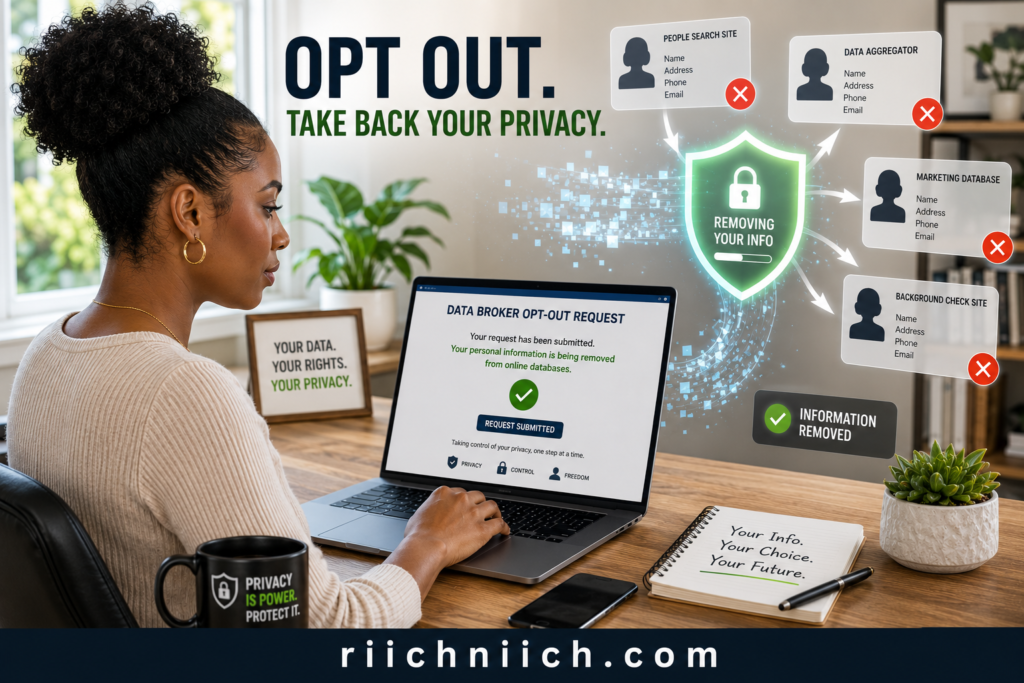
What Are Data Brokers?
Data brokers are companies that collect, organize, and sell personal information about millions of people.
If you’re unfamiliar with how these companies operate, read our complete guide on What is a Data Broker? to learn where they get your information and why they collect it.
They gather data from public records, online purchases, social media activity, loyalty programs, mobile apps, website cookies, marketing partners, and other commercial sources to create detailed profiles that can be sold or shared with businesses.
Want to know exactly where this information comes from? Learn How Data Brokers get your information and why your personal data spreads across so many databases.
Depending on the company, a data broker may have information such as your full name, home address, phone number, email address, date of birth, family members, property ownership, shopping habits, estimated income, interests, and even your employment history. While much of this information is collected legally, many people are surprised to learn just how much of their personal data is available online.
The Federal Trade Commission has explained that data brokers compile information from a wide variety of sources to build consumer profiles that are used for advertising, marketing, fraud prevention, and other business purposes. However, these profiles can also make it easier for scammers, identity thieves, and cybercriminals to gather information about potential victims.
Not all data brokers operate in the same way. Some specialize in marketing data that helps companies deliver targeted advertisements, while others operate people search websites that allow almost anyone to search for personal information. There are also data brokers that focus on financial, employment, or risk-related information for businesses and organizations.
Understanding how these companies operate is the first step toward protecting your privacy. That’s why learning how to opt out of data brokers is so important. By removing your information from as many data brokers as possible, you can reduce your digital footprint, limit the amount of personal information available online, and make it more difficult for strangers to find your data.
The National Institute of Standards and Technology encourages individuals to minimize the amount of personal information they expose online as part of good cybersecurity practices. Opting out of data brokers is one practical way to support that goal while improving your overall online privacy.
Why You Should Learn How to Opt Out of Data Brokers
Your personal information is valuable, and data brokers make money by collecting, organizing, and sharing it with businesses and other organizations. While many of these companies operate legally, the more places your information appears online, the easier it becomes for advertisers, scammers, and identity thieves to find details about you.
If you’ve ever wondered how your information became publicly available in the first place, read our guide on How Your Personal Data Ends Up Online.
Learning how to opt out of data brokers gives you greater control over your online privacy. Instead of allowing dozens—or even hundreds—of companies to continue displaying or selling your personal information, you can request that they remove your data from their databases. This reduces your online exposure and makes it more difficult for strangers to access information such as your home address, phone number, email address, and family members.
One of the biggest benefits of removing your information from data brokers is reducing unwanted contact. Many people notice fewer spam emails, telemarketing calls, scam text messages, and targeted advertisements after removing their information from major data broker websites. While opting out won’t eliminate every unwanted message, it can significantly reduce the number of companies that have access to your personal data.
Another important reason to learn how to opt out of data brokers is to lower your risk of identity theft and social engineering attacks. Cybercriminals often combine information from multiple sources to build detailed profiles of potential victims. According to the Cybersecurity and Infrastructure Security Agency, limiting the amount of personal information available online makes it harder for attackers to impersonate you, answer security questions, or create convincing phishing scams.
Opting out is also an important step if you’ve recently experienced a data breach. Even after changing your passwords, your exposed information may continue circulating among data brokers unless you actively request its removal. Combining data broker removal with strong passwords, multi-factor authentication, and identity monitoring creates a more complete privacy strategy. The National Institute of Standards and Technology recommends using multiple layers of protection rather than relying on a single security measure.
Although manually removing your information is free, it can require submitting requests to dozens or even hundreds of individual companies—and repeating the process as your information is collected again. If your time is valuable or you want continuous monitoring, an automated data removal service can simplify how to opt out of data brokers by handling many of these requests for you and monitoring participating data brokers over time.
Ultimately, learning how to opt out of data brokers isn’t just about improving your privacy today—it’s about reducing your long-term digital footprint and making it more difficult for your personal information to be bought, sold, and misused in the future.
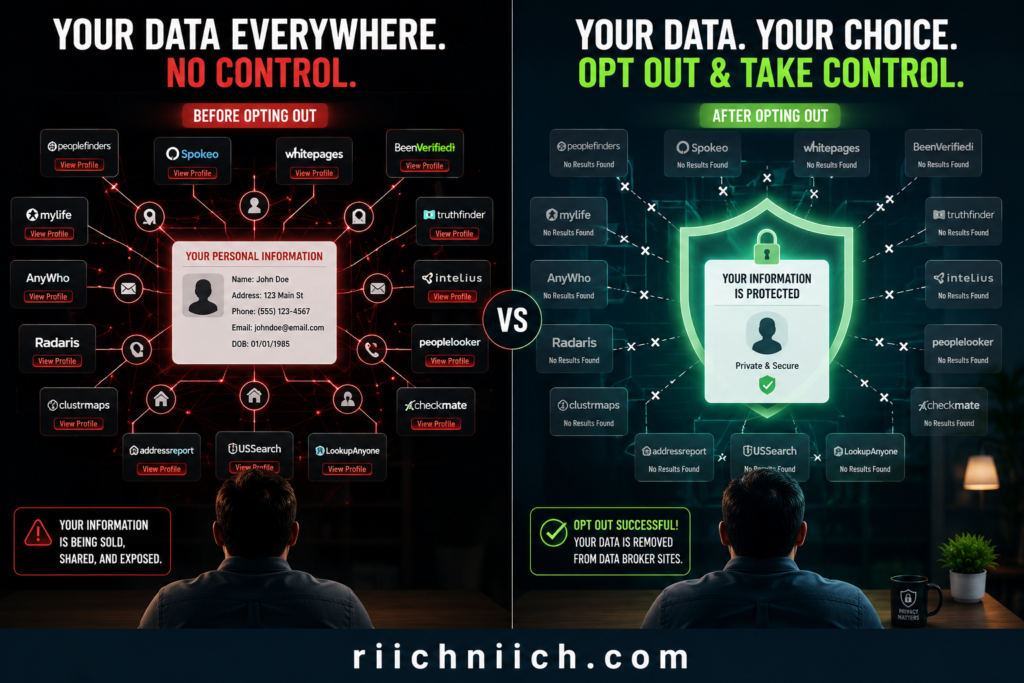
Step-by-Step: How to Opt Out of Data Brokers
Learning how to opt out of data brokers may seem overwhelming at first, but the process becomes much easier when you break it into manageable steps. You can choose to submit every request yourself or use an automated data removal service that does most of the work for you. Here’s how to get started.
Step 1: Find Out Which Data Brokers Have Your Information
The first step is identifying where your personal information appears online. Search for your full name, city, phone number, and home address using search engines and visit popular people search websites to see what information is publicly available.
You may discover listings that include your current or previous addresses, relatives, phone numbers, email addresses, age, and other personal details. Make a list of every data broker that displays your information so you can begin submitting removal requests.
Step 2: Gather the Information You’ll Need
Before submitting an opt-out request, collect the information you’ll need to verify your identity. This may include:
- Your full name
- Current and previous addresses
- Email address
- Phone number
- Links to your online profiles on data broker websites
Having this information ready will make the opt-out process much faster, especially if you’re removing your information from multiple companies.
Step 3: Visit Each Data Broker’s Opt-Out Page
Most legitimate data brokers provide a dedicated opt-out or privacy request page where you can request the removal of your information.
Some companies allow you to search for your profile directly, while others ask you to submit a request through an online form or email. The California Privacy Protection Agency explains that many consumers have privacy rights that allow them to request deletion or opt out of certain uses of their personal information, depending on applicable laws.
Be sure you’re using the official opt-out page for each company rather than third-party websites.
Step 4: Submit Your Opt-Out Request
Complete the required form and submit your request. Some data brokers only ask for basic information, while others require you to confirm your identity before processing the request.
Double-check your information before submitting to avoid delays or rejected requests. If you’re removing your data from several companies, consider keeping a spreadsheet to track which requests you’ve completed and their submission dates.
Step 5: Verify Your Identity if Required
Many data brokers require identity verification to prevent unauthorized removal requests. This often involves clicking a verification link sent to your email or confirming basic personal information.
Some companies may request additional documentation. Only provide information through official websites, and avoid sending unnecessary personal documents unless they are specifically required.
Step 6: Confirm Your Information Has Been Removed
After your request has been processed, revisit the data broker’s website and search for your information again.
If your profile still appears after the stated processing time, submit another request or contact the company’s privacy department for assistance. Some removals can take several days or even weeks to become effective.
Step 7: Repeat the Process Regularly
One of the biggest challenges with how to opt out of data brokers is that new information can be collected over time. Even after your information is removed, it may reappear if data brokers receive updated records from public databases or commercial partners.
For this reason, it’s a good idea to check major data broker websites every few months and submit new opt-out requests when necessary. Maintaining your online privacy requires ongoing attention rather than a one-time effort.
Step 8: Use a Data Removal Service to Save Time
If manually submitting dozens—or even hundreds—of opt-out requests sounds overwhelming, an automated data removal service may be worth considering.
These services continuously search participating data brokers for your personal information, submit removal requests on your behalf, and monitor for new listings over time.
Not sure which service to choose? Compare the Best Data Removal Services to find the right solution for your privacy needs.
Instead of manually repeating the process yourself, you can automate much of the work while continuing to reduce your digital footprint.
For many people, this is the easiest way to follow how to opt out of data brokers, especially if you have information listed on numerous websites or simply don’t have the time to manage ongoing opt-out requests yourself.
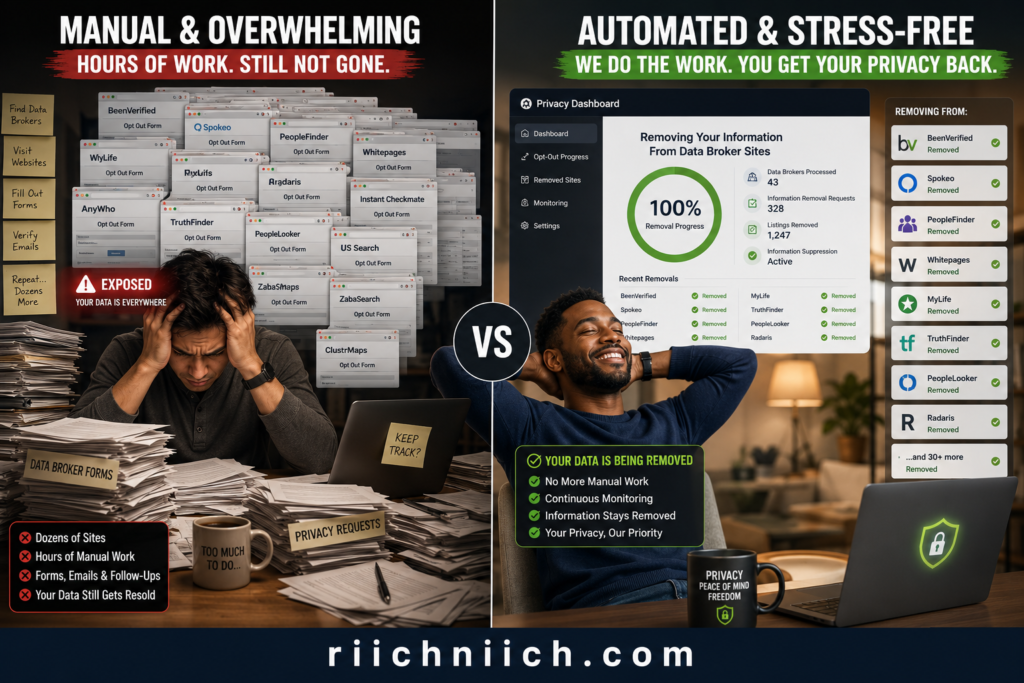
Which Data Brokers Should You Opt Out Of First?
If you’re learning how to opt out of data brokers, you don’t have to remove your information from every company all at once. Since there are hundreds of data brokers, it’s more practical to prioritize the ones that publicly display the most personal information or make it easy for anyone to find you online.
Start with people search websites. Our guide on How to Remove Yourself from People Search Sites walks you through removing your information from many of the most popular public listing websites.
These sites often publish sensitive information such as your full name, current and previous addresses, phone numbers, email addresses, age, relatives, and possible associates. Because this information is publicly searchable, it can be valuable to scammers, stalkers, identity thieves, and anyone trying to build a profile about you.
Next, focus on major consumer data brokers that collect and share information for advertising and marketing purposes. These companies may compile data from public records, online purchases, loyalty programs, mobile apps, and other commercial sources to create detailed consumer profiles. Removing your information from these databases can help reduce targeted advertising and limit how widely your personal information is shared.
If you’ve recently experienced a data breach, you should also prioritize any data brokers that are displaying exposed information such as your email address or phone number. The Cybersecurity and Infrastructure Security Agency recommends taking steps to reduce the amount of personal information available online after a security incident, making data broker removal an important part of your recovery plan.
It’s also worth checking whether your information appears on people finder websites that rank highly in search engines. Search for your full name along with your city or state to see which websites appear on the first page of search results. These are often the listings that strangers, recruiters, scammers, or identity thieves are most likely to find first.
As you continue how to opt out of data brokers, keep in mind that new companies may collect your information over time. The Federal Trade Commission notes that consumers often have little visibility into how widely their information is shared, which is why reviewing your online presence periodically is an important privacy habit.
Manually removing your information from dozens of high-priority data brokers is a great start, but keeping up with hundreds of companies can quickly become overwhelming. If you want ongoing privacy protection without spending hours submitting opt-out requests, an automated data removal service can continuously search participating data brokers, remove your personal information, and monitor for new listings as they appear.
Manual vs. Automated: The Best Way to Opt Out of Data Brokers
When learning how to opt out of data brokers, you’ll quickly discover there are two primary approaches: submitting every opt-out request yourself or using an automated data removal service to handle much of the work for you. Each method has its advantages, and the best choice depends on your time, budget, and long-term privacy goals.
Manual Data Broker Removal
Manually opting out means visiting each data broker’s website individually, locating its privacy or opt-out page, submitting your request, and following any verification steps required. This approach doesn’t cost anything other than your time, making it a good option if you only need to remove your information from a handful of websites.
However, manual removal can become a significant project. There are hundreds of data brokers, each with different procedures, processing times, and verification requirements. Some companies also republish your information after receiving updated records, meaning you’ll need to repeat the process regularly to keep your information removed.
If you choose the manual route, it’s helpful to keep a spreadsheet with each company’s name, the date you submitted your request, and the date your information was removed. Staying organized makes ongoing maintenance much easier.
Automated Data Removal Services
An automated data removal service simplifies how to opt out of data brokers by searching participating data broker websites for your personal information, submitting removal requests on your behalf, and continuing to monitor for new listings over time.
Instead of spending hours researching individual opt-out pages and tracking dozens of requests, the service handles much of the repetitive work while providing updates on your removal progress. This makes automated removal especially valuable for people who have information listed across many websites or simply don’t have time to manage the process themselves.
While automated services require a subscription, many people find the convenience worthwhile because privacy isn’t a one-time task. New data can appear as data brokers receive updated records, making continuous monitoring an important part of keeping your information off the internet.
👉 If you’d rather spend a few minutes setting up your privacy than hours submitting opt-out requests, we recommend Incogni. It automatically contacts participating data brokers, tracks your removal requests, and continues monitoring for new listings, making it one of the easiest ways to protect your personal information over the long term.
Which Option Is Better?
If you only want to remove your information from a few websites and don’t mind spending the time, manual removal can be an effective solution.
However, if your goal is long-term online privacy, reducing your digital footprint, and continuously removing your information from participating data brokers, an automated service is often the more practical choice. It can save countless hours while helping ensure your information doesn’t quietly reappear months later.
Ultimately, the best approach to how to opt out of data brokers is the one you’ll actually maintain. Whether you choose to submit every request yourself or invest in an automated data removal service, taking action today is far better than leaving your personal information available for anyone to find.
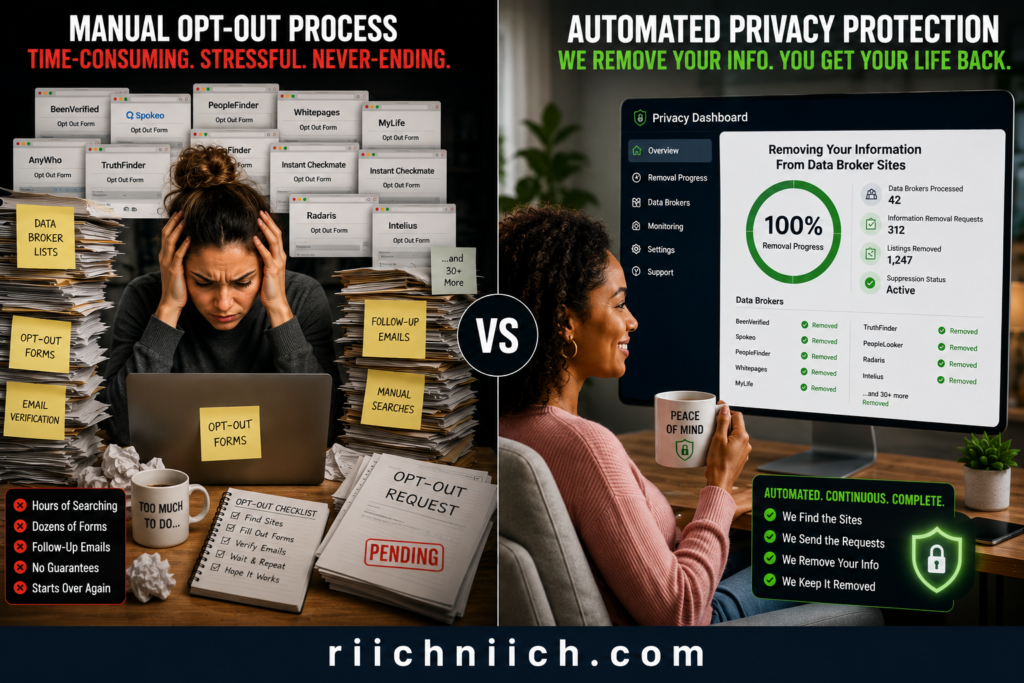
Common Mistakes to Avoid When You Opt Out of Data Brokers
Learning how to opt out of data brokers is an important step toward protecting your privacy, but many people make mistakes that reduce the effectiveness of their efforts. Avoiding these common pitfalls can help you remove your personal information more successfully and keep it off the internet for longer.
Only Removing Information from One or Two Data Brokers
One of the biggest mistakes is assuming that removing your information from a single website solves the problem. There are hundreds of data brokers, and many collect information independently from one another. If you only opt out of a few companies, your personal information may still be available on dozens of other websites.
A more effective strategy is to remove your information from as many major people search websites and data brokers as possible.
Forgetting to Repeat the Process
Many people believe that once they submit an opt-out request, they’re finished forever. Unfortunately, that’s rarely the case.
Data brokers frequently receive updated information from public records, marketing partners, and commercial databases. As a result, your information can reappear months later. The Federal Trade Commission explains that personal information is often collected and shared through multiple sources, making ongoing privacy management an important part of protecting yourself online.
Checking your online presence every few months helps ensure your information stays removed.
Using Unofficial Opt-Out Websites
When researching how to opt out of data brokers, you’ll find many websites claiming to remove your information. Some are legitimate, while others simply collect additional personal information or redirect you elsewhere.
Always submit requests through the official privacy or opt-out page provided by the data broker or use a reputable automated data removal service. Avoid sharing unnecessary personal information with unknown websites.
Providing More Information Than Necessary
Some opt-out forms only require your name, email address, or profile link. Avoid submitting additional personal information unless it’s specifically required to verify your identity.
The less personal information you share during the removal process, the lower your risk of exposing additional data unnecessarily.
Ignoring Your Search Engine Results
Many people focus only on individual data broker websites and never search for themselves online afterward.
After completing several opt-out requests, search for your full name, phone number, and address using major search engines. This helps identify additional people search websites or data brokers that may still be displaying your information.
Expecting Immediate Results
Removing your information isn’t always instant. Some companies process requests within a few days, while others may take several weeks before your profile disappears.
Be patient and check the company’s stated processing timeline before assuming your request was unsuccessful.
Not Combining Data Broker Removal with Other Privacy Measures
Removing your information from data brokers is only one part of protecting your online privacy.
The Cybersecurity and Infrastructure Security Agency recommends using multiple layers of protection, including strong passwords, multi-factor authentication, software updates, and monitoring your online accounts. Combining these practices with how to opt out of data brokers provides much stronger protection than relying on any single solution.
Trying to Manage Hundreds of Requests Manually Forever
Many people begin with good intentions but eventually stop submitting opt-out requests because the process becomes too time-consuming.
If you have information listed across numerous websites or want continuous protection, an automated data removal service can help remove your personal information from participating data brokers, monitor for new listings, and reduce the amount of ongoing work required to maintain your privacy.
Avoiding these common mistakes will make how to opt out of data brokers much more effective and help you build a long-term strategy for reducing your digital footprint and protecting your personal information.
How Long Does It Take to Opt Out of Data Brokers?
The amount of time it takes to complete how to opt out of data brokers depends on whether you choose the manual or automated approach. While some individual opt-out requests can be completed in just a few minutes, removing your information from dozens or even hundreds of data brokers is usually an ongoing process rather than a one-time task.
If you’re opting out manually, expect to spend anywhere from a few hours to several days submitting requests, depending on how many data broker websites you want to remove yourself from. Each company has its own process—some require only a simple online form, while others ask you to verify your identity through email or additional documentation.
After submitting your request, the actual removal timeline varies. Some data brokers remove your information within 24 to 72 hours, while others may take several weeks to process your request. In some cases, you’ll receive an email confirming the removal, while others simply delete your profile without notification.
The California Privacy Protection Agency explains that businesses covered by applicable privacy laws generally have specific timeframes for responding to consumer privacy requests, although the exact timeline depends on the law and the type of request submitted.
One important thing to remember when learning how to opt out of data brokers is that your information can return. Data brokers regularly receive updated information from public records, commercial partners, and other data sources. Even after a successful removal, your profile may reappear months later if new information is collected.
That’s why privacy experts recommend reviewing your online presence on a regular basis. The National Institute of Standards and Technology encourages ongoing management of personal information as part of maintaining good cybersecurity and privacy practices rather than treating it as a one-time task.
If you use an automated data removal service, the initial setup usually takes only a few minutes. After that, the service begins searching participating data brokers, submitting removal requests, tracking their progress, and continuing to monitor for new listings. While the companies still control how quickly they process requests, automation eliminates much of the time you would otherwise spend researching websites, filling out forms, and following up manually.
Ultimately, how to opt out of data brokers isn’t something you complete once and forget. Think of it as routine privacy maintenance. Whether you choose the manual route or an automated service, staying consistent over time is the key to reducing your digital footprint and keeping your personal information out of as many databases as possible.
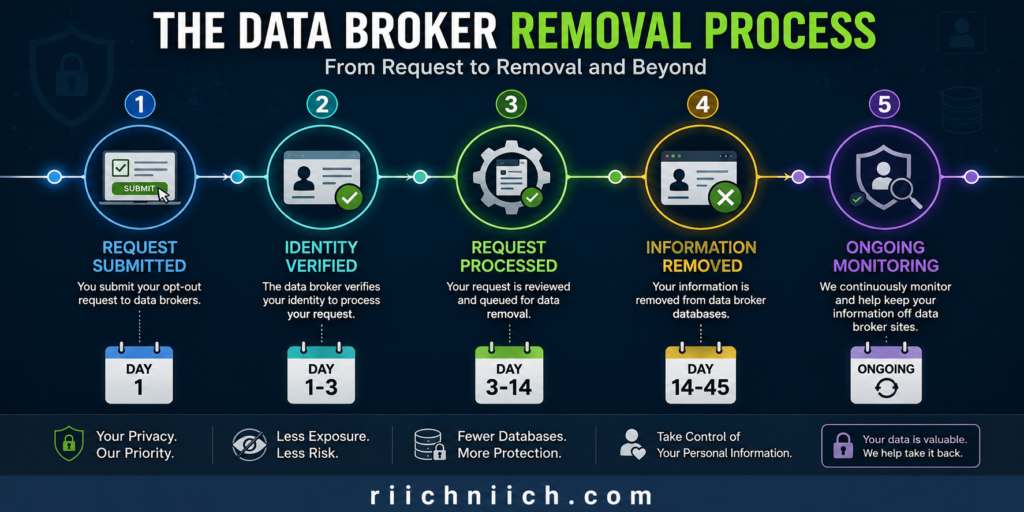
What Happens After You Opt Out of Data Brokers?
After completing how to opt out of data brokers, your personal information doesn’t disappear from the internet overnight. Instead, data brokers begin processing your request, verifying your identity if necessary, and removing your profile according to their internal procedures. Depending on the company, this process may take anywhere from a few days to several weeks.
Once your request is approved, your information should no longer appear in that data broker’s public database or people search listings. This means it becomes more difficult for strangers, marketers, scammers, and identity thieves to find details such as your home address, phone number, email address, and family members through that specific website.
Over time, you may also notice practical benefits from removing your information from data brokers. Many people experience fewer unwanted marketing calls, spam emails, scam text messages, and targeted advertisements because fewer companies have easy access to their personal information. While opting out won’t stop every spam message, it can significantly reduce your overall online exposure.
However, it’s important to understand that how to opt out of data brokers is not a permanent solution. Many data brokers continuously collect new information from public records, commercial databases, loyalty programs, and other legitimate sources. As new information becomes available, your profile may eventually reappear unless you continue monitoring your online presence and submit additional removal requests when necessary.
The Federal Trade Commission explains that personal information is collected from a wide variety of sources and shared across many organizations, which is one reason consumers should regularly review how their information is being used and shared.
Removing your information from data brokers also doesn’t erase information from every website or database.
For additional ways to reduce your online footprint, learn How to Remove Your Personal Information from the Internet beyond data broker websites.
Government records, financial institutions, employers, healthcare providers, and businesses that are legally required to maintain records may still retain your information. Opting out primarily affects participating data brokers and people search websites—not every organization that stores your personal data.
For long-term privacy, it’s best to combine how to opt out of data brokers with other security practices. The Cybersecurity and Infrastructure Security Agency recommends using strong passwords, enabling multi-factor authentication, keeping software updated, and monitoring your financial and online accounts for suspicious activity. Together, these steps create multiple layers of protection against identity theft and online fraud.
If you don’t want to repeat the opt-out process every few months, an automated data removal service can continue monitoring participating data brokers, submit new removal requests when your information reappears, and help maintain your privacy with far less effort than managing everything manually.
Ultimately, learning how to opt out of data brokers is about reducing your digital footprint—not eliminating it completely. The less personal information that’s publicly available, the harder it becomes for scammers, identity thieves, and data harvesters to build a detailed profile about you.
Best Tools to Help You Opt Out of Data Brokers
While you can complete how to opt out of data brokers manually, the process can quickly become overwhelming. Hundreds of data brokers have their own privacy policies, opt-out forms, verification requirements, and processing times. Fortunately, several tools can make removing your personal information faster and easier.
1. Incogni – Best Overall for Automated Data Broker Removal
If your goal is to remove your personal information from as many data brokers as possible without spending hours submitting requests yourself, Incogni is one of the best solutions available.
After signing up, Incogni contacts participating data brokers on your behalf, submits opt-out requests, tracks their progress, and continues monitoring for new listings. Instead of repeating the removal process every few months, the service helps automate ongoing privacy protection.
Incogni is an excellent choice for anyone who wants a simple, hands-off approach to how to opt out of data brokers while reducing their digital footprint over time.
2. DeleteMe – Best for Detailed Data Removal Reports
DeleteMe is another option for people who want professional assistance removing their personal information from supported data broker and people-search websites. Its detailed privacy reports help users understand removal activity and track their progress over time.
👉 If you prefer a data removal service with detailed reporting, compare DeleteMe’s subscription plans and see whether it’s the right fit for your privacy needs.
3. Aura – Best for Data Removal Plus Identity Protection
If you’re looking for more than just data broker removal, Aura combines privacy features with identity theft protection.
In addition to helping reduce your online exposure, Aura offers identity monitoring, credit monitoring, dark web monitoring, fraud alerts, and financial fraud protection. This makes it a strong option for people who want both privacy and comprehensive identity security in one platform.
If you’re wondering whether this feature is worth paying for, read our guide on What is Dark Web Monitoring and Is It Worth It? before choosing a protection service.
4. Google Results About You
One free tool many people overlook is Google’s Results About You feature. This tool helps you identify search results that display sensitive personal information, such as your phone number, home address, or email address, and allows you to request removal from Google Search in eligible situations.
Keep in mind that removing a search result from Google doesn’t remove the information from the original website. You’ll still need to complete how to opt out of data brokers by contacting the website or data broker directly if you want the source listing removed.
5. Password Managers
Password managers don’t remove your information from data brokers, but they play an important role in protecting your online accounts after your information has been exposed.
Strong, unique passwords reduce the risk of account takeovers if cybercriminals discover your email address or other personal information through data broker websites. Pairing data broker removal with a trusted password manager creates a stronger overall privacy strategy.
6. Identity Monitoring Services
Even after successfully completing how to opt out of data brokers, it’s still possible for your personal information to appear elsewhere following future data breaches.
Identity monitoring services continuously monitor for suspicious activity involving your personal information and can alert you if new risks are detected. When combined with data broker removal, these services help you stay informed while reducing the amount of information available to criminals.
The Cybersecurity and Infrastructure Security Agency recommends using multiple layers of protection to improve your overall cybersecurity. Removing your information from data brokers, securing your online accounts, and monitoring your identity work together to create a much stronger defense than relying on a single privacy tool.
Ultimately, the best tool depends on your goals. If you don’t mind spending the time, manual removal is free. However, if you want a faster, more convenient, and long-term solution, an automated data removal service can dramatically simplify how to opt out of data brokers while helping keep your personal information out of participating data broker databases.
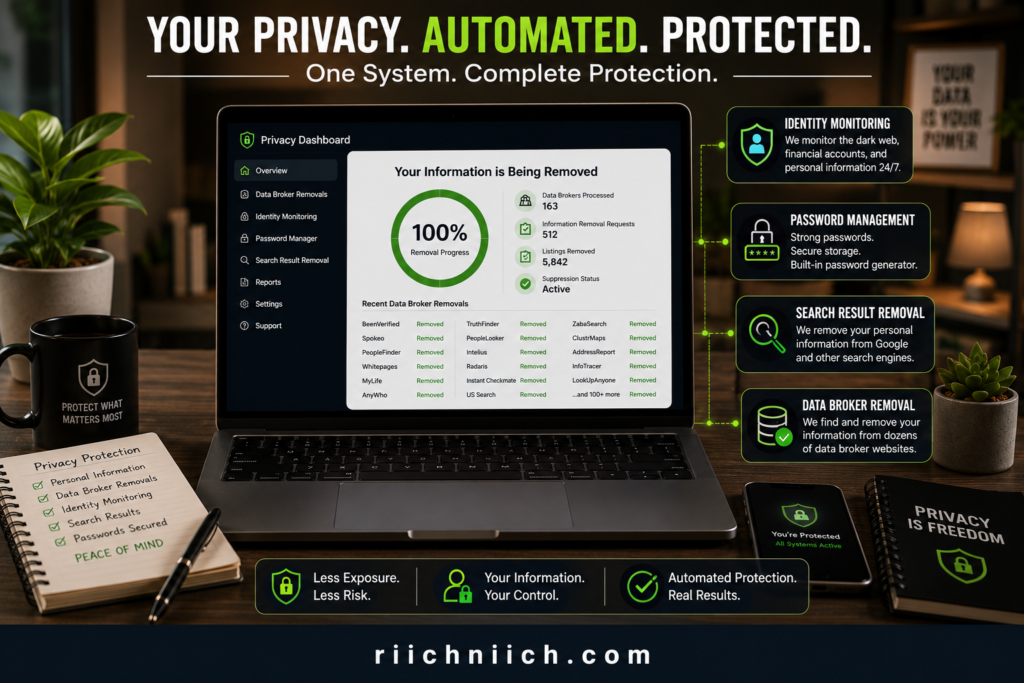
Who Should Learn How to Opt Out of Data Brokers?
The short answer is simple: almost everyone can benefit from learning how to opt out of data brokers. If you’ve ever signed up for a social media account, shopped online, downloaded a mobile app, applied for a loan, registered to vote, or purchased a home, there’s a good chance your personal information exists in one or more data broker databases.
While everyone should care about online privacy, some people have even more to gain from removing their personal information from data brokers.
People Concerned About Their Privacy
If you don’t like the idea of strangers being able to search for your home address, phone number, email address, or family members, learning how to opt out of data brokers is one of the most effective ways to reduce your online exposure. Removing your information helps shrink your digital footprint and gives you more control over what information is publicly available.
Identity Theft Victims
If you’ve experienced identity theft or a data breach, data broker websites can make it easier for criminals to find additional information about you. You should also learn How to Check If Your Information Is On the Dark Web to see whether your exposed data is circulating beyond data broker databases. Removing your personal information from these websites adds another layer of protection while you recover and strengthen your overall security.
The Federal Trade Commission recommends taking proactive steps to protect your personal information after identity theft, making data broker removal a valuable part of a broader recovery plan.
People Receiving Constant Spam and Scam Calls
If your inbox is filled with spam emails or your phone rings with unwanted sales calls and scam messages, data brokers may be contributing to the problem. While opting out won’t eliminate every unwanted contact, removing your information from data brokers can reduce the number of companies that have access to your personal information.
Professionals and Business Owners
Business owners, executives, healthcare professionals, attorneys, real estate agents, and other public-facing professionals often have more personal information available online than they realize.
Learning how to opt out of data brokers can help reduce unwanted contact, protect your family’s privacy, and make it more difficult for strangers to gather information about your personal life outside of work.
Families
Parents often focus on protecting their children’s online privacy but forget about their own digital footprint. Removing your personal information from data brokers helps reduce the amount of family-related information that’s publicly accessible, including home addresses and family connections that may appear on people search websites.
Anyone Who Wants Long-Term Online Privacy
Even if you’ve never experienced identity theft, reducing the amount of personal information available online is a smart preventive measure. The National Institute of Standards and Technology recommends minimizing unnecessary exposure of personal information as part of maintaining good cybersecurity and privacy practices.
If you value your privacy but don’t want to spend hours submitting opt-out requests to dozens of companies, an automated data removal service can simplify how to opt out of data brokers by continuously removing your information from participating data brokers and monitoring for new listings over time.
Ultimately, how to opt out of data brokers isn’t just for privacy enthusiasts or identity theft victims. It’s for anyone who wants greater control over their personal information, a smaller digital footprint, and fewer opportunities for scammers, advertisers, and cybercriminals to access their data.
Is It Worth Paying for a Data Removal Service Instead of Opting Out Manually?
Whether it’s worth paying for a data removal service depends on how much you value your time and how committed you are to maintaining your online privacy. While learning how to opt out of data brokers manually is completely free, it also requires patience, organization, and ongoing effort.
Manual removal means researching hundreds of data broker websites, locating each company’s opt-out page, submitting individual requests, verifying your identity when required, and checking back periodically to make sure your information hasn’t reappeared. For someone with only a few listings, this may be manageable. However, if your information appears across dozens or even hundreds of websites, the process can quickly become overwhelming.
An automated data removal service simplifies how to opt out of data brokers by handling much of this work for you. Instead of manually tracking every request, the service searches participating data brokers, submits removal requests, monitors their progress, and continues checking for new listings over time. This ongoing monitoring is valuable because data brokers frequently receive updated information from public records and commercial sources, allowing previously removed profiles to reappear.
The National Institute of Standards and Technology recommends taking a layered approach to protecting your personal information. Reducing the amount of personal data available online is one layer, while strong passwords, multi-factor authentication, software updates, and identity monitoring provide additional protection. Using a data removal service fits naturally into that broader privacy strategy.
Another factor to consider is consistency. Many people start the manual opt-out process with good intentions but eventually stop because it takes too much time. An automated service helps maintain your privacy even when you don’t have time to submit new requests every few months.
That said, a paid service isn’t necessary for everyone. If you enjoy managing your own privacy, have only a handful of listings to remove, or don’t mind spending the time, manually completing how to opt out of data brokers can be an effective and cost-free solution.
On the other hand, if your goal is long-term privacy with minimal effort, an automated service is often a worthwhile investment. It can save countless hours, reduce your digital footprint more consistently, and help remove your personal information from participating data brokers without requiring you to repeat the same process over and over again.
👉 If you also want identity theft protection while reducing your online exposure, we recommend Aura. It combines automated privacy features with identity monitoring, credit monitoring, dark web monitoring, fraud alerts, and financial fraud protection, making it a strong choice for protecting both your privacy and your identity.
Ultimately, the decision comes down to convenience versus time. If you want the fastest, most hands-off approach to how to opt out of data brokers, investing in a reputable data removal service can provide ongoing privacy protection while allowing you to focus on other aspects of your life.
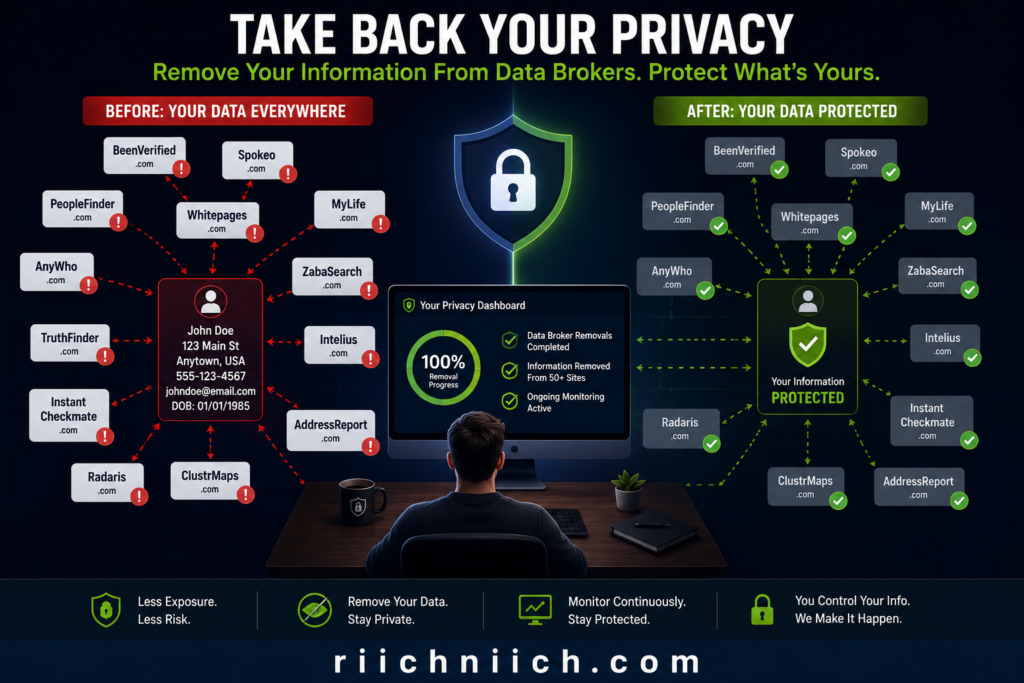
Pros and Cons of Learning How to Opt Out of Data Brokers
Like any privacy strategy, learning how to opt out of data brokers has both advantages and limitations. While removing your personal information from data broker websites can significantly improve your online privacy, it’s important to understand what it can—and cannot—accomplish.
Pros
Greater Control Over Your Personal Information
One of the biggest benefits of learning how to opt out of data brokers is gaining more control over your personal information. Instead of allowing hundreds of companies to collect and display your data indefinitely, you can actively reduce the amount of information that’s publicly available.
Reduces Your Digital Footprint
Every successful opt-out request helps shrink your digital footprint. Fewer websites displaying your personal information means fewer opportunities for strangers, advertisers, scammers, and cybercriminals to find details such as your address, phone number, and email address.
May Reduce Spam and Scam Attempts
Although opting out won’t eliminate every spam email or robocall, removing your information from data brokers can reduce how widely your contact information is shared. This may lead to fewer unsolicited marketing emails, scam text messages, and telemarketing calls over time.
Makes Identity Theft More Difficult
Identity thieves often piece together information from multiple sources before targeting a victim. The Cybersecurity and Infrastructure Security Agency encourages individuals to limit the amount of personal information available online because reducing publicly accessible data can make social engineering and identity theft more difficult.
Improves Long-Term Online Privacy
Learning how to opt out of data brokers is a proactive step toward protecting your privacy. Combined with strong passwords, multi-factor authentication, and identity monitoring, data broker removal helps create a more comprehensive personal security strategy.
Cons
Manual Removal Takes Time
The biggest drawback is the amount of work involved. There are hundreds of data brokers, and each company has its own opt-out process. Manually submitting requests, verifying your identity, and tracking removals can require many hours of effort.
Your Information May Return
Even after a successful removal, your personal information can reappear if data brokers obtain updated records from public sources or commercial partners. This means you’ll need to monitor your online presence and submit additional opt-out requests periodically.
Not Every Company Offers an Easy Opt-Out Process
Some data brokers make opting out simple, while others require multiple verification steps or longer processing times. This can make the overall removal process frustrating, especially if you’re handling everything yourself.
It Doesn’t Remove Information Everywhere
Learning how to opt out of data brokers primarily removes your information from participating data broker and people search websites. It doesn’t erase information from government records, financial institutions, healthcare providers, or businesses that are legally required to maintain certain records.
Some Privacy Protection Requires Ongoing Costs
If you decide to use an automated data removal service for convenience and continuous monitoring, you’ll typically pay a recurring subscription fee. While many people consider the time savings worthwhile, it’s an additional expense compared to handling everything manually.
The Bottom Line
For most people, the advantages of learning how to opt out of data brokers far outweigh the disadvantages. Reducing your digital footprint, limiting the amount of personal information available online, and making it harder for scammers and identity thieves to find your data are valuable long-term benefits. If you have the time, manual removal is a cost-effective option. If you prefer convenience and ongoing monitoring, an automated data removal service can make maintaining your online privacy significantly easier.
Frequently Asked Questions About How to Opt Out of Data Brokers
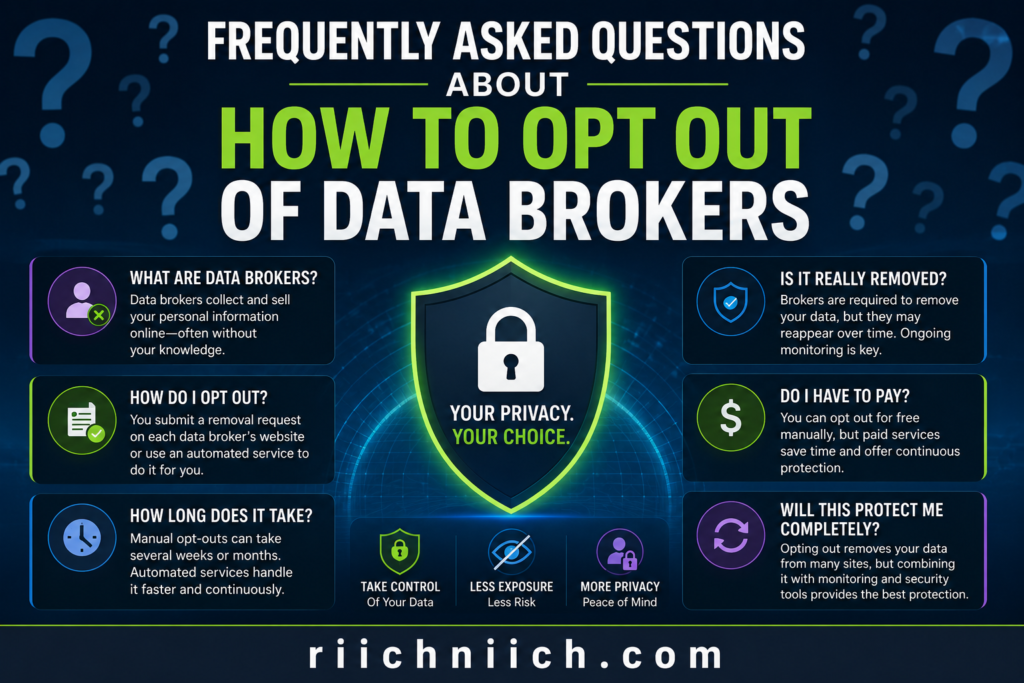
Is how to opt out of data brokers free?
Yes. You can complete how to opt out of data brokers yourself by visiting each company’s official opt-out page and submitting a removal request at no cost. The trade-off is that the process can be time-consuming because every data broker has its own requirements, and you’ll likely need to repeat the process periodically.
How many data brokers are there?
There are hundreds of data brokers operating in the United States, with new companies entering the market regularly. Some focus on advertising and marketing, while others operate people search websites or compile consumer information for businesses. Because there are so many, manually removing your information from every data broker can take a significant amount of time.
Will opting out remove all of my personal information from the internet?
No. Learning how to opt out of data brokers helps remove your information from participating data broker and people search websites, but it won’t erase information from government records, court records, financial institutions, healthcare providers, or other organizations that legally maintain personal records.
How often should I opt out of data brokers?
It’s a good idea to review your online presence every few months. Data brokers regularly receive updated information from public records and commercial partners, so your personal information can reappear even after it has been removed. Performing regular privacy checks helps keep your digital footprint as small as possible.
Can I remove my information from every data broker?
Probably not. While many data brokers provide opt-out options, some may not participate in the same way or may have different legal obligations depending on where they operate. The Federal Trade Commission encourages consumers to understand how companies collect and share personal information and to exercise available privacy rights whenever possible.
Is it better to opt out manually or use a data removal service?
It depends on your priorities. If you have the time and only need to remove your information from a few websites, manual removal can be an effective free option. However, if you want ongoing monitoring, automatic removal requests, and a simpler way to maintain your privacy, a reputable data removal service can save many hours of work while continuously helping remove your personal information from participating data brokers.
Will opting out stop spam emails and scam calls?
It can reduce them, but it won’t eliminate them entirely. Removing your information from data brokers limits how widely your contact information is shared, which may decrease unwanted marketing emails, robocalls, and scam text messages. However, your information may still come from previous data breaches, businesses you’ve interacted with, or other legitimate sources.
Is how to opt out of data brokers enough to protect me from identity theft?
No. Removing your information from data brokers is only one part of protecting yourself online. The Cybersecurity and Infrastructure Security Agency recommends combining privacy measures with strong passwords, multi-factor authentication, software updates, and account monitoring to build multiple layers of protection against identity theft and cybercrime.
How long does it take for my information to be removed?
The timeline varies by company. Some data brokers process requests within a few days, while others may take several weeks. After your information is removed, it’s a good idea to verify that your profile no longer appears and continue checking periodically in case your information is collected again.
Is how to opt out of data brokers worth it?
For most people, yes. Reducing the amount of personal information available online can make it harder for scammers, identity thieves, advertisers, and data brokers to build detailed profiles about you. Whether you choose to handle the process manually or use an automated data removal service, taking action is an important step toward improving your online privacy and reducing your digital footprint.
Conclusion: How to Opt Out of Data Brokers and Protect Your Privacy
Learning how to opt out of data brokers is one of the smartest investments you can make in your online privacy. Every opt-out request reduces the amount of personal information available about you, making it more difficult for advertisers, scammers, identity thieves, and other third parties to build detailed profiles using your data.
Removing your information is just one part of staying safe online. Learn How to Stop Identity Theft Before It Happens with additional proactive security strategies.
If you only have a few listings to remove and don’t mind spending the time, manually removing your information from data brokers is a free and effective option. However, because there are hundreds of data brokers and your information can reappear over time, maintaining your privacy manually requires ongoing effort and regular follow-up.
For many people, an automated data removal service offers the best long-term solution. Instead of researching hundreds of websites, completing countless opt-out forms, and tracking removal requests yourself, these services continuously remove your personal information from participating data brokers and monitor for new listings. If your goal is to save time while reducing your digital footprint, paying for automation can be a worthwhile investment.
Remember that how to opt out of data brokers is only one part of a complete privacy strategy. The Cybersecurity and Infrastructure Security Agency recommends combining privacy practices with strong passwords, multi-factor authentication, software updates, and account monitoring to better protect yourself from cyber threats. Likewise, the Federal Trade Commission encourages consumers to take an active role in managing how their personal information is collected and shared.
If you’re ready to take control of your online privacy, start by removing your information from the highest-priority data brokers today. If the process feels overwhelming or you want ongoing protection without the repetitive work, consider using a trusted automated data removal service to help protect your personal information year-round.
If you also want identity monitoring, fraud alerts, and credit monitoring, compare the Best Identity Theft Protection Services to find the right level of protection for your needs.
The most important thing is to take action. Every piece of personal information you remove is one less opportunity for someone else to misuse it. By learning how to opt out of data brokers, you’re taking a proactive step toward protecting your identity, reducing unwanted exposure, and building a safer, more private online life.



Pingback: Coveron vs Aura - Riich Niich
Pingback: How To Remove Your Email Address From the Internet: 9 Steps That Actually Work - Riich Niich
Pingback: How to Secure Your Online Accounts After a Data Breach - Riich Niich