

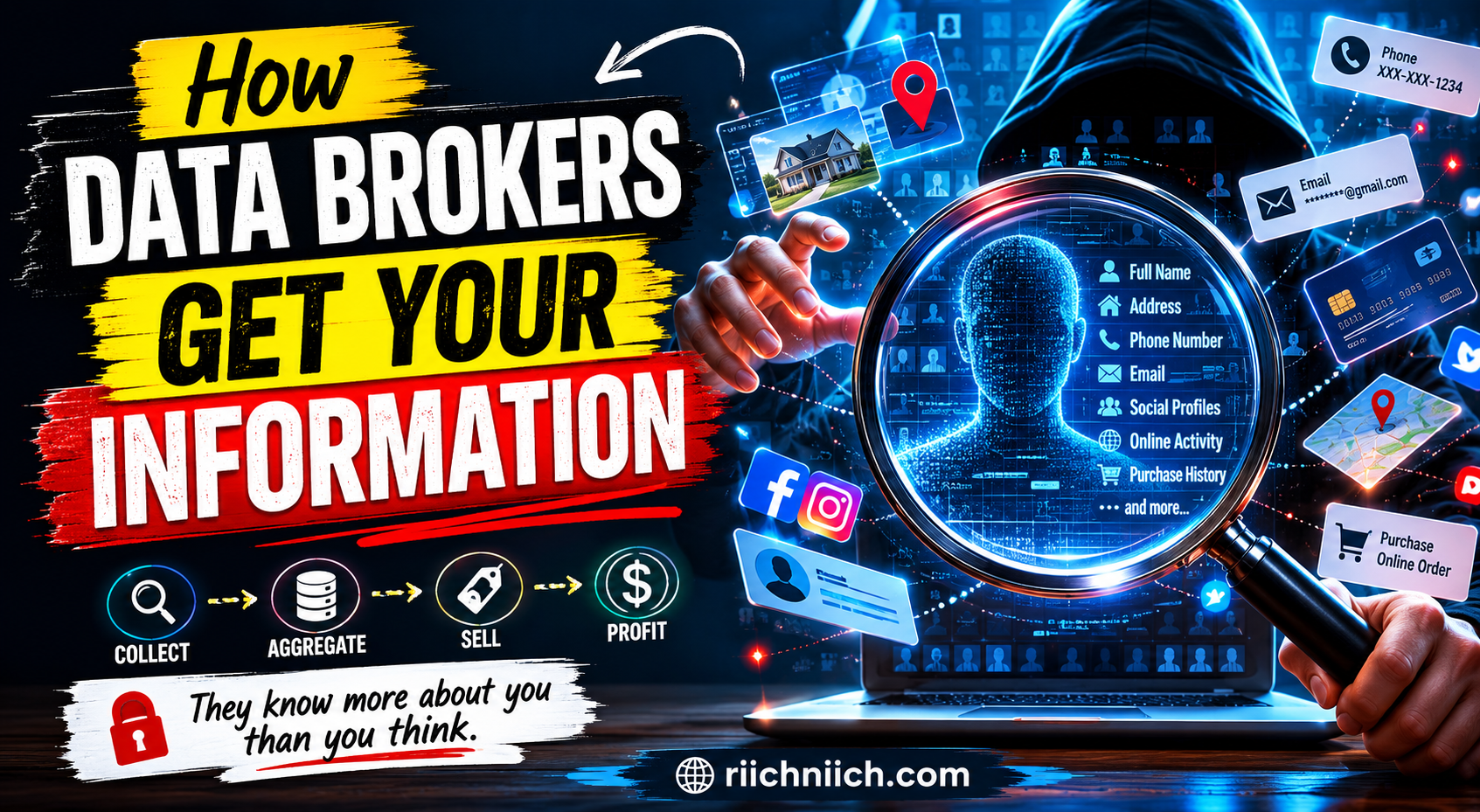
How data brokers get your information is something most people never think about — yet your personal data may already be spreading across hundreds of websites, apps, advertising networks, and people-search databases. Data brokers collect information from social media, public records, online purchases, mobile apps, website tracking systems, and even data breaches to build detailed profiles about you. In this guide, you will learn how data brokers collect personal information, why it can be dangerous for your privacy, and the best ways to reduce your online exposure and protect your personal data.
Table of Contents
What Are Data Brokers?
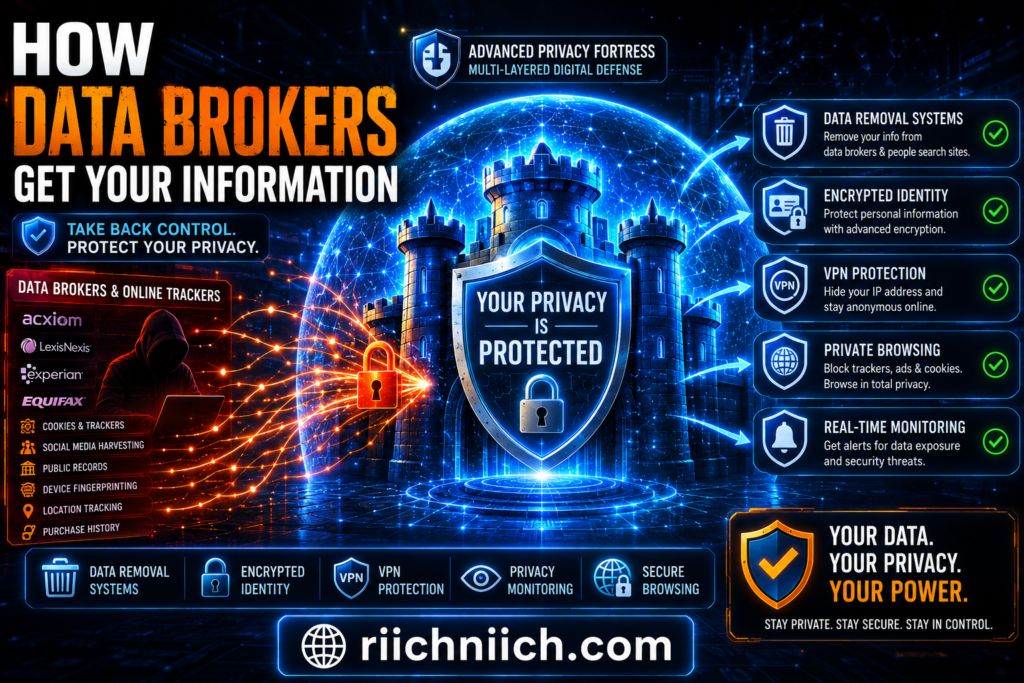
Data brokers are companies that collect, organize, analyze, and sell personal information about people. These companies gather data from multiple online and offline sources to build detailed profiles that can include your name, phone number, email address, home address, browsing activity, purchase history, social media activity, and even financial information.
Want to learn more about how these companies operate? Read our complete guide explaining What Is a Data Broker? and how they collect personal information online.
If you are wondering how data brokers get your information, the answer is surprisingly simple: they collect data from websites, apps, public records, loyalty programs, social media platforms, mobile app permissions, online purchases, and third-party companies that share consumer information.
Many people do not realize how much personal information is publicly available online.
You can also learn the most common ways personal information spreads online in our full guide on How Your Personal Data Ends Up Online.
Data brokers use advanced tracking systems and massive databases to connect this information together and create highly detailed consumer profiles. These profiles are often sold to advertisers, marketers, people-search websites, insurance companies, and other third parties.
Some data brokers focus on advertising and marketing data, while others operate people-search websites that allow anyone to look up personal information online. In some cases, cybercriminals may also use exposed personal data from broker databases for phishing attacks, identity theft, scam calls, and fraud attempts.
Common types of information data brokers collect include:
- Full names
- Phone numbers
- Email addresses
- Home addresses
- Age and birth dates
- Family members
- Employment history
- Shopping habits
- Location history
- Social media activity
- Internet browsing behavior
Understanding how data brokers get your information is important because your data can spread across hundreds of websites without your direct permission. Even something as simple as signing up for a rewards program or downloading a free mobile app can contribute to your information being shared online.
According to the Electronic Frontier Foundation (EFF), data brokers often operate behind the scenes with very little transparency, making it difficult for consumers to know where their information is stored or who has access to it.
The Federal Trade Commission (FTC) has also warned that many consumers are unaware of the amount of personal data being collected and sold through the data broker industry.
Why Data Brokers Collect Personal Information
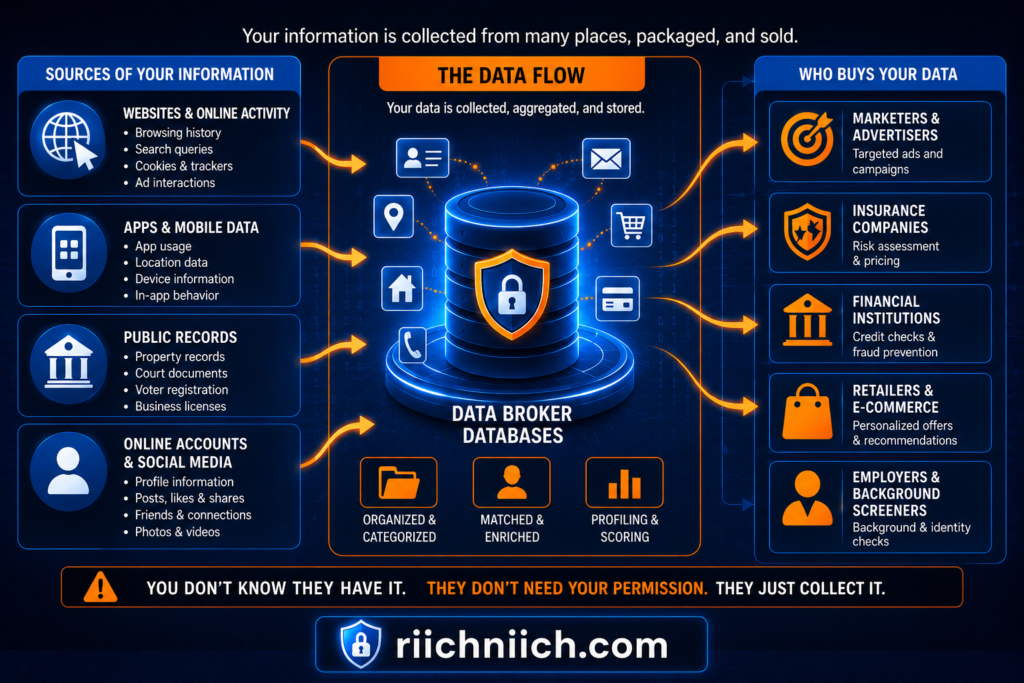
Data brokers collect personal information because consumer data is extremely valuable. Companies use this information to improve advertising, track online behavior, analyze spending habits, personalize marketing campaigns, and build detailed customer profiles. In many cases, the more information companies collect about people, the more money they can make from selling or sharing that data.
Understanding how data brokers get your information also helps explain why the industry continues to grow rapidly. Your personal data can be used for targeted advertising, risk assessments, identity verification, financial marketing, and even political campaign profiling.
Many businesses purchase data from brokers to better understand customer behavior. For example, advertisers may want to know:
- What products you buy online
- Which websites you visit
- Your location history
- Your income range
- Your shopping interests
- Your age and family status
- What devices you use
- Which social media platforms you use most often
This allows companies to create highly targeted ads designed specifically for certain groups of people. If you have ever searched for a product online and then immediately started seeing advertisements for it everywhere, data tracking and broker networks likely played a role.
Another reason data brokers collect personal information is to create people-search databases. These websites often display personal details such as phone numbers, home addresses, relatives, and previous addresses. Some of this information comes from public records, while other data is purchased from third-party companies and online sources.
Learning how data brokers get your information is important because much of the information shared online is collected automatically. Websites use cookies, trackers, mobile app permissions, and analytics systems to monitor user behavior across the internet.
According to the Privacy Rights Clearinghouse, many consumers are unaware that their personal data may be shared or sold to third parties through everyday online activity.
The National Cybersecurity Alliance also recommends limiting unnecessary data sharing online and regularly reviewing privacy settings to reduce exposure to data collection companies.
In some situations, exposed personal data can increase the risk of:
- Identity theft
- Phishing attacks
- Spam calls
- Scam text messages
- Account takeovers
- Financial fraud
- Social engineering attacks
This is why understanding how data brokers get your information is becoming more important for online privacy and cybersecurity protection.
How Data Brokers Get Your Information
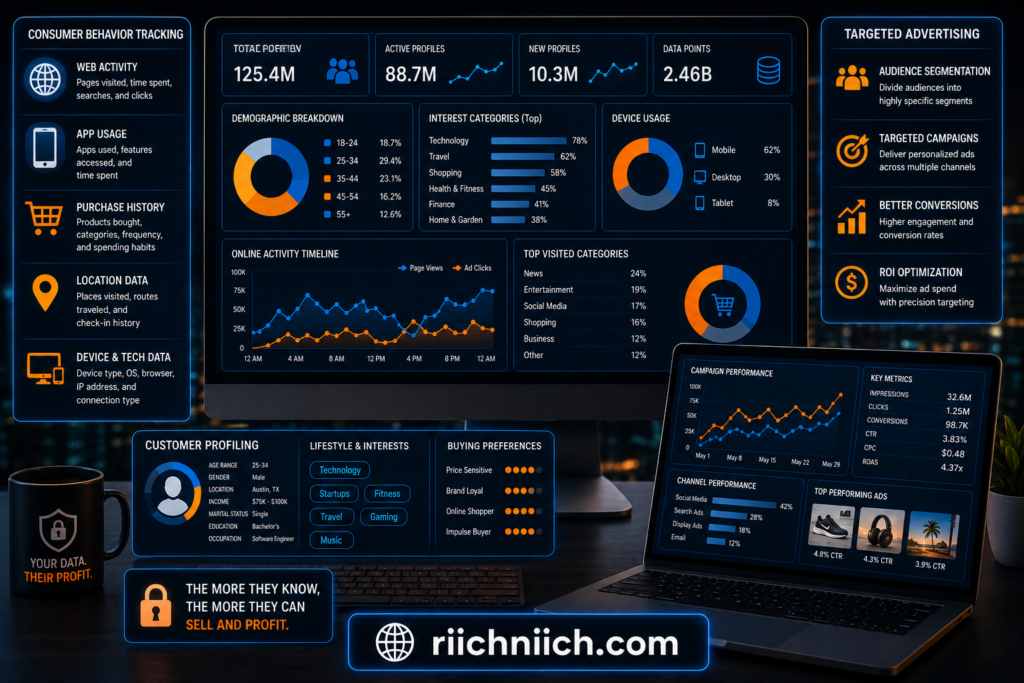
Many people are surprised to learn just how much personal information is collected online every day. Understanding how data brokers get your information is important because most of this data collection happens automatically in the background while you browse websites, use apps, shop online, or interact with social media platforms.
Data brokers gather information from dozens of different sources and combine it into detailed digital profiles. These profiles may include your contact information, browsing behavior, shopping habits, location history, device usage, financial interests, and even information about your family members.
One of the main ways data brokers collect information is through website tracking technologies. Many websites use cookies, advertising trackers, analytics tools, and browser fingerprinting systems to monitor user activity across the internet. This allows companies to track what websites you visit, what products you search for, and how you interact with online content.
Another major source is mobile apps. Many apps request permissions to access your contacts, location data, microphone, camera, or device information. Some apps may share collected data with advertising partners and third-party marketing companies.
If you have ever wondered how data brokers get your information, common sources include:
- Social media platforms
- Public records
- Mobile apps
- Online purchases
- Loyalty rewards programs
- Data breaches
- Website cookies and trackers
- Surveys and contests
- Subscription services
- Online account registrations
- People-search websites
Data brokers also purchase information from other companies. Retail stores, marketing firms, advertisers, and online platforms may share customer data with third parties as part of their business agreements.
According to the Mozilla Privacy Not Included Guide, many apps and online services collect far more data than users realize, often sharing information with advertisers and data partners.
The Identity Theft Resource Center also warns that personal information exposed through data collection and breaches can increase the risk of identity theft and fraud.
Another reason how data brokers get your information has become a growing concern is because large amounts of data can remain online for years. Even old accounts, outdated profiles, and inactive apps may still contain personal information that can be collected and sold.
In some cases, data brokers combine information from multiple sources to build extremely detailed profiles. For example, your online shopping history may be combined with social media activity, location tracking data, and public records to predict your interests, spending behavior, or lifestyle habits.
This is one reason many privacy experts recommend limiting unnecessary app permissions, reviewing privacy settings regularly, using strong cybersecurity tools, and removing personal information from broker websites whenever possible.
Public Records and Government Databases
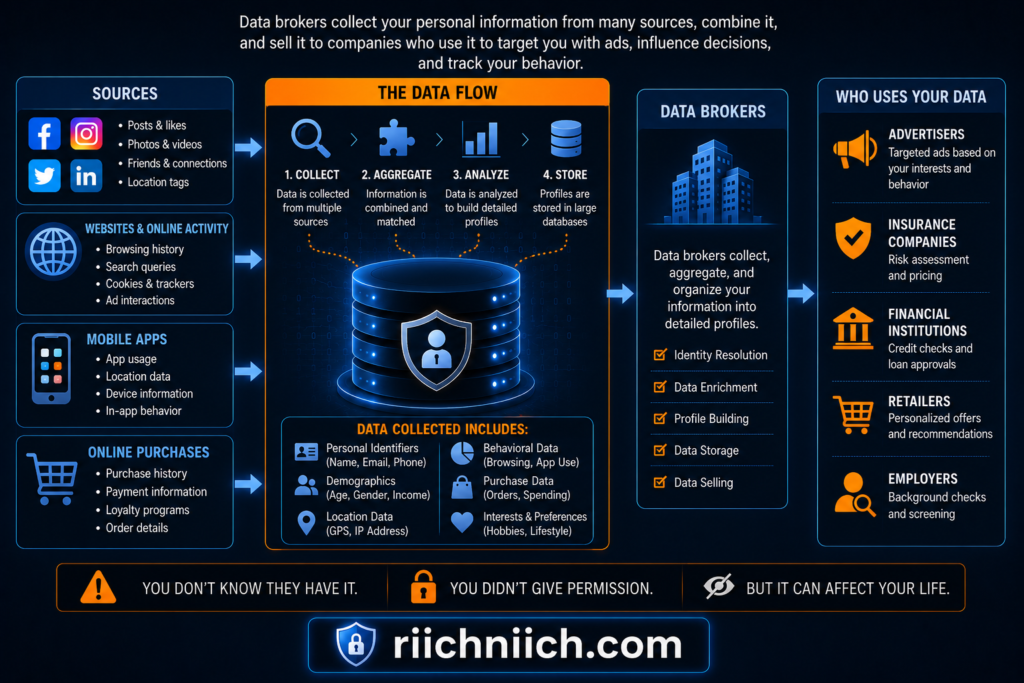
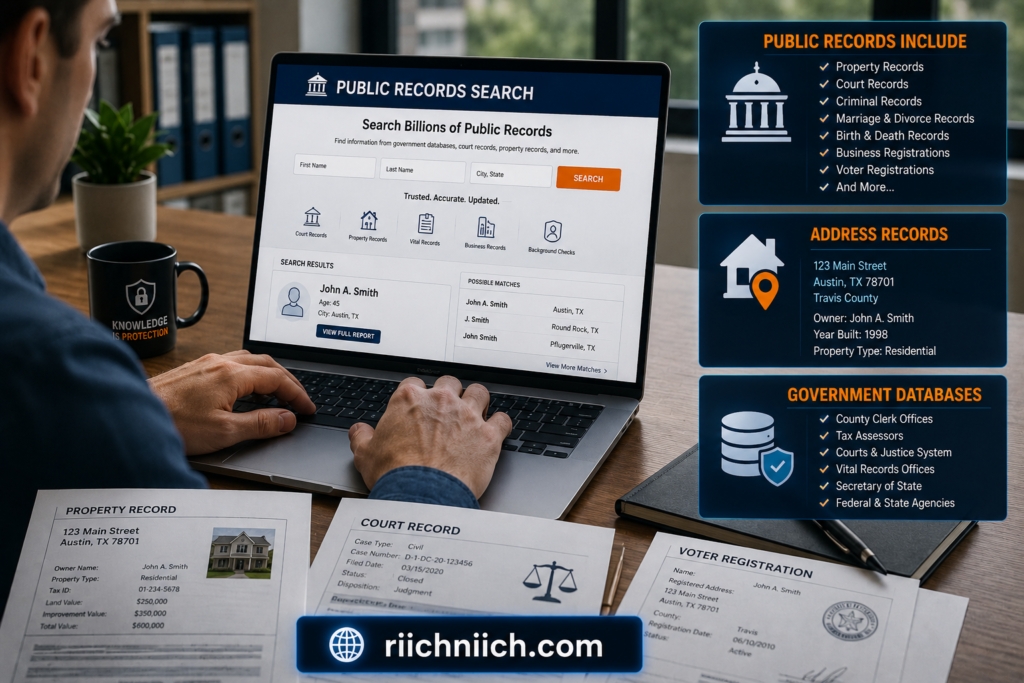
One of the biggest sources of personal information online comes from public records and government databases. Many people do not realize that some of their information may already be legally accessible through government agencies, county offices, court systems, and public databases.
Understanding how data brokers get your information often starts with understanding how public records work. Data brokers regularly collect publicly available information and add it to their own databases, where it can later be sold, shared, or displayed on people-search websites.
Public records may include information such as:
- Full names
- Home addresses
- Property ownership records
- Marriage and divorce records
- Court filings
- Business registrations
- Voter registration information
- Professional licenses
- Bankruptcy filings
- Phone numbers
Once this information becomes publicly available, data brokers can aggregate it with information collected from other sources to create larger consumer profiles.
For example, a property ownership record may reveal your address, while social media activity and marketing databases may provide your email address, phone number, shopping habits, and online interests. Together, this creates a much more detailed digital profile.
This is one reason how data brokers get your information can be difficult to track. Information often comes from multiple databases that are constantly being updated and shared between companies.
According to the National Conference of State Legislatures (NCSL), public records laws vary by state, and many types of government records are legally accessible to the public unless protected by privacy laws.
The U.S. Department of Justice FOIA Guide also explains how certain government information may be disclosed under public access laws.
Although public records themselves are legal, privacy risks increase when data brokers combine those records with tracking data, online activity, and consumer behavior collected from websites and apps.
This can lead to increased exposure on people-search websites, targeted advertising systems, spam campaigns, phishing scams, and even identity theft risks.
Understanding how data brokers get your information from public records is important because removing information from one website does not always remove it from the original public source. In many cases, consumers must remove data from multiple broker sites individually or use automated privacy removal services to reduce exposure.
Privacy experts often recommend:
- Limiting publicly shared information online
- Reviewing state privacy rights
- Removing information from people-search sites
- Using privacy-focused tools
- Monitoring exposed personal information regularly
Reducing your digital footprint can make it harder for data brokers and third parties to build detailed profiles about you online.
If you want to start cleaning up your digital footprint, follow our step-by-step guide on How to Remove Your Personal Information from the Internet.
Social Media and Online Accounts
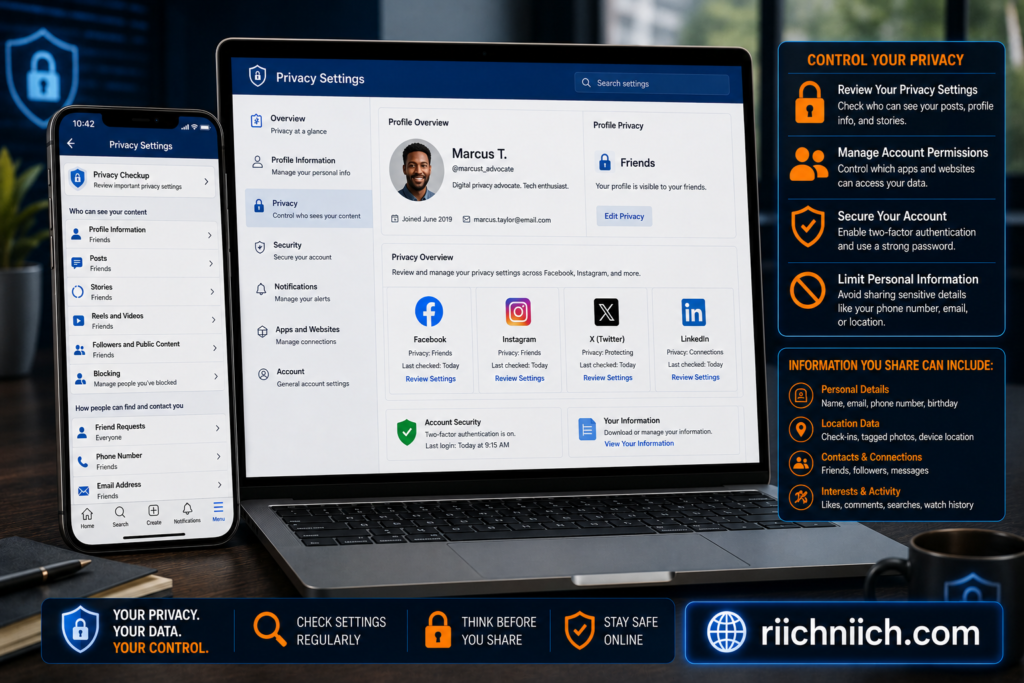
Social media platforms and online accounts are some of the biggest sources of personal information for data brokers. Every time you create an account, post content, like a page, upload photos, or interact with online platforms, you may be sharing valuable data that can be collected, analyzed, and sold.
Understanding how data brokers get your information is important because many social media platforms collect large amounts of behavioral and personal data automatically. Even information that seems harmless can help build detailed digital profiles over time.
Common information collected from social media and online accounts includes:
- Full names
- Birthdays
- Email addresses
- Phone numbers
- Friend and family connections
- Employment information
- Relationship status
- Location check-ins
- Photos and videos
- Interests and hobbies
- Browsing activity
- Device information
Many social media companies also track user engagement patterns, including what content you click on, how long you watch videos, what advertisements you interact with, and what topics interest you most.
This information can then be shared with advertisers, marketing companies, analytics providers, and third-party partners. In some cases, data brokers purchase or aggregate this information to expand consumer profiles.
Another reason how data brokers get your information from online accounts is so effective is because many users voluntarily share information publicly.
You can also improve your online privacy with these important social media safety tips designed to reduce personal data exposure.
Public profiles, usernames, tagged photos, and social interactions can all contribute to your online exposure.
According to the Cybersecurity and Infrastructure Security Agency (CISA), oversharing personal information on social media can increase cybersecurity and identity theft risks.
The Better Business Bureau (BBB) also warns that scammers and fraudsters frequently use social media information for phishing attacks, impersonation scams, and social engineering attempts.
Many online accounts also collect information behind the scenes through:
- Tracking cookies
- Advertising pixels
- Login activity monitoring
- Device fingerprinting
- Search history tracking
- Cross-platform account linking
This helps explain how data brokers get your information and why information spreads so quickly across the internet.
For example, signing into websites using social media accounts may allow platforms to share additional data between services. Similarly, quiz apps, games, and third-party integrations may request access to account details, friend lists, or profile information.
To reduce exposure, privacy experts often recommend:
- Limiting public social media posts
- Reviewing account privacy settings
- Avoiding unnecessary third-party app permissions
- Using strong passwords and multi-factor authentication
- Removing unused online accounts
- Monitoring exposed personal information regularly
Taking these steps can help reduce the amount of personal information available to data brokers, advertisers, and cybercriminals online.
Mobile Apps and App Permissions
Mobile apps are one of the most common ways companies and data brokers collect personal information. Many apps request access to sensitive device permissions that allow them to gather large amounts of user data in the background.
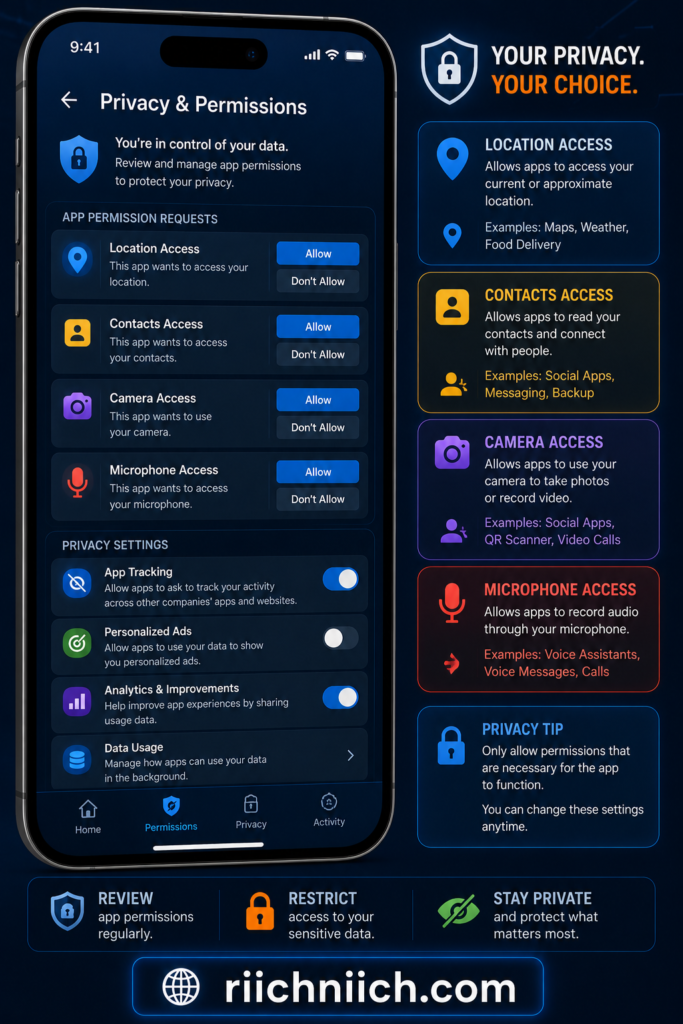
Understanding how data brokers get your information often starts with understanding how app permissions work. When you install an app, you may be asked to allow access to features such as your location, contacts, camera, microphone, photos, calendar, or device storage. In some cases, apps collect more information than users realize.
Common app permissions that may expose personal information include:
- Location tracking
- Contact list access
- Camera access
- Microphone access
- Photo gallery access
- Bluetooth permissions
- Calendar access
- Device identifiers
- Browsing activity
- Usage analytics
Many free apps generate revenue by collecting and sharing user data with advertisers, analytics companies, and third-party marketing networks. This helps explain how data brokers get your information from smartphones and connected devices.
For example, a weather app may request location access, while a social media app may request contact access and device tracking permissions. Over time, this data can be combined with browsing history, online purchases, and advertising activity to build detailed consumer profiles.
Some apps also use software development kits (SDKs), tracking libraries, and advertising identifiers that allow third parties to monitor user behavior across multiple apps and devices.
According to the Consumer Reports Digital Lab, many mobile apps collect extensive user data that may be shared with advertisers and data analytics companies.
The Android Privacy & Security Center also recommends reviewing app permissions regularly and limiting unnecessary access to sensitive device features.
Another reason how data brokers get your information can be difficult to trace is because app ecosystems often involve multiple third-party partners. Even if you trust one app, that app may still share information with advertising networks, data analytics companies, or external tracking providers.
Certain apps may also collect:
- Real-time location history
- Device fingerprints
- Search activity
- Shopping behavior
- App usage patterns
- Biometric information
- Advertising IDs
This data can then be used for targeted advertising, behavioral profiling, location tracking, and marketing personalization.
In some cases, excessive app permissions may also create cybersecurity risks. If an app experiences a data breach or weak security protections, sensitive information could become exposed to cybercriminals.
To reduce privacy risks, cybersecurity experts often recommend:
- Reviewing app permissions regularly
- Removing unused apps
- Limiting location tracking
- Avoiding unnecessary permissions
- Downloading apps only from trusted sources
- Using privacy-focused mobile security tools
- Disabling ad tracking when possible
Taking control of app permissions can help reduce the amount of personal data available to data brokers, advertisers, and third-party tracking companies.
Data Breaches and Hacked Databases
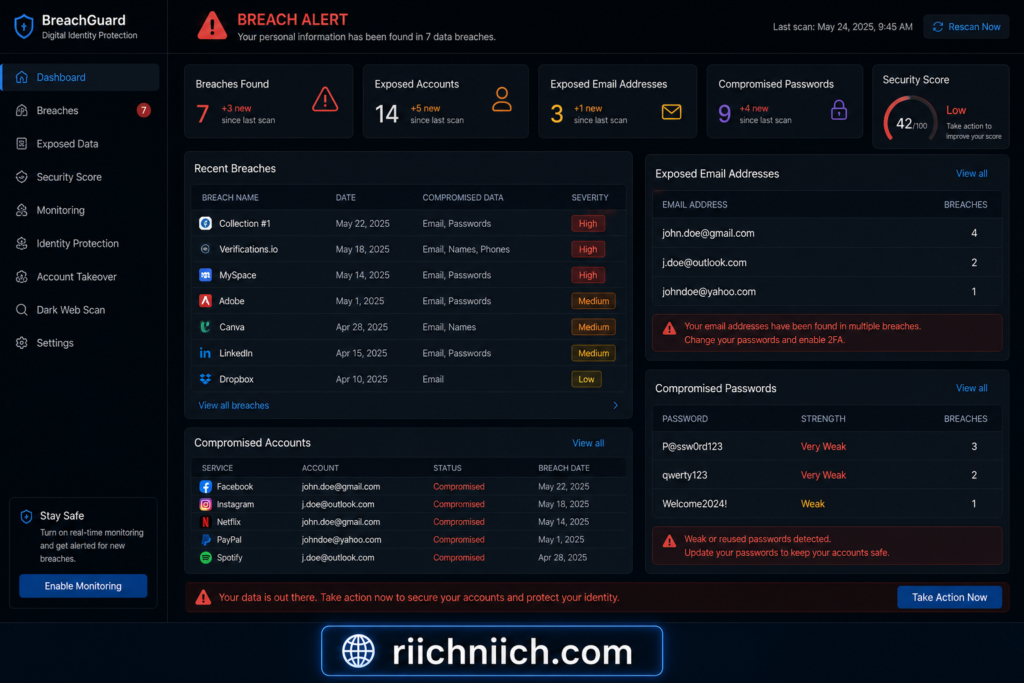
Data breaches and hacked databases are major sources of exposed personal information online. Every year, millions of records containing usernames, passwords, email addresses, phone numbers, financial details, and other sensitive data are leaked after cyberattacks against companies and online platforms.
Understanding how data brokers get your information is important because breached data often spreads far beyond the original hacked company. Once information is exposed online, it may be collected by advertisers, data analytics companies, people-search websites, scammers, and cybercriminals.
A data breach happens when unauthorized individuals gain access to private databases or company systems. These attacks may target:
- Online retailers
- Social media platforms
- Financial institutions
- Healthcare providers
- Mobile apps
- Government agencies
- Cloud storage services
- Technology companies
When a breach occurs, stolen information can quickly circulate across underground forums, cybercriminal marketplaces, and leaked database collections.
You can also learn How to Check If Your Information Is on the Dark Web in our complete privacy guide here.
In some cases, portions of this information eventually make their way into large data broker networks.
Common information exposed in breaches includes:
- Email addresses
- Passwords
- Phone numbers
- Home addresses
- Social Security numbers
- Financial account details
- Date of birth information
- Login credentials
- Security questions
This helps explain how data brokers get your information and why personal information can continue spreading online long after a breach occurs.
According to the IBM Cost of a Data Breach Report, data breaches continue to increase globally, exposing massive amounts of consumer information every year.
One reason how data brokers get your information from breached databases is so concerning is because leaked data can be combined with information from other sources. For example, an exposed email address from a breach may later be connected to social media profiles, online shopping activity, or public records.
This creates larger digital profiles that may increase the risk of:
- Identity theft
- Account takeovers
- Phishing attacks
- Spam campaigns
- Financial fraud
- Credential stuffing attacks
- Social engineering scams
Cybercriminals often use breached information to target users with fake emails, scam messages, and password reset attacks designed to steal even more information.
You can also learn the most common ways How Hackers Get Your Personal Data and how to protect yourself online.
To reduce risks after a breach, cybersecurity experts recommend:
- Changing passwords immediately
- Using unique passwords for every account
- Enabling multi-factor authentication
- Monitoring financial accounts regularly
- Watching for suspicious login activity
- Using identity monitoring services
- Removing exposed information from data broker websites
The faster you respond to a breach, the better your chances of limiting long-term exposure online.
Website Tracking, Cookies, and Online Activity
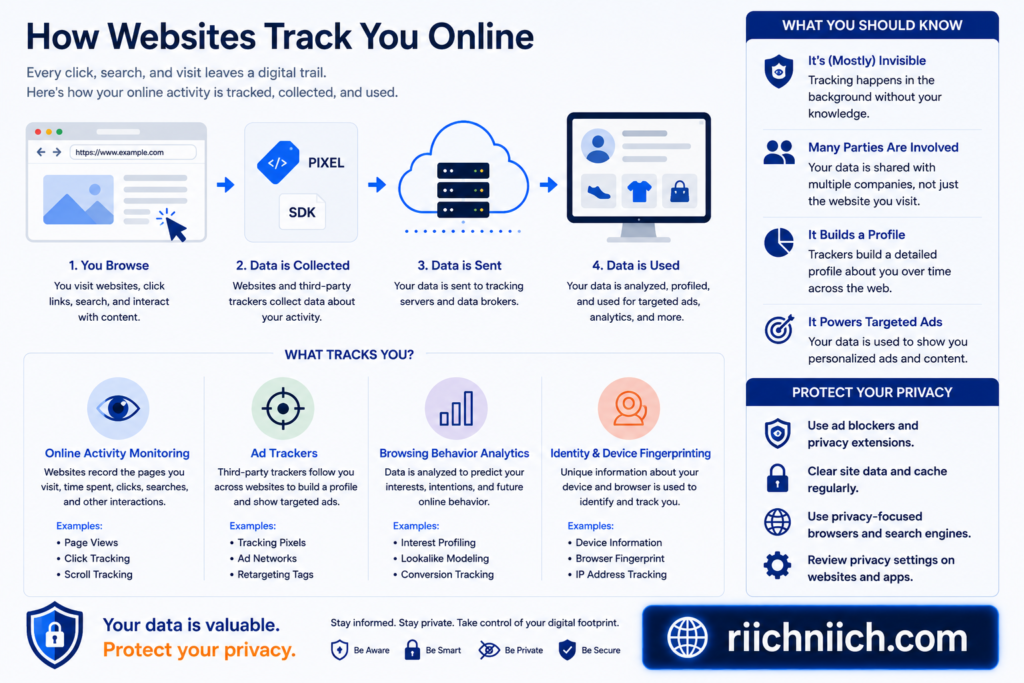
Website tracking technologies are one of the biggest reasons personal information spreads online so quickly. Many websites monitor user behavior using cookies, tracking pixels, analytics tools, advertising networks, and browser fingerprinting systems.
Understanding how data brokers get your information is important because much of your online activity may be tracked automatically every time you browse the internet.
Cookies are small files stored in your browser that help websites remember information about your visit. While some cookies improve website functionality, others are designed to track user behavior across multiple websites for advertising and data collection purposes.
Common information collected through website tracking includes:
- Browsing history
- Search activity
- Products viewed online
- Purchase behavior
- Device information
- IP addresses
- Geographic location
- Ad interactions
- Time spent on websites
- Click patterns
This information helps advertisers and data brokers create detailed consumer profiles based on your online behavior.
For example, if you search for a product online, you may later notice advertisements for that product appearing across social media platforms, search engines, and websites. This happens because tracking systems monitor browsing activity and share data with advertising networks.
Another reason how data brokers get your information through online activity is so effective is because many websites use third-party tracking scripts that operate behind the scenes. These trackers may continue monitoring users across multiple websites and platforms.
According to the Privacy Badger by EFF, online trackers can follow users across websites to collect behavioral data for advertising and profiling purposes.
The Federal Communications Commission (FCC) Online Privacy Guide also explains how websites, advertisers, and online services collect browsing data through cookies and tracking technologies.
Many companies also use browser fingerprinting, which can identify users based on:
- Browser settings
- Device type
- Operating system
- Screen resolution
- Installed fonts
- Extensions and plugins
- Language settings
Unlike traditional cookies, browser fingerprinting can be harder to block because it collects unique technical details about your device.
This helps explain how data brokers get your information and why deleting cookies alone may not completely stop tracking.
Some websites also collect information through:
- Ad trackers
- Embedded videos
- Social media plugins
- Analytics software
- Email tracking pixels
- Cross-site advertising systems
Over time, this data can be combined with public records, mobile app data, social media activity, and breached information to create highly detailed digital profiles.
To reduce tracking exposure, privacy experts often recommend:
- Using privacy-focused browsers
- Blocking third-party cookies
- Installing tracker-blocking extensions
- Clearing browser data regularly
- Using a VPN
- Disabling ad personalization
- Avoiding unnecessary website permissions
Taking these steps can help limit the amount of browsing activity collected by advertisers, tracking companies, and data brokers.
Online Purchases and Loyalty Programs
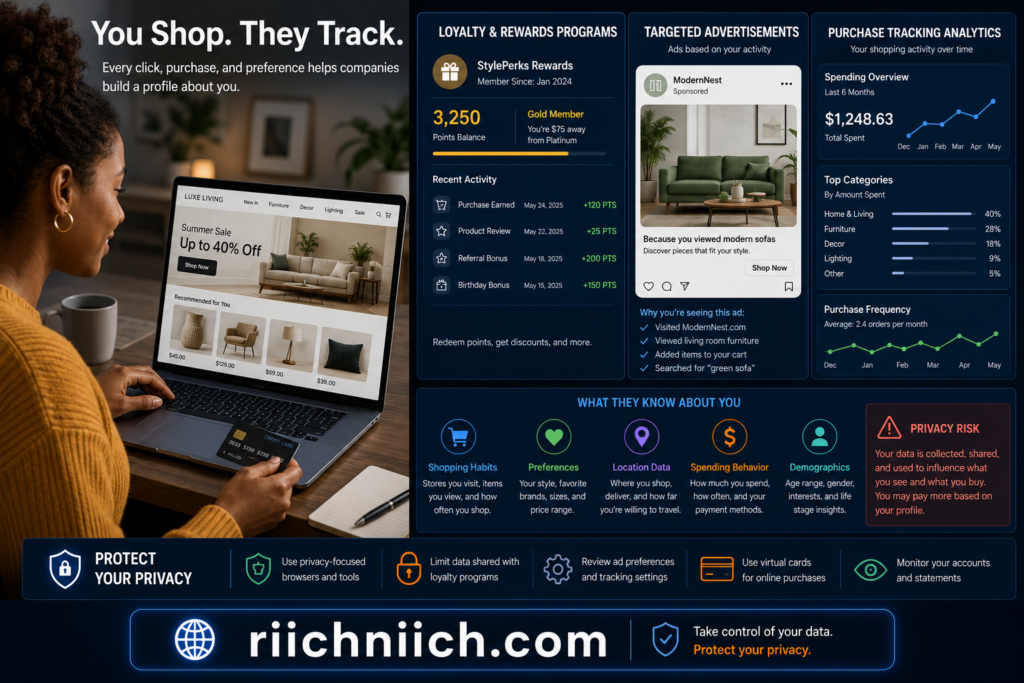
Online purchases and loyalty programs are major sources of consumer data collection. Many retailers, e-commerce platforms, and rewards programs track customer behavior to better understand shopping habits, spending patterns, and product interests.
Understanding how data brokers get your information is important because every online purchase, rewards signup, or discount program may contribute to your digital profile.
When you shop online or join a loyalty program, companies may collect information such as:
- Full name
- Email address
- Phone number
- Home address
- Payment information
- Purchase history
- Shopping preferences
- Product searches
- Store visit history
- Device information
- Location data
Many businesses use this information to personalize advertising, improve marketing campaigns, and predict future buying behavior. In some cases, customer data may also be shared with third-party advertisers, analytics companies, or data brokers.
This is one reason how data brokers get your information from online shopping activity has become such a large industry.
For example, loyalty programs often encourage users to provide additional personal details in exchange for discounts, rewards points, or special offers. While these programs may seem harmless, they can also help companies build highly detailed consumer profiles over time.
According to the Consumer Financial Protection Bureau (CFPB), companies may use consumer data for targeted advertising, financial marketing, and customer behavior analysis.
The Norton Cyber Safety Insights Report also highlights growing concerns about online privacy, data collection, and the amount of personal information shared through digital services.
Another reason how data brokers get your information can be difficult to monitor is because online shopping systems often involve multiple third-party partners, including:
- Advertising networks
- Payment processors
- Analytics providers
- Marketing platforms
- Customer tracking services
- Affiliate marketing systems
These companies may collect and exchange customer information behind the scenes as users browse products, click advertisements, or complete purchases.
Some online retailers also track:
- Abandoned shopping carts
- Purchase frequency
- Product preferences
- Search history
- Email engagement
- Coupon usage
- Device activity
Over time, this information can be combined with data from social media platforms, mobile apps, public records, and website trackers to create larger consumer profiles.
In some cases, excessive data collection may increase the risk of spam emails, scam messages, targeted phishing attacks, and identity theft exposure.
Are spam calls and scam texts becoming a problem? If so, here are practical ways to stop spam calls and scam messages to protect your personal information.
To reduce privacy risks while shopping online, experts often recommend:
- Limiting unnecessary account signups
- Avoiding oversharing personal information
- Using privacy-focused payment methods
- Reviewing loyalty program privacy policies
- Using strong passwords for shopping accounts
- Monitoring financial accounts regularly
- Opting out of unnecessary marketing tracking when possible
Being more selective about what information you share during online purchases can help reduce the amount of personal data available to advertisers and data brokers.
People Search Websites and Public Listings
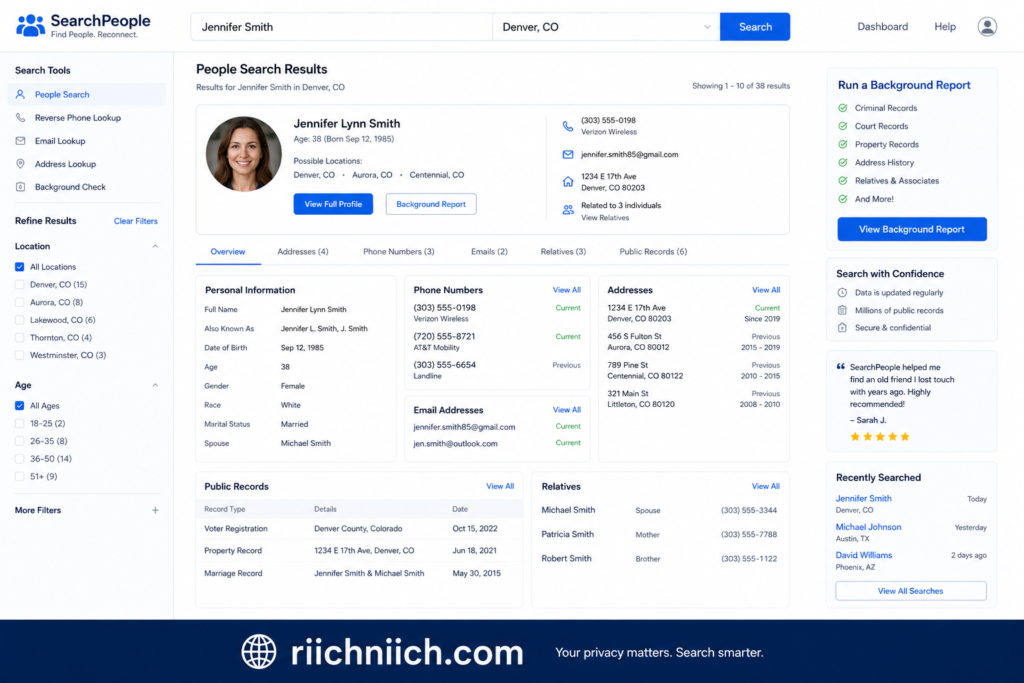
People search websites are one of the most visible examples of how personal information spreads online. These websites collect and display personal data such as names, phone numbers, home addresses, relatives, age ranges, and previous locations — often without users realizing their information is publicly available.
Understanding how data brokers get your information is important because many people-search platforms operate as data brokers themselves or purchase information from other broker networks.
These websites gather information from multiple sources, including:
- Public records
- Social media profiles
- Online account registrations
- Marketing databases
- Property records
- Court records
- Online directories
- Data breaches
- Consumer databases
Once collected, this information may appear in searchable online profiles that can often be accessed by anyone with an internet connection.
This is one reason how data brokers get your information has become a major privacy concern. Even if you never intentionally publish sensitive information online, your data may still appear through third-party databases and public listings.
Common information displayed on people-search websites may include:
- Full name
- Current and previous addresses
- Phone numbers
- Email addresses
- Family members
- Age and birth year
- Employment history
- Property ownership records
- Social media profiles
According to the California Department of Justice Privacy Resources, data brokers and people-search websites can aggregate information from many publicly available and commercial sources to create detailed consumer profiles.
The Identity Theft Resource Center Privacy Resources also warns that exposed personal information online can increase the risk of identity theft, phishing scams, harassment, and fraud.
Another reason how data brokers get your information can be difficult to control is because information spreads across multiple databases very quickly. Removing your data from one website does not necessarily remove it from other broker sites that already copied or purchased the information.
In some cases, cybercriminals may use people-search websites to gather information for:
- Phishing attacks
- Account recovery scams
- SIM swap attacks
- Social engineering
- Identity theft
- Targeted fraud attempts
This is why many privacy experts recommend reducing your online footprint and monitoring exposed personal information regularly.
To help reduce exposure on people-search websites, experts often recommend:
- Opting out of broker databases manually
- Removing unnecessary public information
- Limiting oversharing on social media
- Using privacy-focused services
- Monitoring identity exposure regularly
- Reviewing online search results for your name
Many people also use automated data removal services to help remove personal information from multiple broker websites at once.
You can also follow our complete guide on How to Remove Your Phone Number From Data Broker Sites to reduce spam calls and privacy risks.
Reducing your visibility across people-search databases can help improve online privacy and lower the risk of scams, spam, and identity theft.
Why Having Your Information Online Is Dangerous
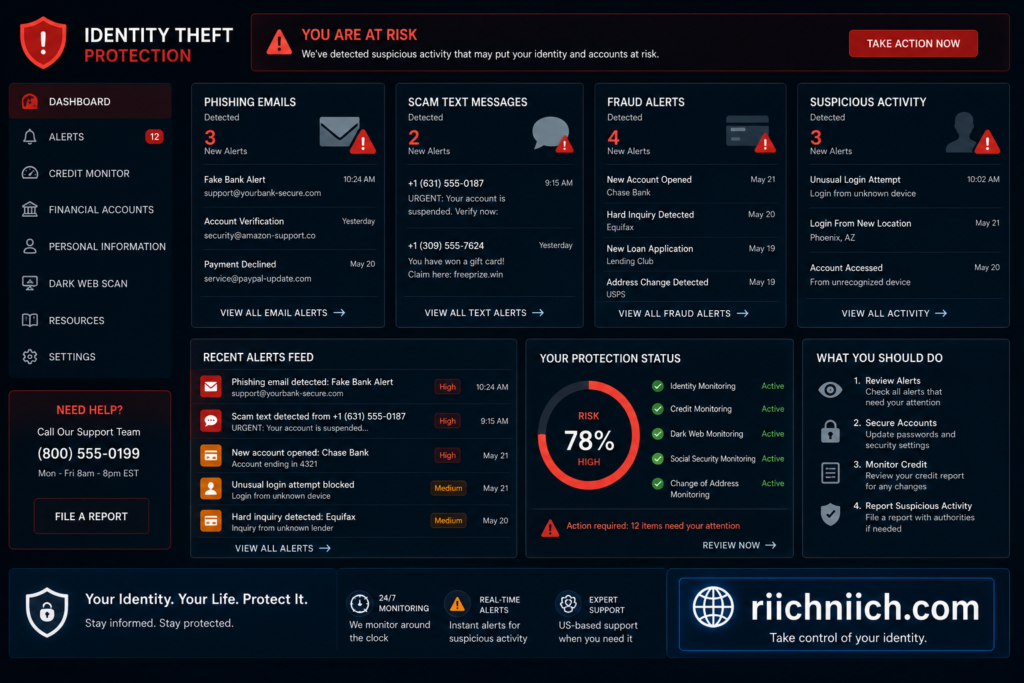
Having personal information online creates serious privacy and cybersecurity risks. The more information that data brokers, advertisers, scammers, and cybercriminals can access, the easier it becomes for them to track your behavior, target you with scams, or even steal your identity.
Understanding how data brokers get your information is important because your personal data can spread across hundreds of databases without you realizing it. Once your information appears online, it can quickly be copied, shared, sold, and redistributed across multiple websites and broker networks.
Even basic information such as your phone number, email address, home address, or date of birth can become valuable to scammers and cybercriminals.
Exposed personal information may increase the risk of:
- Identity theft
- Financial fraud
- Phishing attacks
- Spam calls
- Scam text messages
- Account takeovers
- Social engineering scams
- SIM swap attacks
- Stalking and harassment
- Targeted cyberattacks
👉 Coveron helps monitor identity threats, data breach exposure, and suspicious activity that could put your personal information at risk online.
For example, scammers may use exposed information from people-search websites and breached databases to create highly convincing phishing emails or impersonation scams. In some cases, cybercriminals combine leaked data with social media activity to build detailed profiles designed to trick victims into revealing even more information.
This is one reason how data brokers get your information has become a growing privacy concern. The more data available online, the easier it becomes for third parties to monitor your activity, predict your behavior, and target you with personalized scams or advertisements.
According to the Federal Bureau of Investigation (FBI) Cyber Crime Resources, cybercriminals frequently use exposed personal information for fraud, phishing, and identity theft attacks.
The Cybersecurity & Infrastructure Security Agency (CISA) Identity Theft Resources also warns that publicly exposed personal data can significantly increase cybersecurity risks.
Another major issue is that personal information online is difficult to remove completely. Even after deleting accounts or opting out of certain websites, data may still exist in:
- Data broker databases
- Advertising networks
- Archived records
- Search engine caches
- Public listings
- Third-party marketing systems
This helps explain how data brokers get your information and why online privacy protection has become increasingly important.
Many people now use privacy tools and data removal services to reduce exposure online. Services that remove personal information from broker databases can help limit how much data is publicly accessible across people-search websites and marketing networks.
Privacy-focused tools may help reduce risks by:
- Removing exposed personal information
- Monitoring identity exposure
- Blocking trackers and data collection
- Alerting users to data breaches
- Reducing spam and scam attempts
- Protecting sensitive online accounts
The less personal information available online, the harder it becomes for data brokers, advertisers, scammers, and cybercriminals to build detailed profiles about you.
How to Reduce the Amount of Data Brokers Have About You
Reducing the amount of personal information available online takes time, but it is possible to significantly lower your digital exposure. If you are concerned about privacy, identity theft, spam calls, or online tracking, taking proactive steps can make it much harder for companies and cybercriminals to collect and misuse your data.
Understanding how data brokers get your information is the first step toward protecting your online privacy. Once you know where your data comes from, you can begin limiting how much information is shared across websites, apps, advertisers, and broker databases.
One of the most effective ways to reduce exposure is to remove your information from people-search websites and data broker platforms. Many of these websites allow users to submit manual opt-out requests to remove personal listings.
However, because there are hundreds of broker sites online, manually removing data can become time-consuming and difficult to maintain long term. This is one reason many people now use automated data removal services to help monitor and remove exposed personal information continuously.
Other important privacy steps include:
- Limiting public social media information
- Reviewing app permissions regularly
- Disabling unnecessary location tracking
- Using strong unique passwords
- Enabling multi-factor authentication
- Blocking website trackers and third-party cookies
- Removing unused online accounts
- Opting out of marketing databases when possible
- Monitoring data breach exposure
These steps can help reduce how data brokers get your information from your online activity and connected accounts.
According to the National Institute of Standards and Technology (NIST) Cybersecurity Tips, limiting unnecessary data sharing and improving account security are important parts of protecting personal information online.
The Federal Trade Commission Identity Theft Protection Guide also recommends monitoring personal information exposure and taking steps to reduce online privacy risks.
Privacy-focused tools can also help reduce tracking and data collection. Many people use:
- VPN services
- Tracker blockers
- Privacy-focused browsers
- Identity monitoring tools
- Data removal services
- Password managers
These tools can help reduce how data brokers get your information by limiting tracking activity and protecting sensitive information online.
Another important step is checking whether your information has appeared in data breaches. Exposed email addresses, passwords, or phone numbers can quickly spread across broker databases and scam networks if left unmonitored.
Over time, consistently reducing your online footprint can help:
- Lower spam calls and scam texts
- Reduce targeted advertising
- Improve online privacy
- Decrease identity theft risks
- Limit public exposure of personal information
- Make it harder for cybercriminals to target you
While it may not be possible to remove every piece of personal information online, reducing your visibility across broker databases can significantly improve your overall privacy and cybersecurity protection.
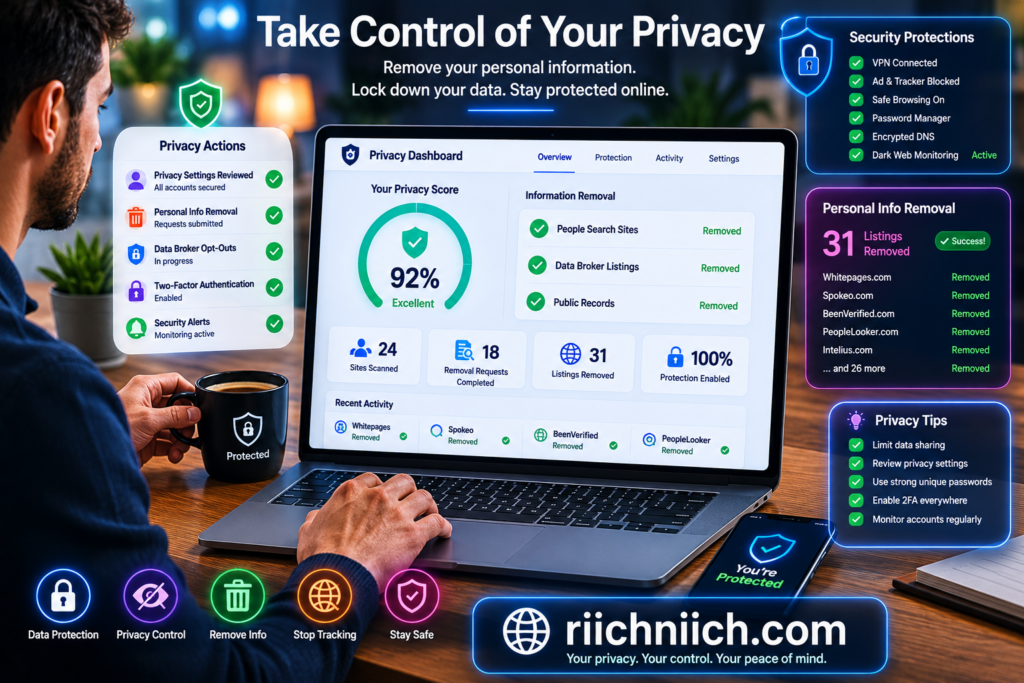
Best Data Removal Services to Protect Your Privacy
If you are concerned about online privacy, identity theft, spam calls, or exposed personal information, data removal services can help reduce how much of your information is publicly available online. These services work by identifying where your personal data appears and submitting removal requests to data broker websites on your behalf.
Understanding how data brokers get your information is important because personal data can spread across hundreds of databases, people-search websites, advertising networks, and marketing platforms. Manually removing your information from every site can take dozens of hours and often requires ongoing monitoring.
👉 Instead of spending hours submitting removal requests manually, services like Incogni automatically contact data brokers and remove your exposed personal information for you.
This is why many people use automated privacy services to help reduce their digital footprint more efficiently.
Some of the best data removal services focus on:
- Removing personal information from broker databases
- Monitoring exposed records online
- Reducing people-search website listings
- Tracking new data exposures
- Protecting sensitive personal information
- Limiting spam and scam risks
One popular option is Incogni, which automates data removal requests across many broker websites and continuously monitors for new exposures. Incogni is often recommended for users looking for a simpler, automated privacy protection solution.
Another well-known service is DeleteMe, which focuses heavily on removing personal information from people-search websites and providing detailed privacy reports.
Some users also combine data removal tools with identity protection services like Aura, which offers identity monitoring, fraud alerts, financial protection tools, and privacy-focused security features.
These services can help reduce how data brokers get your information by continuously removing exposed records and limiting the amount of publicly accessible data connected to your identity.
According to the Electronic Privacy Information Center (EPIC), limiting data broker access and reducing publicly exposed personal information are important steps for improving online privacy and reducing identity theft risks.
The Identity Theft Resource Center Data Privacy Resources also recommends monitoring online exposure and using privacy tools to help reduce long-term risks associated with exposed personal information.
When choosing a privacy service, important features to consider include:
- Number of broker sites covered
- Automatic removal requests
- Ongoing monitoring
- Identity theft protection
- Data breach alerts
- Privacy reporting tools
- Customer support
- Family protection options
Because how data brokers get your information constantly changes, ongoing monitoring is often just as important as the initial removal process.
While no service can remove every piece of information from the internet permanently, reducing your exposure across broker databases can help:
- Lower spam calls and phishing attempts
- Reduce scam text messages
- Improve online privacy
- Limit identity theft risks
- Decrease targeted advertising exposure
- Make personal information harder to find online
For many people, combining data removal services with stronger cybersecurity habits provides one of the most effective ways to improve digital privacy and reduce long-term online exposure.
We also compared the Best Data Removal Services to help you choose the right privacy protection tool for your needs.
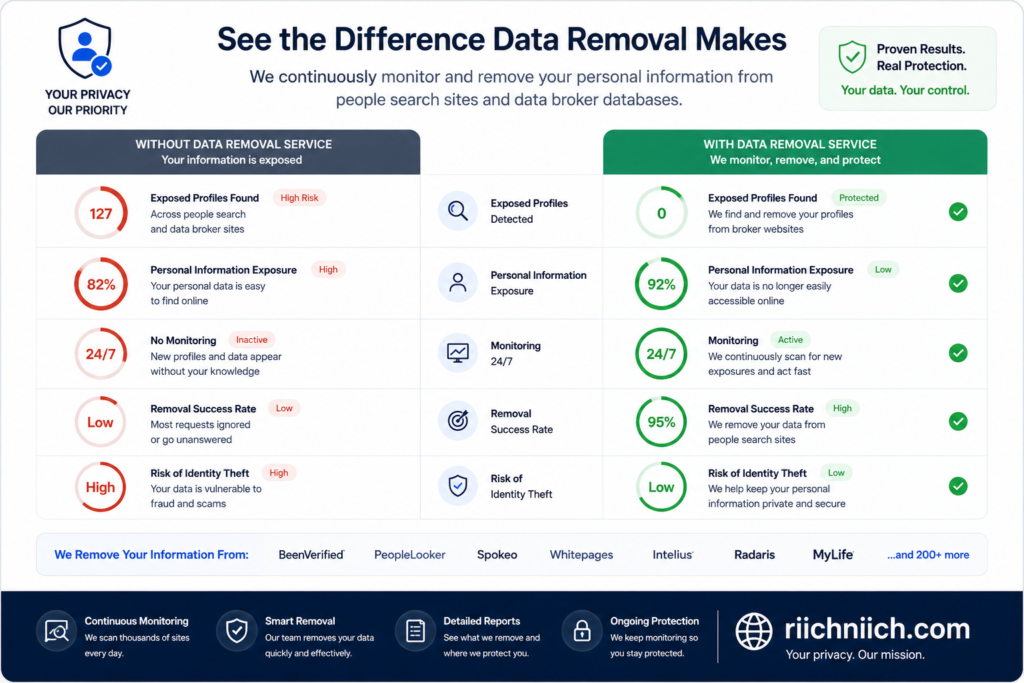
How to Remove Your Information From Data Broker Sites
Removing your personal information from data broker websites can help improve your online privacy and reduce the risk of spam calls, phishing attacks, identity theft, and targeted scams. While it may not be possible to erase every piece of information online permanently, reducing your exposure across broker databases can make your personal data much harder to find.
Understanding how data brokers get your information is important because your data may already exist across hundreds of people-search websites, advertising databases, and marketing platforms.
The first step is identifying where your information appears online. Many data broker websites allow users to search for their names, phone numbers, addresses, or email addresses to locate public profiles.
Once you find your information, most broker sites provide opt-out or removal request forms that allow users to request deletion of their personal records. However, the process can vary significantly between websites.
Manual removal often involves:
- Searching for your profile
- Verifying your identity
- Submitting opt-out requests
- Confirming removal emails
- Repeating the process across multiple websites
- Monitoring for reappearances later
Because there are so many broker websites online, manually removing information can become extremely time-consuming. This is one reason many people choose automated privacy removal services to handle the process more efficiently.
Services like Incogni and DeleteMe continuously submit removal requests to data brokers and monitor for new exposures over time.
These services can help reduce how data brokers get your information by limiting the amount of publicly accessible data available across broker networks and people-search websites.
According to the Privacy Rights Clearinghouse Data Broker Guide, consumers often need to remove personal information from multiple broker websites individually because there is no single universal opt-out system.
The U.S. Cybersecurity & Infrastructure Security Agency (CISA) Personal Information Protection Tips also recommends minimizing publicly available personal information to reduce cybersecurity and identity theft risks.
Additional ways to reduce online exposure include:
- Limiting public social media information
- Removing unused online accounts
- Reviewing privacy settings regularly
- Using tracker blockers and privacy browsers
- Disabling unnecessary app permissions
- Monitoring data breach exposure
- Avoiding oversharing personal information online
Another important step is ongoing monitoring. Because how data brokers get your information constantly changes, your information may reappear online even after removal requests are completed.
This is why continuous monitoring and privacy protection tools can be valuable for long-term online privacy management.
Reducing your exposure across data broker sites can help:
- Lower spam calls and robocalls
- Reduce phishing attempts
- Improve digital privacy
- Limit identity theft risks
- Make personal information harder to search online
- Decrease targeted advertising exposure
The less information available online, the harder it becomes for data brokers, advertisers, scammers, and cybercriminals to build detailed profiles about you.
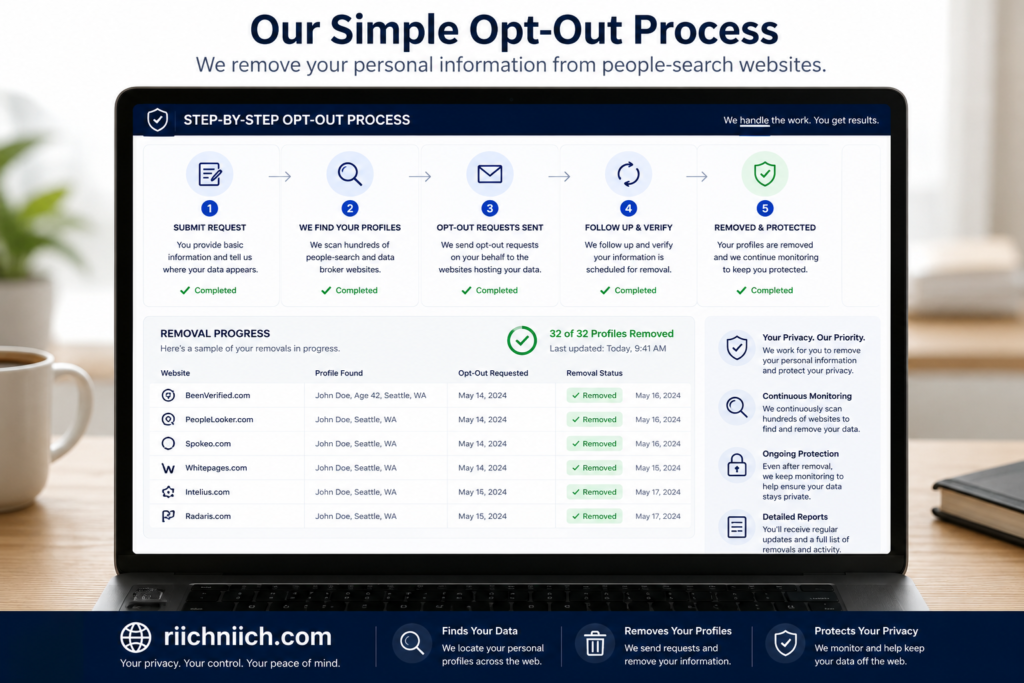
Can VPNs and Privacy Tools Stop Data Collection?
VPNs and privacy tools can significantly reduce online tracking and data collection, but they cannot completely stop every form of data gathering. Understanding how data brokers get your information is important because your personal data often comes from multiple sources, including websites, apps, social media platforms, public records, and data breaches.
A VPN, or Virtual Private Network, helps protect your internet connection by encrypting your traffic and masking your IP address. This makes it harder for advertisers, internet service providers, hackers, and some tracking systems to monitor your browsing activity.
VPNs are especially useful for:
- Protecting browsing activity on public WiFi
- You should also understand the hidden risks of public WiFi networks and how hackers can intercept personal information online
- Hiding IP addresses
- Encrypting internet traffic
- Reducing location tracking
- Improving online privacy
- Preventing some forms of network surveillance
Services like NordVPN and Surfshark also include additional privacy features such as tracker blocking, malware protection, and ad blocking tools that can help limit data collection online.
👉 Surfshark also includes built-in tracker blocking and privacy tools that help reduce the amount of personal data collected while browsing online.
However, VPNs alone cannot stop all data broker activity. If you voluntarily provide information to websites, apps, loyalty programs, or social media platforms, that information may still be collected and shared.
This is why many people combine VPNs with other privacy-focused tools to reduce how data brokers get your information more effectively.
If you are looking for stronger online privacy protection, here are the best VPN services for privacy for protecting your personal data online.
Other privacy tools that can help include:
- Tracker blockers
- Privacy browsers
- Ad blockers
- Password managers
- Identity monitoring services
- Data removal services
- Secure email providers
For example, data removal services like Incogni can help remove exposed personal information from broker databases, while identity protection services like Aura may help monitor identity theft risks and data breach exposure.
According to the Electronic Frontier Foundation Surveillance Self-Defense Guide, combining multiple privacy tools provides stronger protection against online tracking and data collection.
The Mozilla Privacy Tips Guide also recommends using privacy-focused browsers, tracker blockers, and strong security settings to reduce digital exposure.
Another important factor is limiting what information you share online. Even the best privacy tools cannot fully protect information that users voluntarily publish publicly.
This is one reason how data brokers get your information often includes:
- Social media activity
- Online purchases
- Mobile apps
- Public records
- Marketing databases
- Data breaches
- Account registrations
Using privacy tools consistently can still make a major difference by reducing tracking, improving cybersecurity, and limiting how much information advertisers and data brokers can collect over time.
👉 NordVPN helps encrypt your internet traffic, reduce online tracking, and protect your personal data while browsing on public and private networks.
For stronger privacy protection, experts often recommend combining:
- A trusted VPN
- Data removal services
- Strong password security
- Multi-factor authentication
- Privacy-focused browsers
- Regular account monitoring
These essential cybersecurity tips can also help you improve your privacy, strengthen account security, and reduce online risks.
Together, these tools can help reduce online exposure, improve digital privacy, and make it harder for third parties to build detailed profiles about you online.
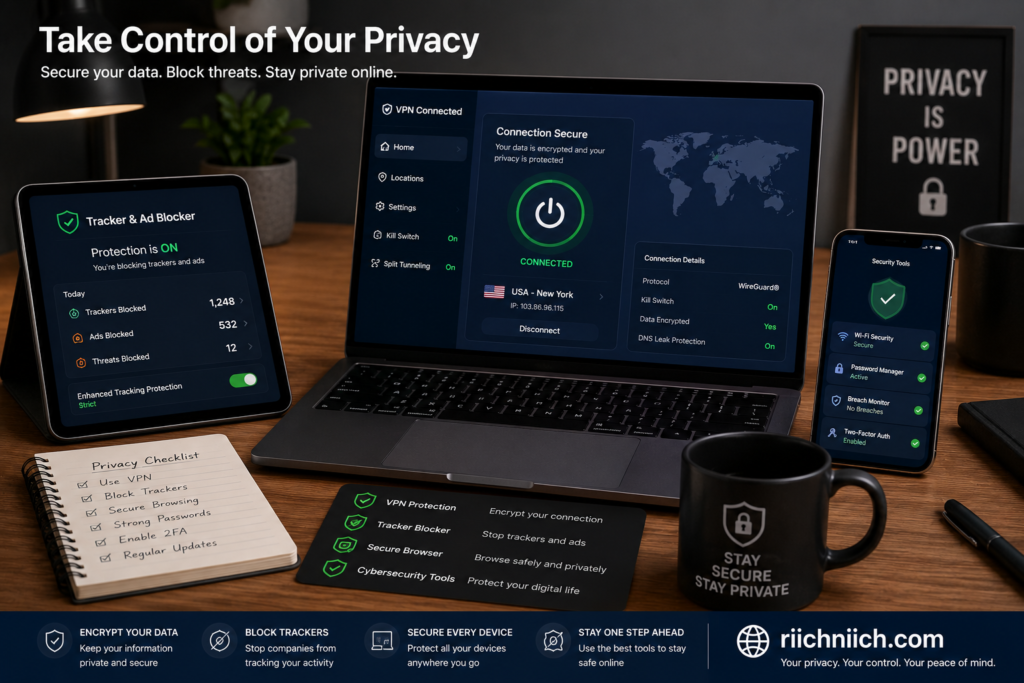
Final Verdict: Can You Stop Data Brokers From Collecting Your Information?
Completely stopping data brokers from collecting your information is extremely difficult in today’s digital world. Personal data is constantly being collected through websites, apps, online purchases, public records, social media platforms, and marketing systems. However, you can significantly reduce how much information is available online and make it much harder for data brokers to build detailed profiles about you.
Understanding how data brokers get your information is the key to protecting your privacy. The less information you share online — and the more privacy protections you use — the lower your overall exposure becomes.
While no single tool can completely eliminate online tracking or data collection, combining multiple privacy strategies can greatly reduce risks associated with:
- Identity theft
- Spam calls
- Scam text messages
- Phishing attacks
- Account takeovers
- Targeted advertising
- Public exposure of personal information
One of the most effective ways to reduce exposure is removing your information from data broker websites and people-search databases. Because manually opting out of hundreds of sites can be overwhelming, many users choose automated privacy services to simplify the process.
Services like Incogni and DeleteMe help automate data removal requests and monitor broker databases for new exposures over time.
For broader protection, some users also combine privacy removal tools with identity protection services like Aura, which offers identity monitoring, fraud alerts, and cybersecurity protection features.
This layered approach can help reduce how data brokers get your information while improving your overall online privacy and digital security.
According to the Center for Democracy & Technology Privacy Resources, reducing personal data exposure and improving privacy controls are becoming increasingly important as data collection practices continue expanding online.
The National Cybersecurity Alliance Privacy Advice also recommends regularly reviewing privacy settings, limiting unnecessary data sharing, and monitoring online accounts for suspicious activity.
Another important reality is that how data brokers get your information constantly changes. Even after removing information from one source, new information may appear through public records, mobile apps, social media activity, data breaches, or third-party marketing databases.
This is why ongoing privacy management matters. The most effective long-term strategy usually includes:
- Removing exposed personal information
- Using privacy-focused tools
- Monitoring identity exposure
- Limiting unnecessary data sharing
- Using VPNs and tracker blockers
- Protecting accounts with strong passwords and multi-factor authentication
The goal is not perfection — it is reducing your digital footprint enough to make tracking, profiling, and cybercrime significantly more difficult.
The less information available online, the harder it becomes for advertisers, data brokers, scammers, and cybercriminals to collect, share, and exploit your personal data.
Pingback: How to Remove Yourself From People Search Sites - Riich Niich
Pingback: How to Stay Anonymous Online (Step-by-Step Guide) - Riich Niich
Pingback: How to Protect Your Email From Hackers - Riich Niich
Pingback: How to Opt Out of Data Brokers (Step-by-Step Guide) - Riich Niich