

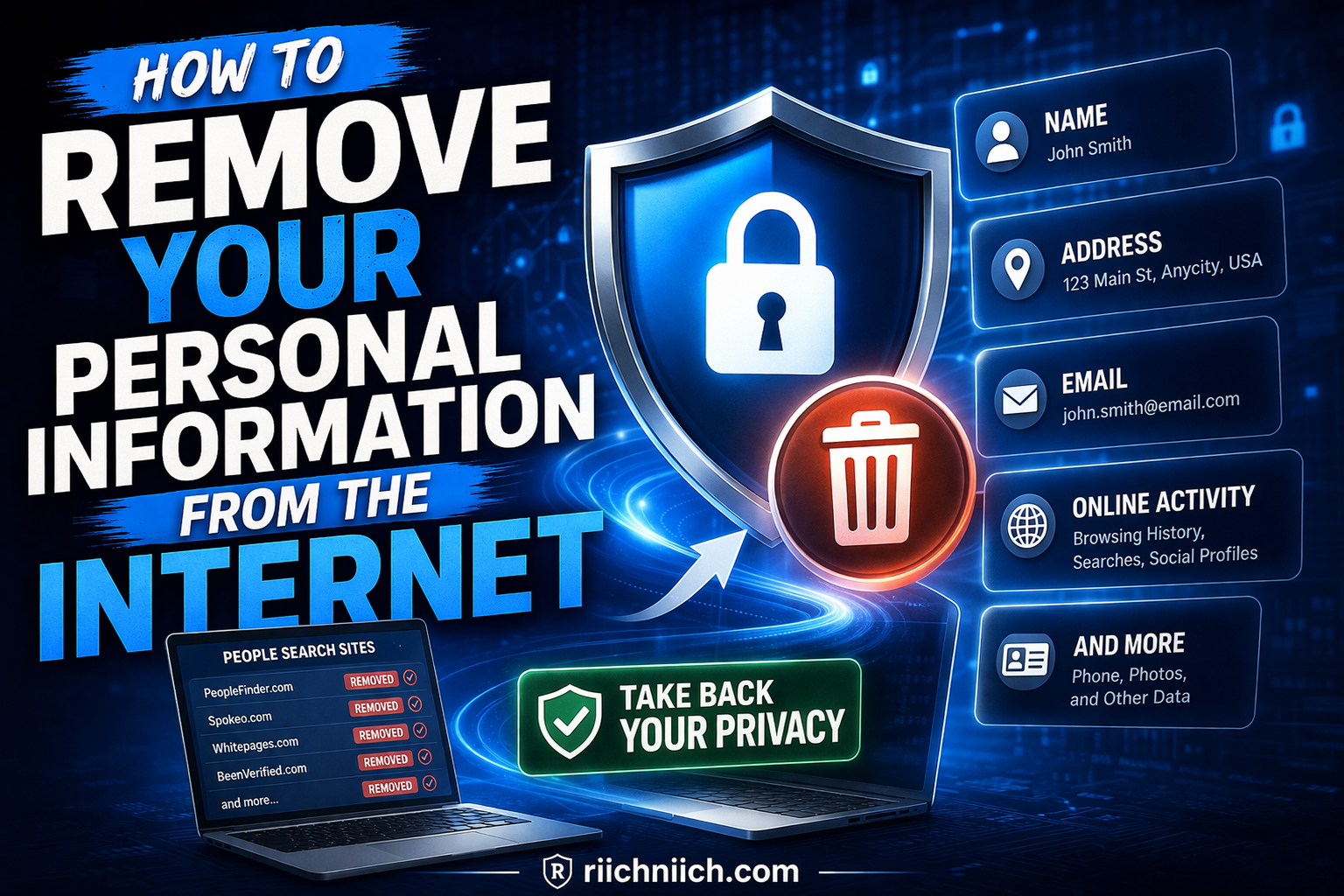
How to remove your personal information from the internet is one of the most important steps you can take to protect your privacy, reduce identity theft risk, and stay in control of your digital footprint. Your personal data—such as your name, address, phone number, and online activity—is often collected, shared, and sold without your knowledge.
In this guide, you’ll learn exactly how to find, remove, and protect your information online using both manual methods and automated tools. Whether you want a free step-by-step approach or a faster, more efficient solution, this article will show you the most effective way to take control of your personal data.
🔍 Quick Reality: Removing Your Data Is Harder Than You Think
Removing your personal information from the internet is possible — but it’s not a one-time fix.
Your data is often collected, shared, and resold across hundreds of websites.
👉 Even if you remove it once, it can reappear again later.
Table of Contents
Where Your Personal Information Exists Online
Your data can be found across multiple sources, including:
❌ Data broker websites
❌ People search sites
❌ Social media platforms
❌ Public records
👉 This is why removing your information requires multiple steps.
How to Remove Your Personal Information from the Internet (Step-by-Step Guide)
If you’re searching for how to remove your personal information from the internet, you’re likely concerned about privacy, identity theft, or your data being exposed without your control. The good news is—you can reduce your online footprint significantly. The challenge is that doing it manually takes time, effort, and consistency.
This step-by-step guide shows you exactly how to remove your personal information from the internet, along with the most efficient way to do it if you want faster, more complete results.
Step 1: Search for Your Personal Information Online
Start by identifying where your data currently exists.
- Google your full name (include city/state)
- Search your phone number and email address
- Check image results for photos tied to your identity
This helps you uncover:
- Data broker listings (Spokeo, Whitepages, etc.)
- Old social media accounts
- Public records and directory listings
As part of protecting your identity during this process, it’s also important to understand credit freeze vs credit lock and when to use each.
Use private browsing mode to avoid personalized search results.
Step 2: Identify Data Broker Websites
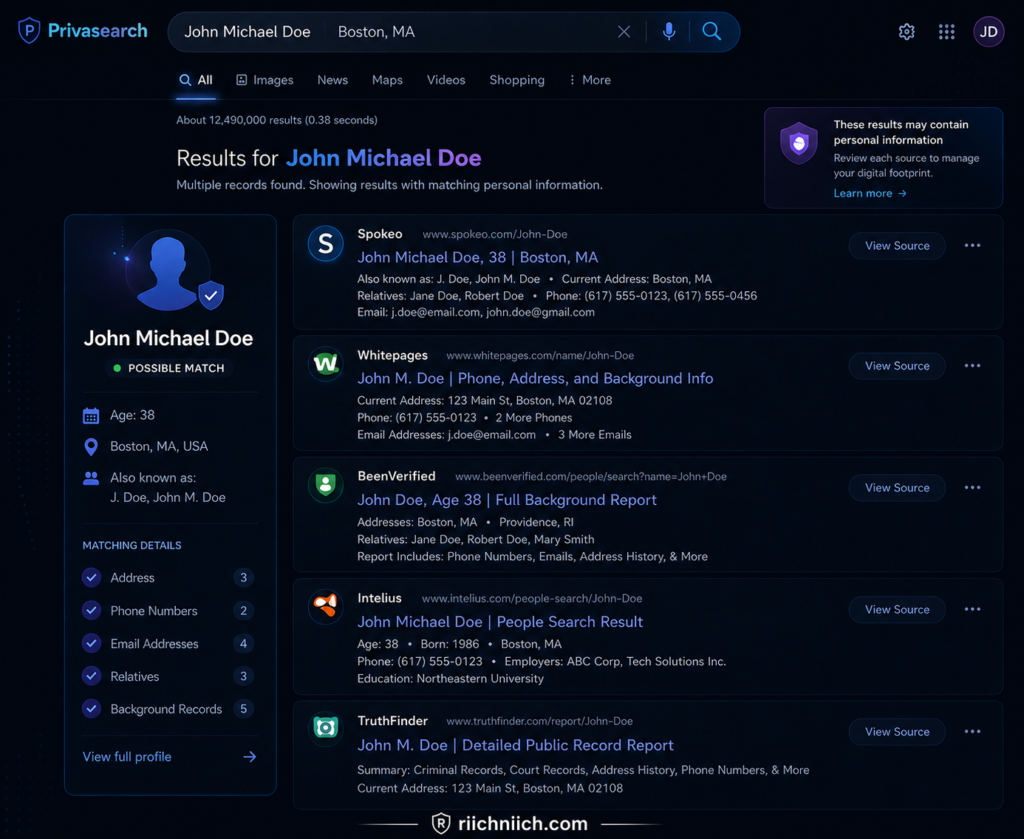
Data brokers are one of the primary sources of your personal information being online. These companies collect, package, and sell your data.
Examples include:
- People search websites
- Background check platforms
- Marketing data aggregators
To understand how your data is collected and used, refer to guidance from the Federal Trade Commission.
Data brokers gather information from:
- Public records
- Social media activity
- Third-party data sharing agreements
Step 3: Submit Manual Removal Requests
Most data broker websites offer opt-out options, but each one has a different process.
Typical steps:
- Locate your listing
- Copy the profile URL
- Submit a removal request
- Verify your identity (usually via email)
Be aware that some sites make this process intentionally complicated or slow.
Step 4: Remove Your Information from Google Search Results
Even after your data is removed from a website, it may still appear in search results.
You can request removal directly through Google.
Google may remove:
- Sensitive personal information (such as SSN or financial data)
- Doxxing content
- Outdated pages that no longer exist
Step 5: Delete or Update Social Media Accounts
Social media profiles are a major source of personal data exposure.
Take the following actions:
- Delete unused accounts
- Set active accounts to private
- Remove personal details such as phone number, location, and workplace
For best practices, refer to the Identity Theft Resource Center.
Step 6: Remove Your Information from Public Records
Some of your personal data may come from public records, including:
- Property ownership records
- Court filings
- Business registrations
While not always removable, you can:
- Request redaction where available
- Use privacy services for business filings
- Limit future exposure where possible
Step 7: Monitor and Repeat Regularly
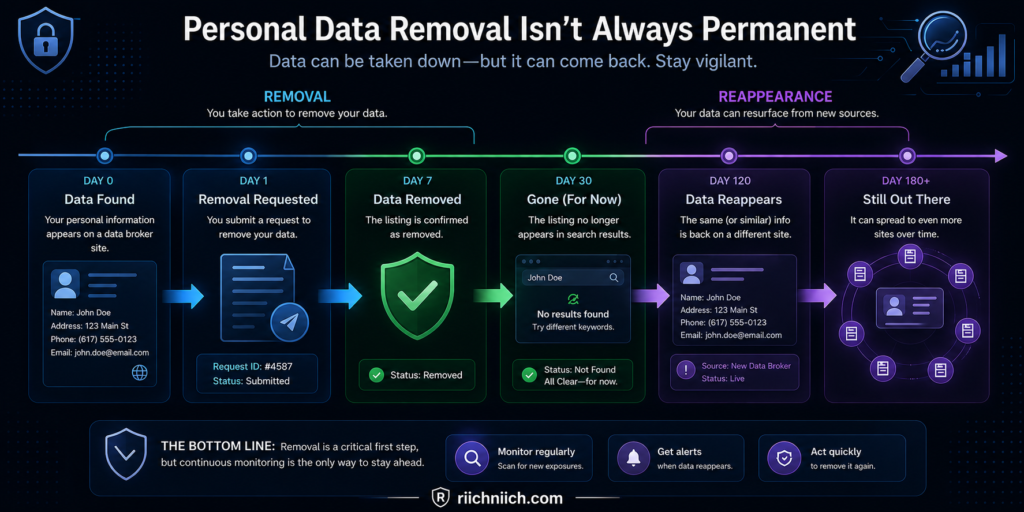
Removing your data is not a one-time task.
Data brokers frequently:
- Re-collect your information
- Re-publish your profiles
This means you need to:
- Monitor your online presence regularly
- Repeat removal requests as needed
The Problem With Removing Your Data Manually
While it’s possible to remove your personal information yourself, the process can be extremely time-consuming.
You’ll need to:
✔ Find every site that has your data
✔ Submit removal requests individually
✔ Follow up regularly
✔ Repeat the process every few months
👉 For most people, this can take dozens or even hundreds of hours.
Why Most People Don’t Do This Themselves
Even though removing your data is important, most people don’t follow through — simply because it’s too much work.
And while you’re trying to remove your data from one site…
👉 It may already be appearing on another.
The Easier Way to Remove Your Personal Information
Instead of doing everything manually, tools like Incogni automate the entire process.
Incogni:
✔ Finds where your data is exposed
✔ Submits removal requests automatically
✔ Continuously monitors and removes new exposures
👉 Remove your personal data automatically with Incogni here!
A Faster Alternative: Automated Data Removal
If you want to remove your personal information from the internet more efficiently, services like Incogni handle the process for you.
Instead of contacting each data broker manually, Incogni:
- Submits removal requests on your behalf
- Covers dozens to hundreds of data broker websites
- Continuously monitors and removes newly exposed data
This transforms a time-intensive process into a more consistent and scalable solution.
Bottom Line
Understanding how to remove your personal information from the internet is an important step in protecting your privacy.
Manual removal gives you direct control but requires ongoing effort. Automated tools provide a more efficient and consistent approach.
For most people, the most effective strategy is to combine both methods—starting with manual cleanup and using automation to maintain long-term protection.
Why Your Personal Information Is Already on the Internet
Before you can fully understand how to remove your personal information from the internet, you need to understand why it’s there in the first place. Most people are surprised to learn that their data is not just online—it is actively collected, shared, and sold across hundreds of sources.
Your personal information doesn’t appear online by accident. It comes from multiple channels working together behind the scenes. To better understand how your data ends up online in the first place, read our guide on how hackers get your personal data.
1. Data Brokers Collect and Sell Your Information
The biggest reason your personal information is online is due to data broker companies.
These companies:
- Collect your data from multiple sources
- Build detailed profiles about you
- Sell that information to advertisers, third parties, and even other data brokers
They gather data such as:
- Full name and address
- Phone number and email
- Age, income range, and interests
- Family members and associates
According to the Federal Trade Commission, data brokers operate largely behind the scenes, and most people don’t even know their data is being collected.
2. Public Records Make Your Data Accessible
Some of your personal information is legally public and easily accessible online.
This includes:
- Property ownership records
- Court documents
- Business registrations
- Voter registration (in some states)
These records are often picked up by data brokers and republished on people search websites.
Even if you never signed up for anything, your data may still appear online because of these records.
3. Social Media and Online Activity
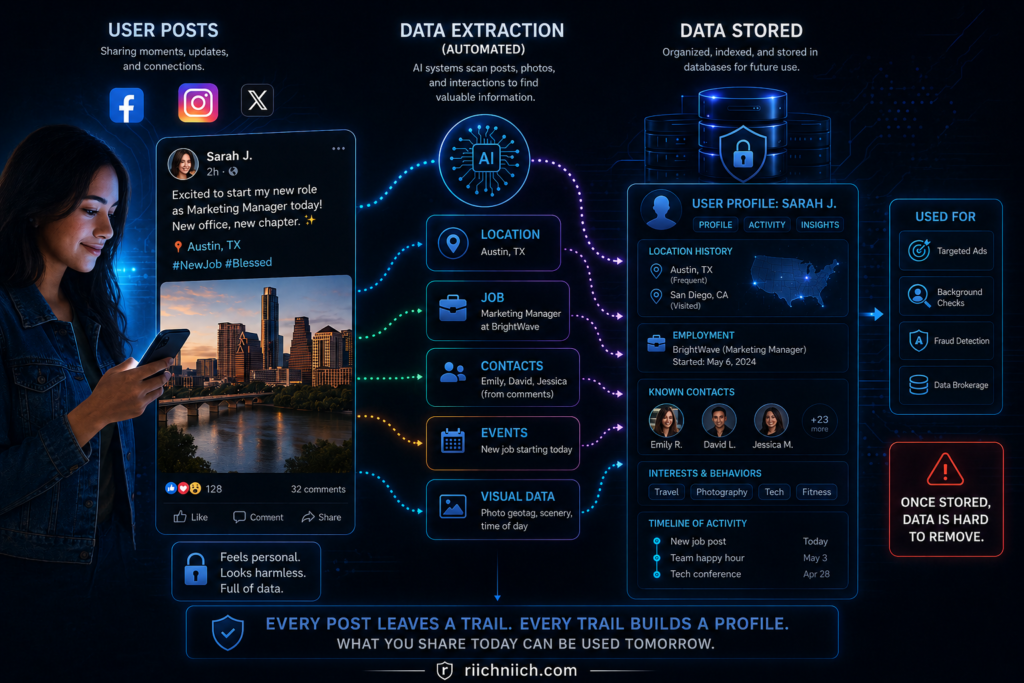
Every time you use social media or sign up for a website, you contribute to your digital footprint.
Common sources include:
- Social media profiles (Facebook, Instagram, LinkedIn)
- Online forms and account registrations
- App permissions and tracking
Even small details—like posting your city, job, or birthday—can be collected and combined into a complete profile.
For guidance on managing your exposure, the Identity Theft Resource Center provides resources on protecting personal data online.
4. Data Breaches and Leaks
One of the fastest ways your information ends up online is through data breaches.
When companies are hacked, your data can be exposed, including:
- Email addresses and passwords
- Financial information
- Social Security numbers
- Account credentials
Once leaked, this data is often:
- Sold on the dark web
- Shared across databases
- Indexed by malicious actors
According to reports from the Identity Theft Resource Center, data breaches continue to expose millions of records every year.
5. Third-Party Data Sharing
Many companies you interact with share your data with third parties.
This happens when you:
- Accept privacy policies without reviewing them
- Use free services or apps
- Sign up for newsletters or promotions
Your data may be shared with:
- Marketing partners
- Analytics platforms
- Data aggregation companies
This creates a chain reaction where your information spreads across multiple databases.
6. Search Engines Index Everything
Search engines like Google do not create your data—but they make it easy to find.
Once your information appears on a website:
- It can be indexed
- Cached
- Displayed in search results
This is why even outdated or removed information can still appear online.
What This Means for You
Your personal information is online because of a combination of:
- Data brokers
- Public records
- Social media activity
- Data breaches
- Third-party sharing
This is why learning how to remove your personal information from the internet is not a one-time task—it is an ongoing process.
Why This Leads to a Bigger Problem
Because your data is constantly being:
- Collected
- Shared
- Re-published
Manual removal becomes difficult to maintain over time.
This is where many people shift toward automated solutions like Incogni, which continuously work to remove your data from multiple sources without requiring constant effort.
Bottom Line
Your personal information is already on the internet because the system is designed to collect and distribute it.
Understanding where your data comes from is the first step. The next step is taking control by removing and limiting that exposure using the methods covered in this guide.
What Personal Information Can Be Found About You Online?
If you’re researching how to remove your personal information from the internet, it’s important to understand exactly what data is exposed. Most people underestimate how much of their personal information is publicly accessible—and how detailed these profiles can be.
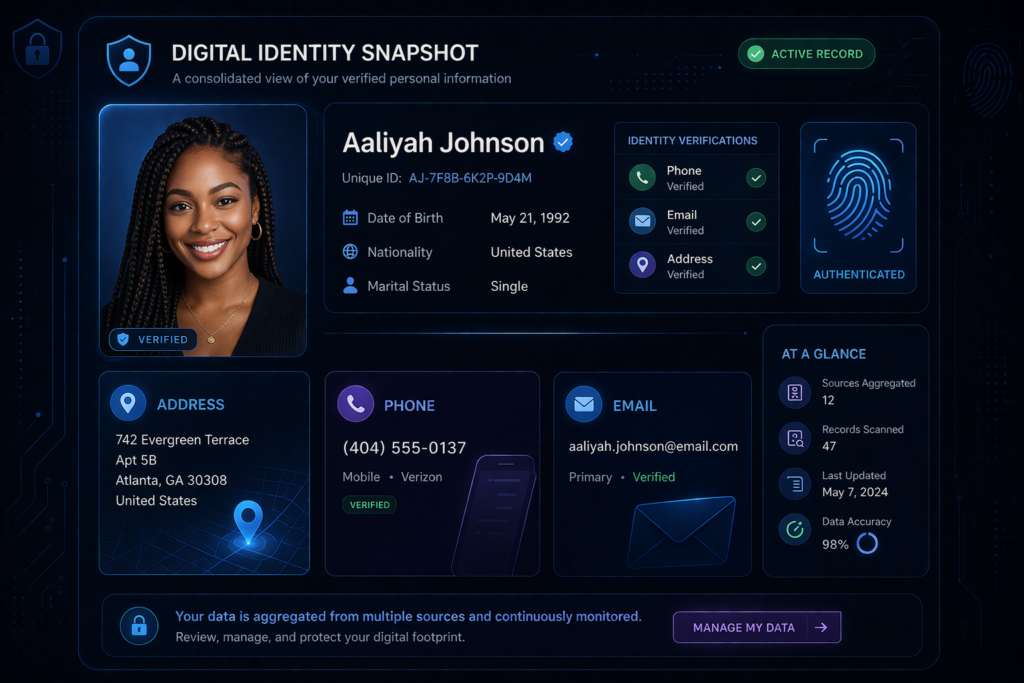
Your online footprint often includes far more than just your name and email. In many cases, complete profiles are built and sold without your knowledge.
1. Basic Identifying Information
This is the most commonly exposed data and often the easiest to find.
It includes:
- Full name
- Current and past addresses
- Phone numbers
- Email addresses
- Date of birth or age range
This information is frequently listed on:
- People search websites
- Public directories
- Data broker platforms
Once exposed, it becomes the foundation for deeper profiling and targeting.
2. Family Members and Relationships
Many data broker sites go a step further by linking you to other people.
This may include:
- Spouse or partner
- Children
- Relatives and associates
- Roommates or previous cohabitants
This type of information increases risk because it allows attackers to:
- Build trust through social engineering
- Target family members
- Answer security questions
3. Employment and Income Data
Your professional life is often publicly accessible or inferred.
This can include:
- Current and past employers
- Job titles
- Work history
- Estimated income range
Sources include:
- Professional networks
- Public records
- Aggregated marketing data
According to the Federal Trade Commission, this type of data is often collected and sold for advertising and profiling purposes.
4. Online Accounts and Usernames
Your usernames can be linked across multiple platforms, creating a connected identity. To secure your accounts during this process, make sure you’re using one of the best password managers to protect your login credentials.
This includes:
- Social media handles
- Forum accounts
- Gaming profiles
- Email usernames
When combined, this data can reveal:
- Behavior patterns
- Interests and habits
- Posting history
This makes it easier to track your activity across the internet.
5. Financial and Behavioral Indicators
While full financial details are not always public, partial data is often available or inferred.
This includes:
- Estimated net worth or income bracket
- Purchasing behavior
- Credit-related indicators
- Home ownership status
This information is commonly used for:
- Targeted advertising
- Financial profiling
- Scam targeting
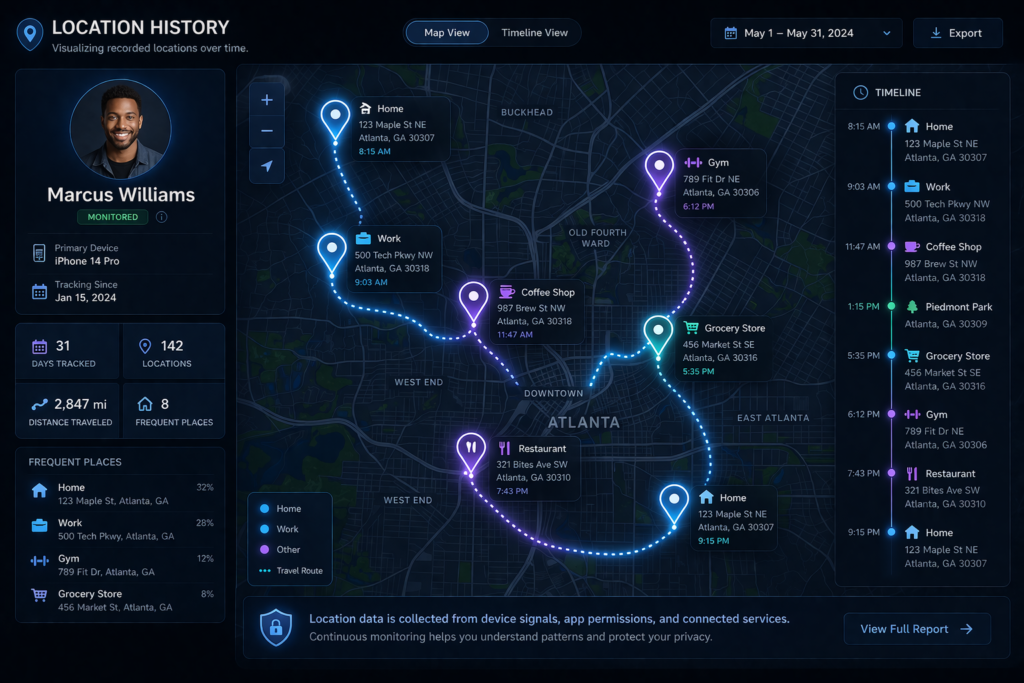
6. Location and Movement Data
Your location data is more exposed than most people realize.
This may include:
- Current and past addresses
- Frequently visited locations
- IP-based location tracking
- Check-ins and tagged locations
Sources include:
- Social media posts
- Mobile apps
- Data-sharing agreements
7. Data from Breaches and Leaks
If your data has ever been part of a breach, it may already be circulating online.
This can include:
- Email addresses and passwords
- Login credentials
- Financial account details
- Personal identification numbers
8. Photos and Digital Content
Images and content tied to your identity are also part of your online footprint.
This includes:
- Profile pictures
- Tagged photos
- Uploaded documents
- Public posts and comments
These can reveal:
- Your appearance
- Your location
- Your lifestyle
Even deleted content can sometimes remain cached or archived.
Why This Matters
When all of this information is combined, it creates a detailed and searchable profile of you. If you’re unsure whether your information is already being used against you, here are the warning signs someone stole your identity.
This makes it easier for:
- Identity thieves
- Scammers
- Data brokers
- Advertisers
to track, target, and exploit your data.
How This Connects to Removal
Understanding what personal information is exposed is a critical step in learning how to remove your personal information from the internet.
The more data that exists:
- The harder it is to remove manually
- The more places you need to monitor
- The more likely it is to reappear
This is why many people move toward automated solutions like Incogni, which focus on removing and monitoring multiple types of personal data across numerous platforms.
Bottom Line
Your personal information online goes far beyond basic contact details. It includes relationships, behavior, location, and even inferred financial data.
Knowing what is exposed allows you to take targeted action—and makes the process of removing your personal information from the internet far more effective.
The Risks of Your Personal Information Being Public
Understanding how to remove your personal information from the internet starts with recognizing the real risks of leaving it exposed. When your data is publicly available, it becomes a resource not just for legitimate businesses—but also for scammers, hackers, and identity thieves.
Below are the most important risks you need to be aware of.
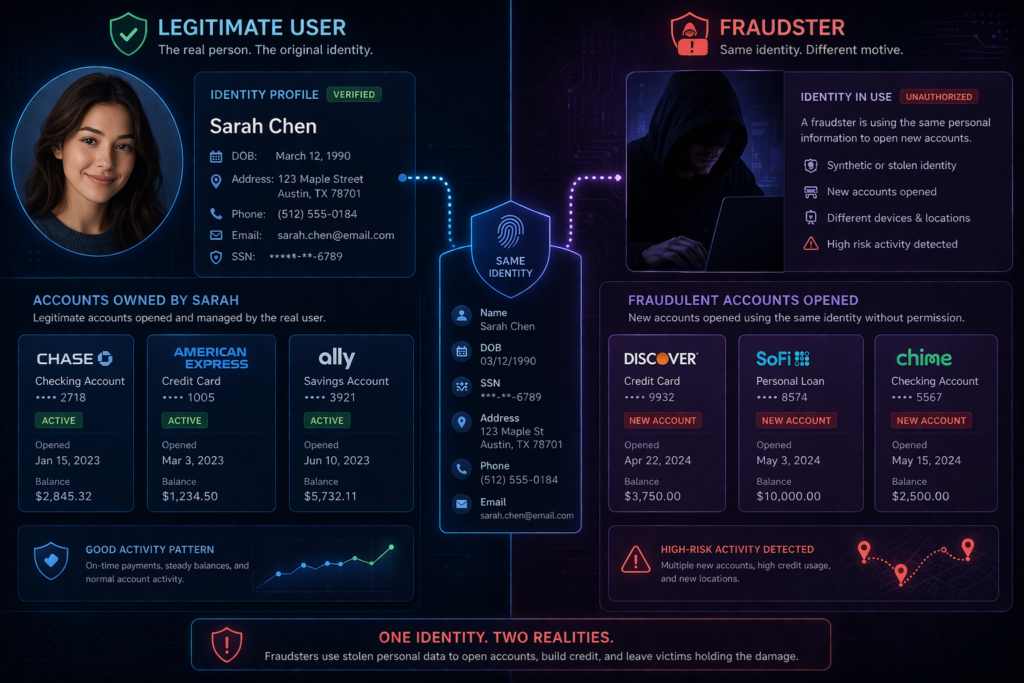
1. Identity Theft
One of the most serious risks is identity theft.
When enough of your personal information is available online, criminals can:
- Open credit accounts in your name
- Apply for loans
- Commit fraud using your identity
Even basic details like your name, address, and date of birth can be enough to start the process. If you believe your information has already been compromised, here’s exactly what to do immediately if your identity is stolen.
According to the Federal Trade Commission, identity theft remains one of the most common types of fraud reported in the United States.
2. Targeted Phishing and Scams
The more information available about you, the more convincing scams become.
Attackers use your data to:
- Personalize phishing emails
- Impersonate trusted contacts
- Create believable fake scenarios
For example, if your employer and email are publicly available, a scam email can appear highly legitimate.
This significantly increases the chances of:
- Clicking malicious links
- Sharing sensitive information
- Falling for financial scams
3. Financial Fraud
Public data can lead directly to financial loss.
Criminals may use your information to:
- Access financial accounts
- Reset passwords
- Intercept verification messages
Even partial data can be combined with breached information to gain access.
The Identity Theft Resource Center regularly reports that financial fraud is often tied to exposed personal data.
4. Social Engineering Attacks
Social engineering relies on manipulating people rather than hacking systems.
When your personal information is public, attackers can:
- Pretend to be someone you know
- Answer security questions
- Gain trust quickly
Examples include:
- Calling customer service pretending to be you
- Contacting family members for information
- Bypassing account recovery systems
5. Loss of Privacy and Personal Safety
Public exposure is not just a digital issue—it can become a real-world concern.
Risks include:
- Stalking or harassment
- Unwanted contact
- Exposure of home address and family details
When your location and personal connections are easily accessible, your overall safety can be impacted.
6. Reputation Damage
Information found online can affect how others perceive you.
This includes:
- Old social media posts
- Outdated or incorrect information
- Public records taken out of context
Employers, clients, or partners may search your name and form opinions based on what they find.
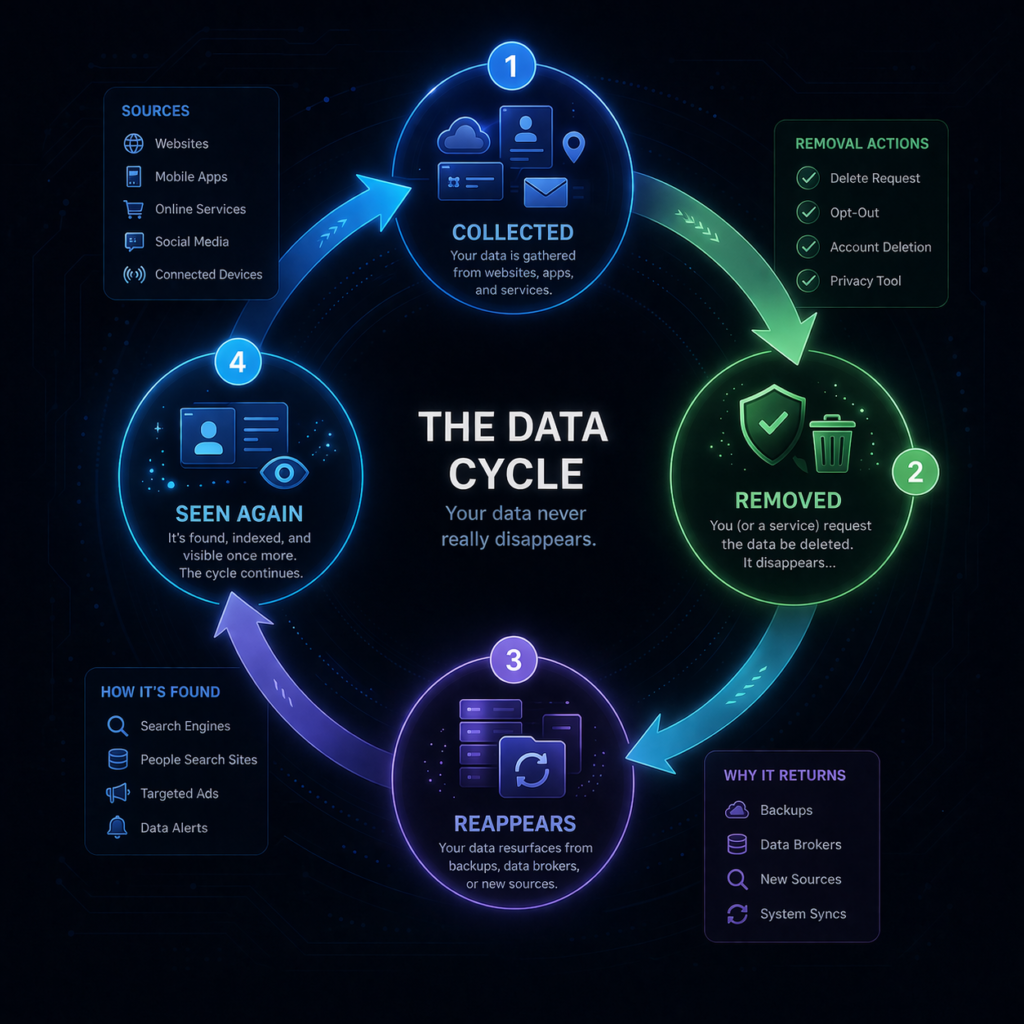
7. Continuous Data Resurfacing
Even if you remove your information once, it often comes back.
This happens because:
- Data brokers resell and redistribute data
- New sources continuously collect your information
- Old databases are updated and republished
This creates an ongoing cycle of exposure.
Why This Makes Removal More Important
These risks highlight why learning how to remove your personal information from the internet is not optional—it is essential.
The more your data is exposed:
- The higher your risk of identity theft
- The easier it is for scammers to target you
- The harder it becomes to control your digital footprint
A Smarter Approach to Reducing Risk
While manual removal can help reduce exposure, it is often not enough on its own due to the scale of data collection.
This is why many people use services like Incogni, which:
- Continuously remove your data from multiple sources
- Reduce the chances of your information resurfacing
- Help maintain long-term privacy protection
Bottom Line
When your personal information is public, it creates multiple risks—from identity theft to financial fraud and loss of privacy.
Understanding these risks reinforces the importance of taking action. The sooner you begin removing and protecting your data, the lower your exposure and the better your long-term security.
For full protection beyond data removal, tools like Aura also monitor fraud, credit activity, and identity theft.
How to Remove Your Personal Information from the Internet for Free (Manual Method)
If you’re looking for how to remove your personal information from the internet without paying for a service, you can do it manually. This method is completely free—but it requires time, consistency, and attention to detail.
Below is a practical, step-by-step approach to removing your data yourself.
Use a password manager like NordPass to secure your accounts while cleaning up your data.
Step 1: Find Where Your Personal Information Is Listed
Start by identifying every place your data appears.
Search for:
- Your full name (with city/state)
- Your phone number
- Your email address
- Usernames you’ve used online
Check beyond Google:
- Bing and Yahoo search results
- People search sites (Spokeo, Whitepages, BeenVerified)
- Old forums or directories
Create a list or spreadsheet of:
- Website name
- URL of your profile
- Type of information exposed
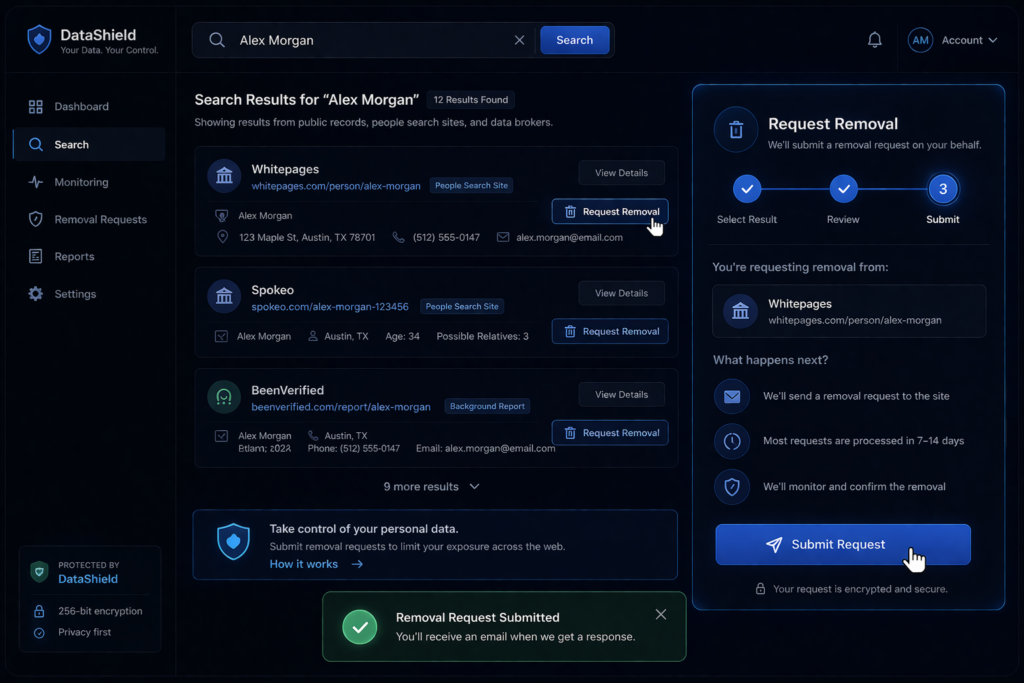
Step 2: Remove Your Information from Data Broker Sites
Data broker websites are the primary source of exposed personal data.
To remove your information:
- Locate your profile on the site
- Find the “Opt-Out” or “Do Not Sell My Info” page
- Submit your removal request
- Confirm via email (if required)
Some well-known opt-out pages:
- Whitepages opt-out
- Spokeo privacy removal
- BeenVerified opt-out
Step 3: Request Removal from Google Search Results
Even after deleting your data from a website, it may still appear in search results.
You can submit a removal request through Google.
Google may remove:
- Sensitive personal data
- Outdated or deleted pages
- Certain types of harmful content
This step helps reduce visibility, even if the original source still exists temporarily.
Step 4: Delete or Clean Up Online Accounts
Old accounts are a major source of personal data exposure.
Take the time to:
- Delete unused accounts
- Remove personal details from active profiles
- Change privacy settings to limit visibility
Focus on:
- Social media platforms
- Shopping accounts
- Forums and community sites
If you’re unsure where you have accounts, you can search your email inbox for past registrations.
Step 5: Contact Website Owners Directly
If your information appears on a site without an opt-out option, you can contact the site owner.
Steps:
- Find the “Contact” or “Privacy” page
- Send a request to remove your personal data
- Include the exact URL and details
In some cases, websites are required to comply depending on privacy laws in your region.
Step 6: Opt Out of Data Sharing Where Possible
Many websites and services allow you to limit how your data is shared.
Look for:
- “Do Not Sell My Personal Information” links
- Privacy settings within accounts
- Email unsubscribe options
For guidance on consumer privacy rights, review information from the Federal Trade Commission.
Step 7: Repeat the Process Regularly
Removing your data once is not enough.
Data brokers and websites often:
- Re-add your information
- Update profiles with new data
- Share your data with other platforms
To stay protected, you need to:
- Recheck your listings periodically
- Submit new removal requests
- Monitor your online presence
The Reality of the Free Manual Method
While this method works, it comes with trade-offs:
- It is time-intensive
- It requires ongoing effort
- It does not cover all data broker sites
- Results can be inconsistent
For many people, the biggest challenge is not removing data once—it is keeping it removed.
When Manual Removal Becomes Difficult
As your data spreads across more platforms, managing it manually becomes harder to maintain.
This is why people researching how to remove your personal information from the internet often start with the free method, then move to automated solutions like Incogni for ongoing removal and monitoring.
Bottom Line
You can remove your personal information from the internet for free by following a manual process. It gives you control and does not require any cost.
However, it requires consistent effort and regular monitoring. If you want long-term results with less time investment, combining manual removal with automated tools is often the most effective approach.
Some tools like Coveron also include financial protection and recovery support.
Step-by-Step: How to Remove Your Personal Information from Data Broker Sites
If you’re serious about learning how to remove your personal information from the internet, removing your data from data broker sites is the most important step. These platforms are the primary source of your exposed personal data—and they continuously collect, update, and resell it. If you want a deeper understanding of the risks involved, here’s a breakdown of how identity theft happens.
This section walks you through exactly how to remove your information from these sites, step by step.
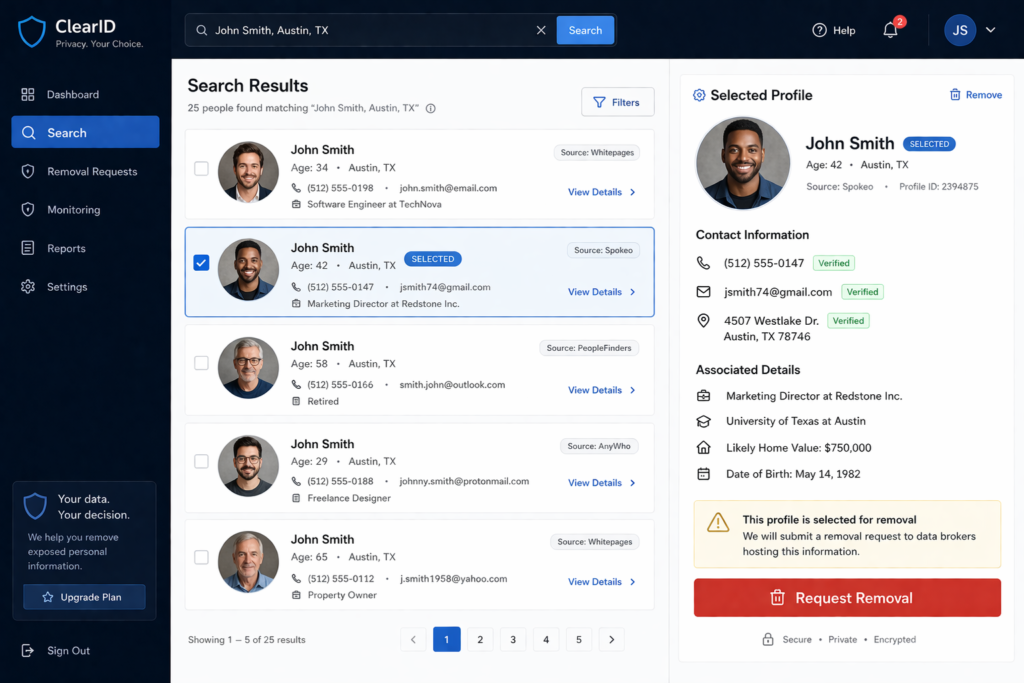
Step 1: Locate Your Profile on Data Broker Websites
Start by finding where your information is listed.
Search for:
- Your full name + city/state
- Your phone number
- Your email address
Check popular data broker sites such as:
- Whitepages
- Spokeo
- BeenVerified
- PeopleFinder
When you find your listing:
- Copy the exact profile URL
- Confirm it matches your identity
Step 2: Find the Opt-Out or Removal Page
Most data broker sites have a dedicated opt-out page, but it’s often not easy to find.
Look for:
- “Opt-Out”
- “Privacy Request”
- “Do Not Sell My Info”
These links are usually located:
- In the website footer
- Inside the privacy policy
- On a hidden support page
Step 3: Submit Your Removal Request
Once you find the opt-out page:
- Paste your profile URL
- Enter your email address
- Submit the removal request
Some sites may require:
- CAPTCHA verification
- Email confirmation
- Additional identity verification
Be careful not to provide more information than necessary.
Step 4: Confirm Your Request via Email
Most data broker sites require you to verify your request.
You will typically:
- Receive a confirmation email
- Click a verification link
- Complete the removal process
If you skip this step, your request will not be completed.
Step 5: Track Your Removal Requests
To stay organized, track each request.
Create a simple system:
- Website name
- Date submitted
- Status (pending, removed, follow-up needed)
This helps you:
- Avoid duplicate work
- Follow up on incomplete removals
- Monitor progress over time
Step 6: Verify That Your Data Has Been Removed
After submitting your request, check if your data is actually gone.
- Revisit the original profile URL
- Search your name again
- Check if the listing still appears
Some sites remove your data quickly, while others take days or weeks.
Step 7: Repeat for Multiple Data Broker Sites
This is where the process becomes time-consuming.
There are hundreds of data broker websites, and each one requires:
- A separate search
- A separate request
- A separate verification
According to the Federal Trade Commission, data brokers operate across a wide network, making complete removal difficult to achieve manually.
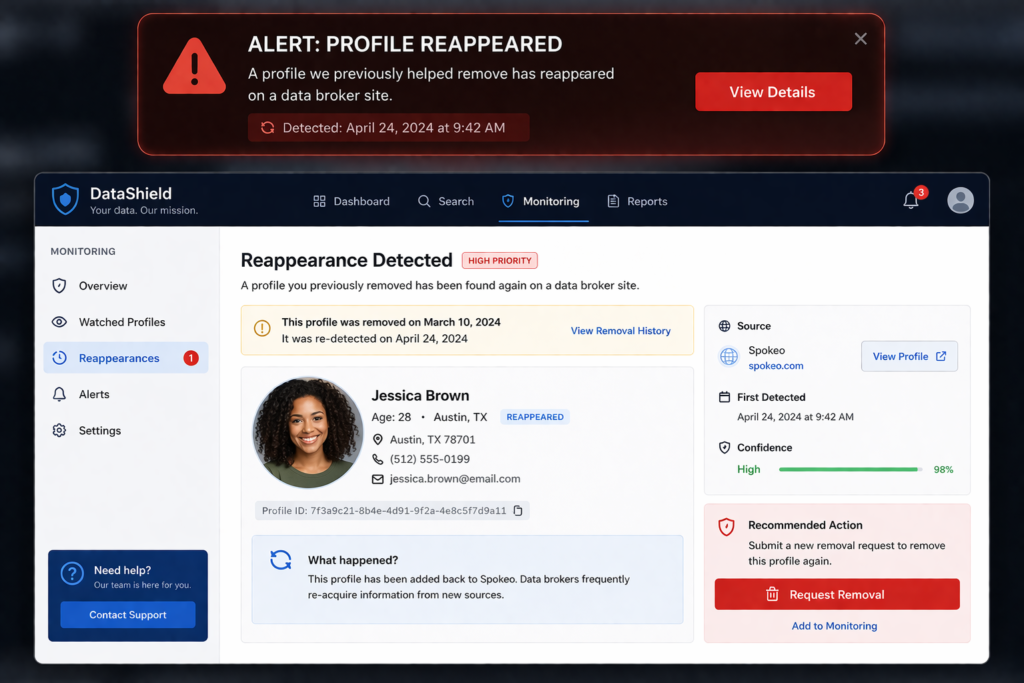
Step 8: Monitor for Reappearance
Even after removal, your data may come back.
This happens because:
- Data brokers continuously update their databases
- Your data is resold or reshared
- New listings are created over time
You will need to:
- Recheck your information regularly
- Submit new removal requests as needed
The Challenge of Data Broker Removal
Removing your data from data broker sites is the most critical part of how to remove your personal information from the internet, but it is also the most difficult.
Challenges include:
- Large number of websites
- Repetitive manual work
- Ongoing maintenance
- Inconsistent results
A More Efficient Alternative
Because of the scale and repetition involved, many people eventually use services like Incogni.
Instead of manually contacting each site, Incogni:
- Handles removal requests automatically
- Targets a large network of data brokers
- Continues monitoring and removing new listings
This significantly reduces the time and effort required.
Bottom Line
If you want to successfully execute how to remove your personal information from the internet, you must remove your data from data broker sites.
You can do this manually by following a structured process, but it requires time, consistency, and ongoing monitoring. For long-term results, many users combine manual removal with automated solutions to maintain control over their data.
Why Removing Your Personal Information Manually Is So Difficult
If you’ve started researching how to remove your personal information from the internet, you’ve likely realized that doing it manually is not as simple as it sounds. While it is possible, the process is time-consuming, repetitive, and often incomplete. Because of these challenges, many people start asking do you really need identity theft protection to stay protected long-term.
Understanding these challenges helps explain why many people struggle to fully remove their data—and why alternative solutions exist.
1. There Are Hundreds of Data Broker Websites
One of the biggest obstacles is scale.
There isn’t just one place where your data exists. There are hundreds of data broker sites, each with its own database and removal process.
This means you must:
- Find each site individually
- Locate your profile
- Submit a separate removal request
According to the Federal Trade Commission, data brokers operate across a vast and largely unregulated ecosystem.
2. Every Website Has a Different Removal Process
There is no standard system for removing your data.
Each site may require:
- Different forms
- Unique verification steps
- Specific instructions
Some sites:
- Hide their opt-out pages
- Require multiple confirmations
- Delay or complicate the process
This inconsistency makes it difficult to create a smooth, repeatable workflow.
3. The Process Takes Significant Time
Manual removal is not a quick task.
For each site, you need to:
- Search for your listing
- Submit a request
- Verify your identity
- Follow up if needed
When multiplied across dozens or hundreds of sites, this can take:
- Several hours
- Multiple days
- Ongoing effort over weeks
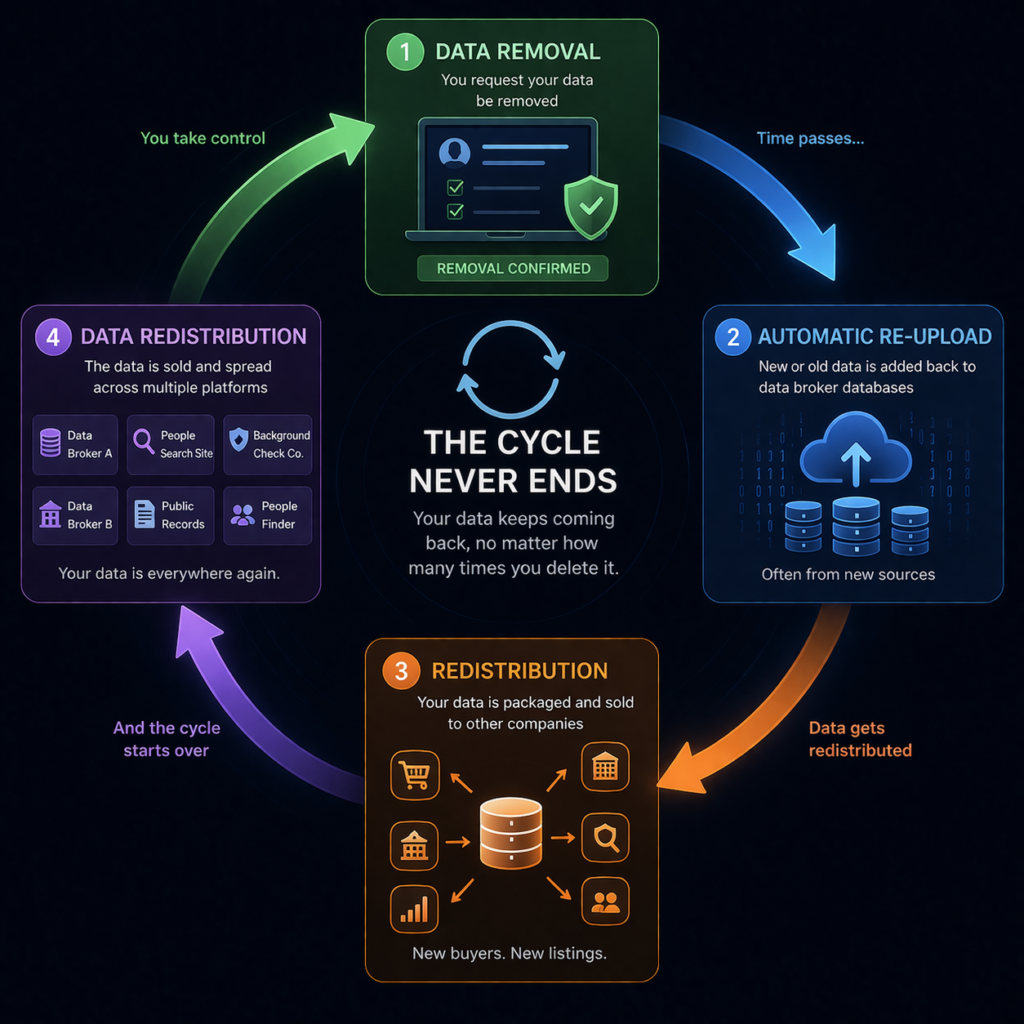
4. Your Data Keeps Reappearing
Even after successful removal, your data often comes back.
This happens because:
- Data brokers continuously collect new data
- Information is shared between companies
- New listings are created over time
According to the Identity Theft Resource Center, personal data exposure is an ongoing issue due to constant data sharing and breaches.
5. Some Sites Require Sensitive Verification
To remove your data, some platforms require you to verify your identity.
This may include:
- Uploading an ID
- Providing additional personal details
- Confirming sensitive information
This creates a risk:
- You may be sharing more data than you are removing
- Your information may be stored again during verification
6. Limited Coverage of Manual Efforts
Even if you remove your data from major sites, many smaller or less-known brokers still exist.
Manual removal often:
- Focuses on the most visible platforms
- Misses smaller databases
- Leaves gaps in your overall protection
A Complete Protection Strategy
To fully protect yourself, many people combine data removal with identity protection tools.
Platforms like Aura provide:
✔ Real-time monitoring
✔ Fraud alerts
✔ Identity theft protection
✔ Recovery support
👉 See how Aura protects your identity here!
7. No Ongoing Monitoring
Manual removal is typically a one-time effort unless you actively maintain it.
Without continuous monitoring:
- New data exposures go unnoticed
- Old listings reappear
- Your digital footprint grows again
This makes it difficult to maintain long-term privacy.
Why This Matters
These challenges explain why learning how to remove your personal information from the internet is not just about removing data once—it is about managing it over time.
Manual methods:
- Work initially
- Require constant repetition
- Become harder to maintain as your data spreads
A More Practical Approach
Because of these limitations, many people eventually look for more efficient ways to manage their data.
Services like Incogni are designed to solve these exact problems by:
- Automating removal requests
- Covering a wider range of data broker sites
- Continuously monitoring and removing new data
This reduces the time and effort required while improving long-term results.
Bottom Line
Removing your personal information manually is difficult because of scale, complexity, and ongoing data collection.
While it is possible, it requires significant time and consistent effort. For most people, combining manual removal with automated solutions provides a more realistic and sustainable way to protect their personal information online.
The Fastest Way to Remove Your Personal Information from the Internet (Automated Method)
If you’ve been researching how to remove your personal information from the internet, you’ve likely noticed that manual removal is slow, repetitive, and difficult to maintain. The fastest and most practical alternative is using an automated data removal method. If you’re considering this approach, here’s a detailed breakdown answering, ‘Is Incogni Worth It?’ and how it compares to manual removal.
Instead of contacting each data broker individually, automated services handle the process for you—saving time and improving coverage.
What Is Automated Data Removal?
Automated data removal uses specialized services to:
- Identify where your personal data is exposed
- Submit removal requests on your behalf
- Monitor your data continuously
- Remove new listings as they appear
This replaces a manual, one-time effort with an ongoing system designed to keep your data off the internet.
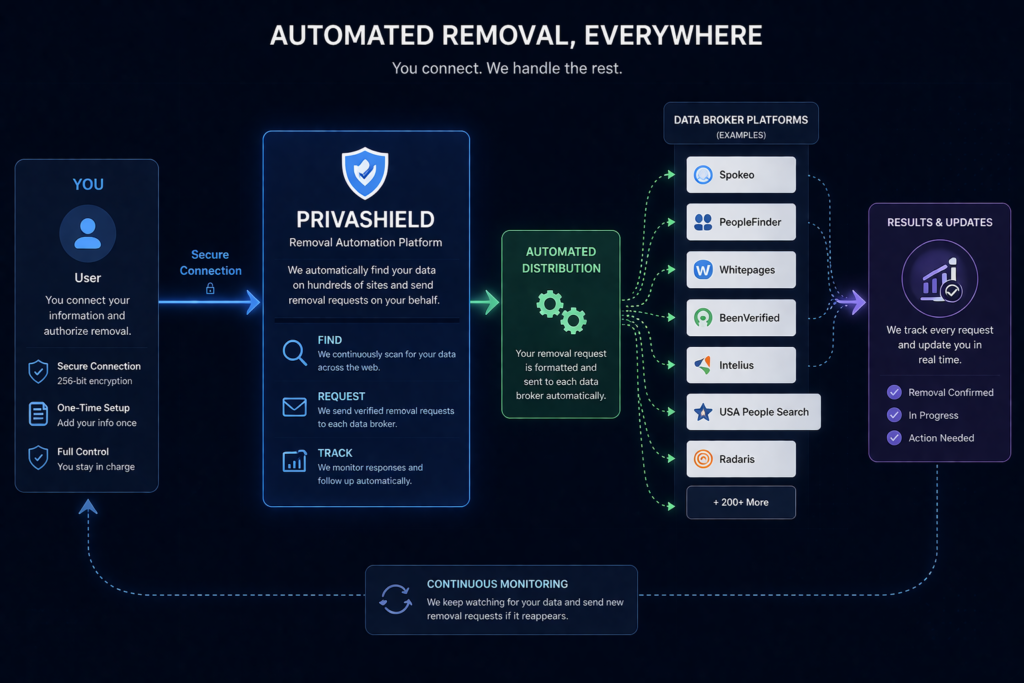
How Automated Data Removal Works
Here’s how the process typically works:
- You sign up and provide basic information
- The service scans data broker sites for your data
- Removal requests are automatically submitted
- The system tracks progress and confirmations
- Ongoing monitoring continues in the background
This approach eliminates the need to:
- Search for every listing manually
- Fill out dozens of forms
- Track each request individually
Why Automation Is the Fastest Method
Compared to manual removal, automation significantly reduces the time required.
With manual removal:
- You handle each site one by one
- You repeat the process regularly
With automation:
- Multiple requests are processed at once
- Monitoring happens continuously
Example: Using Incogni
One of the most well-known tools for this process is Incogni.
It works by:
- Contacting data brokers directly on your behalf
- Sending legally-backed removal requests
- Targeting a large network of data broker sites
- Continuously checking for new exposures
This turns a complex manual process into a streamlined system.
Key Benefits of Automated Removal
Using an automated method provides several advantages:
1. Time Savings
Removes the need for hours of manual work.
2. Broader Coverage
Targets more data broker sites than most individuals can manage.
3. Continuous Monitoring
Keeps your data from reappearing without constant effort.
4. Higher Consistency
Ensures requests are submitted and tracked properly.
What Automated Tools Cannot Do
It’s important to set realistic expectations.
Automated removal:
- Cannot erase all data permanently
- Cannot remove certain public records
- Cannot prevent all future data collection
However, it can significantly reduce your exposure and make your data much harder to find.
How This Fits Into Your Overall Strategy
If your goal is to fully understand how to remove your personal information from the internet, automation should be part of your long-term approach.
A practical strategy looks like this:
- Start with manual cleanup for major exposures
- Use automation to scale and maintain removal
- Monitor your data regularly
Supporting Your Privacy Efforts
For additional guidance on protecting your personal information online, review resources from the Federal Trade Commission.
These resources help you understand your rights and how your data is used.
Bottom Line
The fastest way to remove your personal information from the internet is through automation.
Manual methods give you control, but they require time and ongoing effort. Automated solutions provide a more efficient and scalable way to reduce your exposure and maintain your privacy over time.
For most people, combining both approaches delivers the best results—starting with manual removal and relying on automation for continuous protection.
How Incogni Removes Your Personal Data Automatically
If you’re looking for a faster and more efficient way to handle how to remove your personal information from the internet, understanding how Incogni works is key. Instead of manually contacting each data broker, Incogni automates the entire process and maintains it over time.
What Incogni Does Behind the Scenes
Incogni acts as your authorized representative, meaning it can legally request that companies delete your personal data on your behalf.
Once you sign up, it:
- Identifies where your personal data exists
- Sends removal requests to data brokers
- Tracks responses and confirmations
- Continues monitoring for new exposures
This removes the need for you to manage dozens—or even hundreds—of individual requests.
Step-by-Step: How Incogni Works
1. You Grant Authorization
You provide basic details and give Incogni permission to act on your behalf.
2. Data Broker Discovery
Incogni scans its network of data brokers to find where your personal information is listed.
3. Automated Removal Requests
Requests are sent to each data broker, asking them to delete your data in compliance with privacy regulations.
4. Response Tracking
Incogni monitors which requests are:
- Completed
- Pending
- Requiring follow-up
5. Continuous Monitoring
New data exposures are identified and removed automatically over time.
Why Incogni Can Do This Effectively
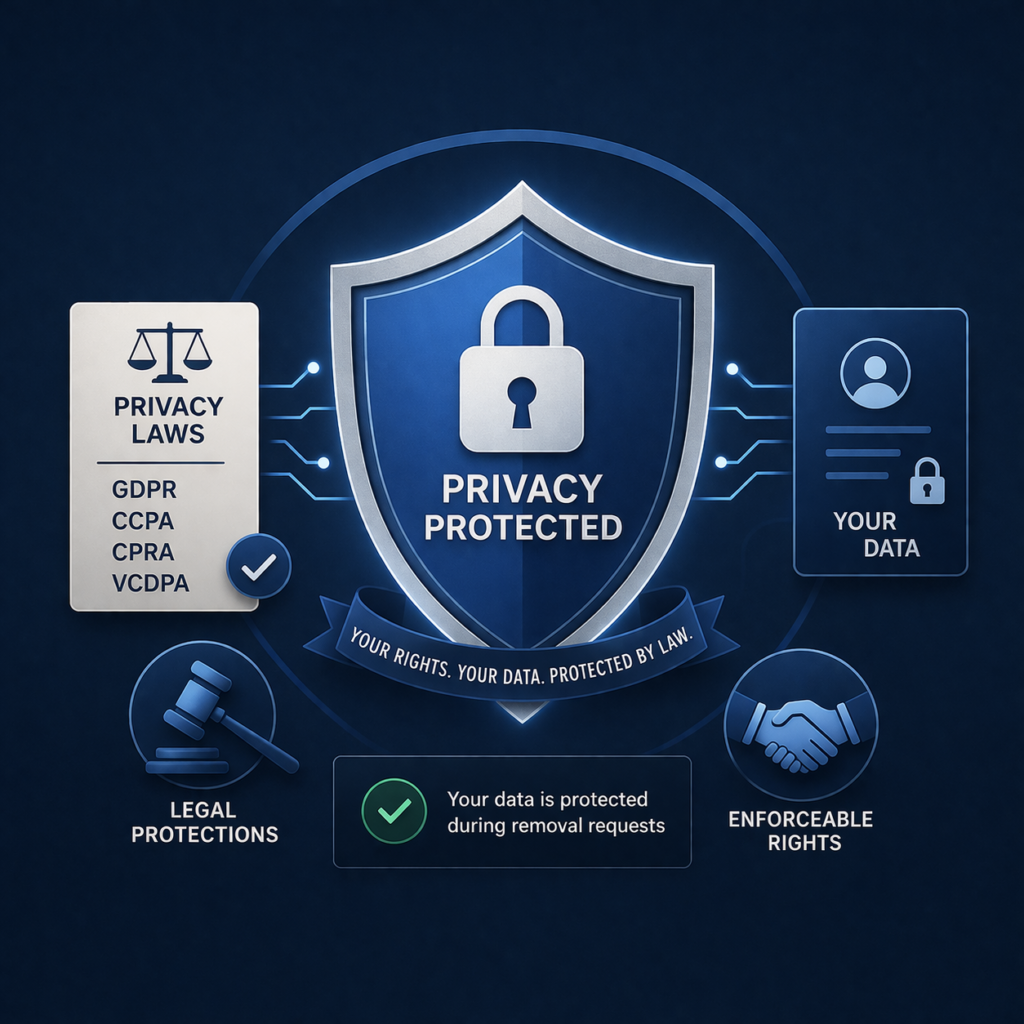
Incogni leverages data protection laws to strengthen its removal requests.
For example:
- GDPR (for EU-related data)
- CCPA/CPRA (for California residents)
These regulations give individuals the right to request deletion of their personal data.
You can learn more about your privacy rights through the Federal Trade Commission.
What Makes Incogni Different from Manual Removal
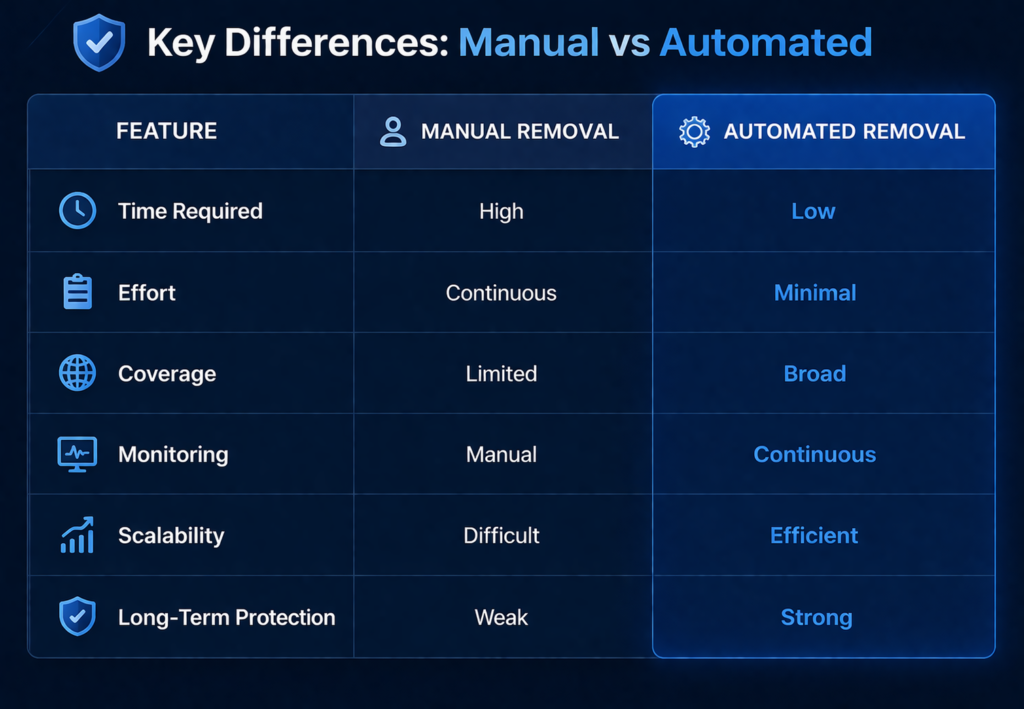
Manual removal requires:
- Finding each data broker
- Submitting individual requests
- Tracking each response
- Repeating the process regularly
With Incogni:
- Requests are automated
- Multiple brokers are handled at once
- Follow-ups are managed for you
- Monitoring is continuous
This significantly reduces the time and effort required.
Types of Data Incogni Helps Remove
Incogni targets a wide range of personal data, including:
- Names and aliases
- Addresses and location history
- Phone numbers and email addresses
- Family connections
- Online activity profiles
This helps reduce your overall digital footprint across multiple platforms.
Important: Data Removal Alone Isn’t Enough
Removing your data reduces your exposure — but it doesn’t fully protect you.
It does NOT:
❌ Monitor your accounts
❌ Detect fraud in real time
❌ Protect against identity theft
👉 This is why many people go beyond data removal.
Ongoing Protection (Not Just One-Time Removal)
One of the most important benefits is continuous protection.
Data brokers frequently:
- Re-collect your data
- Update their databases
- Share your information with other platforms
Incogni continuously:
- Monitors new listings
- Submits additional removal requests
- Maintains your privacy over time
What Incogni Cannot Remove
While powerful, Incogni does have limitations.
It typically cannot remove:
- Government public records
- News articles
- Court documents
- Content you’ve posted yourself
However, it significantly reduces the largest source of exposure: data broker databases.
Why This Matters for Your Privacy
When learning how to remove your personal information from the internet, the biggest challenge is not removing data once—it is keeping it removed.
Incogni addresses this by:
- Automating the process
- Scaling across many platforms
- Providing ongoing monitoring
Bottom Line
Incogni simplifies one of the most difficult parts of how to remove your personal information from the internet—removing your data from data brokers and keeping it off.
Instead of managing everything manually, it provides a more efficient, consistent, and scalable solution for protecting your personal information online.
Manual vs Automated Data Removal: Which Is Better?
If you’re deciding how to remove your personal information from the internet, you’ll quickly run into two options: manual removal and automated data removal. Both methods can reduce your exposure, but they differ significantly in time, effort, coverage, and long-term effectiveness. For full protection beyond data removal, explore the best identity theft protection services available today.
This section breaks down both approaches so you can choose the best strategy based on your goals.
What Is Manual Data Removal?
Manual removal means you handle everything yourself.
You:
- Search for your personal data online
- Identify data broker websites
- Submit opt-out requests individually
- Track and repeat the process over time
This approach gives you full control, but it requires consistent effort.
What Is Automated Data Removal?
Automated removal uses a service to handle the process for you.
Instead of doing everything manually, tools like Incogni:
- Locate your data across multiple platforms
- Submit removal requests automatically
- Track progress and follow up
- Monitor and remove new data continuously
This transforms a repetitive process into an ongoing system.
👉 Not all paid data removal services work the same way. If you value human-assisted removal requests and detailed progress reporting, compare DeleteMe’s plans before choosing a service.
When Manual Removal Makes Sense
Manual removal may be a good option if:
- You want complete control over the process
- You only need to remove data from a few sites
- You are willing to invest time regularly
- You prefer not to use a paid service
However, it is important to understand that manual removal is not a one-time fix. You must continue monitoring and repeating the process.
👉 If you want additional identity monitoring, IdentityIQ is another option to consider.
When Automated Removal Is the Better Choice
Automated removal is often the better option if:
- Your data appears on multiple sites
- You want faster and more consistent results
- You do not have time to manage the process manually
- You want ongoing protection
Services like Incogni are designed specifically to address the limitations of manual removal by scaling the process across many platforms.
What Experts Recommend
Privacy organizations emphasize the importance of ongoing data management.
Similarly, the Federal Trade Commission highlights that consumers should take proactive steps to control how their data is collected and shared.
The Best Strategy: Combine Both
The most effective approach is not choosing one over the other—it is combining both methods.
A practical strategy:
- Use manual removal to clean up major exposures
- Use automation to handle scale and ongoing monitoring
- Periodically review your online presence
This gives you:
- Immediate control
- Long-term protection
- Reduced workload over time
Bottom Line
When evaluating how to remove your personal information from the internet, manual removal provides control but requires ongoing effort. Automated removal offers efficiency, broader coverage, and continuous protection.
For most people, automated solutions provide the most practical and sustainable way to reduce their online exposure—especially when combined with targeted manual cleanup.
How Long Does It Take to Remove Your Personal Information from the Internet?
If you’re researching how to remove your personal information from the internet, one of the most common questions is how long the process actually takes. The answer depends on several factors, including the method you use, how widely your data is spread, and how often it reappears.
In most cases, removing your data is not a one-time task—it’s an ongoing process. Some services also include monitoring and recovery features—see how that works in this Coveron review.
Typical Timeframes (What to Expect)
Here is a realistic breakdown:
- Single website removal: 1–7 days
- Multiple data broker sites (manual): Several weeks to months
- Search engine updates (Google): A few days to several weeks
- Ongoing monitoring and re-removal: Continuous
Each platform has its own process, and some respond faster than others.
Why It Takes Time
There are several reasons why removing your data is not instant:
1. Different Processing Times
Each website handles removal requests at its own pace. Some respond within days, while others take weeks.
2. Verification Steps
Many sites require email confirmations or identity verification before completing your request.
3. Search Engine Indexing
Even after your data is removed from a site, search engines may still display cached versions until they are updated.
4. Multiple Listings
Your information often appears on many different platforms, each requiring a separate request.
Manual Removal Timeline
If you follow the manual process for how to remove your personal information from the internet, your timeline will look like this:
- Week 1–2: Identify and submit removal requests
- Week 2–4: Receive confirmations and track progress
- Month 1–3: Continue removing data across additional sites
- Ongoing: Repeat process as data reappears
This approach requires consistent effort over time.

Automated Removal Timeline
Using an automated method can significantly speed up the process.
With services like Incogni:
- Initial removal requests begin within days
- Early results can appear within the first few weeks
- Ongoing monitoring continues automatically
While automation does not make removal instant, it reduces the time and effort required from you.
Why Your Data May Reappear
Even after removal, your data can come back.
This happens because:
- Data brokers continuously collect new data
- Information is shared between companies
- New listings are created from updated sources
According to the Identity Theft Resource Center, personal data exposure is an ongoing issue due to constant data sharing and breaches.
What Affects Your Timeline
The total time required depends on:
- How many websites your data appears on
- How detailed your online profile is
- Whether your data has been involved in breaches
- How often you monitor and repeat the process
The more exposure you have, the longer it will take to reduce it.
How to Speed Up the Process
To reduce the time it takes:
- Focus on major data broker sites first
- Submit requests in batches
- Track your progress
- Use automated tools for scale and monitoring
Resources from the Federal Trade Commission provide additional guidance on protecting your data and managing exposure.
Bottom Line
When learning how to remove your personal information from the internet, it’s important to understand that results are not immediate.
- Small removals can happen within days
- Larger cleanup efforts take weeks or months
- Long-term protection requires ongoing monitoring
The fastest results come from combining manual removal with automated tools, allowing you to reduce your exposure quickly while maintaining it over time.
Can You Completely Remove Your Personal Information from the Internet?
If you’re researching how to remove your personal information from the internet, you may be wondering if it’s possible to erase everything completely. The honest answer is:
No—you cannot remove 100% of your personal information from the internet.
However, you can significantly reduce your exposure and make your data much harder to find. For most people, that is the real goal.
Why Complete Removal Is Not Possible
There are several reasons why full deletion is unrealistic:
1. Public Records Cannot Always Be Removed
Certain information is legally public, such as:
- Property ownership records
- Court documents
- Business registrations
These records are often required by law and may only be partially restricted, not fully removed.
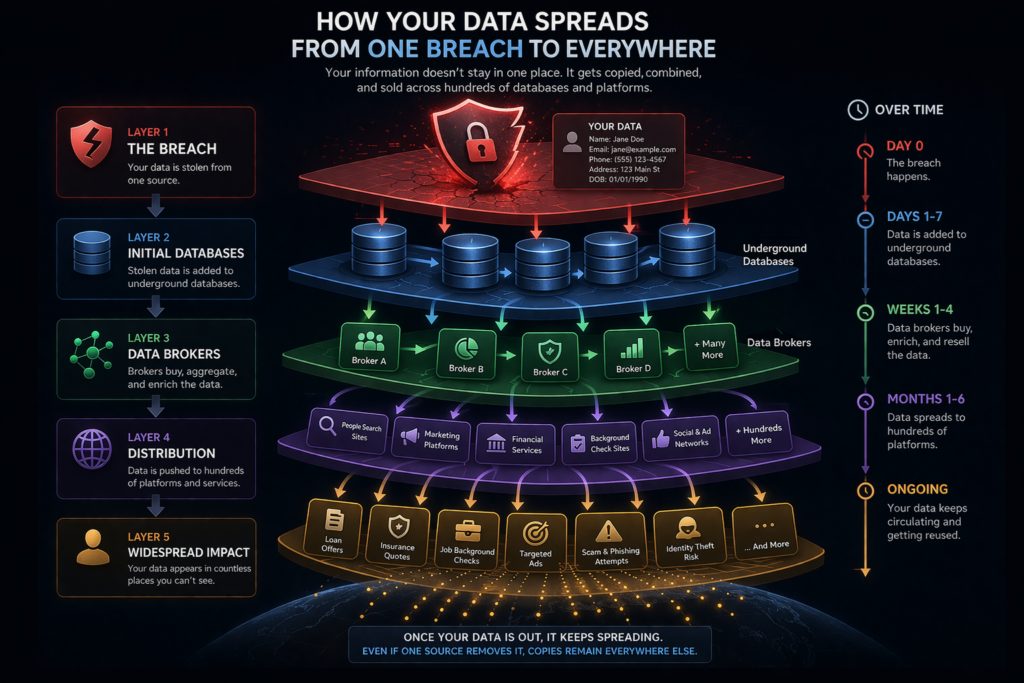
2. Data Is Constantly Collected and Re-Shared
Your data does not stay in one place.
It is:
- Collected by companies
- Sold to data brokers
- Shared across multiple platforms
This creates a cycle where your information continues to spread, even after removal.
According to the Federal Trade Commission, data sharing and aggregation are core parts of the modern digital ecosystem.
3. Search Engines Cache and Index Data
Even if content is removed from a website, it may still appear:
- In search engine results
- In cached versions
- On mirrored or archived sites
This can delay or limit full removal.
4. Data Breaches and Leaks Persist
Once your data is exposed in a breach, it may:
- Circulate on the dark web
- Be stored in multiple databases
- Reappear in new listings
The Identity Theft Resource Center reports that breached data continues to be reused long after initial exposure.
What You Can Do Instead
While complete removal is not possible, you can still take meaningful control.
You can:
- Remove your data from major data broker sites
- Reduce visibility in search results
- Delete or secure your online accounts
- Limit future data sharing
This approach dramatically reduces your digital footprint.
What “Effective Removal” Looks Like
Instead of aiming for 100% deletion, focus on:
- Removing high-risk data (address, phone, email)
- Eliminating exposure on major platforms
- Reducing search visibility
- Preventing easy access to your information
The Role of Ongoing Monitoring
Because your data can reappear, ongoing monitoring is essential.
Without it:
- New listings go unnoticed
- Old data resurfaces
- Your exposure increases again
This is where automation becomes valuable.
How Automation Helps Reduce Exposure
Services like Incogni focus on reducing your data footprint over time.
They:
- Continuously remove your data from data broker sites
- Monitor for new exposures
- Submit additional removal requests automatically
This does not eliminate your data entirely, but it significantly reduces how accessible it is.
What Privacy Experts Recommend
Organizations like the Electronic Frontier Foundation emphasize that privacy protection is an ongoing process, not a one-time action.
This reinforces the idea that managing your data is about reduction and control, not complete erasure.
Bottom Line
You cannot completely remove all of your personal information from the internet. However, you can reduce your exposure to the point where your data is difficult to find and much less useful to others.
If you’re serious about how to remove your personal information from the internet, focus on:
- Removing what you can
- Monitoring what remains
- Preventing future exposure
That is the most realistic and effective way to protect your privacy online.
How to Remove Your Personal Information from Google Search Results
Search for:
- Your full name (with city/state)
- Your phone number
- Your email address
Look for results that display:
- Personal contact details
- Addresses
- Sensitive information
Copy the exact URLs of the pages you want removed.
Step 2: Use Google’s Removal Request Tool
Google provides a dedicated tool to request removal of personal information.
You can request removal for:
- Personal contact information (phone number, email, address)
- Financial or identification details
- Doxxing or harmful content
- Non-consensual or outdated information
Follow the steps:
- Select the type of information you want removed
- Provide the URL(s)
- Submit your request
Step 3: Remove the Information from the Source Website
For best results, remove your data from the original website first.
Why this matters:
- If the source remains active, your data may reappear
- Google may deny requests if the content still exists
You can:
- Submit a removal request to the website
- Use opt-out forms (for data broker sites)
- Contact the site owner directly
According to the Federal Trade Commission, removing data at the source is one of the most effective ways to reduce online exposure.
Step 4: Request Removal of Outdated Content
If your information has already been removed from a site but still appears in search results, you can request removal of cached content. This is especially risky on unsecured networks—learn more in this guide on public WiFi dangers.
Google may:
- Update the listing
- Remove outdated snippets
- De-index the page
This helps ensure your data is no longer visible.
Step 5: Monitor Your Search Results
After submitting removal requests:
- Check your name regularly
- Verify that results are removed
- Watch for new listings
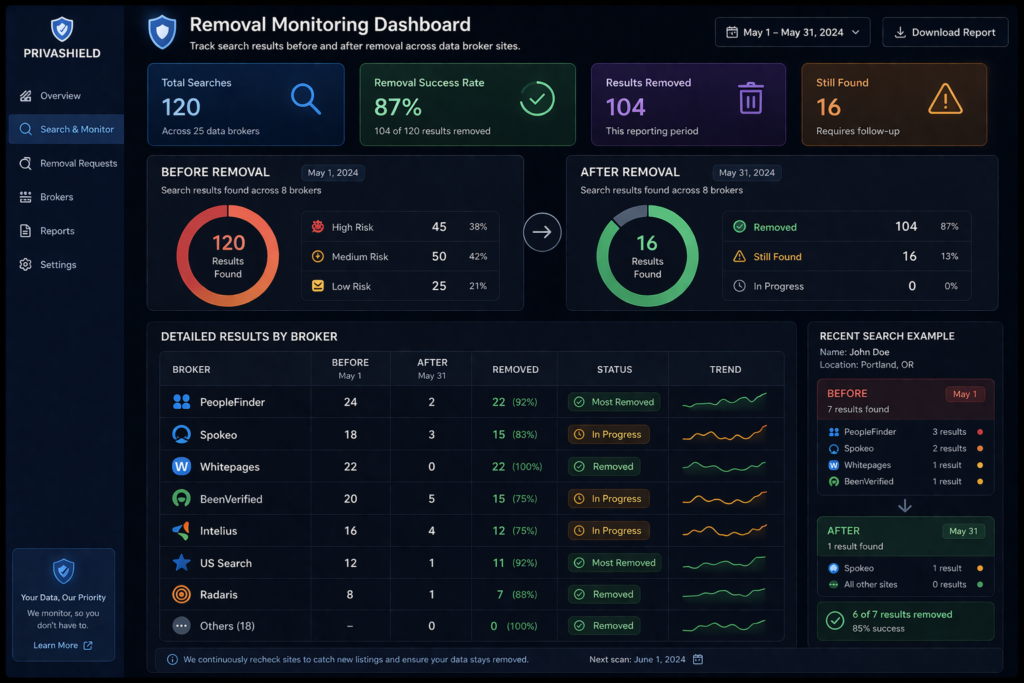
What Google Will and Will Not Remove
Google may remove:
- Sensitive personal information
- Financial or identity-related data
- Certain harmful or privacy-invasive content
Google will not typically remove:
- Public records
- News articles
- Content that is considered in the public interest
Why Your Data May Still Appear
Even after removal, your data can return because:
- The original website republishes it
- Data brokers create new listings
- New pages are indexed
This is why removing your data from Google is only one part of how to remove your personal information from the internet.
How to Strengthen Your Removal Strategy
To reduce the chances of your data reappearing:
- Remove data from source websites first
- Opt out of data broker platforms
- Limit what you share online
- Monitor your name regularly
Where Automation Helps
Managing search results manually can be time-consuming, especially if your data appears across multiple sites.
This is why many people use services like Incogni, which focus on removing your data at the source—reducing the chances it appears in search results in the first place.
Bottom Line
Removing your personal information from Google search results is a key step in how to remove your personal information from the internet, but it is not a complete solution on its own.
For the best results:
- Remove data from the original source
- Submit Google removal requests
- Monitor your search presence over time
This combined approach helps reduce visibility and protect your privacy more effectively.
How to Remove Your Phone Number and Address from the Internet
If you’re learning how to remove your personal information from the internet, your phone number and home address should be your top priority. These are among the most sensitive pieces of data—and the most commonly exposed on data broker sites, directories, and public listings. To further protect your devices and personal data, consider using one of the best antivirus for families.
Removing this information reduces your risk of scams, identity theft, and unwanted contact.
Where Your Phone Number and Address Appear
Your contact details are often found on:
- Data broker websites (Whitepages, Spokeo, etc.)
- People search directories
- Old social media accounts
- Online forms and account registrations
- Public records and listings
Because this data is widely shared, it often appears in multiple places at once.
Step 1: Search for Your Phone Number and Address
Start by identifying where your contact information is exposed.
Search:
- Your phone number (with and without dashes)
- Your full address
- Your name + address
Check multiple search engines:
- Bing
- Yahoo
Make a list of:
- Websites displaying your data
- URLs of specific listings
- Type of information shown
Step 2: Remove Your Data from Data Broker Sites
Data broker platforms are the main source of exposed phone numbers and addresses.
To remove your data:
- Locate your profile on each site
- Find the opt-out or removal page
- Submit your request
- Confirm via email if required
This process must be repeated for each site.
For additional guidance on privacy and data removal, refer to the Federal Trade Commission.
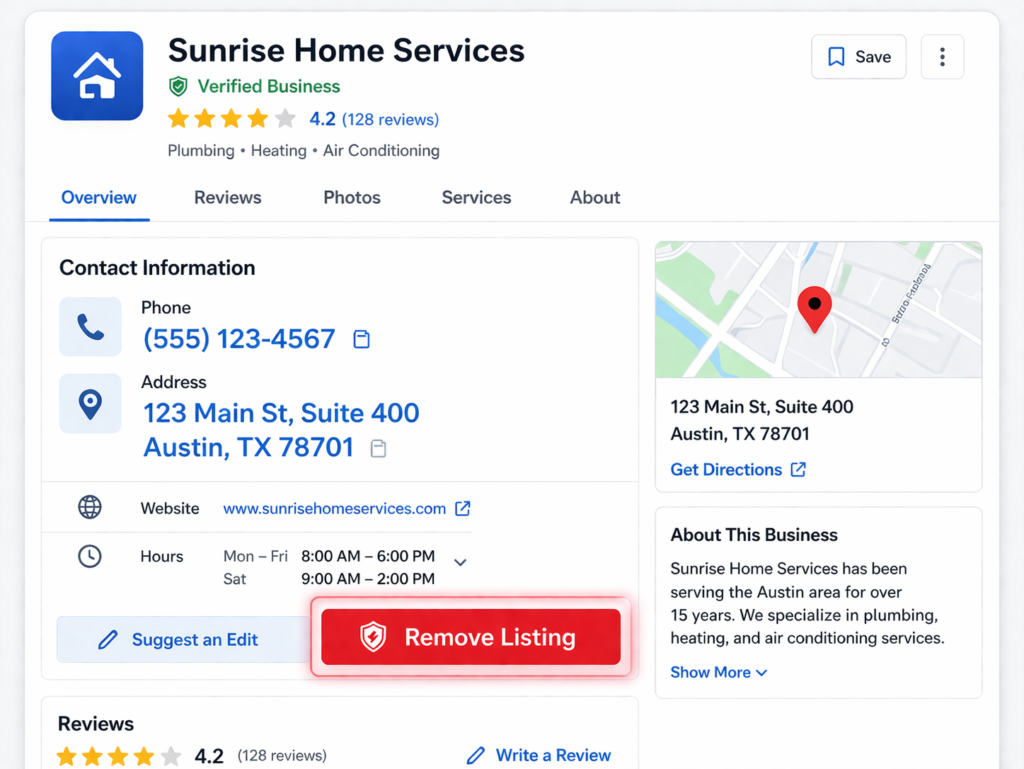
Step 3: Remove Contact Details from Social Media
Social media platforms often expose more information than expected.
Review your accounts and:
- Delete your phone number from profiles
- Remove or hide your address
- Set profiles to private
- Limit who can search for you
Even if your profile is private, some details may still be visible or shared.
Step 4: Request Removal from Websites and Directories
If your phone number or address appears on a website without an opt-out option:
- Locate the contact or privacy page
- Send a direct removal request
- Include the exact URL and details
Some websites will comply, especially if your request relates to personal privacy.
Step 5: Remove Information from Google Search Results
If your phone number or address appears in search results, you can request removal through Google.
Google may remove:
- Personal contact information
- Sensitive personal data
- Certain privacy-related content
Step 6: Limit Future Exposure
After removing your data, take steps to prevent it from being re-added.
- Avoid sharing your phone number publicly
- Use alternate or secondary email/phone for sign-ups
- Opt out of data sharing when possible
- Review privacy settings on all accounts
Step 7: Monitor Your Information Regularly
Your phone number and address can reappear over time.
To stay protected:
- Search your information periodically
- Check major data broker sites
- Submit new removal requests when needed
Why This Step Is Critical
Your phone number and address are high-value targets for:
- Identity theft
- Phishing scams
- Harassment or unwanted contact
- Location tracking
Removing this information significantly reduces your risk.
A Faster Way to Remove Contact Information
Manually removing your phone number and address can take time, especially across multiple sites.
This is why many people use services like Incogni, which:
- Automatically remove your contact details from data brokers
- Monitor for new listings
- Continue removing data over time
This helps ensure your information stays off the internet longer.
Bottom Line
Removing your phone number and address is one of the most important steps in how to remove your personal information from the internet.
While you can do it manually, it requires effort and ongoing monitoring. For the best results, combine manual removal with proactive privacy practices and continuous protection strategies.
How to Protect Your Personal Information from Being Re-Added Online
After learning how to remove your personal information from the internet, the next step is just as important: keeping it from coming back. Many people successfully remove their data—only to find it reappears weeks or months later. One of the biggest causes of data exposure is oversharing—learn how to reduce this risk in our upcoming guide on how to stay safe on social media.
This happens because data collection is continuous. To maintain your privacy, you need to actively limit how your information is shared and re-collected.
1. Limit What You Share Online
The more information you share, the easier it is for data brokers to collect it.
Reduce exposure by:
- Avoiding posting your full address or phone number
- Limiting personal details on social media
- Being cautious with online forms
Even small details can be combined to rebuild your profile.
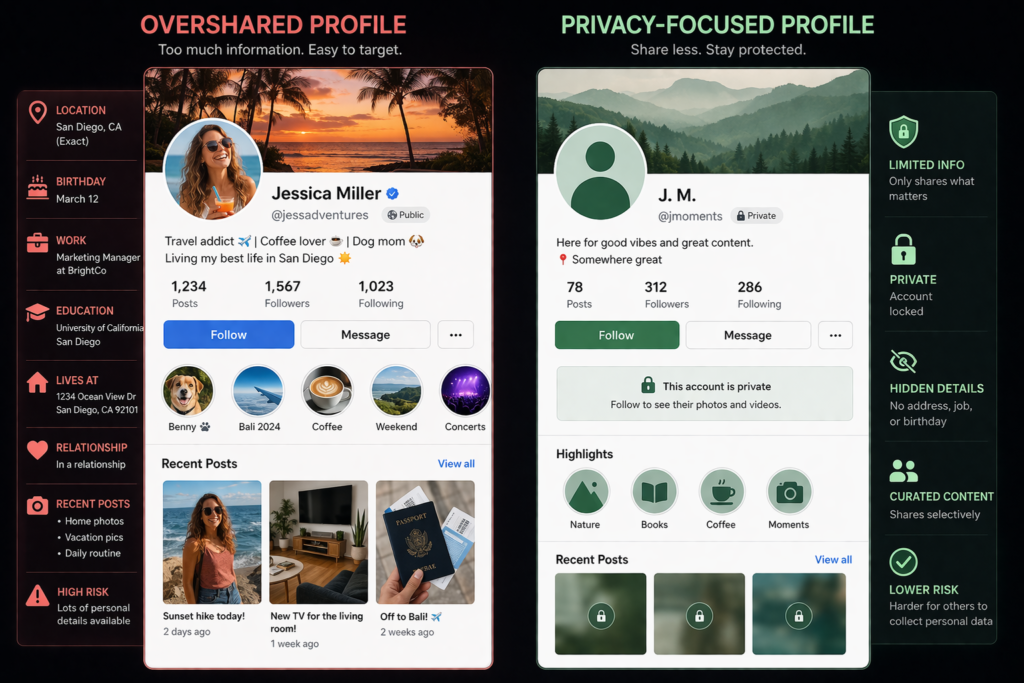
2. Adjust Privacy Settings on All Accounts
Review your account settings across all platforms.
Focus on:
- Social media privacy controls
- Search engine visibility
- Profile indexing settings
Set your accounts to:
- Private (when possible)
- Limited visibility
- Restricted search access
3. Opt Out of Data Collection and Sharing
Many websites and services allow you to control how your data is used.
Look for:
- “Do Not Sell My Personal Information” links
- Cookie preferences and tracking settings
- Data-sharing options in account settings
According to the Federal Trade Commission, opting out of data sharing can reduce how widely your information is distributed.
4. Use Separate Contact Information
Using different contact details helps limit how your primary information spreads.
Consider:
- A secondary email for sign-ups
- A virtual phone number for online accounts
- Avoiding reuse of the same contact details everywhere
This prevents your main information from being widely distributed.
5. Be Careful with Apps and Permissions
Many apps collect and share your data without you realizing it.
Before installing or using apps:
- Review permissions carefully
- Avoid granting unnecessary access
- Remove apps you no longer use
Common data collection points include:
- Location tracking
- Contact lists
- Usage behavior
6. Monitor Your Personal Information Regularly
Even with precautions, your data can still reappear.
Make it a habit to:
- Search your name periodically
- Check for new listings
- Monitor your phone number and address
This allows you to act quickly if your data is exposed again.
7. Use Continuous Data Removal Services
Because data collection is ongoing, protection must also be ongoing.
Services like Incogni help by:
- Continuously monitoring data broker sites
- Removing new listings automatically
- Reducing the chance of your data reappearing
This creates a long-term protection system rather than a one-time cleanup.
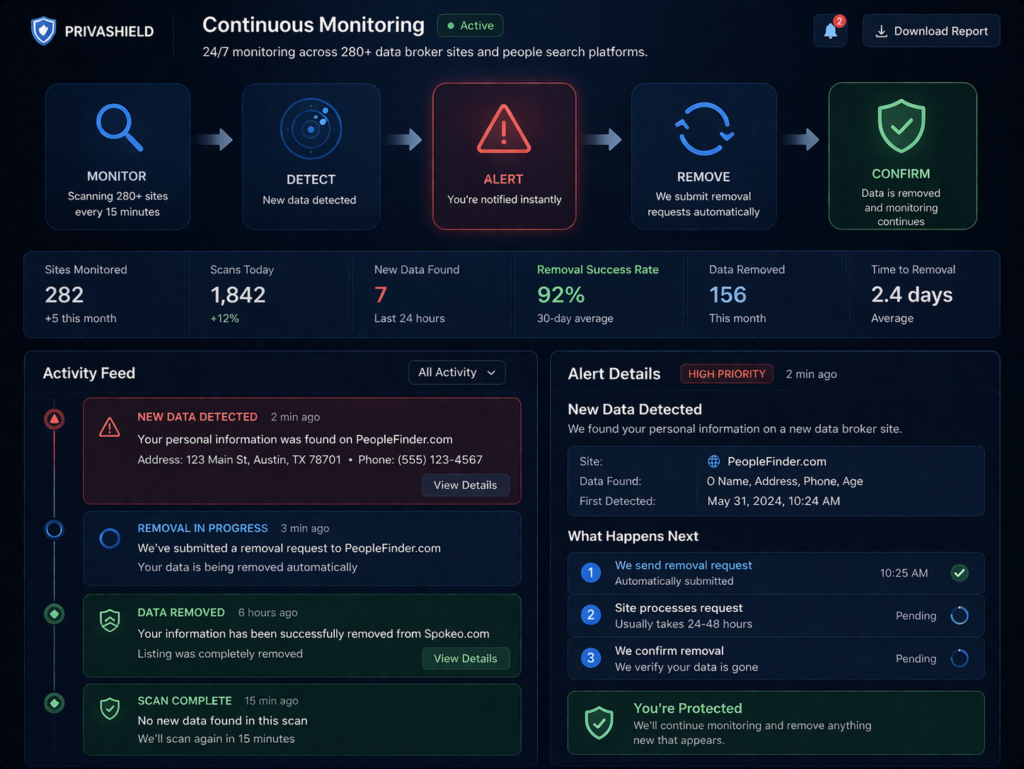
Why This Step Matters
If you only focus on removal without prevention:
- Your data will return
- Your exposure will increase again
- Your effort will be wasted over time
Protecting your data from being re-added is what makes your privacy strategy effective.
Bottom Line
Understanding how to remove your personal information from the internet is only part of the solution. Keeping it off requires ongoing action.
To protect your data long-term:
- Limit what you share
- Control your privacy settings
- Opt out of data collection
- Monitor your exposure regularly
Combining these steps with continuous removal tools gives you the strongest and most sustainable protection.
Frequently Asked Questions About Removing Personal Information from the Internet
If you’re researching how to remove your personal information from the internet, you likely have specific questions about what works, what doesn’t, and what to expect. Below are clear, direct answers to the most common concerns.
Is It Legal to Remove Your Personal Information from the Internet?
Yes. In many cases, you have the legal right to request that companies delete your personal data.
Laws that support this include:
- Data privacy regulations (such as CCPA/CPRA in California)
- Consumer protection laws
Organizations like the Federal Trade Commission explain that consumers have the right to control how their data is collected and used.
Can I Remove My Personal Information from Google?
Yes, but with limitations.
Google allows you to:
- Request removal of sensitive personal information
- Remove outdated or deleted content
- Reduce visibility of certain data
However:
- Google does not remove all types of content
- You often need to remove the data from the original website first
How Much Does It Cost to Remove Personal Information from the Internet?
There are two options:
Free (Manual Method):
- No cost
- Requires time and effort
- Must be repeated regularly
Paid (Automated Services):
- Monthly or yearly subscription
- Saves time
- Provides ongoing monitoring
Services like Incogni are designed to automate and maintain the process over time.
How Long Does It Take to Remove Personal Information?
The timeline varies:
- Individual removals: a few days to a week
- Multiple sites: several weeks or months
- Ongoing monitoring: continuous
Removing your data is not instant and requires follow-up.
Can I Remove My Address and Phone Number Completely?
You can remove your address and phone number from many websites, especially data broker platforms.
However:
- Some public records may remain
- Data can reappear over time
- Complete removal is not always possible
The goal is to reduce visibility and limit access.
Why Does My Information Keep Coming Back?
Your data reappears because:
- Data brokers continuously collect new information
- Companies share and resell data
- New listings are created over time
According to the Identity Theft Resource Center, ongoing data exposure is common due to continuous data sharing and breaches.
Is Manual Removal Enough?
Manual removal can work, but it has limitations:
- Time-consuming
- Requires ongoing effort
- Does not cover all websites
For many people, it becomes difficult to maintain over time.
Are Data Removal Services Worth It?
Data removal services can be worth it if:
- Your information appears on multiple sites
- You want faster results
- You prefer ongoing monitoring
Tools like Incogni automate the process and help maintain your privacy without constant manual work.
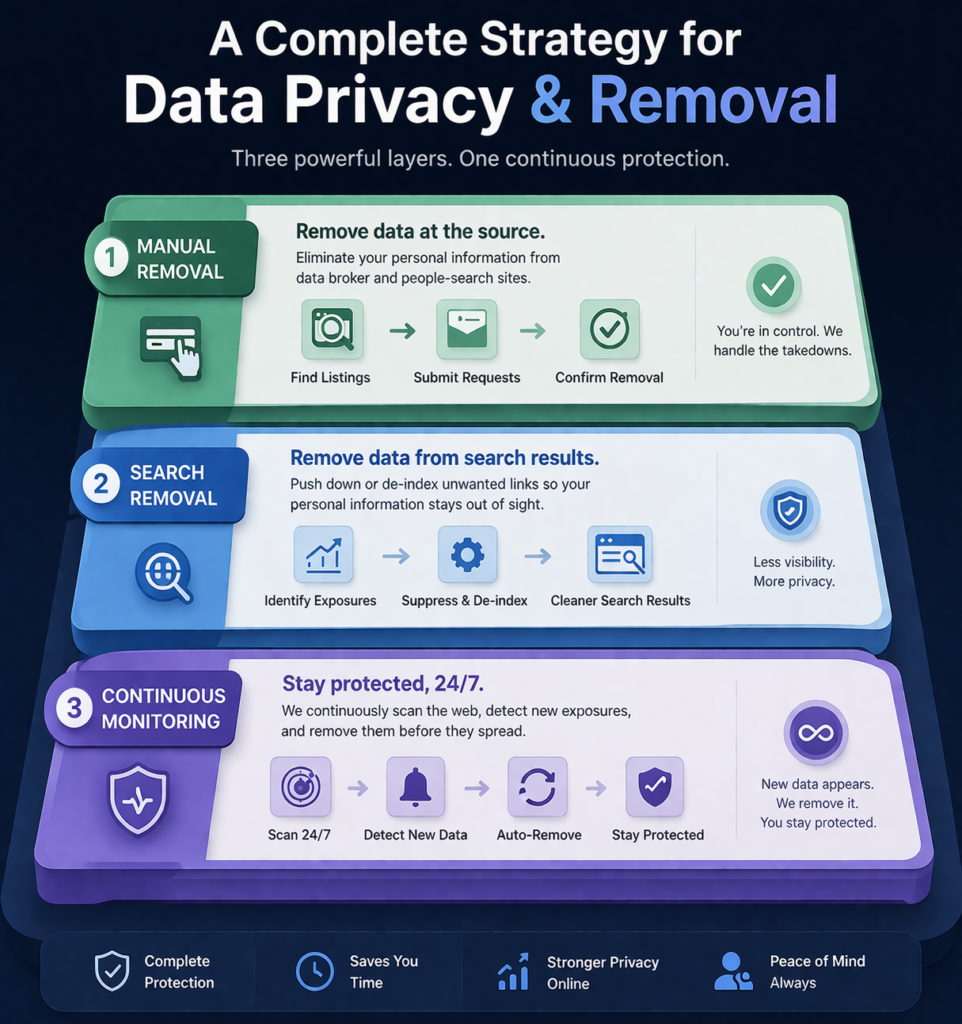
What Is the Best Way to Remove Personal Information from the Internet?
The most effective approach combines multiple steps:
- Remove your data manually from key sites
- Request removal from search engines
- Limit future data sharing
- Use automated tools for ongoing protection
This balanced approach provides both immediate and long-term results.
Bottom Line
Understanding how to remove your personal information from the internet involves more than just one step. It requires a combination of removal, monitoring, and prevention.
These FAQs highlight the key realities:
- You can reduce your exposure significantly
- Complete removal is not always possible
- Ongoing effort is required
By taking a structured approach, you can gain control over your personal data and protect your privacy more effectively.
Conclusion: What Is the Best Way to Remove Your Personal Information from the Internet?
If you’ve followed this guide, you now understand that how to remove your personal information from the internet is not a single action—it’s a process. The most effective approach is not choosing one method, but combining the right strategies to reduce your exposure and keep it low over time. For complete protection across your household, consider exploring the best identity theft protection for families.
The Reality: There Is No One-Click Solution
There is no way to instantly or permanently erase all of your personal information from the internet.
Your data exists because it is:
- Collected by companies
- Shared across platforms
- Continuously updated
According to the Federal Trade Commission, managing your personal data requires ongoing awareness and action.
The Best Strategy (What Actually Works)
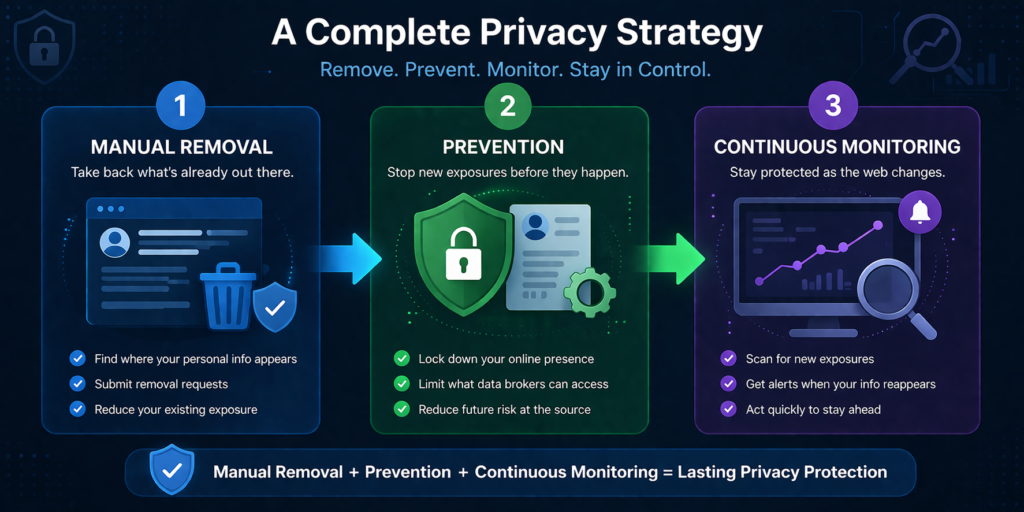
The most effective way to handle how to remove your personal information from the internet is a three-part strategy:
1. Start with Manual Removal
Begin by removing your data from the most visible sources:
- Data broker websites
- Google search results
- Old social media accounts
- Public profiles and directories
This gives you immediate control and reduces your most obvious exposure.
2. Reduce Future Data Collection
Next, prevent your data from spreading further:
- Limit what you share online
- Adjust privacy settings on all accounts
- Opt out of data sharing whenever possible
- Use separate contact information for sign-ups
3. Use Ongoing Monitoring and Automation
Finally, maintain your privacy over time.
Because your data can reappear, ongoing monitoring is essential. This is where services like Incogni become valuable.
They help by:
- Continuously removing your data from data brokers
- Monitoring for new exposures
- Handling the process automatically
This turns a one-time effort into a long-term protection system.
What Most People Get Wrong
Many people:
- Remove their data once
- Assume the job is done
- Stop monitoring their information
This leads to:
- Data reappearing
- Increased exposure over time
- Lost effort
Understanding this is critical to maintaining results.
What Success Actually Looks Like
Success is not about removing everything—it’s about reducing your visibility and risk.
A successful outcome means:
- Your personal data is difficult to find
- Your contact information is not easily accessible
- Your exposure across data broker sites is minimized
- Your data is actively monitored and controlled
Supporting Your Long-Term Privacy
For continued protection, review guidance from trusted sources like the Identity Theft Resource Center.
These resources help you stay informed about risks and best practices.
Bottom Line
The best way to approach how to remove your personal information from the internet is to combine:
- Manual removal for immediate results
- Prevention strategies to limit future exposure
- Automated tools for ongoing protection
There is no instant fix—but with the right approach, you can significantly reduce your online footprint and maintain control over your personal information.
Take Back Control of Your Personal Information
Removing your data from the internet is one of the best steps you can take to protect your privacy.
But the most effective strategy is combining data removal with ongoing protection.
👉 Start protecting your identity here!
If you want a simple takeaway:
Remove what you can, prevent what you share, and continuously monitor what remains.
That is the most effective and realistic way to protect your privacy online.


Pingback: Cybersecurity Tips Everyone Should Know (2026 Guide) - Riich Niich
Pingback: How to Stay Safe on Social Media in 2026 (Avoid These Costly Mistakes) - Riich Niich
Pingback: Is Online Banking Safe in 2026? (Risks + How to Protect Your Money) - Riich Niich
Pingback: Best VPN for Privacy (Stay Anonymous & Protect Your Data Online) - Riich Niich
Pingback: Incogni vs DeleteMe: Which Data Removal Service Is Better? - Riich Niich
Pingback: How Data Brokers Get Your Information - Riich Niich
Pingback: How to Know If Someone Stole Your Identity - Riich Niich
Pingback: Best Data Removal Services - Riich Niich
Pingback: Is Surfshark Worth It? Full Review, Pros, Cons & Real Value - Riich Niich
Pingback: How to Stay Anonymous Online (Step-by-Step Guide) - Riich Niich
Pingback: How to Protect Yourself from Identity Theft (Step-by-Step Guide) - Riich Niich
Pingback: Why Insider Threats Are More Dangerous Than Hackers (Real Risks Explained) - Riich Niich
Pingback: How Hackers Get Your Email Address - Riich Niich
Pingback: How to Opt Out of Data Brokers (Step-by-Step Guide) - Riich Niich
Pingback: How To Remove Your Information From Google Search Results - Riich Niich
Pingback: Can Someone Steal Your Identity With Just Your Phone Number? Here's the Truth - Riich Niich
Pingback: How To Remove Your Email Address From the Internet: 9 Steps That Actually Work - Riich Niich
Pingback: How To Remove Yourself From Public Records Online: 9 Steps That Actually Work - Riich Niich
Pingback: What Is a Data Broker? - Riich Niich
Pingback: How Your Personal Data Ends Up Online - Riich Niich