

Wondering what is synthetic identity theft? It happens when criminals combine real personal information—such as a stolen Social Security number—with fake details to create a false identity. That can make the fraud difficult to spot, even when you regularly check your accounts.
This guide explains how synthetic identity fraud works, warning signs to investigate, and steps to protect yourself. You’ll also learn what to compare before paying for identity theft protection, including monitoring, recovery assistance, and insurance limitations.
Table of Contents
What Is Synthetic Identity Theft?
If you’re wondering what is synthetic identity theft, it is a type of fraud in which someone combines real and fabricated personal information to create a false identity. Instead of impersonating you completely, a criminal may use one piece of your information—such as your Social Security number—as part of an identity belonging to someone who does not actually exist.
The Federal Reserve describes how a legitimate Social Security number can be combined with a made-up name, address, or birth date. Criminals can then use that synthetic identity to seek credit and commit financial fraud.
For example, imagine someone pairing your stolen Social Security number with a fictional name and birth date on a credit application. The resulting identity is not entirely yours, but your real information helps make it appear legitimate. This is a key difference between synthetic identity fraud and traditional identity theft: the criminal builds a false identity rather than simply copying an existing one.

Understanding this distinction matters when shopping for protection. Credit monitoring and identity monitoring serve different purposes. Credit monitoring tracks changes on the credit reports covered by your plan. Identity monitoring may check additional databases for misuse of your personal information. The Federal Trade Commission’s guide to identity theft protection explains these differences and notes that recovery services may provide help resolving identity theft problems.
Before paying for a service, compare which credit bureaus it monitors, what personal-information alerts it offers, and whether hands-on recovery assistance is included. Ask specifically how it handles suspected synthetic identity misuse and what falls outside its coverage.
The value of paid protection is in the monitoring and assistance you receive. Look for clearly explained features that meet your needs, rather than assuming a plan’s name or advertised insurance amount tells you how well it addresses synthetic identity risks.
How Synthetic Identity Theft Works
To understand what is synthetic identity theft, think of a false identity that gradually earns trust. Criminals combine personal information with invented details, then use that identity to build a financial history that appears legitimate.
Here is how synthetic identity theft can develop:
1. Personal Information Becomes Exposed
A criminal obtains sensitive information, such as a Social Security number, through stolen records, scams, or a data breach. That information can become the foundation of a fabricated identity.
2. Real And Fake Details Are Combined
The stolen information is paired with a different name, birth date, or other details. The resulting profile represents a fictional person, even though some of its information belongs to a real individual.
3. The False Identity Builds Credibility
Over time, accounts and payment activity can make the fabricated identity appear trustworthy. This is one reason synthetic identity fraud can be difficult to detect: apparently normal financial behavior may conceal the underlying deception. The Federal Reserve’s research on synthetic identity fraud explains how these identities develop and exploit gaps in verification.
4. The Criminal Takes The Money And Disappears
In a pattern known as a “bust-out,” the criminal builds creditworthiness, accumulates charges or borrows money, and then stops paying. Lenders face losses, while people whose Social Security numbers were misused may have to correct affected credit records.

What Does This Mean When Choosing Protection?
Understanding how synthetic identity theft works helps you ask better questions before buying a service. Credit monitoring tracks activity on the credit reports included in your plan, while identity monitoring may check additional sources for suspicious use of your information. Recovery assistance can provide help if you need to dispute problems and restore affected records, as the Federal Trade Commission explains.
Before subscribing, ask:
- What does Social Security number monitoring actually check?
- Which credit bureaus are included in this specific plan?
- Will a recovery specialist help with synthetic identity misuse?
- What situations and expenses are excluded from coverage?
Compare the scope of monitoring and recovery support before comparing price alone. A useful plan should clearly explain what it can flag, where its detection has limits, and what help you receive if your information is misused.
Synthetic Identity Theft Examples: How Real And Fake Information Get Combined
If you’re asking what is synthetic identity theft, examples make the distinction easier to understand. A criminal does not need to copy someone’s entire identity. A real Social Security number combined with fabricated personal details can become the foundation of a fictional person.
The following synthetic identity theft examples are hypothetical, illustrating the combination of real and invented information described by the Federal Reserve.
Example 1: An Adult’s Social Security Number With A Fictional Name
Imagine a person’s Social Security number is exposed in a data breach. A criminal pairs it with a made-up name and a different birth date to seek credit.
The application contains one real identifier, but the supposed applicant does not exist. This differs from traditional identity theft, where someone might apply using the victim’s actual name and other matching details.
Example 2: A Child’s Information Used To Create An Adult Profile
A criminal combines a child’s stolen Social Security number with a fictional adult name and birth date. The fabricated profile presents the child’s identifier as belonging to someone old enough to borrow money.
Child synthetic identity theft can remain unnoticed because children generally are not checking credit records or applying for loans. The Federal Reserve’s synthetic identity fraud report identifies children among the groups vulnerable to this misuse.
Example 3: Real Information Behind A Seemingly Reliable Borrower
A false identity built with someone’s real Social Security number develops a history of accounts and on-time payments. To a lender, that activity may look like evidence of a reliable customer.
The criminal later accumulates debt and disappears. A positive payment history does not prove that the identity behind it is genuine. The Federal Reserve describes this build-up-and-abandon pattern as a form of synthetic identity payments fraud.

What These Examples Mean Before You Buy Protection
These scenarios show why you should examine what a protection plan actually monitors. Before paying for identity theft protection for synthetic identity risks, ask whether the plan checks for unfamiliar information associated with your Social Security number, offers child monitoring if needed, and provides recovery assistance for this type of misuse.
Do not assume “identity protection” means every fabricated identity will be detected. Compare the plan’s monitored sources, exclusions, and recovery services. Choose based on the assistance and coverage you can verify—not simply the largest advertised insurance amount.
Synthetic Identity Theft Vs Traditional Identity Theft
The key difference is whether a criminal impersonates an existing person or creates a fictional one. Understanding that distinction helps answer what is synthetic identity theft and gives you a clearer idea of what to look for when comparing protection services.
In traditional identity theft, someone misuses your identity or accounts—for example, using your personal details to apply for a credit card in your name. In synthetic identity theft, someone combines information such as your Social Security number with invented details to create a different identity. The Federal Reserve explains that this fabricated identity can develop its own apparent creditworthiness before being used to commit financial fraud.
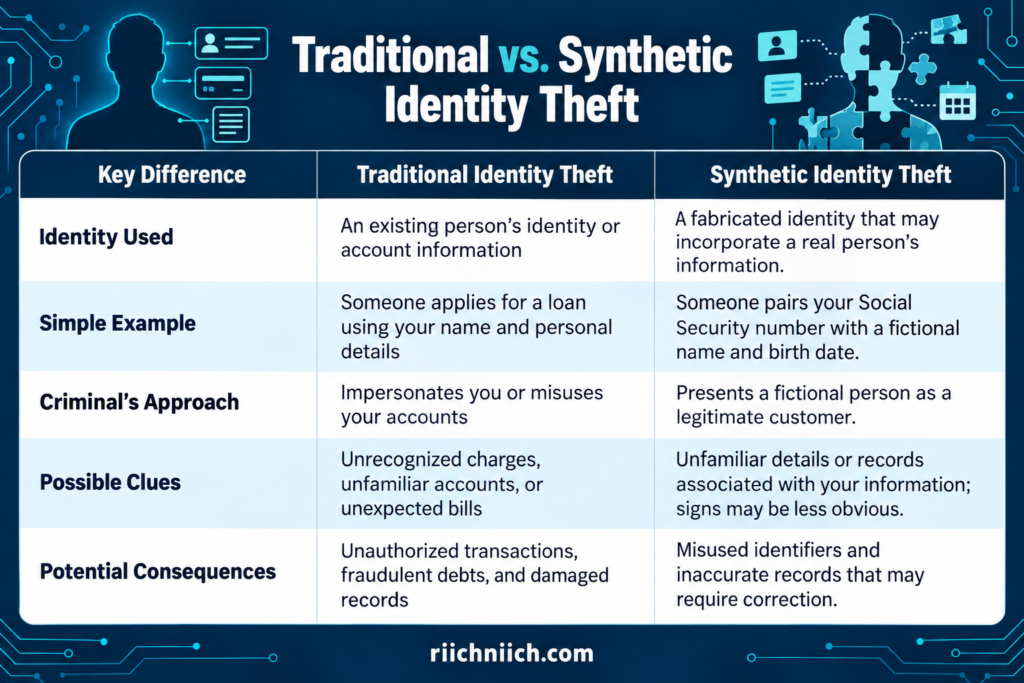
Neither type is necessarily easy to spot. The Federal Trade Commission recommends reviewing bills, account statements, and credit reports for unfamiliar activity. However, checking an existing bank account alone does not show every possible misuse of your identity.
Which Protection Features Should You Compare?
When evaluating credit monitoring vs identity theft protection, look at the specific services included:
- Credit monitoring: Which bureaus are monitored, and what changes trigger alerts?
- Identity monitoring: Which additional sources are checked for suspicious use of your information?
- Recovery assistance: Will a specialist help you address inaccurate records and communicate with affected organizations?
The FTC explains that credit monitoring, identity monitoring, and recovery services perform different jobs, and recovery assistance may be included or cost extra.
Before subscribing, ask how the provider handles both traditional and synthetic identity misuse. A plan is easier to evaluate when it clearly explains its detection limits and the practical help you receive if something goes wrong.
Why Criminals Target Children’s Social Security Numbers
Children’s Social Security numbers can be attractive to criminals because misuse may go unnoticed for years. Most children are not applying for credit, reviewing financial records, or receiving account alerts. That leaves fewer opportunities for a family to discover suspicious activity.
For parents asking what is synthetic identity theft, the concern is straightforward: a criminal may combine a child’s real Social Security number with a fictional adult name and birth date to create a false identity.
Little Credit History Can Mean Fewer Clues
Children generally have limited or no credit history. A fabricated identity using their information may therefore develop without the child or parent recognizing what is happening. The Federal Reserve’s research on synthetic identity fraud identifies children as vulnerable partly because they are less likely to check credit information and uncover misuse.
Problems May Surface When The Child Gets Older
A family might discover identity misuse only when an unexpected bill arrives or a young adult applies for financial assistance. The Federal Trade Commission’s child identity theft guide lists warning signs such as unfamiliar overdue bills, benefit problems, and a student loan denial caused by damaged credit. These signs warrant investigation, although they do not prove synthetic identity theft specifically.

Start With Free Protection Before Comparing Paid Plans
Keep sensitive documents secure and ask why an organization needs your child’s Social Security number before providing it. The FTC also recommends requesting a free credit freeze for children under 16 through each of the three major credit bureaus. A freeze helps restrict new-account fraud; it does not prevent every form of identity misuse.
If you want additional monitoring and recovery support, compare family identity theft protection plans carefully. Before subscribing, ask:
- Does the plan cover each child, and what are the age limits?
- What sources does child identity monitoring actually check?
- Does recovery assistance address synthetic identity misuse involving a minor?
- Are children included in any insurance coverage, and what exclusions apply?
Want monitoring and recovery support for your household? Explore Aura’s family protection options and review the child benefits, eligibility requirements, and current price before choosing a plan.
Choose a family plan based on verified child-specific benefits. Paid monitoring may add convenience and support, but it should complement practical safeguards such as protecting documents and freezing your child’s credit.
To compare options for your household, explore our guide to the best identity theft protection for families, paying particular attention to child monitoring and recovery support.
Warning Signs of Synthetic Identity Theft
Synthetic identity fraud can be difficult to notice because the false identity may use a different name from yours. If you’re researching what is synthetic identity theft, watch for unexplained connections between your personal information and accounts, names, or financial activity you do not recognize.
These warning signs deserve investigation, but none proves synthetic identity theft on its own. Reporting errors, mixed credit files, and other forms of identity theft can cause similar problems.
For a broader look at suspicious activity across your accounts and records, review these 13 warning signs someone stole your identity.
Unfamiliar Accounts Or Credit Inquiries
A loan, credit card, or application-related inquiry you do not recognize could indicate misuse of your information. Review unfamiliar entries rather than assuming they are harmless. The Federal Trade Commission recommends checking credit reports for accounts you did not open.
Names Or Addresses You Cannot Explain
An unfamiliar name or address associated with your credit records deserves a closer look—particularly if it appears alongside an unknown account. However, an old address, name variation, or reporting mistake is not automatically evidence of fraud.
Bills Or Collection Notices For Unknown Debts
An unexpected bill or collection notice may reveal an account you never authorized. Verify the organization through independently obtained contact information before sharing sensitive details or making a payment.
Financial Activity Connected To Your Child
Overdue bills addressed to your child, unexpected tax notices, or benefit problems involving their Social Security number can signal identity misuse. The FTC’s child identity theft guidance explains these warning signs and how to request a search for a child’s credit records. Not every child credit file is fraudulent, so investigate the underlying information.
Unexpected Credit Or Benefits Problems
A credit denial, unexplained credit-score change, or benefits issue may prompt you to examine your records. These problems have many possible causes, but synthetic identity fraud can affect credit access and other records, according to the Federal Reserve.

What If You Have Not Noticed Any Warning Signs?
A quiet bank account does not establish that your personal information is safe. Synthetic identity activity may involve a separate fabricated identity, making familiar account statements an incomplete picture.
If you are considering paid protection, compare the scope of alerts and the help available after an alert arrives. Ask which credit bureaus and identity-data sources the plan monitors, whether child monitoring is included, and whether recovery specialists assist with suspected synthetic identity misuse.
A useful service should help you understand and investigate suspicious activity. Do not treat the absence of an alert as a guarantee that no fraud exists.
How To Detect Synthetic Identity Theft
Learning what is synthetic identity theft is the first step. Detecting it requires checking for unfamiliar activity and investigating discrepancies—not simply watching your credit score. Because a fabricated identity can use different personal details, no single consumer check can rule out every instance of synthetic identity fraud.
Review Your Credit Reports From All Three Bureaus
Request your reports through AnnualCreditReport.com, then review each one individually. Look for accounts you did not open, unfamiliar application-related inquiries, and personal information you cannot explain.
Check the underlying entries rather than relying on a score change alone. An unfamiliar item could reflect fraud, a reporting error, or a creditor using a business name you do not recognize.
Investigate Suspicious Entries Directly
If something looks wrong, contact the credit bureau and the company that supplied the information through their official channels. Explain exactly which account or detail you do not recognize and ask them to investigate.
Keep copies of the entry, relevant correspondence, and case numbers. An unexplained mismatch is a reason to investigate—not a confirmed diagnosis of synthetic identity theft.
Check Your Child’s Records When You Suspect Misuse
For suspected child synthetic identity theft, contact each major credit bureau and request a manual search using your child’s Social Security number. The Federal Trade Commission explains that you may need identification, proof of your address, and documents establishing your relationship to the child. Use the bureaus’ official submission processes when providing these sensitive records.

Use Monitoring Alerts As Leads To Investigate
Credit monitoring can flag changes on the credit reports included in your plan. Identity monitoring may check other databases for suspicious use of your information. The FTC’s explanation of monitoring services makes clear that these services cover different activities and have detection limits.
A dark web alert indicates that information was found in a monitored source; it does not, by itself, establish that someone created a synthetic identity. Likewise, receiving no alerts does not establish that your information has never been misused.
Compare Detection Features Before Paying
If you want help keeping track of potential problems, compare services on practical details:
- Coverage: Does the selected plan monitor all three credit bureaus?
- Additional checks: What does its Social Security number or identity monitoring actually search?
- Alert usefulness: Does it explain what triggered an alert and what to do next?
- Recovery support: Can a specialist help investigate and resolve suspected synthetic identity misuse?
Paid monitoring may reduce the work of watching for changes, but its value depends on what it checks and how it helps you respond. Start with your free reports, then consider whether additional alerts and recovery assistance justify the subscription cost.
How To Prevent Synthetic Identity Theft
Understanding what is synthetic identity theft helps you focus on two priorities: limiting access to your personal information and making it harder for criminals to misuse it. You cannot eliminate every risk, but these steps can strengthen your protection.
Freeze Your Credit At All Three Bureaus
Place a free security freeze with Equifax, Experian, and TransUnion separately. A freeze restricts access to your credit report, making it harder to open fraudulent accounts that require a credit check.
Use our step-by-step guide on how to freeze your credit to place a security freeze with Equifax, Experian, and TransUnion.
A credit freeze is an important safeguard, but it does not block every use of your Social Security number or guarantee that a separate synthetic identity cannot be created. It also does not stop unauthorized transactions on existing accounts.
Share Your Social Security Number Only When Necessary
Before providing your number, ask why it is needed, how it will be protected, and whether another identifier will work. Avoid sending it through ordinary email or responding to unexpected messages requesting it.
For additional ways to limit exposure, follow our guide on how to protect your Social Security number.
The Federal Trade Commission’s identity theft guidance recommends both credit freezes and limiting unnecessary disclosure of your Social Security number.
Secure Documents And Digital Accounts
Keep Social Security cards, tax records, and other sensitive paperwork in a secure location. Shred documents before discarding them.
Use unique passwords and enable multifactor authentication, especially for email and financial accounts. These measures help reduce opportunities for criminals to obtain the personal information used in synthetic identity fraud.

Protect Your Child’s Information Early
Do not wait for an unfamiliar bill to think about child identity protection. Secure your child’s records and question unnecessary requests for their Social Security number.
For children under 16, parents or guardians can request a free credit freeze through each major bureau. Follow the official documentation requirements described in the FTC’s child identity theft guide.
Review Records And Respond To Unfamiliar Activity
Regularly examine credit reports, financial statements, and official notices. Investigate unexpected accounts or personal-information changes promptly. These checks support early detection; they do not prevent the initial misuse of your information.
Add Paid Protection If Its Features Meet Your Needs
A paid service may be worth considering if you want automated alerts and help resolving identity misuse. Before subscribing, compare:
- Three-bureau credit monitoring and the changes it tracks.
- Identity monitoring with clearly explained sources and limitations.
- Child coverage if you need protection for dependents.
- Recovery assistance that addresses synthetic identity misuse.
- Renewal pricing and exclusions so you understand the ongoing cost.
Check whether your employer, bank, or insurance policy already provides relevant benefits before buying overlapping coverage.
Build your protection around free safeguards first, then pay for useful monitoring and support. The strongest reason to purchase a plan is the specific assistance it provides—not a promise that identity theft can never happen.
What To Do If Your Information Is Used In A Synthetic Identity
Discovering that someone may have combined your information with a false identity can feel overwhelming. Once you understand what is synthetic identity theft, the next priority is documenting the misuse, reporting it, and correcting affected records.
You do not need to purchase a protection plan before starting recovery.
1. Document What You Found
Save unfamiliar account notices, collection letters, credit-report entries, and relevant alerts. Record when you discovered each issue and keep a log of conversations, case numbers, and promised follow-up dates.
Describe the facts clearly: which information belongs to you, which details are unfamiliar, and which accounts you did not authorize. Avoid assuming that every discrepancy proves synthetic identity fraud.
2. Contact The Affected Company’s Fraud Department
Use contact information from the company’s official website or a verified statement. Explain that your personal information may have been used in a fabricated identity.
Ask the company to investigate, close any confirmed fraudulent accounts, and provide written confirmation of its findings. If the account uses a different name, explain that mismatch rather than presenting yourself as the fictional account holder.
3. Report The Identity Theft
Visit IdentityTheft.gov to report the misuse and receive a personalized recovery plan. Include the details you know, even if you cannot identify every account involved. The FTC also provides recovery letters and forms to help you contact affected organizations.
4. Freeze Your Credit And Consider A Fraud Alert
Request a free credit freeze separately with Equifax, Experian, and TransUnion. This helps restrict access to your credit reports and makes certain new-account fraud harder.
You can also place a free initial fraud alert by contacting one bureau, which must notify the other two. According to the FTC’s credit freeze and fraud alert guidance, an initial alert lasts one year; eligible identity theft victims can request a seven-year extended alert. Neither measure removes existing fraudulent records.

5. Dispute Affected Records And Track The Results
Review all three credit reports and dispute fraudulent entries with the bureaus showing them and the companies that supplied them. Explain any unfamiliar names or addresses connected to the misuse.
Follow the documentation instructions in your recovery plan. Keep copies of submissions and check that promised corrections appear. If tax, benefits, or other records are affected, contact the responsible agency too—correcting a credit report does not automatically correct other systems.
For a more detailed recovery process, follow our guide on how to recover from identity theft as you work through reporting, disputes, and follow-up.
6. Check Existing Recovery Benefits Before Paying For Help
Your employer benefits, insurance policy, bank, or current identity protection subscription may already offer assistance. Ask whether a recovery specialist can help with synthetic identity misuse and what work they will perform.
If you are considering a new service, confirm in writing whether it will assist with an incident discovered before enrollment. Do not assume a new subscription or advertised insurance benefit covers an existing problem.
Paid recovery support may be useful if you need help organizing disputes and communicating with organizations. Compare hands-on assistance, eligibility, exclusions, and total cost—and begin the free reporting steps while you evaluate your options.
Free Protection Steps Vs Paid Identity Theft Protection
If researching what is synthetic identity theft has you considering a protection plan, start by separating what you can do for free from the services worth paying for. Free safeguards provide a strong foundation. Paid plans may add automated monitoring, alerts, and recovery assistance.
You do not need a subscription to freeze your credit or report identity theft.
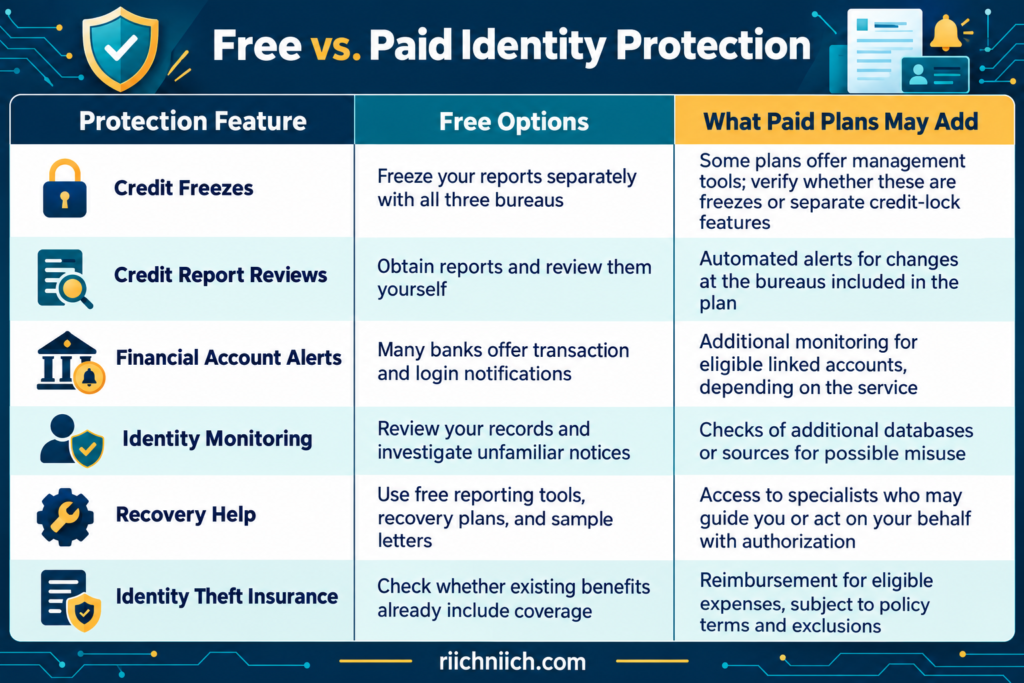
If you are unsure which type of service fits your needs, our comparison of credit monitoring vs identity theft protection explains the differences in alerts, coverage, and recovery assistance.
What Free Protection Can Accomplish
Credit freezes help restrict access to your credit reports, making certain fraudulent account openings harder. They are free to place and lift. Fraud alerts are also free and tell lenders to take additional identity-verification steps. The Federal Trade Commission explains how these protections work.
Combine them with strong account security, careful handling of your Social Security number, and regular record reviews. These steps reduce opportunities for misuse, although they cannot guarantee that a criminal will never create a synthetic identity.
What You Are Paying For
The main reasons to consider paid identity theft protection are convenience, broader monitoring, and recovery support. The FTC’s guide to monitoring and recovery services explains that credit monitoring watches covered credit reports, while identity monitoring may check other sources. Recovery services may help with letters, paperwork, and communication with creditors.
Those benefits vary by plan. An alert does not automatically stop fraud, and a large advertised insurance limit does not mean every loss qualifies for reimbursement.
Which Option Makes Sense For You?
Free safeguards may meet your needs if you consistently review records and are comfortable handling follow-up yourself. A paid plan may be worth considering if you want fewer manual checks, monitoring for family members, or professional assistance during recovery.
If automated alerts would make monitoring easier to manage, compare Identity Guard’s plans and current pricing to see which option includes the monitoring and recovery features you need.
Before buying, compare the renewal price, monitored sources, child coverage, and scope of recovery assistance. Ask specifically how the service handles synthetic identity misuse, and check for overlapping benefits through your employer, bank, or insurance.
Pay for clearly defined help that fills a gap in your existing protection. Keep free safeguards in place whether or not you subscribe.
Can Credit Monitoring Detect Synthetic Identity Theft?
Credit monitoring can flag some signs of synthetic identity theft, but it cannot reliably detect every case. Its usefulness depends on whether suspicious activity appears on the credit reports your service monitors.
If you’re researching what is synthetic identity theft, this limitation matters: a criminal may use your Social Security number with different identifying details. Activity connected to that fabricated identity may not appear on the personal credit report you normally review.
What Credit Monitoring Can Flag
Depending on the service, credit monitoring may alert you to:
- New loans or credit card accounts appearing on a monitored report.
- Credit inquiries associated with unfamiliar applications.
- Changes to reported names, addresses, or other personal details.
- Late payments or other unexpected account changes.
The Federal Trade Commission explains that services may monitor one, two, or all three major credit bureaus. An alert identifies a change that deserves attention; it does not establish whether the cause is synthetic identity fraud, another type of fraud, or a reporting error.
Why Synthetic Identity Fraud Can Escape Detection
Credit monitoring watches reported information—it does not independently verify the identity behind every credit application.
The Federal Reserve’s research on synthetic identity fraud describes how fabricated identities can develop separate credit records. That creates a potential blind spot when a consumer’s monitoring focuses on their own established file.
Three-bureau monitoring broadens coverage of your credit reports, but it does not guarantee detection of a separate synthetic identity. Credit monitoring also should not be treated as comprehensive monitoring of tax, benefits, or other non-credit activity.

Is Broader Identity Monitoring Worth Considering?
Identity monitoring may check additional databases for unfamiliar information associated with your identity, including activity outside your credit reports. Coverage varies, so ask what the service actually searches and what its Social Security number monitoring can—and cannot—identify. The FTC distinguishes these checks from standard credit monitoring.
Before paying for protection, ask:
- Which credit bureaus does this specific plan monitor?
- Does it check for unfamiliar names or information associated with my Social Security number?
- What guidance comes with a suspicious-activity alert?
- Will recovery specialists assist with synthetic identity misuse?
Use our guide to the best identity monitoring service to compare monitoring features and recovery support with these questions in mind.
Choose credit monitoring for the visibility it provides, then evaluate additional identity monitoring and recovery support on their own merits. A worthwhile plan should explain its limits clearly and help you act when something suspicious appears.
Is Identity Theft Protection Worth Paying For?
Identity theft protection can be worth paying for if its monitoring and recovery assistance fill a need you cannot easily manage yourself. The value depends on the features, ongoing cost, and benefits you already have—not simply the size of an advertised insurance policy.
If learning what is synthetic identity theft has made you consider a subscription, focus on what the service would actually do if someone misused your information.
When A Paid Plan May Be Worth It
A subscription may make sense if you:
- Want fewer manual checks. Automated monitoring can notify you about certain changes without requiring you to repeatedly review every covered source.
- Need family coverage. A suitable plan may include child identity monitoring and recovery support for eligible dependents.
- Would benefit from recovery assistance. A specialist may help organize paperwork, prepare disputes, or communicate with affected organizations.
- Want monitoring beyond credit reports. Some plans check additional sources for possible misuse of your personal information.
The Federal Trade Commission explains that monitoring and recovery services differ, and some recovery providers can act on your behalf when you formally authorize them. Ask whether you are buying hands-on assistance or general guidance.

When Free Safeguards May Be Enough
You may decide against a subscription if you regularly review your records, use strong account security, and feel comfortable handling disputes yourself. Credit freezes are free, and you can access free recovery tools through IdentityTheft.gov.
Check your existing benefits before purchasing. Your employer, financial institution, or insurance policy may already provide some monitoring or recovery assistance.
Still weighing the cost? Our guide, ‘Do You Really Need Identity Theft Protection?‘, can help you decide whether paid support fills a gap in your existing safeguards.
Calculate The Real Cost Before You Subscribe
Compare the annual renewal cost rather than judging the plan only by its introductory monthly price. For example, a hypothetical $25 monthly subscription costs $300 a year. Ask whether the additional monitoring and support justify that expense for your household.
Review these details before buying:
- Which credit bureaus and other sources are monitored.
- Whether every family member you need to cover is eligible.
- What recovery specialists will actually handle.
- Whether assistance applies to incidents discovered before enrollment.
- Insurance exclusions, reimbursement limits, and cancellation terms.
Do Not Buy Based On A Prevention Guarantee
Credit and identity monitoring can flag certain problems, but neither guarantees that synthetic identity fraud will be detected or prevented. Insurance also does not mean every loss will be reimbursed.
A paid plan is most worthwhile when it delivers useful alerts and practical recovery help at a price you can comfortably maintain. Compare those benefits first, and keep free safeguards in place regardless of which service you choose.
How To Choose Identity Theft Protection For Synthetic Identity Risks
Choose identity theft protection by comparing what the plan monitors, how it helps you investigate alerts, and what recovery support it provides. Understanding what is synthetic identity theft makes those questions especially important: a fabricated identity may involve your information without using your actual name.
Start With Your Household’s Needs
Decide whether you need individual coverage, protection for two adults, or a family plan that includes children. Check eligibility rules and enrollment requirements instead of assuming everyone in your household is automatically covered.
For parents, child identity monitoring should complement free safeguards. The Federal Trade Commission’s child identity theft guide explains how to protect children’s information and request credit freezes.
Ask What Social Security Number Monitoring Actually Does
“Social Security number monitoring” can describe different checks. Ask which sources the service monitors, what triggers an alert, and whether it looks for unfamiliar identifying information associated with your number.
Be cautious about vague claims such as “complete protection.” No consumer service should be treated as a guaranteed way to discover every synthetic identity.
Compare Credit Monitoring And Identity Monitoring Separately
Three-bureau credit monitoring offers visibility into changes on your reports at Equifax, Experian, and TransUnion. Broader identity monitoring may check additional databases for activity outside those reports.
The FTC’s explanation of identity protection services distinguishes these functions and describes their limitations. Buying both does not eliminate every blind spot, but understanding the difference helps you compare plans accurately.

Verify The Recovery Service Before You Need It
Ask the provider this direct question:
“If my Social Security number is used with a different name to create a synthetic identity, what would your recovery team do to help me?”
Find out whether the service provides a dedicated case manager, helps prepare disputes, and communicates with organizations on your behalf when authorized. Confirm whether those services are included in the plan you are considering.
If you already suspect misuse, ask whether assistance applies to an incident discovered before enrollment. Get the answer in writing.
Read The Price And Coverage Details Together
Before subscribing, check:
- Renewal cost: What will you pay after the introductory offer?
- Insurance terms: Which expenses qualify, and what exclusions or smaller coverage limits apply?
- Family enrollment: Must you register each person separately?
- Cancellation terms: How do you cancel, and are refunds available?
- Existing benefits: Would the subscription duplicate coverage you already receive?
Choose The Plan You Can Clearly Explain
You should be able to say what you are buying without relying on advertising language: which records are monitored, who is covered, and what help follows an alert.
Prioritize useful monitoring and verified recovery assistance over the longest feature list. A plan that fits your household and budget is a stronger purchase than one whose main appeal is an impressive insurance headline.
Ready to narrow your options? Compare the best identity theft protection services, then verify each plan’s monitoring limits, recovery assistance, and renewal price before subscribing.
Features To Compare Before Buying: Monitoring, Recovery Support, And Insurance
If researching what is synthetic identity theft has led you to compare protection plans, evaluate three features separately: monitoring helps identify potential problems, recovery support helps address them, and insurance may reimburse eligible expenses. A strong offering in one area does not guarantee strong benefits in the others.
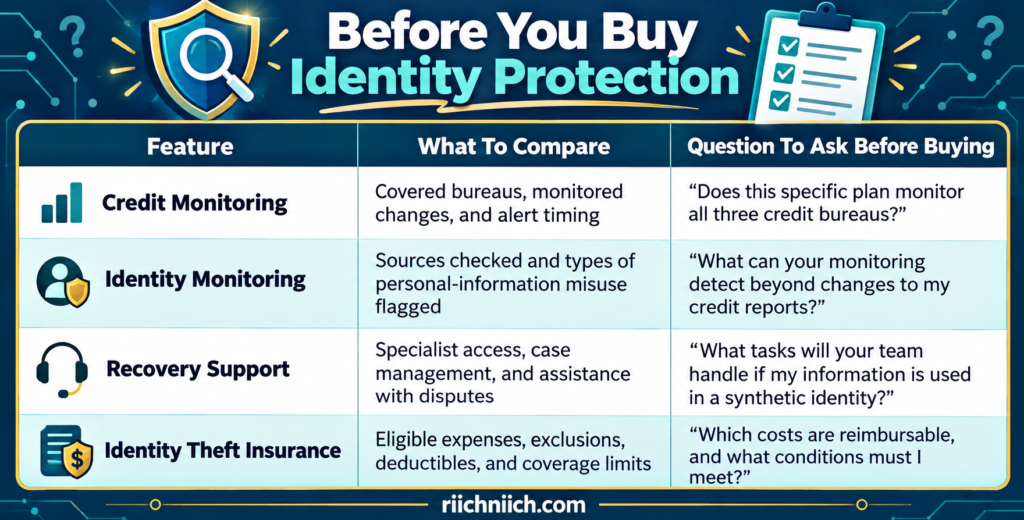
Monitoring: Compare Coverage And Useful Alerts
Look beyond the phrase “identity monitoring.” Ask whether the plan checks for unfamiliar information associated with your Social Security number, includes child monitoring when needed, and explains how to investigate an alert.
The Federal Trade Commission distinguishes credit monitoring from identity monitoring: the former watches covered credit reports, while the latter may check additional databases. Neither offers visibility into every possible misuse of your information.
Also ask how quickly notifications are delivered after the provider detects a change. Fast notification does not necessarily mean the underlying source reports activity immediately.
Recovery Support: Find Out Who Does The Work
A telephone advice line and hands-on case management provide different levels of help. Before subscribing, confirm whether a specialist can:
- Help identify affected records and organize the next steps.
- Prepare dispute letters and supporting documents.
- Contact creditors or other organizations with your authorization.
- Follow up until the agreed recovery work is complete.
Ask specifically about synthetic identity fraud recovery. Confirm support hours, whether you receive a consistent case manager, and whether assistance covers eligible children.
Insurance: Read Beyond The Advertised Maximum
Identity theft insurance may cover certain recovery expenses, such as document costs, eligible lost wages, or legal fees. Do not assume the advertised maximum is a payout you will receive or that stolen money is automatically covered. The FTC recommends checking coverage and deductibles before purchasing.
Request the applicable insurance documents and check:
- Whether limits apply per person, per incident, or across the household.
- Whether individual expense categories have smaller limits.
- Whether prior incidents or known problems are excluded.
- What receipts, reports, and claim deadlines are required.
- Whether synthetic identity misuse falls within the policy’s covered events.
Compare The Exact Plan At Its Renewal Price
Features can differ between subscription tiers from the same provider. Evaluate the plan you intend to buy—not benefits advertised elsewhere on the company’s website.
The strongest purchase combines relevant alerts, clearly defined recovery help, and understandable coverage at a sustainable price. Give priority to benefits you can verify and would actually use.
What Identity Theft Protection And Insurance May Not Cover
An identity theft protection subscription does not guarantee that every misuse will be detected, every problem will be resolved, or every loss will be reimbursed. If you’re learning what is synthetic identity theft, these limits matter because a fabricated identity may involve records outside a provider’s monitoring coverage.
Before buying, distinguish between the service’s monitoring features, recovery assistance, and insurance policy. Each can have different restrictions.
Fraud Outside The Sources Being Monitored
Credit monitoring generally tracks changes on the credit reports included in your plan. It does not automatically detect misuse involving tax returns, government benefits, or every account opened using your information.
The Federal Trade Commission explains that even broader identity monitoring has gaps. A service cannot alert you to every activity simply because it monitors your Social Security number.
Problems That Existed Before You Enrolled
Do not assume a new subscription will cover synthetic identity fraud you have already discovered. Eligibility for recovery assistance and eligibility for insurance reimbursement may differ.
Ask whether the provider will help with an existing incident, whether that assistance costs extra, and whether related expenses qualify for reimbursement. Request written confirmation before paying.
Every Dollar Lost To Fraud
An advertised insurance limit is a maximum subject to policy terms—not a guaranteed payment. Some policies focus on eligible recovery expenses, while any stolen-funds coverage must be checked separately.
The FTC notes that identity theft insurance may cover expenses such as document costs, lost wages, or legal fees, but generally does not reimburse stolen money or financial losses from the theft. Verify the specific policy rather than assuming broader coverage.
Scam Payments You Authorized
Do not assume money you willingly sent to a scammer qualifies as an insured identity theft loss. A deceptive payment and unauthorized identity misuse can be treated differently under policy definitions.
If scam reimbursement matters to you, ask whether it is expressly included and which conditions apply.

Unlimited Expenses Or Automatic Family Coverage
A policy may have smaller limits for individual expense categories, documentation requirements, or deadlines for submitting claims. A household benefit may also be shared rather than available in full to each person.
Confirm that every intended family member is eligible and properly enrolled. Child monitoring, recovery assistance, and insurance should each be verified separately.
Guaranteed Recovery Results
A recovery specialist may help prepare disputes and contact organizations, but that does not guarantee a particular outcome or completion date. Ask what the provider commits to doing and what responsibilities remain yours.
Buy Based On Written Terms, Not The Headline Benefit
Before subscribing, request the service terms and applicable insurance documents. Confirm how they address synthetic identity misuse, existing incidents, covered people, and eligible expenses.
Choose a plan whose limits you understand and whose practical benefits justify the renewal cost. Clear recovery assistance and relevant monitoring are more useful purchasing criteria than an insurance number alone.
Frequently Asked Questions About Synthetic Identity Theft
Still have questions after learning what is synthetic identity theft? These answers address specific concerns about exposed information, credit checks, and choosing protection.
Does A Data Breach Mean Someone Has Created A Synthetic Identity With My Information?
No. A breach means information was exposed or accessed without authorization; it does not establish how that information was subsequently used.
Take the exposure seriously, but distinguish a breach notification from evidence of fraud. Review the information involved, secure affected accounts, and investigate unfamiliar records. If you purchase monitoring, treat alerts as leads to investigate rather than automatic confirmation of synthetic identity theft.
Can I Get A New Social Security Number After Synthetic Identity Theft?
Possibly, but only in limited circumstances. The Social Security Administration says an identity theft victim may qualify when they have tried to resolve the misuse but continue to be disadvantaged by using the original number.
A new number is not a routine first step or a guaranteed solution. Begin by documenting and reporting the misuse, and ask SSA about eligibility if problems persist.
Will Checking My Credit Reports Repeatedly Lower My Credit Score?
No. Checking your own credit reports does not affect your credit score, according to the Consumer Financial Protection Bureau.
You can review your reports for unfamiliar accounts or identifying details without damaging your score. Do not buy monitoring because you believe checking your own reports hurts your credit. Consider it for automated alerts and additional services instead.

Should I Cancel My Credit Cards If Someone Misuses My Social Security Number?
Not automatically. Misuse of your Social Security number does not establish that every existing card is compromised. Contact the relevant issuer if a card number was exposed or you discover unauthorized transactions, and follow its instructions.
Closing legitimate credit cards does not correct a fabricated identity or remove fraudulent records elsewhere. Focus your response on the information and accounts actually affected.
Do I Need Two Identity Theft Protection Subscriptions For Better Coverage?
Not necessarily. Two subscriptions may duplicate credit monitoring, alerts, and recovery benefits without addressing the gaps that matter to you.
Before paying twice, compare the sources monitored, covered family members, and recovery assistance. Ask how any insurance benefits interact with other coverage. A second subscription is worth considering only if it provides a useful, verified benefit your existing protection lacks.
What Happens To My Protection When A Child Turns 18?
That depends on the provider’s eligibility and enrollment rules. Ask whether your child remains covered, must establish a separate account, or needs a different plan. Also confirm whether monitoring, recovery assistance, and insurance change at different ages.
When comparing family identity theft protection, look beyond today’s price. Choose a plan with clear transition rules so you can maintain appropriate coverage as your household’s needs change.
Conclusion: Understand the Risks and Choose the Right Protection
The answer to what is synthetic identity theft reveals why protecting individual pieces of personal information matters. A criminal can combine a real identifier with fabricated details to create a false identity—and the resulting activity may not be obvious on the records you normally check.
Start with safeguards you can control. Protect your Social Security number, secure sensitive documents, strengthen account security, and freeze your credit at all three bureaus. The Federal Trade Commission explains how free freezes and fraud alerts help reduce new-account fraud. These measures are valuable, though they cannot prevent every form of synthetic identity misuse.
If you discover suspicious activity, investigate promptly. You can report identity theft and get a free recovery plan through IdentityTheft.gov before purchasing any service.
Paid identity theft protection is worth considering when it adds useful monitoring and practical recovery assistance. Before subscribing, compare:
- Monitoring coverage: Which credit bureaus and additional sources does the plan check?
- Recovery assistance: What will specialists actually do if your information is misused?
- Family benefits: Are eligible children included and properly enrolled?
- Insurance terms: Which expenses qualify, and what exclusions apply?
- Ongoing cost: Do the benefits justify the renewal price?

Choose protection based on verified benefits, not promises of complete prevention. A plan that provides relevant alerts, clear next steps, and dependable recovery support may offer worthwhile help—but it should complement your own security habits.
Turn these recommendations into a repeatable routine with our identity theft prevention checklist, including a printable version you can use to track your progress.
Take one practical step today: freeze your credit, review your records, or compare plans against the checklist above. Then choose the level of support that fits your household and budget.