

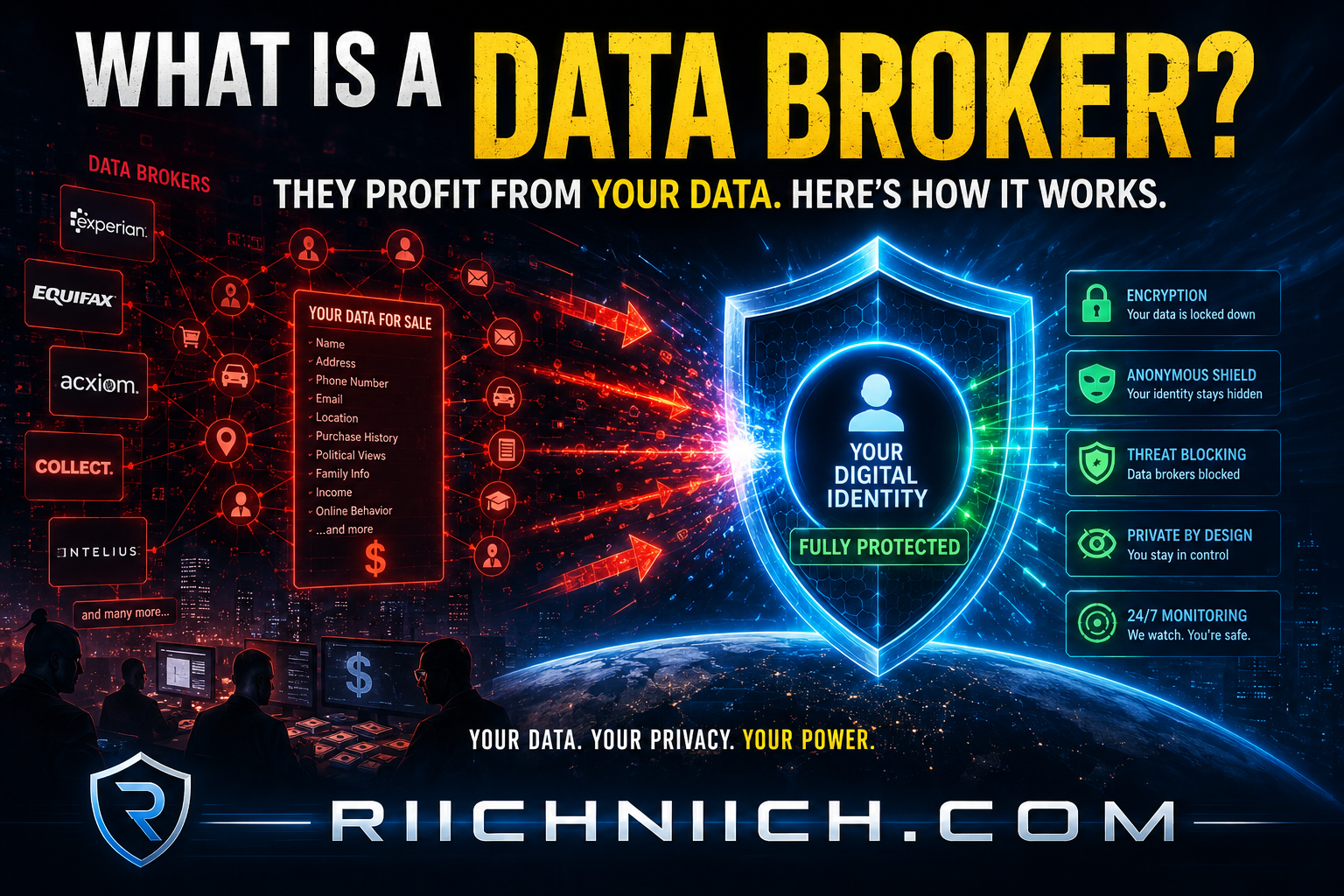
What is a data broker, and why do these companies have so much of your personal information online? Most people do not realize that data brokers constantly collect, store, and sell personal data gathered from websites, apps, public records, social media platforms, and even data breaches.
The problem is that this information can increase your risk of identity theft, phishing attacks, scam calls, spam emails, and online privacy exposure. In this guide, you will learn how data brokers work, how your information ends up online, how to remove your personal data from broker websites, and the best tools to protect your privacy long-term.
Table of Contents
🔥 Quick Answer
A data broker is a company that collects, buys, and sells your personal information without you realizing it. These companies gather data from public records, apps, websites, social media activity, online purchases, and even data breaches. Your information can then be shared with advertisers, marketers, insurance companies, recruiters, and sometimes even cybercriminals if the data becomes exposed online.
If you are wondering what is a data broker and why it matters, the biggest concern is privacy and identity theft risk. Data brokers can build detailed profiles containing your full name, phone number, home address, email address, family members, income level, browsing behavior, and more. The more exposed your data becomes, the easier it is for scammers, hackers, and phishing attacks to target you.
Want to understand how cybercriminals collect personal information in the first place? Read our complete guide on How Hackers Get Your Personal Data.
Many people search for how to remove personal information from the internet because of how aggressively data broker websites spread private information online. Manually opting out of these sites can take hours, and new broker databases constantly appear. That is why many people now use automated data removal services to continuously monitor and remove exposed information.
👉 Remove your personal information from data broker websites automatically with Incogni here before scammers and marketers collect even more of your data.
According to the Electronic Frontier Foundation (EFF), data collection and online tracking have become major privacy concerns as companies continue expanding how they gather and share user information.
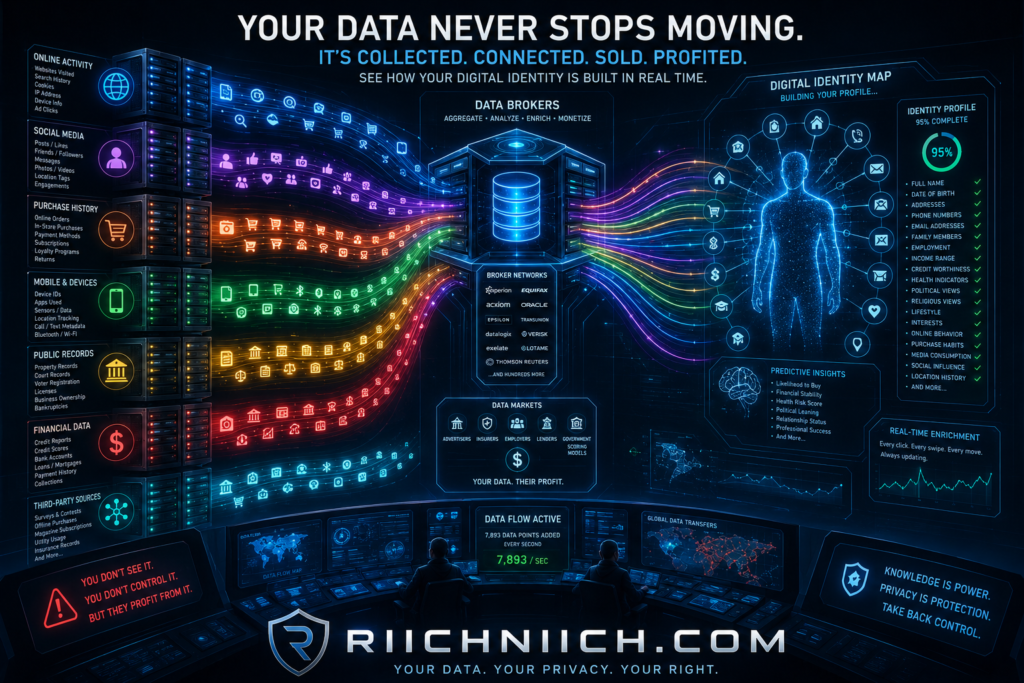
The good news is that you can reduce your exposure. Using privacy tools, removing your data from broker sites, enabling stronger account security, and monitoring for identity theft can significantly lower your risk online.
What Is a Data Broker?
A data broker is a company that collects and sells your personal information to other businesses, advertisers, marketers, and sometimes even government agencies. If you are searching for what is a data broker, it is important to understand that these companies operate behind the scenes by gathering data from websites, apps, public records, loyalty programs, online purchases, and social media activity.
Most people never directly interact with data broker companies, yet these businesses may already have detailed information about:
- Your full name
- Home address
- Phone number
- Email address
- Age and income range
- Family members
- Shopping habits
- Search behavior
- Device usage
- Location history
Data brokers combine this information to create digital profiles that can be sold or shared across massive advertising and analytics networks. According to the Privacy Rights Clearinghouse, data brokers often collect information from multiple online and offline sources to build highly detailed consumer profiles.
One reason people are increasingly concerned about data brokers is because of the growing risk of identity theft and online privacy exposure. The more places your personal information appears online, the easier it becomes for scammers, hackers, and phishing attacks to target you. Even small details like previous addresses or phone numbers can help cybercriminals answer security questions, impersonate accounts, or launch social engineering scams.
Many people are shocked when they discover how their personal information ends up online in the first place. Data broker websites often obtain information through:
- Website trackers and cookies
- Mobile app permissions
- Sweepstakes and surveys
- Public government records
- Social media platforms
- Purchase histories
- Third-party marketing databases
- Previous data breaches
This is why searches for terms like “how to remove personal information from the internet,” “how to stop data brokers,” and “best data removal services” have grown rapidly in recent years.
The difficult part is that manually removing your information from data broker sites can take a huge amount of time. Some sites require separate opt-out requests, identity verification steps, or repeated follow-ups to keep your information removed.
Because of this, many people now use automated privacy protection tools that continuously monitor broker websites and submit removal requests automatically. These services help reduce your online exposure while saving hours of manual work.
Understanding what a data broker is can help you take control of your digital privacy before your personal information spreads even further online.
How Data Brokers Collect Your Personal Information
Many people asking “what is a data broker” are surprised to learn that data brokers collect personal information from dozens of different sources every single day. Most of this data collection happens automatically in the background while you browse websites, use apps, shop online, or interact with social media platforms.
Data broker companies are designed to gather, organize, and sell consumer data at massive scale. Their goal is to build highly detailed digital profiles that businesses can use for advertising, analytics, marketing, and targeting purposes.
According to the National Public Radio (NPR) Privacy Coverage, data brokers often compile information from both online and offline sources to create extensive records on consumers.
Some of the most common ways data brokers collect your personal information include:
Website Tracking and Cookies
Every time you visit a website, tracking technologies such as cookies, pixels, and scripts can collect information about your activity. This may include:
- Pages you visit
- Products you view
- Links you click
- Search history
- Time spent on websites
- Device information
- IP addresses
This data helps advertisers and broker companies understand your interests and online behavior.
Mobile Apps and Permissions
Many mobile apps collect far more information than users realize. Some apps may access:
- Location history
- Contact lists
- Device identifiers
- App usage behavior
- Browsing activity
Even free apps often monetize user data by sharing information with advertising networks and third-party analytics companies connected to data broker systems.
Public Records and Government Databases
Data broker websites also collect information from publicly available records, including:
- Property records
- Court filings
- Voter registrations
- Marriage licenses
- Business registrations
This information can then be combined with online activity to create more complete personal profiles.
Social Media Platforms
Social media is one of the largest sources of personal data online. Public posts, profile details, likes, follows, comments, and location tags can all contribute to the information brokers collect.
Even small details shared online can help companies and scammers build detailed identity profiles.
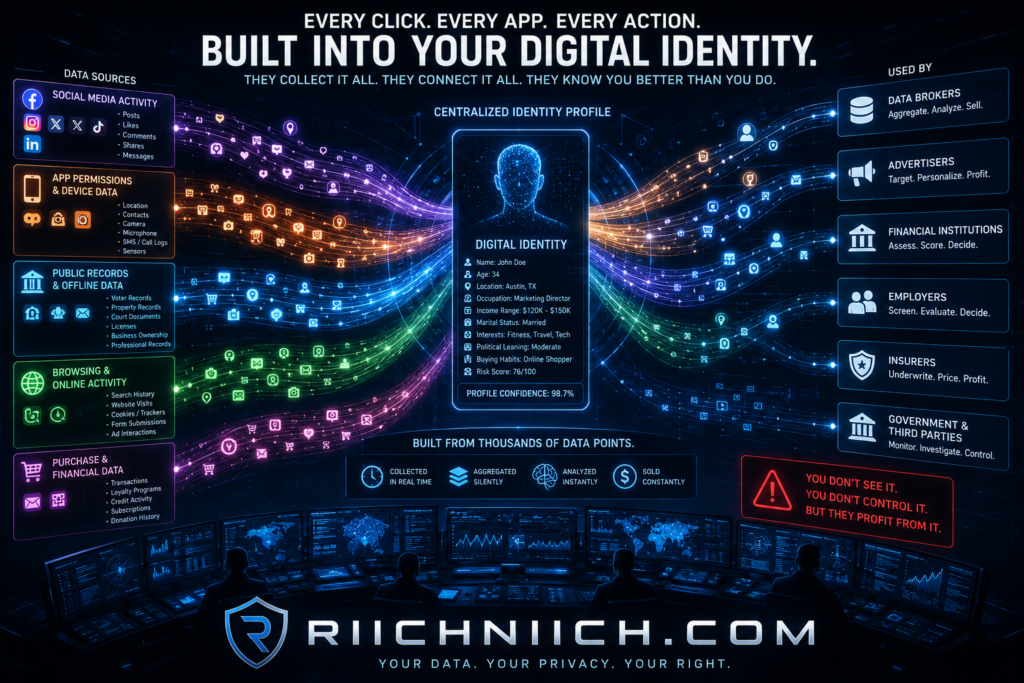
Online Purchases and Loyalty Programs
Retailers and loyalty programs often track shopping behavior to better understand customer interests. This can include:
- Purchase history
- Spending habits
- Favorite brands
- Subscription services
- Product preferences
Some companies share or sell portions of this data to third-party marketing networks and consumer analytics firms.
Data Breaches and Leaked Information
One of the biggest privacy risks comes from data breaches. When companies experience cyberattacks, exposed information may eventually circulate through underground markets, marketing databases, or broker networks.
This can include:
- Email addresses
- Passwords
- Phone numbers
- Home addresses
- Financial information
The more breaches your information appears in, the larger your online exposure becomes.
Because of how aggressively companies collect and share personal information, many people now search for terms like “how to stop data brokers,” “how to remove your information online,” and “best privacy protection services.”
Understanding how data brokers collect your personal information is important because you cannot protect your privacy if you do not know where your data is coming from in the first place.
What Kind of Information Do Data Brokers Sell?
If you are researching what is a data broker, one of the most important things to understand is the type of personal information these companies collect and sell. Many people assume data brokers only gather basic marketing information, but the reality is far more extensive.
Data broker companies can build highly detailed consumer profiles containing personal, financial, behavioral, and online activity data gathered from multiple sources. This information is then sold to advertisers, marketers, analytics firms, and other third parties.
According to the Electronic Privacy Information Center (EPIC), data brokers maintain massive databases containing consumer information collected from online tracking, public records, and commercial sources.
Some of the most common types of information data brokers sell include:
Personal Identification Information
Many data broker websites collect core identifying details such as:
- Full name
- Home address
- Email address
- Phone number
- Date of birth
- Gender
- Marital status
This information is often used to create searchable online profiles that can easily appear in people-search databases.
Financial and Income Information
Some brokers estimate or collect:
- Income range
- Home ownership status
- Estimated net worth
- Credit-related behavior
- Spending habits
- Purchase history
Advertisers and financial companies may use this information for targeted offers, while scammers may use it for fraud attempts or phishing campaigns.
Online Activity and Browsing Behavior
Data brokers also track digital behavior across websites and apps, including:
- Search history
- Websites visited
- Products viewed
- Ad interactions
- Device usage
- IP address activity
This helps companies predict consumer interests and personalize advertising campaigns.
Location and Movement Data
Some mobile apps and connected devices collect precise location information that can later be shared with third parties. This may include:
- Frequently visited places
- Daily travel patterns
- Store visits
- Real-time location history
Location data has become one of the most valuable forms of consumer tracking information online.
Family and Relationship Information
Certain broker databases may also contain:
- Family member names
- Household relationships
- Children in the home
- Roommate associations
- Previous addresses
Even partial relationship information can increase identity theft and social engineering risks.
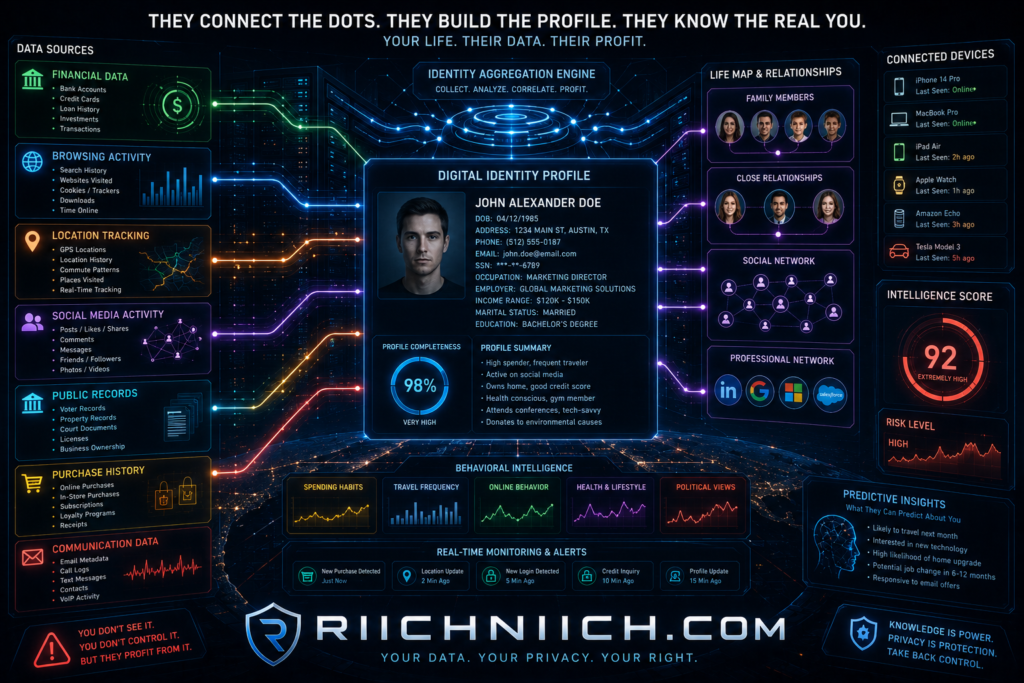
Health and Interest Categories
Some companies categorize users based on:
- Health interests
- Shopping preferences
- Lifestyle behaviors
- Hobbies
- Political engagement
- Subscription services
While this information is often used for advertising, it can still create serious privacy concerns when combined with other personal data.
Data From Previous Breaches
One of the biggest risks comes from leaked information after data breaches. Exposed records may include:
- Email addresses
- Passwords
- Phone numbers
- Account credentials
- Partial financial information
Once your data enters multiple broker databases, removing it completely becomes much more difficult.
This is one reason why so many people search for:
- how to remove personal information from the internet
- best data removal services
- how to stop data brokers
- identity theft protection services
- privacy protection tools
The more information data brokers collect and distribute, the greater your online exposure becomes. Understanding what kind of information data brokers sell can help you take action before your personal data spreads even further across the internet.
Why Data Brokers Are Dangerous for Your Privacy
Understanding what is a data broker is important because these companies can create serious privacy and security risks without most people even realizing it. The more your personal information spreads across broker databases, the easier it becomes for advertisers, scammers, hackers, and identity thieves to access details about your life.
Data brokers are dangerous for your privacy because they collect, combine, and distribute information from multiple sources to build highly detailed digital profiles. In many cases, consumers never directly consent to having this information sold across advertising networks or public people-search websites.
According to the Mozilla Privacy Not Included Guide, data brokers can compile sensitive personal information from apps, online activity, public records, and commercial databases, making it difficult for users to maintain online privacy.
One major problem is the sheer amount of information that can become publicly accessible online. Data broker sites may expose:
- Home addresses
- Phone numbers
- Email addresses
- Family members
- Employment history
- Location history
- Shopping behavior
- Previous residences
The more information that becomes available online, the easier it is for cybercriminals to target individuals with scams and fraud attempts.
Increased Risk of Identity Theft
One of the biggest dangers of data brokers is the increased risk of identity theft. Criminals can use exposed personal details to:
- Open fraudulent accounts
- Attempt account takeovers
- Bypass security questions
- Launch phishing attacks
- Impersonate victims online
Even partial information from multiple broker databases can help scammers piece together complete identity profiles.
More Spam Calls, Scam Messages, and Phishing Attacks
Many people notice a sharp increase in spam calls, robocalls, phishing emails, and scam text messages after their information spreads through marketing and broker networks.
This happens because data broker companies often share information across advertising ecosystems where personal data can circulate widely between multiple organizations.
Loss of Online Privacy
Most users do not realize how little control they actually have over their personal data once it enters broker systems. Removing information manually can be extremely difficult because:
- Hundreds of broker sites may contain your data
- Some sites republish removed information
- New broker databases constantly appear
- Opt-out procedures vary between companies
This is why searches for “how to remove personal information from the internet” and “best data removal services” continue growing rapidly.
Personal Profiles Can Become Extremely Detailed
Data brokers do not just collect basic contact information. Many companies build advanced behavioral profiles based on:
- Browsing habits
- Purchase behavior
- Device usage
- App activity
- Location tracking
- Social media engagement
Over time, these profiles can reveal surprisingly detailed insights about your habits, routines, and interests.
Data Breaches Make the Problem Worse
Even legitimate companies can become victims of cyberattacks. When broker databases or marketing platforms experience data breaches, massive amounts of personal information can become exposed online.
Once your information appears in leaked databases, it may continue circulating indefinitely across the internet.
This is one reason many people now invest in:
- identity theft protection services
- privacy monitoring tools
- automated data removal services
- VPNs and cybersecurity software
Understanding why data brokers are dangerous for your privacy is the first step toward reducing your online exposure and protecting your personal information before it spreads even further.
How Data Brokers Increase Identity Theft Risk
If you are researching what is a data broker, one of the biggest concerns should be how these companies increase identity theft risk. The more your personal information spreads across broker databases and public people-search websites, the easier it becomes for cybercriminals to target you.
Data brokers collect and distribute large amounts of sensitive information that can help scammers build detailed identity profiles. Even if a single database only contains partial information, criminals can combine data from multiple sources to create a much clearer picture of who you are.
According to the Identity Theft Resource Center (ITRC), exposed personal information from data broker systems can contribute to fraud, phishing attacks, and identity theft-related crimes.
Some of the most common ways data brokers increase identity theft risk include:
Exposing Personal Details Online
Many data broker websites publicly display information such as:
- Full names
- Phone numbers
- Home addresses
- Email addresses
- Family members
- Previous addresses
- Age ranges
While this information may seem harmless individually, it becomes dangerous when combined together.
Cybercriminals often use these details to:
- Answer security questions
- Verify identities
- Create phishing scams
- Impersonate victims
- Access online accounts
Making Phishing Attacks More Convincing
One reason phishing scams have become so effective is because scammers now have access to highly personalized information.
For example, criminals may know:
- Your name
- Your employer
- Your phone number
- Your recent purchases
- Your family members
- Your city or location
This allows them to create targeted scam emails, phone calls, or text messages that appear legitimate.
The more information data brokers collect and sell, the easier it becomes for scammers to build trust and manipulate victims.
Increasing Exposure After Data Breaches
When companies experience data breaches, leaked information often spreads across underground forums, marketing databases, and broker networks.
Over time, your information may appear in multiple databases simultaneously, making it easier for identity thieves to piece together:
- Login credentials
- Contact information
- Financial details
- Password recovery data
This is one reason searches for “how to protect yourself from identity theft” and “best identity theft protection services” continue increasing every year.
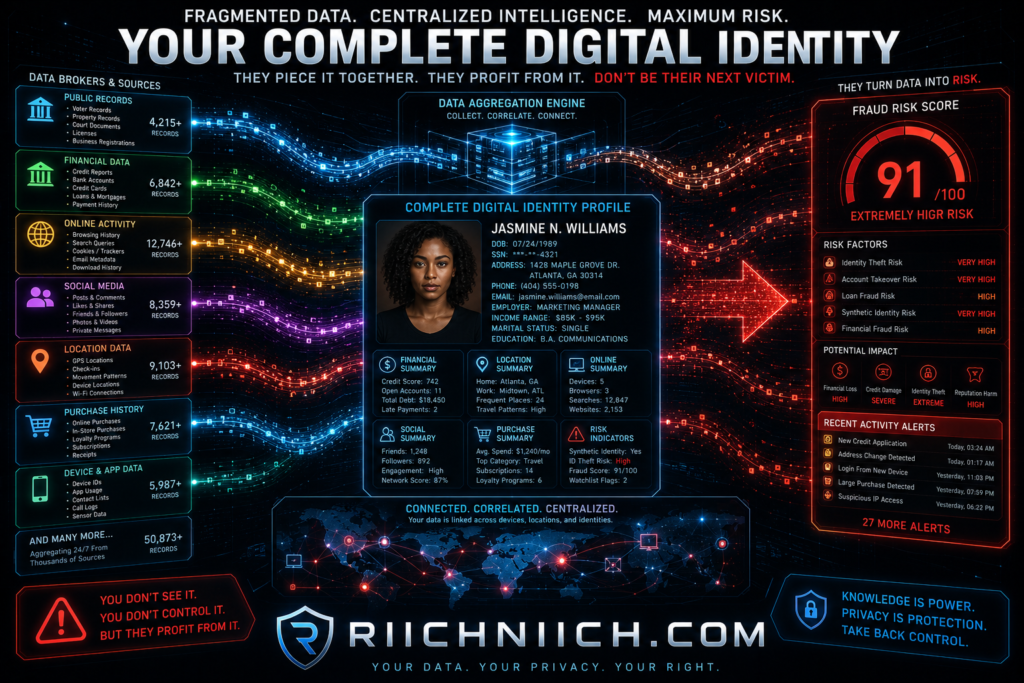
Helping Criminals Build Full Identity Profiles
Modern identity theft rarely depends on a single piece of information. Instead, cybercriminals combine data from multiple sources to build complete identity profiles.
This may include:
- Public records
- Social media information
- Broker databases
- Breached account credentials
- Purchase histories
- Device information
Once enough data is collected, criminals may attempt:
- Credit fraud
- Loan fraud
- Tax fraud
- Account takeovers
- SIM swap attacks
Long-Term Privacy Exposure
One of the biggest problems with data brokers is that information can continue circulating online for years. Even if you remove your data from one website, it may still appear on dozens of other broker platforms.
Some broker sites also republish information after:
- New public records appear
- Marketing databases refresh
- Additional data is purchased
- New breaches occur
This creates ongoing privacy and identity theft risks unless your information is continuously monitored and removed.
Because of these risks, many people now use:
- identity monitoring tools
- automated data removal services
- privacy protection software
- credit monitoring services
Understanding how data brokers increase identity theft risk can help you take proactive steps to reduce your online exposure before cybercriminals exploit your personal information.
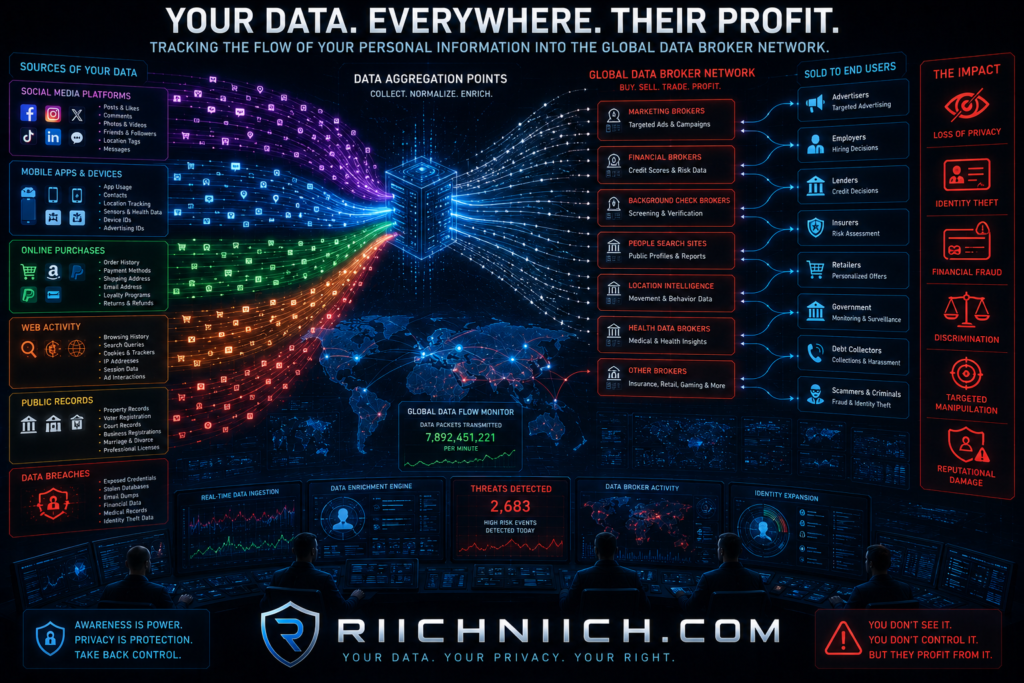
How Your Personal Data Ends Up Online
Many people researching what is a data broker are shocked to discover how easily personal information spreads across the internet. In most cases, your data does not appear online because of a single mistake. Instead, it slowly spreads through apps, websites, public records, marketing databases, and data-sharing networks over time.
Once your information enters multiple data broker systems, it can become extremely difficult to fully remove.
According to the Consumer Reports Digital Privacy Research, consumer data is constantly collected, shared, and sold across large advertising and analytics ecosystems.
Here are some of the most common ways your personal data ends up online:
Social Media Activity
Social media platforms are one of the largest sources of personal data exposure online. Public profiles, posts, comments, likes, and location tags can all reveal information about:
- Your identity
- Relationships
- Interests
- Daily routines
- Employment
- Travel habits
Even when accounts are private, third-party apps and advertising systems may still collect behavioral data connected to your activity.
Website Tracking and Advertising Networks
Many websites use:
- Cookies
- Tracking pixels
- Analytics tools
- Ad networks
- Browser fingerprinting
These technologies monitor how users browse the internet and help companies build advertising profiles based on interests and online behavior.
Over time, this information may be shared with data broker companies that aggregate user activity across thousands of websites.
Mobile Apps and Device Permissions
Some mobile apps request access to:
- Contacts
- Photos
- Location data
- Device identifiers
- Microphone access
- Usage activity
In many cases, users unknowingly allow apps to collect large amounts of personal information that may later be shared with third-party marketing or analytics firms.
Public Records and Government Databases
Certain personal details become publicly accessible through:
- Property ownership records
- Court filings
- Voter registration
- Business licenses
- Marriage records
Data broker websites often collect and republish this information into searchable online databases.
Online Purchases and Loyalty Programs
Retailers and subscription services frequently track:
- Purchase history
- Product interests
- Spending habits
- Membership activity
Some companies share customer information with advertising partners and consumer analytics firms to improve targeted marketing campaigns.
Data Breaches and Leaked Databases
One of the biggest reasons personal information spreads online is because of data breaches. When companies are hacked, exposed information may include:
- Email addresses
- Passwords
- Phone numbers
- Home addresses
- Financial information
Once leaked data enters broker systems or underground forums, it can continue circulating online for years.
The Cybersecurity & Infrastructure Security Agency (CISA) warns that exposed personal data from breaches can significantly increase fraud and identity theft risks.
Third-Party Data Sharing
Many companies share user information with:
- Advertising partners
- Analytics firms
- Marketing platforms
- Affiliate networks
- Consumer research companies
Even if you never directly interact with a data broker, your information may still reach broker databases through these third-party relationships.
This is one reason why people increasingly search for:
- how to remove personal information from the internet
- how to stop data brokers
- best privacy protection services
- identity theft protection tools
Understanding how your personal data ends up online is important because you cannot fully protect your privacy unless you know how information spreads in the first place.
Are Data Brokers Legal?
One of the most common questions people ask after learning what is a data broker is whether these companies are actually legal. The answer is yes — in many countries, including the United States, most data broker activities are currently legal. However, privacy laws and regulations surrounding personal data collection continue evolving as concerns about online privacy and identity theft increase.
Data broker companies operate by collecting, analyzing, and selling consumer information gathered from public records, websites, apps, marketing databases, and third-party data-sharing agreements. In many cases, this data collection happens through terms of service agreements that users unknowingly accept when using online platforms or mobile applications.
According to the National Conference of State Legislatures (NCSL) Privacy Law Overview, several states have introduced or expanded consumer privacy laws that regulate how businesses collect, store, and share personal information.
Even though many broker activities are legal, there are growing concerns about:
- Consumer privacy
- Identity theft risks
- Lack of transparency
- Data security
- Online tracking practices
- Personal data exposure
Why Data Brokers Remain Legal
Most data brokers avoid legal issues because they typically collect information from sources that are considered legally accessible, including:
- Public records
- Marketing databases
- Consumer surveys
- Website tracking systems
- Social media activity
- Retail loyalty programs
Many companies also rely on user consent hidden within lengthy privacy policies and app permissions.
As a result, consumers often unknowingly agree to data collection practices without fully understanding how their information may later be shared or sold.
Some Privacy Laws Are Starting to Limit Data Collection
Although data brokers remain legal in many areas, privacy regulations are slowly becoming stricter.
For example, laws such as:
- California Consumer Privacy Act (CCPA)
- General Data Protection Regulation (GDPR)
- State consumer privacy laws
give some users the right to:
- Request personal data disclosures
- Opt out of data sales
- Delete stored information
- Limit tracking activity
However, enforcement and coverage vary depending on location and company practices.
Legal Does Not Always Mean Safe
Even if data brokers operate legally, that does not mean your information is fully protected.
The more your personal data spreads across online databases, the greater your risk of:
- Identity theft
- Phishing attacks
- Scam calls
- Fraud attempts
- Account takeovers
- Privacy invasion
Many people searching for “how to remove personal information from the internet” are not necessarily worried about legality — they are worried about exposure.
Data Breaches Can Still Expose Broker Databases
Another major concern is cybersecurity. Even legitimate companies can become targets for hackers.
When broker databases are breached, exposed records may contain:
- Names
- Addresses
- Phone numbers
- Emails
- Financial details
- Login credentials
Once stolen data begins circulating online, it becomes much harder to control or remove.
Why More People Use Data Removal Services
Because manually opting out of broker databases can be difficult and time-consuming, many users now turn to:
- automated data removal services
- identity theft protection tools
- privacy monitoring software
- online security services
These tools help reduce online exposure by continuously monitoring broker websites and submitting removal requests on behalf of users.
Understanding whether data brokers are legal is important, but protecting your personal information online is even more important. Even legal data collection practices can create serious privacy and identity theft risks if your information spreads across too many databases.
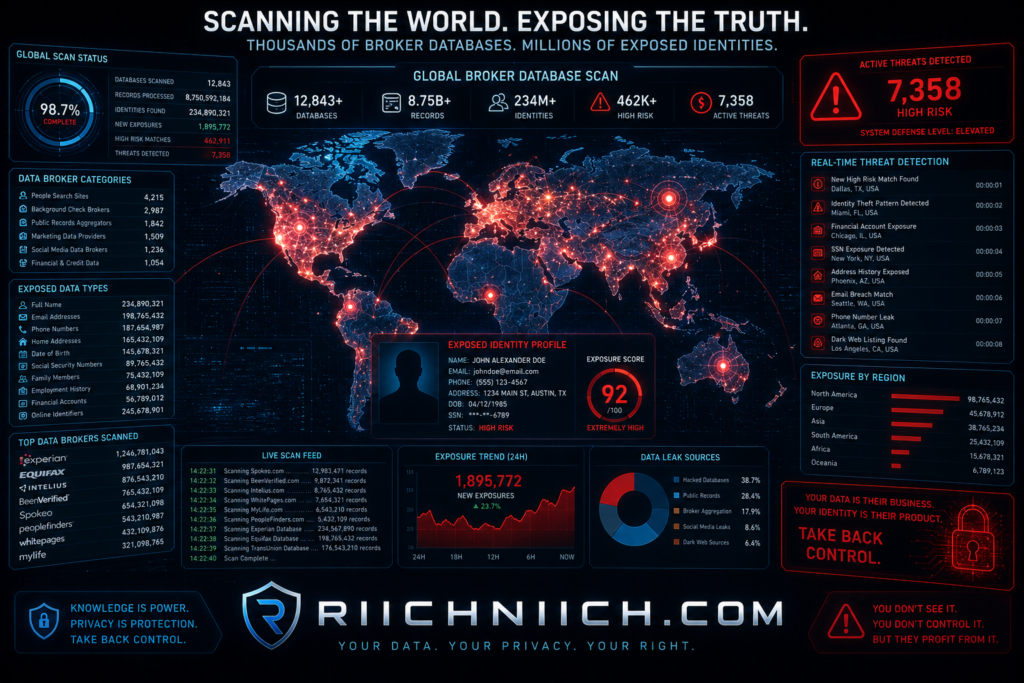
How to Find Out Which Data Brokers Have Your Information
After learning what is a data broker, many people immediately want to know whether their personal information is already exposed online. The reality is that most individuals appear in multiple data broker databases without ever realizing it.
Data broker websites often create searchable profiles using information gathered from public records, marketing databases, social media activity, and online tracking systems. In some cases, your information may already appear across dozens or even hundreds of people-search websites.
According to the California Department of Justice Consumer Privacy Resources, consumers increasingly have rights to know how companies collect and share personal information online.
Here are some of the most effective ways to find out which data brokers have your information:
Search for Your Name Online
One of the simplest ways to check your online exposure is by searching:
- Your full name
- Phone number
- Home address
- Email address
in search engines like Google.
You may discover people-search websites displaying:
- Addresses
- Age ranges
- Relatives
- Employment history
- Location history
Some of the most common broker and people-search platforms may publicly display partial identity information even if you never created an account.
Check Major People-Search Websites
Many broker websites allow users to search public profiles directly. You can manually search for your information on:
- People-search engines
- Public record databases
- Background check sites
- Marketing profile databases
This process can quickly become time-consuming because there are hundreds of broker sites online.
Use Data Exposure Monitoring Tools
Many people now use privacy monitoring tools to automatically scan broker databases for exposed information.
These tools can help identify:
- Exposed phone numbers
- Email addresses
- Home addresses
- Personal profiles
- Breached account data
Automated privacy monitoring has become increasingly popular because manually searching hundreds of sites is difficult and inefficient.
Check if Your Information Appeared in Data Breaches
One major source of exposure comes from leaked databases after cyberattacks. If your accounts were involved in previous breaches, your information may already be circulating across broker systems or underground forums.
If your information appears in multiple breaches, your risk of:
- identity theft
- phishing scams
- spam calls
- account takeovers
can increase significantly.
If you want to reduce your risk, check out our full guide on How to Protect Yourself from Identity Theft.
Watch for Signs Your Data Is Being Shared
Sometimes your online exposure becomes obvious through:
- Increased robocalls
- Scam text messages
- Spam emails
- Personalized phishing attempts
- Unexpected targeted ads
These signs may indicate your information is circulating through marketing and broker networks.
Monitor Public Records and Online Accounts
Public information can also spread online through:
- Property ownership records
- Court filings
- Voter registration databases
- Business registrations
In addition, oversharing on social media platforms can unintentionally increase your visibility across broker systems.
Why Many People Use Automated Data Removal Services
Manually checking and removing information from broker websites can take countless hours. Some websites require:
- Individual opt-out forms
- Identity verification
- Repeated removal requests
- Ongoing monitoring
Because of this, many people searching for “how to remove personal information from the internet” choose automated data removal services instead.
These tools continuously monitor broker websites and submit removal requests on your behalf to help reduce your digital footprint over time.
Understanding how to find out which data brokers have your information is one of the first steps toward improving your online privacy and reducing your exposure to identity theft risks.
Can You Remove Your Information From Data Brokers?
Yes, you can remove your information from many data broker websites, but the process is often difficult, time-consuming, and ongoing. If you have been researching what is a data broker, you have probably already realized how widely personal information can spread online once it enters broker databases.
Data broker companies collect and distribute information across large networks of people-search websites, marketing databases, and advertising systems. Even after you remove your information from one site, it may still appear on dozens of others.
You can also follow our step-by-step guide on How to Remove Your Personal Information from the Internet to start reducing your online exposure.
Manual Data Broker Removal
One option is manually removing your information from broker websites yourself.
This usually involves:
- Finding broker websites that contain your information
- Searching for your personal profile
- Submitting opt-out requests
- Verifying your identity
- Confirming removal requests by email
Some websites make this process relatively simple, while others intentionally make it difficult or confusing.
In many cases, users must repeatedly submit requests because information may reappear later after:
- Database updates
- New public records
- Additional marketing data purchases
- New data-sharing agreements
Why Removing Your Information Is Difficult
The biggest challenge is scale. There are hundreds of active data broker websites online, and new ones continue appearing.
Some broker platforms may contain:
- Old addresses
- Phone numbers
- Family member information
- Email addresses
- Purchase behavior
- Public records
Even if you successfully remove your information from one website, copies of that data may still exist elsewhere.
This is one reason why searches for:
- how to remove personal information from the internet
- best data removal services
- how to stop data brokers
- online privacy protection tools
have become increasingly common.
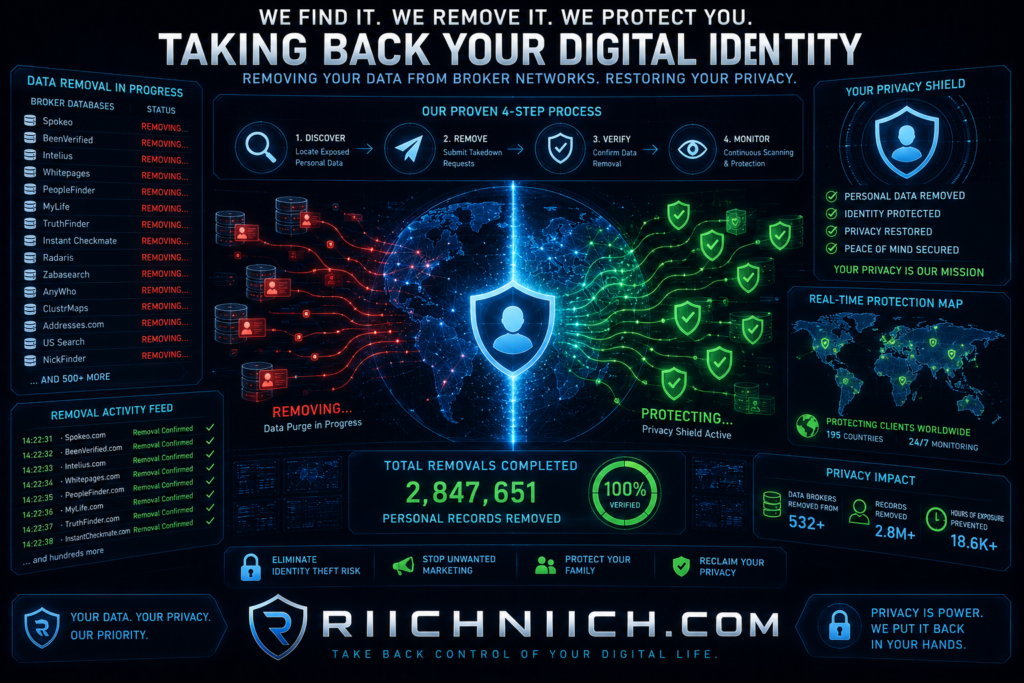
Automated Data Removal Services
Because manual removal can take hours or even days, many people now use automated data removal services.
These tools continuously:
- Scan broker databases
- Identify exposed profiles
- Submit removal requests
- Monitor for reappearing information
Automated services help reduce your digital footprint without requiring you to manually track hundreds of broker websites yourself.
Removal Does Not Guarantee Complete Privacy
Even after removing your information, some exposure may still remain online through:
- Public government records
- Social media platforms
- Old marketing databases
- Archived search engine results
- Future data breaches
That is why ongoing monitoring is important for long-term privacy protection.
Additional Steps to Protect Your Privacy
Removing your information from data brokers is only one part of improving online security. Many privacy experts also recommend:
- Using strong unique passwords
- Enabling two-factor authentication
- Limiting social media oversharing
- Using privacy-focused browsers
- Monitoring identity theft alerts
- Checking breach exposure regularly
The Electronic Frontier Foundation Surveillance Self-Defense Guide provides additional privacy and security recommendations for reducing online exposure.
Is Data Broker Removal Worth It?
For many people, yes. Reducing the amount of personal information available online can help lower your exposure to:
- Identity theft
- Scam calls
- Phishing attacks
- Spam emails
- Fraud attempts
- Social engineering scams
You may also want to explore the Best Identity Theft Protection Services for additional monitoring and fraud protection.
Understanding what is a data broker is important, but taking action to remove your information can be even more important if you want to improve your online privacy and reduce long-term security risks.
How to Remove Your Personal Information From Data Brokers
If you have been researching what is a data broker, the next step is learning how to remove your personal information from these websites. While it is possible to reduce your online exposure, the process can take significant time and ongoing effort because data broker companies constantly collect and republish information.
Removing your information from data brokers can help lower your risk of:
- Identity theft
- Scam calls
- Phishing attacks
- Spam emails
- Fraud attempts
- Social engineering scams
According to the Identity Theft Resource Center, limiting online exposure and monitoring personal information are important steps for reducing identity theft risks.
Here are some of the most effective ways to remove your personal information from data broker websites:
Search for Your Personal Information Online
Start by searching for:
- Your full name
- Phone number
- Email address
- Home address
in major search engines.
This can help identify:
- People-search websites
- Public profile databases
- Marketing directories
- Broker platforms displaying your information
Make a list of the sites where your information appears.
Submit Manual Opt-Out Requests
Most data broker websites provide some form of opt-out or removal request process.
This often requires:
- Finding your profile
- Requesting removal
- Confirming your identity
- Verifying requests through email
Some broker sites remove profiles quickly, while others may take several days or weeks.
Remove Information From Multiple Broker Sites
One of the biggest challenges is that your information may appear across many databases simultaneously.
Even if you remove your data from one site, it may still exist on:
- Other people-search platforms
- Marketing databases
- Public record aggregators
- Advertising networks
This is why manual data removal can become extremely time-consuming.
Monitor for Reappearing Information
Many people are surprised when previously removed information appears online again later.
This can happen because:
- Broker databases refresh regularly
- Public records update
- New marketing data is purchased
- Information spreads to additional platforms
Ongoing monitoring is important if you want to maintain long-term privacy protection.
Use Automated Data Removal Services
Because manually opting out of hundreds of broker websites can take countless hours, many people now use automated data removal services.
These services typically:
- Scan broker websites continuously
- Identify exposed personal profiles
- Submit removal requests automatically
- Monitor for reappearing information
Automated privacy services are popular among people searching for:
- best data removal services
- how to stop data brokers
- online privacy protection tools
- identity theft prevention services
Reduce Future Data Collection
Removing existing information is important, but limiting future exposure matters too.
You can reduce future data collection by:
- Limiting social media oversharing
- Disabling unnecessary app permissions
- Using privacy-focused browsers
- Blocking tracking cookies
- Using unique passwords
- Enabling two-factor authentication
The Consumer Reports Online Privacy Protection Guide provides additional recommendations for reducing online tracking and improving digital privacy.
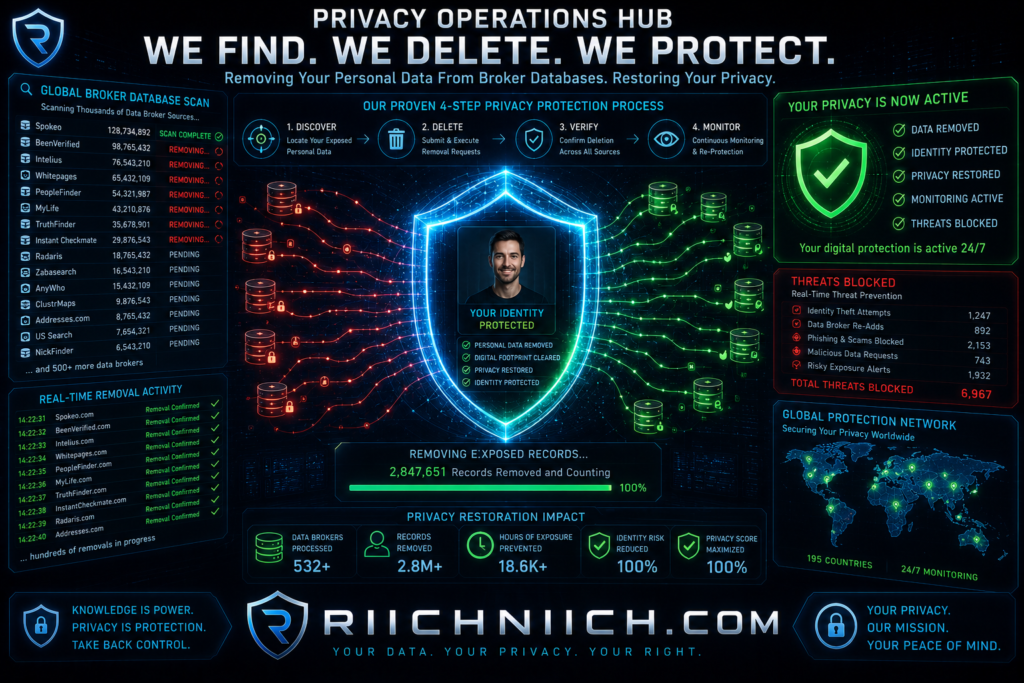
Is Removing Your Information Worth It?
For most people, yes. The less personal information available online, the harder it becomes for scammers and cybercriminals to target you.
Reducing your digital footprint can help:
- Improve online privacy
- Lower identity theft risk
- Reduce spam calls and scam messages
- Limit phishing attacks
- Decrease exposure after data breaches
Understanding what is a data broker is only the beginning. Taking action to remove your personal information online can significantly improve your long-term privacy and cybersecurity protection.
Manual Data Removal vs Automated Data Removal Services
After learning what is a data broker, many people eventually face the same question: should you remove your information manually or use an automated data removal service?
Both methods can help reduce your online exposure, but they work very differently. The right choice often depends on how much time, effort, and ongoing monitoring you are willing to handle yourself.
Still comparing services? See our complete breakdown of Incogni vs DeleteMe to compare features, automation, and privacy protection.
Because personal information can spread across hundreds of broker websites, searches for:
- best data removal services
- how to remove personal information from the internet
- automated privacy protection tools
- how to stop data brokers
have grown rapidly in recent years.
According to the Electronic Privacy Information Center Consumer Privacy Resources, consumers often struggle to control how personal information spreads across broker and advertising networks.
Manual Data Removal
Manual data removal means you personally locate broker websites and submit opt-out requests yourself.
This usually involves:
- Searching for your personal profiles
- Visiting broker websites individually
- Completing removal forms
- Confirming requests through email
- Monitoring whether information reappears
Some people prefer manual removal because it allows direct control over the process and may avoid subscription costs.
Advantages of Manual Removal
Manual removal may work well for users who:
- Have limited online exposure
- Only appear on a few broker sites
- Prefer handling privacy tasks personally
- Want to avoid recurring service fees
If done carefully, manual removals can help reduce some publicly visible information.
Disadvantages of Manual Removal
The biggest downside is how time-consuming the process becomes.
There are hundreds of broker websites online, and each one may have:
- Different opt-out procedures
- Identity verification requirements
- Delayed processing times
- Reappearing profile data
Many people underestimate how long ongoing monitoring actually takes.
Even after successful removal requests, your information may return later after:
- Database refreshes
- New public records
- Additional data-sharing agreements
- Future data breaches
Automated Data Removal Services
Automated data removal services handle much of the process for you.
These services typically:
- Scan broker databases continuously
- Detect exposed personal information
- Submit removal requests automatically
- Monitor for reappearing data
- Provide ongoing privacy monitoring
This approach has become increasingly popular among people concerned about:
- Identity theft
- Scam calls
- Online privacy
- Digital footprint reduction
- Long-term exposure monitoring
Advantages of Automated Removal Services
Automated services can save significant time because they manage removals across large numbers of broker sites simultaneously.
Many services also provide:
- Ongoing monitoring
- Exposure alerts
- Repeat removal requests
- Privacy dashboards
- Identity exposure tracking
This makes automated protection especially useful for users with widespread online exposure.
Disadvantages of Automated Removal Services
The main downside is cost. Most automated data removal tools require monthly or yearly subscriptions.
Coverage can also vary depending on:
- The number of broker sites supported
- Monitoring frequency
- Removal success rates
- Additional privacy features
Some services may focus heavily on major broker platforms while offering less coverage for smaller databases.
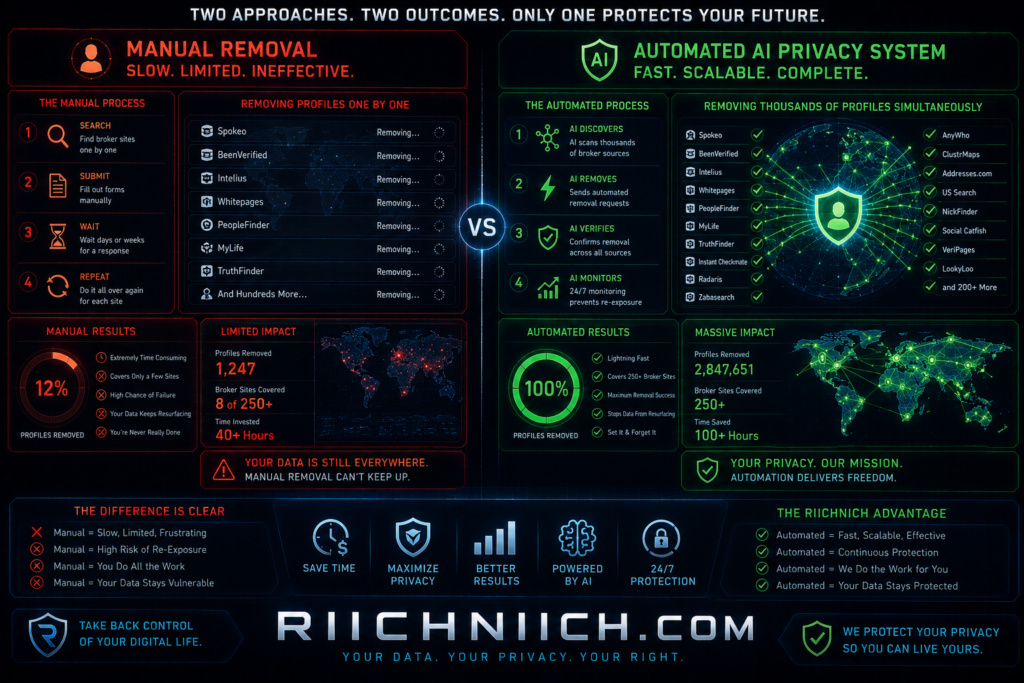
Which Option Is Better?
For people with limited exposure, manual removal may be enough temporarily.
However, for users who:
- Appear across many broker sites
- Have experienced data breaches
- Receive constant spam calls
- Want long-term privacy monitoring
- Want faster removal management
automated data removal services are often more practical.
The Cyber Civil Rights Initiative Privacy Safety Resources highlights the importance of ongoing online privacy management and exposure reduction.
Is Data Removal Worth It?
In many cases, yes. Reducing your online exposure can help:
- Lower identity theft risk
- Reduce phishing attacks
- Limit scam calls
- Improve digital privacy
- Minimize personal data exposure
Understanding what is a data broker is important, but actively managing your online information is what truly helps protect your long-term privacy and security.
Best Data Removal Services to Protect Your Privacy
If you have been researching what is a data broker, you have probably realized how difficult it can be to remove your personal information from the internet manually. Because data broker websites constantly collect and republish personal information, many people now use automated data removal services to help protect their privacy online.
The best data removal services work by:
- Scanning broker databases
- Identifying exposed personal information
- Submitting opt-out requests
- Monitoring for reappearing data
- Reducing your digital footprint over time
These services have become increasingly popular among people concerned about:
- Identity theft
- Scam calls
- Phishing attacks
- Online privacy
- Data breaches
- Personal information exposure
According to the Privacy Rights Clearinghouse Consumer Privacy Resources, reducing personal data exposure can help lower privacy and identity theft risks.
Incogni
Incogni has become one of the most popular automated data removal services because it focuses heavily on automation and continuous monitoring.
The service works by:
- Contacting broker websites on your behalf
- Submitting removal requests automatically
- Monitoring for reappearing information
- Managing ongoing opt-out requests
Many users prefer Incogni because the platform simplifies a process that would otherwise require hours of manual work.
Incogni is especially useful for people searching for:
- how to remove personal information from the internet
- best data broker removal service
- automated privacy protection tools
DeleteMe
DeleteMe is another well-known privacy protection service that helps users remove information from broker websites and people-search databases.
The platform focuses heavily on:
- Detailed removal reporting
- Broker monitoring
- Ongoing privacy tracking
DeleteMe can be helpful for users who want more visibility into how their information is being removed across various broker platforms.
Aura
Aura combines identity theft protection with privacy and security tools.
In addition to some privacy monitoring features, Aura also offers:
- Credit monitoring
- Identity theft alerts
- Financial fraud monitoring
- Antivirus protection
- VPN services
This makes Aura appealing for users looking for broader all-in-one digital security protection.
Why Automated Removal Services Are Becoming More Popular
One of the biggest problems with manual data removal is that information often returns later after:
- Database updates
- New marketing data purchases
- Public record refreshes
- Additional data-sharing agreements
Automated services continuously monitor for these changes and repeat removal requests when necessary.
For many users, this ongoing monitoring is the biggest advantage over manual removal methods.
What to Look for in a Data Removal Service
When comparing privacy protection tools, some of the most important factors include:
- Number of supported broker sites
- Automation level
- Ongoing monitoring
- Identity theft protection features
- Reporting and transparency
- Ease of use
The best service often depends on how much exposure you already have online and how aggressively you want to reduce your digital footprint.
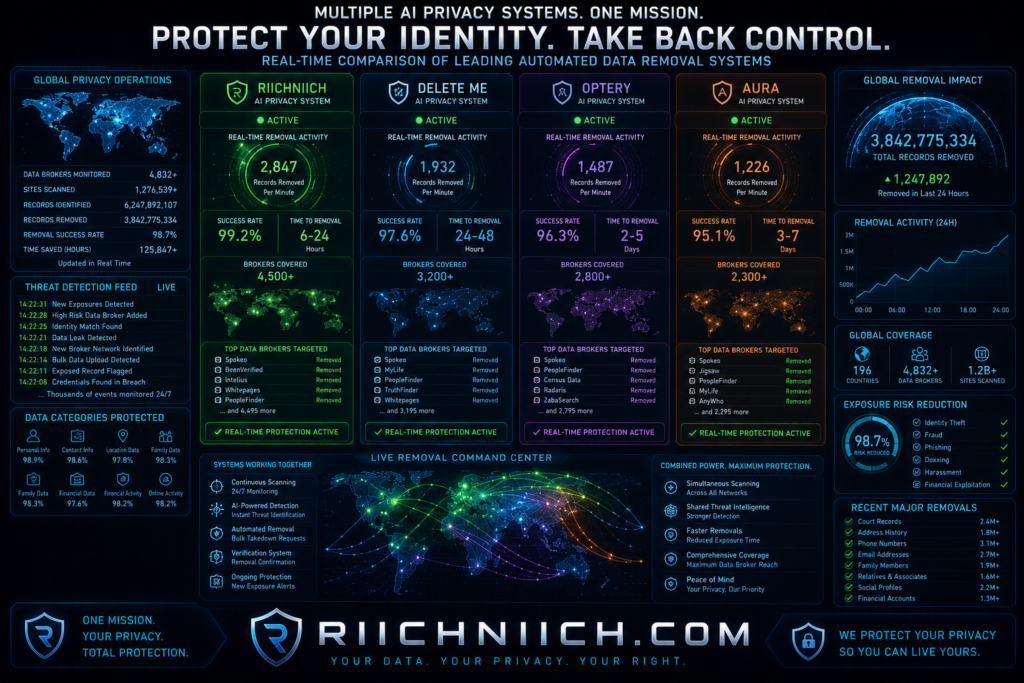
Are Data Removal Services Worth It?
For many people, yes. The less personal information available online, the lower the risk of:
- Identity theft
- Targeted phishing attacks
- Scam calls
- Spam emails
- Fraud attempts
- Social engineering attacks
The National Cybersecurity Alliance Privacy Resources recommends proactive privacy and security practices to help reduce online exposure and protect personal information.
Understanding what is a data broker is important, but actively reducing your online exposure is what truly helps improve long-term privacy and cybersecurity protection.
Why Incogni Is One of the Best Tools for Data Broker Removal
If you have been researching what is a data broker and how to remove your personal information from the internet, Incogni is one of the strongest tools currently available for automated data broker removal.
One of the biggest problems with data brokers is that manually removing your information can take countless hours. Many broker websites require:
- Separate opt-out forms
- Identity verification
- Email confirmations
- Repeated removal requests
Even after successful removals, your information may reappear later when databases refresh or new records are collected.
This is where Incogni stands out.
Incogni is designed to automate the entire data removal process by continuously contacting broker websites and requesting the deletion of your personal information on your behalf.
According to the International Association of Privacy Professionals (IAPP) Privacy Resources, consumer demand for stronger privacy management and automated data protection tools continues growing as online exposure increases.
Automated Data Broker Removal
One reason many people consider Incogni one of the best data removal services is because of its automation-focused approach.
Instead of manually tracking hundreds of websites yourself, Incogni helps:
- Identify broker databases containing your information
- Submit removal requests automatically
- Monitor for reappearing data
- Continue ongoing removal efforts
This can save enormous amounts of time compared to manual opt-outs.
Continuous Monitoring and Privacy Protection
Data broker removal is not a one-time task. Information can reappear online after:
- Database updates
- Public record refreshes
- New marketing data purchases
- Future data breaches
Incogni continuously monitors broker networks to help keep your information removed over time.
For users concerned about:
- identity theft
- scam calls
- phishing attacks
- spam emails
- online privacy
this type of ongoing monitoring can be extremely valuable.
Easy Setup for Beginners
Another reason Incogni has become popular is its simplicity.
Many privacy tools can feel overwhelming for average users, but Incogni is designed to make data removal easier even for people with little technical knowledge.
After setup, much of the removal process happens automatically in the background.
Helps Reduce Your Digital Footprint
The more places your information appears online, the greater your exposure becomes.
Reducing your digital footprint can help lower the risk of:
- Identity theft
- Social engineering attacks
- Targeted scams
- Robocalls
- Fraud attempts
- Personalized phishing campaigns
Many people searching for:
- best data broker removal service
- how to stop data brokers
- remove personal information online
- online privacy protection
are specifically looking for tools that reduce this long-term exposure.
Why Automation Matters
One of the biggest challenges with manual removal is scale. There are hundreds of active broker websites online, and new ones continue appearing regularly.
Trying to manually manage:
- opt-out requests
- follow-ups
- verification emails
- ongoing monitoring
can quickly become exhausting.
Automated systems like Incogni simplify this process by handling much of the repetitive work automatically.
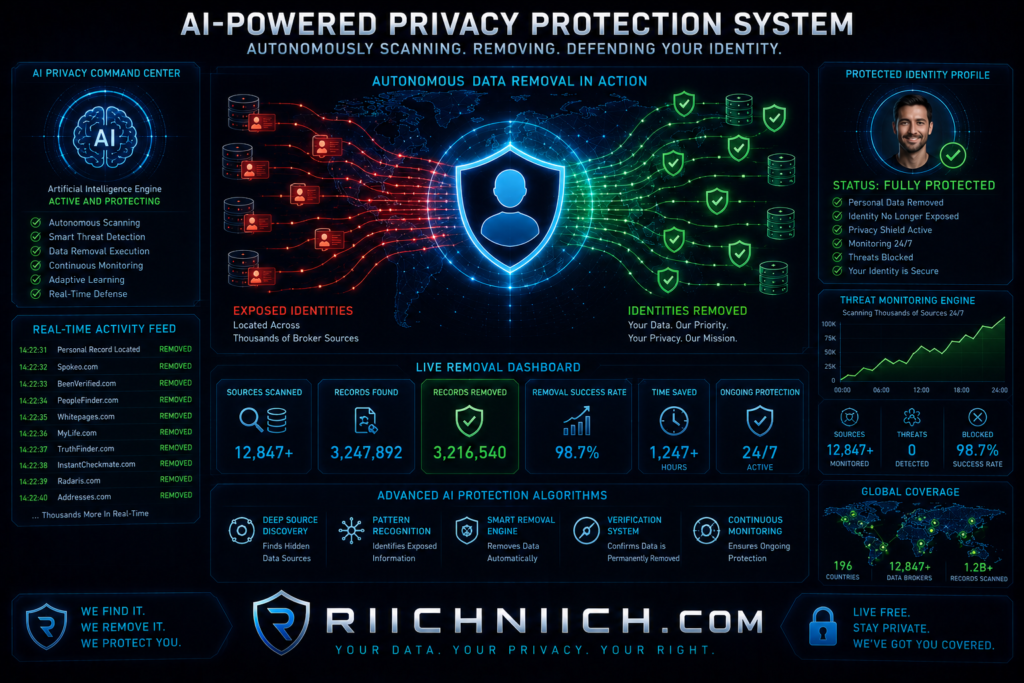
Is Incogni Worth It?
For many people, yes — especially if:
- Your information appears on many broker sites
- You receive frequent spam calls or phishing attempts
- You want long-term privacy monitoring
- You do not want to spend hours on manual removals
The Center for Democracy & Technology Privacy Resources highlights growing concerns around personal data collection and the importance of improving consumer privacy protections online.
Understanding what is a data broker is important, but taking action to reduce your online exposure is what truly helps protect your privacy. Tools like Incogni can make that process significantly faster, easier, and more manageable long-term.
How to Stop Data Brokers From Collecting Your Data Again
After learning what is a data broker and removing your information from broker websites, the next challenge is preventing your personal data from spreading online again. Unfortunately, data brokers constantly collect new information from websites, apps, public records, and marketing databases.
That means privacy protection is not just about removing existing information — it is also about reducing future exposure.
The good news is that there are several effective ways to limit how much personal data data broker companies can collect about you.
According to the National Institute of Standards and Technology (NIST) Online Privacy Guidance, minimizing unnecessary data sharing is one of the most effective ways to improve long-term digital privacy and security.
Limit What You Share on Social Media
Social media platforms are one of the largest sources of personal information online.
Try to avoid publicly sharing:
- Home locations
- Phone numbers
- Birthdays
- Travel plans
- Family details
- Employment information
Even small pieces of information can help data brokers and scammers build detailed identity profiles.
Review App Permissions Regularly
Many mobile apps collect far more information than users realize.
Check your device settings and disable unnecessary access to:
- Location tracking
- Contacts
- Camera
- Microphone
- Background activity
Reducing app permissions can help limit how much behavioral data enters advertising and broker systems.
Use Privacy-Focused Browsers and Search Engines
Traditional browsers and search engines often collect large amounts of user activity data.
Privacy-focused tools can help reduce:
- Tracking cookies
- Ad profiling
- Browser fingerprinting
- Cross-site tracking
This makes it harder for broker networks to build detailed browsing profiles over time.
Opt Out of Data Sharing Whenever Possible
Many websites and services allow users to:
- Disable targeted advertising
- Reject optional cookies
- Limit marketing data sharing
- Restrict account visibility
While these settings may not eliminate tracking entirely, they can reduce unnecessary exposure.
Use Strong Privacy and Security Tools
Many people trying to stop data brokers also use:
- VPN services
- Password managers
- Identity theft monitoring
- Data removal services
- Antivirus software
Layered privacy protection can make it harder for companies and cybercriminals to collect and exploit your information.
Monitor for Data Breaches
Data breaches are one of the biggest reasons personal information spreads online.
If your accounts are exposed during breaches, your information may eventually enter:
- Broker databases
- Scam lists
- Underground marketplaces
- Marketing systems
Monitoring breach exposure can help you react quickly before criminals exploit leaked information.
Continue Monitoring Broker Databases
Even after successful removals, your information can reappear later through:
- Public record updates
- New marketing partnerships
- Additional data collection
- Republished databases
This is why many people continue using automated privacy monitoring and data removal services long-term.
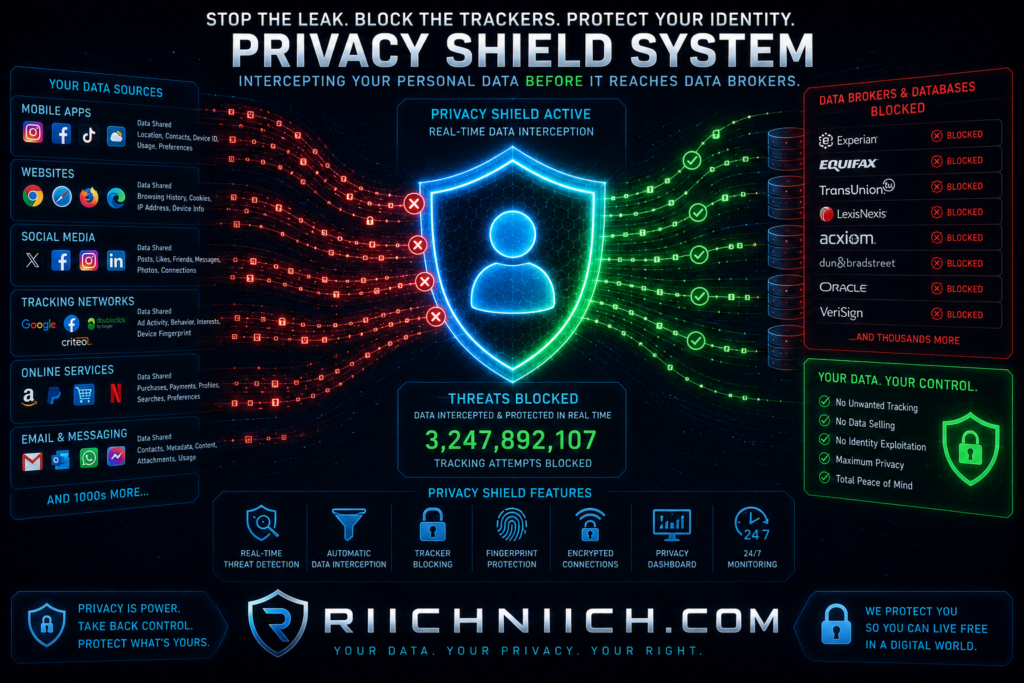
Why Ongoing Privacy Protection Matters
Data collection online is constant. Every app download, website visit, online purchase, and public profile can contribute to your digital footprint.
The more information brokers collect, the easier it becomes for:
- scammers
- advertisers
- cybercriminals
- phishing campaigns
to target you.
The Future of Privacy Forum Consumer Privacy Education Center explains how ongoing privacy management and reduced data sharing can help consumers maintain better control over personal information online.
Understanding what is a data broker is only the first step. The real goal is limiting how much information these companies can continue collecting about you in the future.
Additional Ways to Protect Yourself Online
Understanding what is a data broker and removing your information from broker databases are important steps, but true online privacy requires a broader cybersecurity strategy. Data brokers are only one part of the larger digital privacy problem.
Cybercriminals also target weak passwords, unsecured devices, phishing scams, public WiFi networks, and leaked account credentials. The more layers of protection you have, the harder it becomes for scammers and hackers to access your personal information.
According to the Cybersecurity & Infrastructure Security Agency (CISA) Personal Cybersecurity Guide, strong cybersecurity habits significantly reduce the risk of identity theft and online fraud.
Here are additional ways to protect yourself online and reduce your long-term exposure:
Use Strong Unique Passwords
Weak passwords remain one of the biggest security risks online.
Avoid:
- Reusing passwords
- Simple password combinations
- Predictable personal information
Instead, create long, unique passwords for every account. Password managers can help securely store and generate complex credentials.
Need help managing secure passwords? Here are the Best Password Managers for improving your online security.
👉 Secure your accounts with strong encrypted passwords using NordPass here.
This is especially important because leaked passwords from data breaches often circulate across broker and cybercriminal networks.
Enable Two-Factor Authentication (2FA)
Two-factor authentication adds an extra security layer beyond passwords.
Even if attackers obtain your login credentials, 2FA can help block unauthorized access by requiring:
- Authentication apps
- Security keys
- Verification codes
Enabling 2FA on important accounts can dramatically reduce account takeover risk.
Avoid Public WiFi Without Protection
Public WiFi networks can expose sensitive information if connections are not secured properly.
Cybercriminals may attempt to intercept:
- Login credentials
- Browsing activity
- Financial information
- Personal communications
Using unsecured networks can expose even more personal data online. Learn more in our guide on Public WiFi Dangers.
Using a VPN on public networks helps encrypt your internet traffic and reduce exposure.
If you are looking for stronger online privacy, check out our list of the Best VPN for Privacy.
👉 Protect your internet activity on public WiFi with NordVPN here.
Monitor Your Financial and Online Accounts
Regularly checking your:
- Bank accounts
- Credit reports
- Email accounts
- Subscription services
can help detect suspicious activity early before major fraud occurs.
Fast detection is one of the most important factors in limiting identity theft damage.
Be Careful With Phishing Attacks
Phishing scams continue evolving and often use personalized information gathered from:
- Data brokers
- Social media
- Data breaches
- Public records
Always be cautious of:
- Unexpected emails
- Urgent requests
- Fake login pages
- Suspicious attachments
- Unverified links
The more exposed your information becomes online, the more convincing phishing attacks can appear.
Keep Devices and Software Updated
Security updates help patch vulnerabilities that hackers may exploit.
This includes:
- Phones
- Browsers
- Operating systems
- Apps
- Antivirus software
- Routers
Outdated software creates unnecessary security risks.
Use Identity Theft Monitoring Services
Many people concerned about data brokers also use identity theft protection services to monitor:
- Credit activity
- Dark web exposure
- Account breaches
- Fraud alerts
- Suspicious activity
👉 For additional identity theft monitoring and fraud alerts, you can try Aura here.
Why Layered Privacy Protection Matters
No single tool can fully eliminate online privacy risks. Data brokers, scammers, advertisers, and cybercriminals all operate differently.
That is why combining:
- data removal services
- VPNs
- password managers
- identity monitoring
- strong security habits
creates much stronger protection overall.
The National Cybersecurity Alliance Online Safety Resources recommends layered cybersecurity and privacy protection to help reduce online exposure and improve long-term digital security.
Understanding what is a data broker is an important first step, but building strong cybersecurity habits is what truly helps protect your personal information long-term.
Want more ways to improve your online privacy and security? Read our full list of Cybersecurity Tips Everyone Should Know before you go.
Conclusion: Should You Worry About Data Brokers?
Yes — if you care about online privacy, identity theft protection, and reducing your digital footprint, you should absolutely pay attention to data brokers.
Understanding what is a data broker is important because these companies quietly collect, store, and distribute massive amounts of personal information every day. In many cases, people do not realize how exposed their data has become until they start receiving:
- Scam calls
- Spam emails
- Phishing messages
- Fraud attempts
- Identity theft alerts
The more your personal information spreads across broker databases, the easier it becomes for cybercriminals, advertisers, and scammers to build detailed profiles about you.
According to the Electronic Frontier Foundation (EFF) Surveillance and Privacy Resources, large-scale consumer data collection creates significant long-term privacy and security concerns for internet users.
The good news is that you are not powerless.
You can reduce your exposure by:
- Removing your information from broker websites
- Using automated data removal services
- Limiting social media oversharing
- Monitoring for identity theft
- Using strong passwords and two-factor authentication
- Protecting your internet activity with privacy tools
For many people, manually managing hundreds of broker sites simply is not realistic long-term. That is why automated privacy protection services have become increasingly popular among users searching for:
- best data removal services
- how to remove personal information from the internet
- how to stop data brokers
- online privacy protection tools
If you are considering automated removal tools, read our full Is Incogni Worth It review to see whether it is the right privacy solution for you.
At the end of the day, data brokers are unlikely to disappear anytime soon. Personal data has become extremely valuable online, and companies continue collecting information through apps, websites, marketing systems, and public databases every day.
That means protecting your privacy requires ongoing effort.
The less information available about you online, the harder it becomes for:
- scammers to target you
- hackers to impersonate you
- advertisers to profile you
- cybercriminals to exploit your personal data
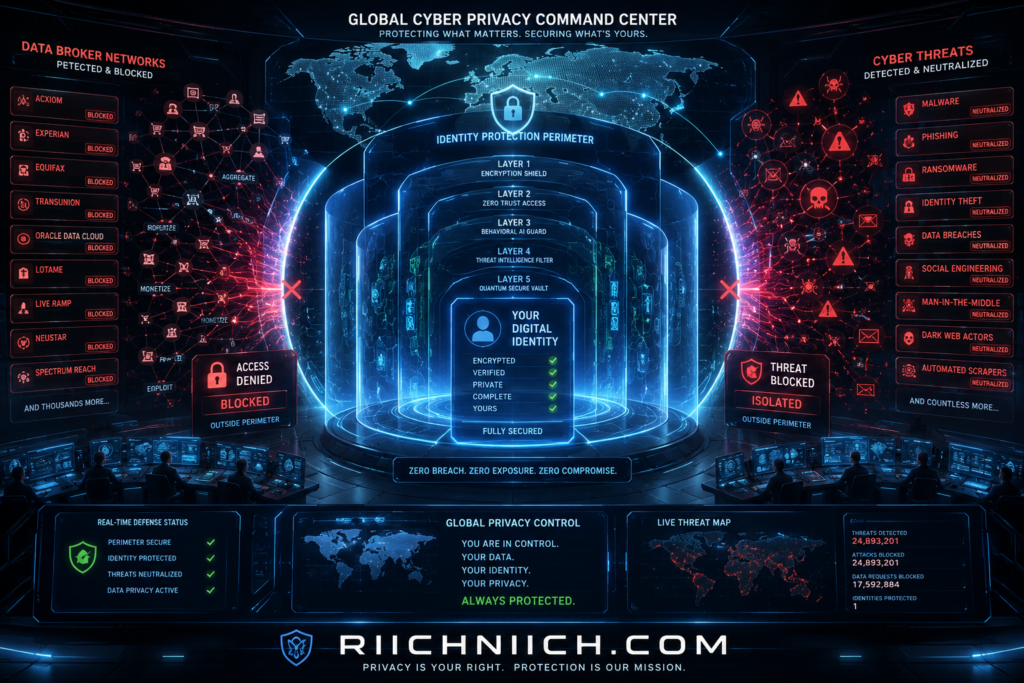
The Center for Internet Security Online Safety Resources emphasizes the importance of proactive digital privacy and cybersecurity habits to reduce long-term online exposure.
If you have been wondering whether data brokers are worth worrying about, the answer is simple: the earlier you start protecting your personal information, the easier it becomes to reduce your risk of identity theft and online privacy exposure in the future.
Pingback: How Your Personal Data Ends Up Online - Riich Niich
Pingback: How to Remove Your Phone Number From Data Broker Sites - Riich Niich
Pingback: How Data Brokers Get Your Information - Riich Niich
Pingback: How Hackers Get Your Email Address - Riich Niich
Pingback: How to Remove Yourself From People Search Sites - Riich Niich
Pingback: Incogni vs Aura: Which Privacy Protection Service Is Right for You? - Riich Niich
Pingback: How to Stop Spam Calls and Scam Messages (Complete Guide) - Riich Niich