

Identity theft insurance can help pay eligible recovery expenses after someone misuses your personal information—but a large advertised coverage limit does not mean every loss is covered. Before paying for a policy or protection plan, you need to understand what qualifies for reimbursement and what you could still owe.
This guide explains coverage, exclusions, costs, and the differences between popular protection services so you can decide whether identity theft insurance is worth it and choose a plan that fits your needs and budget.
Table of Contents
What Is Identity Theft Insurance and How Does It Work?
Identity theft insurance helps reimburse eligible expenses you incur while recovering from identity theft. Depending on the policy, those expenses may include lost wages, document replacement fees, certified mailing costs, and certain legal fees. It can reduce the financial burden of recovery, but it does not prevent someone from stealing or misusing your information.
Think of it as financial support for the cleanup process. If someone opens fraudulent accounts using your information, resolving the problem may involve paperwork, phone calls, and time away from work. Coverage can help with qualifying costs associated with that process.
The Federal Trade Commission (FTC) distinguishes insurance from monitoring and recovery services: monitoring helps flag suspicious activity, recovery services help address the damage, and insurance helps reimburse covered expenses. A paid protection plan may combine these benefits, but they serve different purposes.
Here’s How The Process Generally Works:
- You obtain coverage. You may purchase identity theft insurance separately, add it to an existing insurance policy, or receive it through a protection service or benefits program.
- You report a potentially covered incident. Contact the insurer or plan administrator promptly to learn the claim requirements and applicable deadlines.
- You document your eligible expenses. Keep receipts, records of lost wages, and any other documentation the insurer requests. Ask whether legal services or other expenses require approval before you incur them.
- The insurer reviews your claim. Reimbursement depends on the policy’s terms, exclusions, coverage limits, and any deductible. An advertised coverage amount is a maximum limit—not an automatic payout.
For example: Suppose you lose wages while resolving fraudulent accounts and pay to send supporting documents by certified mail. If those expenses qualify under your policy, you could submit them for reimbursement. You should not assume the same policy will replace money stolen from your bank account; check the specific stolen-funds provisions and exclusions.

Before buying identity theft insurance, check whether you already have coverage through your homeowners policy or another benefit. The Texas Department of Insurance recommends reviewing existing coverage and checking deductibles and policy limits before purchasing.
Choose based on the expenses covered and the help available—not just the largest advertised dollar amount. If you also want someone to guide you through recovery, compare plans that include restoration assistance alongside identity theft insurance, and confirm exactly what each benefit provides.
What Does Identity Theft Insurance Cover?
Identity theft insurance typically helps pay eligible expenses involved in restoring your identity after fraud. Depending on the policy, that can include lost wages, legal fees, and administrative costs associated with resolving the damage. The key buying question is which expenses qualify for reimbursement—not simply how much coverage the plan advertises.
The Federal Trade Commission identifies document copying, postage, notarization, lost wages, and legal fees as potential covered expenses. Benefits vary by policy, so use these categories as a starting point when comparing coverage.
Document And Administrative Expenses
Recovering from identity theft can require sending paperwork to creditors, credit bureaus, and other organizations. identity theft insurance may reimburse qualifying costs for copying documents, certified mailing, and notarization.
Before purchasing, ask what documentation you must provide and whether a deductible would reduce reimbursement for smaller expenses.
Lost Wages During Recovery
If resolving identity theft requires taking unpaid time away from work, a policy may reimburse eligible lost wages. The Texas Department Of Insurance notes that complex cases can involve time off work and expenses that a policy could cover.
When comparing identity theft insurance, ask:
- What proof of lost income is required?
- Is there a daily limit or maximum number of covered days?
- How does the policy handle self-employment income?
- Does using paid vacation or sick leave qualify?
These questions help you evaluate whether the benefit fits your working situation.
Certain Legal Fees
Some policies may reimburse eligible attorney fees associated with resolving identity theft. However, having legal-expense coverage does not mean every lawyer’s bill will qualify.
Before hiring an attorney, check whether the insurer must approve the expense, which legal services qualify, and whether a separate reimbursement limit applies. If legal support matters to you, request those terms before choosing a plan.
Recovery Assistance Included With A Plan
A protection package may pair identity theft insurance with access to a recovery specialist. That specialist might help prepare dispute letters, explain paperwork, or communicate with creditors when authorized. These services are distinct from insurance reimbursement, so verify that both are included.
For buyers who want practical help, ask: Will someone actively assist with my case, or will I mainly receive instructions to follow myself?
Check Stolen-Money Coverage Separately
Do not assume identity theft insurance automatically replaces stolen savings or money sent to a scammer. The FTC cautions that reimbursement for stolen money is generally outside standard coverage. Check whether the specific plan includes a stolen-funds benefit and what conditions apply.
Before you buy, request the policy or certificate of coverage. Compare covered expenses, exclusions, deductibles, and any separate benefit limits. The best identity theft insurance for your needs should offer clearly defined benefits that address the recovery costs you are most concerned about.
What Does Identity Theft Insurance Not Cover?
Identity theft insurance does not cover every loss caused by identity theft. Its main purpose is to reimburse eligible recovery expenses, and the policy’s exclusions determine where that financial help stops. Before buying, check what is excluded as carefully as what is included.
Stolen Money Without An Applicable Benefit
Do not assume a policy will replace money taken from your bank account or sent to a scammer. The Federal Trade Commission explains that identity theft insurance generally does not reimburse stolen money or financial losses from the theft.
If a plan advertises stolen-funds reimbursement, read that benefit separately. Ask whether it covers unauthorized transfers, payments you were tricked into authorizing, or both. A recovery-expense benefit and a stolen-funds benefit are not interchangeable.
Expenses Already Covered By Another Policy
Buying additional identity theft insurance does not necessarily mean you can collect twice for the same expense. The FTC notes that most policies will not pay when the loss is covered by homeowners or renters insurance.
Before subscribing to a protection service, review your existing insurance and ask how overlapping coverage is handled. This can help you avoid paying for benefits you already have.
Costs Outside The Policy’s Covered Categories
An expense does not automatically qualify simply because identity theft caused it. The National Association of Insurance Commissioners (NAIC) describes coverage as reimbursement for certain restoration costs, such as eligible legal fees, lost wages, and administrative expenses.
Do not assume identity theft insurance pays for emotional distress, inconvenience, or every hour spent making phone calls. Ask which losses qualify and what evidence is required. Documented lost wages, for example, are different from placing a dollar value on your personal time.

Amounts Above Coverage Limits
Even an eligible expense may not be reimbursed in full. Check the overall coverage limit, any deductible, and whether individual benefits have smaller limits.
For example, if a hypothetical policy limits lost-wage reimbursement to $1,000, a larger overall insurance limit would not automatically increase that benefit. When comparing identity theft insurance, ask for the benefit limits in writing instead of relying on the headline coverage amount.
Incidents Or Expenses That Do Not Meet Policy Conditions
Coverage dates and claim requirements deserve close attention. Before purchasing, ask:
- Existing incidents: Does the policy cover identity theft discovered before enrollment?
- Reporting deadlines: How soon must you notify the insurer?
- Prior approval: Must the insurer authorize legal fees or other expenses?
- Covered people: Which household members qualify?
- Documentation: What records are needed to support reimbursement?
The answers depend on the specific policy. Do not assume a new subscription will cover an existing problem or every member of your household.
Choose identity theft insurance only after reviewing the actual policy or certificate of coverage. A useful plan should clearly explain what it excludes, what you may have to pay yourself, and how its benefits match your needs.
Does Identity Theft Insurance Cover Stolen Money?
Identity theft insurance may cover stolen money if the policy includes an applicable stolen-funds reimbursement benefit. However, you should never assume that benefit is included. Many policies focus on recovery expenses rather than replacing the money a criminal takes.
The Federal Trade Commission cautions that identity theft insurance generally does not reimburse stolen money or financial losses from theft. If replacing stolen funds is your main concern, confirm that the policy specifically covers that loss before purchasing.
Recovery Expenses And Stolen Funds Are Different Benefits
Consider this hypothetical situation: A criminal takes $3,000 from your account, and you incur $200 in eligible expenses while resolving the fraud.
Recovery-expense coverage might reimburse the qualifying $200, subject to the policy’s terms. Reimbursement of the stolen $3,000 would require a benefit that specifically covers that loss.
A large advertised insurance limit does not mean every dollar stolen from you is covered. When comparing identity theft insurance, look for the exact stolen-funds provision, its limit, and its exclusions.
How The Money Was Taken Matters
A criminal accessing your account and transferring money is different from a scammer persuading you to make a payment yourself. Ask the insurer how it handles each situation:
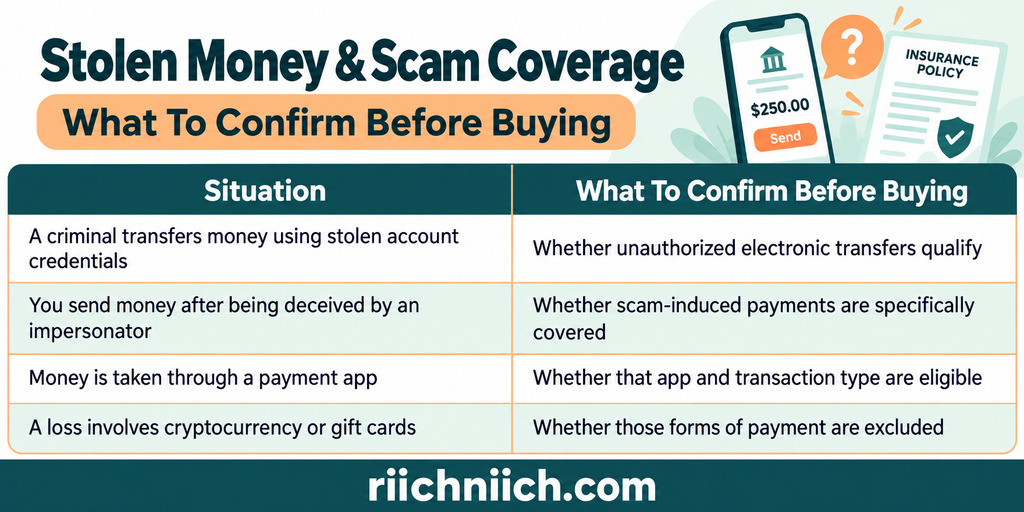
These are questions to verify in the policy—not a list of guaranteed benefits.
Also, sharing information after being tricked does not automatically mean a transfer was authorized. The Consumer Financial Protection Bureau (CFPB) explains that when a fraudster tricks someone into sharing account-access information and then initiates an electronic transfer without authority, the transfer can qualify as unauthorized under Regulation E. Those banking protections are separate from insurance coverage.
Contact Your Bank Before Waiting For An Insurance Claim
If money disappears, contact your bank or payment provider immediately and report the transaction. Ask whether it can be reversed and what dispute steps you need to complete. The FTC recommends promptly contacting the company used to send the money and requesting recovery.
Notify your insurer promptly as well, and keep transaction records, correspondence, and claim numbers. Ask how any bank reimbursement affects your insurance claim.
What To Check Before Choosing A Plan
Before paying for identity theft insurance, get clear answers to these questions:
- Is stolen-funds reimbursement included in the tier I am buying?
- Does it cover only unauthorized transfers, or also certain scam payments?
- Is there a separate limit or deductible for stolen funds?
- Must I first seek reimbursement from my bank or another provider?
- What reporting deadlines, exclusions, and documentation requirements apply?
If protecting your savings is the main reason you are shopping, compare the stolen-funds terms before comparing the subscription price. Choose identity theft insurance based on the specific losses it covers, not the impression created by a large headline benefit.
Understanding Identity Theft Insurance Coverage Limits and Deductibles
Identity theft insurance coverage limits and deductibles help determine how much you could receive after an approved claim—and how much you may need to pay yourself. Understanding both makes it easier to compare plans beyond their advertised benefits.
The Texas Department of Insurance recommends checking deductibles and policy limits before purchasing coverage. A large advertised maximum does not tell you everything about how a claim will be paid.
What A Coverage Limit Actually Means
A coverage limit is the maximum payable under the applicable policy or benefit, subject to its terms. It is not a guaranteed payout after identity theft.
For example, a plan advertising up to $1 million in identity theft insurance does not automatically pay $1 million when your information is stolen. Reimbursement depends on your eligible losses, supporting documentation, exclusions, and applicable limits.
Before buying, ask whether the advertised amount applies:
- Per person: Does each covered individual receive a separate limit?
- Per incident: What is the maximum for one covered event?
- Per policy period: Do multiple claims share a total limit?
- Per household: Do family members draw from the same coverage amount?
Do not assume these limits are interchangeable. Ask the provider to explain how they apply to the specific plan you are considering.
Smaller Benefit Limits Can Affect Your Claim
A policy may have a sublimit, meaning a smaller maximum for a particular expense within the overall coverage.
When comparing identity theft insurance, check whether lost wages, legal fees, or stolen-funds reimbursement have separate caps. Also ask whether those benefits count toward the overall limit or provide additional coverage.
Hypothetical example: A policy could advertise a large total limit while capping lost-wage reimbursement at $1,500. If your eligible lost wages total $2,000, that benefit would leave at least $500 unreimbursed, even before considering a deductible.
How A Deductible Works
A deductible is the portion of a covered claim you are responsible for paying. It may be deducted from the reimbursement rather than paid directly to the insurer. The Texas Department of Insurance’s explanation of deductibles illustrates this basic calculation.
Here is a simplified hypothetical example for identity theft insurance, assuming all expenses qualify, no limits reduce the claim, and one deductible applies:
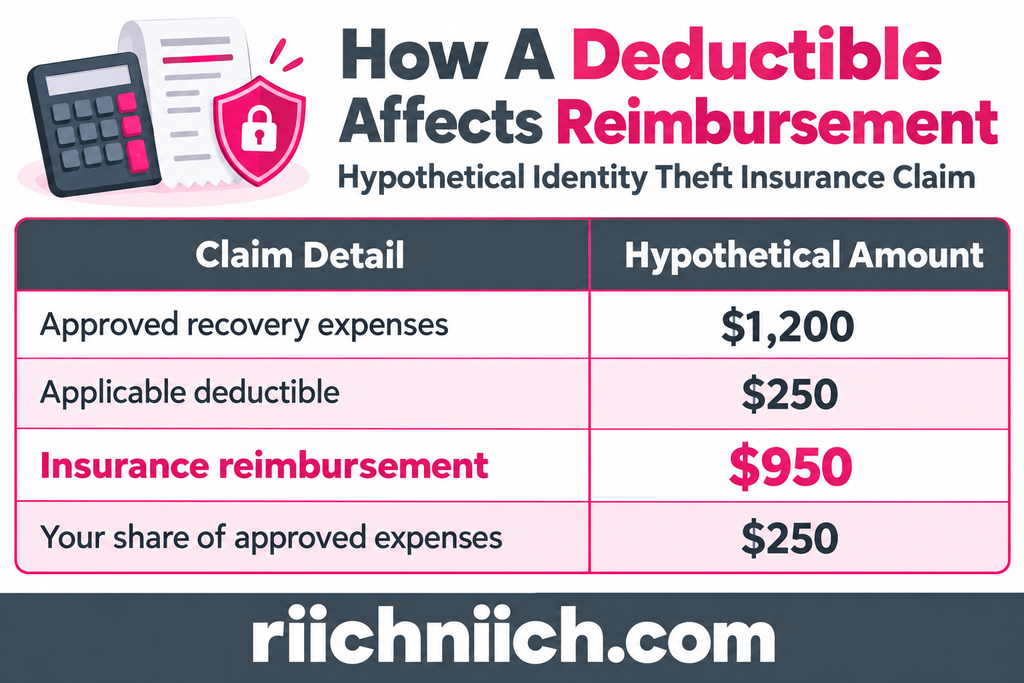
If approved expenses were only $200 and the applicable deductible were $250, this example would produce no reimbursement.
A deductible is separate from your premium or subscription fee. Paying for a plan does not necessarily eliminate your out-of-pocket costs when you file a claim.
What To Compare Before Paying For A Plan
Before choosing identity theft insurance, request the policy or certificate of coverage and confirm:
- The applicable deductible: Is it zero, a fixed amount, or different for certain benefits?
- How often it applies: Is the deductible charged per incident, claim, or policy period?
- Individual benefit caps: Are the expenses most relevant to you subject to smaller limits?
- Family coverage: Are limits separate for each person or shared?
- Combined benefits: Is the advertised amount one shared maximum or the sum of benefits with different restrictions?
A $0 deductible can make smaller eligible claims more useful, but it does not remove exclusions or coverage limits.
Compare what you could actually claim—not just the largest number on the sales page. The best identity theft insurance for your needs should combine useful covered benefits, manageable out-of-pocket costs, and clearly explained reimbursement limits.
How Much Does Identity Theft Insurance Cost?
Identity theft insurance can be a relatively inexpensive addition to your existing insurance, while a subscription that includes monitoring and recovery services has a different overall price. The first step is deciding whether you want reimbursement coverage alone or a broader protection package.
The Texas Department of Insurance lists a typical cost of $25–$50 per year for coverage offered as an add-on or standalone policy. That guidance was last updated in January 2023, so treat it as a general benchmark—not a guaranteed current quote. Ask your insurer for today’s price and the specific benefits included.
Insurance Coverage Vs. A Protection Subscription
When comparing identity theft insurance costs, make sure you are comparing similar products.
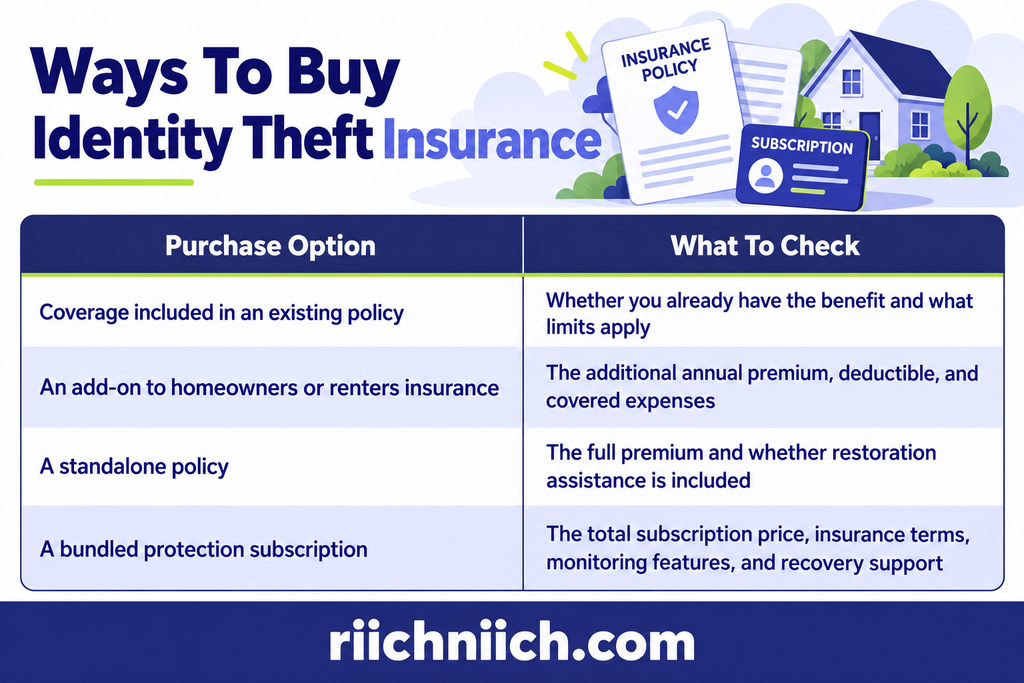
A protection subscription’s entire price should not be described as the cost of insurance alone. You may also be paying for alerts, credit monitoring, security tools, or access to a recovery specialist.
Compare The Annual Cost And Renewal Price
A monthly price can look manageable while adding up to a larger yearly expense. Multiply a true monthly subscription charge by 12, and check whether an advertised monthly equivalent requires paying for the year upfront.
Hypothetical example: A subscription charging $15 each month costs $180 over a year. If that monthly rate increases to $25 at renewal, the next year costs $300—an increase of $120.
Before buying a plan that includes identity theft insurance, confirm:
- The amount charged today
- Whether billing is monthly or annual
- When any introductory discount ends
- The renewal price
- Cancellation and refund terms
An annual discount is useful only if the coverage and services fit your needs.
Include Potential Out-Of-Pocket Costs
The cheapest premium does not necessarily produce the lowest cost when you need to claim. A deductible or a restrictive benefit limit can leave you responsible for part of an otherwise eligible expense.
For identity theft insurance, compare the annual price alongside the deductible, lost-wage limits, legal-expense coverage, and any stolen-funds benefit. The Texas Department Of Insurance specifically recommends reviewing deductibles and policy limits before purchasing.
Paying more should buy a benefit you actually value. A higher price alone does not prove that a plan provides better reimbursement.
Check For Existing Benefits Before Paying Again
Review your homeowners or renters policy first. You may already have identity theft insurance, or your insurer may offer an add-on. Ask for the coverage details rather than assuming your current policy includes it.
If your main goal is reimbursement for recovery expenses, start by requesting an insurance quote. If you also want monitoring and hands-on restoration support, compare the full cost of bundled plans. Choose identity theft insurance based on useful coverage and a sustainable renewal price—not just an introductory discount.
Is Identity Theft Insurance Worth It?
Identity theft insurance can be worth it if eligible recovery expenses would strain your budget and the policy provides useful coverage at an affordable price. Its value depends on what it reimburses, the deductible, and whether you already receive similar benefits elsewhere.
The strongest reason to buy is to help manage covered recovery costs—not to guarantee that identity theft will never happen.
When Coverage Can Be Worth Paying For
Resolving identity theft may involve unpaid time away from work, administrative expenses, or legal assistance. The Texas Department of Insurance explains that eligible expenses such as lost wages and attorney fees may be covered, depending on the policy.
Consider identity theft insurance if:
- Lost wages would affect your household budget. Check that your employment situation qualifies and that the reimbursement limit is useful.
- You want help paying eligible legal expenses. Verify which services are covered and whether advance approval is required.
- You lack comparable coverage. Review existing insurance and benefits before adding another premium.
- The ongoing price fits your budget. Evaluate the renewal cost alongside the deductible and coverage limits.
Insurance is most useful when it addresses a financial risk you would struggle to absorb yourself.
When Additional Coverage May Offer Limited Value
Paying for identity theft insurance may be less worthwhile if your existing policy already provides suitable benefits, the deductible would absorb the smaller expenses you are concerned about, or the losses you most want covered are excluded.
For example, if replacing stolen savings is your priority, a policy limited to document costs and lost wages may not meet that need. A large advertised maximum does not make an excluded loss eligible.
Before purchasing, ask yourself: What specific expense am I paying this policy to help with? If you cannot connect the coverage to a meaningful need, reconsider the plan.
Consider Recovery Assistance Separately
When deciding whether identity theft insurance is worth it, separate financial reimbursement from practical support. A bundled plan may offer both, but an insurance benefit alone does not tell you how much assistance you will receive.
If hands-on help matters, ask whether the service provides a dedicated recovery specialist, helps prepare disputes, or contacts institutions on your behalf when authorized. Verify those services before paying a higher subscription price.
Free help is also available. The FTC’s IdentityTheft.gov provides recovery guidance, reporting tools, and forms and letters to help people address identity theft. A paid service should offer clearly explained additional value for your needs.
Use A Simple Value Check Before Buying
Compare each plan against these questions:
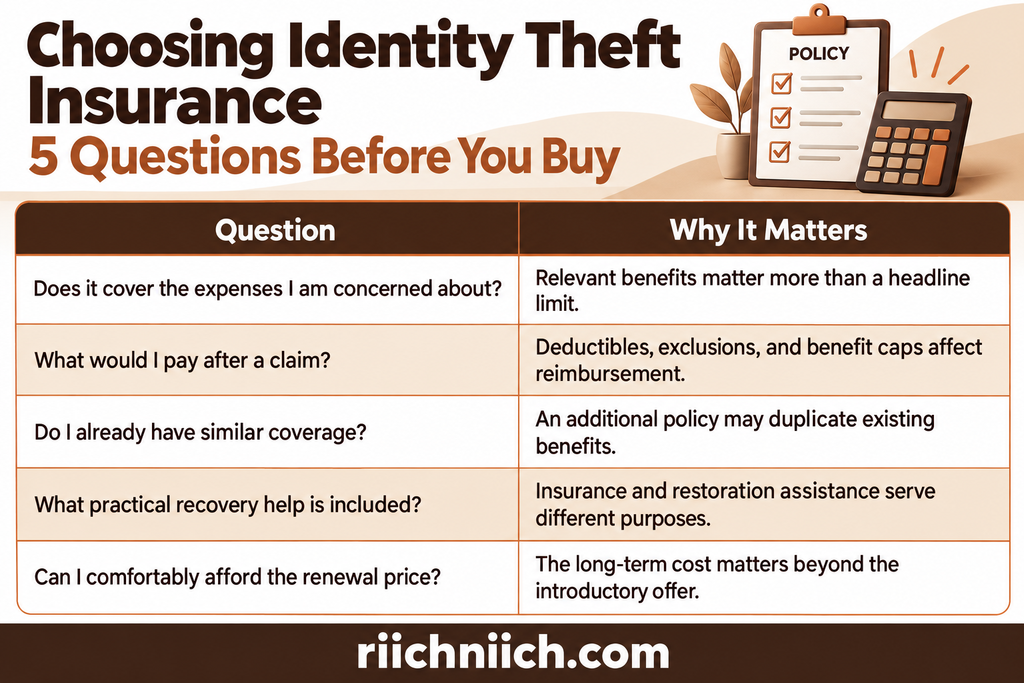
Identity theft insurance is worth considering when it fills a clear gap at a reasonable ongoing cost. Compare the actual policy terms first, then decide whether insurance alone or a package with recovery assistance offers better value for your household.
👉 If you want monitoring and recovery support alongside insurance, compare Aura’s current plans and coverage details to see whether its benefits fit your needs and budget.
Who Should Consider Buying Identity Theft Insurance?
Identity theft insurance is worth considering if the expenses of recovering from fraud could disrupt your finances and you do not already have suitable coverage. Your decision should depend on your income, household needs, existing benefits, and the specific costs a policy would reimburse.
Workers Who Could Lose Income During Recovery
If taking unpaid time off would make it harder to pay your bills, compare policies that include lost-wage reimbursement. The Texas Department of Insurance identifies lost wages, administrative expenses, and certain attorney fees as costs that coverage may help reimburse.
Before buying identity theft insurance, confirm how the policy defines eligible lost wages. Hourly employees, salaried workers, and self-employed people should ask what documentation is required and whether their income qualifies.
Look for a useful reimbursement limit—not simply a benefit labeled “lost wages.”
Families Looking For Coverage Across Their Household
Parents and couples may want identity theft insurance that extends to eligible family members. However, a plan marketed to families should still be checked carefully.
Ask whether coverage includes:
- Your spouse or partner.
- Minor children.
- Adult children living at home or attending college.
- Other relatives you want to include.
Also confirm whether each person receives a separate limit or everyone shares one maximum. Choose a family plan based on who actually qualifies under the policy.
People Who Want Financial Coverage And Recovery Support
Busy parents, caregivers, and people uncomfortable handling disputes may prefer a package that combines identity theft insurance with restoration assistance.
The Federal Trade Commission explains that recovery services may provide counselors or case managers who help with letters, paperwork, and other recovery steps. These services may be included in a plan or cost extra.
When comparing packages, ask what the specialist will actually do. Reimbursement coverage helps with eligible expenses; hands-on assistance addresses the work involved in resolving the problem.

People Reviewing Their Protection After A Data Breach
A breach notification can be a useful reason to review your existing benefits and consider identity theft insurance. It does not automatically mean you need to buy a subscription.
First, check what assistance the breached organization offers. Then ask any prospective insurer how it handles previously exposed information, incidents discovered before enrollment, and future misuse.
Do not assume a newly purchased policy will reimburse an existing problem. Request a clear explanation of the coverage dates and eligibility requirements before paying.
Homeowners And Renters With A Coverage Gap
If you already have homeowners or renters insurance, start with your current insurer. Some policies include identity-related coverage, while others offer it as an add-on.
Request the coverage details and compare them with any standalone policy or protection subscription you are considering. An additional purchase is more useful when it fills an identifiable gap, such as eligible family coverage or more suitable recovery-expense benefits.
Choose Based On Your Needs And Budget
You may not need additional identity theft insurance if your existing coverage meets your needs or the policy excludes the losses you are most concerned about.
Before buying, identify your priority: reimbursement for eligible expenses, practical recovery assistance, or both. Then compare the deductible, relevant benefit limits, covered household members, and renewal price. The right plan should address a specific need at a cost you can comfortably maintain.
Identity Theft Insurance Vs. Identity Theft Protection: What’s the Difference?
Identity theft insurance helps reimburse eligible costs after identity theft, while identity theft protection is a broader service package that may include monitoring, alerts, and recovery assistance. Some protection plans include insurance, but the terms are not interchangeable.
The National Association of Insurance Commissioners explains that insurance may be purchased separately or bundled with protection services. Understanding that distinction helps you choose the benefits you actually need.
Compare What Each Option Does
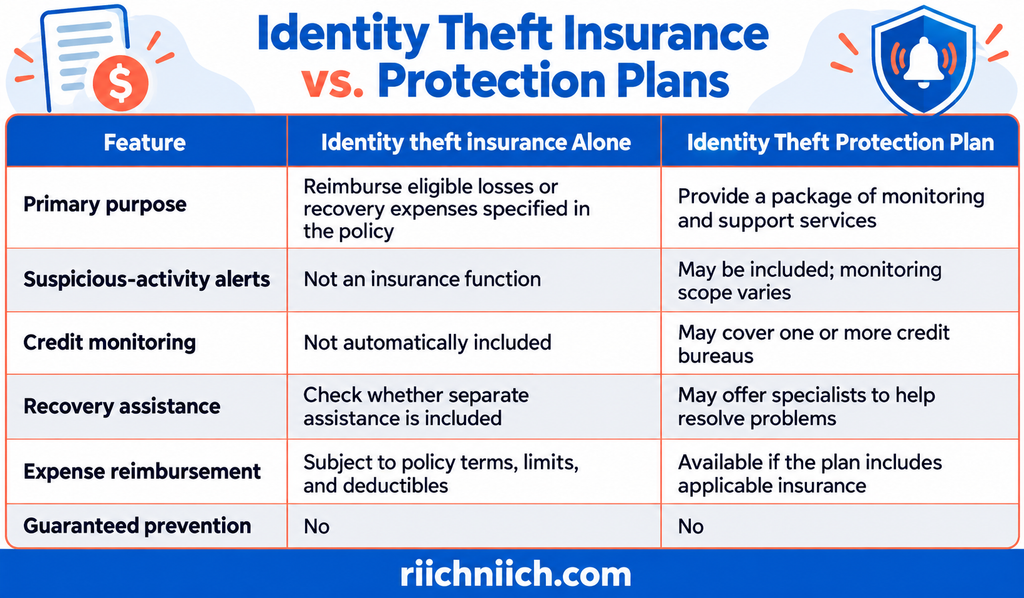
The FTC distinguishes monitoring, recovery services, and insurance as separate benefits. Check each one individually instead of assuming a subscription includes all three.
Insurance Helps With Eligible Costs
The main purpose of identity theft insurance is financial reimbursement. Depending on the policy, covered expenses may include qualifying lost wages, legal fees, and administrative costs incurred while restoring your identity.
When comparing coverage, prioritize:
- The expenses you could claim.
- The deductible and individual benefit limits.
- Which household members qualify.
- Any specific stolen-funds benefit and its exclusions.
An insurance limit tells you little about the quality of a provider’s alerts or recovery support.
Protection Services Help You Detect And Address Problems
A protection subscription may notify you about certain credit-report changes or signs that your personal information is being misused. Recovery services may help with dispute letters, paperwork, and communication with institutions when authorized.
However, monitoring has gaps. A service can only alert you to activity within the information it monitors; it cannot guarantee that every instance of identity theft will be detected. The Federal Trade Commission explains these differences and limitations in its consumer guidance.
Before subscribing, ask: What is monitored, how will I receive alerts, and what help will I get if an alert reveals fraud?
For a closer look at what different monitoring services actually do, read our guide to credit monitoring vs identity theft protection.
Which Option Should You Buy?
Consider insurance alone if you mainly want reimbursement for eligible recovery expenses and are comfortable monitoring your accounts and managing recovery tasks yourself. Start by checking whether your existing insurance already provides suitable benefits.
Consider a bundled protection plan if you also value alerts and practical restoration assistance. Confirm that the subscription tier you choose includes identity theft insurance and the specific services you expect.
Review your existing benefits first if you already receive monitoring or insurance through another arrangement. Identify what is missing before paying for overlapping services.
When comparing prices, separate the value of the insurance from the value of the subscription’s other features. Choose a plan because its coverage, monitoring, and recovery support fit your needs—not simply because it advertises a large insurance amount.
Does Your Homeowners or Renters Policy Include Identity Theft Insurance?
Your homeowners or renters policy may include identity theft insurance, but you should not assume it does. Some policies provide coverage automatically, while others require an optional add-on, often called an endorsement.
The Texas Department of Insurance recommends checking your policy or asking your agent whether coverage is included. If it is missing, your insurer may offer an option to add it.
How To Check Your Existing Coverage
Start with your policy’s declarations page, which summarizes your coverage, and review the list of endorsements. Search your documents for terms such as “identity theft,” “identity fraud expense,” or “identity restoration.”
Then ask your insurer to identify the exact section explaining your benefits. A coverage name alone does not tell you what expenses qualify or how reimbursement works.
You can ask:
“Does my current policy include identity theft insurance? If so, please send me the coverage terms, deductible, limits, exclusions, and details of any recovery assistance.”
If the answer is no, request a written quote for adding coverage.
Do Not Confuse Property Theft With Identity Theft
Coverage for stolen belongings does not establish that you have identity theft insurance. Replacing a stolen laptop and paying eligible expenses after someone misuses the personal information on it are different coverage questions.
Ask your insurer about both situations separately. Also confirm whether the identity-related benefit requires a particular type of incident and whether it applies when your information is misused without a physical theft.
What To Verify Before Relying On Your Policy
Use this checklist to evaluate the coverage you already have or are considering adding:
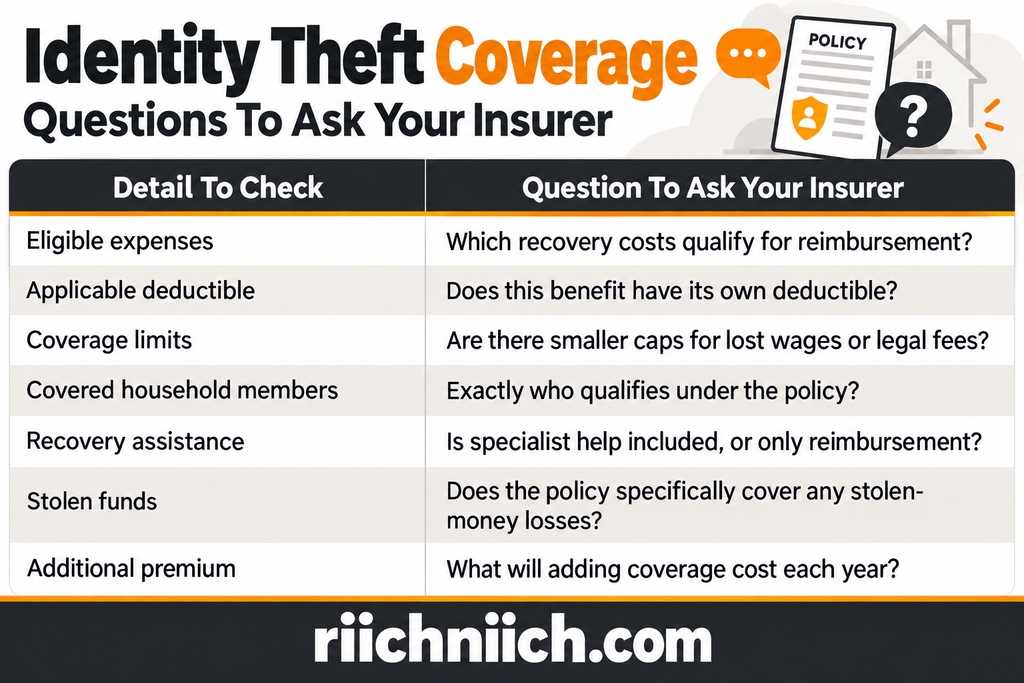
Do not assume your property deductible applies to the identity-related benefit. Ask the insurer to confirm the applicable amount and how it would affect a claim.
Compare An Add-On With A Separate Protection Plan
Adding identity theft insurance to an existing policy may suit you if your priority is reimbursement for eligible recovery expenses. A separate protection subscription may be worth comparing if you also want monitoring, alerts, and restoration support.
The National Association of Insurance Commissioners explains that insurance can be included in homeowners or renters policies or bundled with broader protection services. The benefits should be evaluated separately.
Request the add-on quote first, then compare its annual cost and benefits with the separate plan’s renewal price. If you already have both, ask how overlapping coverage would affect a claim.
Check your existing policy before buying additional identity theft insurance. If it meets your needs, another subscription may offer little extra value. If it leaves a meaningful gap, choose additional coverage or services that address that gap at a price you can maintain.
How To Choose The Best Identity Theft Insurance For Your Needs
The best identity theft insurance for your needs should cover the expenses you are concerned about, include manageable out-of-pocket costs, and fit your ongoing budget. Start with the actual policy terms, then compare the services and price.
Decide What You Want Covered
Before comparing plans, identify your main priority. Are you concerned about losing wages during recovery, paying eligible legal fees, or getting help with paperwork? If replacing stolen money matters most, look specifically for an applicable stolen-funds benefit.
The Federal Trade Commission recommends checking what coverage includes and excludes, along with the deductible. It also cautions that insurance generally does not reimburse stolen money.
Eliminate plans that exclude your main concern before comparing their prices.
Request The Policy Before Enrolling
Ask for the policy or certificate of coverage that applies to your state and chosen subscription tier. A marketing page can help you shortlist options, but you need the coverage documents to evaluate identity theft insurance properly.
Use this comparison checklist:
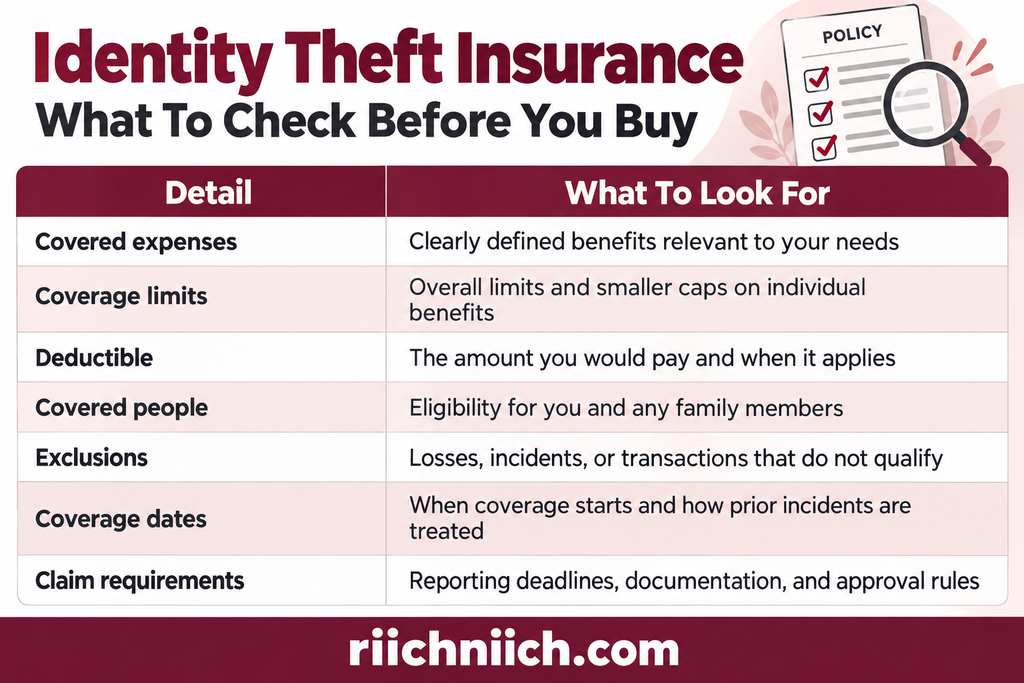
If an important term is unclear, ask the provider to identify the relevant policy language. Keep the answer with your coverage documents.
Evaluate Recovery Assistance Separately
If you want help resolving fraud, compare the restoration services bundled with identity theft insurance. Ask whether you receive a dedicated specialist, help preparing disputes, or assistance communicating with creditors.
The FTC explains that recovery services may guide you through documents and letters, and some may act on your behalf when formally authorized. The level of assistance varies.
Before paying for a premium package, confirm support hours and what happens after you report a problem. “Recovery assistance included” should come with a clear explanation of the work the service performs.
Identify Who Handles The Insurance Claim
Ask which company issues the insurance and which organization handles claims. If you are buying through a protection subscription, confirm whether the subscription provider or a separate insurer makes coverage decisions.
Request the insurer’s full legal name and claim contact details. The NAIC’s consumer resources can help you find your state insurance department if you need assistance checking an insurer or resolving an insurance complaint.
This gives you a practical contact path before you need to use the coverage.
Compare The Full Renewal Cost
For each shortlisted option, record the first-year price, renewal price, billing schedule, and cancellation terms. Compare those costs with any identity theft insurance you already receive through existing benefits.
A higher-priced plan should offer something useful to you—such as suitable family coverage or more substantial recovery assistance. Extra tools have limited value if you already have them or will not use them.
Make Your Final Choice With A Realistic Example
Ask each provider how its policy would handle the same hypothetical situation:
“If I lost wages and incurred legal expenses while resolving identity theft, which costs could qualify, what approvals would I need, and what limits or deductible would apply?”
The answer is not a guarantee of a future claim, but it can reveal differences that headline coverage amounts hide.
Shortlist two or three plans, compare their actual terms, and choose the one that best addresses your priorities. Useful benefits, clear claim requirements, and an affordable renewal price are stronger reasons to buy identity theft insurance than a large advertised maximum alone.
Comparing Identity Theft Insurance Included With Popular Protection Services
Several protection services bundle identity theft insurance with monitoring and recovery assistance. However, their advertised coverage amounts are not always directly comparable. A per-adult limit, a household total, and a package combining separate benefits can represent very different protection.
Compare the benefit breakdown for your chosen plan—not just the largest dollar amount on the page.
How Popular Services Compare
🚨 The following examples summarize provider-advertised benefits. All amounts are maximums subject to eligibility, exclusions, and applicable policy terms.
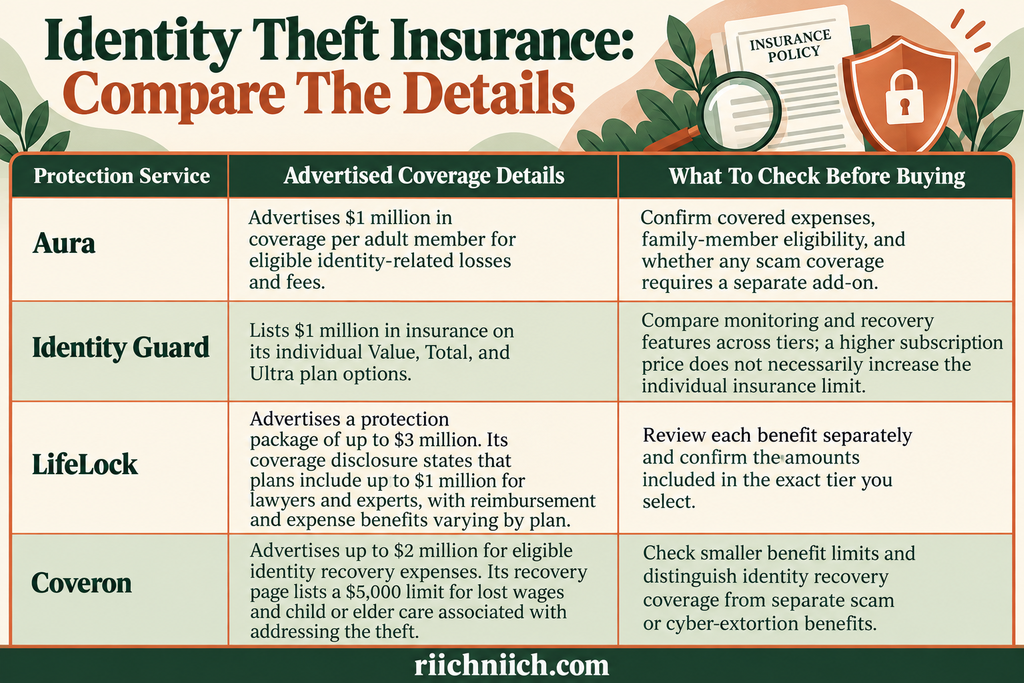
🚨 These details come from the providers’ own coverage and plan pages. Confirm the applicable policy before enrolling, because plan offerings can change.
Aura: Compare Per-Adult Coverage With Household Needs
Aura may be worth shortlisting if you want identity theft insurance alongside monitoring and support for multiple adults. Its advertised $1 million per-adult structure makes it important to check who qualifies under your chosen plan.
Aura also promotes a separate scam-protection add-on with cybercrime coverage. Do not assume those benefits are automatically part of its standard identity-related coverage.
Buying consideration: Compare the insurance terms and enrolled household members before paying for additional features.
If Aura is on your shortlist, our ‘Is Aura worth it?’ review examines its features, pricing, and potential value beyond the advertised insurance benefit.
Identity Guard: Evaluate What An Upgrade Actually Adds
Identity Guard lists the same $1 million individual insurance amount across its Value, Total, and Ultra options, while monitoring features differ. Its Ultra tier specifically lists White Glove Fraud Resolution.
That makes the upgrade decision about more than identity theft insurance alone. Check whether the added credit monitoring and recovery services address a need you have.
Buying consideration: Choose the lowest-priced tier that provides your required benefits, after checking its renewal cost and coverage terms.
👉 Before paying for a higher tier, compare Identity Guard’s plans side by side to find the monitoring and recovery features you need and check the price after the introductory offer.
LifeLock: Separate The Package Into Its Benefits
LifeLock’s advertised protection package combines categories of assistance and reimbursement. Its disclosure distinguishes lawyers-and-experts coverage from reimbursement and expense benefits that vary by plan.
When comparing identity theft insurance, do not interpret the package total as one unrestricted amount available for any loss.
Buying consideration: Ask for the specific stolen-funds, personal-expense, and legal-support limits in your selected plan before deciding whether an upgrade is worthwhile.
Deciding between these two providers? Our Aura vs LifeLock comparison can help you weigh their monitoring, recovery support, and overall plan value.
Coveron: Pay Attention To Smaller Reimbursement Caps
Coveron’s advertised recovery coverage illustrates why benefit limits matter. Its overall maximum is much larger than the listed limit for lost wages and qualifying child or elder care.
If unpaid time away from work is your main concern, that smaller limit may matter more to your decision than the headline amount.
Buying consideration: Compare the benefits you are most likely to need and verify which additional fraud protections your subscription includes.
👉 If you are also concerned about online scams, explore Coveron’s current plans and insurance benefits to check which options include the protection you want and what exclusions apply.
Make Your Final Comparison On Equal Terms
The Federal Trade Commission recommends checking covered expenses, exclusions, and deductibles before purchasing identity theft insurance.
For each shortlisted service, record the same five details: eligible losses, individual benefit limits, deductible, recovery assistance, and annual renewal cost.
Choose the plan whose actual coverage matches your household’s needs. A larger advertised insurance amount is useful only when the policy covers the expenses or losses you want help with.
What To Check Before Buying Identity Theft Insurance For Your Family
Identity theft insurance for your family should cover the people you intend to protect and the eligible recovery costs that could affect your household budget. A “family plan” label alone does not establish who is insured, how much each person can claim, or what help children receive.
Before enrolling, check the insurance terms separately from the plan’s monitoring and parental-control features.
Confirm Exactly Which Family Members Qualify
Write down everyone you want included, then compare that list with the policy’s definition of an insured person.
Ask about:
- Spouses and unmarried partners
- Minor children and stepchildren
- Children who live at another address
- College students and adult dependents
- Parents or other relatives you want to include
Confirm any age, residency, dependency, or legal-guardianship requirements. If a child divides time between two homes, ask specifically whether that living arrangement affects eligibility.
Do not assume that adding someone to a monitoring dashboard automatically gives them insurance coverage.
Separate Children’s Monitoring From Insurance Benefits
When buying identity theft insurance, ask what happens if a child becomes the victim. Does the policy cover eligible expenses incurred by a parent during the child’s recovery? Does a restoration specialist assist with the child’s case? What documentation must the parent or guardian provide?
Child identity monitoring, recovery assistance, and insurance reimbursement are different benefits. Confirm each one rather than relying on a general promise of “child protection.”
Insurance also complements preventive steps. The Federal Trade Commission recommends requesting a free credit freeze for children under 16 to make fraudulent new accounts harder to open. Minors ages 16 or 17 can request their own freezes.
Find Out Whether Coverage Limits Are Shared
A family’s advertised total may represent separate amounts for eligible adults or a limit shared across covered people. Ask how the policy handles an incident affecting multiple family members.
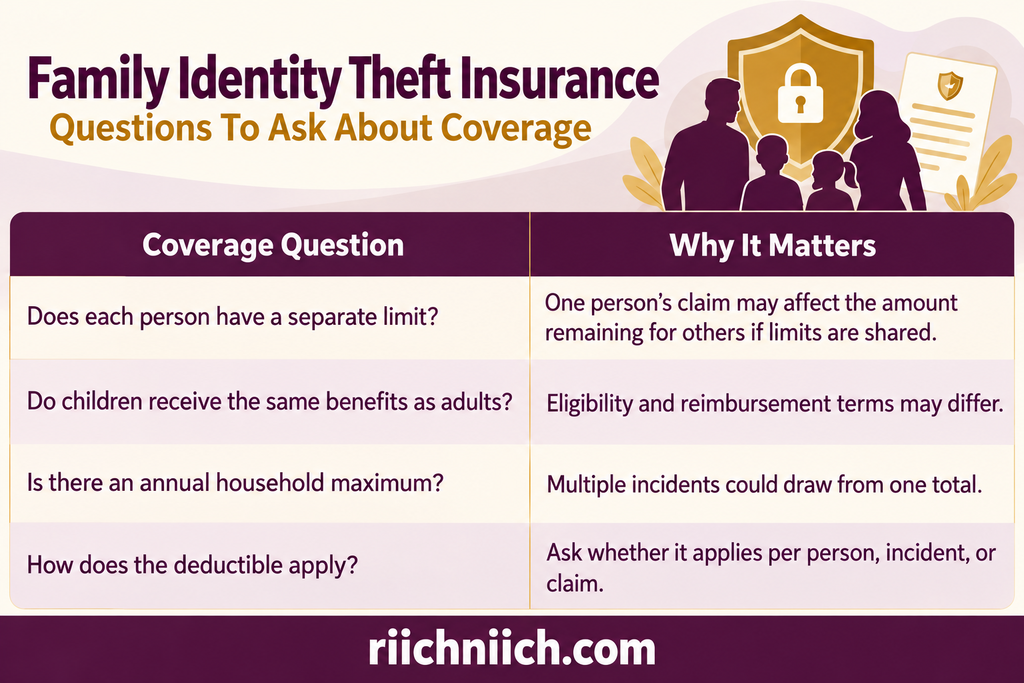
The Texas Department of Insurance recommends reviewing deductibles and policy limits before purchasing identity theft insurance.
Check Benefits That Matter To Your Household
Focus on the expenses your family would struggle to absorb. Ask whether the policy covers eligible lost wages when a parent handles a child’s identity theft, qualifying legal expenses, or necessary child-care costs during recovery.
These are benefits to verify—not benefits every policy includes. Request the applicable limits, exclusions, and approval requirements.
If you want hands-on assistance, also ask who can speak with the recovery specialist and what authorization is needed to help an adult relative.
Verify Enrollment And Age Changes
Before paying for identity theft insurance, confirm what each person must do to activate coverage. Ask whether adults need separate accounts or identity verification and how parents enroll eligible children.
Check what happens when a child turns 18, moves away, or stops qualifying as a dependent. Understanding those transitions helps you avoid assuming coverage continues unchanged.
Compare The Full Family Cost
Review existing household insurance and employer benefits before buying another plan. Then compare the family subscription’s renewal price, deductibles, eligible members, and recovery services.
To narrow your options, compare the best identity theft protection for families and check which plans match your household’s coverage and support needs.
Choose family coverage only after confirming that every intended member qualifies. The best identity theft insurance for your household should provide useful benefits for the people you want covered, with clear limits and an ongoing price that fits your budget.
How To File An Identity Theft Insurance Claim
To file an identity theft insurance claim, notify your insurer or claims administrator promptly, request its claim instructions, and document the incident and related expenses. Requirements vary by policy, so confirm the reporting deadlines and required paperwork before assuming an expense will be reimbursed.
You do not need to wait until every receipt is collected before reporting the incident. Ask how to provide additional documents as your recovery progresses.
Contact Your Insurer And Secure A Claim Number
Use the contact information in your policy, certificate of coverage, or verified account portal. If your identity theft insurance comes through a protection subscription, ask whether its support team opens the insurance claim or refers you to a separate claims administrator.
Request:
- A claim number and contact person.
- The claim form and submission instructions.
- Deadlines for reporting the incident and submitting proof of loss.
- Details of expenses requiring advance approval.
- Access to any included recovery assistance.
Contact affected banks or businesses promptly as well. Opening an insurance claim does not replace reporting fraudulent transactions or securing compromised accounts.
For the steps to take alongside your claim, follow our guide on how to recover from identity theft, including reporting fraud, disputing inaccurate records, and securing affected accounts.
Report the Identity Theft and Keep A Timeline
Report the incident at the FTC’s IdentityTheft.gov. The site provides an identity theft reporting process and a personalized recovery plan.
Save your report and record when you discovered the fraud, which accounts were affected, and whom you contacted. Ask the insurer whether it requires an FTC report, a police report, or other evidence.
An FTC report does not automatically open an insurance claim. Follow the insurer’s submission process separately.
Gather Evidence For Each Expense
For identity theft insurance reimbursement, organize the documents supporting the specific benefits you are claiming.
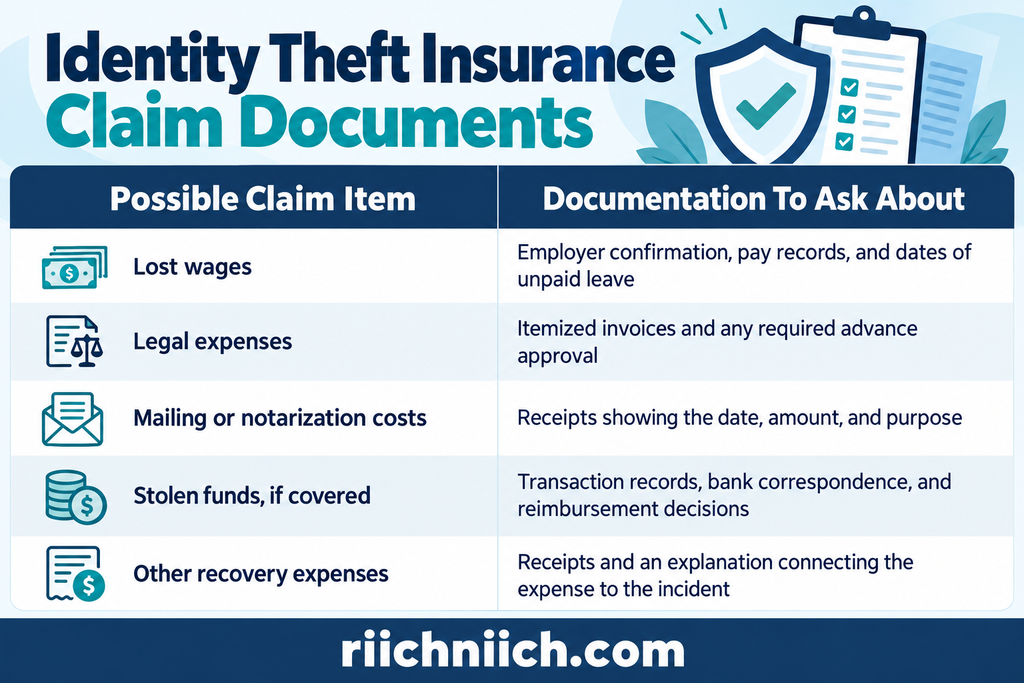
Keep copies of everything you submit. Use the insurer’s verified secure submission method for sensitive documents.
Confirm Approval Before Incurring Major Costs
Before hiring an attorney or paying for a recovery service, ask whether the expense qualifies and requires written authorization. Keep the insurer’s response.
A benefit listed in your identity theft insurance policy may still have conditions, smaller reimbursement limits, or documentation requirements. Approval to use a service should not be confused with a promise to reimburse every charge.
Submit the Claim and Track Its Progress
Complete the forms accurately, attach the requested evidence, and retain confirmation of submission. Disclose any reimbursement received from your bank or another insurer so the claims administrator can evaluate overlapping payments.
Ask when to expect an update and respond promptly to requests for additional information. Maintain a simple contact log with dates, names, and the next action required.
Review the Decision and Ask About Disputed Amounts
When you receive a decision, compare it with your submitted expenses and applicable policy terms. Ask for an explanation of any deductible, benefit cap, or excluded amount.
If a claim is denied, request the reason in writing and ask about reconsideration procedures and deadlines. You can locate your state insurance department through the NAIC’s consumer resources if you need help with an unresolved insurance complaint.
Before buying identity theft insurance, evaluate the claims process alongside the coverage. Clear instructions, accessible claims contacts, and well-defined recovery assistance can make a plan more useful when you need to act.
Common Mistakes to Avoid When Buying Identity Theft Insurance
Buying identity theft insurance without checking the details can leave you paying for coverage that does not match your needs. Before enrolling, look beyond the introductory price and advertised maximum to understand what you could actually claim.
Choosing The Largest Advertised Coverage Amount
A large coverage limit can look reassuring, but it does not make every expense eligible. Smaller limits may apply to particular benefits, and family members may share a total.
Compare the limits for the expenses that matter to you, such as lost wages or legal fees. Ask whether the headline amount applies per person, per incident, or across the policy period.
Assuming Every Stolen Dollar Will Be Replaced
Do not buy identity theft insurance assuming it covers every unauthorized withdrawal or scam payment. The National Association of Insurance Commissioners explains that these policies generally reimburse certain recovery costs rather than money stolen from accounts.
If stolen-funds reimbursement is your priority, find the specific benefit in the policy. Verify which transactions qualify and whether payments you were deceived into making are covered.
Buying Coverage You Already Have
Before adding another subscription, review your existing insurance. The Texas Department of Insurance notes that some homeowners policies include identity-related coverage, while insurers may also offer add-ons for homeowners or renters.
Ask whether your existing identity theft insurance already meets your needs. Additional coverage should address a meaningful gap, rather than simply repeat benefits you receive elsewhere.
Comparing Introductory Prices Only
A discounted first year does not tell you the long-term cost. Check the renewal price, billing frequency, cancellation process, and refund terms before subscribing.
Also distinguish an actual monthly payment from a monthly equivalent billed annually. Compare the full amount charged today and the expected cost at renewal.
Confusing Insurance With Monitoring And Recovery Help
A plan offering identity theft insurance does not automatically include comprehensive monitoring or hands-on restoration assistance. The NAIC identifies insurance and broader protection services as distinct benefits that may be bundled together.
If practical support is important, ask what a recovery specialist will do for you. If alerts are your priority, check which information and credit bureaus the plan monitors.

Overlooking Eligibility And Coverage Start Dates
Do not assume everyone in your household qualifies under a family plan. Confirm age, relationship, residency, and enrollment requirements for each person you want covered.
Likewise, do not assume purchasing identity theft insurance after discovering fraud will cover that existing incident. Ask how the policy treats prior events, when coverage begins, and whether any activation steps remain.
Ignoring Deductibles And Claim Requirements
A low premium may be less useful if the deductible absorbs the expenses you are most concerned about. The Texas Department Of Insurance recommends reviewing both deductibles and policy limits before purchasing.
Before enrolling, check:
- How soon you must report an incident.
- What evidence supports a claim.
- Which expenses require advance approval.
- Who handles claims and how to contact them.
- How other reimbursements affect payment.
Save the policy or certificate of coverage that applies to your purchase.
Choose identity theft insurance based on clear terms, relevant benefits, and an affordable ongoing price. Before paying, make sure you can explain who is covered, which losses qualify, and what you would need to do to receive reimbursement.
Frequently Asked Questions About Identity Theft Insurance
These additional questions can help you compare identity theft insurance and clarify details that may not appear prominently on a plan’s sales page.
Do I Still Need Coverage If My Credit Is Frozen?
A credit freeze and identity theft insurance serve different purposes. A freeze helps restrict access to your credit report, making fraudulent new credit accounts harder to open. Insurance helps reimburse eligible losses or recovery expenses specified in the policy.
The Federal Trade Commission confirms that credit freezes are free to place and lift. Whether additional coverage is worth buying depends on your existing benefits, budget, and the expenses you want covered.
If you have not restricted access to your credit reports yet, follow our instructions on how to freeze your credit at all three credit bureaus.
Does Personal Coverage Protect My Small Business?
Do not assume personal identity theft insurance covers business losses. Ask how the policy treats business accounts, business-related fraud, and expenses incurred in a professional capacity.
The National Association of Insurance Commissioners distinguishes personal identity-related insurance from cybersecurity insurance typically held by businesses. Business owners should discuss their commercial risks separately with an insurance professional.
Will Coverage Apply While I Am Traveling Abroad?
That depends on the policy’s geographic scope and eligibility requirements. Before purchasing identity theft insurance, ask whether it covers qualifying incidents discovered during international travel and whether expenses incurred overseas are eligible.
Also check how you would contact the claims team from abroad. Do not assume coverage for a U.S. resident automatically includes every foreign account or transaction.
What Happens To An Open Claim If I Cancel My Subscription?
Cancellation can raise separate questions about insurance coverage, claim reporting, and ongoing restoration assistance. Ask the insurer how cancellation affects an incident that occurred or was discovered while coverage was active.
Before canceling a plan with an open identity theft insurance claim, obtain written clarification about remaining deadlines and whether recovery support continues. Keep your policy documents and claim records.
Can I Choose My Own Attorney For A Covered Case?
Do not assume you can hire any attorney and receive reimbursement. Ask whether the policy requires advance approval, restricts eligible legal services, or limits hourly rates and total fees.
If choosing your own attorney matters to you, compare that provision before buying identity theft insurance. Request written authorization before incurring expenses when the policy requires it.
Does A Money-Back Guarantee Mean My Losses Are Guaranteed?
No. A subscription refund guarantee and an insurance benefit are separate commitments. A money-back offer may refund eligible subscription payments under its terms; it does not establish that stolen money or recovery expenses will be reimbursed.
Evaluate identity theft insurance using the policy’s covered losses, exclusions, and claim requirements. Read the refund guarantee separately.
Will Coverage Follow Me If I Leave My Job?
If you receive coverage through an employer, ask the benefits administrator when eligibility ends and whether you can continue it individually. Confirm how leaving affects previously discovered incidents and ongoing claims.
Before purchasing replacement identity theft insurance, compare the new effective date with the end of your employer benefit. Choose replacement coverage based on its actual terms rather than assuming it will work exactly like your previous plan.
Conclusion: Choose Identity Theft Insurance That Fits Your Needs
Identity theft insurance can help reduce the financial burden of recovering from fraud, but its value depends on the actual coverage. Eligible expenses, exclusions, deductibles, and reimbursement limits matter more than a large advertised dollar amount.
The National Association of Insurance Commissioners recommends checking those details before purchasing and cautions that coverage generally does not replace money stolen from your accounts.
Before choosing a plan, focus on three questions:
- Does it cover your priorities? Check the benefits for eligible lost wages, legal expenses, and any specifically included stolen-funds reimbursement.
- Does it provide the help you want? Confirm whether restoration assistance is included and what the specialist will do.
- Is the ongoing cost reasonable? Compare the renewal price, deductible, and existing benefits before paying for additional coverage.
If you primarily want reimbursement for recovery expenses, start by checking your current insurance. If you also want monitoring and practical recovery support, compare protection subscriptions that include identity theft insurance. Evaluate each benefit separately so you know what your payment buys.
Alongside your coverage decision, use our identity theft prevention checklist to strengthen everyday habits that help protect your accounts and personal information.

Your next step: shortlist two or three plans and compare their coverage documents alongside their renewal prices. The best identity theft insurance for your needs should fill a clear gap, cover the intended household members, and offer benefits you understand at a price you can maintain.
Ready to build your shortlist? Compare the best identity theft protection services to find a plan with the monitoring, recovery assistance, and insurance benefits that fit your needs.