
The 153 million driver’s license data breach has triggered serious concerns after a dark-web identity service reportedly claimed access to an enormous collection of U.S. and Canadian driver’s-license records. With the FBI investigating and questions still surrounding exactly how many people were affected, consumers need to understand what information may have been exposed and what risks could come next.
In this guide, we’ll break down what is currently known, what remains unconfirmed, how to determine whether your driver’s license may have been affected, and the most important steps you can take to protect yourself from identity theft. We’ll also explain whether credit freezes, identity monitoring, and identity theft protection services are worth considering after a driver’s-license data exposure.
Table of Contents
🔥 Quick Answer: What Is the 153 Million Driver’s License Data Breach?
The 153 million driver’s license data breach refers to an ongoing FBI investigation involving a dark-web identity service called Nexus, which claimed to have access to more than 153 million driver’s license records from people in the United States and Canada. The records were reportedly being offered through a searchable service marketed to identity thieves and included digital images of real driver’s licenses.
However, the number requires an important clarification: 153 million does not currently mean 153 million confirmed individual victims. It is the number of driver’s-license records Nexus claimed to possess. Authorities have not independently verified the total number of records or established how many unique people are affected. The FBI confirmed that it is looking into the incident, while the ultimate source and full scope remain under investigation.
The reported exposure is particularly concerning because these were not described as simple lists containing names and license numbers. Reporting on the Nexus database found front-and-back images of driver’s licenses, and some records reportedly contained barcode information, infrared images, ultraviolet images, and scan timestamps—the kinds of data associated with identity-verification systems.
Security journalist Brian Krebs first reported the incident after a source alerted him to Nexus and the operators used a copy of his own Virginia driver’s license as a sample while advertising the service on a Russian cybercrime forum. Krebs subsequently examined other records and reported evidence suggesting a possible connection to Louisiana-based identity-verification provider IDScan.net. IDScan.net had not publicly confirmed the reported source or scope, so that connection should not yet be treated as a completed forensic finding.
For consumers, the 153 million driver’s license data breach is important because a driver’s license can contain several pieces of information useful for identity fraud, including your full name, photograph, home address, date of birth, driver’s-license number, expiration date, physical descriptors, and machine-readable barcode information. A high-quality digital copy can therefore create risks that go well beyond someone simply knowing your license number.
There is currently no confirmed public lookup tool that lets you enter your information and determine whether your driver’s license appeared in the reported Nexus collection. That means consumers should be cautious about websites, emails, text messages, or phone calls claiming they can instantly tell you whether your license was exposed—especially if they request sensitive information or payment.
If you’re concerned that your information may have been exposed, you don’t need to wait for evidence of identity theft before improving your defenses. Reviewing your credit reports, watching financial accounts for unfamiliar activity, considering a free credit freeze, strengthening account security, and monitoring for suspicious identity activity can all help reduce your risk. The Federal Trade Commission (FTC) also provides official guidance for consumers whose personal information has been lost or exposed.
For people who want broader monitoring, this is also an appropriate time to compare identity theft protection services that can watch for certain signs of identity misuse and alert you to suspicious activity. These services cannot erase exposed driver’s-license information or guarantee that identity theft will never happen, but the right service can provide an additional monitoring and recovery layer when sensitive personal information may already be outside your control.
The biggest takeaway from the 153 million driver’s license data breach is that protecting your physical driver’s license is no longer enough. Every time an ID is scanned or digitally verified, another copy or set of identity data may potentially be created and stored somewhere. Until investigators establish exactly what happened, consumers should treat the incident as a reason to take practical precautions—not as proof that all 153 million reported records represent confirmed victims.
What Happened in the 153 Million Driver’s License Data Breach?
The 153 million driver’s license data breach came to public attention after cybersecurity journalist Brian Krebs was alerted to a newly advertised dark-web service called Nexus. On August 31, 2026, a source showed Krebs a sales post on the Russian cybercrime forum Exploit advertising access to an enormous collection of North American identity documents. The operators reportedly used a digital copy of Krebs’ own Virginia driver’s license as a free sample to demonstrate what buyers could access.
Nexus claimed its searchable collection contained more than 153 million driver’s license records from the United States and Canada, along with more than 10 million identification cards, millions of travel or international identity documents, and hundreds of thousands of medical cards. Krebs reported that a blank search of Nexus produced roughly 11.5 million pages with approximately 15 results per page, lending some support to the enormous scale claimed by the operators. However, investigators have not confirmed that the 153 million records represent 153 million unique people.
What made the discovery particularly concerning was the apparent quality of the records. Nexus wasn’t reportedly offering only names or driver’s-license numbers. Records examined during the investigation included images of the front and back of driver’s licenses, and some entries reportedly contained barcode data, infrared and ultraviolet images, and timestamps associated with when an ID was scanned.
Krebs then contacted people whose driver’s licenses appeared in the database and compared information associated with the records to situations in which those individuals remembered having their IDs scanned. According to his investigation, several people were able to associate timestamps with activities such as renting vehicles. Those findings helped point the investigation toward Louisiana-based identity-verification provider IDScan.net.
That connection is important—but it should not be treated as a settled conclusion.
As of September 7, IDScan.net has not publicly confirmed that its systems were the source of all 153 million reported driver’s-license records. The company’s investigation was described as preliminary, and neither the FBI nor IDScan.net has publicly established the final number of affected people, the specific systems involved, or the complete scope of the incident.
Another alarming detail was how quickly the reported database appeared to be changing. Krebs observed nearly 400,000 additional records appearing within approximately 24 hours, raising the possibility that the collection was being updated rather than representing only an old, static database. Nexus reportedly claimed it had been continuously obtaining new data for more than a year, although that claim has not been independently confirmed.
The situation quickly attracted federal attention. The FBI confirmed that it was “looking into the incident” but declined to provide additional details because the investigation remains ongoing. Reuters independently reported the FBI’s confirmation and noted that, if the reported scale is ultimately verified, the incident could rank among the largest exposures of government-issued identity documents in North America.
Shortly after Krebs published his findings, Nexus went offline. Its disappearance does not mean the driver’s-license records were destroyed or recovered. There is currently no public evidence establishing what happened to copies of the information, whether it had already been downloaded or redistributed, or whether similar collections could surface elsewhere.
For consumers, that’s what makes the 153 million driver’s license data breach worth paying attention to even before investigators establish the final numbers. A driver’s license is a government-issued identity credential containing information that can potentially assist criminals with impersonation, fraudulent verification attempts, social engineering, or other forms of identity fraud. Unlike a compromised password, much of the information printed on your driver’s license cannot simply be changed with a few clicks.
This doesn’t mean everyone in the United States or Canada should assume their driver’s license was stolen. It means consumers should understand the potential risk and consider preventative measures before suspicious activity appears.
That can include checking your credit reports, freezing your credit when appropriate, strengthening authentication on important accounts, watching for unfamiliar accounts or verification requests, and considering an identity theft protection service if you want broader monitoring and assistance responding to potential identity misuse.
The key point is that the 153 million driver’s license data breach remains an active investigation. The existence of the Nexus service and its massive collection has been reported, the FBI has confirmed that it is investigating, and samples of the data have been independently checked. But the advertised total, number of unique victims, ultimate source of the records, and complete extent of the exposure have not yet been conclusively established.
Is the 153 Million Driver’s License Data Breach Confirmed?
The 153 million driver’s license data breach is partially confirmed, but the full scope is not. The FBI has confirmed that it is investigating reports involving millions of U.S. and Canadian driver’s-license records offered through the dark-web service Nexus. However, authorities have not confirmed that exactly 153 million unique people were affected, nor have they publicly established the complete source of the records.
That distinction is important because the widely reported 153 million figure came from Nexus itself. The illicit service claimed to possess more than 153 million driver’s-license records, along with millions of other identity documents. Investigative reporting found genuine driver’s-license records within the collection, but a criminal marketplace’s advertised record count should not be treated the same as a verified breach notification or completed forensic investigation.
What Has Been Confirmed So Far?
There are several important pieces of the 153 million driver’s license data breach story that have stronger supporting evidence.
Cybersecurity journalist Brian Krebs personally examined Nexus records after discovering that the operators had used a copy of his own Virginia driver’s license as a sample when advertising the service. Krebs subsequently examined additional records and interviewed people whose driver’s licenses appeared in the database. Nexus claimed that its collection included more than 153 million U.S. and Canadian driver’s-license records.
Most importantly, the FBI confirmed to Reuters that it was investigating the report. That means the federal investigation itself is real; it does not mean investigators have validated every claim made by Nexus.
What Has Not Been Confirmed?
Several major questions remain unanswered.
Authorities have not publicly confirmed:
- That there are exactly 153 million unique victims.
- That every record advertised by Nexus is authentic.
- That all 153 million records came from one company or database.
- Exactly how the information was obtained.
- When any unauthorized access began.
- Which businesses or customers may have been affected.
- Whether every record contains the same types of information.
- How many copies of the information may now exist elsewhere.
The difference between records and people is especially important. One person could potentially have multiple scans, different versions of the same license, expired licenses, or other duplicate records within a large collection. Until investigators establish the number of unique individuals involved, it would be inaccurate to say that “153 million people had their driver’s licenses stolen.”
Has IDScan.net Confirmed the Breach?
No—not based on the public information available as of September 7, 2026.
Krebs’ investigation found evidence pointing toward Louisiana-based identity-verification provider IDScan.net. He connected timestamps and other characteristics in sampled records with situations where individuals remembered having their IDs scanned. Some records also reportedly contained infrared and ultraviolet images associated with identity-verification processes.
But that evidence does not amount to a final forensic determination that IDScan.net was the source of all the Nexus records.
Public reporting indicates that IDScan.net was investigating the situation, but the company had not publicly confirmed unauthorized access, identified affected systems or customers, or provided a verified number of affected individuals.
For that reason, consumers should be careful with headlines describing this definitively as the “IDScan.net data breach.” The connection is an important part of the investigation, but the final findings have not yet been released.
Should You Wait for Confirmation Before Protecting Yourself?
No. You don’t need to assume that your driver’s license was exposed, but you also don’t need to wait for the investigation to finish before taking reasonable precautions.
If your personal information appears in a future breach notification—or you simply want stronger protection after learning about the 153 million driver’s license data breach—you can review your credit reports, watch financial accounts for unfamiliar activity, use strong multi-factor authentication, consider freezing your credit, and be especially cautious about unexpected identity-verification requests.
Consumers who want more extensive monitoring may also consider an identity theft protection service. Depending on the provider and plan, these services may monitor certain personal information, credit activity, dark-web findings, or other warning signs and provide recovery assistance if identity theft occurs. They cannot remove an exposed driver’s-license scan from a criminal database or guarantee that fraud will be prevented, so they should be viewed as an additional protection layer rather than a complete solution.
For now, the most accurate way to describe the 153 million driver’s license data breach is this: a massive collection of driver’s-license records has been reported and authentic records have been examined, and the FBI has confirmed an investigation—but the advertised 153 million total, number of unique victims, source, and complete scope have not been conclusively confirmed.
Who Is Nexus and What Does It Have to Do With the 153 Million Driver’s License Data Breach?
Nexus was not a government agency, driver’s-license database, or legitimate identity-protection company. It was the name given to an illicit identity-theft service advertised on the Russian-language cybercrime forum Exploit. Nexus offered customers searchable access to an enormous collection of digital identity documents, including driver’s licenses from people in the United States and Canada.
Nexus is central to the 153 million driver’s license data breach because its operators claimed their database contained more than 153 million driver’s-license records. They also advertised more than 10 million identification-card records, more than 3 million travel documents or international IDs, and at least 579,000 medical-card records.
How Was Nexus Discovered?
Nexus gained public attention after a source contacted cybersecurity journalist Brian Krebs on August 31, 2026. The source had spotted Nexus being advertised by a new account on Exploit.
There was an unusual reason the advertisement immediately caught Krebs’ attention: Nexus reportedly used Krebs’ own Virginia driver’s license as a free sample to demonstrate the information customers could obtain through the service.
Krebs investigated further and found what appeared to be a massive searchable database of identity documents.
A blank search reportedly returned approximately 11.5 million pages of results, with roughly 15 records displayed on each page. While that does not independently prove that there were exactly 153 million unique and valid driver’s-license records, the apparent size of the database suggested that Nexus’ claim could not simply be dismissed as a small collection being exaggerated for advertising purposes.
What Could Nexus Customers Search For?
This is one of the most concerning parts of the 153 million driver’s license data breach.
Nexus reportedly functioned as a searchable identity-record service, rather than simply offering one enormous file for download. According to Krebs’ investigation, customers could search the database using identifying information such as a person’s name, address, date of birth, driver’s-license number, and other criteria.
Some records reportedly contained much more than basic text information. Available records included front-and-back driver’s-license images, and some entries included standard, infrared and ultraviolet images along with timestamps associated with when the identification document had been scanned.
That distinction matters.
A criminal obtaining a name and address is concerning. A criminal obtaining a digital copy of the actual government-issued identification document associated with that person can potentially create additional opportunities for impersonation, social engineering and attempts to defeat identity-verification systems.
However, there is currently no evidence establishing that every Nexus record contained all of these elements or that every record was successfully used for identity theft.
Was Nexus Responsible for Stealing the Driver’s Licenses?
That has not been conclusively established.
Nexus’ operators reportedly claimed that they were continuously obtaining information from an active compromise involving a major identity-verification company. Krebs also observed the number of driver’s-license records increasing by nearly 400,000 within approximately 24 hours, which raised concerns that the collection might have been receiving new information rather than consisting solely of an old data dump.
But there is an important difference between selling stolen information and being the organization that originally obtained it.
Investigators have not publicly established who initially accessed the information, precisely how it was obtained, whether Nexus’ operators carried out the suspected intrusion themselves, or whether they received the information from someone else.
For that reason, it would be premature to describe Nexus as the confirmed hacker responsible for the 153 million driver’s license data breach.
Where Did Nexus Say the Records Came From?
Nexus reportedly claimed that its driver’s-license images were coming from an ongoing breach involving a major identity-verification company whose customers included large businesses.
Krebs subsequently investigated the origins of sampled records. By contacting people whose driver’s licenses appeared in Nexus and comparing scan timestamps with occasions when those individuals remembered presenting their IDs, the investigation found evidence pointing toward identity-verification provider IDScan.net.
That remains an investigative connection—not a final determination of responsibility.
Reuters reported that the source of the breach had not been confirmed and that the FBI was investigating.
This distinction is especially important for consumers searching for information about the Nexus data breach or IDScan.net data breach. The available evidence raises serious questions, but the final source, affected systems, affected customers and number of unique victims have not yet been publicly established.
What Happened to Nexus?
Nexus disappeared shortly after the incident became public.
Reuters reported that the dark-web service vanished after Krebs published his investigation.
But Nexus going offline should not be interpreted as confirmation that the driver’s-license information has been destroyed.
Digital information can be copied. Investigators have not publicly established how many people accessed the Nexus collection, whether records were downloaded in bulk, whether copies were sold or shared elsewhere, or whether another marketplace could eventually offer some of the same information.
Why Nexus Matters to Consumers
Nexus matters because the incident illustrates a larger identity-theft problem: your physical driver’s license may never leave your wallet, while a digital copy of it can exist somewhere else.
You may have legitimately provided or scanned your driver’s license when renting a vehicle, verifying your age, opening an account, entering a secured facility, completing an online identity check, or using another service requiring government identification. That doesn’t mean any particular transaction exposed your information, but it demonstrates how digital ID verification can create additional copies or data associated with your identity.
And once sensitive identity information is exposed, simply replacing a password isn’t enough.
That’s why consumers concerned about the 153 million driver’s license data breach should consider protecting the broader identity surrounding the license—not only the physical card. That can include monitoring credit reports and financial accounts, freezing credit when appropriate, securing important accounts with multi-factor authentication, watching for suspicious identity-verification requests, and responding quickly to unfamiliar accounts or inquiries.
Consumers who want more extensive monitoring can also compare an identity theft protection service that monitors certain identity, credit, financial, or dark-web activity and provides recovery assistance if identity theft occurs. These services cannot retrieve a driver’s-license scan from criminals, but they may provide another layer for detecting signs that exposed information is being misused.
Ultimately, Nexus is the illicit service that brought the reported exposure to public attention and offered access to the driver’s-license records. It is not yet publicly established who originally obtained all of the information, exactly where every record came from, or whether Nexus’ claimed total represents unique individuals. Those unanswered questions are why the 153 million driver’s license data breach remains an active and important investigation.
Where Did the 153 Million Driver’s License Records Reportedly Come From?
The exact source of the records involved in the 153 million driver’s license data breach has not yet been conclusively confirmed. However, the original investigation by cybersecurity journalist Brian Krebs found evidence suggesting that at least some of the driver’s-license scans may be connected to systems in the ecosystem of IDScan.net, a Louisiana-based company that provides identity-verification and ID-scanning technology to businesses.
This is an important distinction. Nexus claimed that it was obtaining information from a major identity-verification company, but neither the FBI nor a completed public forensic investigation has established that IDScan.net was the source of all 153 million records. IDScan.net told KrebsOnSecurity that it was investigating the situation.
How Investigators Traced Some Records Back to Real ID Scans
One of the strongest clues came from the timestamps attached to individual records.
Krebs searched Nexus for driver’s licenses belonging to more than a dozen friends and family members and reported finding records for nine of them. He then contacted those individuals and asked whether they could determine where they had presented their driver’s licenses around the dates shown in Nexus.
Several matches reportedly emerged.
For example, some individuals were able to connect the timestamps with occasions when their driver’s licenses had been scanned during activities such as renting a vehicle. Krebs’ investigation found connections between sampled records, businesses using identity-verification technology, and IDScan.net.
That provided investigators with something more meaningful than simply finding IDScan.net’s name somewhere online: they could compare an actual Nexus record with the approximate time and place where the person remembered presenting the physical ID.
Still, these matches represent evidence involving sampled records, not proof explaining the origin of every record advertised by Nexus.
The Images Contained Another Important Clue
The types of images found in Nexus also attracted attention.
According to the investigation, some records contained more than ordinary photographs of the front and back of a driver’s license. Nexus also reportedly displayed infrared and ultraviolet versions of certain IDs. Those specialized images can be produced by document-authentication systems designed to examine security features that aren’t easily visible under normal lighting.
That matters because identity-verification companies don’t necessarily just photograph an ID. Depending on the technology being used, a verification system may examine the document, extract information, inspect security features, read its barcode, compare images, or perform other authentication checks.
IDScan.net publicly describes technology designed to scan and authenticate government-issued identification documents. The similarity between those capabilities and some of the unusual image types appearing in Nexus was another clue pointing investigators toward the company’s ecosystem. However, similarity alone does not prove where the entire database originated.
Did All 153 Million Records Come From IDScan.net?
That has not been established.
This is one of the most important facts to understand about the 153 million driver’s license data breach.
Current evidence may point toward IDScan.net in connection with sampled records, but there has not been a public forensic finding establishing that:
- IDScan.net was the source of all 153 million records.
- Exactly 153 million unique people were affected.
- One IDScan.net database containing all these records was compromised.
- Every record was obtained through the same method.
- Every IDScan.net customer was affected.
- Every person who previously had an ID processed using its technology had information exposed.
Reuters reported that the source had not been confirmed, while the FBI acknowledged that it was investigating the incident.
That is why this article does not treat the reported incident as a conclusively established “IDScan.net data breach.” The evidence warrants investigation, but the final attribution and scope still require confirmation.
Nexus Claimed the Data Was Being Continuously Obtained
There is another reason the suspected source has received so much attention.
Nexus reportedly claimed it had been continuously obtaining new data for more than a year. Krebs also observed the driver’s-license count increasing by nearly 400,000 records in roughly 24 hours while investigating the service.
If accurate, that could suggest something different from criminals simply obtaining an old backup database years ago and putting it online.
It could potentially indicate access to a system or data stream that continued receiving new identity records.
But this remains a claim associated with Nexus, not a publicly confirmed finding from the FBI or IDScan.net. Investigators still need to determine whether the apparent growth represented genuinely new records, duplicates, older information being added to the service, or something else.
Why Would an Identity-Verification Company Have Driver’s License Information?
This part of the story helps explain why the 153 million driver’s license data breach is potentially so significant.
Businesses increasingly use third-party identity-verification technology when they need to verify someone’s identity, age, or government-issued ID.
A consumer might hand a driver’s license to a business without ever realizing that another company provides the technology operating behind the scenes.
IDScan.net’s products, for example, are designed to process government-issued identification for businesses. Its publicly described technology can scan, parse, authenticate, and verify documents such as driver’s licenses and state identification cards.
That doesn’t mean every business scanning an ID stores an unrestricted copy forever, nor does it mean using an identity-verification provider automatically exposes your information.
But it illustrates an important privacy issue: your driver’s license can potentially become digital data once it is scanned.
You might still have the physical card safely inside your wallet while information associated with a previous verification exists somewhere else.
Why the Reported Source Matters for Your Identity
For consumers, figuring out exactly where the records originated isn’t merely about assigning responsibility.
It can eventually help determine who may actually be affected.
If investigators identify specific systems, businesses, dates, or customers connected to the exposure, consumers may have a much better way to determine whether their own driver’s-license information could have been included.
For now, there is no confirmed public affected-person database or official lookup tool that can tell everyone whether their driver’s license appeared in Nexus. Even knowing that a business used IDScan.net would not, by itself, prove that your information was exposed.
That uncertainty is also why taking reasonable preventative measures can make sense before fraud appears.
If you’re concerned about the 153 million driver’s license data breach, consider checking your credit reports, reviewing unfamiliar credit inquiries or accounts, strengthening security on sensitive accounts, considering a credit freeze, and paying closer attention to unexpected identity-verification requests.
For consumers who want additional oversight, an identity theft protection service may also be worth considering. Depending on the service, it can monitor certain credit and identity signals, provide alerts when suspicious activity is detected, and offer recovery assistance if your identity is actually misused. It cannot retrieve an exposed driver’s-license scan, so it should be viewed as another layer of protection rather than a way to reverse the exposure.
The evidence currently points toward identity-verification systems associated with IDScan.net as a possible source of at least some of the records examined, but that remains an investigative finding rather than a final determination. Until the FBI, IDScan.net, forensic investigators, or another authoritative source establishes what happened, the source and complete scope of the 153 million driver’s license data breach should be considered unconfirmed and still under investigation.
What Is IDScan.net and How Is It Connected to the Investigation?
IDScan.net is a Louisiana-based identity-verification technology company that provides businesses with tools for scanning, authenticating, and verifying government-issued identification. Its technology is designed to help organizations detect fake IDs, verify age and identity, prevent fraud, and manage access. The company offers products that can process driver’s licenses, state IDs, passports, and other identity documents both in person and remotely.
IDScan.net became connected to the 153 million driver’s license data breach after cybersecurity journalist Brian Krebs investigated samples from the Nexus dark-web service and found evidence suggesting that at least some of the records may have originated from systems associated with the company.
There has also been an important development since this story first broke: IDScan.net has now publicly acknowledged a data security incident. On September 4, the company said it had learned around September 1 that certain information may have been accessed without authorization and that an unauthorized third party may have accessed or copied certain customer information stored within accounts on the IDScan.net cloud.
That makes the connection considerably stronger than it was when the Nexus story first appeared—but it still does not confirm that all 153 million records claimed by Nexus came from IDScan.net.
What Does IDScan.net Actually Do?
IDScan.net operates primarily behind the scenes.
A consumer may interact with technology powered by the company without necessarily recognizing the IDScan.net name. Its products can be incorporated into systems used by businesses that need to verify someone’s age or identity.
IDScan.net describes its platform as supporting ID fraud prevention, age verification, access management, document authentication, remote identity verification, face matching, and other identity-verification functions. The company says its technology can be used across industries including financial services, automotive, hospitality, gaming, retail, transportation, nightlife, security, education, and other areas.
The company also says its systems have analyzed more than 150 million scanned IDs in connection with its fraud-reporting research. That number should not be confused with the 153 million records claimed by Nexus; the similarity in the numbers does not establish that they represent the same records.
This distinction is important because using an ID-scanning service does not automatically mean someone’s driver’s license was exposed.
How Did Investigators Connect Nexus to IDScan.net?
The connection did not begin simply because Nexus mentioned IDScan.net.
Krebs examined actual records available through Nexus and contacted people whose driver’s licenses appeared in the collection. According to his investigation, he searched for driver’s licenses belonging to more than a dozen friends and relatives and found records for nine of them.
Some of those records contained timestamps showing when the identification documents had apparently been scanned.
Krebs then asked those individuals whether they could determine where they had presented their driver’s licenses around those dates. Several reportedly connected the timestamps to real transactions, including vehicle rentals. Those connections, combined with publicly available information about the identity-verification technology involved, pointed toward IDScan.net.
Another clue involved the actual images contained in Nexus.
Some records reportedly included not only standard images of driver’s licenses but also infrared and ultraviolet versions. These specialized images can be used by document-authentication technology to examine security features and determine whether an ID is genuine. IDScan.net itself publicly describes document-authentication technology that uses sophisticated methods to identify fraudulent IDs.
None of those clues individually proved the source. Together, however, they provided enough evidence to raise serious questions about whether information processed through IDScan.net systems was involved.
IDScan.net Has Now Confirmed Unauthorized Access May Have Occurred
This is the most significant development for understanding IDScan.net’s connection to the 153 million driver’s license data breach.
On September 4, IDScan.net issued a notification stating that it had received information around September 1 indicating that certain data may have been accessed without authorization. The company said it immediately took steps to secure its systems and brought in third-party specialists to investigate.
According to the company’s notification:
“an unauthorized third party may have accessed and/or copied certain customer information”
IDScan.net said that information was stored within customer accounts on its cloud platform and that potentially affected data may include full names and driver’s-license or other government-issued identification numbers.
The company also said there was no evidence at that time of ongoing unauthorized access and that potentially affected records were those that entered its system before September 1, 2026.
This is important because we can now say more than simply, “Krebs suspects IDScan.net.”
We can accurately say that IDScan.net has acknowledged investigating unauthorized access to information stored within customer accounts on its cloud platform.
What we still cannot accurately say is:
“IDScan.net confirmed that Nexus stole all 153 million driver’s licenses from its database.”
That has not been established.
Has IDScan.net Confirmed 153 Million People Were Affected?
No.
IDScan.net’s notification does not confirm that 153 million unique individuals were affected by its security incident. The company said its investigation remains ongoing and that it is conducting a comprehensive review to determine potentially affected individuals.
This means the Nexus claim and IDScan.net’s confirmed security investigation need to remain separate until investigators establish exactly how they overlap.
Think of it this way:
Nexus: Claimed more than 153 million driver’s-license records.
Independent investigation: Found evidence connecting sampled Nexus records to IDScan.net.
FBI: Confirmed that it is investigating the incident.
IDScan.net: Has now acknowledged that an unauthorized third party may have accessed or copied customer information stored within its cloud accounts.
Still unknown: Whether all 153 million Nexus records came from IDScan.net and how many unique people were actually affected.
That distinction keeps the 153 million driver’s license data breach reporting accurate while the investigation continues.
What Is IDScan.net Doing for Potentially Affected Consumers?
IDScan.net says it is reviewing the potentially affected information to determine which individuals were impacted. According to its September 4 notification, the company intends to provide identified individuals with notices explaining how to enroll in free credit monitoring services.
The company also encouraged potentially affected people to monitor their account statements for suspicious activity and errors.
That doesn’t mean consumers should assume that receiving no notification today proves their information is safe. The investigation and review are still underway.
Consumers concerned about the 153 million driver’s license data breach can take additional precautions now rather than waiting for evidence of fraud. Checking your credit reports, reviewing financial accounts, strengthening account authentication, watching for unexpected identity-verification requests, and considering a credit freeze can help reduce some identity-theft risks.
For people who want more extensive monitoring, this is also a reasonable time to compare an identity theft protection service. Depending on the provider, these services may monitor credit activity, certain personal information, dark-web findings, new accounts, or other identity-related signals and provide recovery assistance if identity theft occurs.
Identity theft protection cannot retrieve a driver’s-license scan that has already been copied, but it may help you detect signs of misuse sooner and respond more quickly.
The Federal Trade Commission provides additional guidance on responding when personal information has been exposed through identitytheft.gov.
Why IDScan.net’s Role Matters
The connection between IDScan.net and the 153 million driver’s license data breach illustrates something consumers don’t always consider when handing over a driver’s license: the physical card may be returned to you immediately, while information derived from the scan may continue to exist within digital systems.
That doesn’t mean you should stop using legitimate identity-verification services when they’re necessary. It does mean consumers should think about driver’s-license security as part of their broader identity protection—not simply as a matter of keeping the card physically safe.
The investigation has also progressed enough that IDScan.net can no longer be described only as a company that investigative reporting suspected might be connected. IDScan.net has now acknowledged a security incident involving potential unauthorized access to customer information in its cloud. What remains unresolved is whether that incident accounts for the entire Nexus collection, exactly how much information was accessed, which customers were affected, and whether Nexus’ claim of more than 153 million driver’s-license records accurately represents the number and scope of the exposure.
Has IDScan.net Confirmed a Data Breach?
As of September 7, 2026, the most accurate answer is: IDScan.net has been linked to a possible security incident, but the publicly available evidence still does not confirm that IDScan.net was the source of all 153 million driver’s-license records claimed by Nexus.
That distinction matters when discussing the 153 million driver’s license data breach. Nexus claimed to possess more than 153 million U.S. and Canadian driver’s-license records, and investigative reporting found authentic records and evidence pointing toward IDScan.net. However, the 153 million figure remains the illicit service’s claimed record count—not a confirmed count of unique people affected by an IDScan.net breach.
What Has IDScan.net Actually Confirmed?
This is where we need to be particularly precise.
When KrebsOnSecurity first contacted IDScan.net about the Nexus records, the company said it was investigating the matter. At that stage, IDScan.net had not publicly established that an unauthorized party accessed its systems, identified which systems or customers might have been affected, or confirmed the number of people involved.
Meanwhile, the FBI confirmed separately that it was investigating the reported exposure. Reuters reported on September 2 that the source of the driver’s-license data had not been confirmed.
Therefore, readers should be careful about interpreting headlines saying that “IDScan.net lost 153 million driver’s licenses.”
What we currently know is more nuanced:
Nexus claimed 153 million+ driver’s-license records → authentic records were found → evidence pointed investigators toward IDScan.net → IDScan.net investigated the possible connection → the FBI opened an investigation.
That is significant, but it is not the same as a completed forensic report confirming that one IDScan.net database containing 153 million unique people’s licenses was breached.
Why Is IDScan.net Being Connected to the Records?
The connection comes largely from Brian Krebs’ investigation of the Nexus database.
Krebs searched Nexus for driver’s licenses belonging to friends and family members and found records belonging to several of them. He then compared timestamps associated with the records with occasions when those people remembered having their IDs scanned. Those comparisons reportedly pointed toward businesses using IDScan.net’s identity-verification technology.
Some Nexus records also reportedly contained more sophisticated versions of identification images, including infrared and ultraviolet scans, which can be associated with document-authentication technology.
SANS Institute summarized the investigation by noting that Krebs cross-referenced businesses used by people whose licenses appeared in Nexus and identified IDScan.net as a third-party identity-verification provider they had in common.
Did IDScan.net Confirm That 153 Million People Were Affected?
No.
This is perhaps the most important clarification surrounding the 153 million driver’s license data breach.
There has been no authoritative confirmation that 153 million unique individuals were affected. Nexus advertised more than 153 million driver’s-license records, but records and people are not necessarily the same thing.
A large identity-document collection could potentially contain duplicate scans, multiple versions of the same person’s license, expired and replacement licenses, or different image formats associated with one document.
Until investigators complete their analysis, we should not convert:
153 million records
into:
153 million victims.
The FBI investigation also had not publicly confirmed the advertised total when Reuters reported on the case.
Could Your Driver’s License Have Been Processed by IDScan.net Without You Knowing?
Potentially, yes.
IDScan.net provides behind-the-scenes identity-verification technology to businesses. That means consumers may encounter technology from an identity-verification provider without necessarily recognizing the company’s name.
However, having your driver’s license scanned by a business—or even establishing that the business used IDScan.net—does not prove your information was included in Nexus.
There is currently no confirmed public affected-person list or official breach lookup tool that allows consumers to enter their information and determine whether their driver’s license appeared in the reported Nexus collection.
Be particularly cautious if you encounter an unfamiliar website claiming it can check whether your license was part of the 153 million driver’s license data breach in exchange for uploading another copy of your driver’s license, entering your Social Security number, or providing payment information.
Giving more sensitive information to an unverified “breach checker” could create another privacy risk.
Should You Protect Yourself Before IDScan.net’s Investigation Is Finished?
Yes—without assuming that your information was necessarily exposed.
You don’t have to wait for investigators to establish the final victim count before taking free or relatively simple precautions.
If you’re concerned about the 153 million driver’s license data breach, consider reviewing your credit reports for unfamiliar accounts or inquiries, monitoring financial accounts, strengthening authentication on important accounts, watching for suspicious identity-verification requests, and considering a credit freeze with all three major credit bureaus.
A credit freeze is particularly worth understanding because it can make it harder for an identity thief to open certain new credit accounts using your information.
Consumers who want broader monitoring can also compare identity theft protection services. Depending on the provider and plan, these services may monitor certain credit activity, personal information, dark-web findings, financial activity, or other identity-related signals and provide recovery assistance if identity theft occurs.
That doesn’t mean you need to purchase a service simply because you read about this incident. Identity theft protection cannot retrieve an exposed driver’s-license image or guarantee that fraud won’t occur. Its potential value is in adding monitoring, alerts, and recovery assistance that may help you identify and respond to misuse sooner.
What Should Consumers Watch for Next?
Because the investigation is developing, several future announcements could significantly change what we know about the 153 million driver’s license data breach.
The most important developments would include a completed forensic investigation identifying the source of the Nexus records, an official number of affected individuals, identification of affected IDScan.net customers or systems, direct consumer breach notifications, state attorney-general notifications, additional findings from the FBI, and information explaining exactly what personal data was accessed.
Those developments could eventually help consumers determine whether their own driver’s-license information was involved.
For now, the safest conclusion is straightforward: IDScan.net has been connected to the investigation through evidence involving sampled Nexus records, but neither the 153 million-record total nor 153 million unique victims has been conclusively attributed to IDScan.net. The 153 million driver’s license data breach therefore remains a developing story, and consumers should distinguish between what Nexus claimed, what investigators discovered, and what authorities have actually confirmed.
What Has the FBI Confirmed About the Investigation?
The FBI has confirmed that it is actively looking into the reported exposure of driver’s-license records connected to the Nexus dark-web service. The FBI’s New Orleans field office became involved after reports emerged that Nexus was offering searchable access to more than 153 million U.S. and Canadian driver’s-license records.
However, the FBI has not confirmed the 153 million figure as the number of unique people affected by the 153 million driver’s license data breach. It also has not publicly confirmed the ultimate source of the records, how the information was obtained, how long unauthorized access may have occurred, or whether every record advertised by Nexus was authentic.
That difference is critical. The FBI investigation is confirmed. The full scope of the reported breach is not.
What Has the FBI Actually Said?
The FBI has been deliberately limited in its public comments because the investigation is ongoing.
FBI New Orleans told FreightWaves:
“The FBI can confirm that it is looking into the incident.”
The agency declined to comment further because of the ongoing investigation.
KrebsOnSecurity’s original September 1 investigation reported that the FBI’s New Orleans field office had launched an official inquiry into the source of the driver’s-license images after information about Nexus and the enormous identity-document collection came to light.
Reuters subsequently independently confirmed that the FBI was investigating the reported exposure.
For readers following the 153 million driver’s license data breach, that means there is a genuine federal investigation behind the headlines—not merely speculation based on a cybercrime-forum advertisement.
What Has the FBI Not Confirmed?
There is still a considerable amount that the FBI has not publicly established.
Most importantly, the agency has not confirmed that:
- Exactly 153 million driver’s-license records were stolen.
- 153 million unique individuals were affected.
- Every record offered through Nexus was authentic.
- All the records originated from the same organization.
- IDScan.net was the source of the entire collection.
- Nexus itself carried out the original intrusion.
- Every person whose license was scanned through a particular company was affected.
- Specific commercial drivers or transportation companies were compromised.
Reuters specifically reported that the source of the breach had not been confirmed.
FreightWaves also reported that although some Nexus entries carried labels such as “CDL” or “ECDL,” authorities had not identified an affected transportation business or commercial driver.
This is why consumers should be skeptical of headlines declaring that the FBI has confirmed “153 million Americans were hacked.” It hasn’t.
Why Did the FBI Get Involved?
The potential scale and sensitivity of the information make the incident particularly serious.
Nexus claimed to possess more than 153 million driver’s-license records, more than 10 million identification-card records, more than 3 million travel or international identity documents, and at least 579,000 medical-card records. Krebs’ examination of the service also found records belonging to real people, including his own driver’s license.
Some driver’s-license records reportedly contained considerably more than basic identifying information. Krebs found records containing front-and-back images along with infrared and ultraviolet versions of the licenses and timestamps associated with the scans.
Those types of government-issued identity documents can potentially be valuable for identity fraud and impersonation because they combine multiple pieces of identifying information in one credential.
The scale is another reason the investigation matters. If investigators ultimately verify anything close to the number advertised by Nexus, Reuters reported that the incident could represent one of the largest exposures of government-issued identity documents in North American history.
Is the FBI Investigating IDScan.net?
The FBI’s publicly confirmed investigation concerns the reported driver’s-license exposure, while investigative reporting has pointed toward IDScan.net as a possible source of at least some records.
Krebs’ investigation connected timestamps associated with sampled Nexus driver’s licenses to occasions when those individuals remembered having their IDs scanned. That evidence, along with characteristics of the scanned images, pointed toward IDScan.net’s identity-verification technology.
But this distinction remains important:
Evidence pointing toward IDScan.net is not the same as the FBI publicly concluding that IDScan.net was responsible for the entire breach.
Reuters reported that the source remained unconfirmed.
Until the FBI or another authoritative investigative body releases additional findings, RiichNiich readers should treat attribution of the entire Nexus collection to IDScan.net as unresolved.
Has the FBI Confirmed That Your Driver’s License Was Exposed?
No.
The FBI has not released a public list identifying people affected by the 153 million driver’s license data breach, and there is currently no FBI tool that allows consumers to enter their information and determine whether their driver’s license appeared in Nexus.
That means you should be extremely careful if you receive an unexpected email, text message, advertisement, or phone call claiming:
“The FBI found your driver’s license in the 153 million-record breach.”
Unless that communication can be independently verified, don’t provide your Social Security number, upload another driver’s-license image, disclose financial information, or pay someone to “remove” your license from the breach.
What Should You Do While the FBI Investigation Continues?
You don’t need to wait for the FBI to complete its investigation before improving your identity security.
If you’re concerned about the 153 million driver’s license data breach, start with practical protections: review your credit reports, monitor financial accounts for transactions you don’t recognize, watch for unfamiliar credit inquiries or new accounts, strengthen authentication on important accounts, and consider freezing your credit with the major credit bureaus.
The Federal Trade Commission provides free recovery guidance through IdentityTheft.gov if you discover that someone is actually using your personal information.
Consumers who want more extensive monitoring may also consider an identity theft protection service. Depending on the provider and plan, these services can monitor certain credit and identity signals, alert you to suspicious activity, and provide recovery assistance if identity theft occurs.
An identity theft protection service cannot recover an exposed driver’s-license scan or guarantee that criminals will never use it. Its potential value is giving you another monitoring layer that may help identify suspicious activity earlier—which can be particularly useful when the complete affected-person list is still unknown.
What Should We Watch for From the FBI Next?
The most important development would be additional FBI findings establishing the source and actual scope of the incident.
Consumers should watch for authoritative announcements identifying affected systems or companies, a verified number of affected individuals, information about exactly what personal data was compromised, breach notifications to affected consumers, evidence explaining how the information was obtained, or arrests and criminal charges connected to the incident.
Until that happens, the most accurate description remains straightforward:
The FBI has confirmed that it is investigating the reported incident. It has not publicly confirmed that exactly 153 million unique people were affected, nor has it publicly established the ultimate source of the entire Nexus collection.
That uncertainty doesn’t make the 153 million driver’s license data breach insignificant. It means consumers should separate the facts investigators have confirmed from the claims that are still being investigated—and take reasonable steps to protect their identity while authorities determine what actually happened.
What Information Was Reportedly Exposed in the 153 Million Driver’s License Data Breach?
The 153 million driver’s license data breach is particularly concerning because the reported Nexus collection contained far more than a list of driver’s-license numbers. Investigators reviewing the service found digital images of government-issued identification, including front-and-back driver’s-license scans, with some records containing additional authentication images and metadata.
Based on the records examined and the information visible on typical driver’s licenses, potentially exposed information could include a person’s full name, photograph, home address, date of birth, driver’s-license number, expiration date, physical descriptors, and information encoded in the license barcode. Some Nexus records also reportedly included scan timestamps.
However, not every Nexus record has been shown to contain every one of these data elements. The exact information affected can vary by record, and investigators have not released a final comprehensive list covering all of the driver’s-license records.
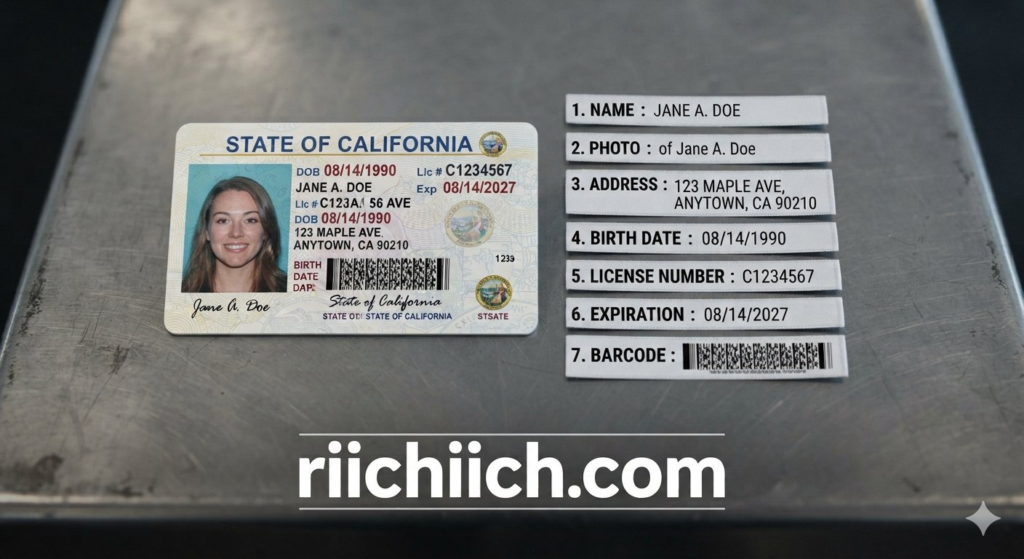
Front and Back Images of Driver’s Licenses
One of the most significant reported exposures was actual digital imagery of driver’s licenses.
Nexus reportedly offered images showing both the front and back of licenses belonging to people in the United States and Canada.
That makes this potentially more serious than a conventional database leak containing only text fields.
The front of a driver’s license can reveal multiple pieces of identifying information in one place, while the back may contain a machine-readable barcode encoding information from the credential. Together, these images can potentially provide criminals with a much more complete representation of someone’s government-issued identity document.
That information could potentially assist with identity impersonation, fraudulent verification attempts, targeted scams, or attempts to create convincing fake identification.
It does not mean every person whose information appears in Nexus has experienced identity theft. Exposure and actual misuse are two different things.
Infrared and Ultraviolet Driver’s License Images
One of the more unusual discoveries in the 153 million driver’s license data breach was the reported presence of infrared and ultraviolet images.
These aren’t photographs most consumers would ever take of their own driver’s license.
Identity-verification systems can use specialized imaging to examine security features embedded in government-issued documents. Krebs reported finding standard, infrared, and ultraviolet versions of licenses within the Nexus service.
The presence of those specialized images became one of the clues suggesting that at least some records may have originated from technology used for professional ID authentication rather than from ordinary photographs collected individually from victims.
Driver’s License Barcode Data
Some records reportedly included barcode information from the driver’s licenses.
That’s important because the barcode on the back of a driver’s license isn’t simply decorative. It is designed to allow compatible systems to read information associated with the credential electronically.
Having a complete digital representation of an ID—including both sides and associated barcode information—could potentially make identity impersonation more convincing than having someone’s name and address alone.
For consumers, this reinforces an important point: protecting a driver’s license from identity theft means thinking beyond the physical card itself.
Scan Dates and Timestamps
Another potentially sensitive element involved timestamps associated with driver’s-license scans.
These timestamps became important to the investigation because Krebs was able to ask people whose licenses appeared in Nexus where they remembered presenting their IDs around particular dates. Those comparisons helped investigators trace some records back toward identity-verification activity.
A timestamp may not seem as sensitive as a driver’s-license number, but metadata can provide context about when an identity document was captured or processed.
That context can become particularly useful when investigators are trying to determine where exposed information originated.
Were Other Types of Identification Reportedly Exposed?
Yes.
The Nexus collection wasn’t reportedly limited to driver’s licenses.
The service claimed to possess more than 10 million identification-card records, more than 3 million travel or international identity documents, and at least 579,000 medical-card records, in addition to its claimed 153 million driver’s-license records.
Some records reportedly included customer photographs where available, while other entries carried labels associated with different document categories.
These additional categories are another reason investigators are working to determine exactly where the information originated and whether the collection came from one source or potentially multiple sources.
Were Social Security Numbers or Credit Card Numbers Exposed?
There is currently no reliable public evidence establishing that Social Security numbers, passwords, bank-account credentials, or payment-card numbers were included across the reported Nexus driver’s-license collection.
That distinction matters.
We should not assume that because driver’s licenses were reportedly exposed, every other piece of sensitive information associated with those individuals was also compromised.
At the same time, a driver’s-license scan already contains enough identifying information to create legitimate identity-theft concerns.
What Has IDScan.net Said About the Information Involved?
This story has developed since Nexus was first discovered.
IDScan.net announced on September 4 that an unauthorized third party may have accessed or copied certain customer information stored within accounts on its cloud platform. The company said the potentially affected information may include full names and driver’s-license or other government-issued identification numbers.
IDScan.net said it is conducting a comprehensive review to identify potentially affected individuals and intends to provide notices and instructions for enrolling in free credit monitoring services to those it identifies. The company also said it had found no evidence of ongoing unauthorized access at the time of its announcement.
Importantly, IDScan.net’s announcement still does not establish that every record advertised by Nexus came from its systems or that 153 million unique individuals were affected.
Those questions remain under investigation.
Why Is This Information Valuable to Identity Thieves?
Think about what criminals normally need to impersonate someone.
They need enough accurate information to convince another person—or an automated verification system—that they are the victim.
A driver’s license can bundle several pieces of that identity together:
Name + photograph + address + birth date + driver’s-license number + physical descriptors + barcode information.
A high-quality front-and-back digital scan potentially makes that information even more useful.
Criminals could potentially use exposed identity information for targeted phishing, impersonation attempts, fraudulent account applications, fake identification, social-engineering attacks, or attempts to bypass identity-verification procedures.
This doesn’t mean every attack would succeed. Modern verification systems can use additional signals beyond a driver’s-license image. But the more authentic information criminals possess, the more convincing some fraud attempts can become.
What Should You Do If This Type of Information Is Exposed?
If you eventually receive confirmation that your information was involved in the 153 million driver’s license data breach, don’t focus only on replacing the physical card.
Start monitoring the identity surrounding the license.
Review your credit reports for accounts you don’t recognize, watch financial accounts for unusual activity, consider freezing your credit with all three major credit bureaus, strengthen authentication on important accounts, and be suspicious of unexpected communications that already know details such as your name, address, birth date, or driver’s-license information.
Consumers who want additional monitoring may also consider an identity theft protection service. Depending on the provider and plan, these services may monitor certain credit, identity, financial, or dark-web signals and provide alerts or recovery assistance when suspicious activity is detected.
Identity theft protection cannot pull a copied driver’s-license image back from the dark web. Its potential buyer value after an exposure like this is detection and response—helping you watch for signs that exposed personal information is actually being used.
The major concern surrounding the 153 million driver’s license data breach is therefore not simply the enormous number being reported. It is the depth of information contained in some of the records. Front-and-back driver’s-license images, barcode information, specialized authentication images, and scan metadata can provide a much richer identity profile than a basic list of names and license numbers.
Why Are Driver’s License Scans So Valuable to Identity Thieves?
A driver’s license scan can be far more valuable to an identity thief than a driver’s-license number by itself because it combines multiple pieces of verified personal information into one government-issued credential. A scan may reveal a person’s full name, photograph, date of birth, address, driver’s-license number, expiration date, physical descriptors, and information encoded in the barcode.
That is one reason the 153 million driver’s license data breach deserves attention. If criminals obtain high-quality images of legitimate identification documents, they potentially have a much more complete identity profile to work with than they would get from a simple spreadsheet containing names and addresses.
The Federal Trade Commission specifically warns that an identity thief could attempt to impersonate someone using their driver’s-license information.
A Driver’s License Is Designed to Prove Who You Are
This is what makes a driver’s license different from many other pieces of exposed personal information.
A driver’s license isn’t simply a card containing your information. It is a government-issued identity credential specifically designed to help establish that you are who you claim to be.
The American Association of Motor Vehicle Administrators (AAMVA) notes that driver’s licenses and state-issued identification cards are regularly used as proof of identity. AAMVA even operates a Driver’s License Data Verification service that allows approved government and commercial organizations to verify information from an identification document against data from the issuing motor-vehicle agency.
That makes an authentic driver’s-license scan potentially useful to criminals attempting identity impersonation.
Think about the difference:
A stolen address tells a criminal where you live.
A stolen birth date tells them when you were born.
A stolen photograph shows them what you look like.
A stolen driver’s-license number gives them an identifier associated with a government-issued credential.
A driver’s-license scan can potentially put several of those pieces together.
The Barcode Can Contain Machine-Readable Identity Information
The barcode on the back of many North American driver’s licenses is another reason a complete front-and-back scan can be sensitive.
AAMVA’s standards specify information used within driver’s-license and ID-card barcodes, including an issuer identification number that identifies the issuing jurisdiction.
Businesses routinely use scanners and verification technology to electronically read information from identification documents.
That means a criminal possessing both sides of a driver’s license may potentially have access not only to what a person can visually read from the card but also to machine-readable credential information.
Driver’s License Scans Can Make Impersonation More Convincing
Identity theft often depends on convincing another person or system that the criminal is actually the victim.
A high-quality driver’s-license image can potentially make that deception easier.
For example, criminals could attempt to use stolen identity information in fraudulent account applications, targeted social-engineering attacks, account-recovery attempts, or other situations where identity information is requested.
This does not mean possessing a driver’s-license scan automatically allows a criminal to pass modern identity verification. Many organizations use additional security controls, document-authentication technology, database verification, facial matching, multi-factor authentication, or other fraud-detection signals.
In fact, AAMVA maintains verification systems specifically intended to help organizations validate identity information and combat fraudulent use of identity documents.
But having accurate information from a real credential can potentially give an identity thief a stronger starting point than fabricated information would.
A Driver’s License Scan Can Make Targeted Scams More Believable
Not every criminal needs to create a fake ID to benefit from exposed driver’s-license information.
Imagine receiving an unexpected phone call from someone who already knows your:
Full name.
Home address.
Date of birth.
Driver’s-license number.
They could potentially use those details to make a fraudulent communication appear more legitimate.
That is why people concerned about the 153 million driver’s license data breach should be especially skeptical of unexpected calls, texts, or emails claiming to come from a DMV, financial institution, insurance company, identity-verification service, or law-enforcement organization.
The fact that someone knows accurate personal information about you does not prove that the person contacting you is legitimate.
Driver’s License Information Is Harder to Change Than a Password
There is another major difference between a compromised driver’s license and a compromised online account.
You can usually change a password immediately.
You can cancel a compromised credit card and receive another card number.
You can replace certain account credentials.
But much of the information appearing on a driver’s license isn’t easily changed.
Your date of birth doesn’t change.
Your face doesn’t suddenly change.
Your legal name generally remains the same unless you formally change it.
Your home address may remain the same for years.
Even obtaining a replacement driver’s license does not necessarily mean every underlying identity element associated with the original credential disappears.
That can make government-issued identity information particularly valuable for long-term identity fraud.
Why a Digital Scan Creates a Different Risk Than Losing the Physical Card
If you lose your wallet, you eventually notice that your driver’s license is missing.
A digital copy creates a different problem.
You could still be carrying your physical driver’s license every day while an unauthorized copy exists somewhere else.
The original remains in your wallet.
The copy can potentially be duplicated again.
And you may have no obvious indication that anything happened until suspicious activity appears.
This is an important lesson from the 153 million driver’s license data breach: physical possession of your driver’s license doesn’t necessarily tell you whether a digital representation of that credential has been exposed elsewhere.
Criminals Can Combine Driver’s License Data With Other Breached Information
A driver’s-license scan can become even more concerning when combined with information from other data breaches.
A criminal might obtain one set of information from one exposure and different information from another. Combining those pieces can potentially create a more complete profile of a victim.
For example:
Driver’s-license information + exposed email address + compromised phone number + leaked password
could provide considerably more opportunities for impersonation and targeted fraud than any one piece of information by itself.
This is why protecting yourself after a driver’s-license exposure shouldn’t focus exclusively on the driver’s license.
You need to protect the identity connected to it.
What Should You Monitor After Driver’s License Information Is Exposed?
If you know—or later learn—that your driver’s-license information was compromised, the FTC recommends contacting your motor-vehicle agency. Depending on the state and circumstances, the agency may be able to flag the license number or recommend obtaining a duplicate. The FTC also recommends checking, freezing, and monitoring your credit following exposure of driver’s-license information.
Watch for unfamiliar credit accounts, inquiries you don’t recognize, unexpected account-verification messages, suspicious financial activity, or communications containing personal information that someone shouldn’t have.
If you discover actual identity theft, the FTC’s IdentityTheft.gov service can generate a personalized recovery plan and an FTC Identity Theft Report.
Is Identity Theft Protection Worth Considering After a Driver’s License Exposure?
For consumers worried about the 153 million driver’s license data breach, an identity theft protection service can be worth considering if you want more monitoring than you’re comfortable managing yourself.
Depending on the provider and plan, identity theft protection may monitor certain credit activity, identity information, financial accounts, dark-web findings, or new-account activity. Some plans also include alerts and identity-recovery assistance.
The important limitation is that identity theft protection cannot make an exposed driver’s-license scan disappear.
Its value is primarily in helping you monitor for potential misuse, receive alerts, and get assistance if identity theft occurs.
Free protections remain important as well. The FTC recommends checking your credit reports and freezing your credit when personal information has been exposed; a credit freeze can make it harder for someone to use your information to open certain new accounts.
Ultimately, driver’s-license scans are valuable to identity thieves because they can provide multiple pieces of credible identity information in a single package. The reported presence of digital license images in the 153 million driver’s license data breach therefore raises a different concern than a breach containing only email addresses or passwords: criminals may potentially have copies of documents specifically designed to help prove a person’s identity.
That doesn’t guarantee identity theft will occur. But it does make early detection, credit protection, account security, and identity monitoring especially important if your driver’s-license information is ever confirmed to have been exposed.
Were Commercial Driver’s Licenses (CDLs) Reportedly Included?
Yes—but this part of the 153 million driver’s license data breach requires an important qualification.
Cybersecurity journalist Brian Krebs reported seeing records inside the Nexus database carrying labels such as “CDL” and “ECDL.” FreightWaves independently reported those findings after speaking with Krebs and other security researchers. However, investigators have not confirmed how many commercial driver’s licenses were included, what the CDL/ECDL labels specifically represented inside Nexus, or whether any commercial drivers have experienced fraud because of the exposure.
That means it would be premature to say that millions of truck drivers had their CDLs exposed. What we can accurately say is that CDL-labeled records reportedly appeared within the massive Nexus collection.
What Did Researchers Find?
While examining Nexus, Krebs reportedly encountered records marked “CDL” and “ECDL” while performing unrelated searches.
He told FreightWaves that there were “quite a few” such entries appearing in random search results. Importantly, the CDL-labeled files did not appear noticeably different from the other driver’s-license records in the database.
Some jurisdictions use terminology such as ECDL for an enhanced commercial driver’s license, but researchers have not established what Nexus itself meant by the “ECDL” designation.
There is also no confirmed number showing how many of Nexus’ claimed 153 million driver’s-license records were associated with commercial drivers.
So we currently know:
CDL/ECDL labels appeared → the exact meaning is uncertain → the number of CDL records is unknown → no affected trucking company has been publicly identified.
That distinction is important when discussing the 153 million driver’s license data breach because CDL holders shouldn’t assume that their information was included simply because they hold a commercial license.
Why Would Exposed CDL Scans Be Particularly Concerning?
A commercial driver’s license is more than an everyday form of identification. For professional drivers, it also demonstrates that the person is licensed to operate specific classes of commercial vehicles.
Within the transportation industry, driver identity can become part of the process used to determine who is authorized to pick up valuable freight.
That creates a potential security problem.
If a criminal obtained an authentic digital image of a commercial driver’s license and combined it with other stolen information about a legitimate driver or carrier, that information could potentially make an impersonation attempt more convincing.
FreightWaves noted that criminals involved in cargo theft already use false credentials to impersonate legitimate drivers. Security researchers therefore warned that access to authentic CDL images could make certain fraudulent identity checks harder to detect.
Has Nexus Been Connected to Cargo Theft?
No.
This is another distinction worth emphasizing.
There is currently no evidence connecting the CDL-labeled Nexus records to cargo theft, fraudulent freight pickups, or another transportation crime. Authorities have not identified a transportation company or commercial driver affected by the reported exposure, and researchers did not find warehouse names, shipment histories, or freight-transaction details within the CDL records they examined.
The FBI has confirmed that it is investigating the broader incident, but it has released few details because the investigation remains ongoing. Reuters also reported that the ultimate source of the Nexus driver’s-license collection had not been established.
Therefore, the risk to trucking should currently be described as potential, not as confirmed freight fraud resulting from the breach.
Why Could a Stolen CDL Be Useful for Driver Impersonation?
Consider how a fraudulent freight pickup can work.
A criminal doesn’t necessarily need to invent an entirely fake trucking company. Another strategy is attempting to impersonate a legitimate driver or carrier.
An authentic CDL scan could potentially provide useful information for making that impersonation more believable.
Security researchers interviewed by FreightWaves warned that an authentic credential might successfully validate as a real document without necessarily proving that the person presenting it is the legitimate CDL holder.
That’s an important difference:
Is this a legitimate CDL?
and
Is this actually the person who owns that CDL?
are two separate security questions.
A verification system that answers only the first question could potentially miss an impostor using information taken from a real credential.
Does This Mean Truck Drivers Should Replace Their CDLs?
Not automatically.
There is currently no evidence showing that every CDL holder—or even a particular large group of commercial drivers—was affected by the 153 million driver’s license data breach.
Researchers haven’t established how many CDL records appeared in Nexus, and authorities haven’t released an affected-driver list.
Replacing your commercial driver’s license simply because you read about Nexus may therefore be unnecessary.
If you eventually receive a breach notification stating that your CDL or driver’s-license information was actually compromised, contact your state driver’s-licensing agency and follow its instructions. Procedures for compromised license information can vary by state.
Also remember that replacing the physical card does not automatically eliminate digital copies that may already exist.
What Should CDL Holders Watch For?
Commercial drivers can take the same basic precautions recommended to other consumers while paying additional attention to driver-identity impersonation.
Watch for unexpected credit inquiries, unfamiliar accounts, suspicious calls requesting identity verification, unexpected requests for copies of your CDL, communications supposedly coming from a carrier or broker that you cannot independently verify, or notifications involving accounts or services you never requested.
Be especially cautious about sending photographs of the front and back of your CDL through email or text unless you know exactly who is requesting them and why.
If you’re asked to upload a CDL for employment, onboarding, insurance, credentialing, or another legitimate business purpose, verify that you’re using the organization’s genuine submission system rather than a link sent through an unexpected message.
Should CDL Holders Consider Identity Theft Protection?
CDL holders concerned about the 153 million driver’s license data breach may consider an identity theft protection service if they want additional monitoring beyond what they can reasonably manage themselves.
Depending on the provider and plan, identity theft protection may monitor certain credit activity, identity information, dark-web findings, financial accounts, or other signals associated with identity misuse. Some services also provide identity-recovery assistance if fraud occurs.
That can be useful for someone whose livelihood depends partly on a government-issued professional credential.
But identity theft protection has an important limitation: it cannot retrieve a CDL scan that has already been copied or guarantee that someone will never attempt to misuse it.
Its value is primarily in monitoring, alerts, and recovery assistance.
Free protections should still form part of your defense. Consumers can review their credit reports and place credit freezes when appropriate.
What Does This Mean for the Trucking Industry?
The reported CDL records add another dimension to the 153 million driver’s license data breach because identity verification is already an important part of freight security.
Freight facilities can strengthen security by verifying not only that a CDL is genuine, but that the person presenting the credential matches the approved driver, carrier, and assigned shipment. FreightWaves reported that security researchers specifically recommended stronger person-to-credential verification rather than relying solely on a document scan.
For now, CDL holders shouldn’t panic or assume their licenses were exposed. The available evidence shows that CDL and ECDL labels reportedly appeared within Nexus, but investigators have not established how many commercial licenses were involved, what every label represented, or whether those records have been used for transportation fraud.
The CDL angle nevertheless makes the 153 million driver’s license data breach potentially more significant than an ordinary consumer identity exposure. If investigators eventually confirm that substantial numbers of commercial driver’s-license scans were compromised, the consequences could extend beyond individual identity theft into driver impersonation and transportation-security risks—which makes monitoring both your personal identity and professional credentials especially important.
How Do You Know If Your Driver’s License Was Exposed?
Right now, there is no confirmed public lookup tool that allows you to enter your name or driver’s-license number and determine whether your license appeared in the reported Nexus collection. That means most consumers cannot immediately check whether they were personally affected by the 153 million driver’s license data breach.
However, that does not mean you have no way to find out. IDScan.net has now said it is reviewing potentially affected information to identify impacted individuals and plans to send notices to people it identifies. The company also said those notices will include instructions for enrolling in free credit monitoring services.
Until those notifications and additional investigative findings become available, there are several clues you can watch for.
1. Watch for an Official Data Breach Notification
The strongest indication that your driver’s-license information was involved would be a legitimate notification from IDScan.net or another organization that determines your information was affected.
On September 4, IDScan.net announced that an unauthorized third party may have accessed or copied certain customer information stored within customer accounts on its cloud platform. According to the company, affected information may include full names and driver’s-license or other government-issued identification numbers.
IDScan.net said it is conducting a comprehensive review to identify potentially impacted individuals.
If you’re identified, the company says it intends to provide a notice explaining the incident and how to enroll in free credit monitoring and identity protection services.
That makes an official notification one of the clearest ways you may eventually learn that your information was involved.
But don’t assume every email mentioning the 153 million driver’s license data breach is legitimate. A major breach can also give scammers an opportunity to send convincing fake breach notifications.
Never provide additional sensitive information simply because an unexpected email says your driver’s license was exposed.
2. Think About Where You’ve Had Your Driver’s License Scanned
Another clue is whether your driver’s license has previously been scanned or uploaded as part of an identity-verification process.
IDScan.net provides technology that businesses can use behind the scenes to scan and verify government-issued identification. Because the provider may operate in the background, you might not recognize the IDScan.net name even if its technology was involved in a transaction.
Krebs was able to connect some Nexus records to real-world transactions by comparing timestamps associated with driver’s-license scans with occasions when people remembered presenting their IDs. Those findings were part of the evidence pointing toward IDScan.net.
Think back to situations where a business may have:
- Scanned your physical driver’s license.
- Photographed the front and back of your license.
- Asked you to upload your ID online.
- Used your license for age or identity verification.
- Asked you to complete a remote identity-verification process.
Having your driver’s license scanned does not mean your information was exposed. Even knowing that a business used IDScan.net would not prove that your particular record was involved.
It simply gives you another clue to investigate.
3. Check Old Receipts, Emails and Privacy Notices
If you’re wondering, “Was my driver’s license exposed?”, look through records from situations where you remember having your ID scanned.
Search old emails, receipts, rental documents, consent screens, privacy notices, and account records for terms such as:
IDScan.net
VeriScan
DIVE
ID verification
Those records may help you determine which company processed your driver’s license.
You can also contact the business that scanned your ID and ask which identity-verification provider it used on the approximate date of your transaction.
If you do this, don’t email another unredacted copy of your driver’s license simply to ask the question.
Instead, provide enough information for the business to locate the transaction without unnecessarily sending more sensitive identity information.
4. Look for Signs Someone Is Using Your Identity
Sometimes the first indication of exposure isn’t a breach notification.
It’s fraud.
Watch for unfamiliar credit inquiries, accounts you didn’t open, unexpected bills, changes to existing accounts, suspicious identity-verification messages, or communications concerning services you never requested.
An unusual event doesn’t automatically prove your information came from the 153 million driver’s license data breach. Your personal information could have been exposed through another breach, data broker, phishing attack, stolen mail, or another source.
But unexplained activity deserves investigation.
The Federal Trade Commission recommends reviewing your credit reports and taking additional steps if you discover identity theft. You can also place a free credit freeze, which restricts access to your credit report and can make it harder for criminals to open certain new accounts in your name.
5. Don’t Use Random “153 Million Driver’s License Breach Checkers”
This could become increasingly important as awareness of the incident grows.
There is currently no confirmed public Nexus or IDScan.net affected-person lookup tool that allows you to determine conclusively whether your driver’s license was part of the reported collection.
That creates an obvious opportunity for scammers.
Imagine seeing an advertisement saying:
“153 MILLION LICENSES LEAKED — ENTER YOUR DRIVER’S LICENSE NUMBER TO SEE IF YOU’RE A VICTIM.”
That may look useful, but entering sensitive information into an unverified website could expose even more personal data.
Be particularly suspicious if a breach-checking website asks you to provide your Social Security number, upload the front and back of your driver’s license, enter banking information, pay a fee, or provide account passwords.
6. An IDScan.net Connection Still Doesn’t Confirm Exposure
Suppose you discover that a business scanned your driver’s license using IDScan.net.
That’s useful information—but it still doesn’t prove that your license appeared in Nexus.
The investigation has not established that every driver’s license ever processed through IDScan.net was compromised. It also has not established that Nexus’s claimed 153 million driver’s-license records represent 153 million unique people.
IDScan.net’s latest statement says potentially impacted records are those that entered its system before September 1, 2026, but the company is still conducting its review to determine which individuals were affected.
So there are three very different statements:
“A business scanned my driver’s license.”
“The business used IDScan.net.”
“My driver’s-license information was compromised.”
Only the last statement confirms exposure.
7. Take Protective Steps While You Wait for Confirmation
You don’t necessarily have to determine with certainty that your driver’s license was exposed before improving your identity security.
If you’re concerned about the 153 million driver’s license data breach, start with the free protections available to you.
Review your credit reports regularly. Consider freezing your credit with all three nationwide credit bureaus. Monitor financial accounts. Strengthen passwords and multi-factor authentication on important accounts. Be suspicious of unexpected communications containing accurate personal information about you.
The FTC says credit freezes are free to place and remove and recommends reviewing credit reports frequently to spot potential fraud.
If you receive a legitimate IDScan.net breach notification offering free monitoring, review the instructions and verify that you’re enrolling through an official channel before entering personal information.
Should You Consider Identity Theft Protection While You Wait?
If you want more extensive monitoring, this is also where an identity theft protection service may be worth considering.
Depending on the service and plan, identity theft protection can monitor certain credit activity, identity information, financial activity, dark-web findings, or other warning signs. Some services also include recovery specialists who can assist if identity theft occurs.
That can be particularly useful when you’re worried about a driver’s license data breach 2026 incident but don’t yet know whether your specific record was involved.
However, paid identity theft protection should supplement—not replace—free protections such as credit freezes, credit-report reviews, strong account security, and legitimate free monitoring offered after a breach.
It also cannot tell you with certainty that your driver’s license was inside Nexus unless the provider has reliable information specifically linking your credential to that exposure.
The Bottom Line: Can You Check Your Driver’s License Right Now?
Not conclusively.
As of September 7, 2026, there is no confirmed public tool that lets everyone search the reported Nexus database to determine whether their driver’s license was exposed. IDScan.net says it is reviewing potentially affected records, identifying impacted individuals, and preparing notifications with instructions for free credit monitoring.
Until that process provides more answers, the best approach is to watch for a legitimate notification, investigate where your driver’s license may have been scanned, monitor your identity for suspicious activity, and strengthen your protections now.
Most importantly, don’t give additional sensitive information to an unknown website simply because it promises to tell you whether you were part of the 153 million driver’s license data breach.
When you don’t yet know whether your information was exposed, monitoring and early detection become your next line of defense.
What Can Criminals Do With Your Driver’s License Information?
If criminals obtain your driver’s-license information, they may be able to use it for much more than simply creating a fake ID. A driver’s license can contain several pieces of verified personal information in one place—including your full name, photograph, date of birth, home address, driver’s-license number, physical descriptors, and potentially machine-readable information from the back of the card.
That makes the reported 153 million driver’s license data breach particularly concerning. Nexus reportedly offered digital driver’s-license scans rather than just a database of license numbers, and some records included front-and-back images and additional authentication-related imagery.
Criminals could potentially combine that information with data from previous breaches, data brokers, phishing attacks, or stolen account credentials to build a much more complete identity profile.
1. Attempt to Open Accounts in Your Name
One of the biggest concerns is new-account fraud.
Identity thieves who collect enough personal information may attempt to apply for credit cards, loans, utility accounts, wireless accounts, or other services while pretending to be someone else.
The Federal Trade Commission warns that identity thieves can use stolen personal information to obtain new credit cards, establish utility accounts, make purchases, and commit other forms of fraud.
A driver’s-license scan alone won’t necessarily be enough to open a financial account. Banks and other organizations may require additional verification, such as a Social Security number, credit check, facial verification, one-time security code, or other authentication.
But an authentic driver’s-license image could potentially provide another piece of the identity puzzle.
This is one reason a credit freeze can be valuable following serious personal-information exposure. A freeze restricts access to your credit file and can make it harder for an identity thief to open certain new credit accounts.
2. Create More Convincing Fake Identification
A high-quality image of a legitimate driver’s license could potentially help criminals produce counterfeit identification or manipulate a digital copy of the document.
Instead of inventing every detail, a criminal may already have information taken from a genuine credential.
The danger can increase if the criminal has both the front and back of the driver’s license, because that potentially provides visual information from the entire credential.
The Nexus service reportedly contained digital driver’s-license scans belonging to real people in the United States and Canada. Krebs verified records with multiple individuals and even found his own Virginia driver’s license being used as a sample to advertise the service.
3. Impersonate You During Identity Verification
Another concern is identity-verification fraud.
Many businesses ask customers to provide identification when establishing accounts, recovering access, completing certain transactions, or proving their identity.
If a criminal possesses a digital copy of your driver’s license, they may attempt to present that document as evidence that they are you.
That doesn’t mean the attempt will succeed.
Modern identity-verification systems may examine document security features, compare facial images, check databases, analyze devices, require additional credentials, or use other fraud-detection techniques.
But criminals possessing authentic personal information may be able to make some impersonation attempts appear more believable.
This is particularly important when the stolen information includes a photograph, address, date of birth, and driver’s-license number rather than just one isolated data point.
4. Launch Highly Personalized Phishing Scams
Criminals don’t necessarily need to open an account with your driver’s license to profit from the information.
They can also use it to make phishing and social-engineering attacks more convincing.
Imagine receiving a phone call from someone claiming to represent your state’s DMV.
The caller already knows your:
Full name.
Home address.
Date of birth.
Driver’s-license number.
Then the caller says:
“There’s a problem with your driver’s license. We just need your Social Security number and payment information to fix it.”
Because the caller knows information that feels private, the scam may appear legitimate.
That’s why people concerned about the 153 million driver’s license data breach should remember an important rule:
Knowing your personal information does not prove someone is legitimate.
The FTC recommends refusing to provide personal information in response to unexpected calls, emails, or text messages and using strong passwords and multi-factor authentication to strengthen online accounts.
5. Attempt to Take Over Existing Accounts
Driver’s-license information could potentially be useful during an account takeover attempt, particularly when combined with other stolen data.
Suppose a criminal already has an exposed email address, phone number, password, and driver’s-license image from different breaches.
They may attempt to convince a company’s customer-service department that they’ve lost access to an account and need it recovered.
The driver’s license could become one piece of the evidence they present.
This illustrates why separate data breaches can become more dangerous when criminals combine information from multiple sources.
A driver’s-license exposure shouldn’t therefore be viewed in isolation. Protect the email accounts, phone numbers, financial accounts, and other digital identities connected to you as well.
6. Commit Financial Identity Theft
Stolen identity information may ultimately contribute to broader financial fraud.
The FTC warns that identity thieves can potentially open accounts, make unauthorized purchases, establish services, and create debts in someone else’s name.
Again, a driver’s license by itself does not automatically give someone access to your bank account.
The concern is what happens when driver’s-license information is combined with other compromised information.
7. Use Your Identity During an Encounter With Police
One of the more serious forms of identity theft is criminal identity theft.
The FTC warns that, in extreme cases, an identity thief may provide someone else’s name to law enforcement during an arrest.
That can create serious problems for the victim if incorrect information becomes associated with their identity.
If someone is arrested while using your personal information, the FTC recommends contacting the law-enforcement agency involved, documenting the impersonation, and working to correct the records.
This type of identity theft is less common than everyday credit or account fraud, but it demonstrates why government-issued identity information deserves additional protection.
8. Combine Your License With Information From Other Breaches
This may be one of the most overlooked risks.
Cybercriminals don’t have to obtain every piece of your identity from the same data breach.
Imagine your driver’s-license scan appears in one exposure.
Your email address and phone number appear in another.
An old password appears in another.
Your Social Security number appears in a completely separate breach.
Criminals can potentially assemble those fragments into a more complete identity profile.
This is why simply asking whether your driver’s-license number has been misused may not be enough. You also need to watch the accounts and personal information surrounding your identity.
9. Sell or Trade Your Identity Information
The reported Nexus operation demonstrates another potential use of stolen driver’s-license information: selling access to it.
Nexus was advertised on a Russian-language cybercrime forum and claimed to contain more than 153 million driver’s-license records, along with millions of other identification documents.
That means the person who originally obtained a driver’s-license scan doesn’t necessarily have to commit fraud personally.
Stolen identity information can potentially pass between different criminals.
One party obtains it.
Another organizes or sells it.
Another purchases it.
Someone else may eventually attempt to use it.
This is also why the disappearance of a dark-web service doesn’t automatically mean the underlying data has disappeared. Copies could potentially have been downloaded or redistributed before a service went offline, although investigators have not established how widely the Nexus records were copied.
What Should You Do If Criminals Have Your Driver’s License Information?
If you know your driver’s-license information has been compromised, focus on making that information harder to use successfully.
Contact your state’s motor-vehicle agency and ask what steps it recommends for compromised driver’s-license information. The FTC notes that a state may flag a driver’s-license number or recommend obtaining a replacement, depending on the circumstances.
You should also review your credit reports, consider freezing your credit with all three major credit bureaus, monitor financial accounts, strengthen important online accounts with multi-factor authentication, and investigate unfamiliar accounts or credit inquiries immediately.
Can Identity Theft Protection Help?
For consumers concerned about the 153 million driver’s license data breach, this is where an identity theft protection service may provide additional value.
The FTC explains that identity-monitoring services can watch certain databases, credit activity, public records, and websites where stolen personal information may appear. Recovery services may also provide specialists who help consumers deal with creditors and other institutions after identity theft occurs.
The Consumer Financial Protection Bureau (CFPB) similarly notes that identity-monitoring services vary considerably in price and features, so consumers should understand exactly what a service monitors before paying for it.
An identity theft protection service cannot erase an exposed driver’s-license scan, guarantee that fraud will never happen, or replace a credit freeze.
Its buyer value is different: monitoring, alerts, and recovery assistance.
If you’re comparing identity theft protection after a driver’s-license data breach, look closely at whether a plan offers three-bureau credit monitoring, identity monitoring, dark-web monitoring, new-account alerts, restoration assistance, and clearly explained identity-theft insurance coverage.
The central concern surrounding the 153 million driver’s license data breach isn’t that possessing a driver’s-license scan automatically gives a criminal complete control over someone’s identity. It doesn’t.
The danger is that an authentic government-issued credential can give criminals credible information they may combine with other stolen data to impersonate you more effectively.
That’s why credit protection, account security, identity monitoring, and quick action when something looks wrong are so important. The goal isn’t simply to protect the driver’s license in your wallet—it’s to make the identity behind that license much harder to misuse.
What Should You Do After the 153 Million Driver’s License Data Breach?
If you’re concerned about the 153 million driver’s license data breach, you don’t need to wait until every detail of the investigation is resolved before protecting yourself. Nexus claimed access to more than 153 million U.S. and Canadian driver’s-license records, while the FBI has confirmed it is investigating the incident. IDScan.net has also acknowledged a security incident and said an unauthorized third party may have accessed or copied certain customer information stored in its cloud.
That still does not mean your driver’s license was definitely exposed. But because driver’s-license information can potentially be combined with other stolen personal data for identity fraud, taking several preventative steps now can reduce your risk.
1. Don’t Panic—and Don’t Assume You’re a Victim
The first thing to understand is the difference between reported exposure and confirmed personal exposure.
Nexus claimed more than 153 million driver’s-license records, but authorities have not confirmed that 153 million unique people were affected. The FBI has confirmed its investigation but has not publicly validated the advertised victim count.
So don’t immediately replace every identity document or assume criminals are already using your information.
Instead, treat the incident as a reason to strengthen your defenses and watch for warning signs.
2. Watch for a Legitimate Breach Notification
IDScan.net said it is reviewing potentially affected information to identify individuals whose information may have been involved. The company says those individuals will receive notifications that include instructions for enrolling in free credit monitoring services.
If you receive such a notification, verify it through an official source before clicking links or entering personal information.
This is especially important because scammers frequently take advantage of major data-breach headlines.
Be suspicious of unexpected messages telling you:
“Your driver’s license was found in the 153 million-record breach—click here immediately.”
Don’t upload another driver’s-license image, provide your Social Security number, disclose banking information, or pay a fee merely to find out whether you were affected.
3. Freeze Your Credit
A credit freeze is one of the strongest free protections you can put in place after a serious personal-data exposure.
The FTC says a credit freeze restricts access to your credit report, making it harder for identity thieves to open new credit accounts in your name. Freezes are free to place and remove, don’t affect your credit score, and remain in effect until you lift them.
You need to place the freeze separately with Equifax, Experian, and TransUnion.
This is particularly useful if you’re concerned about driver’s license identity theft, because criminals may attempt to combine driver’s-license information with personal information obtained elsewhere.
Driver’s-license information is only one piece criminals may use, which is why understanding How Identity Theft Happens can help you recognize how information from separate breaches may be combined to impersonate you.
A credit freeze doesn’t prevent every form of identity theft. For example, it doesn’t stop fraudulent charges against an existing account. That’s why you still need the next steps.
4. Review Your Credit Reports for Accounts You Don’t Recognize
Check your credit reports for signs that someone may already be using your identity.
Look specifically for new accounts you didn’t open, unfamiliar lenders, incorrect personal information, or credit activity you don’t recognize.
The FTC recommends regularly reviewing your credit reports because accounts you didn’t open can indicate identity theft.
Don’t check only once.
Information exposed in a data breach can potentially remain useful long after the original incident disappears from the news. Periodic monitoring gives you a better chance of identifying suspicious activity later.
5. Monitor Your Existing Financial Accounts
A credit freeze helps protect against certain new-account fraud, but it doesn’t stop criminals from attempting to misuse accounts you already have.
Watch your bank accounts, credit cards, payment accounts, insurance statements, and other financial services for activity you don’t recognize.
Pay attention even to small transactions.
Also enable transaction notifications when your financial institutions provide them. Receiving an immediate alert about an unexpected purchase can help you investigate suspicious activity faster.
6. Secure the Accounts Connected to Your Identity
A driver’s-license scan becomes potentially more dangerous when criminals combine it with information obtained from other breaches.
For example:
Driver’s license + email + phone number + compromised password
could potentially give an identity thief more opportunities than a driver’s-license image alone.
Use unique passwords for important accounts and enable multi-factor authentication wherever possible—especially for your primary email account, financial accounts, mobile-phone account, and password manager.
Your email deserves particular attention because criminals who gain control of it may be able to intercept password resets and security notifications.
7. Be Suspicious of Scammers Who Already Know Your Information
After a data breach, scammers may already know enough about you to sound convincing.
Someone who knows your name, address, birth date, or driver’s-license information might call pretending to represent a DMV, bank, insurance company, identity-verification provider, or government agency.
They may then ask for the one piece of information they don’t already have.
That’s why you shouldn’t use someone’s knowledge of your personal information as proof that the communication is legitimate.
If an organization contacts you unexpectedly, don’t use the phone number or link provided in the message. Independently locate the organization’s official contact information and verify the request yourself.
8. Contact Your State Licensing Agency if Exposure Is Confirmed
If you eventually receive confirmation that your driver’s-license information was compromised, contact the motor-vehicle agency that issued your license.
Ask specifically what procedures are available for a compromised driver’s-license number or identity document.
Don’t assume that simply ordering a replacement physical card solves the problem. Depending on your state’s procedures, a replacement card may not necessarily eliminate every underlying identifier associated with the exposed credential.
This is why the response to a driver’s-license data breach should involve identity protection, not simply replacing plastic.
9. Accept Legitimate Free Credit Monitoring if You’re Offered It
If IDScan.net confirms that you’re affected and offers free credit monitoring, consider taking advantage of it after verifying the enrollment instructions through legitimate channels.
The FTC specifically recommends considering free monitoring services offered by a company following a data breach.
But understand what credit monitoring does.
It can help alert you to certain changes in your credit file.
It does not prevent someone from possessing your driver’s-license image, and it doesn’t replace a credit freeze.
Think of monitoring as the alarm and a credit freeze as one of the locks.
10. Consider Broader Identity Theft Protection
If you want more extensive monitoring following the 153 million driver’s license data breach, you may also consider comparing identity theft protection services.
This is different from simply monitoring one credit report.
Depending on the provider and plan, an identity theft protection service may offer some combination of credit monitoring, dark-web monitoring, identity alerts, financial-account monitoring, Social Security number monitoring, new-account alerts, identity-recovery assistance, and identity-theft insurance.
That additional coverage may be worth paying for if you want someone else continuously watching multiple identity signals rather than handling everything manually.
However, don’t purchase a service simply because a frightening headline makes you feel like you have no other option.
Start with your free protections first.
Then compare paid identity theft protection based on the monitoring and recovery features you actually want.
11. Report Actual Identity Theft Immediately
Exposure doesn’t necessarily mean identity theft has occurred.
But if you discover someone actually using your information, act quickly.
The FTC’s IdentityTheft.gov service can help you report identity theft and create a personalized recovery plan.
Document everything you find, including suspicious accounts, transactions, emails, letters, credit inquiries, and conversations with companies.
Those records can become important while disputing fraudulent accounts and correcting your identity records.
12. Keep Monitoring Even After the Headlines Disappear
Don’t assume the risk ends when the 153 million driver’s license data breach disappears from the news.
Nexus reportedly went offline shortly after the story became public, but that doesn’t establish that copies of the driver’s-license records were destroyed or never downloaded elsewhere. Krebs’ investigation had already documented a functioning searchable service containing authentic driver’s-license records before it disappeared.
Stolen personal information can potentially be stored and reused later.
That’s why long-term habits matter: keep your credit protected, review your reports periodically, monitor important accounts, secure your email and phone accounts, and investigate suspicious identity activity instead of ignoring it.
The Most Important Steps to Take Right Now
If you’re wondering what to do after a driver’s license data breach, don’t make the mistake of thinking you have to purchase something immediately.
Start with the strongest free protections available to you: freeze your credit, review your credit reports, monitor existing accounts, strengthen account security, verify breach notifications, and watch for identity-theft warning signs. The FTC specifically recommends credit freezes, credit-report monitoring, and legitimate free monitoring services after personal information is exposed.
Then decide whether you want an identity theft protection service to provide additional monitoring, alerts, and recovery assistance.
The goal after the 153 million driver’s license data breach isn’t to panic over a number that investigators are still working to verify. It’s to make your exposed information much harder for someone to successfully use against you.
Should You Freeze Your Credit After the 153 Million Driver’s License Data Breach?
For most consumers concerned about the 153 million driver’s license data breach, freezing your credit is one of the strongest free precautions you can take, especially if you believe your driver’s-license information may have been exposed.
The Federal Trade Commission says a credit freeze makes it harder for identity thieves to open new credit accounts in your name. It is free to place, free to lift, does not affect your credit score, and can be used even if you have not experienced identity theft.
That protection is particularly relevant here because Nexus reportedly claimed possession of more than 153 million U.S. and Canadian driver’s-license records, including digital scans of government-issued IDs. The FBI is investigating the reported exposure, although the full scope and number of unique people affected remain unconfirmed.
What Does Freezing Your Credit Actually Do?
A credit freeze restricts access to your credit report.
When a lender receives an application for a new credit card, loan, or another credit-based account, it will often check the applicant’s credit report before approving the application.
If your credit is frozen, that access is restricted.
According to the FTC, while a freeze is in place, new credit accounts generally cannot be opened in your name—including by you—until the freeze is lifted.
That creates an additional obstacle for a criminal who may possess your driver’s-license information and attempts to combine it with personal information obtained from other data breaches.
Why Does a Credit Freeze Matter After a Driver’s License Data Breach?
A driver’s license alone doesn’t automatically give a criminal everything necessary to open a financial account.
The concern is driver’s license identity theft combined with other stolen information.
For example, a criminal could potentially obtain:
Driver’s-license scan + Social Security number + date of birth + address + phone number
from several different data sources.
They may then attempt to impersonate the victim and apply for credit.
A credit freeze targets one important part of that attack: the ability to open certain new credit accounts.
The FTC specifically says freezes are especially important when personal information has been exposed in a data breach or when an identity thief has already misused someone’s information.
Do You Need Proof That Your Driver’s License Was Exposed Before Freezing Your Credit?
No.
You don’t have to wait for IDScan.net, the FBI, or another organization to confirm that your specific driver’s license was involved in the 153 million driver’s license data breach.
The FTC says anyone can freeze their credit at any time and for any reason. You don’t have to prove that your identity has already been stolen.
That makes a credit freeze particularly useful during a developing breach investigation.
If you eventually discover that your information wasn’t involved, the freeze hasn’t harmed your credit score. You can leave it in place as a preventative measure or remove it whenever you choose.
Do You Have to Freeze All Three Credit Bureaus?
Yes, if you want your credit frozen across all three nationwide credit bureaus.
You need to place a separate freeze with:
Freezing your credit with one bureau does not automatically freeze it with the other two. The FTC specifically instructs consumers who want a credit freeze to contact all three.
Follow the FTC’s links to each credit bureau rather than clicking an unexpected link in an email, text, or advertisement claiming to help victims of the 153 million driver’s license data breach.
Does Freezing Your Credit Cost Money?
No.
Federal law allows consumers to place and lift credit freezes for free. The FTC also confirms that a freeze does not affect your credit score.
Be cautious if you encounter a website charging you simply to place a standard credit freeze.
You should not need to purchase credit monitoring, identity theft protection, or another paid product just to freeze your credit.
Can You Still Apply for Credit With a Freeze?
Yes.
A credit freeze isn’t permanent in the sense that you’re locked out of credit forever.
Suppose you want to finance a vehicle, apply for a mortgage, open a credit card, or complete another transaction requiring access to your credit report.
You can temporarily lift the freeze, allow the necessary credit check, and then freeze your credit again afterward.
The FTC notes that if you know which credit bureau a lender will use, you may only need to temporarily lift the freeze at that particular bureau.
What Doesn’t a Credit Freeze Protect You From?
This is extremely important.
A credit freeze is powerful, but it is not complete identity theft protection.
Freezing your credit does not erase an exposed driver’s-license scan. It doesn’t prevent someone from sending you phishing emails. It doesn’t stop every type of account takeover. It doesn’t automatically protect your bank account, email account, phone account, tax identity, medical identity, or existing credit cards.
And it doesn’t prevent criminals from simply possessing or attempting to redistribute stolen personal information.
The primary purpose of a freeze is much narrower:
Make it harder for someone to open certain new credit accounts in your name.
That’s why a credit freeze should be considered one layer of your identity-security strategy rather than the entire strategy.
Credit Freeze vs. Fraud Alert: What’s the Difference?
These protections are related, but they’re not the same.
A credit freeze restricts access to your credit report, creating a stronger barrier against new-account fraud.
A fraud alert still allows businesses to access your credit report but tells them to take additional steps to verify your identity before issuing new credit.
The FTC says an initial fraud alert is free, lasts one year, and can be placed by anyone who believes they are—or may be—affected by identity theft. Unlike a freeze, you only need to contact one of the three credit bureaus to place an initial fraud alert; that bureau must notify the other two.
You can also have a fraud alert while your credit is frozen.
For consumers particularly worried about their driver’s-license information being exposed, a freeze provides the more restrictive barrier against new credit being opened.
Should You Freeze Your Credit Even If Your Social Security Number Wasn’t Exposed?
It can still make sense.
There is currently no reliable evidence establishing that Social Security numbers were included throughout the reported Nexus driver’s-license collection.
But criminals don’t necessarily obtain every piece of someone’s identity from the same breach.
Information from a driver’s license could potentially be combined with a Social Security number, email address, phone number, password, or other personal information obtained elsewhere.
That is why the 153 million driver’s license data breach should be viewed as part of your overall identity-security picture rather than as an isolated driver’s-license problem.
A credit freeze reduces one important opportunity for criminals to profit from that combined information.
Should You Still Monitor Your Credit After Freezing It?
Absolutely.
A freeze helps prevent certain new accounts from being opened, but you should still review your credit reports for activity you don’t recognize.
The FTC specifically recommends checking credit reports for unfamiliar accounts because those can be warning signs of identity theft.
Continue watching your existing financial accounts as well.
A freeze isn’t designed to alert you every time suspicious activity occurs. It is primarily a preventative barrier.
Do You Still Need Identity Theft Protection if Your Credit Is Frozen?
Possibly—but the two protections serve different purposes.
A credit freeze is free and focused primarily on preventing certain new-credit fraud.
An identity theft protection service may provide broader monitoring, depending on the provider and plan. That can include credit monitoring, dark-web monitoring, identity alerts, financial-account monitoring, Social Security number monitoring, new-account alerts, and identity-recovery assistance.
For someone concerned about the 153 million driver’s license data breach, the combination can make sense:
Credit freeze = prevention against certain new-credit fraud
Identity monitoring = detection of certain suspicious activity
Identity recovery services = assistance if fraud actually occurs
But paid identity theft protection should not replace a free credit freeze.
If you’re comparing identity theft protection services after a driver’s-license exposure, look beyond flashy insurance amounts. Consider exactly what the service monitors, how quickly alerts are delivered, whether all three credit bureaus are monitored, what recovery assistance is included, and what limitations apply.
What if IDScan.net Offers You Free Credit Monitoring?
If you eventually receive a legitimate notification stating that your information was affected and you’re offered free credit monitoring, consider using it.
The FTC recommends considering free monitoring or identity protection offered after a data breach.
But credit monitoring and credit freezing aren’t the same thing.
Monitoring may tell you that something happened.
A freeze can help prevent certain new accounts from being opened in the first place.
You can use both.
Should You Freeze Your Credit Right Now?
If you’re concerned about the 153 million driver’s license data breach, there is little downside to considering a credit freeze—especially if you’re not planning to apply for new credit immediately.
It’s free, doesn’t lower your credit score, remains in place until you lift it, and can be temporarily removed when you legitimately need someone to access your credit report.
The key is understanding what the freeze can—and cannot—do.
It won’t make a leaked driver’s-license scan disappear. It won’t prevent every form of identity theft. And it won’t tell you whether your information was actually part of the reported Nexus collection.
But it can close off one of the most valuable opportunities identity thieves may pursue: opening new credit in your name.
For that reason, freezing your credit is one of the most practical free steps to consider while the 153 million driver’s license data breach investigation continues. If you want protection beyond new-credit fraud, you can then decide whether broader identity theft protection and monitoring is worth adding as another layer.
Should You Replace Your Driver’s License If Your Information Was Exposed?
If your driver’s-license information is eventually confirmed as part of the 153 million driver’s license data breach, you should contact your state’s motor-vehicle agency before automatically replacing your license. Whether you actually need a replacement—and whether your driver’s-license number can or should change—depends on the state and the circumstances surrounding the exposure.
The Federal Trade Commission specifically recommends contacting your nearest DMV when driver’s-license information has been lost, stolen, or exposed. The FTC says the state might flag your license number in case someone else tries to use it, or it might recommend that you apply for a duplicate.
That’s an important distinction: simply ordering another physical card doesn’t necessarily solve the underlying identity-theft risk.
Don’t Replace Your License Just Because You Read About the Breach
At this stage, you shouldn’t assume that your driver’s license was exposed simply because Nexus claimed to possess more than 153 million driver’s-license records.
IDScan.net has acknowledged a data security incident and said an unauthorized third party may have accessed or copied certain customer information stored in its cloud. The company says potentially affected information may include full names and driver’s-license or other government-issued identification numbers. It is still reviewing the potentially affected information to identify impacted individuals.
Therefore, replacing your driver’s license immediately—without evidence that your information was affected—may be unnecessary.
A better approach is to watch for a legitimate breach notification, monitor your identity, and contact your DMV if you receive confirmation that your driver’s-license information was exposed.
A Replacement Card May Not Mean a New Driver’s-License Number
This is where many consumers could make the wrong assumption.
Replacement driver’s license does not necessarily mean new driver’s-license number.
Depending on your state’s procedures, a replacement or duplicate license may simply replace the physical card. Your underlying driver’s-license number may remain the same.
That matters because if a criminal already possesses a digital image containing the original information, getting another piece of plastic for your wallet doesn’t automatically erase the stolen digital copy.
The FTC therefore advises consumers to contact their DMV and follow the state’s specific instructions rather than assuming replacement alone is the solution.
What Should You Ask Your DMV?
If your driver’s-license information is confirmed as exposed, contact the agency that issued your license and explain that your driver’s-license information was compromised in a data breach.
Don’t simply say that you lost your card if the physical card is still in your possession.
Explain the actual problem: someone may have obtained a digital copy or information from the credential.
Ask whether the agency recommends a duplicate or replacement license, whether it can flag the existing driver’s-license number for potential misuse, whether a new number is available under the circumstances, and whether it needs documentation showing that your information was compromised.
Requirements can vary considerably between states, so follow the instructions from your own licensing agency.
When Does Replacing Your Driver’s License Make More Sense?
Replacement becomes more important if you have confirmation that your driver’s-license information was exposed, particularly if you begin seeing evidence that someone is actually attempting to use the credential.
For example, contact your DMV promptly if you discover suspicious activity involving your driver’s-license number, receive a legitimate breach notification identifying your license information, learn that someone presented your license information while impersonating you, or receive official instructions telling affected consumers to replace their credentials.
The FTC specifically warns that an identity thief could attempt to impersonate you using your driver’s-license information.
If actual identity theft has already occurred, replacing or flagging the credential may become part of a broader identity-recovery process rather than a simple precaution.
What if Your Physical Driver’s License Wasn’t Stolen?
You may still need to take action.
One unusual aspect of the 153 million driver’s license data breach is that the concern involves digital identity information.
You could still have your physical driver’s license sitting safely inside your wallet while an unauthorized digital copy exists elsewhere.
That’s fundamentally different from losing your wallet.
In a traditional lost-license situation, you know the physical credential is gone. With a data breach, the original and the copy can potentially exist simultaneously.
That is why protecting yourself shouldn’t stop at replacing the physical card.
Does Replacing Your License Make the Stolen Scan Useless?
Not necessarily.
Even if your state issues a new credential or changes your driver’s-license number, much of the information visible on the exposed document may remain accurate.
Your name may remain the same.
Your date of birth remains the same.
Your photograph may still resemble you.
Other identifying information may remain useful to criminals.
And most importantly, replacing your license cannot retrieve digital copies that have already been downloaded or copied.
This is why driver’s license identity theft needs to be treated as an identity-security problem—not simply a card-replacement problem.
Should You Freeze Your Credit Even if You Replace Your License?
If your driver’s-license information is confirmed exposed, a credit freeze can still be worthwhile even after replacing the license.
The two actions solve different problems.
Replacing or flagging the driver’s license addresses the compromised government credential.
Freezing your credit makes it harder for someone to use your personal information to open certain new credit accounts.
The FTC recommends checking, freezing, and monitoring your credit when driver’s-license information has been exposed.
This matters because criminals may combine information from a driver’s-license exposure with Social Security numbers, phone numbers, email addresses, passwords, or other personal data obtained from completely different breaches.
Replacing the license doesn’t protect your credit file from that type of combined identity fraud.
Should You Consider Identity Theft Protection After Replacing Your License?
If your driver’s-license information is confirmed as part of the 153 million driver’s license data breach, you may also want to compare identity theft protection services—particularly if you want ongoing monitoring after dealing with the DMV.
Depending on the provider and plan, identity theft protection may monitor certain credit changes, identity information, new accounts, dark-web findings, or other warning signs. Some services also provide recovery specialists who can help consumers work through identity theft if fraud occurs.
The FTC explains that identity-monitoring services may watch databases and other sources for signs that someone is using your personal information, while identity-recovery services can provide assistance resolving problems after identity theft.
Paid monitoring isn’t mandatory, and it shouldn’t replace free protections such as credit freezes and regular credit-report reviews.
Its buyer value is continued detection and recovery assistance after you’ve taken the immediate protective steps.
What if IDScan.net Notifies You That You Were Affected?
Pay close attention to the specific information identified in the notice.
IDScan.net says it is conducting a comprehensive review to identify potentially impacted individuals and intends to provide those people with notifications and instructions for enrolling in free credit monitoring services. The company said potentially affected information may include names and driver’s-license or other government-issued identification numbers.
If you receive such a notice, save it.
It may help you explain the situation when contacting your DMV, financial institutions, credit bureaus, or other organizations.
And verify any notification independently before clicking links or providing more personal information. A criminal could potentially exploit publicity surrounding the breach by sending fake “your driver’s license was exposed” messages.
What if Someone Has Already Used Your Driver’s License?
At that point, you’re no longer dealing only with data exposure. You’re dealing with potential identity theft.
Report the identity theft through the federal government’s IdentityTheft.gov service. The FTC can generate an Identity Theft Report and personalized recovery plan based on what happened.
Document suspicious accounts, transactions, communications, applications, or other evidence connected to the misuse.
The FTC also recommends reporting the compromised driver’s license to your DMV. Depending on the circumstances, the state may flag the number or recommend replacement.
So, Should You Replace Your Driver’s License?
Not automatically.
If you haven’t received confirmation that your driver’s-license information was exposed, there is currently no reason to assume that you personally need a replacement simply because of the 153 million driver’s license data breach.
If your exposure is confirmed, contact your state DMV and follow its instructions. Ask specifically whether it recommends flagging the existing driver’s-license number, issuing a duplicate, replacing the credential, or changing the number if your state’s rules allow it.
And don’t stop with the physical license.
Continue monitoring your credit and financial accounts, consider a credit freeze, strengthen important online accounts, watch for impersonation attempts, and consider identity theft protection if you want broader ongoing monitoring and recovery assistance.
The key is to remember that replacing a driver’s license replaces a credential—it doesn’t necessarily erase the identity information that may already have been copied. That is why the best response to the 153 million driver’s license data breach combines DMV action, credit protection, account security, and continued identity monitoring.
How Can You Protect Your Driver’s License From Identity Theft?
Protecting your driver’s license from identity theft requires protecting both the physical card and the information printed or encoded on it. The reported 153 million driver’s license data breach demonstrates why this distinction matters: you can still have your physical license safely inside your wallet while a digital scan of the credential exists somewhere you never expected. KrebsOnSecurity reported that Nexus claimed more than 153 million U.S. and Canadian driver’s-license records, including front-and-back scans and, for some records, specialized images and timestamps.
You cannot completely control what happens to an ID after a legitimate business scans it. But you can reduce unnecessary exposure, strengthen the accounts surrounding your identity, and monitor for signs that your driver’s-license information is being misused.
1. Stop Giving Out Your Driver’s License When It Isn’t Necessary
One of the simplest ways to protect your driver’s license from identity theft is to reduce the number of places that receive copies of it.
Before allowing a business to scan, photograph, photocopy, or upload your driver’s license, ask:
Why do you need to scan it?
Are you storing the image?
How long will you keep it?
Can you verify my identity without keeping a copy?
Who has access to the stored information?
Some businesses legitimately need identification for regulatory, security, age-verification, financial, rental, or other purposes. The goal isn’t to refuse every legitimate ID request. It’s to avoid creating unnecessary copies when another verification method would work.
The 153 million driver’s license data breach is a powerful reminder that once a digital copy leaves your possession, protecting that copy may depend partly on another company’s security practices.
2. Don’t Send Driver’s License Photos Through Unverified Email or Text Messages
Be particularly careful when someone asks you to photograph your driver’s license and send it through email or text.
Verify the request independently first.
If the request supposedly comes from your employer, bank, insurance company, apartment complex, hotel, car-rental company, or another organization, contact that organization using contact information you already trust.
Don’t automatically use the phone number or link contained in the message requesting your ID.
The FTC recommends avoiding unexpected requests for personal information and independently contacting the company through a website or phone number you know is legitimate.
3. Never Post a Driver’s License Photo on Social Media
This may sound obvious, but people sometimes accidentally expose identification documents online.
Someone might post a picture celebrating:
“I finally got my license!”
But a photograph can potentially reveal far more than intended.
Even if you cover the driver’s-license number, other identifying information may remain visible.
If your license accidentally appears in a photo, delete the image where possible and review exactly what information was visible.
The same rule applies to commercial driver’s licenses, state IDs, passports, insurance cards, and other government-issued credentials.
4. Protect Both Sides of Your Driver’s License
Don’t assume the back of your driver’s license is harmless.
Modern driver’s licenses can contain machine-readable information, including barcode data. That makes protecting the front and back of the credential important.
If a legitimate organization requires only one side, don’t automatically provide both unless necessary.
And if you’re disposing of an expired license, don’t simply throw it intact into the trash.
Destroy it thoroughly enough that the photograph, license number, barcode, and other identifying information cannot easily be recovered.
The FTC similarly recommends securely storing documents containing personal information and shredding sensitive documents before disposing of them.
5. Keep Your Physical Driver’s License Secure
Digital exposure may be receiving attention because of the 153 million driver’s license data breach, but traditional theft still matters.
Keep your driver’s license in a secure wallet or cardholder rather than loose inside your vehicle, backpack, gym bag, or other easily accessible location.
If your wallet disappears, determine immediately what was inside it.
Don’t wait several days hoping it will turn up if your driver’s license, credit cards, or other sensitive documents were inside.
A missing driver’s license should be treated as a missing identity credential, not merely a missing piece of plastic.
6. Freeze Your Credit
A credit freeze doesn’t protect the driver’s license itself, but it can help protect the identity connected to the license.
The FTC says a credit freeze restricts access to your credit report, making it harder for an identity thief to open certain new credit accounts in your name. Credit freezes are free to place and lift.
This can be particularly useful if you’re concerned about driver’s license identity theft because criminals may combine driver’s-license information with Social Security numbers, phone numbers, email addresses, or other information obtained elsewhere.
A driver’s-license breach and a Social Security number breach don’t have to happen at the same company for criminals to combine the information later.
7. Secure Your Email Account
Your email account is one of the most important accounts connected to your identity.
If criminals obtain driver’s-license information and also gain access to your email, they may potentially have additional opportunities to impersonate you, intercept security notifications, or attempt password resets.
Use a strong, unique password for your primary email account and enable two-factor authentication.
The FTC recommends strong passwords and two-factor authentication for online accounts, noting that a second authentication factor can help prevent access even when someone obtains a password.
Use the same principle for financial accounts, your mobile-phone account, password manager, and other high-value accounts.
8. Be Careful With Security Questions Based on Personal Information
A driver’s-license exposure could potentially reveal information that overlaps with weak account-recovery questions.
For example, questions involving your ZIP code, birthplace, or other easily discovered personal details aren’t particularly strong authentication methods.
The FTC recommends avoiding security-question answers that criminals could find through public records or online sources. If you’re forced to use weak questions, the FTC suggests treating the answers more like passwords—using answers that are difficult to discover or guess.
This becomes increasingly important when criminals can combine information from driver’s license records leaked in one incident with personal information from another.
9. Monitor Your Credit and Financial Accounts
Protection isn’t only about preventing exposure.
It’s also about discovering misuse quickly.
Review your credit reports for accounts you don’t recognize. Check bank and credit-card statements for unfamiliar transactions. Pay attention to unexpected bills, new-account notifications, password-reset messages, credit inquiries, and changes to your personal information.
The FTC identifies unfamiliar accounts, unexpected bills, unrecognized withdrawals, and charges you didn’t make as potential warning signs of identity theft.
10. Don’t Trust Someone Just Because They Know Your Driver’s License Information
This becomes especially important after a major data exposure.
A scammer might call and know your:
Full name.
Address.
Date of birth.
Driver’s-license number.
That can make the conversation feel legitimate.
But those details could be precisely what was stolen.
Never treat knowledge of your personal information as proof that someone represents a bank, DMV, government agency, insurance company, or identity-verification service.
Instead, end the unexpected communication and independently contact the organization through a trusted channel.
11. Contact Your DMV if Your License Information Is Confirmed Exposed
If you receive reliable confirmation that your driver’s-license information has been compromised, contact the motor-vehicle agency that issued your license.
Explain that the information from the credential may have been exposed, even if you still possess the physical card.
Ask what procedures your state provides for compromised driver’s-license information and whether the agency recommends flagging the existing credential, obtaining a duplicate, replacing it, or taking another action.
Don’t assume that ordering a replacement card automatically changes your driver’s-license number or makes an existing digital copy useless.
12. Take Legitimate Free Monitoring Offered After a Breach
If a company confirms that your information was affected and offers legitimate free credit monitoring or identity protection, consider enrolling after independently verifying the offer.
The FTC recommends taking advantage of free services such as credit monitoring or identity-theft insurance when they’re legitimately offered following a breach.
Free monitoring doesn’t erase exposed information, and it shouldn’t replace a credit freeze. But it can provide another way to detect certain suspicious changes.
13. Consider Identity Theft Protection for Broader Monitoring
If you want more extensive monitoring after the 153 million driver’s license data breach, you may also want to compare identity theft protection services.
Depending on the provider and plan, these services may include credit monitoring, identity monitoring, dark-web monitoring, new-account alerts, financial-account monitoring, recovery assistance, and identity-theft insurance.
The FTC explains that identity-monitoring services may search various databases for signs that someone is using your information, including certain websites where identity thieves trade stolen data. Recovery services may provide case managers or other assistance if identity theft actually occurs.
That doesn’t mean everyone needs to pay for identity theft protection.
Start with free protections such as credit freezes, credit-report reviews, strong account security, and legitimate monitoring offered following a breach. Then decide whether the convenience and broader monitoring of a paid service justify the cost for you.
14. Act Immediately if You Discover Identity Theft
If someone actually starts using your driver’s-license information, don’t wait to see whether the problem gets worse.
Document what happened and report the identity theft.
You may also need to contact your DMV, credit bureaus, financial institutions, creditors, or other organizations depending on how your identity was misused.
For a complete step-by-step strategy, see our guide on How to Protect Your Driver’s License from Identity Theft, including ways to secure the physical card, digital copies, credit, and accounts.
Protect the Information, Not Just the Card
The biggest lesson from the 153 million driver’s license data breach is that protecting your driver’s license now means much more than keeping your wallet secure.
KrebsOnSecurity’s investigation found that some Nexus records reportedly included multiple digital images of the same driver’s license—including front-and-back scans and infrared and ultraviolet versions—demonstrating how detailed a digital identity record can become.
You cannot guarantee that every organization scanning your ID will never experience a breach. What you can control is how often you provide your driver’s license, how securely you handle it, how strongly you protect the accounts connected to your identity, and how quickly you respond when suspicious activity appears.
For consumers worried about how to protect driver’s license from identity theft, the strongest approach is layered: limit unnecessary ID scans, secure the physical credential, freeze your credit when appropriate, strengthen important accounts, monitor for fraud, and consider identity theft protection if you want broader ongoing monitoring and recovery assistance.
That approach cannot make the risk disappear completely, but it can make the information exposed in the 153 million driver’s license data breach considerably harder for an identity thief to turn into successful fraud.
Can Identity Theft Protection Help After the 153 Million Driver’s License Data Breach?
Yes. Identity theft protection can provide an additional layer of monitoring and recovery assistance after the reported 153 million driver’s-license exposure, particularly if you’re concerned that a digital copy of your government-issued ID could be combined with information from other breaches.
That makes identity theft protection especially relevant to the 153 million driver’s license data breach. Nexus reportedly claimed possession of more than 153 million U.S. and Canadian driver’s-license records, with some records containing detailed front-and-back scans and additional authentication images. The FBI has confirmed that it is investigating the incident, although the reported total has not been established as 153 million unique victims.
Identity theft protection cannot retrieve an exposed driver’s-license scan or guarantee that criminals will never use your information. Its value is primarily in helping you detect suspicious activity sooner and recover if identity theft actually occurs.
What Does Identity Theft Protection Actually Do?
Identity theft protection is usually a collection of different monitoring and recovery services rather than one single protection.
According to the FTC, these services can include credit monitoring, identity monitoring, identity recovery assistance, and identity theft insurance.
Credit monitoring watches your credit reports for certain changes.
Identity monitoring may search additional databases and sources for suspicious use of your personal information.
Recovery services may provide specialists or case managers who help you respond after identity theft.
Identity theft insurance may reimburse certain eligible expenses associated with recovering your identity, depending on the policy.
These differences matter when you’re deciding whether identity theft protection is worth paying for after a driver’s license data breach 2026 incident.
👉 If you want broader identity monitoring in one service, Aura is one option worth considering for credit monitoring, identity alerts, dark-web monitoring, and identity restoration support. Check Aura’s current plans and pricing here.
How Can Credit Monitoring Help?
Credit monitoring can alert you to certain changes appearing on your credit reports.
The FTC says these services may notify you when a company checks your credit history, a new loan or credit-card account appears, personal information on your credit report changes, or other monitored credit activity occurs.
That can be valuable if someone obtains your driver’s-license information and combines it with personal information stolen elsewhere to attempt new-account fraud.
Instead of discovering a fraudulent account months later, monitoring may help you spot certain changes much sooner.
But credit monitoring has limitations.
It generally won’t tell you if someone withdraws money directly from your bank account, and it cannot detect every possible form of identity theft.
How Can Identity Monitoring Help?
This is where broader identity theft protection can potentially provide more value than credit monitoring alone.
The FTC explains that identity-monitoring services may check databases containing different types of information and alert consumers when suspicious information appears. Depending on the service, monitoring may include change-of-address requests, public records, applications for certain services, and websites where identity thieves trade stolen information.
The Consumer Financial Protection Bureau similarly explains that identity-monitoring services can monitor personally identifiable information across credit applications, public records, websites, and other sources for unusual activity.
That broader approach may be attractive to consumers concerned about driver’s licenses on the dark web, because the risk extends beyond someone’s credit report.
Can Identity Theft Protection Tell You if Your Driver’s License Was in the Nexus Records?
Don’t assume that it can.
There is currently no confirmed consumer lookup system that can definitively tell you whether your driver’s license was among the Nexus records simply because you subscribe to an identity theft protection service.
A service might detect certain personal information appearing in monitored sources, but dark-web monitoring has limitations. No company should be assumed to have visibility into every criminal marketplace, private database, stolen-data archive, or copy of information circulating online.
So if a company advertises identity theft protection after the 153 million driver’s license data breach, don’t buy it solely because you expect it to answer:
“Was my driver’s license definitely exposed?”
Instead, evaluate what the service can monitor going forward.
Can Identity Theft Protection Prevent Someone From Using Your Driver’s License?
Not completely.
This distinction is critical.
An identity theft protection company generally cannot reach into a criminal’s computer and delete your driver’s-license scan.
It cannot change your date of birth.
It cannot change your face.
It cannot guarantee that your information won’t be used in a phishing attempt.
And it cannot guarantee that identity theft won’t occur.
The purpose of identity theft protection is better described as monitor, alert, and assist rather than make stolen information disappear.
That’s why identity theft protection should be combined with preventative measures such as freezing your credit, securing your email and financial accounts, using multi-factor authentication, and being suspicious of unexpected identity-verification requests.
Identity Theft Protection Does Not Replace a Credit Freeze
Even if you purchase comprehensive identity theft protection after the 153 million driver’s license data breach, consider keeping your credit frozen when you don’t need lenders accessing it.
A credit freeze and identity theft monitoring perform different jobs.
Credit freeze: Helps block access to your credit reports and makes certain new-credit fraud harder.
Identity theft monitoring: Watches for certain suspicious activity and alerts you when something potentially important changes.
Recovery assistance: Helps you work through the aftermath if identity theft occurs.
The FTC specifically recommends credit freezes as a free identity-theft protection measure.
Think of it as the difference between a lock and an alarm. Ideally, you want to make fraud harder while also having a way to detect suspicious activity.
What Happens if Someone Actually Steals Your Identity?
This is where identity recovery assistance can become particularly valuable.
Recovering from identity theft may involve contacting creditors, disputing fraudulent accounts, working with credit bureaus, documenting fraud, replacing compromised credentials, sending letters, and keeping records of multiple conversations.
The FTC says identity recovery services may provide counselors or case managers who help consumers through the process. Depending on the service, they may assist with letters to creditors and debt collectors, credit freezes, documents, and communications with institutions.
But some consumers may prefer having professional assistance available—particularly if the identity theft becomes complicated.
What About Identity Theft Insurance?
Many paid identity theft protection plans advertise insurance coverage, sometimes with very large dollar amounts.
Read the details carefully.
The FTC explains that identity theft insurance may cover certain expenses associated with reclaiming your identity, such as document-copying costs, postage, notarization expenses, lost wages, or legal fees, depending on the policy. But identity theft insurance generally doesn’t simply reimburse every dollar a criminal steals from you. Coverage, exclusions, deductibles, and limits vary.
Don’t choose an identity theft protection service based entirely on the biggest insurance number displayed on its sales page.
Monitoring quality and recovery assistance may ultimately be more useful.
What Should You Look for Before Paying?
If you’re considering buying identity theft protection because of the 153 million driver’s license data breach, compare the actual protection rather than simply the brand name.
Look for a service that provides a useful combination of:
- Three-bureau credit monitoring
- Identity monitoring
- Dark-web monitoring
- New-account alerts
- Financial-account monitoring, if offered
- Fast and useful alerts
- Identity restoration or recovery assistance
- Clearly explained identity theft insurance
- Family coverage if you need to protect multiple people
The CFPB warns that identity-monitoring services vary considerably in features and price, so consumers should understand exactly what they’re receiving before signing up.
This is also why comparing the best identity theft protection services can make more sense than purchasing the first service advertised after a major breach.
Should You Pay if You’re Already Being Offered Free Credit Monitoring?
Not necessarily.
If you’re officially notified that your information was exposed and offered legitimate free credit monitoring, consider using it.
The FTC specifically recommends taking advantage of free credit monitoring offered following a data breach.
Then determine whether you actually need anything beyond it.
Free credit monitoring may be enough if your main concern is watching your credit reports.
Paid identity theft protection becomes more compelling when you want broader monitoring, additional alerts, family coverage, or hands-on recovery assistance.
Don’t pay twice for essentially the same protection.
Who May Benefit Most From Paid Identity Theft Protection?
Paid protection can make more sense if you’ve experienced identity theft before, your personal information has appeared in multiple breaches, you want broader monitoring than you’re willing to perform yourself, you’re protecting several family members, or you particularly value having recovery specialists available if something goes wrong.
It may also appeal to consumers worried about driver’s license records leaked because government-issued identification contains information that can’t simply be reset like a password.
But paying for monitoring doesn’t mean you can stop paying attention to your own accounts.
What Should You Do Even if You Don’t Buy Identity Theft Protection?
You can still build strong identity protection without paying a monthly subscription.
Freeze your credit.
Review your credit reports.
Enable transaction notifications.
Monitor financial accounts.
Use unique passwords.
Enable multi-factor authentication.
Secure your email and mobile-phone accounts.
Be suspicious of unexpected requests for additional personal information.
These steps remain important whether you purchase an identity theft protection service or not.
Is Identity Theft Protection Worth Considering After This Breach?
For consumers worried about the 153 million driver’s license data breach, identity theft protection can be worth considering—but primarily for monitoring, alerts, and recovery assistance, not because it can undo the breach.
If you’re still deciding whether paying for a service makes sense, read Do You Really Need Identity Theft Protection? to compare paid protection with free monitoring and determine whether the additional coverage is worth the cost for you.
That distinction matters.
If your driver’s-license scan has already been copied, no monitoring service can pull every copy back from the internet. And investigators have not established that all of the more than 153 million records claimed by Nexus represent unique victims.
What a good identity theft protection service can potentially do is help you watch for the consequences.
Start with the strongest free protections—particularly a credit freeze, secure accounts, and regular credit-report reviews. Accept legitimate free monitoring if you’re offered it following a confirmed exposure. Then compare paid identity theft protection if you want broader monitoring and professional recovery assistance.
The strongest response to the 153 million driver’s license data breach isn’t relying on one product to protect everything. It’s combining prevention, monitoring, fast alerts, and a recovery plan so that if someone does attempt to misuse your driver’s-license information, you have a better chance of discovering it quickly and responding before the damage becomes much larger.
What Should You Look for in an Identity Theft Protection Service?
If you’re considering identity theft protection because of the 153 million driver’s license data breach, don’t choose a service simply because it advertises a huge insurance amount or promises “complete” protection.
The better question is: What will this service actually monitor, how quickly will it alert me, and what happens if my identity is stolen?
That distinction matters because Nexus reportedly claimed access to more than 153 million U.S. and Canadian driver’s-license records, including digital scans. The exact number of unique victims remains unconfirmed, but the incident illustrates why monitoring more than your credit report can be valuable when government-issued identity information may have been exposed.
The FTC and Consumer Financial Protection Bureau both emphasize that identity theft protection services vary significantly in what they monitor and provide.
1. Look for Three-Bureau Credit Monitoring
Start with credit monitoring, but pay attention to how much coverage you’re actually getting.
The three nationwide credit bureaus are Equifax, Experian, and TransUnion.
Some identity theft protection plans monitor only one bureau, while more comprehensive plans may monitor activity across all three.
The FTC recommends asking an identity-monitoring company which credit bureaus it monitors and how frequently it checks for changes.
That’s important because a suspicious credit application may not necessarily appear identically across all three reports.
If you’re comparing paid plans after the 153 million driver’s license data breach, three-bureau monitoring is a feature worth prioritizing, especially when the price difference between plans isn’t substantial.
2. Look for New-Account and Credit Inquiry Alerts
You shouldn’t have to constantly log into a dashboard hoping to find something suspicious.
A strong identity theft protection service should actively alert you when certain important changes occur.
Depending on the service, that could include:
- New credit inquiries
- New credit cards
- New loans
- Changes to personal information on your credit report
- Other significant credit-file activity
The FTC says credit-monitoring services can alert consumers to certain changes involving accounts, credit inquiries, credit limits, and personal information.
For someone concerned about driver’s license identity theft, these alerts can be especially useful because a criminal may attempt to combine driver’s-license information with personal information obtained from other breaches.
3. Look Beyond Credit Monitoring
Credit monitoring is important, but identity theft extends beyond credit.
That’s why broader identity monitoring can make a paid service more valuable.
The CFPB explains that identity-monitoring services may monitor personally identifiable information across credit applications, public records, websites, and other sources for unusual activity that could indicate identity theft.
Depending on the provider and plan, additional monitoring could include your Social Security number, personal information, address changes, financial accounts, public records, or other identity-related signals.
The exact features vary widely.
Before paying, look at the actual monitoring categories rather than assuming that anything labeled “identity protection” covers everything.
If advanced identity monitoring is one of your biggest priorities, Identity Guard is another option worth comparing. See Identity Guard’s current protection plans here.
4. Look for Dark-Web Monitoring—But Understand Its Limits
Dark-web monitoring is particularly relevant when discussing the 153 million driver’s license data breach, because Nexus was reportedly operating as a dark-web identity theft service offering digital driver’s-license scans.
A good identity theft protection plan may monitor certain criminal forums, compromised-data sources, websites, or other locations for information connected to you.
But don’t interpret dark-web monitoring as:
“This company can search the entire dark web.”
No service has visibility into every private criminal group, database, encrypted channel, stolen-data archive, or offline copy of compromised information.
Dark-web monitoring is best viewed as another detection layer, not proof that your information is safe if nothing is found.
5. Look for Fast, Actionable Alerts
An alert isn’t particularly useful if you receive it long after the suspicious activity occurs.
When comparing identity theft protection services, find out how alerts are delivered.
Look for options such as app notifications, text messages, email alerts, or other immediate notifications.
More importantly, ask what happens after you receive an alert.
A useful alert should help you understand:
What happened?
Why was I alerted?
Is this activity likely mine?
What should I do if I don’t recognize it?
Speed matters, but clarity matters too.
You want a service that helps you identify something suspicious and determine the appropriate next action—not one that simply generates a constant stream of confusing notifications.
6. Look for Identity Restoration Assistance
This may be one of the most valuable features of a paid identity theft protection service.
Monitoring tells you something might be wrong.
Restoration assistance helps you deal with what happens next.
The FTC says identity recovery services may provide counselors or case managers who help victims resolve problems caused by identity theft.
That assistance may become important if you’re dealing with fraudulent accounts, creditors, debt collectors, credit bureaus, financial institutions, or other organizations simultaneously.
You can handle identity theft recovery yourself for free.
But some consumers may consider professional recovery assistance worth paying for simply because they don’t want to navigate a complicated identity-theft case alone.
7. Understand What the Identity Theft Insurance Actually Covers
Don’t automatically choose the plan advertising the biggest insurance number.
A “$1 million” identity theft insurance headline doesn’t necessarily mean you’ll receive $1 million if your identity is stolen.
The CFPB says some identity-monitoring services offer identity theft insurance that may cover certain out-of-pocket losses associated with identity theft.
Coverage varies by policy.
Before buying, look at what expenses qualify, whether there are deductibles or sub-limits, whether stolen funds receive different treatment, what documentation is required, and what exclusions apply.
The insurance should be treated as one feature of the plan, not the sole reason to purchase it.
8. Check Whether Financial-Account Monitoring Is Included
Credit reports don’t show everything happening with your money.
The FTC specifically points out that traditional credit monitoring generally won’t alert you if someone simply withdraws money from your bank account.
Some broader identity protection plans offer additional financial-account monitoring or alerts.
If you’re comfortable connecting the necessary accounts, this can provide another layer of visibility beyond your credit reports.
But read exactly what is monitored.
“Financial monitoring” can mean different things depending on the service.
9. Consider Family Protection if You Need It
If you’re protecting more than yourself, compare the family coverage carefully.
Don’t assume a family plan automatically provides every adult and child with identical protection.
Find out how many adults and children are included, which monitoring features each family member receives, whether children receive identity monitoring, and whether recovery assistance and insurance apply to everyone.
Child identity theft can remain undetected for a long time because children typically aren’t regularly applying for credit. The FTC recommends checking whether a child has a credit report when there are warning signs and freezing a child’s credit when appropriate.
A good family plan should therefore offer meaningful protection rather than simply allowing you to add names to an account.
10. Check How Easy It Is to Cancel
This isn’t exciting, but it’s important.
Before subscribing, check the monthly or annual price, renewal terms, trial period, cancellation process, and whether the advertised price increases after an introductory period.
The CFPB specifically warns consumers to check trial periods, fees, cancellation requirements, and restrictions when considering identity-monitoring services.
A good identity theft protection service shouldn’t require you to solve a puzzle simply to understand what you’ll pay.
Compare the real annual cost, not just the introductory monthly price.
11. Don’t Pay for Features You Already Receive for Free
Before purchasing identity theft protection following the 153 million driver’s license data breach, check what you already have.
Your bank, credit-card company, employer, insurance provider, or a company involved in a previous breach may already provide certain monitoring services.
You can also monitor your credit yourself and freeze your credit for free.
The CFPB notes that consumers can use free credit reports to monitor their files and can freeze and unfreeze their credit records for free with the three nationwide credit reporting companies.
Paid protection becomes more compelling when you’re buying additional convenience, broader monitoring, faster alerts, or professional recovery assistance that you don’t already receive.
12. Don’t Confuse Monitoring With Prevention
This may be the most important thing to understand before buying.
Identity theft protection cannot guarantee that identity theft won’t happen.
The CFPB explicitly warns that credit-monitoring services generally don’t prevent personal information from being stolen—they primarily alert consumers to certain activity after something has happened.
That’s particularly important with the 153 million driver’s license data breach.
If your driver’s-license scan has already been copied, purchasing an identity theft protection plan cannot retrieve that image or erase every copy.
Instead, you’re paying for the ability to watch for certain consequences of the exposure and potentially receive help if fraud occurs.
Which Features Matter Most After a Driver’s License Data Breach?
For someone specifically worried about driver’s license records leaked, I would prioritize a service with three-bureau credit monitoring, useful new-account alerts, broader identity monitoring, dark-web monitoring, fast notifications, and strong identity restoration assistance.
Then evaluate financial monitoring, family coverage, and insurance based on your personal needs.
That combination addresses the biggest reason to consider paid protection following the 153 million driver’s license data breach: you aren’t buying a product that can make the exposed information disappear. You’re buying additional tools to detect suspicious use and get help recovering if your identity is actually stolen.
Don’t Choose Based on Fear—Choose Based on Coverage
The reported scale of the 153 million driver’s license data breach makes identity theft protection worth considering, but that doesn’t mean the most expensive plan is automatically the best choice.
Start with free protections such as credit freezes, credit-report reviews, strong passwords, multi-factor authentication, and account alerts. A credit freeze can generally prevent new creditors from accessing your credit file until you lift it, although it doesn’t prevent takeover of existing accounts.
Then compare paid identity theft protection based on what it adds.
For most buyers concerned about a driver’s-license exposure, the strongest value will come from a service that combines broad monitoring, three-bureau credit coverage, useful alerts, and hands-on identity restoration at a price that makes sense for the level of protection provided.
If you want to compare those features side by side, see our Best Identity Theft Protection Services to find the option that best matches your monitoring, recovery, and budget needs.
That is the standard you should use when comparing the best identity theft protection services after the 153 million driver’s license data breach—not the biggest advertisement, the largest insurance headline, or the scariest sales pitch.
Class-Action Lawsuits Filed Following the Reported Driver’s License Exposure
The legal fallout from the 153 million driver’s license data breach has already begun.
Multiple proposed class-action lawsuits have been filed against IDScan.net in the U.S. District Court for the Eastern District of Louisiana following reports that a massive collection of driver’s-license records appeared through the Nexus identity-theft service. Public federal court dockets show complaints filed beginning September 2, 2026, only days after the alleged exposure became public.
Importantly, these lawsuits contain allegations—not court findings. The cases are at an early stage, and filing a complaint does not establish that IDScan.net is legally responsible for the reported Nexus collection or that the claimed 153 million records represent 153 million unique victims.
How Many Lawsuits Have Been Filed Against IDScan.net?
As of September 7, 2026, public federal court records show at least five separate lawsuits filed against IDScan.net in the Eastern District of Louisiana:
- Sealy v. IDscan.net, Inc. — filed September 2, 2026.
- Layman v. IDscan.net, Inc. — filed September 3, 2026.
- Wagner v. IDscan.net, Inc. — filed September 4, 2026.
- Katz et al. v. IDscan.net, Inc. — filed September 4, 2026.
- Sullivan v. IDscan.net, Inc. — filed September 4, 2026.
That count is important because earlier reports referred to four lawsuits, but another federal docket filed September 4 brings the publicly identifiable total to at least five as of this writing.
The number could continue changing quickly as additional people or attorneys respond to the reported exposure.
What Are the Lawsuits About?
Broadly, the litigation concerns allegations surrounding IDScan.net’s handling and protection of personal information in connection with the reported data-security incident.
The individual complaints aren’t identical. Public docket descriptions show different causes of action associated with the cases, including allegations involving fraud, breach of fiduciary duty, contract-related claims, and tort-related claims.
The central issue for consumers is straightforward:
Was sensitive driver’s-license information adequately protected, and what responsibility—if any—does IDScan.net have for the alleged exposure?
Those are questions the litigation may eventually address.
They have not yet been decided by a court.
Why Did Lawsuits Appear So Quickly?
The speed isn’t particularly surprising given the potential sensitivity and reported scale of the incident.
KrebsOnSecurity reported on September 1 that Nexus claimed more than 153 million U.S. and Canadian driver’s-license records, plus millions of other identity documents. Krebs was able to verify authentic records belonging to multiple people, and the FBI subsequently began investigating the source of the images.
Within days, lawsuits began appearing in Louisiana federal court.
The first of the five cases identified above, Sealy v. IDscan.net, Inc., was filed September 2.
Does Filing a Class Action Mean IDScan.net Has Been Found Responsible?
No.
This distinction is critical when following the 153 million driver’s license data breach.
A complaint represents the plaintiffs’ allegations.
It is not a court ruling establishing liability.
IDScan.net will have opportunities to respond to the allegations, and the cases could potentially be challenged, consolidated, dismissed, certified as class actions, settled, or proceed through litigation.
Even calling them “class-action lawsuits” requires some context: these are proposed class actions. A judge does not automatically certify a case as a class action simply because the complaint seeks class treatment.
That process happens later.
What Has IDScan.net Actually Acknowledged?
This part of the story has changed since the earliest reports.
IDScan.net has now acknowledged a data security incident. The company said that, on or around September 1, it received information indicating that certain data may have been accessed without authorization.
According to its notification, IDScan.net’s investigation determined that an unauthorized third party may have accessed and/or copied certain customer information stored within customer accounts on the IDScan.net cloud. The potentially affected information may include full names and driver’s-license or other government-issued identification numbers.
However, that acknowledgment should not be interpreted as confirmation that all 153 million records advertised through Nexus originated from IDScan.net, or that 153 million unique people were affected.
Those questions remain unresolved.
Could the Lawsuits Determine How the Driver’s License Records Were Exposed?
Potentially.
Litigation can sometimes bring additional information to light through the legal discovery process.
If these cases move forward, questions could eventually involve how information was stored, what security protections were in place, when unauthorized activity began, how the unauthorized party gained access, what information was affected, which customers were involved, and how long the information may have been accessible.
But consumers shouldn’t assume that every unanswered question surrounding the IDScan data breach will immediately become public.
Litigation can take months or years, and some information may remain confidential or subject to court restrictions.
Could Affected Consumers Receive Compensation?
Possibly—but there is no guaranteed payout at this stage.
Proposed class-action lawsuits can seek different forms of relief, and the outcome depends on how the cases proceed.
A lawsuit might ultimately be dismissed.
Plaintiffs could prevail.
The parties could reach a settlement.
A class could eventually be certified.
Or the litigation could take another direction entirely.
There is currently no established settlement fund or guaranteed payment simply because someone’s driver’s-license information may have been involved.
That means consumers should be skeptical of websites, emails, social-media advertisements, or text messages promising immediate “153 million driver’s license breach compensation.”
Watch Out for Fake Class-Action Settlement Scams
Major breaches can create a second opportunity for criminals: pretending to help victims of the first incident.
A scammer could potentially send a message claiming:
“Your driver’s license was exposed. You’re entitled to $2,500. Enter your Social Security number and banking information to receive your settlement.”
Don’t assume it’s legitimate.
If a real settlement eventually occurs, there should be verifiable court records, settlement documentation, eligibility requirements, deadlines, and an officially authorized claims process.
Don’t pay someone simply to “reserve” your settlement.
And don’t provide additional sensitive information merely because someone already knows your name or driver’s-license details.
Should You Save Your Breach Notification?
Yes.
If IDScan.net or another organization eventually sends you a legitimate notice confirming that your information was affected, keep a copy.
Also preserve relevant documentation if you experience suspicious activity, including fraudulent accounts, unauthorized transactions, identity-theft reports, credit-report changes, replacement-document expenses, correspondence with your DMV, or other costs connected to the incident.
That documentation could be useful for resolving identity theft.
And if litigation eventually produces a settlement with eligibility requirements, documentation could potentially help establish that you fall within the affected group.
Don’t fabricate damages or assume you’ll automatically qualify for compensation. Simply keep accurate records of what actually happens.
Should You Wait for the Lawsuits Before Protecting Yourself?
No.
This is where the buyer-intent side of the 153 million driver’s license data breach becomes especially important.
A class-action lawsuit is a legal response to an alleged past event.
It is not an identity-protection strategy.
Even if a lawsuit eventually produces compensation, that doesn’t stop someone from attempting to misuse driver’s-license information today.
If you’re concerned that your information may have been exposed, focus on protective steps now: freeze your credit, monitor your credit reports, watch financial accounts, strengthen your email and other important accounts, enable multi-factor authentication, and investigate suspicious activity immediately.
These precautions are only part of a broader defense, so follow our complete guide on How to Protect Yourself from Identity Theft to strengthen the rest of your personal information and accounts.
If you want broader monitoring than you’re comfortable handling yourself, this may also be a reasonable time to compare identity theft protection services that offer credit monitoring, identity monitoring, dark-web monitoring, fraud alerts, and identity-recovery assistance.
Paid protection cannot undo the exposure or guarantee that identity theft won’t happen, but it can potentially help detect certain warning signs and provide recovery assistance if fraud occurs.
The Lawsuits Are Important—but They’re Only Beginning
The filing of at least five federal cases shows how quickly the legal consequences surrounding the reported 153 million driver’s license data breach are developing. Public dockets confirm lawsuits against IDScan.net filed between September 2 and September 4, 2026.
But consumers should keep the current situation in perspective.
Lawsuits have been filed. Liability has not been established. No settlement has been announced. No guaranteed consumer payout exists. And the full relationship between IDScan.net and the entire Nexus collection remains under investigation.
Meanwhile, the FBI investigation into the reported driver’s-license exposure is ongoing. Reuters reported that the FBI confirmed it was looking into the incident but could not provide additional details because of the continuing investigation.
For anyone concerned about the 153 million driver’s license data breach, the lawsuits are worth watching—but don’t wait for the courts to decide what happens next before protecting your identity. Credit freezes, account security, ongoing monitoring, and carefully selected identity theft protection can address risks that a lawsuit simply cannot prevent.
What Is Still Unknown About the 153 Million Driver’s License Data Breach?
Despite the enormous amount of attention surrounding the 153 million driver’s license data breach, some of the most important questions still do not have definitive answers.
We know that Nexus claimed access to more than 153 million U.S. and Canadian driver’s-license records, that KrebsOnSecurity verified authentic records belonging to multiple people, and that the FBI is investigating. But the FBI has not publicly confirmed the reported victim count or the precise source of the entire collection.
That distinction matters. This is a developing investigation, and consumers should separate what has been confirmed from what Nexus claimed.

1. We Still Don’t Know Whether 153 Million Unique People Were Affected
The biggest unanswered question is also the number appearing in the headline.
Nexus claimed more than 153 million driver’s-license records.
That does not necessarily mean 153 million different people.
One person could potentially have multiple records because their driver’s license was scanned on different occasions. A collection could also contain expired licenses, duplicate records, multiple versions of the same document, or several images associated with a single scan.
KrebsOnSecurity reported that Nexus displayed approximately 11.5 million pages of driver’s-license search results with roughly 15 results per page, which suggested a collection consistent with the enormous advertised scale. But that still doesn’t establish the number of unique individuals represented.
Until investigators complete a more thorough analysis, 153 million records should not be reported as 153 million confirmed victims.
2. We Still Don’t Know the Complete Source of the Nexus Collection
Evidence reported by KrebsOnSecurity pointed toward identity-verification provider IDScan.net, but the exact origin of the entire Nexus collection has not been conclusively established.
Krebs connected records to real-world transactions based on scan timestamps, customer relationships, and the types of identity-verification images appearing in Nexus. Reuters reported, however, that it could not independently establish where the collection originated.
That leaves an important unanswered question:
Did every driver’s-license record come from the same source?
Or did Nexus combine information obtained from multiple systems, customers, repositories, or previous data exposures?
Until investigators answer that question, consumers should avoid assuming that every one of the reported 153 million driver’s licenses exposed came from one database.
3. We Still Don’t Know Exactly How the Unauthorized Access Happened
Another major unanswered question is how the information was obtained.
Was a vulnerability exploited?
Were credentials stolen?
Was an improperly secured database accessed?
Was a customer account compromised?
Was an employee or contractor involved?
Was a cloud configuration responsible?
Or was another attack method used?
Those possibilities should not be treated as explanations for this incident until investigators establish what actually happened.
The technical cause matters because understanding how the driver’s license records leaked can help determine what systems were affected, how long access existed, and whether the vulnerability has been completely eliminated.
4. We Don’t Know Exactly How Long the Attackers Had Access
Nexus claimed that it had been continuously obtaining new data for more than a year.
That’s a claim from the operator—not a confirmed forensic timeline.
However, Krebs reported observing the displayed driver’s-license count increase by nearly 400,000 records in roughly 24 hours, which raised questions about whether the underlying access was still active around the time the service was discovered.
Investigators still need to determine when unauthorized access began, whether access was continuous or intermittent, and when it was completely stopped.
That timeline could significantly affect the eventual number of people involved.
5. We Don’t Know Every Business or Organization Potentially Connected to the Records
Identity-verification technology can operate behind the scenes.
You might hand your driver’s license to a business without ever knowing which company provides the scanning or identity-verification technology.
That makes identifying the potentially affected organizations especially important.
Investigators may eventually determine which customers, locations, accounts, products, or repositories were involved.
Until then, simply knowing that a company used an ID-verification provider does not prove that every driver’s license scanned there was exposed.
Consumers should be especially cautious about online claims saying:
“If you visited this company, your driver’s license was definitely stolen.”
The available evidence doesn’t support making that conclusion for every customer.
6. We Don’t Know the Complete List of Information Exposed
The Nexus records reportedly included much more than driver’s-license numbers.
Krebs reported front-and-back license images, and some records contained standard, infrared, and ultraviolet images along with scan timestamps. Nexus also claimed millions of other identification documents.
But there is still no complete, independently verified field-by-field inventory covering the entire reported collection.
For example, consumers should not assume that Social Security numbers, bank-account numbers, passwords, or payment-card information were exposed simply because driver’s licenses were involved.
There currently isn’t sufficient evidence to make those claims across the reported dataset.
7. We Don’t Know How Many Records Were Downloaded Before Nexus Disappeared
Nexus reportedly disappeared shortly after Krebs published his investigation.
But shutting down a website doesn’t necessarily make the underlying information disappear.
One of the biggest unanswered questions is whether criminals had already purchased, downloaded, copied, or redistributed records before Nexus went offline.
There is currently no public accounting of how many people accessed the service, how many records were purchased, whether bulk copies were created, or whether portions of the collection have moved elsewhere.
That uncertainty is particularly important because government-issued identity information can’t simply be reset like a password.
8. We Don’t Know Why Nexus Disappeared
The timing of Nexus going offline naturally raises questions.
But there is no public evidence establishing why it disappeared.
It could have been shut down by its operators.
Its infrastructure could have been disrupted.
The operators could have moved elsewhere.
Or another explanation could eventually emerge.
Consumers shouldn’t automatically assume that law enforcement seized Nexus or that the stolen information was destroyed.
The confirmed fact is simply that the service became unavailable shortly after public reporting.
9. We Don’t Know Whether the Information Has Already Been Used for Fraud
The presence of authentic driver’s-license information in a criminal marketplace creates an obvious identity-theft concern.
But that doesn’t establish that every exposed record has been used fraudulently.
Investigators have not publicly quantified how many people—if any—have experienced new-account fraud, impersonation, account takeover, fraudulent identity verification, or other crimes specifically attributable to Nexus.
This distinction is important:
Exposure creates risk.
Exposure does not automatically mean fraud has already occurred.
If you’re wondering what can happen after personal information is leaked, our guide to What Happens After a Data Breach explains how exposed information can lead to phishing, account fraud, identity theft, and other risks over time.
For consumers, however, waiting for confirmed fraud before taking precautions isn’t necessary. Free measures such as credit freezes and account monitoring can be taken proactively.
10. We Don’t Know the Full Impact on Commercial Driver’s Licenses
There is also an unresolved question surrounding commercial driver’s licenses.
FreightWaves reported that some Nexus entries contained labels such as “CDL” or “ECDL.” However, nobody has confirmed exactly what those labels represented within the Nexus database. Authorities also had not identified an affected transportation company or commercial driver, and no evidence had connected the records to cargo theft.
That means reports of commercial driver’s-license information deserve attention, but claims that the incident has already caused freight fraud or cargo theft would go beyond the available evidence.
11. We Don’t Know Whether Everyone Affected Will Receive a Notification
Determining exactly who should receive a data-breach notification can take time.
Organizations may need to identify affected records, determine which individuals they belong to, establish what information was involved, remove duplicates, locate current contact information, and evaluate notification requirements.
That means consumers shouldn’t assume:
“I haven’t received a letter, so my driver’s license wasn’t exposed.”
At the same time, you shouldn’t assume exposure simply because you once had your driver’s license scanned.
Until an affected-person list or individual notification process provides greater clarity, many consumers may remain uncertain about whether their specific credential was involved.
12. We Don’t Know the Final Outcome of the FBI Investigation
The FBI has confirmed that it is looking into the incident but has declined to provide additional details because the investigation is ongoing.
That means some of the biggest questions remain unanswered:
Who obtained the information?
How was it obtained?
Which systems were affected?
How many unique people were involved?
Was the information sold or redistributed?
And who may ultimately face criminal or civil consequences?
The answers could substantially change our understanding of the 153 million driver’s license data breach.
13. We Don’t Know How the Lawsuits Will End
Proposed class-action lawsuits have already followed the reported driver’s-license exposure, but filing a lawsuit doesn’t establish liability.
Cases can be dismissed, consolidated, certified for class treatment, settled, tried, or otherwise resolved.
There is currently no reason for consumers to assume that a particular settlement amount or payment is guaranteed.
If compensation eventually becomes available, consumers should rely on verified court-approved information rather than advertisements or unsolicited messages claiming they can collect a “153 million driver’s license breach payout.”
Don’t Let the Unknowns Stop You From Protecting Yourself
There is an important difference between waiting for facts and waiting to protect yourself.
You shouldn’t treat unverified claims about the 153 million driver’s license data breach as confirmed facts.
But you also don’t need to know the final victim count, attack method, or FBI findings before taking reasonable precautions.
You can freeze your credit for free, review your credit reports, monitor financial accounts, strengthen your email and other important accounts, enable multi-factor authentication, and watch for suspicious identity activity. The FTC provides official guidance on responding when personal information is lost or exposed through
If you want additional monitoring, you can also compare identity theft protection services based on three-bureau credit monitoring, identity monitoring, dark-web monitoring, fast alerts, and hands-on recovery assistance.
Paid identity theft protection can’t answer every unresolved question about this breach, and it cannot retrieve an exposed driver’s-license scan. Its potential value is helping you watch for certain signs that your information is being misused while the investigation continues.
The Investigation Is Still Developing
The most important thing to remember about the 153 million driver’s license data breach is that the headline number is not the same thing as a final forensic conclusion.
Nexus claimed more than 153 million driver’s-license records. Authentic records were independently verified. The FBI is investigating. But the precise number of unique victims, complete source of the records, attack method, full affected-data inventory, duration of unauthorized access, extent of redistribution, and amount of resulting fraud have not all been publicly established.
Those unanswered questions are significant—but they shouldn’t leave consumers powerless.
Until more facts emerge, the most practical strategy is to protect your credit, secure your accounts, monitor your identity, verify any breach notification carefully, and consider identity theft protection if you want broader monitoring and recovery assistance.
That way, you’re responding to the known risks of the 153 million driver’s license data breach without treating the investigation’s unanswered questions as established facts.
Frequently Asked Questions About the 153 Million Driver’s License Data Breach
The 153 million driver’s license data breach has raised major questions about what happened, who may be affected, and what consumers should do next. The FBI is investigating after Nexus, a dark-web identity-theft service, claimed access to more than 153 million U.S. and Canadian driver’s-license records. KrebsOnSecurity verified authentic records belonging to multiple individuals, but investigators have not confirmed that 153 million unique people were affected.
Here are answers to the most important questions consumers are asking.
Is the 153 Million Driver’s License Data Breach Real?
There is a real investigation, but the headline requires context.
Nexus reportedly offered searchable access to more than 153 million driver’s-license records from the United States and Canada. KrebsOnSecurity examined the service and confirmed authentic driver’s-license information with nine people whose records appeared in the collection. The FBI subsequently confirmed that it was “looking into the incident.”
However, investigators have not publicly confirmed that Nexus’s advertised number represents 153 million unique victims.
That’s why this article uses 153 million driver’s license data breach as the focus keyword while distinguishing between the reported record count and a confirmed number of affected individuals.
Were 153 Million People Actually Affected?
That has not been established.
Nexus claimed more than 153 million driver’s-license records, which isn’t necessarily the same as 153 million individual people.
The collection could potentially contain duplicate scans, multiple scans belonging to the same person, different images of the same credential, expired licenses, or other duplication.
Krebs reported that a blank Nexus search appeared to return roughly 11.5 million pages with approximately 15 results per page, which was consistent with an extremely large collection. But that observation still doesn’t establish the number of unique individuals involved.
Is the FBI Investigating the Driver’s License Exposure?
Yes.
The FBI confirmed to Reuters on September 2, 2026, that it was investigating the report. The bureau said it was looking into the incident but couldn’t provide additional information because of the ongoing investigation.
That confirms the investigation—not the final size, source, or impact of the reported breach.
What Is Nexus?
Nexus was the name of the illicit identity-theft service that reportedly offered access to the driver’s-license records.
KrebsOnSecurity reported that Nexus was advertised on the Russian-language cybercrime forum Exploit and claimed access to more than 153 million driver’s-license records, more than 10 million ID-card records, more than 3 million travel or international-ID records, and hundreds of thousands of medical-card records.
Nexus subsequently went offline.
Its disappearance doesn’t establish that copies of the data were destroyed or that nobody downloaded information before the service disappeared.
Is Nexus the Same Company as IDScan.net?
No.
Nexus was the illicit service reportedly offering access to identity records.
IDScan.net is an identity-verification technology company.
KrebsOnSecurity’s investigation found evidence suggesting a connection between sampled Nexus records and IDScan.net, but that doesn’t establish that every record Nexus advertised originated from IDScan.net.
Keeping the two names separate is important when discussing the IDScan data breach or Nexus data breach investigation.
Has IDScan.net Acknowledged a Security Incident?
Yes. IDScan.net has acknowledged a data-security incident and said an unauthorized third party may have accessed and/or copied certain customer information stored within customer accounts on its cloud.
The company has said potentially affected information may include full names and driver’s-license or other government-issued identification numbers, and that it is reviewing potentially affected information to identify individuals who need notification.
That acknowledgment still doesn’t establish that all of the Nexus records came from IDScan.net or that 153 million unique individuals were affected.
What Information Was Reportedly Exposed?
The Nexus collection reportedly contained considerably more than a list of driver’s-license numbers.
Records examined by Krebs reportedly included front-and-back driver’s-license images, with some records also containing barcode information, scan timestamps, and standard, ultraviolet, or infrared images used during identity verification.
A driver’s license itself may reveal information such as your name, photograph, address, date of birth, driver’s-license number, expiration information, physical descriptors, and machine-readable data.
However, there is currently no evidence establishing that Social Security numbers, bank passwords, or payment-card numbers were included across the reported Nexus driver’s-license collection.
Although there isn’t a confirmed Nexus lookup tool, you can learn How to Check If Your Information Is on the Dark Web and look for other signs that your personal information may already be circulating online.
Were Social Security Numbers Exposed?
There is currently no confirmed evidence establishing that Social Security numbers were included throughout the reported driver’s-license collection.
Don’t assume your Social Security number was exposed simply because your driver’s license may have been involved.
At the same time, criminals can potentially combine information obtained from completely separate breaches.
For example, driver’s-license information from one exposure could theoretically be combined with an SSN obtained elsewhere.
That is one reason protecting your broader identity matters even when one particular breach doesn’t contain every piece of information needed for fraud.
Were Commercial Driver’s Licenses Included?
Possibly.
FreightWaves reported that some Nexus entries carried labels such as “CDL” or “ECDL.” However, investigators had not established exactly what those labels represented, how many commercial licenses were included, or whether any Nexus records had been used in freight fraud.
Commercial drivers should therefore take the reported exposure seriously without assuming that every CDL holder was affected.
How Do I Know if My Driver’s License Was Exposed?
There is currently no confirmed public lookup tool that can conclusively tell you whether your driver’s license appeared in the Nexus collection.
Watch for legitimate notifications concerning the incident and think about businesses where your ID may previously have been scanned or uploaded.
You can also review receipts, emails, privacy notices, and account records for references to an identity-verification provider.
But remember:
A business using a particular identity-verification provider doesn’t automatically prove your driver’s-license record was exposed.
Should I Use a Website That Claims It Can Check Whether My License Was Leaked?
Be extremely careful.
Major data breaches create opportunities for scammers to build fake “breach checker” websites designed to collect even more personal information.
Don’t upload an unredacted driver’s-license image, Social Security number, banking information, or payment information to an unfamiliar website merely because it promises to tell you whether you were involved in the 153 million driver’s license data breach.
If an official affected-person lookup becomes available, verify it independently before submitting information.
What Can Criminals Do With Driver’s License Information?
Driver’s-license information could potentially assist criminals with identity impersonation, targeted phishing, fraudulent applications, counterfeit identification, account-recovery attempts, or other identity fraud.
The risk can become greater when driver’s-license information is combined with personal information from other breaches.
But possessing a driver’s-license scan doesn’t automatically allow a criminal to open a bank account or defeat modern identity-verification systems.
Many organizations require additional authentication.
The concern is that authentic government-issued identity information gives criminals another potentially valuable component for building a convincing identity profile.
Should I Freeze My Credit?
If you’re worried about the 153 million driver’s license data breach, a credit freeze is one of the strongest free preventative measures available.
A freeze restricts access to your credit file and can make it harder for an identity thief to open certain new credit accounts in your name.
You don’t need proof that identity theft has already occurred before freezing your credit.
And freezing your credit doesn’t damage your credit score.
A freeze doesn’t prevent every form of identity theft, however, so continue monitoring your existing financial and online accounts.
Should I Replace My Driver’s License?
Not automatically.
If you don’t have confirmation that your driver’s-license information was exposed, immediately replacing the physical card may accomplish very little.
If your exposure is confirmed, contact the motor-vehicle agency that issued your license and explain that the information associated with your credential may have been compromised.
Ask whether the agency recommends flagging your driver’s-license number, issuing a duplicate, replacing the credential, or taking another action.
Remember that receiving a replacement physical card doesn’t necessarily mean your driver’s-license number changes—and replacing the card can’t retrieve digital copies that have already been made.
Should I Accept Free Credit Monitoring if It’s Offered?
Generally, yes—after verifying that the offer is legitimate.
If you receive an official notification stating that your information was involved and you’re offered free credit monitoring, consider using it.
But don’t confuse monitoring with prevention.
Credit monitoring may alert you to certain changes in your credit file.
A credit freeze can help prevent certain new-credit fraud.
You can use both.
Do I Need Identity Theft Protection?
Not necessarily, but the 153 million driver’s license data breach makes broader identity monitoring worth considering if you want more protection than you’re comfortable managing yourself.
Depending on the provider and plan, an identity theft protection service may offer:
- Three-bureau credit monitoring
- Identity monitoring
- Dark-web monitoring
- New-account alerts
- Financial-account monitoring
- Identity restoration assistance
- Identity theft insurance
Paid protection doesn’t replace free credit freezes, and it cannot remove a driver’s-license scan that has already been exposed.
Its main buyer value is monitoring, alerts, and recovery assistance.
When comparing the best identity theft protection services, focus on what each service actually monitors rather than choosing the plan with the biggest advertising claim.
Can Dark-Web Monitoring Find My Driver’s License?
Possibly—but no dark-web monitoring service can guarantee visibility into every location where stolen information may exist.
Dark-web monitoring can search certain known databases, websites, forums, or other sources for information associated with you.
But criminals also use private databases, closed groups, encrypted communications, and other systems that monitoring services may not be able to see.
For consumers worried about driver’s licenses on the dark web, monitoring is best treated as an early-warning tool rather than proof that your information hasn’t been exposed.
Have Class-Action Lawsuits Been Filed?
Yes.
Multiple proposed class-action lawsuits have already been filed following reports of the driver’s-license exposure. Recent reporting says at least four lawsuits have been filed against IDScan.net, and additional litigation may follow as the investigation develops.
However, these are allegations, not findings that IDScan.net is legally responsible.
A proposed class action must also proceed through the court process; simply filing a complaint doesn’t guarantee class certification, a settlement, or compensation for consumers.
Am I Entitled to a Settlement?
There is currently no guaranteed settlement payment simply because you believe your driver’s license may have been exposed.
Be particularly suspicious of unsolicited messages claiming:
“You qualify for the 153 million driver’s license breach settlement—enter your banking information now.”
If a legitimate settlement eventually becomes available, verify the claims process through official court-approved sources before submitting personal information.
Has Anyone Confirmed That the Stolen Information Was Used for Identity Theft?
Investigators have not publicly established the total amount of fraud attributable specifically to the Nexus records.
Exposure and identity theft are related but different.
Your information can be exposed without anyone successfully using it.
That’s why monitoring is important: you’re watching for signs that exposure has turned into actual misuse.
What Should I Do Right Now?
You don’t need to wait for the FBI investigation to finish before taking reasonable precautions.
Freeze your credit if appropriate, review your credit reports, monitor bank and credit-card accounts, strengthen your primary email account, enable multi-factor authentication, be skeptical of unexpected identity-verification requests, and investigate unfamiliar accounts or credit inquiries immediately.
For a broader ongoing monitoring, compare identity theft protection services based on three-bureau credit monitoring, identity monitoring, dark-web monitoring, useful alerts, and hands-on restoration assistance rather than fear-based advertising.
If you find evidence that someone is already using your information, follow these steps on What To Do Immediately If Your Identity Is Stolen so you can begin limiting the damage as quickly as possible.
What Is the Most Important Thing to Remember?
The most important fact about the 153 million driver’s license data breach is that 153 million records does not currently equal 153 million confirmed victims.
Nexus claimed the enormous dataset. Authentic driver’s-license records were verified. The FBI is investigating. But the final number of unique people affected, complete source of the collection, full extent of the information involved, and amount of resulting fraud remain unresolved.
You don’t need to panic, but you shouldn’t ignore the potential risk either.
Protect the identity surrounding your driver’s license: freeze your credit, secure important accounts, monitor for suspicious activity, verify breach communications carefully, and consider identity theft protection if you want broader monitoring and professional recovery assistance.
Those precautions remain valuable regardless of what investigators ultimately determine about the final scope of the 153 million driver’s license data breach.
Conclusion: What the 153 Million Driver’s License Data Breach Means for Consumers
The 153 million driver’s license data breach should be taken seriously—but it should also be understood accurately.
Nexus claimed access to more than 153 million U.S. and Canadian driver’s-license records, and KrebsOnSecurity independently verified authentic records belonging to multiple people. The FBI has confirmed that it is investigating the incident. However, authorities have not established that 153 million unique individuals were affected, and major questions about the complete source, scope, and distribution of the records remain unanswered.
For consumers, the takeaway isn’t to panic. It’s to recognize that a driver’s license has become more than a piece of plastic in your wallet. A digital copy of your license can become a long-lasting piece of your identity, and once that information is copied, protecting the identity surrounding it becomes more important than simply replacing the physical card.
The Reported Scale Is Enormous, but the Final Victim Count Is Still Unknown
One of the most important distinctions throughout the 153 million driver’s license data breach is the difference between records and people.
Nexus reportedly claimed more than 153 million driver’s-license records, along with millions of additional identification and travel documents. But a database containing 153 million records doesn’t automatically represent 153 million unique individuals.
Duplicate scans, repeated identity-verification transactions, expired licenses, multiple versions of the same credential, and different images associated with one person could potentially increase the total.
KrebsOnSecurity’s examination indicated that Nexus possessed an extremely large collection, but the final number of unique victims remains unresolved.
That’s why consumers should be skeptical of headlines claiming that 153 million people have definitively had their identities stolen.
That has not been established.
The Bigger Lesson Is What Happens to Your Driver’s License After It’s Scanned
For many consumers, the most important lesson from this incident may not be the headline number.
It’s the realization that your driver’s license can create a digital record long after you’ve put the physical card back in your wallet.
Think about how many situations involve presenting or scanning an ID: renting a car, checking into certain businesses, verifying your age, opening an account, entering restricted locations, completing financial transactions, or verifying your identity online.
Once a business scans or photographs your driver’s license, you may have little visibility into where that digital copy is stored, how long it is retained, which service providers process it, or what happens if one of those systems is compromised.
That doesn’t mean you should refuse every legitimate ID check.
It means consumers should become more selective about when, where, and why they allow their driver’s license to be copied.
A Driver’s License Isn’t a Password You Can Simply Reset
This is what makes a large-scale driver’s license data breach 2026 incident different from many password breaches.
If your password is exposed, you can change it.
If a payment card is compromised, the bank can cancel it and issue another.
But information associated with your driver’s license can include your photograph, full name, date of birth, address, driver’s-license number, physical characteristics, barcode information, and other credential details.
Some of those characteristics aren’t easily changed.
That’s why the FTC advises consumers whose driver’s-license information has been exposed to contact their state motor-vehicle agency; depending on the circumstances, the state may flag the license number or recommend applying for a duplicate. The FTC also recommends checking, freezing, and monitoring credit following exposure of personal information.
You Shouldn’t Wait for Fraud Before Protecting Yourself
Another important lesson from the 153 million driver’s license data breach is that you don’t need to wait until someone successfully steals your identity before taking action.
A credit freeze is a particularly strong free precaution.
The FTC says anyone can freeze their credit at any time, and placing or lifting a freeze is free. A freeze restricts access to your credit report, making it harder for an identity thief to open certain new credit accounts in your name.
You should also review your credit reports, monitor bank and credit-card transactions, protect your primary email account with a strong unique password and multi-factor authentication, and investigate unfamiliar account activity immediately.
These protections cost little or nothing, and they remain useful whether or not investigators eventually determine that your driver’s license was part of the Nexus collection.
Don’t Assume Nexus Going Offline Means the Risk Is Gone
Nexus reportedly went offline shortly after the driver’s-license collection became public. But investigators have not established whether records were previously purchased, downloaded, copied, or redistributed.
Digital information doesn’t necessarily disappear when the website distributing it disappears.
A copied driver’s-license image can potentially be stored indefinitely.
That means consumers shouldn’t view this as a threat that automatically ended when Nexus went offline.
Long-term monitoring may be more important than repeatedly checking for breaking-news updates over the next few days.
Be Prepared for Scams About the Breach Itself
The publicity surrounding the 153 million driver’s license data breach can create another risk: criminals impersonating investigators, government agencies, identity-protection companies, law firms, or breach-notification services.
Be suspicious of messages claiming:
“Your driver’s license was found on the dark web.”
“You qualify for immediate breach compensation.”
“Upload your license to check whether you were affected.”
“Pay $29.99 to remove your driver’s license from the breach.”
“Confirm your Social Security number to secure your identity.”
Knowing information about you doesn’t prove the sender is legitimate. In fact, information obtained from a previous breach can make a later scam considerably more convincing.
Verify unexpected communications independently rather than using the phone number or link provided in the message.
Identity Theft Protection Can Help—but Understand What You’re Buying
For consumers who want more monitoring than they’re comfortable performing themselves, the 153 million driver’s license data breach also creates legitimate buyer intent around identity theft protection.
But don’t buy a service because an advertisement frightens you.
Buy it because the features solve a problem you actually want help managing.
A comprehensive identity theft protection service may provide features such as three-bureau credit monitoring, new-account alerts, identity monitoring, dark-web monitoring, financial-account monitoring, identity restoration assistance, and identity theft insurance, depending on the provider and plan.
Its value is primarily:
Monitoring.
Detection.
Alerts.
Recovery assistance.
It cannot retrieve every copy of an exposed driver’s-license scan, guarantee that criminals won’t use your information, or replace sensible precautions such as a credit freeze.
The FTC recommends taking advantage of legitimate free credit monitoring or identity-theft services offered following a breach.
If free monitoring doesn’t provide the breadth of protection you want, that’s when comparing the best identity theft protection services can make sense.
Who Should Seriously Consider Paid Identity Theft Protection?
Not everyone needs to purchase a subscription because of the 153 million driver’s license data breach.
But paid identity theft protection may be more attractive if your driver’s-license exposure is eventually confirmed, your information has already appeared in multiple breaches, you’ve previously experienced identity theft, you want broader monitoring across several types of identity activity, you’re protecting multiple family members, or you value professional assistance if fraud occurs.
The strongest reason to pay isn’t the promise that identity theft will never happen.
It’s having another system continuously looking for certain warning signs—and someone to help you navigate recovery if those warnings turn into actual fraud.
Don’t Forget That Free Protection Still Matters
Even if you purchase identity theft protection, don’t abandon the free steps.
In fact, the strongest approach after a driver’s license data breach combines several layers.
Freeze your credit.
Monitor your credit reports.
Enable bank and credit-card transaction alerts.
Secure your email.
Use unique passwords.
Turn on multi-factor authentication.
Verify unexpected identity requests.
Keep legitimate breach notices.
Contact your DMV if your driver’s-license exposure is confirmed.
Report actual identity theft.
And consider paid monitoring if you want additional detection and recovery support.
No single product replaces those fundamentals.
This Incident Should Change How You Think About Showing Your ID
Perhaps the biggest long-term lesson is simple:
Treat your driver’s license like sensitive personal data—not merely something you carry in your wallet.
Before allowing a business to copy or scan it, when circumstances allow, consider asking:
Why do you need to scan it?
Do you need the entire license?
Will the image be stored?
How long will it be retained?
Is there another way to verify my identity?
You won’t always have an alternative, and businesses may have legitimate legal or security reasons for collecting identification.
But consumers have become accustomed to handing over driver’s licenses without thinking about what happens after the scan.
The reported Nexus collection demonstrates why that deserves more attention.
The Final Verdict
The 153 million driver’s license data breach is ultimately about much more than one dark-web service or one enormous number.
It’s a warning about how valuable digital identity documents have become.
Nexus claimed more than 153 million U.S. and Canadian driver’s-license records. Authentic records were independently verified. The FBI is investigating. Proposed class-action litigation has begun. But the final number of unique victims, complete source of the collection, and full consequences of the exposure remain unresolved.
Consumers shouldn’t treat speculation as fact.
But they also shouldn’t wait for every unanswered question to be resolved before protecting themselves.
If you’re concerned about the 153 million driver’s license data breach, start with the protections you control today: freeze your credit, secure your accounts, monitor your financial and identity activity, verify suspicious communications, and contact your DMV if your exposure is confirmed.
Then decide whether identity theft protection is worth buying based on the monitoring and recovery assistance you actually need.
The reported exposure may eventually become clearer as the FBI investigation and related litigation progress. But the consumer lesson is already clear:
Protect the information connected to your driver’s license—not just the card itself.