

Credit Monitoring vs Identity Theft Protection can be a confusing choice when both services promise to alert you to suspicious activity. Credit monitoring focuses on changes to your credit information, while identity theft protection may add broader alerts and recovery help. This guide explains what each option covers, what you can get for free, and when a paid plan may be worth it.
Table of Contents
💥 Quick Answer: Credit Monitoring vs Identity Theft Protection
Credit monitoring vs Identity Theft Protection comes down to what you want a service to watch and what help you want if something goes wrong. Credit monitoring alerts you to certain changes in your credit information. Identity theft protection may also watch for signs that your personal information is being misused outside your credit reports, and some plans include recovery help or identity theft insurance. The features depend on the plan you choose.
If your main concern is spotting unfamiliar credit activity, start by comparing free credit monitoring options. If you also want broader identity alerts and help dealing with identity theft, a paid protection plan may be worth considering. Before you subscribe, check which credit bureaus and types of information the plan monitors, what happens after an alert, and what recovery help is included.
Neither service guarantees that identity theft will be stopped. A free credit freeze can help restrict access to your credit file, whether or not you pay for monitoring.
What Is Credit Monitoring?
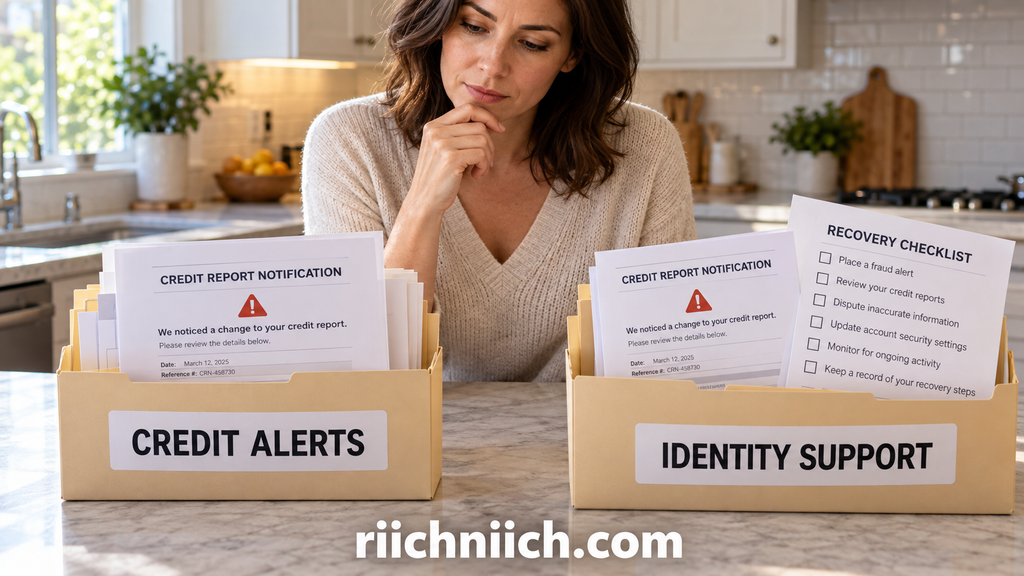
Credit monitoring is a service that watches your credit information for certain changes and sends you an alert when it detects one. Depending on the service, alerts may cover a new account, a credit inquiry, or a significant change to a credit report. The alert gives you a chance to check whether the activity is yours.
When comparing credit monitoring vs identity theft protection, look closely at which credit reports the monitoring service checks. A service that watches one bureau may miss a change that appears only on another bureau’s report. Also check which events trigger alerts and how quickly you’ll receive them. These details can matter more than a long list of advertised features.
Credit monitoring helps you spot possible problems; it does not block someone from applying for credit in your name. You can also review your credit reports yourself for free, and a credit freeze is a separate tool that restricts access to your credit file. The

What Is Identity Theft Protection?
Identity theft protection is a service that watches for signs your personal information may be misused. Depending on the plan, it may monitor credit activity, certain public records, and other sources. Some plans also include identity recovery help or insurance. The Federal Trade Commission explains these as separate features, so check what a plan actually includes before subscribing.
In the credit monitoring vs identity theft protection comparison, broader monitoring and recovery support are the main reasons to consider paying for identity theft protection. Look beyond the feature list: find out what triggers an alert, whether a person will help you resolve a problem, and what expenses the insurance may cover.
The right plan depends on the help you want. If credit alerts are enough for you, a broader subscription may offer little extra value. If you want alerts about other types of identity misuse and hands-on recovery assistance, compare those features carefully before choosing a service.
👉 Want to see what a broader plan includes? Compare Aura’s current plans and pricing to check whether its monitoring and recovery features match the help you want.

Credit Monitoring vs Identity Theft Protection: Key Differences at a Glance
When comparing credit monitoring vs identity theft protection, the first question is whether you want alerts about your credit reports or a service that may also watch for other signs of identity misuse. The Federal Trade Commission treats credit monitoring, identity monitoring, recovery help, and insurance as distinct features. A paid plan may combine several of them, so check the details before subscribing.
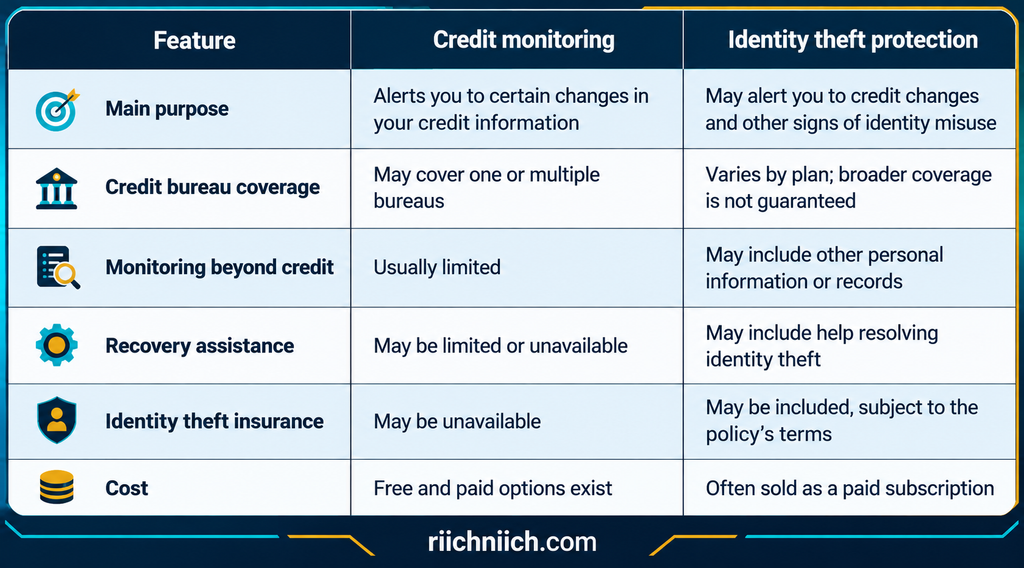
The buying decision: Don’t pay for an identity theft protection plan just because its feature list is longer. Compare its bureau coverage, alerts, recovery assistance, and insurance terms with the free credit monitoring tools you already have. The better choice is the one that fills a gap you actually care about.
What Does Credit Monitoring Watch For?
Credit monitoring watches for changes in the credit information covered by your service. Depending on the provider and plan, you may receive alerts for:
- A new credit inquiry
- A new loan or credit card account appearing on your report
- A change to an existing account’s balance or payment status
- A change to personal details listed on your credit report
- A significant change to your credit score
An alert tells you something changed. It does not automatically mean fraud occurred. A credit inquiry, for example, could be connected to an application you submitted. When an alert arrives, compare it with your own activity and review the relevant credit report if you do not recognize it.
In the credit monitoring vs identity theft protection decision, pay particular attention to which bureaus the service monitors. If a plan checks only one bureau, it may not alert you to activity reported only to another. Before buying three-bureau credit monitoring, check whether you already receive useful alerts through a bank, credit card, or free service.

What Does Identity Theft Protection Watch For?
Identity theft protection may watch for signs that your personal information is being used in places beyond your credit reports. The exact sources depend on the plan. A service might offer alerts involving:
- Your Social Security number or other personal details found in certain monitored data sources
- Your email address or passwords appearing in a known data breach
- Changes to certain public records
- Applications or accounts associated with your identity
- Credit activity, if credit monitoring is included
In the credit monitoring vs identity theft protection comparison, those additional alerts are a reason to look at a broader plan. But phrases like dark web monitoring can sound more comprehensive than the feature really is. Before paying, check which information you can enroll, which sources the service checks, and what the alert tells you to do next. No service can watch every place your information might be misused.
Choose the coverage based on the risks you want help spotting, then compare plans by their actual monitoring features rather than their names.

Which Alerts Can Help You Spot Identity Theft?
The most useful alert is one that points to activity you do not recognize and gives you enough detail to investigate it. In the credit monitoring vs identity theft protection comparison, consider how you would act on each type of warning:
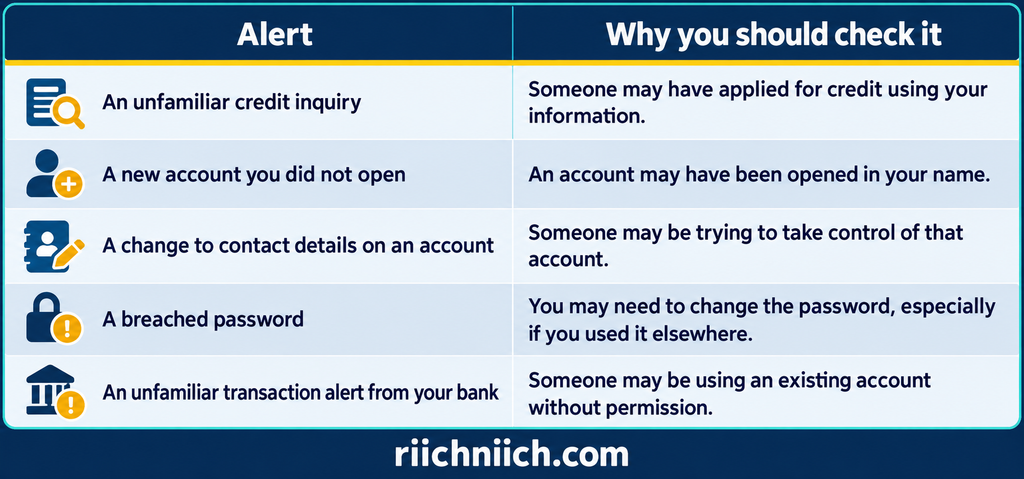
Speed and detail matter more than the number of alerts advertised. Before paying for a service, see whether it tells you what changed, where it happened, and what to check next. Also turn on available alerts from your banks and credit card issuers; a separate identity protection plan may not replace them.
An alert is a prompt to investigate, not proof of identity theft. Confirm suspicious activity with the relevant credit bureau, lender, or account provider before taking the next step.
If a new account looks unfamiliar, follow our guide on How to Tell If Someone Opened an Account In Your Name to investigate it.
What Would You Do With an Alert?
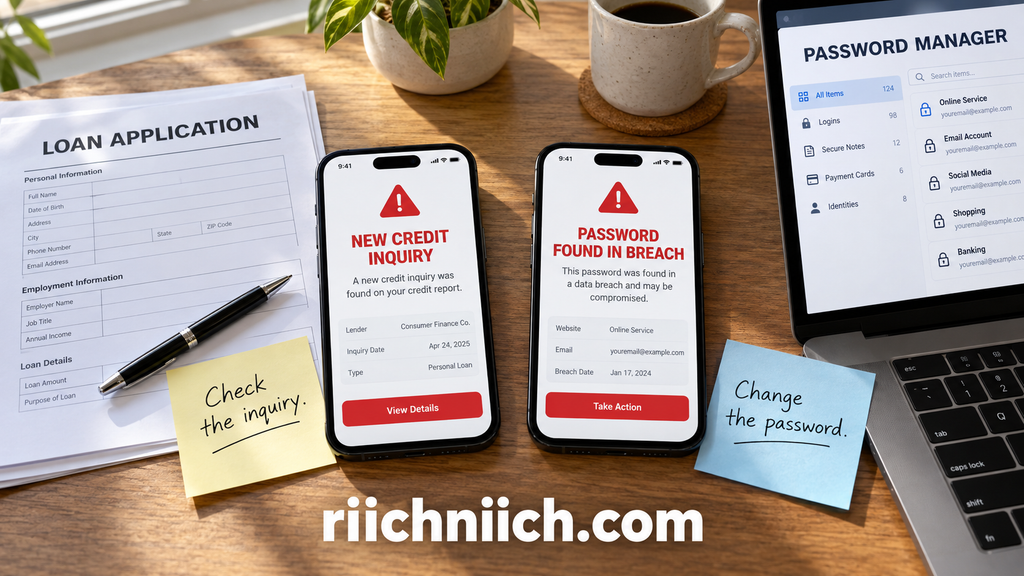
Picture getting a notification about a new credit inquiry. If you applied for a card that morning, you may recognize it immediately. If you did not apply, the alert is useful because it tells you where to start checking. Open the service directly, review the inquiry details, and contact the lender through its official website if you still do not recognize it.
Now picture an alert saying your email address appeared in a data breach. That calls for a different response: check which account was affected, change its password, and change that password anywhere else you reused it. The alert does not tell you that someone has opened a credit account in your name.
These examples show why credit monitoring vs identity theft protection is about the kind of warning you want to receive. Before paying for either service, look at sample alerts if the provider offers them. Ask yourself whether each alert gives you enough information to decide what to check next. A long feature list is less useful than a clear, timely warning you know how to act on.
Does Either Service Prevent Identity Theft?
No monitoring service can guarantee that identity theft will never happen. Credit monitoring alerts you to certain changes in your credit information; identity theft protection may watch additional sources and offer recovery support. An alert helps you respond to a warning sign, but it does not stop someone from trying to misuse your information. The
Consumer Financial Protection Bureau makes this distinction when explaining credit monitoring services.
That distinction matters when shopping for credit monitoring vs identity theft protection. If a plan advertises “protection,” check which features actually restrict access or secure an account and which ones simply notify you after activity is detected. For example, a credit freeze is a separate, free step that restricts access to your credit file for most new credit applications. Monitoring can still be useful alongside a freeze because it helps you notice other changes or problems.
For help putting that barrier in place, see, ‘How to Freeze Your Credit at All Three Credit Bureaus’.
Pay for a service because its alerts or recovery assistance are useful to you, not because you expect it to make identity theft impossible.

What Happens If Your Identity Is Stolen?
If you find an account or transaction you do not recognize, contact the company involved through its official website or the number on your statement. Tell it what you found and ask how to secure the account or dispute the activity. You can then report identity theft at IdentityTheft.gov to get a recovery plan tailored to what happened.
This is where the credit monitoring vs identity theft protection choice can affect your experience. A credit monitoring service may send the alert, but you will generally need to handle the follow-up yourself. An identity theft protection plan may include a recovery specialist who helps you work through the steps. How much that person can do on your behalf depends on the plan.
Before buying, ask a practical question: “If I report a stolen identity, who helps me, and what will they actually do?” A clear answer is more valuable than a vague promise of “full protection.”

Identity Recovery Help and Insurance: What Are You Paying For?
Recovery help and insurance can be the most valuable parts of a paid plan, but they are different benefits. The Federal Trade Commission explains that identity recovery services may help you address the damage from identity theft, while insurance may cover certain costs under a policy’s terms.
In the credit monitoring vs identity theft protection comparison, check these benefits separately:
- Recovery help: Will you get a dedicated specialist? Will they guide you, prepare documents, contact companies with your authorization, or only provide instructions?
- Insurance: Which expenses qualify? What is the coverage limit? Are there exclusions, documentation requirements, or a deductible?
Do not assume an advertised insurance amount is money you automatically receive if your identity is stolen. Read the policy to see what losses or recovery expenses it covers. Likewise, “recovery support” may mean anything from access to a checklist to hands-on help.
If you are considering a paid service, ask to see the recovery service details and insurance terms before checkout. Those documents will tell you more about the plan’s value than its headline coverage amount.

Free Credit Monitoring vs Paid Identity Theft Protection
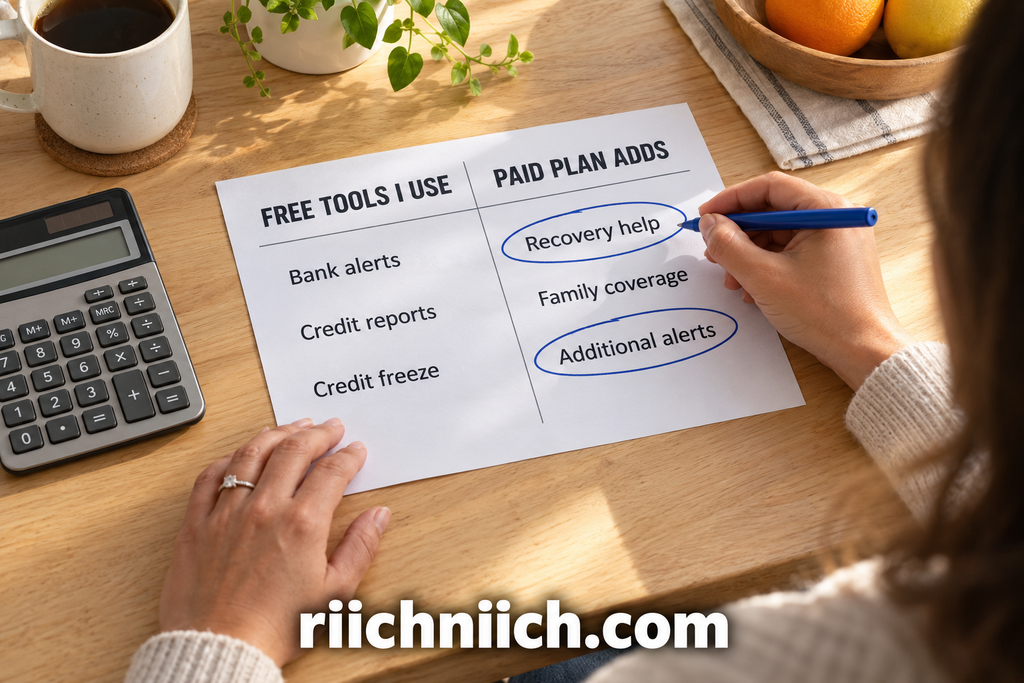
Start by checking what you can get for free. Some banks, credit card issuers, and other services provide credit alerts, while you can review your credit reports for free through AnnualCreditReport.com. A free credit freeze is another option if you want to restrict access to your credit file. The
Consumer Financial Protection Bureau recommends considering these tools when weighing a paid monitoring service.
Free tools may be enough if you are comfortable checking alerts and handling a suspicious account yourself. A paid identity theft protection plan may be worth considering if it adds monitoring you want, alerts you can act on, or recovery help you would use. Paying more does not automatically mean better coverage: one plan might monitor only one credit bureau, while another includes three-bureau credit monitoring and additional identity alerts.
For the credit monitoring vs identity theft protection decision, list the free tools you already use. Then compare paid plans against that list. If a subscription mostly duplicates your existing alerts, look for a plan that fills a real gap—or keep using the free tools.
For a specific example, our Aura vs free credit monitoring comparison examines what a paid service may add beyond basic credit alerts.
How Much Does Identity Theft Protection Cost?
Identity theft protection is usually sold as a monthly or annual subscription. There is no single price that tells you whether a plan is a good deal: the cost depends on the features, the number of people covered, and whether you are looking at an introductory offer or the regular renewal price.
For the credit monitoring vs identity theft protection decision, compare the total cost for the first year and the next year. Before you subscribe, check:
- Introductory price: When does the offer end, and what will you pay afterward?
- Billing schedule: Is the advertised monthly figure charged each month, or do you have to pay for a full year upfront?
- Coverage: Does the price include one person or a family? How many credit bureaus are monitored?
- Included help: Are recovery assistance and insurance included in this tier?
- Cancellation terms: Will the subscription renew automatically, and how do you cancel?
The Consumer Financial Protection Bureau advises checking trial periods, fees, cancellation requirements, and restrictions before enrolling in a monitoring service.
A useful price comparison is cost per feature you would actually use. A lower-priced plan can be the better buy if its alerts meet your needs; a higher-priced plan may justify its cost if you want its specific recovery support or family coverage. Check the current checkout terms before making that call.
👉 If credit bureau coverage is your priority, compare IdentityIQ’s current plans and check which tier includes the monitoring you want before subscribing.

Do You Need Identity Theft Protection If Your Credit Is Frozen?
Maybe, but a credit freeze changes what you should look for in a paid plan. A freeze restricts access to your credit file for most new credit applications. It does not watch your bank accounts, warn you about a breached password, or help you resolve other forms of identity misuse.
In the credit monitoring vs identity theft protection decision, ask what a subscription would add after you have frozen your credit. A plan may be useful if you want alerts outside your credit reports, family coverage, or hands-on identity recovery help. If its main selling point is credit alerts you already receive for free, paying for it may be harder to justify.
A freeze and a monitoring service serve different purposes. Keep your freeze in place if it suits your needs, then judge any paid plan by the additional help you would actually use.

Who Is Credit Monitoring Best For?
Credit monitoring is a good fit for someone who wants alerts about changes to their credit information and is comfortable investigating an alert themselves. It may be especially useful if you:
- Want to know when a new inquiry or account appears on a monitored credit report
- Are reviewing your credit closely after a data breach
- Want alerts while applying for a loan or managing several credit accounts
- Already have access to free credit alerts and do not need paid recovery support
For the credit monitoring vs identity theft protection decision, start with your main concern. If it is spotting unfamiliar credit activity, credit monitoring may meet that need without a broader subscription. Check whether your free option covers one bureau or more, which changes trigger alerts, and how you receive them.
Credit monitoring requires you to act on what you find. If you would want someone to help manage the recovery process after identity theft, factor that into your choice before settling on the lowest-cost service.

Who Is Identity Theft Protection Best For?
Identity theft protection may be a better fit for someone who wants alerts beyond credit reports and help if their identity is misused. It may appeal to you if you:
- Want a service to watch for certain uses of your personal information outside your credit reports
- Would value a recovery specialist’s help after identity theft
- Need to compare coverage for a spouse, children, or other family members
- Have reviewed the free tools available to you and found a gap a paid plan would fill
In the credit monitoring vs identity theft protection decision, the strongest reason to pay is a specific feature you expect to use—not the feeling that a subscription makes identity theft impossible. If recovery help is your priority, find out whether a specialist will work with you directly. If family coverage matters most, check exactly who is eligible and which features each person receives.
Our guide to the best identity theft protection for families can help you compare plans for your household.
Choose a plan only after its monitoring, support, and price make sense for your household. The best identity theft protection service for someone else may not cover the risks you care about most.

What to Look for Before Choosing a Service
Before subscribing, open the plan details and check what you would receive at the price you will actually pay. For credit monitoring vs identity theft protection, use these questions to narrow your choice:
- What does it monitor? Check the number of credit bureaus and the specific identity alerts included. A feature shown on the provider’s website may belong to a higher-priced tier.
- How useful are the alerts? Look for clear details about the activity and a way to investigate it. Check whether alerts arrive by email, text, or app notification.
- What help is available after identity theft? Find out whether you get a dedicated recovery specialist, general guidance, or access to a checklist.
- What are the insurance terms? Read what expenses qualify, the coverage limits, and any exclusions. Do not judge a plan by its advertised maximum alone.
- What will it cost to keep? Compare the introductory price with the renewal price, and check the billing and cancellation terms.
If you are comparing two plans, write down the three features you care about most and see which plan actually includes them. A shorter list of useful features is a better reason to buy than a long list you may never use.

How to Compare Two Plans Without Getting Lost in the Features
Suppose Plan A costs less and offers credit alerts from one bureau. Plan B costs more and advertises three-bureau credit monitoring, identity alerts, and recovery help. Plan B sounds stronger, but it is only the better purchase if those added features matter to you and are included in the tier you intend to buy.
Make a short comparison using the provider’s plan details:
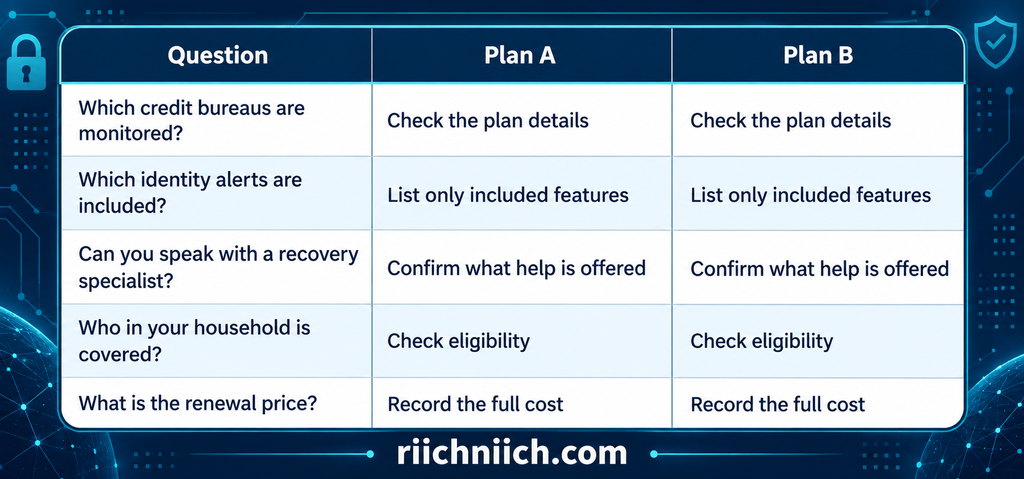
Then cross out features you already get for free or would not use. In a credit monitoring vs identity theft protection comparison, this makes the decision more personal: you can see what each subscription adds for its price.
If two plans meet your needs, compare their renewal prices and support terms before choosing. To apply this approach to two providers, explore our Aura vs LifeLock comparison. If neither adds enough value beyond your free tools, you do not need to subscribe just to feel prepared.
These add the practical examples and buying exercise we should have included from the start.
Credit Monitoring vs Identity Theft Protection: Which Is Worth Paying For?
For most people, the first step is to use the free alerts and credit reports available to them. If those tools cover your main concern, paying for another credit monitoring subscription may add little value. A paid service becomes more compelling when it provides coverage or help you would otherwise lack.
In the credit monitoring vs identity theft protection decision, consider paying for:
- Credit monitoring if you specifically want broader credit bureau coverage or alerts that your free tools do not provide.
- Identity theft protection if you want useful alerts beyond credit reports, family coverage, or hands-on recovery help—and the plan you choose actually includes those features.
Do not choose by the size of an insurance headline or the number of features in an advertisement. Choose by what the plan monitors, the help you can get after an alert, and the cost after any introductory offer ends.
Our take: Start free, identify the gap, and pay only for a service that fills it. If you want someone to help you through identity theft recovery, that support may be the clearest reason to choose a broader protection plan.

Frequently Asked Questions
Does signing up for credit monitoring affect your credit score?
No. Checking your own credit information through a monitoring service does not count as a lender’s hard inquiry. When comparing credit monitoring vs identity theft protection, you can evaluate plans without worrying that enrollment itself will lower your score.
Do you have to provide your Social Security number to enroll?
Some services ask for it to match you with your credit file or monitor for misuse of that number. Before entering it, confirm you are on the provider’s official website and read which information the service requires. If you are uncomfortable providing a particular detail, ask whether the feature you want can work without it.
Can you use two monitoring services at the same time?
Yes. You might receive credit alerts through your bank while also using a separate identity theft protection plan. Before paying for both, compare the alerts they send. Two services that report the same event may add notifications without giving you useful new coverage.
What happens to your alerts if you cancel a paid plan?
Check the provider’s terms before canceling. Access to past alerts, reports, or recovery support may change when your subscription ends. Save any records you need for an active dispute or identity theft case, and make sure your free alerts are turned on if you still want notifications.

Conclusion: Credit Monitoring vs Identity Theft Protection
The right choice in credit monitoring vs identity theft protection depends on the help you would actually use. If you mainly want to spot unfamiliar credit activity and feel comfortable investigating alerts yourself, start with free credit monitoring and regular credit report reviews. A free credit freeze can add a separate layer of protection against many new credit accounts being opened in your name.
Consider paying for identity theft protection if you want specific alerts beyond credit reports, family coverage, or hands-on recovery assistance. Before choosing a plan, confirm that those features are included at the price you will pay after any introductory offer ends.
If you are ready to compare providers, review our best identity theft protection services guide to narrow your options.
Our recommendation: Use the free tools first. Then, if you find a gap that matters to you, choose a paid service that clearly fills it. Monitoring helps you notice warning signs; the value of a paid plan lies in the additional coverage and support it provides when you need to act.




Pingback: Best Identity Monitoring Service: What to Look for Before You Choose - Riich Niich