

How long does it take to recover from identity theft? If you’ve recently become a victim, it’s one of the first questions you’ll ask. While some cases can be resolved within a few weeks, more serious identity theft involving stolen Social Security numbers, fraudulent loans, or multiple compromised accounts can take months—or even longer—to fully recover from. In this guide, you’ll learn what affects the recovery timeline, the steps you can take to speed up the process, common mistakes to avoid, and the best tools to help protect your identity while you recover.
Table of Contents
What Affects How Long It Takes to Recover From Identity Theft?
If you’re wondering how long does it take to recover from identity theft, the honest answer is that it depends on how quickly you discover the fraud and how extensive the damage is. Some people resolve minor cases within a few days or weeks, while others spend several months—or even more than a year—repairing their finances, credit reports, and personal records.
According to the Federal Trade Commission (FTC), identity theft recovery can involve contacting banks, credit bureaus, government agencies, and other organizations depending on the type of fraud involved. The more accounts that have been compromised, the longer the recovery process usually takes. The FTC’s IdentityTheft.gov website provides step-by-step recovery guidance for victims of identity theft.
The good news is that acting immediately can significantly reduce both the recovery time and the financial impact. Freezing your credit with the three major credit bureaus, reporting the theft, disputing fraudulent accounts, replacing compromised documents, and monitoring your identity can all help shorten the recovery process. You can also obtain your free credit reports through AnnualCreditReport.com to review your accounts for unauthorized activity during your recovery.
If you’re concerned about ongoing fraud while you’re trying to recover, this is also when many people choose an identity theft protection service. These services can continuously monitor your credit, alert you to suspicious activity, and help you catch additional fraud before it causes even more damage. For many victims, having professional assistance can save dozens of hours during the recovery process while providing peace of mind that someone is watching for additional signs of identity theft.
Although every situation is different, the following timeline provides a realistic idea of what to expect:
- Minor identity theft: Often resolved within a few days to several weeks.
- Credit card fraud: Commonly resolved within one to three months.
- New accounts opened in your name: Frequently takes three to six months.
- Social Security number misuse or multiple fraudulent accounts: Recovery can take six months to over a year.
- Complex identity theft involving tax fraud, employment fraud, or criminal identity theft: In some cases, recovery may extend beyond a year.
The key takeaway is that how long does it take to recover from identity theft often depends less on luck and more on how quickly you respond. The sooner you begin the recovery process, the easier it becomes to limit additional damage, protect your financial accounts, and regain control of your identity.
If you’re not sure where to begin, follow our complete Identity Theft Recovery Checklist for a step-by-step action plan after your identity has been stolen.
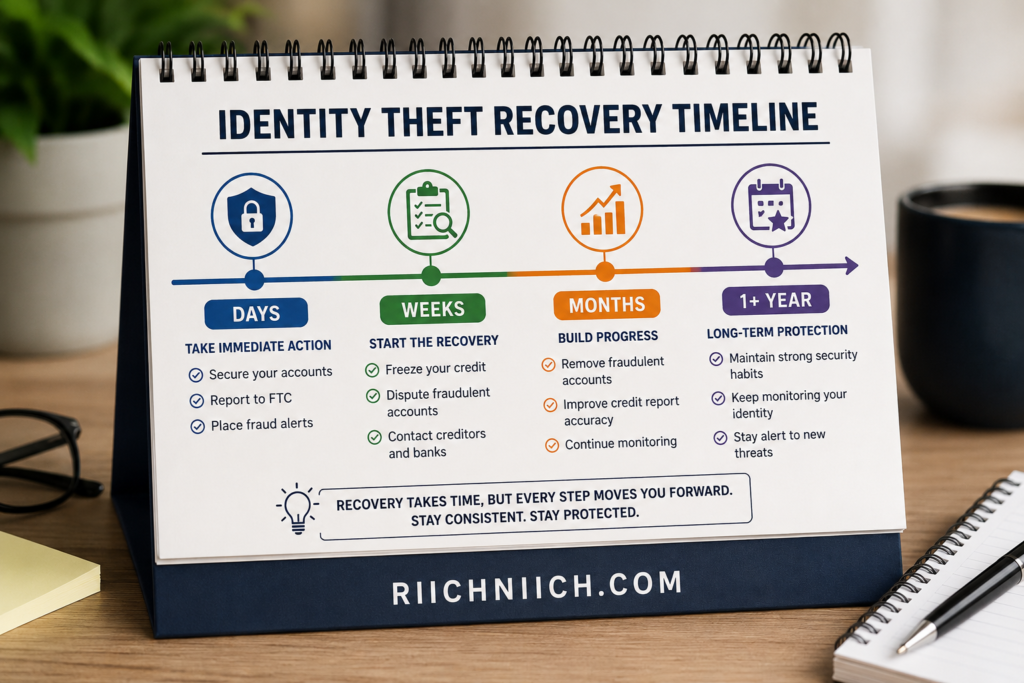
Average Identity Theft Recovery Timeline
One of the biggest questions victims ask is how long does it take to recover from identity theft after discovering their personal information has been stolen. While no two cases are exactly alike, most identity theft incidents follow a similar recovery timeline. The amount of time you’ll spend depends on the type of fraud, how quickly you respond, and whether criminals continue using your information after you’ve reported the theft.
The Federal Trade Commission (FTC) recommends reporting identity theft as soon as possible because taking immediate action can significantly reduce both your financial losses and your overall identity theft recovery time. Delaying even a few days may give criminals additional opportunities to open accounts, apply for loans, or misuse your personal information.
Below is a general timeline of what many victims experience during the identity theft recovery process.
First 24 to 48 Hours
The first two days are often the most critical. During this period, your goal is to stop additional damage before it spreads.
You should immediately:
- Freeze your credit with all three credit bureaus.
- Change passwords for your financial and email accounts.
- Enable multi-factor authentication.
- Contact your bank and credit card companies.
- Report the identity theft through IdentityTheft.gov.
- Review recent account activity for unauthorized transactions.
Taking these steps quickly can prevent criminals from opening additional accounts and may greatly reduce how long does it take to recover from identity theft.
First Week
During the first week, you’ll spend most of your time notifying financial institutions and gathering documentation.
Common tasks include:
- Disputing fraudulent charges.
- Filing fraud reports.
- Ordering copies of your credit reports.
- Replacing compromised debit or credit cards.
- Updating passwords across important online accounts.
- Saving copies of emails, letters, and claim numbers.
Organization becomes extremely important during this stage. Keeping detailed records makes future disputes much easier if additional fraud is discovered later.
One to Three Months
Most straightforward identity theft cases begin improving within the first few months.
By this point, many victims have:
- Closed fraudulent accounts.
- Received replacement financial cards.
- Corrected inaccurate credit report information.
- Had fraudulent charges removed.
- Restored access to compromised online accounts.
However, you should continue monitoring your credit reports because new fraudulent activity sometimes appears weeks after the initial theft. You can obtain free credit reports through AnnualCreditReport.com to verify that disputed accounts have been updated correctly.
Three to Six Months
More complicated identity theft cases often require several additional months.
Examples include:
- Multiple loans opened in your name.
- Fraud involving several credit cards.
- Identity theft affecting multiple financial institutions.
- Extensive credit report corrections.
- Ongoing fraud investigations.
Although the situation may feel overwhelming, many victims begin seeing meaningful progress during this period as lenders complete investigations and credit bureaus update disputed information.
Six Months to One Year
If criminals have used your Social Security number, committed tax fraud, employment fraud, or medical identity theft, recovery often takes much longer.
During this stage, you may still be:
- Working with government agencies.
- Responding to creditor investigations.
- Correcting credit report errors.
- Replacing official identification documents.
- Monitoring for additional fraudulent activity.
The Social Security Administration and Internal Revenue Service each have their own procedures for handling fraud involving Social Security numbers or tax identity theft, which can extend the overall recovery timeline.
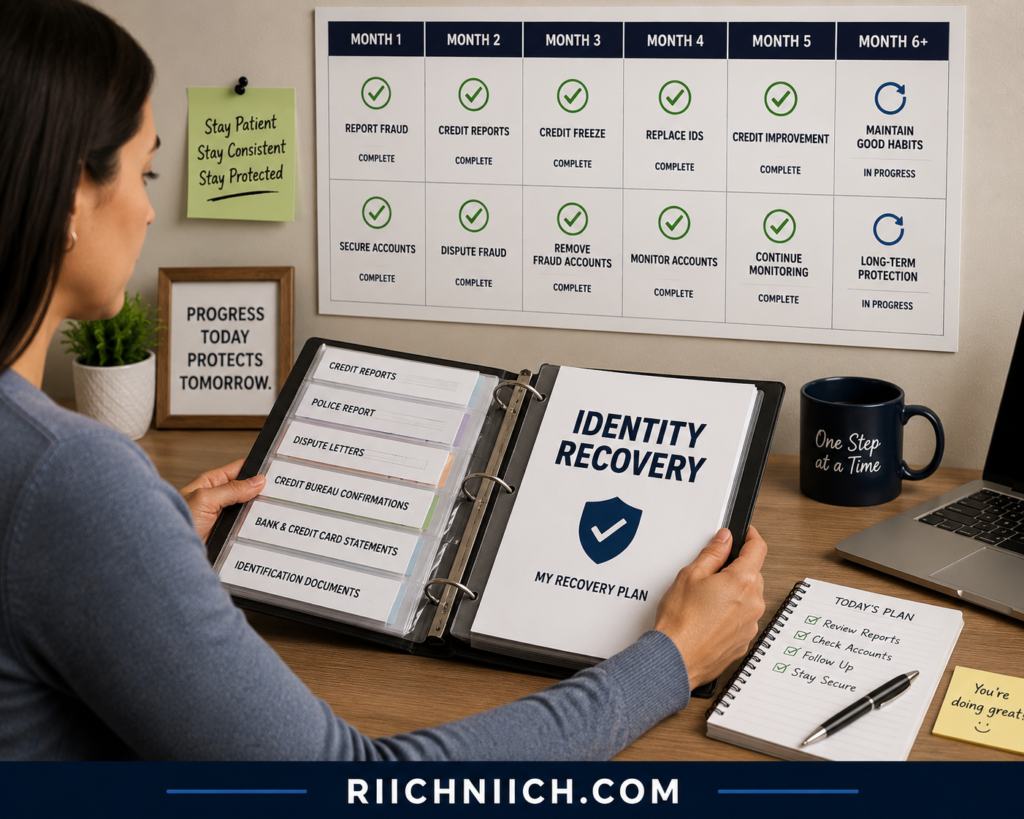
One Year or Longer
Unfortunately, some victims continue dealing with identity theft for more than a year.
This is more common when:
- Criminals repeatedly use stolen personal information.
- Multiple identities have been compromised.
- Criminal identity theft is involved.
- Large financial losses require lengthy investigations.
- Court proceedings become necessary.
Even after your financial accounts have been restored, it’s wise to continue monitoring your identity. Criminals sometimes wait months before attempting to reuse stolen information from an earlier data breach.
This is one reason many people choose an identity theft protection service after recovering. Continuous credit monitoring, dark web monitoring, fraud alerts, and identity restoration assistance can help detect future misuse much sooner, reducing the chances of repeating the recovery process.
The Bottom Line
Although how long does it take to recover from identity theft varies from person to person, most victims spend anywhere from a few weeks to several months resolving the immediate damage. More serious cases involving Social Security fraud, tax fraud, or multiple fraudulent accounts can easily extend beyond a year.
The sooner you act—and the more consistently you monitor your identity afterward—the shorter your recovery is likely to be. Combining prompt action with ongoing identity monitoring can help you recover faster while reducing the risk of future identity theft.
Step-by-Step Identity Theft Recovery Process
If you’re asking how long does it take to recover from identity theft, the answer depends largely on how quickly you complete the recovery process. Taking the right steps in the correct order can stop additional fraud, improve your chances of recovering stolen funds, and shorten the amount of time it takes to restore your identity.
Below is a practical step-by-step identity theft recovery process that many victims follow after discovering suspicious activity.
Step 1: Secure Your Financial Accounts Immediately
Your first priority is preventing additional financial damage.
Contact your:
- Bank
- Credit card companies
- Loan providers
- Investment accounts
- Payment apps
Ask them to:
- Freeze or lock compromised accounts.
- Cancel affected debit and credit cards.
- Issue replacement cards.
- Flag your accounts for suspected fraud.
Many financial institutions have dedicated fraud departments that can begin investigating unauthorized transactions immediately.
Step 2: Freeze Your Credit Reports
One of the most effective ways to stop criminals from opening new accounts is placing a credit freeze with all three major credit bureaus:
- Experian
- Equifax
- TransUnion
A credit freeze prevents lenders from accessing your credit file, making it much harder for identity thieves to obtain loans or credit cards using your information.
If you’re wondering how long does it take to recover from identity theft, freezing your credit early can prevent new fraud that would otherwise add weeks or months to your recovery.
Not sure whether you should freeze or lock your credit? Learn the differences in our guide to Credit Freeze vs. Credit Lock before making your decision.
Step 3: Report the Identity Theft
File an official identity theft report through the Federal Trade Commission’s IdentityTheft.gov website.
The FTC provides:
- A personalized recovery plan.
- Official documentation of the fraud.
- Sample dispute letters.
- Recovery checklists based on your situation.
Having an FTC Identity Theft Report can make it easier to dispute fraudulent accounts with creditors and credit bureaus.
Step 4: Review Your Credit Reports Carefully
Request copies of your credit reports and review every section carefully.
Look for:
- Accounts you didn’t open.
- Incorrect personal information.
- Unknown addresses.
- Hard credit inquiries you don’t recognize.
- Collection accounts that don’t belong to you.
You can obtain your free credit reports through AnnualCreditReport.com, which is the only federally authorized source for free annual credit reports.
The sooner fraudulent accounts are identified, the less likely they are to delay how long does it take to recover from identity theft.
Step 5: Dispute Fraudulent Accounts
Contact both the lender and the credit bureau for every fraudulent account you discover.
Provide copies of:
- Your FTC Identity Theft Report.
- Supporting documentation.
- Government-issued identification.
- Any requested dispute forms.
Keep copies of every letter, email, and confirmation number throughout the recovery process.
Disputes often take several weeks to investigate, making this one of the longest parts of identity theft recovery.
Step 6: Change Your Passwords
If criminals accessed one account, they may attempt to access others using the same password.
Immediately update passwords for:
- Email accounts
- Online banking
- Shopping websites
- Investment accounts
- Social media
- Cloud storage
- Password manager (if applicable)
Create strong, unique passwords for every account and enable multi-factor authentication whenever available.
This reduces the likelihood of additional compromises while you’re recovering.
Step 7: Replace Compromised Identification
Depending on the type of identity theft, you may need to replace important documents.
These may include:
- Driver’s license
- State ID
- Passport
- Social Security card (when appropriate)
- Health insurance cards
If your Social Security number has been misused, review guidance from the Social Security Administration to determine whether additional protective measures are recommended.

Step 8: Continue Monitoring Your Identity
Recovery doesn’t end once fraudulent accounts are removed.
👉 If you want an easier way to monitor your credit, dark web exposure, and personal information while you recover, Aura can alert you to suspicious activity and connect you with identity restoration specialists if new fraud is detected.
Continue checking:
- Credit reports
- Bank statements
- Credit card transactions
- Insurance claims
- Tax records
- Email security alerts
Identity thieves sometimes wait several months before attempting to reuse stolen information.
Many victims choose an identity theft protection service during this stage because continuous credit monitoring, dark web monitoring, fraud alerts, and identity restoration support can help identify new problems before they become major financial losses. For people recovering from extensive fraud, these services can reduce both stress and the amount of time spent monitoring accounts manually.
Stay Organized Throughout the Recovery Process
One of the most overlooked parts of recovering from identity theft is staying organized.
Create a dedicated folder containing:
- Fraud reports
- Credit reports
- Dispute letters
- Claim numbers
- Bank correspondence
- Copies of identification
- Notes from phone conversations
Having everything in one place makes it much easier to respond if creditors request additional documentation months later.
The Bottom Line
Although how long does it take to recover from identity theft varies depending on the severity of the fraud, following a structured recovery process can significantly reduce delays. Acting quickly, documenting every step, disputing fraudulent activity promptly, and continuing to monitor your identity are some of the most effective ways to shorten the recovery timeline and protect yourself from future identity theft.
What Can Delay Your Identity Theft Recovery?
If you’re wondering how long does it take to recover from identity theft, it’s important to understand that the recovery timeline isn’t determined by one factor alone. Even if you take immediate action, certain situations can slow the process and require additional paperwork, investigations, or follow-up with multiple organizations.
Knowing what causes delays can help you avoid common mistakes and recover your identity as quickly as possible.
Waiting Too Long to Take Action
One of the biggest reasons identity theft recovery takes longer is waiting to report the fraud.
Some people assume an unfamiliar charge is simply a banking error or overlook warning signs until additional accounts are opened in their name. Every day you wait gives criminals more opportunities to misuse your personal information.
As soon as you notice suspicious activity, contact your financial institutions, freeze your credit, and report the theft through the Federal Trade Commission’s IdentityTheft.gov website. Acting quickly often reduces both financial losses and the overall recovery timeline.
Multiple Types of Identity Theft
Recovering from one fraudulent credit card account is usually much simpler than dealing with several different forms of identity theft at once.
Your recovery may take longer if criminals have used your information for:
- Credit card fraud
- Personal loans
- Social Security fraud
- Tax identity theft
- Medical identity theft
- Employment fraud
- Utility accounts
- Criminal identity theft
Each type of fraud often requires contacting different organizations, completing separate investigations, and providing additional documentation.
Fraud Across Multiple Financial Institutions
If your information has been used at several banks, lenders, or credit card companies, you’ll need to work with each organization individually.
This often means:
- Completing multiple fraud affidavits.
- Verifying your identity several times.
- Speaking with different fraud departments.
- Tracking numerous claim numbers.
- Following different investigation timelines.
The more companies involved, the more time you’ll likely spend managing your recovery.
Missing or Incomplete Documentation
Keeping accurate records is essential.
Many investigations are delayed because victims cannot quickly provide:
- Identity theft reports.
- Copies of identification.
- Bank statements.
- Credit reports.
- Previous correspondence.
- Dispute letters.
- Fraud claim numbers.
Creating one organized folder for all recovery documents makes it much easier to respond when creditors or government agencies request additional information.
Ongoing Criminal Activity
Sometimes identity thieves continue using stolen information even after you’ve discovered the fraud.
If you’re wondering whether additional fraud is still happening, read our guide on How to Know if Someone Stole Your Identity to learn the warning signs to watch for.
For example, they may:
- Attempt to open additional accounts.
- Submit new loan applications.
- Use stolen information for online purchases.
- Sell your personal information to other criminals.
This is why freezing your credit and monitoring your accounts remain important throughout the recovery process—not just during the first few weeks.
Credit Bureau Investigation Timelines
When you dispute fraudulent information on your credit report, credit bureaus must investigate the claim before making corrections.
Although investigations often move relatively quickly, they may take longer if:
- Additional documentation is required.
- Creditors dispute your claim.
- Multiple accounts are involved.
- Information is incomplete or inconsistent.
Until investigations are completed, inaccurate information may continue affecting your credit profile.
Government-Related Identity Theft
Cases involving government agencies are often among the longest to resolve.
Examples include:
- Social Security number misuse.
- Tax identity theft.
- Unemployment benefit fraud.
- Medicare fraud.
These situations frequently require extra verification and communication with agencies such as the Social Security Administration or the Internal Revenue Service before records can be corrected.

Not Monitoring Your Identity After the Initial Recovery
Many victims assume the recovery process is over once fraudulent accounts have been removed.
Unfortunately, stolen personal information can remain valuable to criminals for years. Information exposed in a data breach may be reused long after the original incident.
This is one reason many people invest in an identity theft protection service after recovering. Features like credit monitoring, dark web monitoring, fraud alerts, and identity restoration assistance can help detect new threats early, reducing the likelihood of repeating the recovery process.
The Bottom Line
If you’re asking how long does it take to recover from identity theft, remember that delays are often caused by factors you can control. Reporting fraud immediately, organizing your documentation, freezing your credit, responding quickly to requests from financial institutions, and continuing to monitor your identity can significantly shorten your recovery time.
While some complex cases may still take months to resolve, avoiding these common delays gives you the best chance of restoring your identity as efficiently as possible.
How to Recover From Identity Theft Faster
If you’re asking how long does it take to recover from identity theft, you’ll be glad to know that there are several steps you can take to speed up the recovery process. While some investigations are outside of your control, acting quickly, staying organized, and using the right tools can help you restore your identity much sooner.
The faster you respond, the less opportunity criminals have to continue using your personal information.
Act Immediately After Discovering the Fraud
Time is one of the biggest factors in identity theft recovery.
As soon as you notice suspicious activity:
- Contact your bank or credit card company.
- Freeze your credit with all three credit bureaus.
- Change passwords for important accounts.
- Enable multi-factor authentication.
- Report the theft through IdentityTheft.gov.
Waiting several days—or even weeks—can give criminals more time to open new accounts or make unauthorized purchases.
Keep All Recovery Documents in One Place
Identity theft recovery often involves communicating with several companies over many weeks or months.
Create a dedicated folder that contains:
- Identity theft reports.
- Credit reports.
- Bank correspondence.
- Fraud claim numbers.
- Copies of dispute letters.
- Notes from phone conversations.
- Confirmation emails.
Having everything organized allows you to respond quickly whenever additional information is requested, preventing unnecessary delays.
Respond to Requests as Soon as Possible
Banks, lenders, insurance companies, and credit bureaus may ask for additional documentation before completing their investigations.
If you delay responding, your case may remain on hold.
Whenever possible:
- Upload requested documents the same day.
- Keep copies of everything you submit.
- Record confirmation numbers.
- Follow up if you don’t receive updates within the expected timeframe.
Staying proactive can shorten how long does it take to recover from identity theft by keeping your case moving forward.
Review Your Credit Reports Regularly
Don’t assume that every fraudulent account has already been found.
Continue checking your credit reports for:
- New accounts.
- Unauthorized inquiries.
- Incorrect balances.
- Collection accounts.
- Personal information changes.
You can request free credit reports through AnnualCreditReport.com to monitor your progress and verify that disputed accounts have been corrected.
Our guide on How to Check Your Credit Report for Signs of Identity Theft explains exactly what to look for when reviewing your credit reports.
Freeze Your Credit Until Recovery Is Complete
Many victims remove their credit freeze too early.
Keeping your credit frozen prevents identity thieves from opening additional accounts while existing investigations are still underway.
You can temporarily lift your credit freeze whenever you legitimately apply for credit, then re-enable it afterward.
Maintaining this protection can prevent setbacks that would extend your recovery timeline.
Monitor Your Financial Accounts Every Week
Even after your accounts appear secure, continue reviewing:
- Bank transactions.
- Credit card statements.
- Investment accounts.
- Payment apps.
- Loan activity.
👉 If manually checking every account feels overwhelming, Identity Guard continuously monitors your identity and sends real-time alerts so you can catch suspicious activity before it becomes a larger problem.
Developing this habit also helps protect you from future identity theft.
Consider Identity Theft Protection During Recovery
If your identity has already been stolen, recovering can become a full-time project.
Many people choose an identity theft protection service because it provides features that can simplify the recovery process, including:
- Credit monitoring.
- Dark web monitoring.
- Fraud alerts.
- Identity restoration assistance.
- Dedicated recovery specialists.
Instead of manually checking multiple accounts every day, these services continuously monitor your information and notify you when suspicious activity is detected. Some providers also assign recovery specialists who can help coordinate paperwork and communicate with financial institutions, potentially reducing both the time and stress involved in recovering from identity theft.

Stay Patient and Continue Following Up
Identity theft investigations rarely finish overnight.
Even after submitting all required documents, continue checking the status of your:
- Fraud disputes.
- Credit report corrections.
- Bank investigations.
- Insurance claims.
- Government reports.
A brief follow-up call or email can often keep your case from stalling and ensure nothing has been overlooked.
The Bottom Line
If you’re concerned about how long does it take to recover from identity theft, the best strategy is to stay proactive from beginning to end. Acting immediately, keeping organized records, responding quickly to documentation requests, monitoring your accounts, and using identity theft protection services when appropriate can significantly shorten your recovery timeline.
While no one can guarantee an exact recovery time, following these best practices gives you the strongest chance of restoring your identity as quickly as possible while reducing the risk of future fraud.
Best Tools to Help Speed Up Identity Theft Recovery
If you’re worried about how long does it take to recover from identity theft, using the right tools can make a significant difference. While no service can erase the damage overnight, certain identity protection and cybersecurity tools can help you detect fraud sooner, reduce manual work, and prevent additional identity theft while you’re recovering.
Below are some of the most effective tools to consider if you’re trying to shorten your identity theft recovery time.
Aura – Best Overall Identity Theft Protection
Aura is one of the most comprehensive identity theft protection services available. It combines credit monitoring, identity monitoring, dark web monitoring, financial account alerts, antivirus software, VPN protection, password management, and identity theft insurance into one platform.
For people recovering from identity theft, Aura’s real-time alerts can notify you if someone attempts to open new accounts or misuse your personal information again. If fraud is detected, identity restoration specialists are available to guide you through the recovery process and help resolve issues faster.
If your goal is reducing how long does it take to recover from identity theft, Aura offers one of the most complete all-in-one solutions.
Identity Guard – Best for Ongoing Identity Monitoring
Identity Guard focuses heavily on monitoring your personal information and providing alerts when suspicious activity is detected.
Features include:
- Credit monitoring
- Dark web monitoring
- High-risk transaction alerts
- Identity theft insurance
- Dedicated recovery assistance
Continuous monitoring helps you catch additional fraud before it becomes a larger problem, making it easier to stay ahead of criminals throughout the recovery process.
Coveron – Best for Financial Fraud Recovery Support
Recovering from identity theft often begins with preventing another incident. Coveron combines identity monitoring with cybersecurity features designed to help safeguard your personal information from future attacks.
Depending on your plan, it can provide:
- Identity monitoring
- Dark web monitoring
- Cyber extortion protection
- Financial fraud assistance
- Recovery support
For individuals who spend a significant amount of time online, Coveron adds another layer of security while helping reduce the chances of repeated identity theft.
NordPass – Best Password Manager
Weak or reused passwords are one of the most common reasons identity theft happens in the first place.
NordPass helps you:
- Generate strong passwords.
- Store passwords securely.
- Autofill login credentials.
- Identify weak or reused passwords.
- Protect sensitive information with encrypted storage.
Changing every compromised password after identity theft can feel overwhelming. A password manager makes this process much faster and helps prevent future account takeovers.
NordVPN – Best for Protecting Sensitive Information Online
During recovery, you’ll likely access financial accounts, upload personal documents, and communicate with banks online.
NordVPN encrypts your internet connection, helping protect sensitive information—especially when using public Wi-Fi or unsecured networks.
This reduces the risk of exposing additional personal information while you’re actively recovering from identity theft.
Why These Tools Matter During Recovery
Recovering from identity theft doesn’t end after the fraudulent accounts are removed.
Many victims continue monitoring their identity for months because criminals sometimes reuse stolen information long after the original incident.
Using identity monitoring tools can help you:
- Detect new fraud earlier.
- Monitor your credit automatically.
- Receive real-time security alerts.
- Protect online accounts.
- Reduce manual monitoring.
- Gain professional recovery assistance if new fraud occurs.
Instead of checking multiple accounts every day, these services continuously watch for suspicious activity and notify you when action is needed.
Choosing the Right Tool
The best service depends on your situation.
- Choose Aura if you want an all-in-one identity theft protection platform with recovery assistance and multiple security features.
- Choose Identity Guard if your priority is continuous identity monitoring and early fraud detection.
- Choose Coveron if you want additional cyber protection alongside identity monitoring.
- Choose NordPass if you’re replacing compromised passwords and strengthening account security.
- Choose NordVPN if you frequently access sensitive accounts online and want to protect your internet connection during recovery.
Many people use more than one of these tools together to create multiple layers of protection against future identity theft.
The Bottom Line
If you’re wondering how long does it take to recover from identity theft, the right tools won’t eliminate the recovery process, but they can make it much easier to manage. Identity monitoring, password management, VPN protection, and professional recovery assistance can help you detect new fraud quickly, stay organized, and reduce the likelihood of experiencing another identity theft incident while you’re still recovering.
Investing in proactive protection today can save countless hours, reduce stress, and provide greater peace of mind if your personal information is ever targeted again.
Who Should Read This Guide?
If you’re asking how long does it take to recover from identity theft, this guide is designed to help you understand what to expect and how to make the recovery process as smooth as possible. Whether you’ve recently become a victim or you’re trying to prepare for the future, knowing the typical identity theft recovery timeline can help you make informed decisions and avoid costly mistakes.
People Who Recently Became Victims of Identity Theft
If you’ve just discovered fraudulent charges, unfamiliar accounts, or suspicious activity on your credit report, this guide will walk you through the recovery process and explain why some cases are resolved quickly while others take several months.
Understanding the factors that affect recovery time can help you set realistic expectations while taking the right steps to protect yourself.
Anyone Whose Personal Information Was Exposed in a Data Breach
Even if no fraud has occurred yet, a data breach can put your personal information at risk.
If your:
- Social Security number
- Driver’s license number
- Credit card information
- Banking information
- Email address
- Online account credentials
have been exposed, learning how long does it take to recover from identity theft can help you prepare in case criminals attempt to misuse your information in the future.
The Federal Trade Commission recommends monitoring your accounts closely after a data breach because identity theft may not happen immediately. Criminals sometimes wait months before using stolen information.

People Recovering From Credit Card or Banking Fraud
Not every case of identity theft involves multiple fraudulent accounts.
If you’ve experienced:
- Unauthorized credit card purchases
- Fraudulent bank withdrawals
- Payment app fraud
- Unauthorized online purchases
this guide can help you understand how long recovery typically takes and what you can do to minimize additional financial damage.
Individuals Concerned About Their Credit
Identity theft can affect your credit score if fraudulent accounts remain unresolved.
If you’re planning to:
- Buy a home
- Finance a vehicle
- Apply for a credit card
- Qualify for a personal loan
- Rent an apartment
understanding the identity theft recovery process can help you restore your credit profile before applying for new credit.
Monitoring your credit reports throughout the recovery process can also help confirm that disputed accounts have been corrected.
Families Protecting Multiple Household Members
Identity theft doesn’t only affect one person.
Families often need to protect:
- Spouses
- Children
- Elderly parents
- College students
Learning about identity theft recovery now can help your household respond faster if someone else’s personal information is compromised.
Many families also choose identity theft protection services that monitor multiple household members under a single plan, making it easier to detect fraud early.
Seniors Looking to Reduce Financial Risk
Older adults are frequently targeted by scammers because they often have established credit histories and accumulated financial assets.
If you’re retired or helping an aging parent manage finances, understanding how long does it take to recover from identity theft can help you recognize the importance of early detection, account monitoring, and keeping financial records organized.
Taking preventive measures before fraud occurs is often much easier than trying to repair the damage afterward.
Anyone Considering Identity Theft Protection
Many people begin researching recovery timelines because they’re deciding whether an identity theft protection service is worth the investment.
If that’s you, this guide explains why recovery can take weeks or even months and how professional monitoring, fraud alerts, and identity restoration assistance may help reduce both the workload and stress involved after identity theft occurs.
Choosing protection before a problem develops is often easier—and less expensive—than recovering after extensive fraud has already happened.
The Bottom Line
Whether you’ve already become a victim or simply want to be prepared, understanding how long does it take to recover from identity theft can help you make smarter decisions before, during, and after an identity theft incident. The more informed you are, the faster you’ll be able to respond, reduce potential damage, and protect your financial future.
Common Mistakes That Make Identity Theft Recovery Take Longer
If you’re wondering how long does it take to recover from identity theft, avoiding a few common mistakes can make a significant difference. Many victims unintentionally delay their own recovery by overlooking important steps or assuming the problem has been resolved too soon.
The good news is that most of these mistakes are preventable. By recognizing them early, you can speed up the identity theft recovery process and reduce the risk of additional fraud.
Waiting Too Long to Report the Theft
One of the biggest mistakes is hoping the suspicious activity will simply go away.
Some people wait days or even weeks before contacting their bank or reviewing their credit reports. Unfortunately, that delay gives criminals more time to:
- Open new accounts.
- Apply for loans.
- Make unauthorized purchases.
- Change account information.
- Commit additional fraud.
The sooner you report identity theft, the sooner financial institutions and government agencies can begin helping you recover.
Forgetting to Freeze Your Credit
Many victims report identity theft but never place a credit freeze.
Without a credit freeze, criminals may continue opening new accounts using your personal information while you’re still trying to resolve existing fraud.
A credit freeze is one of the most effective ways to stop new account fraud during recovery and can significantly reduce future complications.
Ignoring Smaller Signs of Fraud
Not every warning sign involves thousands of dollars.
Small issues can be early indicators of a much larger problem, including:
- Unrecognized credit inquiries.
- Small unauthorized purchases.
- Bills from unfamiliar companies.
- Missing financial statements.
- Unexpected password reset emails.
Investigating these warning signs early may prevent more serious identity theft later.
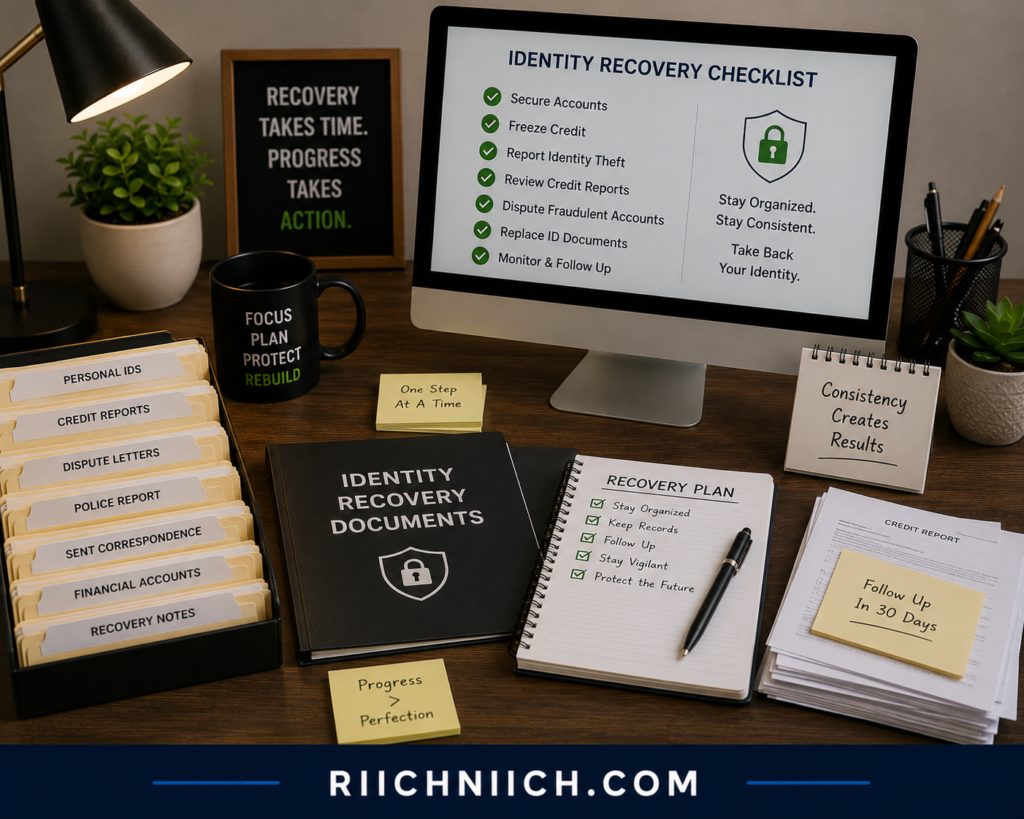
Failing to Keep Good Records
Identity theft recovery usually involves multiple phone calls, emails, letters, and documents.
Without organized records, it becomes much harder to:
- Track disputes.
- Verify previous conversations.
- Provide requested documentation.
- Follow up with financial institutions.
Create a dedicated recovery folder and save every confirmation number, letter, email, and report related to your case.
Reusing the Same Passwords
If one online account was compromised, other accounts using the same password could also be at risk.
After identity theft, every important account should receive a new, unique password.
Using a password manager can make this process much easier while reducing the chances of another account takeover.
Stopping Credit Monitoring Too Soon
Some victims stop monitoring their identity after fraudulent accounts have been removed.
Unfortunately, stolen personal information may continue circulating online for months or even years after the original theft.
According to guidance from the Federal Trade Commission, continued account monitoring is an important part of protecting yourself after identity theft because criminals may attempt to use stolen information again long after the initial incident.
Not Following Up on Disputes
Submitting paperwork doesn’t always mean your case is finished.
Banks, lenders, and credit bureaus occasionally request additional documentation or clarification during an investigation.
If you don’t respond promptly, your dispute could remain open longer than necessary.
Following up every few weeks helps ensure your recovery continues moving forward.
Trying to Handle Everything Alone
Many people underestimate how much work identity theft recovery can involve.
Depending on the severity of the fraud, you may need to communicate with:
- Banks
- Credit card companies
- Credit bureaus
- Government agencies
- Insurance providers
- Debt collectors
For more complex cases, identity theft protection services with dedicated recovery specialists can help manage paperwork, monitor your identity, and provide guidance throughout the recovery process. Professional assistance may reduce both the time and stress involved, especially when multiple fraudulent accounts are involved.
Assuming Recovery Is Complete
One of the most costly mistakes is believing the problem is over once your accounts have been restored.
Even after you’ve recovered, continue to:
- Monitor your credit reports.
- Review financial statements.
- Watch for fraud alerts.
- Secure your online accounts.
- Update passwords regularly.
Identity thieves sometimes attempt to reuse stolen information months after the original fraud occurred.
The Bottom Line
If you’re concerned about how long does it take to recover from identity theft, avoiding these common mistakes can significantly shorten your recovery timeline. Acting quickly, freezing your credit, keeping detailed records, monitoring your identity, and following up consistently with financial institutions will improve your chances of resolving identity theft as efficiently as possible while helping prevent future incidents.
Is Identity Theft Protection Worth It During Recovery?
If you’re asking how long does it take to recover from identity theft, you’ve probably also wondered whether identity theft protection is worth paying for while you’re trying to recover. The answer depends on your situation, but for many victims, the added protection and support can make the recovery process easier, less stressful, and more organized.
Identity theft protection services won’t erase fraudulent accounts overnight or replace the work required by banks and government agencies. However, they can help you detect new fraud faster and provide valuable assistance while you’re working to restore your identity.
Why Many Victims Choose Identity Theft Protection
After identity theft occurs, your personal information may continue circulating among criminals for months or even years. That means recovering from one incident doesn’t necessarily prevent another.
Many identity theft protection services offer features such as:
- Credit monitoring
- Dark web monitoring
- Identity monitoring
- Real-time fraud alerts
- Identity restoration assistance
- Identity theft insurance (depending on the provider)
👉 If you’re looking for ongoing protection after recovering, Coveron combines identity monitoring, dark web monitoring, and recovery support to help you detect new threats before they become another identity theft case.
Professional Recovery Assistance Can Save Time
One of the biggest advantages of identity theft protection is access to recovery specialists.
Depending on the provider, these specialists may help you:
- Understand the recovery process.
- Organize fraud documentation.
- Navigate disputes with financial institutions.
- Coordinate recovery steps.
- Answer questions throughout your case.
If your identity theft involves multiple accounts or extensive fraud, having experienced guidance can reduce confusion and help you stay on track.
Continuous Monitoring Reduces the Risk of New Fraud
One reason how long does it take to recover from identity theft varies so much is that some victims experience additional fraudulent activity while they’re still resolving the original incident.
Identity monitoring services continuously watch for suspicious activity and notify you if they detect:
- New credit applications.
- Changes to your credit file.
- Personal information appearing on the dark web.
- Suspicious account activity.
- Potential identity misuse.
Detecting problems early often makes them easier to resolve before they become larger financial issues.
Identity Theft Protection Can Reduce Stress
Recovering from identity theft can feel overwhelming.
Many victims spend weeks contacting banks, reviewing documents, checking credit reports, and following up on investigations.
Knowing that your identity is being monitored around the clock can provide additional peace of mind while you focus on completing the recovery process.

When Identity Theft Protection Makes the Most Sense
Identity theft protection may be especially valuable if:
- Your Social Security number has been exposed.
- Multiple accounts were opened in your name.
- Your financial accounts were compromised.
- Your personal information appeared in a data breach.
- You’ve experienced identity theft more than once.
- You don’t have time to monitor your accounts regularly.
In these situations, ongoing monitoring and recovery assistance may help reduce the likelihood of additional fraud during recovery.
When It May Be Less Necessary
Some people may not need a paid identity theft protection service.
If your case involves a single fraudulent credit card transaction that was resolved quickly and you’ve already frozen your credit, changed your passwords, and continue monitoring your accounts regularly, you may feel comfortable managing the recovery process yourself.
However, you’ll still need to remain vigilant because identity theft can reappear long after the original incident.
Choosing the Right Identity Theft Protection Service
Not every service offers the same level of protection.
When comparing providers, look for features such as:
- Three-bureau credit monitoring
- Dark web monitoring
- Identity restoration support
- Real-time fraud alerts
- Identity theft insurance
- Dedicated recovery specialists
If you’re still deciding whether a monitoring service is worth the investment, read our in-depth guide on Is Identity Theft Protection Worth It? to compare the benefits before choosing a provider.
The Bottom Line
If you’re wondering how long does it take to recover from identity theft, investing in identity theft protection during recovery can be a smart decision for many victims. While these services can’t eliminate the recovery process, they can help you detect additional fraud sooner, simplify ongoing monitoring, provide access to recovery specialists, and reduce the stress of managing everything on your own.
For individuals recovering from extensive identity theft—or anyone whose Social Security number or financial information has been compromised—the added protection can be well worth the investment while you work toward fully restoring your identity.
Pros and Cons of Identity Theft Protection During Recovery
If you’re asking how long does it take to recover from identity theft, you’re probably weighing whether an identity theft protection service is worth the cost while you’re recovering. These services can provide valuable tools and support, but they aren’t the right solution for everyone.
Understanding both the advantages and disadvantages can help you decide whether investing in identity theft protection makes sense for your situation.
Pros of Identity Theft Protection During Recovery
Continuous Monitoring for New Fraud
One of the biggest benefits is ongoing monitoring of your personal information.
Many services continuously monitor for:
- New credit activity.
- Changes to your credit reports.
- Dark web exposure.
- Suspicious use of your personal information.
- Fraud alerts involving your identity.
This allows you to respond much sooner if criminals attempt to use your information again while you’re still recovering.
Faster Detection Can Reduce Recovery Time
The sooner fraud is discovered, the easier it is to stop.
Real-time alerts help you respond before fraudulent accounts grow into larger financial problems, which may help reduce how long does it take to recover from identity theft by preventing additional damage.
Access to Identity Recovery Specialists
Many premium identity theft protection services provide dedicated recovery specialists who can assist throughout the recovery process.
Depending on the provider, they may help you:
- Understand next steps.
- Organize documentation.
- Navigate disputes.
- Coordinate with financial institutions.
- Answer recovery-related questions.
Having expert guidance can make complicated recovery cases much easier to manage.
Less Time Spent Monitoring Accounts
Recovering from identity theft often means checking multiple accounts every week.
Identity monitoring services automate much of this work by continuously watching for suspicious activity and notifying you when action is required.
This can save considerable time during a lengthy recovery.
Greater Peace of Mind
Identity theft can be emotionally exhausting.
Knowing that your credit and personal information are being monitored around the clock can reduce stress while you focus on resolving existing fraud.
Many victims value this peace of mind just as much as the monitoring itself.
Cons of Identity Theft Protection During Recovery
Monthly or Annual Cost
Most identity theft protection services require an ongoing subscription.
If your identity theft was minor and has already been resolved, you may decide that manually monitoring your accounts provides enough protection without paying a monthly fee.
It Doesn’t Prevent Every Type of Identity Theft
No service can completely stop identity theft.
Even the best providers cannot prevent:
- Data breaches.
- Phishing scams.
- Stolen mail.
- Human error.
- Social engineering attacks.
Identity theft protection should be viewed as one layer of your overall security strategy—not a guarantee against fraud.
You’ll Still Need to Take Action
Receiving an alert doesn’t automatically resolve the problem.
If suspicious activity is detected, you’ll still need to:
- Contact your financial institution.
- Confirm unauthorized activity.
- Complete fraud reports.
- Dispute fraudulent accounts.
Identity theft protection helps identify problems, but you remain responsible for responding to them.
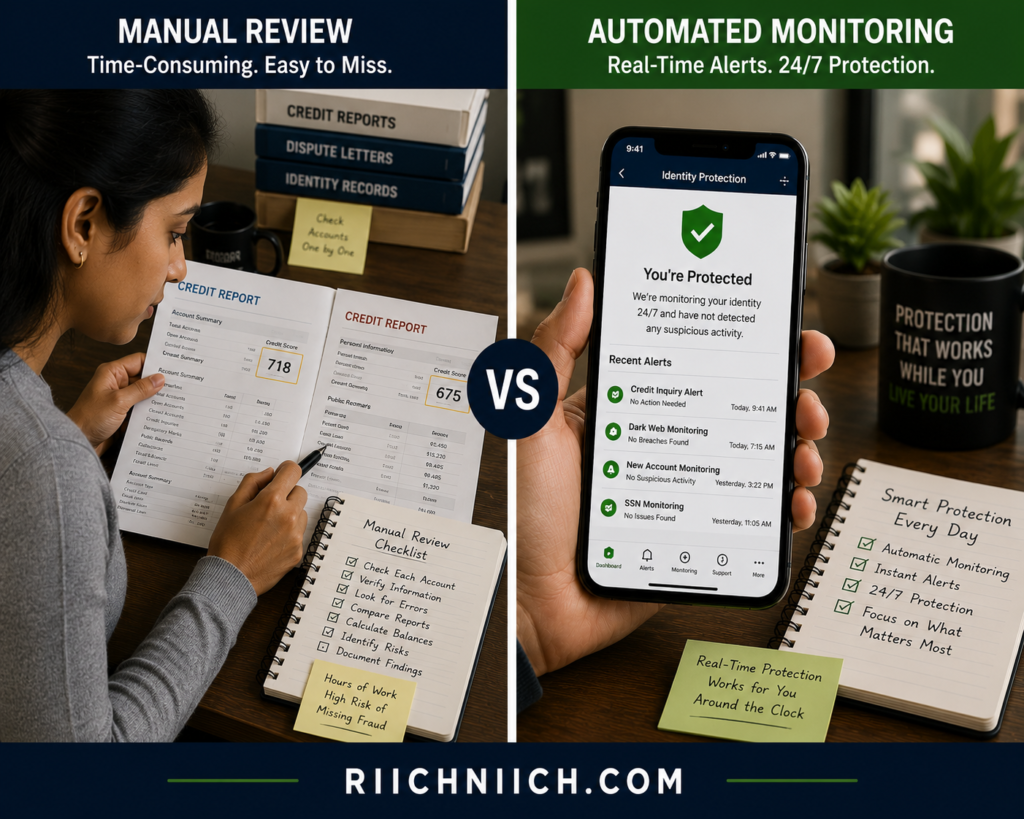
Some Features Overlap With Free Services
Certain features, such as checking your credit reports or freezing your credit, are available at no cost through government-authorized resources and the major credit bureaus.
For some people, these free options may be enough if they are willing to monitor everything themselves.
Is the Cost Worth It?
The value of identity theft protection often depends on the severity of your situation.
It may be a worthwhile investment if:
- Your Social Security number was exposed.
- Multiple financial accounts were compromised.
- You’re recovering from extensive identity theft.
- You want ongoing monitoring after a data breach.
- You prefer professional recovery support instead of managing everything alone.
On the other hand, if your identity theft was limited to a single fraudulent transaction that has already been resolved, you may be comfortable relying on free credit freezes, routine account monitoring, and strong online security habits.
The Bottom Line
If you’re wondering how long does it take to recover from identity theft, identity theft protection can be a valuable tool during recovery, especially for victims dealing with complex fraud or ongoing risks. Continuous monitoring, fraud alerts, and recovery specialists may help you detect new problems earlier and simplify the recovery process.
However, these services are not a substitute for taking immediate action yourself. The fastest recoveries typically happen when identity theft protection is combined with prompt reporting, organized documentation, regular account monitoring, and strong cybersecurity practices.
Frequently Asked Questions About How Long It Takes to Recover From Identity Theft
How long does it take to recover from identity theft?
The answer depends on the type of fraud and how quickly you respond. Minor cases involving a compromised credit card may be resolved within a few weeks, while more serious cases involving Social Security fraud, tax fraud, or multiple fraudulent accounts can take several months or even longer than a year. Acting immediately by reporting the fraud, freezing your credit, and disputing unauthorized accounts can help reduce how long does it take to recover from identity theft.
Can identity theft be resolved completely?
Yes, many people successfully recover from identity theft. However, recovery doesn’t necessarily end when fraudulent accounts are removed. Because stolen personal information may continue circulating after a data breach, it’s important to monitor your credit reports and financial accounts regularly to catch future fraud as early as possible.
What type of identity theft takes the longest to recover from?
Some of the longest recovery times are associated with:
- Social Security number misuse
- Tax identity theft
- Medical identity theft
- Criminal identity theft
- Cases involving multiple fraudulent loans or accounts
These situations often require communication with several financial institutions and government agencies, which can extend the recovery process.
Can I recover from identity theft without paying for identity theft protection?
Yes. Many people recover successfully by working directly with their banks, creditors, credit bureaus, and the Federal Trade Commission through IdentityTheft.gov. However, identity theft protection services can simplify ongoing monitoring, provide fraud alerts, and offer recovery assistance, which may reduce stress and help detect additional fraud sooner.
Will identity theft permanently damage my credit?
Not necessarily. If fraudulent accounts are reported and disputed successfully, they can often be removed from your credit reports. The key is acting quickly and following up throughout the investigation to ensure incorrect information is corrected. You can also review your credit reports through AnnualCreditReport.com to monitor your progress.
Should I keep my credit frozen after recovering?
For many people, yes. Keeping your credit frozen adds an extra layer of protection against new account fraud. You can temporarily lift the freeze whenever you need to apply for credit and then reactivate it afterward.
Can identity thieves use my information again later?
Unfortunately, yes. Criminals sometimes wait months or even years before attempting to reuse stolen personal information. That’s why ongoing credit monitoring, reviewing financial statements, and maintaining strong account security remain important even after you’ve completed the initial recovery process.
Does identity theft protection make recovery faster?
Identity theft protection cannot force banks or credit bureaus to complete investigations more quickly. However, many services provide continuous monitoring, real-time fraud alerts, and access to identity restoration specialists who can help you stay organized and respond faster if additional fraud is discovered. This may indirectly shorten how long does it take to recover from identity theft by preventing new problems from developing.
What’s the first thing I should do after discovering identity theft?
Your first priorities should be to secure your financial accounts, freeze your credit with the three major credit bureaus, change compromised passwords, and report the fraud through the Federal Trade Commission’s IdentityTheft.gov website. Taking these steps immediately can significantly reduce additional financial damage and improve your chances of recovering more quickly.

Final Verdict: How Long Does It Take to Recover From Identity Theft?
If you’re still asking how long does it take to recover from identity theft, the most accurate answer is that every case is different. A simple case involving a fraudulent credit card charge may be resolved in a matter of weeks, while more complex situations involving Social Security fraud, tax identity theft, or multiple fraudulent accounts can take several months or even longer than a year.
The good news is that your actions can have a major impact on your identity theft recovery time. Reporting the fraud immediately, freezing your credit, organizing your documentation, responding quickly to requests from financial institutions, and monitoring your accounts consistently can all help shorten the recovery process and prevent additional damage.
If your identity theft is extensive or your personal information was exposed in a major data breach, investing in a reputable identity theft protection service can also be worthwhile. Features such as credit monitoring, dark web monitoring, real-time fraud alerts, and access to dedicated recovery specialists can help you detect new threats early and provide valuable support while you’re restoring your identity. Although these services can’t eliminate the recovery process, they can make it easier to manage and reduce the chances of future incidents.
Remember that recovering from identity theft isn’t just about fixing today’s problems—it’s also about protecting yourself from tomorrow’s. Even after your accounts have been restored, continue reviewing your credit reports, monitoring your financial statements, securing your online accounts with strong passwords and multi-factor authentication, and staying alert for signs of suspicious activity. The Federal Trade Commission also recommends maintaining records of your recovery in case additional issues arise later.
Ultimately, how long does it take to recover from identity theft depends on how quickly you act, how severe the fraud is, and how proactive you remain throughout the recovery process. The sooner you begin taking the right steps—and the better your ongoing protection—the faster you’ll be able to regain control of your identity, restore your financial security, and move forward with confidence.