


How to remove yourself from people search sites is one of the most effective ways to protect your privacy and reduce the amount of personal information available online. Many people are surprised to discover that websites like Whitepages, Spokeo, and BeenVerified may display their home address, phone number, email address, family members, and other sensitive details without their knowledge. In this guide, you’ll learn how people search websites collect your information, how to remove personal information from people search websites, and the best strategies for preventing your data from reappearing in the future. Whether you choose manual opt-outs or an automated data broker removal service, taking action today can help you regain control of your online privacy and reduce your digital footprint.
Table of Contents
What Are People Search Sites?
People search sites are websites that collect, organize, and publish personal information about individuals online. If you’re researching how to remove yourself from people search sites, understanding how these websites work is the first step toward protecting your privacy.
Many people are surprised to discover that their home address, phone number, email address, age, relatives, and even past addresses can be found through a simple online search. People search websites gather this information from public records, marketing databases, social media profiles, property records, court filings, and other publicly available sources.
Some of the most well-known people search sites include:
- Whitepages
- Spokeo
- BeenVerified
- PeopleFinders
- TruthFinder
- Intelius
These platforms are often used by individuals looking to find contact information, reconnect with old friends, perform background searches, or verify identities. However, they can also expose sensitive personal information that may increase your risk of spam, scams, unwanted solicitations, social engineering attacks, and identity theft.
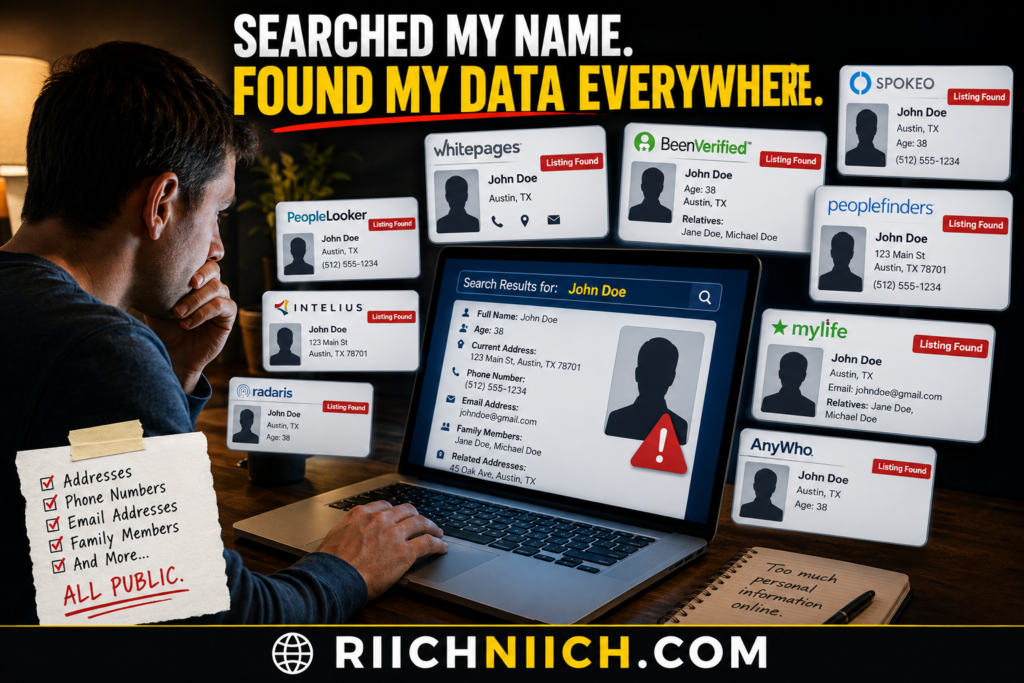
Many people search websites operate as data brokers, meaning they collect information from numerous sources and package it into searchable profiles. According to the consumer guidance published by the Federal Trade Commission, data brokers can gather information from public records, online activity, commercial databases, and other sources to build detailed profiles about individuals.
Want to understand where these companies get your information in the first place? Read our guide on What Is a Data Broker?
As a result, your personal information may appear online even if you never intentionally shared it with these websites. This is one of the main reasons so many people search for ways to remove personal information from people search websites and regain control of their online privacy.
Some people search sites offer free basic information, while others charge subscription fees for access to more detailed reports. These reports may include:
- Current and previous addresses
- Phone numbers
- Email addresses
- Family members and associates
- Property ownership records
- Employment history
- Criminal and court records (when publicly available)
The growing popularity of these websites has led many consumers to seek people search sites removal services and automated data broker removal tools. While manual opt-out requests are possible, the process can become time-consuming because there are hundreds of people search websites and data brokers operating online.
For this reason, many privacy-conscious consumers researching how to remove yourself from people search sites eventually consider automated solutions that continuously monitor and remove their information from data broker databases.
For additional information about data broker practices and consumer privacy rights, readers can review guidance published by the California Privacy Protection Agency and the Electronic Frontier Foundation, both of which provide educational resources on protecting personal information online.
Why Your Personal Information Appears on People Search Websites
If you’re wondering why your name, address, phone number, or other personal details appear online, you’re not alone. Many people researching how to remove yourself from people search sites are surprised to learn that they never directly gave their information to these websites. Instead, people search websites collect data from a variety of legal and publicly available sources.
Understanding where this information comes from can help you take the right steps to remove personal information from people search websites and reduce your online exposure.
Public Records
One of the biggest sources of information for people search websites is public records. Certain records are legally accessible to the public and may include:
- Property ownership records
- Voter registration records
- Marriage and divorce records
- Court filings
- Business registrations
- Professional licenses
People search companies gather information from these records and combine it into searchable online profiles.
Data Brokers
Data brokers are companies that collect, buy, sell, and share consumer information. They gather data from numerous sources and package it into detailed consumer profiles.
Data brokers may collect:
- Contact information
- Household information
- Purchasing behavior
- Demographic data
- Online activity
- Location data
Many people search websites either operate as data brokers or purchase information directly from them. This is one reason why data broker removal has become an important part of online privacy protection.
For more information on data broker practices, readers can review educational resources provided by the National Conference of State Legislatures, which discusses how consumer data is collected and shared across the data broker industry.
Social Media Activity
Many people unknowingly make personal information publicly available through social media platforms.
Examples include:
- Public profile information
- Friend lists
- Employment details
- Hometown information
- Photos with location tags
- Contact information
Even if a people search website does not directly pull information from social media, data brokers may collect publicly available information and incorporate it into consumer databases.
To learn more about how companies collect, buy, and share your personal information, see How Data Brokers Get Your Information.
Marketing and Commercial Databases
Retailers, advertisers, loyalty programs, survey companies, and marketing firms often collect consumer information during everyday transactions.
Examples include:
- Online purchases
- Rewards programs
- Newsletter subscriptions
- Contest entries
- Customer surveys
That information may eventually be shared with third-party data providers, who then make it available to data brokers and people search websites.
If you’re wondering how your information spreads across so many databases, check out How Your Personal Data Ends Up Online.
Online Accounts and Website Activity
Your personal information can also spread through normal internet use.
Examples include:
- Creating online accounts
- Registering domain names
- Joining forums
- Posting classified advertisements
- Publishing business information online
Over time, this information can be copied, aggregated, and redistributed across numerous databases.
The more places your information appears online, the easier it becomes for people search websites to create detailed profiles about you.
Data Breaches
Data breaches are another major source of personal information exposure. When companies experience security incidents, customer information may be leaked, stolen, or sold.
Depending on the breach, exposed information may include:
- Names
- Email addresses
- Phone numbers
- Home addresses
- Dates of birth
Privacy researchers at the Identity Theft Resource Center regularly track data breaches and provide educational resources about protecting personal information after exposure.
Why This Matters
The more information that appears on people search websites, the greater your exposure to unwanted contact, spam, phishing attacks, scams, social engineering attempts, and identity theft risks.
That is why many consumers researching how to remove yourself from people search sites choose to submit opt-out requests, remove personal information from people search websites, or use automated people search sites removal services to reduce their digital footprint.
Understanding where your information originates is the first step toward taking control of your privacy and preventing additional personal data from spreading across the internet.
What Information Can People Search Sites Display?
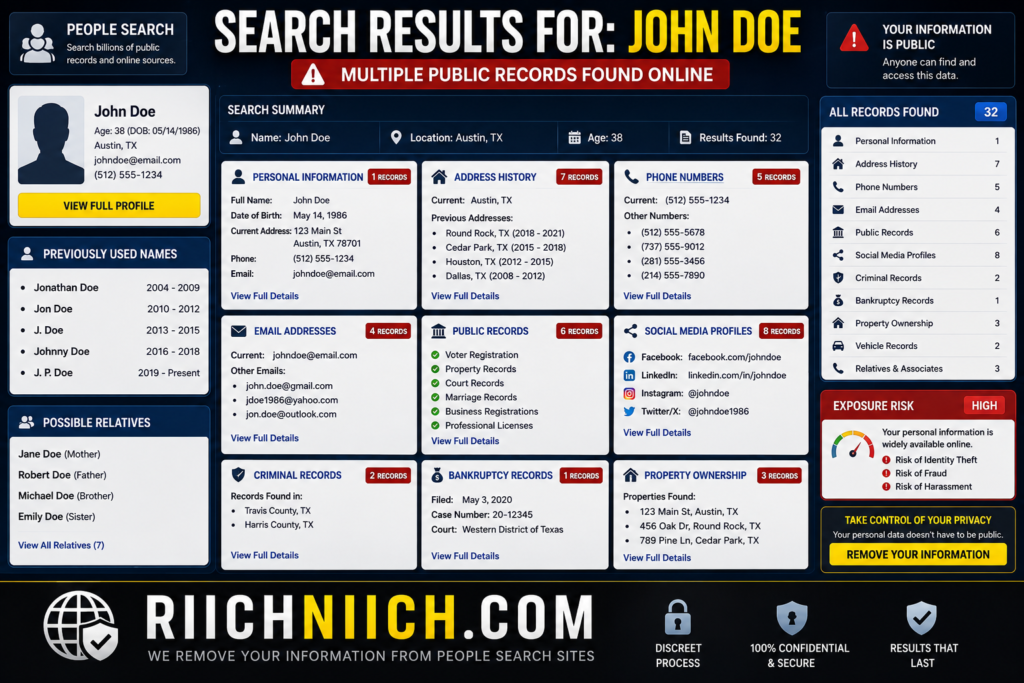
Many people begin researching how to remove yourself from people search sites after discovering just how much personal information is publicly available online. While the amount of information varies by website, some people search platforms can display surprisingly detailed profiles compiled from public records, data brokers, and commercial databases.
The more information available about you online, the easier it becomes for marketers, scammers, identity thieves, and other third parties to learn personal details about your life. Understanding what information is visible can help you determine whether you should remove personal information from people search websites or consider a people search sites removal service.
Full Name and Known Aliases
Most people search websites display your full legal name along with any known aliases, maiden names, nicknames, or previous names associated with public records.
This information is often used as the starting point for building a complete profile.
Current and Previous Addresses
One of the most common pieces of information displayed on people search websites is your address history.
Depending on the site, visitors may be able to view:
- Current home address
- Previous residences
- Length of residence at each location
- Associated household members
For many consumers, finding their home address online is the main reason they begin searching for how to remove yourself from people search sites.
Phone Numbers
Many people search websites display both current and previous phone numbers.
These may include:
- Mobile phone numbers
- Landline numbers
- Business phone numbers
Publicly available phone numbers can increase unwanted robocalls, spam calls, scam messages, and phishing attempts.
Email Addresses
Some people search websites include email addresses gathered from public records, marketing databases, or historical online activity.
This can expose individuals to:
- Spam emails
- Phishing attacks
- Account takeover attempts
- Targeted scams
Removing email addresses from public databases is often an important step in improving online privacy protection.
Family Members and Associates
Many people search sites attempt to identify relationships between individuals.
A profile may include:
- Parents
- Siblings
- Spouses
- Former spouses
- Children
- Known associates
Even if you personally maintain strong privacy habits, information about family members may still appear through connected public records.
Age and Date of Birth Information
Some websites display an individual’s age or estimated birth year.
While this information may seem harmless, it can help scammers verify identities, answer security questions, or build more convincing phishing attacks.
Property Ownership Records
Property records are frequently included in people search reports.
Information may include:
- Home ownership history
- Property purchase dates
- Property values
- Tax assessment information
Many consumers are surprised to discover that property ownership information is often publicly accessible and easily searchable online.
Employment and Business Information
Certain people search websites may display:
- Current employer
- Past employers
- Professional licenses
- Business affiliations
This information can help marketers build consumer profiles, but it may also increase privacy concerns for individuals who prefer to keep their professional and personal lives separate.
Court and Public Records
Depending on local laws and data sources, some websites may display information obtained from public court records.
Examples may include:
- Civil court filings
- Bankruptcy records
- Business disputes
- Traffic-related records
The availability of this information varies significantly by jurisdiction.
Why This Information Matters
Each individual data point may seem harmless on its own. However, when combined into a single profile, people search websites can create a surprisingly detailed picture of your life.
According to educational resources published by the National Cybersecurity Alliance, limiting the amount of personal information publicly available online can help reduce privacy risks and make it more difficult for criminals to gather information used in scams and identity theft schemes.
For anyone concerned about online privacy, understanding what information appears online is an important step toward deciding whether to remove personal information from people search websites. Many individuals who discover extensive personal details online eventually explore manual opt-outs, data broker removal strategies, or automated services designed to continuously monitor and remove exposed information.
The more personal information that remains publicly available, the more valuable it becomes to advertisers, data brokers, and cybercriminals. That is why many privacy-conscious consumers researching how to remove yourself from people search sites take proactive steps to reduce their online footprint and regain control of their personal information.
Risks of Leaving Your Information on People Search Sites
Many people do not realize the dangers of having their personal information publicly available until they discover their details on a people search website. If you are researching how to remove yourself from people search sites, understanding the risks can help explain why so many privacy-conscious individuals choose to remove personal information from people search websites.
While these websites may appear harmless, they often make sensitive information easily accessible to strangers, marketers, scammers, and cybercriminals.
Increased Risk of Identity Theft
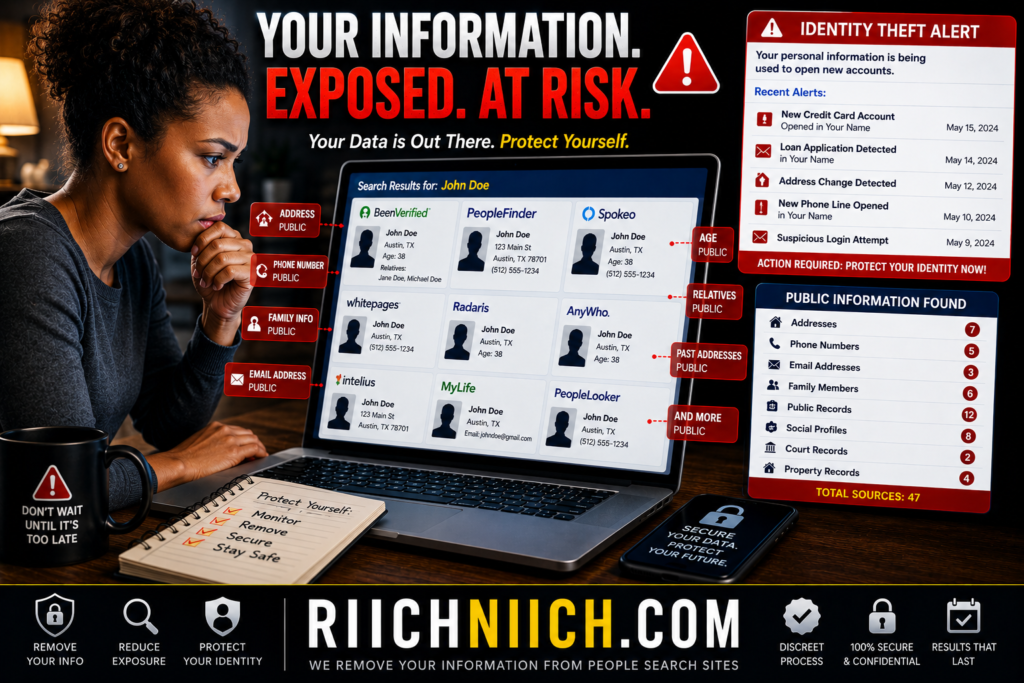
One of the biggest concerns is identity theft. Many people search websites display information that criminals can use to verify your identity or build a profile about you.
This information may include:
- Full name
- Current address
- Previous addresses
- Phone numbers
- Family members
- Age
Even if a website does not display highly sensitive information such as Social Security numbers, criminals can combine publicly available details with information obtained through data breaches and phishing attacks.
The more information available online, the easier it becomes for criminals to impersonate you or commit fraud in your name.
If you’re curious about how exposed personal information can be used by criminals, read How Identity Theft Happens.
More Spam Calls and Scam Messages
People search websites often make phone numbers easy to find. Once your contact information becomes widely available, you may experience:
- Robocalls
- Telemarketing calls
- Scam text messages
- Fraudulent offers
- Phishing attempts
Scammers frequently use publicly available information to make their communications appear more legitimate and trustworthy.
This is one reason many consumers search for people search sites removal solutions after noticing an increase in unwanted calls and messages.
Targeted Phishing Attacks
Cybercriminals often conduct research before launching phishing attacks. Information found on people search websites can help them create highly convincing scams.
For example, a scammer who knows your:
- Address
- Relatives’ names
- Employer
- Phone number
may be able to craft personalized emails or text messages that appear legitimate.
According to guidance published by the Cybersecurity and Infrastructure Security Agency, personalized phishing attacks can be significantly more effective because they use information that victims recognize as accurate.
Many phishing scams begin with information gathered from public sources. Learn more in How Hackers Get Your Personal Data.
Stalking and Personal Safety Concerns
For some individuals, privacy is more than a convenience—it is a safety issue.
People search websites can make it easier for strangers to locate:
- Home addresses
- Family members
- Contact information
- Property records
This can create concerns for:
- Victims of harassment
- Domestic violence survivors
- Public-facing professionals
- Law enforcement personnel
- Content creators
Removing personal information from people search websites can help reduce the amount of information available to individuals with harmful intentions.
Social Engineering Risks
Social engineering attacks rely on manipulating people into sharing sensitive information or granting access to accounts.
When attackers have access to personal details from people search websites, they may use that information to:
- Answer security questions
- Gain trust during phone calls
- Impersonate family members
- Convince customer service representatives to reveal information
The more information available online, the easier these attacks become.
Loss of Privacy
Even if you are not concerned about identity theft, many people simply do not want their personal information publicly available.
People search websites may display:
- Past residences
- Family connections
- Contact information
- Property records
Many individuals are uncomfortable with strangers being able to access these details through a simple online search.
This growing concern has contributed to increased interest in data broker removal and online privacy protection services.
Long-Term Data Exposure
One of the biggest challenges with people search websites is that information often spreads across multiple databases.
After your information appears on one site, it may be copied or shared with:
- Additional data brokers
- Marketing databases
- People finder websites
- Search engines
This makes manual removal more difficult over time and is one reason many individuals researching how to remove yourself from people search sites eventually consider automated monitoring and removal services.
Why Taking Action Matters
The risks associated with people search websites extend beyond simple privacy concerns. Publicly available personal information can contribute to identity theft, phishing attacks, scams, harassment, and unwanted exposure.
The Privacy Rights Clearinghouse recommends limiting the amount of personal information available online whenever possible as part of a broader privacy protection strategy.
For many people, learning about these risks is what motivates them to finally take action. Whether through manual opt-outs or professional data broker removal services, reducing your online footprint can help protect your privacy and make it more difficult for bad actors to access information about you.
If your goal is to improve online privacy and reduce unnecessary exposure, understanding these risks is an important reason to explore how to remove yourself from people search sites and take steps toward reclaiming control of your personal information.
How to Find Which People Search Sites Have Your Information
Before you can begin the process of how to remove yourself from people search sites, you first need to identify where your personal information is currently being displayed. Many people are surprised to discover that their information appears on dozens of people search websites and data broker databases without their knowledge.
The good news is that you can perform a simple audit of your online presence and uncover many of the websites that may be exposing your personal information.
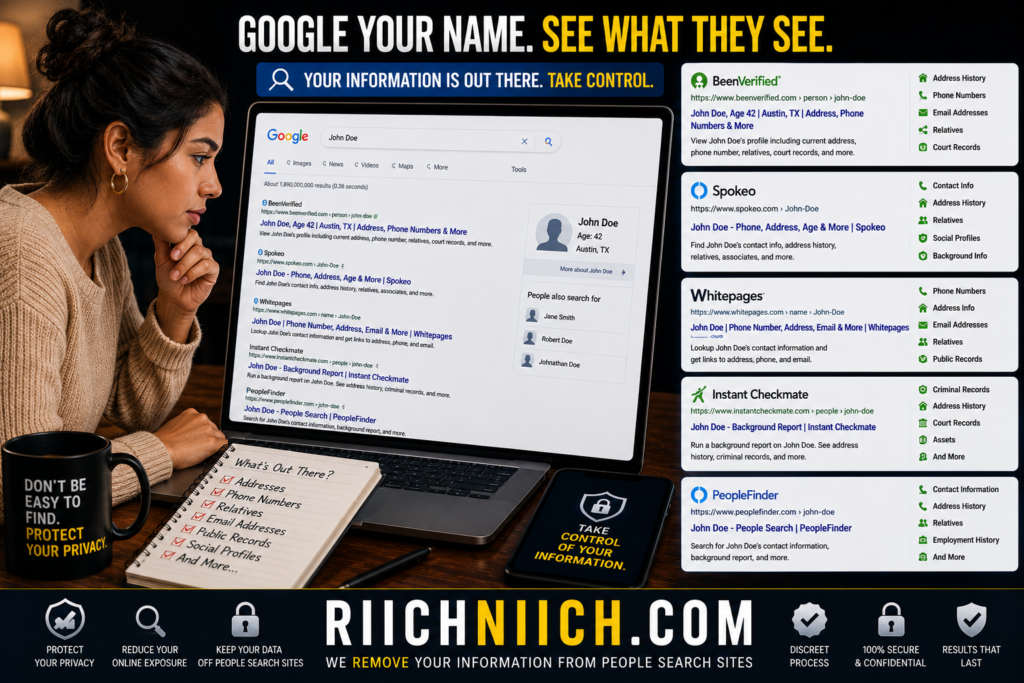
Search for Your Full Name on Google
The easiest place to start is with a basic search of your full name.
Try searching:
- Your first and last name
- Your name in quotation marks
- Your name plus your city or state
- Your name plus your phone number
For example:
- “John Smith”
- “John Smith Texas”
- “John Smith phone number”
Review the search results carefully and look for listings from people search websites.
Common examples include:
- Whitepages
- Spokeo
- BeenVerified
- PeopleFinders
- TruthFinder
- Intelius
These websites often rank highly in search results and may already contain personal information about you.
Search for Your Phone Number
Your phone number can often reveal profiles you may not find through a name search alone.
Enter your phone number into search engines using quotation marks:
- “555-555-5555”
This may uncover listings on:
- People search websites
- Data broker databases
- Business directories
- Public profile pages
If your phone number appears publicly, it may explain unwanted spam calls and scam messages.
Search for Your Email Address
Many people search websites and data brokers collect email addresses as part of their profiles.
Try searching:
This can help identify websites that have published or indexed your email address.
If your email appears publicly, it may increase your exposure to spam emails, phishing campaigns, and account takeover attempts.
Search Previous Addresses
Older addresses often remain in data broker databases for years.
Search combinations such as:
- Your name + previous address
- Previous phone number
- Previous city and state
Many people discover that outdated information continues to circulate online long after they have moved.
Check Major People Search Websites Directly
In addition to search engines, you should search major people search websites individually.
Examples include:
- Whitepages
- Spokeo
- BeenVerified
- Intelius
- TruthFinder
- PeopleFinders
Enter your:
- Full name
- City
- State
You may find profiles that do not appear in Google search results.
This step is especially important if you plan to remove personal information from people search websites manually.
Review Data Broker Search Results
Many data brokers operate separately from traditional people search websites.
Some data brokers allow public searches while others sell information behind the scenes.
The Electronic Privacy Information Center provides educational resources about data broker practices and consumer privacy rights, helping individuals better understand how personal information is collected and distributed online.
Checking data broker exposure can help you build a more complete picture of your online footprint.
Use Privacy Scanning Tools
Several privacy-focused services offer free exposure scans that can help identify websites displaying your information.
These tools can often detect:
- People search site listings
- Data broker records
- Public profile exposure
- Contact information leaks
Privacy scans can save significant time compared to manually searching hundreds of websites.
Create a Tracking List
As you identify websites containing your information, create a simple spreadsheet or document that includes:
- Website name
- Profile URL
- Information displayed
- Opt-out page location
- Removal request status
Keeping records will make it easier to track your progress as you work through the process of how to remove yourself from people search sites.
Why Finding Your Listings Matters
You cannot remove information that you do not know exists. Taking the time to locate your profiles is one of the most important steps in the entire removal process.
The more websites you identify, the more complete your privacy protection strategy becomes. Many people find that their information appears on far more sites than expected, which is why data broker removal and ongoing monitoring have become increasingly popular privacy solutions.
The Center for Democracy and Technology recommends regularly reviewing your online presence as part of a broader privacy management strategy.
Once you know where your information appears, you can begin submitting opt-out requests and taking action to complete the process of how to remove yourself from people search sites more effectively.
How to Remove Yourself From People Search Sites Manually
If you’ve discovered your personal information online, you may be wondering whether you can handle the removal process yourself. The good news is that it is possible to remove personal information from people search websites without paying for a service. However, the process requires patience, organization, and ongoing monitoring.
For many individuals researching how to remove yourself from people search sites, manual removal is often the first step toward improving online privacy and reducing exposure to data brokers.
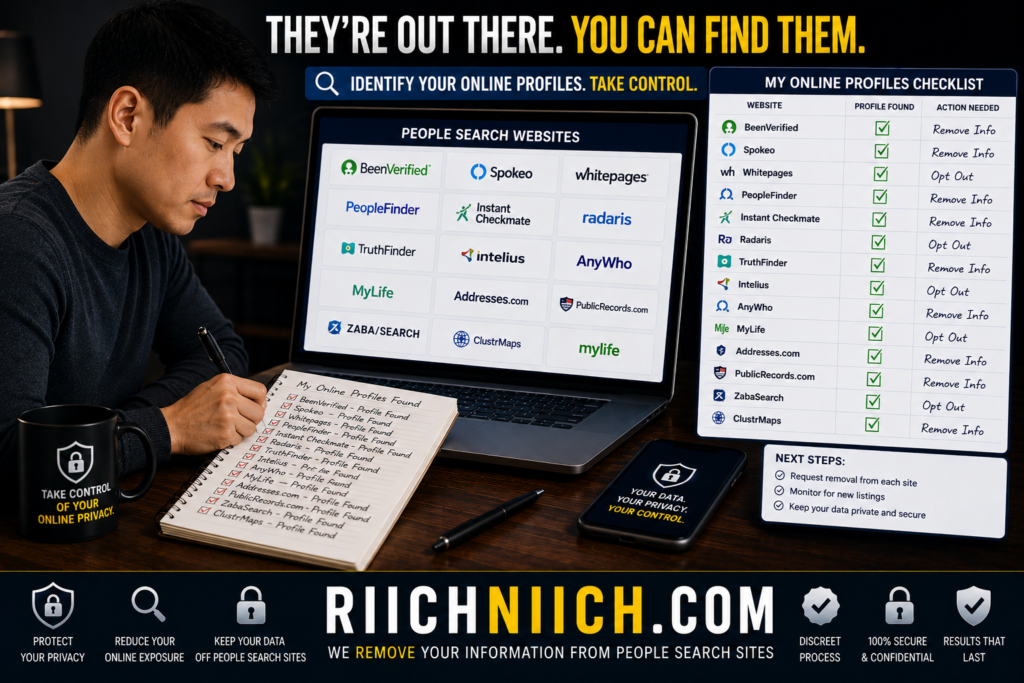
Step 1: Locate Your Profile
Before you can submit a removal request, you must find the exact profile containing your information.
Search for:
- Your full name
- Current city and state
- Previous cities
- Phone number
- Email address
Once you locate your profile, save the direct URL. Most opt-out forms will require the profile link to process your request.
Step 2: Find the Website’s Opt-Out Page
Most legitimate people search websites provide an opt-out process, although some make it easier to find than others.
Look for links such as:
- Opt Out
- Remove My Information
- Privacy Request
- Data Removal Request
- Do Not Sell My Information
These links are often located in the website footer, privacy policy, or help center.
The opt-out page typically provides instructions for removing your information from people search websites.
Step 3: Submit a Removal Request
After locating the opt-out page, complete the required form.
You may be asked to provide:
- Your full name
- Email address
- Profile URL
- State of residence
- Verification information
Always follow the site’s instructions carefully to avoid delays.
Some websites process requests within a few days, while others may take several weeks.
Step 4: Verify Your Identity
Many people search websites require identity verification before removing records.
Verification methods may include:
- Email confirmation
- CAPTCHA verification
- Phone verification
- Identity confirmation forms
This process helps prevent unauthorized removal requests.
While verification can be frustrating, it is often necessary to complete the people search sites removal process.
Step 5: Confirm Removal
After submitting your request, do not assume the record has been removed immediately.
Check back periodically to verify that:
- The profile no longer appears
- Search results are updated
- Cached information has disappeared
In some cases, search engines may continue displaying outdated results until their indexes refresh.
Step 6: Repeat the Process Across Multiple Sites
One of the biggest challenges with how to remove yourself from people search sites is the number of websites involved.
Many individuals discover their information on:
- Whitepages
- Spokeo
- BeenVerified
- PeopleFinders
- Intelius
- TruthFinder
- Dozens of additional data broker websites
Each website usually requires a separate removal request.
This is why manual data broker removal can become time-consuming.
Step 7: Monitor for Reappearing Information
Even after successful removal, your information may eventually return.
This happens because:
- Data brokers continue collecting information
- New public records become available
- Databases share information with one another
- Marketing data is constantly updated
Privacy experts at the International Association of Privacy Professionals recommend regularly reviewing your online presence to identify newly published personal information.
Benefits of Manual Removal
Manual removal can be a good option if you:
- Have limited exposure
- Want full control over the process
- Prefer not to pay for a service
- Only need to remove a few records
For some individuals, submitting opt-out requests directly can successfully reduce their online footprint.
Drawbacks of Manual Removal
Manual removal also has significant limitations.
Challenges often include:
- Hundreds of websites to monitor
- Repeated removal requests
- Information reappearing over time
- Ongoing maintenance requirements
- Hours of research and tracking
This is one reason many people eventually explore automated data broker removal solutions after attempting manual opt-outs.
Is Manual Removal Worth It?
For those committed to improving online privacy, manual removal can be an effective starting point. It allows you to remove personal information from people search websites without paying for a subscription service.
However, if your information appears across dozens of sites, the process can quickly become overwhelming. Many people researching how to remove yourself from people search sites begin with manual removals but later look for automated solutions that continuously monitor and remove their information from data broker databases.
According to resources provided by the Electronic Privacy Information Center, consumers should take proactive steps to limit the amount of personal information available online and regularly review their digital footprint for new exposures.
Manual removal works, but it requires consistency. The more websites displaying your information, the more time and effort it will take to maintain your privacy over the long term.
How to Remove Yourself From Whitepages
Whitepages is one of the most well-known people search websites on the internet. It often displays personal information such as names, phone numbers, current and previous addresses, relatives, and other publicly available details. If you are researching how to remove yourself from people search sites, Whitepages is usually one of the first websites you should check.
Because Whitepages ranks highly in search engines, removing your information from the platform can be an important step toward improving your privacy and reducing your online exposure.
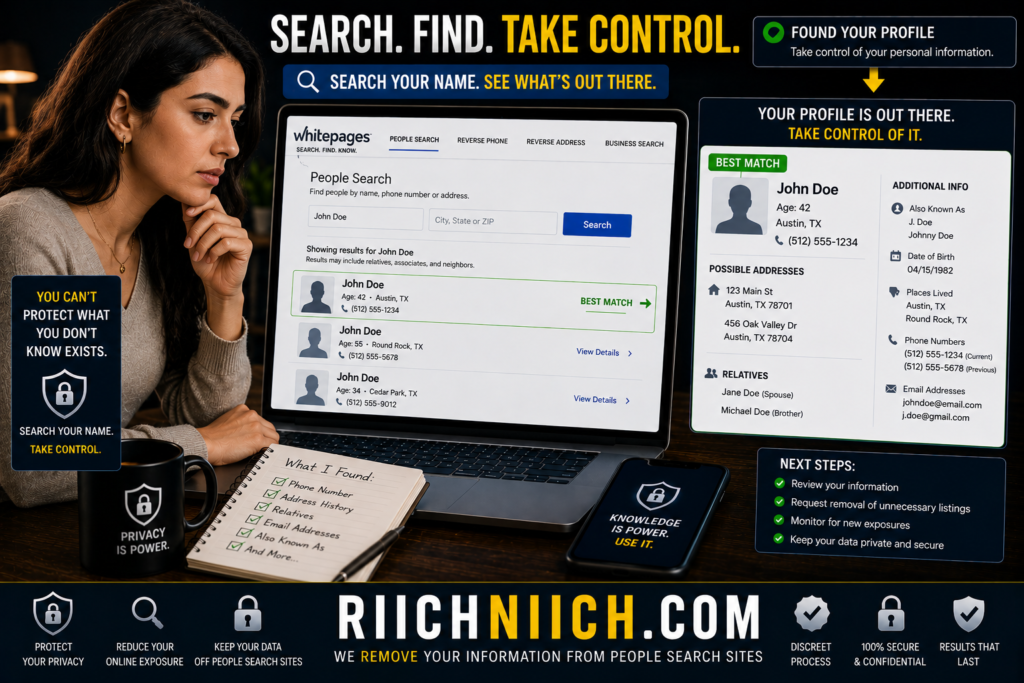
Step 1: Find Your Whitepages Listing
Start by visiting Whitepages and searching for:
- Your full name
- Your city and state
- Your phone number
Locate the profile that contains your information.
Carefully verify that the profile belongs to you before proceeding.
Once you find the correct listing, copy the profile URL. You will need this link when submitting your removal request.
Step 2: Access the Whitepages Opt-Out Process
Whitepages provides a dedicated opt-out process that allows individuals to request removal of their personal information.
Locate the company’s privacy or suppression page and follow the instructions provided for personal record removal.
You will typically need:
- The profile URL
- An email address
- Verification information
Whitepages may update its removal procedures periodically, so always follow the instructions listed on the company’s current privacy request page.
Step 3: Submit Your Removal Request
After locating your profile and accessing the opt-out page, submit your request for removal.
You may be asked to confirm:
- Your identity
- The record being removed
- An email verification link
Ensure that all information is entered accurately to avoid delays.
Once submitted, Whitepages will typically provide confirmation that your request has been received.
Step 4: Verify the Removal
After completing the request, monitor your profile periodically to verify that the information has been removed.
Keep in mind that:
- Processing times can vary
- Search engine results may take time to update
- Cached versions of pages may remain visible temporarily
It may take several days before the removal is fully reflected across search results.
What Information Can Whitepages Display?
Depending on the listing, Whitepages profiles may contain:
- Full name
- Phone numbers
- Current address
- Previous addresses
- Relatives
- Age range
- Property information
Many consumers are surprised by how much information is publicly available through a simple search.
This is one reason why so many people begin researching how to remove yourself from people search sites after discovering a Whitepages profile containing personal details.
Why Whitepages Removal Matters
Removing your Whitepages listing can help reduce:
- Spam calls
- Scam messages
- Unwanted solicitations
- Privacy concerns
- Social engineering risks
While removal from Whitepages will not erase your information from every people search website, it can significantly reduce one of the most visible sources of public personal information.
Whitepages Removal Is Only One Piece of the Puzzle
One common mistake is assuming that removing information from Whitepages solves the entire problem.
In reality, your information may also appear on:
- Spokeo
- BeenVerified
- PeopleFinders
- TruthFinder
- Intelius
- Numerous data broker websites
Each site usually requires a separate removal request.
The Future of Privacy Forum notes that personal information is often distributed across multiple databases, making comprehensive privacy management an ongoing process rather than a one-time task.
Should You Remove Whitepages Listings Manually or Use a Service?
Manual Whitepages removal is free and can be completed in a relatively short amount of time. However, many individuals discover that their information appears on dozens of similar websites.
For this reason, some people choose to combine manual opt-outs with data broker removal services that continuously monitor and remove information across multiple platforms.
If your goal is complete privacy protection, removing your Whitepages profile is an excellent first step in the broader process of how to remove yourself from people search sites. However, ongoing monitoring is often necessary because personal information can reappear as data brokers update their databases and acquire new records.
How to Remove Yourself From Spokeo
Spokeo is one of the largest people search websites and data aggregation platforms online. The site collects information from public records, marketing databases, social networks, and other sources to create searchable profiles about individuals.
If you are researching how to remove yourself from people search sites, Spokeo is another major platform you should check. Many users discover that Spokeo profiles contain personal details such as addresses, phone numbers, email addresses, family members, and other information they never intended to make publicly available.
Removing your information from Spokeo can help improve your privacy and reduce the amount of personal data accessible through online searches.
Step 1: Search for Your Spokeo Profile
Begin by visiting Spokeo and searching for:
- Your full name
- Current city and state
- Previous cities
- Phone number
Review the results carefully to identify your profile.
Once you locate the correct record, copy the profile URL. You will need the direct link to submit a removal request.
Step 2: Access Spokeo’s Opt-Out Page
Spokeo provides an opt-out process that allows consumers to request the removal of their personal information.
Locate the company’s privacy or opt-out page and follow the current instructions provided.
You will generally need:
- Your profile URL
- A valid email address
- Verification information
Because companies occasionally update their privacy procedures, it is important to follow the instructions currently published on Spokeo’s website.
Step 3: Submit Your Removal Request
After accessing the opt-out form, submit the requested information.
Double-check that:
- The profile URL is correct
- The profile belongs to you
- Your contact information is entered accurately
Submitting incorrect information may delay the removal process or result in the wrong profile being reviewed.
Step 4: Complete Email Verification
In most cases, Spokeo requires users to verify their request through email.
Check your inbox for a confirmation message and follow the verification instructions.
Your removal request may not be processed until this verification step is completed.
Step 5: Monitor the Listing
After submitting your request, periodically check the profile to verify that it has been removed.
Keep in mind that:
- Processing times vary
- Search results may take time to update
- Cached search engine results may remain temporarily visible
Patience is often required during the removal process.
What Information Can Spokeo Display?
Depending on the available data sources, Spokeo profiles may contain:
- Full names
- Current addresses
- Previous addresses
- Phone numbers
- Email addresses
- Family members
- Age ranges
- Property information
- Social media accounts
The amount of information displayed can vary from one profile to another.
For many consumers, discovering the extent of their online exposure is what motivates them to begin researching how to remove yourself from people search sites.
Why Removing Your Spokeo Listing Is Important
Publicly available personal information can create several privacy concerns.
Potential risks include:
- Spam calls
- Scam messages
- Phishing attacks
- Social engineering attempts
- Identity theft risks
- Unwanted contact from strangers
The more information available online, the easier it becomes for bad actors to build detailed profiles about individuals.
One Removal Does Not Remove Everything
A common misconception is that removing information from Spokeo eliminates it from the internet.
Unfortunately, the same information may still appear on:
- Whitepages
- BeenVerified
- PeopleFinders
- TruthFinder
- Intelius
- Additional data broker databases
Each website typically requires its own removal request process.
The Data & Marketing Association provides resources explaining how consumer information is collected and shared across numerous databases, which helps illustrate why personal information often appears on multiple platforms simultaneously.
Manual Removal vs Ongoing Privacy Protection
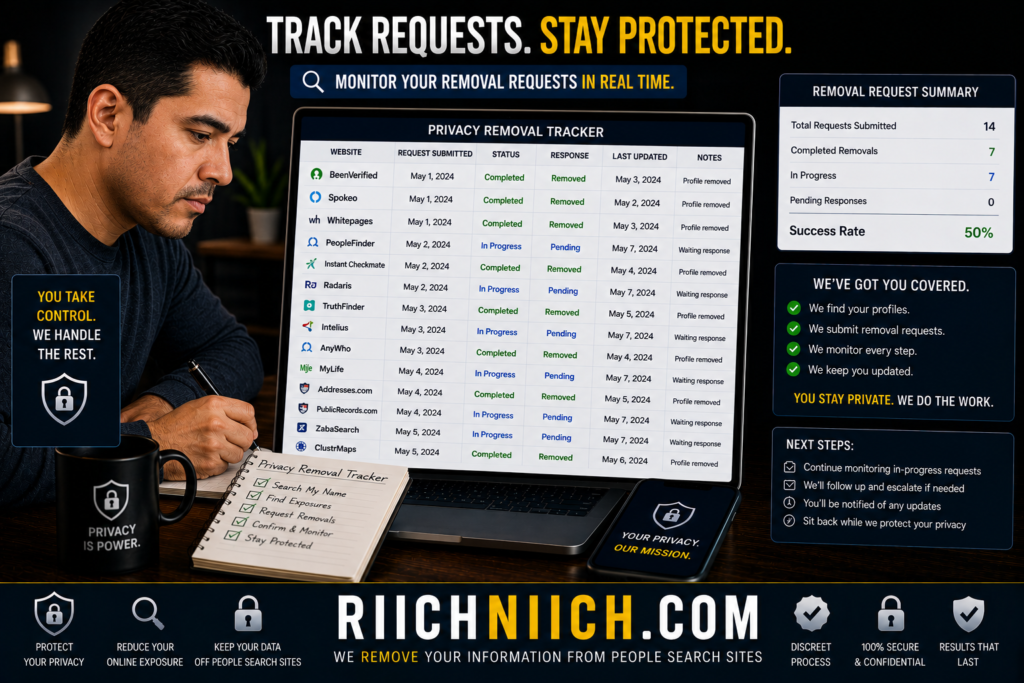
Removing your Spokeo listing manually is an effective way to reduce some of your online exposure. However, many consumers discover that their information exists across dozens or even hundreds of people search websites and data broker databases.
As a result, maintaining privacy often requires:
- Regular monitoring
- Repeated opt-out requests
- Ongoing data broker removal efforts
For anyone serious about online privacy, removing information from Spokeo is an important step in the broader process of how to remove yourself from people search sites. While the manual process can be effective, it requires ongoing attention because personal information may reappear as databases update and acquire new records over time.
How to Remove Yourself From BeenVerified
BeenVerified is another popular people search website that compiles personal information from public records, data brokers, and various online sources. If you’re researching how to remove yourself from people search sites, checking BeenVerified should be a priority because many users discover detailed personal information listed in its reports.
These profiles can include addresses, phone numbers, email addresses, relatives, property records, and other information that may contribute to privacy concerns. Removing your information from BeenVerified can help reduce your online footprint and make it more difficult for strangers to access personal details about you.
Step 1: Search for Your Information on BeenVerified
Begin by searching BeenVerified using:
- Your full name
- City and state
- Previous locations
- Phone number
Carefully review the search results to find the profile that matches your information.
Once you locate your listing, copy the profile URL or record details needed for the removal request process.
Step 2: Locate BeenVerified’s Opt-Out Process
BeenVerified provides a privacy request process that allows consumers to request the removal of personal information from public search results.
Visit the company’s privacy or opt-out section and follow the instructions currently provided.
You may need to provide:
- Your name
- The profile URL
- Contact information
- Verification details
Because privacy procedures can change over time, always follow the latest instructions published directly by BeenVerified.
Step 3: Submit Your Removal Request
After locating the appropriate opt-out form, submit the required information.
Before sending your request, verify that:
- The profile belongs to you
- The URL is accurate
- Your contact information is correct
Providing accurate information helps prevent delays during the review process.
Step 4: Complete Any Verification Requirements
Many people search websites require verification to confirm that the person requesting removal is connected to the record.
Verification may involve:
- Email confirmation
- CAPTCHA verification
- Additional identity confirmation steps
Be sure to complete all required actions to ensure your request can be processed.
Step 5: Confirm That Your Listing Has Been Removed
After submitting your request, periodically check BeenVerified to confirm that your information no longer appears.
Keep in mind that:
- Processing times vary
- Search engines may temporarily display cached results
- Updates may take several days to appear
Regular monitoring helps ensure that your removal request has been successfully completed.
What Information Can BeenVerified Display?
Depending on the available records, BeenVerified profiles may include:
- Full names
- Current and previous addresses
- Phone numbers
- Email addresses
- Family members
- Property ownership records
- Age ranges
- Social media information
Many individuals become interested in how to remove yourself from people search sites after seeing how much information is included in these reports.
Why Removing Your BeenVerified Profile Matters
Having personal information publicly available can increase exposure to:
- Identity theft
- Scam calls
- Phishing emails
- Social engineering attacks
- Harassment
- Privacy concerns
Even information that appears harmless can be valuable when combined with data from other online sources.
The more information available online, the easier it becomes for third parties to build a detailed profile about you.
Your Information May Exist on Multiple Websites
Removing your information from BeenVerified is a good step, but it does not automatically remove your information from other people search websites.
Your data may still appear on:
- Whitepages
- Spokeo
- PeopleFinders
- TruthFinder
- Intelius
- Other data broker platforms
This is why many consumers find that remove personal information from people search websites requires multiple opt-out requests across numerous sites.
The National Institute of Standards and Technology encourages individuals to limit unnecessary exposure of personal information online as part of broader privacy and cybersecurity best practices.
Manual Removal Requires Ongoing Monitoring
Even after successful removal, information can sometimes reappear due to:
- New public records
- Data broker updates
- Database sharing agreements
- Newly acquired consumer data
This is one reason many privacy-conscious consumers eventually consider data broker removal services that continuously monitor and remove information from multiple sources.
For individuals committed to improving online privacy, removing a BeenVerified listing is an important part of how to remove yourself from people search sites. While manual opt-outs can be effective, ongoing monitoring is often necessary to ensure that your personal information remains as private as possible over time.
Why Manual Removal Is Difficult
At first glance, manually removing your information from people search websites may seem straightforward. You find your profile, submit an opt-out request, and wait for it to be removed. However, many people quickly discover that how to remove yourself from people search sites is far more complicated than removing a few online listings.
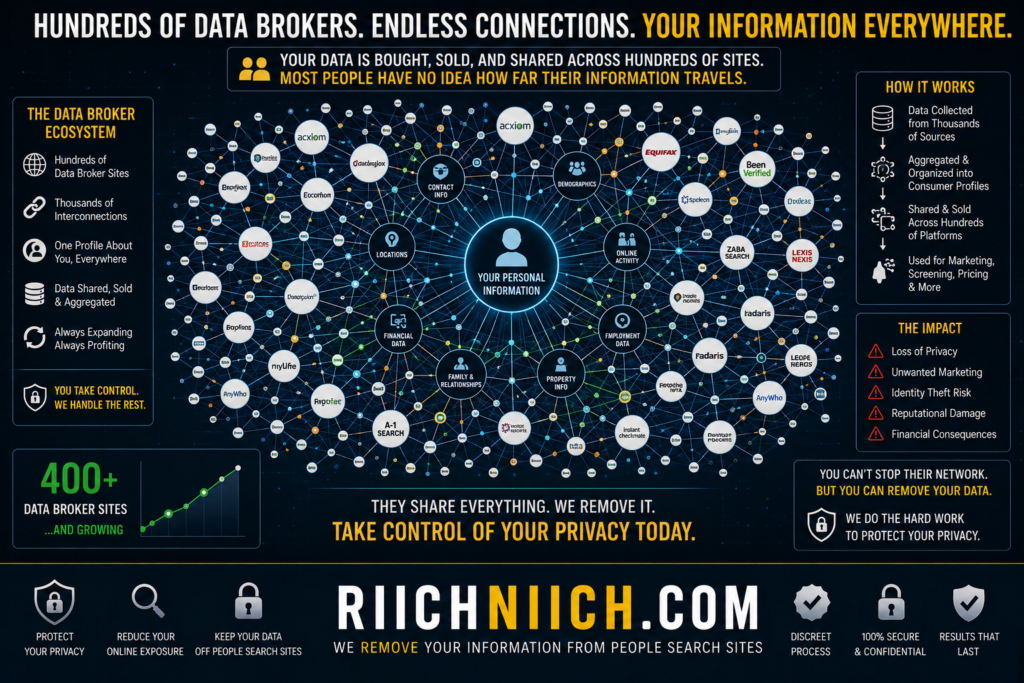
The reality is that personal information is often spread across hundreds of people search websites, data brokers, marketing databases, and public record aggregators. While manual removal is possible, maintaining long-term privacy can become a significant and ongoing challenge.
There Are Hundreds of Data Broker Websites
Most people only recognize a few major people search websites such as Whitepages, Spokeo, and BeenVerified. However, there are hundreds of lesser-known companies collecting and sharing consumer information.
These websites may contain:
- Home addresses
- Phone numbers
- Email addresses
- Family relationships
- Property records
- Demographic information
Removing information from a handful of websites is relatively manageable. Removing information from hundreds of websites is a much larger task.
Every Website Has a Different Removal Process
One of the biggest frustrations with manual removal is that there is no universal opt-out system.
Each website may require:
- Different forms
- Different verification methods
- Different processing times
- Different privacy procedures
Some websites make removal simple, while others require multiple steps before a request can be completed.
As a result, consumers often spend hours researching how to remove personal information from people search websites one site at a time.
Information Often Reappears
Even after a successful removal request, personal information can return.
This may happen because:
- Data brokers acquire new records
- Public records are updated
- Marketing databases share information
- Data is republished from other sources
Many individuals are surprised to find that information they removed months earlier has appeared again on the same website.
This ongoing cycle is one of the most common reasons people continue searching for how to remove yourself from people search sites long after their initial removal efforts.
👉 Instead of manually tracking hundreds of data brokers, many people use Incogni to automatically submit removal requests and continuously monitor for new listings that appear online.
Tracking Requests Becomes Time-Consuming
When dealing with dozens of websites, organization becomes critical.
Many people eventually create spreadsheets to track:
- Website names
- Profile URLs
- Removal request dates
- Verification status
- Follow-up reminders
Without a tracking system, it becomes easy to lose track of which websites have processed requests and which still require action.
New Data Brokers Appear Regularly
The data broker industry continues to evolve.
New companies frequently enter the market and begin collecting consumer information from:
- Public records
- Commercial databases
- Marketing partners
- Online activity sources
This means that even after removing information from current websites, new listings may appear on websites that did not previously exist.
Search Engines May Continue Showing Cached Results
Another challenge involves search engines.
Even after a profile is removed:
- Search results may remain temporarily visible
- Cached pages may continue to appear
- Outdated information may linger for weeks
This can make it seem as though a removal request failed, even when the website has already deleted the profile.
Manual Removal Requires Ongoing Monitoring
Removing information once is rarely enough.
To maintain privacy, consumers often need to:
- Search for themselves regularly
- Review new people search websites
- Monitor data broker activity
- Submit additional opt-out requests
The Consumer Reports has highlighted how difficult it can be for individuals to keep track of personal information that is constantly being collected and redistributed across the data broker ecosystem.
Why Many People Eventually Use Data Removal Services
Because of the time commitment involved, many consumers eventually look for alternatives to manual removal.
Instead of:
- Searching dozens of websites
- Filing repeated opt-out requests
- Monitoring for reappearing information
some individuals choose automated data broker removal services that continuously monitor and submit removal requests on their behalf.
While manual removal can be effective, it often requires ongoing effort and long-term maintenance.
Is Manual Removal Still Worth Doing?
Yes. Manual removal can help reduce your online exposure and may be the right option if your information appears on only a few websites.
However, many consumers researching how to remove yourself from people search sites eventually discover that the challenge is not simply removing information once—it’s keeping it removed over time.
The Identity Theft Resource Center recommends taking proactive steps to limit personal information exposure and regularly monitoring online privacy risks.
For anyone serious about online privacy, understanding the limitations of manual removal is important. While it can reduce exposure, the ongoing effort required to monitor hundreds of people search websites is one reason many individuals eventually consider automated people search sites removal and data broker removal solutions.
Using Data Removal Services to Automate the Process
After learning how time-consuming manual opt-outs can be, many people begin looking for a more efficient solution. If you’re researching how to remove yourself from people search sites, data removal services can help automate much of the process by identifying where your information appears and submitting removal requests on your behalf.
Instead of manually searching dozens or even hundreds of people search websites, these services continuously monitor data broker databases and work to remove your personal information over time.
For individuals who value privacy but do not want to spend hours managing opt-out requests, automated people search sites removal services can be a practical alternative.
How Data Removal Services Work
Most data removal services follow a similar process.
They typically:
- Scan data broker databases for your information.
- Identify people search websites containing your data.
- Submit removal requests automatically.
- Track removal progress.
- Continue monitoring for reappearing information.
Because personal information often resurfaces as data brokers update their databases, ongoing monitoring is one of the biggest advantages of automated services.
Why Automation Can Save Time
Manual removal requires you to:
- Search dozens of websites
- Locate opt-out pages
- Submit requests individually
- Track confirmations
- Repeat the process regularly
For someone with information appearing across many websites, this can quickly become overwhelming.
Automated services simplify the process by centralizing these tasks into a single platform.
Rather than manually trying to remove personal information from people search websites one at a time, the service handles much of the work behind the scenes.
Popular Data Removal Services
Several companies specialize in data broker removal and online privacy protection.
Common examples include:
Each service varies in terms of coverage, monitoring capabilities, reporting features, and pricing.
When evaluating options, consumers should consider:
- Number of supported data brokers
- Frequency of monitoring
- Transparency of removal requests
- Ongoing protection features
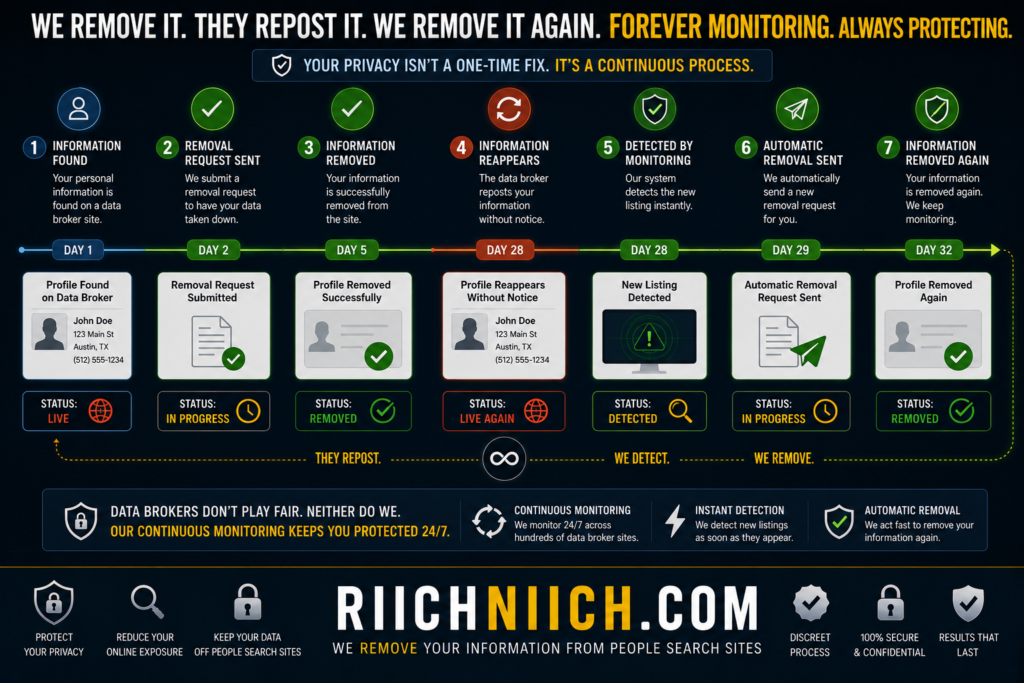
Continuous Monitoring Matters
One of the biggest challenges with how to remove yourself from people search sites is that removal is rarely a one-time event.
New information may appear because:
- Data brokers acquire fresh records
- Public records change
- Marketing databases are updated
- New people search websites launch
A major benefit of automated services is that they continue monitoring after the initial removal requests are completed.
This ongoing approach can help reduce the risk of personal information quietly reappearing online months later.
Can Data Removal Services Remove Everything?
No service can guarantee the complete removal of every piece of personal information from the internet.
Certain information may remain available through:
- Government public records
- Court records
- Property records
- News articles
- Personal websites
However, data removal services can significantly reduce the amount of information exposed through major people search websites and commercial data broker databases.
For many consumers, reducing exposure is often the primary goal.
Are Data Removal Services Worth It?
The answer depends largely on your situation.
A data removal service may be worthwhile if:
- Your information appears on numerous websites
- You value convenience
- You lack time for manual removals
- You want ongoing monitoring
- You are concerned about privacy risks
On the other hand, individuals with limited online exposure may prefer handling a small number of removals manually.
The National Consumers League encourages consumers to understand how their personal information is collected and shared so they can make informed privacy decisions.
Data Removal Services vs Manual Removal
Manual removal offers:
- No subscription cost
- Direct control over requests
- Greater involvement in the process
Automated services offer:
- Time savings
- Ongoing monitoring
- Continuous removal efforts
- Simplified privacy management
Neither approach is perfect, but many consumers eventually choose automation because maintaining privacy manually can become difficult over time.
If you’re comparing privacy tools, see our updated guide to the Best Data Removal Services for a detailed breakdown of the top options available today.
Choosing the Right Privacy Strategy
For anyone serious about how to remove yourself from people search sites, the most important factor is consistency. Whether you choose manual removal or an automated service, ongoing monitoring is essential because personal information constantly moves between data brokers and people search websites.
The World Privacy Forum has long emphasized the importance of understanding how personal information flows through the data broker ecosystem and taking proactive steps to reduce unnecessary exposure.
Ultimately, data removal services provide a convenient way to automate many of the tasks involved in people search sites removal. While they cannot erase every trace of information online, they can help reduce your digital footprint and make it significantly harder for strangers, marketers, and cybercriminals to access your personal information.
Is Incogni Worth It for People Search Site Removal?
For many people, manually submitting dozens of opt-out requests quickly becomes frustrating. After spending hours researching how to remove yourself from people search sites, it is common to start looking for a faster and more automated solution. This is where Incogni comes in.
Incogni is a data broker removal service designed to help consumers reduce their online exposure by contacting data brokers and requesting the removal of personal information on their behalf. Rather than manually managing removal requests across numerous websites, users authorize Incogni to handle much of the process automatically.
For individuals who value privacy but have limited time, Incogni can be an effective way to simplify people search sites removal.
How Incogni Works
Incogni focuses on identifying data brokers that collect and share personal information.
After creating an account, users provide authorization that allows Incogni to:
- Contact participating data brokers
- Submit removal requests
- Track responses
- Monitor for reappearing information
- Continue sending requests when necessary
Because many people search websites obtain information from data brokers, reducing data broker exposure can help decrease the amount of personal information available online.
Why Incogni Is Popular
One reason Incogni has gained attention is its emphasis on automation.
Instead of:
- Searching hundreds of websites
- Filling out individual forms
- Tracking dozens of requests
users can manage much of the process through a single dashboard.
This can be especially valuable for individuals whose information appears on multiple people search websites and data broker databases.
Benefits of Using Incogni
Some of the key advantages include:
- Automated removal requests
- Ongoing monitoring
- Reduced manual effort
- Regular progress updates
- Coverage across numerous data brokers
For consumers who have already attempted manual removal, these features can save a significant amount of time.
Many people researching how to remove yourself from people search sites discover that maintaining long-term privacy often requires continuous effort, which is where automated monitoring can be helpful.
Limitations to Consider
While Incogni can be useful, it is important to understand that no service can remove every piece of personal information from the internet.
Certain information may remain available through:
- Government records
- Court records
- Property records
- News publications
- Public websites
Incogni primarily focuses on data brokers and related information-sharing networks rather than every possible source of personal data online.
As a result, consumers should view Incogni as a privacy improvement tool rather than a complete solution for internet-wide information removal.
Who May Benefit Most From Incogni?
Incogni may be a good fit for individuals who:
- Appear on multiple people search websites
- Want to reduce data broker exposure
- Prefer automation over manual removal
- Have limited time for privacy management
- Want ongoing monitoring
For users who only have one or two profiles online, manual removal may be sufficient. However, for individuals with widespread online exposure, automated services often become more appealing.

How Incogni Compares to Manual Removal
Manual removal offers full control and does not require a subscription. However, it often involves:
- Repeated searches
- Multiple opt-out requests
- Ongoing monitoring
- Significant time investment
Incogni helps reduce much of that workload by automating many of the administrative tasks involved in remove personal information from people search websites.
For many consumers, the decision ultimately comes down to time versus cost.
What Privacy Experts Say
Organizations such as the Electronic Frontier Foundation have long encouraged consumers to take proactive steps to reduce unnecessary personal information exposure online. While privacy experts generally recommend limiting the amount of personal information available publicly, they also recognize that maintaining privacy can require ongoing effort due to the constantly evolving data broker ecosystem.
This is one reason why automated privacy tools have become increasingly popular among consumers concerned about online privacy protection.
Is Incogni Worth It?
If your goal is to reduce the amount of personal information available across people search websites and data broker databases, Incogni can be a useful tool.
For individuals with extensive online exposure, the time savings alone may justify the cost. The ability to automate requests and continuously monitor for new listings can make privacy management much easier than handling everything manually.
However, if your information appears on only a few websites and you are comfortable submitting opt-out requests yourself, manual removal may be enough.
For many consumers researching how to remove yourself from people search sites, Incogni offers a practical middle ground between doing everything manually and ignoring the problem altogether. It simplifies the removal process, reduces ongoing workload, and helps maintain privacy over time, making it a worthwhile option for individuals who want a more hands-off approach to protecting their personal information.
How to Keep Your Information From Reappearing Online
Successfully removing your personal information is a major accomplishment, but it is only part of the process. One of the biggest challenges people face after learning how to remove yourself from people search sites is preventing that information from reappearing later.
Unfortunately, personal information is constantly being collected, shared, and updated by data brokers, marketing companies, public record aggregators, and people search websites. Without ongoing privacy habits, information that was previously removed can find its way back online.
The good news is that there are several practical steps you can take to reduce future exposure and maintain better control over your personal information.
Limit the Personal Information You Share Online
One of the simplest ways to reduce future exposure is to be more selective about what you share online.
Consider limiting:
- Home addresses
- Personal phone numbers
- Birth dates
- Family details
- Personal email addresses
- Location information
The less information available publicly, the less data brokers have to collect and distribute.
Strengthen Your Social Media Privacy Settings
Social media platforms are common sources of personal information.
Review your privacy settings regularly and consider:
- Making profiles private
- Limiting public posts
- Hiding contact information
- Restricting friend lists
- Removing old personal information
Even information shared years ago can be collected by data brokers and added to people search databases.
Maintaining strong privacy settings can help reduce the amount of information available for future collection.
Use Separate Email Addresses When Possible
Many consumers unknowingly expose personal information through email addresses that are used across numerous websites.
Consider creating separate email accounts for:
- Online shopping
- Newsletter subscriptions
- Promotions
- Public-facing activities
Using dedicated email addresses can help limit the spread of your primary contact information.
Be Careful With Online Forms
Many websites collect more information than necessary.
Before completing forms, consider whether providing details such as:
- Phone numbers
- Addresses
- Birth dates
is actually required.
Reducing unnecessary data sharing can help minimize future entries in marketing databases and data broker records.
Regularly Search for Your Information
A simple privacy habit is to periodically search for:
- Your full name
- Phone number
- Email address
- Current address
Conducting occasional searches can help you identify new people search site listings before they spread across multiple databases.
Many individuals researching how to remove yourself from people search sites make this a regular part of their privacy routine.
Continue Monitoring Data Broker Activity
Data brokers continuously acquire and update consumer information.
Even after successful removal requests, your information may reappear due to:
- New public records
- Commercial database updates
- Marketing partnerships
- Data sharing agreements
Regular monitoring helps you catch these issues early.
If your phone number is still appearing online, our guide on How to Remove Your Phone Number From Data Broker Sites can help.
Consider Ongoing Data Removal Services
Many consumers find that ongoing monitoring becomes difficult over time.
This is why some individuals choose data broker removal services that:
- Monitor for new listings
- Submit removal requests automatically
- Track removal progress
- Continue working after initial removals
These services can help simplify long-term privacy management and reduce the amount of manual effort required.
Protect Your Accounts With Strong Security Practices
Privacy and security often go hand in hand.
Good security habits include:
- Using strong passwords
- Enabling multi-factor authentication
- Monitoring account activity
- Updating passwords regularly
The National Cyber Security Centre recommends using unique passwords and strong account protections to reduce the risk of unauthorized access and data exposure.

Remove Information From Additional Sources
People search websites are only one part of the privacy puzzle.
You may also want to review:
- Public social media profiles
- Online directories
- Forum accounts
- Old business listings
- Archived personal websites
The more sources you address, the more difficult it becomes for data brokers to rebuild your profile.
For a broader privacy strategy beyond people search websites, see How to Remove Your Personal Information From the Internet.
Make Privacy an Ongoing Habit
The reality is that privacy is not a one-time project. Personal information constantly moves through the data broker ecosystem, and new databases appear every year.
The Privacy International emphasizes the importance of ongoing awareness and proactive privacy management in today’s data-driven environment.
For anyone serious about how to remove yourself from people search sites, the goal should not only be removing information once but also reducing future exposure. By combining smart privacy habits, regular monitoring, and responsible information sharing, you can significantly reduce the chances of your personal information reappearing online and maintain better control over your digital footprint over the long term.
Frequently Asked Questions About People Search Site Removal
Many people who begin researching how to remove yourself from people search sites have similar questions about the process, how long it takes, and whether removal efforts are actually effective. Below are answers to some of the most common questions about people search sites removal and online privacy protection.
Is It Legal to Remove Yourself From People Search Sites?
Yes. In most cases, it is completely legal to request the removal of your personal information from people search websites.
Many people search sites provide opt-out procedures specifically designed for consumers who want to remove personal information from people search websites. Privacy laws in certain states and countries may also provide additional rights regarding personal data removal.
If you find your information on a people search website, you generally have the right to submit a request for removal through the site’s privacy or opt-out process.
How Long Does People Search Site Removal Take?
The timeline varies depending on the website.
Some websites process requests within a few days, while others may take several weeks.
Factors that affect processing time include:
- Verification requirements
- Website policies
- Request volume
- Data source updates
Even after removal, search engines may temporarily display cached results until they update their indexes.
Will My Information Come Back After Removal?
Unfortunately, it can.
Many consumers successfully remove information only to find it reappears later.
This happens because:
- Data brokers acquire new information
- Public records are updated
- Marketing databases share data
- People search websites refresh their records
This is one reason ongoing monitoring is important after completing the process of how to remove yourself from people search sites.
Do Data Removal Services Actually Work?
In many cases, yes.
Data removal services can help automate requests to participating data brokers and people search websites.
These services typically:
- Identify exposed information
- Submit removal requests
- Monitor progress
- Continue tracking future exposures
However, no service can guarantee the complete removal of every piece of personal information from the internet.
Their primary goal is to reduce exposure and simplify privacy management.
Can I Remove My Address From Google Search Results?
Removing information from Google usually requires removing it from the original source first.
If your address appears on a people search website, removing the profile from that website is typically the first step.
Once the source page is removed, search engines usually update their results over time.
Google also provides certain privacy-related removal options for specific situations involving sensitive personal information.
How Many People Search Sites Exist?
There are hundreds of people search websites and data brokers operating online.
While many consumers are familiar with:
- Whitepages
- Spokeo
- BeenVerified
there are numerous smaller websites that also collect and share personal information.
This is why remove personal information from people search websites can become a long-term privacy project rather than a one-time task.
Is Manual Removal Better Than Using a Data Removal Service?
It depends on your situation.
Manual removal may be a good option if:
- You only appear on a few websites
- You have time to manage requests
- You prefer direct control
A data removal service may be a better choice if:
- Your information appears on many websites
- You want ongoing monitoring
- You prefer automation
Both approaches can be effective when used consistently.
Can People Search Sites Display Information About My Family?
Yes.
Many people search websites display information about:
- Relatives
- Household members
- Former spouses
- Known associates
This information is often gathered from public records and commercial databases.
As a result, even if you limit the information you share online, details about family relationships may still appear in public profiles.
Why Is My Information Online If I Never Gave It to These Websites?
Most people search websites do not receive information directly from consumers.
Instead, they collect information from:
- Public records
- Data brokers
- Marketing databases
- Property records
- Commercial data providers
The Federal Communications Commission provides consumer education materials explaining how personal information can be shared across various databases and commercial networks.
Many individuals are surprised to learn how widely their information is distributed without their direct involvement.
You may also want to check whether your information has appeared in data breaches by reading How to Check If Your Information Is on the Dark Web.
Is People Search Site Removal Worth the Effort?
For many consumers, yes.
Reducing publicly available personal information can help lower exposure to:
- Identity theft
- Scam calls
- Phishing attacks
- Social engineering
- Privacy concerns
While no solution provides complete anonymity, removing unnecessary personal information can significantly improve your privacy and reduce your digital footprint.
What Is the Best Way to Start?
The best first step is identifying where your information appears.
Search for:
- Your name
- Phone number
- Email address
- Home address
Then begin submitting opt-out requests or consider a data broker removal service if your information appears on numerous websites.
The Internet Society encourages individuals to regularly review their online presence and take proactive steps to protect personal information.
For anyone interested in how to remove yourself from people search sites, understanding these common questions can make the process much easier and help set realistic expectations about privacy protection and long-term information removal.
Conclusion: How to Remove Yourself From People Search Sites
If you’ve made it this far, you’ve probably realized that how to remove yourself from people search sites is not a one-time task. Personal information can appear on dozens of people search websites, data broker databases, and public record aggregators without your knowledge.
The good news is that you can take control of your online privacy.
Whether you choose to manually remove personal information from people search websites or use an automated data broker removal service, every step you take reduces your digital footprint and limits the amount of personal information available to strangers, marketers, and cybercriminals.
For individuals with only a few online listings, manual opt-outs may be enough. However, if your information appears across multiple websites, the process can quickly become time-consuming. Each website often requires its own removal request, verification process, and ongoing monitoring.
That is why many consumers eventually choose automated privacy services that continuously monitor and remove information from data broker databases. Instead of spending hours tracking websites and submitting repeated requests, these services help streamline the process and provide ongoing protection.

The most important thing to remember is that privacy requires ongoing attention. Even after successful removal requests, information can reappear as data brokers update their records and acquire new information from public and commercial sources.
To maintain better privacy over time:
- Regularly search for your personal information online
- Review social media privacy settings
- Limit unnecessary information sharing
- Monitor people search websites periodically
- Consider ongoing data broker removal solutions if needed
If you’re concerned about identity theft after discovering your information online, you may also want to read Is Identity Theft Protection Worth It?
For most people, the biggest challenge is not learning how to remove yourself from people search sites—it’s consistently keeping that information from coming back. A combination of removal efforts, privacy awareness, and ongoing monitoring provides the strongest long-term protection.
If your goal is to reclaim your privacy and reduce your online footprint, starting today is far better than waiting. Every profile removed, every opt-out request submitted, and every data broker record deleted makes it harder for your personal information to be collected, shared, and exploited.
For readers who want the fastest and most convenient approach, a reputable data broker removal service can help automate much of the process. For those willing to invest the time, manual removal remains a viable option.
For a complete breakdown of pricing, features, and real-world performance, read our full Is Incogni Worth It? review.
Either way, taking action now is one of the most effective steps you can take toward protecting your personal information and maintaining greater control over your online privacy.



Pingback: How To Protect Your Personal Data Online (Complete Guide) - Riich Niich