

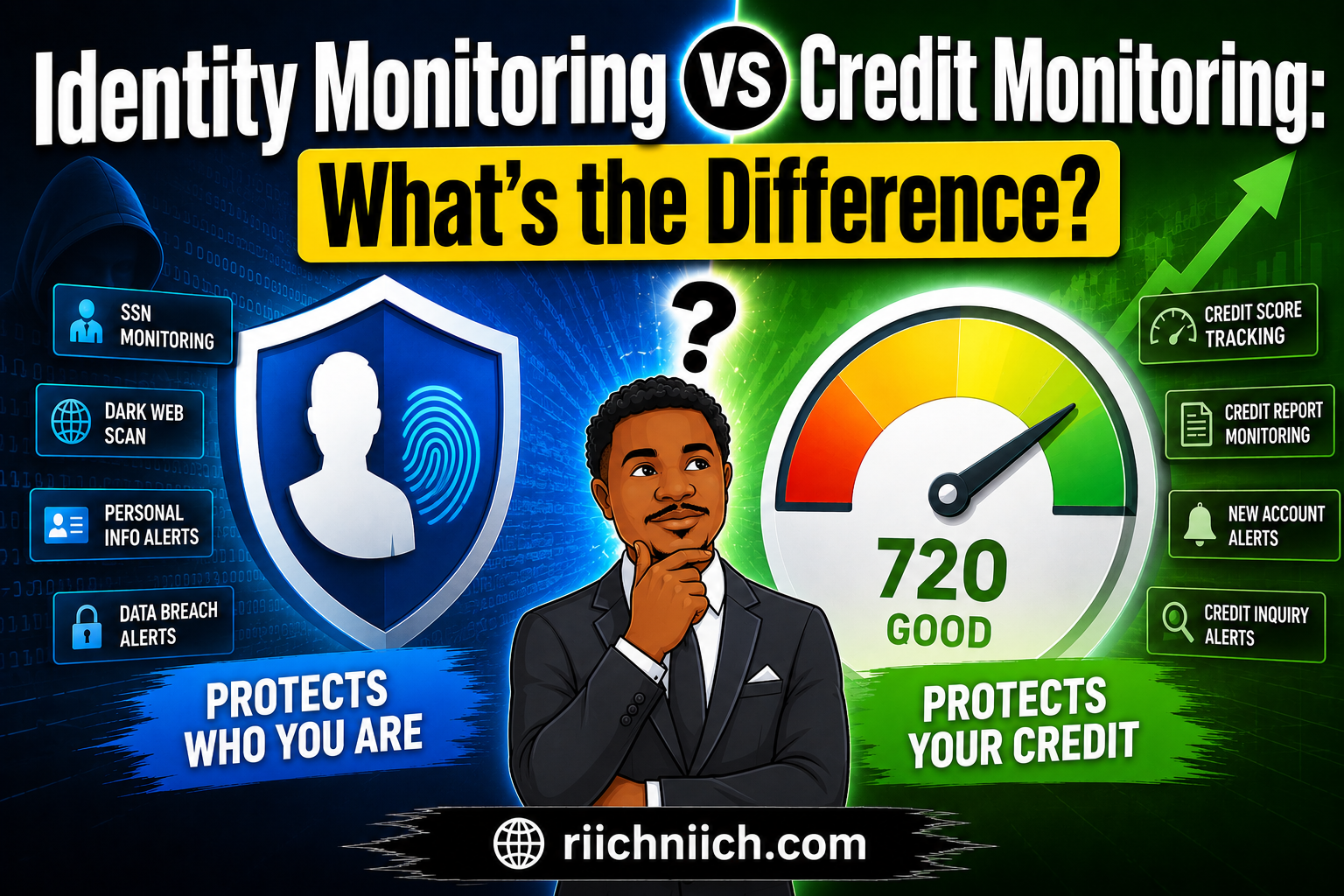
Identity monitoring vs credit monitoring is a comparison many people make when trying to protect themselves from identity theft—but these two services aren’t the same. While both help detect suspicious activity, they monitor different aspects of your personal information and provide different levels of protection.
If you’re wondering whether an identity protection service is worth paying for in the first place, our guide on Do You Really Need Identity Theft Protection? breaks down who benefits most and when it makes sense to upgrade.
In this guide, you’ll learn the key differences between identity monitoring and credit monitoring, what each service can and cannot do, who should use them, and whether you need both. By the end, you’ll have a clear understanding of which option best fits your needs and how to choose the right identity theft protection service for comprehensive peace of mind.
Table of Contents
🔥 Quick Comparison: Identity Monitoring vs Credit Monitoring
If you’re trying to decide between identity monitoring vs credit monitoring, the easiest way to think about it is this:
- Credit monitoring focuses on protecting your credit reports by alerting you to changes such as new accounts, hard inquiries, or collection activity.
- Identity monitoring provides broader protection by monitoring your personal information across multiple sources, including the dark web, data breaches, financial accounts, and other signs of identity theft.
While both services help detect fraud, identity monitoring covers far more than your credit history. That’s why many premium identity theft protection services include both features in a single plan.
👉 If you want one service that combines identity monitoring, credit monitoring, dark web monitoring, fraud alerts, and identity restoration, I recommend checking out Aura to see everything that’s included in its protection plans.
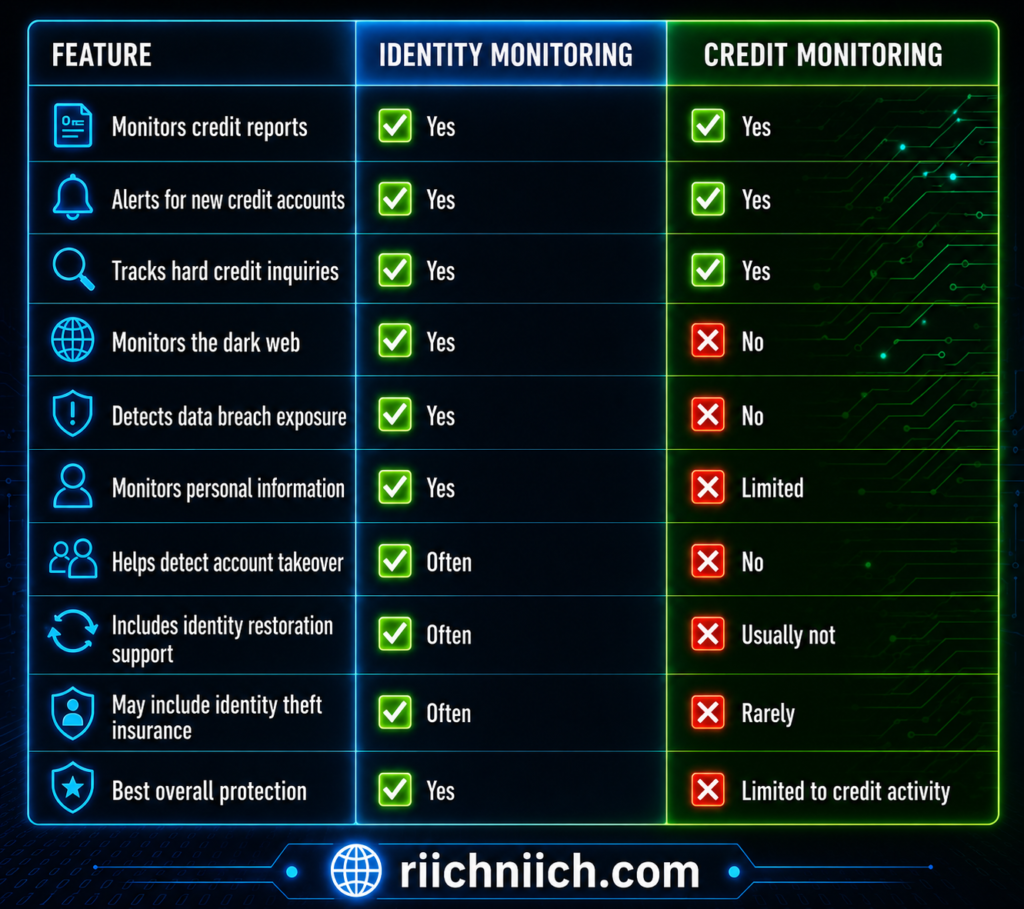
The biggest difference in identity monitoring vs credit monitoring is the scope of protection. Credit monitoring only alerts you when activity affects your credit file, while identity monitoring looks for suspicious use of your personal information before it turns into larger financial or legal problems.
For example, if a criminal opens a credit card in your name, both services may eventually alert you. However, if your Social Security number appears on the dark web after a data breach or someone attempts to take over one of your financial accounts, identity monitoring is much more likely to notify you first.
Another important consideration is convenience. Instead of managing multiple standalone services, many identity theft protection providers bundle identity monitoring, credit monitoring, dark web monitoring, identity restoration, and fraud insurance into one easy-to-manage dashboard. This gives you a more complete view of your digital security while simplifying the process of responding to alerts.
Ultimately, the choice between identity monitoring vs credit monitoring depends on the level of protection you want. If your primary concern is tracking changes to your credit report, credit monitoring may be sufficient. However, if you want broader protection against modern identity theft tactics—including data breaches, account takeovers, and misuse of your personal information—identity monitoring offers significantly more comprehensive coverage.
What Is Identity Monitoring?
Identity monitoring is a security service that continuously watches for signs that your personal information is being misused. Unlike basic credit monitoring, identity monitoring looks beyond your credit reports to detect suspicious activity involving your sensitive data, helping you respond before identity theft causes significant financial or personal damage.
When comparing identity monitoring vs credit monitoring, this is one of the biggest differences. Credit monitoring primarily tracks changes to your credit files, while identity monitoring keeps an eye on many areas where criminals may attempt to use your identity.
Most identity monitoring services watch for activity involving information such as:
- Your Social Security number
- Email addresses
- Phone numbers
- Bank account information
- Credit card details
- Driver’s license number
- Passport information
- Home address
- Personal information exposed in known data breaches
If any suspicious activity is detected, you’ll typically receive an alert so you can investigate immediately. Catching fraud early often makes it much easier to stop criminals before they open fraudulent accounts, steal money, or commit identity fraud in your name.
Many premium identity monitoring services also include features such as:
- Dark web monitoring
- Data breach notifications
- Identity theft alerts
- Account takeover monitoring
- Financial account monitoring
- Identity restoration assistance
- Identity theft insurance
- Lost wallet assistance
One of the biggest advantages of identity monitoring is that it doesn’t rely solely on your credit report. Many forms of identity theft never appear on a credit report until significant damage has already been done. For example, criminals may attempt to access your online accounts, use your stolen personal information on the dark web, file fraudulent tax returns, or take over existing financial accounts without immediately triggering a credit alert.
When evaluating identity monitoring vs credit monitoring, it’s important to understand that identity monitoring provides broader coverage by monitoring multiple sources of personal information instead of focusing only on your credit history. This makes it especially valuable for detecting fraud that traditional credit monitoring may not catch until much later.
According to the Federal Trade Commission (FTC), identity thieves continue to find new ways to misuse stolen personal information, making early detection one of the most effective ways to reduce financial losses and recover more quickly. The Cybersecurity and Infrastructure Security Agency (CISA) also recommends monitoring your accounts regularly and responding immediately to suspicious activity to minimize the impact of identity theft.
If you frequently shop online, bank digitally, travel, or have been affected by a previous data breach, identity monitoring adds another layer of protection beyond basic credit monitoring. This broader approach is one of the main reasons many people researching identity monitoring vs credit monitoring ultimately choose an identity theft protection service that combines identity monitoring, credit monitoring, dark web monitoring, and identity recovery support into a single solution.
What Is Credit Monitoring?
Credit monitoring is a service that tracks changes to your credit reports and notifies you when important activity occurs. It is designed to help you spot potential fraud, identity theft, or errors on your credit file before they become larger financial problems.
When comparing identity monitoring vs credit monitoring, credit monitoring has a much narrower focus. Instead of monitoring all aspects of your identity, it primarily watches your credit reports maintained by the three major credit bureaus and alerts you when significant changes occur.
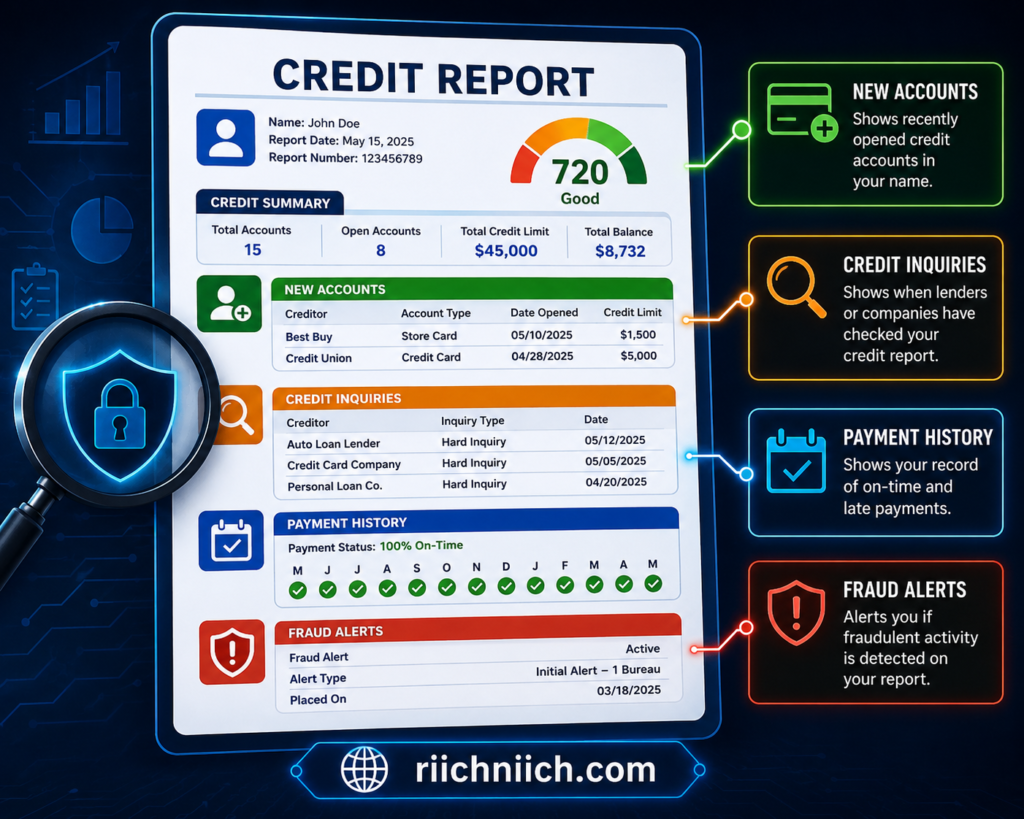
Most credit monitoring services can notify you about changes such as:
- New credit accounts opened in your name
- Hard credit inquiries
- Changes to your credit score
- New loans or credit cards
- Missed or late payments reported to the credit bureaus
- Collection accounts
- Changes to your personal information on your credit report
- Public records that appear on your credit file
These alerts allow you to review suspicious activity quickly. For example, if you receive a notification that a new credit card has been opened but you never applied for one, you can immediately contact the lender, place a fraud alert, or freeze your credit before additional accounts are opened.
One of the biggest advantages of credit monitoring is that it helps you catch unauthorized borrowing early. Criminals often attempt to open credit cards, personal loans, auto loans, or other financing using stolen personal information. Early alerts can significantly reduce the financial impact of this type of fraud.
However, when evaluating identity monitoring vs credit monitoring, it’s important to understand that credit monitoring has limitations. Many types of identity theft never appear on your credit report, meaning credit monitoring alone may not detect them.
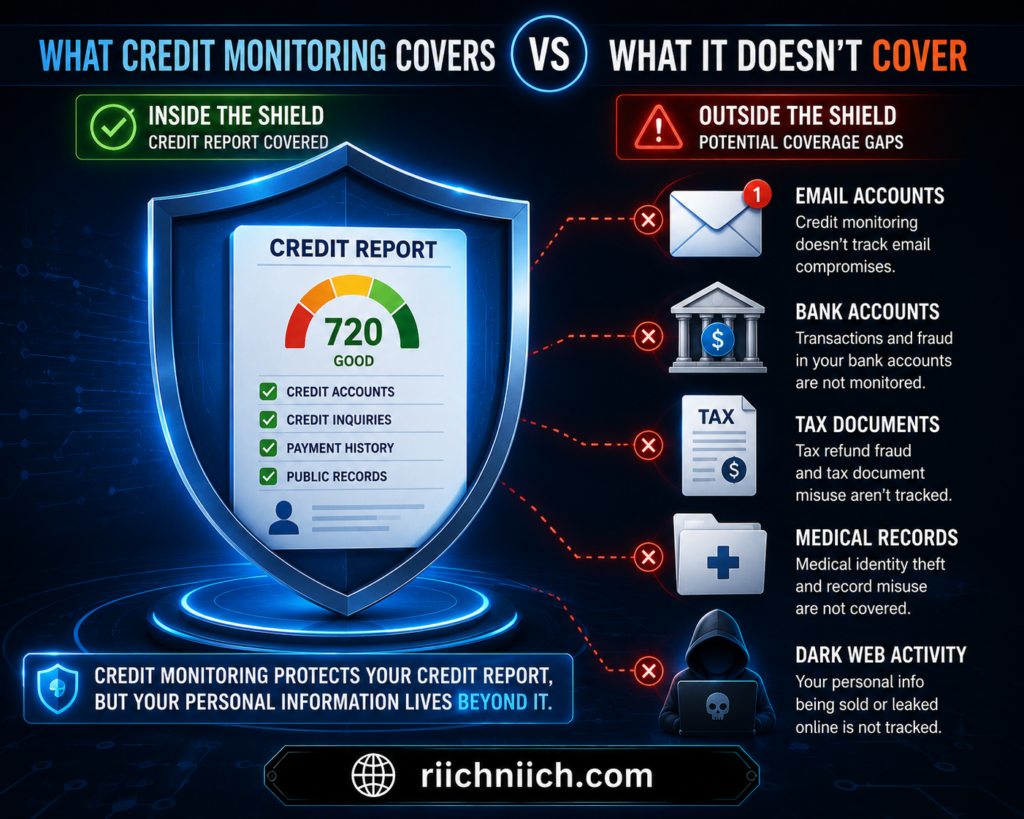
For example, traditional credit monitoring generally does not monitor:
- Dark web marketplaces for stolen personal information
- Bank account takeovers
- Email account compromises
- Social media account hijacking
- Identity theft involving tax refunds
- Medical identity theft
- Criminal identity theft
- Data breach exposure
Because of these limitations, many people choose a comprehensive identity theft protection service that includes both identity monitoring and credit monitoring. This combination provides broader coverage while still alerting you to important changes affecting your credit profile.
According to the Consumer Financial Protection Bureau (CFPB), regularly reviewing your credit reports and responding quickly to unfamiliar activity are important steps for protecting yourself against fraud. The Federal Trade Commission (FTC) also recommends checking your credit reports periodically and taking immediate action if you discover accounts or inquiries you don’t recognize.
While credit monitoring is an excellent tool for detecting new credit-related fraud, it should not be viewed as complete identity protection. Understanding this distinction is essential when deciding between identity monitoring vs credit monitoring, especially if you want the broadest possible protection against today’s increasingly sophisticated identity theft schemes.
What Credit Monitoring Can and Cannot Do
Understanding what credit monitoring can—and cannot—do is essential when comparing identity monitoring vs credit monitoring. While credit monitoring is an effective tool for detecting certain types of fraud, it isn’t designed to protect every aspect of your identity. Knowing its strengths and limitations can help you decide whether credit monitoring alone is enough or if a more comprehensive identity protection solution is the better choice.
Understanding how identity theft happens can help you reduce your risk before criminals gain access to your personal information.
What Credit Monitoring Can Do
Credit monitoring continuously watches your credit reports for significant changes and notifies you when suspicious activity is detected. These alerts give you the opportunity to investigate potential fraud before it causes more serious financial damage.
Credit monitoring can typically:
- Alert you when a new credit account is opened in your name.
- Notify you of hard credit inquiries from lenders.
- Track changes to your credit score.
- Detect new loans, mortgages, or credit cards reported to the credit bureaus.
- Notify you when collection accounts appear on your credit report.
- Alert you to changes in personal information listed on your credit file, such as your name or address.
These features make credit monitoring especially useful for catching criminals who attempt to borrow money using your identity.
What Credit Monitoring Cannot Do
Although credit monitoring is valuable, it has important limitations. Many of today’s identity theft schemes occur outside your credit report, meaning they may go completely undetected by traditional credit monitoring services.
Credit monitoring generally does not:
- Monitor the dark web for stolen personal information.
- Detect bank account takeovers.
- Alert you if your email account has been compromised.
- Monitor your Social Security number outside of credit-related activity.
- Detect fraudulent tax return filings.
- Monitor medical identity theft.
- Warn you about data breach exposure before fraud occurs.
- Monitor social media account hijacking.
- Detect unauthorized use of your driver’s license or passport information.
For example, if hackers steal your email password during a data breach and use it to access your online banking account, credit monitoring may never generate an alert because your credit report hasn’t changed.
Why These Limitations Matter
Cybercriminals no longer rely solely on opening fraudulent credit accounts. Today, identity thieves often target existing financial accounts, online logins, government benefits, tax refunds, and other sensitive personal information that never appears on your credit report.
This is one of the biggest differences in identity monitoring vs credit monitoring. Credit monitoring reacts to changes involving your credit profile, while identity monitoring searches for suspicious activity involving your personal information across a much wider range of sources.
As identity theft tactics continue to evolve, relying on credit monitoring alone may leave significant gaps in your protection. Many people choose an identity theft protection service that combines credit monitoring with identity monitoring, dark web monitoring, fraud alerts, and identity restoration assistance to provide broader coverage against today’s threats.
According to the Consumer Financial Protection Bureau (CFPB), regularly reviewing your credit reports is an important part of protecting your financial health. However, the Federal Trade Commission (FTC) also recommends monitoring your personal information and responding quickly to signs of identity theft, since not every form of fraud will appear on your credit report.
When evaluating identity monitoring vs credit monitoring, remember that credit monitoring is an excellent first line of defense for credit-related fraud—but it isn’t a complete identity protection solution. Understanding what it covers, and what it doesn’t, will help you choose the level of protection that best fits your needs.
What Identity Monitoring Can and Cannot Do
Identity monitoring offers broader protection than traditional credit monitoring, but it’s important to understand that no service can completely prevent identity theft. When comparing identity monitoring vs credit monitoring, knowing exactly what identity monitoring can—and cannot—do will help you choose the right level of protection for your personal information.
Watch for these 13 warning signs someone stole your identity so you can respond before fraud spreads to additional accounts.
What Identity Monitoring Can Do
Identity monitoring continuously watches for signs that your sensitive information is being used in suspicious ways. Instead of focusing only on your credit reports, it monitors multiple sources where identity thieves commonly exploit stolen personal data.
Depending on the provider, identity monitoring can:
- Monitor your Social Security number for suspicious activity.
- Scan the dark web for exposed personal information.
- Alert you when your information appears in known data breaches.
- Monitor email addresses for compromised credentials.
- Watch for unauthorized changes involving your personal information.
- Detect potential account takeover attempts.
- Monitor linked financial accounts for unusual activity.
- Notify you of suspicious identity-related alerts in near real time.
- Provide identity restoration assistance if your identity is stolen.
- Include identity theft insurance to help cover eligible recovery expenses.
These features allow you to respond quickly before criminals have the opportunity to cause significant financial or personal damage.
What Identity Monitoring Cannot Do
Although identity monitoring provides much broader coverage than credit monitoring, it is not a guarantee that identity theft will never occur.
Identity monitoring generally cannot:
- Prevent hackers from stealing your personal information.
- Stop every phishing attack before it reaches you.
- Block every data breach involving companies that store your information.
- Guarantee that every type of identity fraud will be detected immediately.
- Recover stolen money automatically without your involvement.
- Protect accounts that lack strong passwords or multi-factor authentication.
- Eliminate the need to review your financial statements and monitoring alerts.
Identity monitoring is designed to detect suspicious activity as early as possible—not to make you immune to cybercrime. Your own security habits still play a major role in protecting your identity.
Why Identity Monitoring Works Best as Part of a Larger Security Strategy
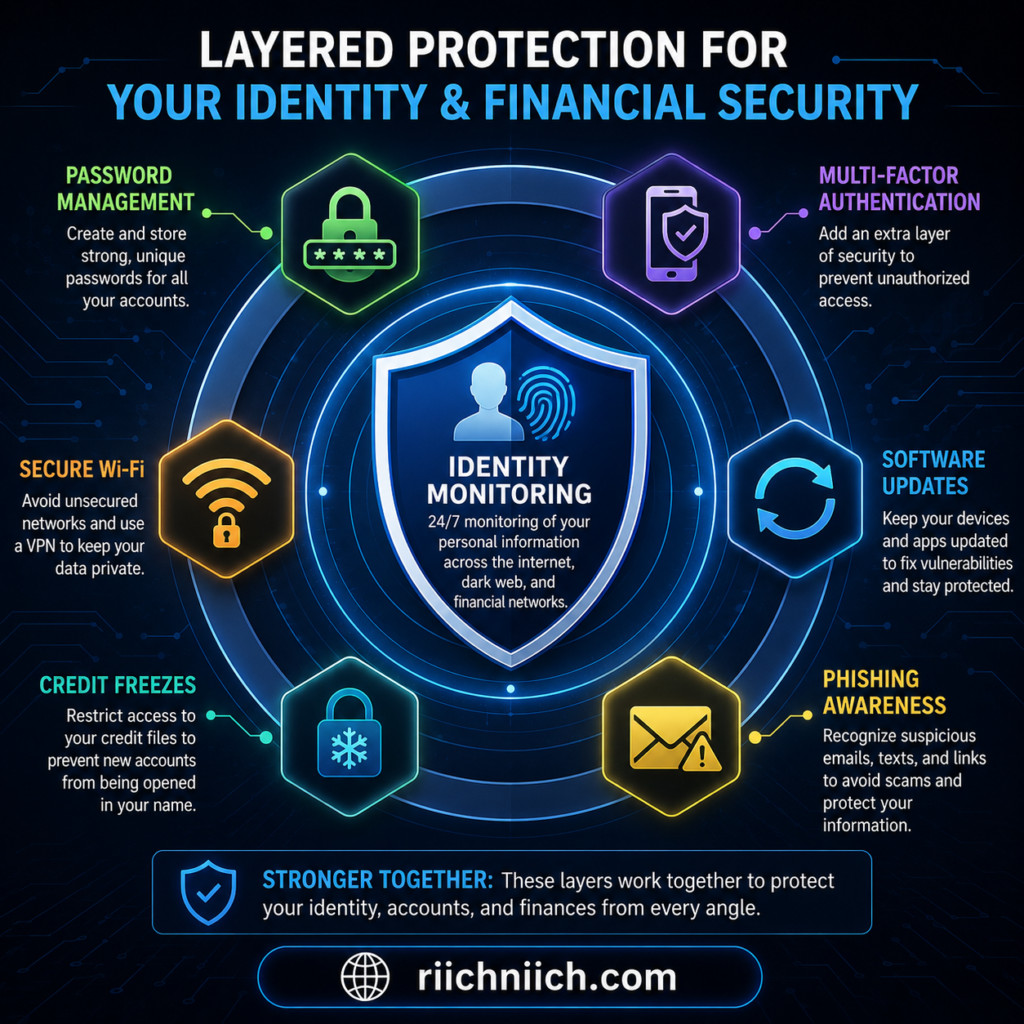
One common misconception is that purchasing an identity monitoring service means you no longer have to pay attention to your accounts. In reality, identity monitoring is most effective when combined with good cybersecurity practices.
For example, you should still:
- Use strong, unique passwords for every account.
- Enable multi-factor authentication whenever possible.
- Review bank and credit card statements regularly.
- Freeze your credit when appropriate.
- Keep your devices updated with the latest security patches.
- Be cautious of phishing emails, text messages, and phone scams.
These habits work together with identity monitoring to reduce your overall risk of becoming an identity theft victim.
Why This Matters When Comparing Identity Monitoring vs Credit Monitoring
One of the biggest advantages in identity monitoring vs credit monitoring is the broader visibility that identity monitoring provides. Instead of waiting for fraudulent activity to appear on your credit report, identity monitoring searches for warning signs across multiple areas where criminals may misuse your personal information.
That said, identity monitoring should be viewed as an early warning system rather than a complete replacement for personal vigilance. The most effective approach combines identity monitoring with responsible online habits and regular financial reviews.
According to the Cybersecurity and Infrastructure Security Agency (CISA), maintaining strong passwords, enabling multi-factor authentication, and monitoring your accounts regularly are among the best ways to reduce your risk of identity theft. Likewise, the Federal Trade Commission (FTC) recommends acting immediately if you receive alerts indicating your personal information may have been compromised.
Understanding these strengths and limitations makes the decision between identity monitoring vs credit monitoring much clearer. While identity monitoring provides significantly broader protection than credit monitoring alone, combining proactive security habits with a reputable identity theft protection service offers the strongest defense against today’s evolving cyber threats.
Which Is Better: Identity Monitoring or Credit Monitoring?
The answer depends on what you’re trying to protect. When comparing identity monitoring vs credit monitoring, credit monitoring is an excellent tool for tracking changes to your credit reports, while identity monitoring offers broader protection by monitoring many other areas where criminals may misuse your personal information.
If your primary concern is preventing fraudulent loans or credit cards from being opened in your name, credit monitoring may provide enough visibility. However, if you want protection against today’s more sophisticated identity theft tactics—including data breaches, account takeovers, dark web exposure, and stolen personal information—identity monitoring is generally the better choice.
When Credit Monitoring May Be Enough
Credit monitoring is a practical option if you:
- Primarily want alerts about changes to your credit reports.
- Regularly review your financial accounts.
- Have already frozen your credit.
- Prefer a lower-cost monitoring solution.
- Want to detect unauthorized borrowing as quickly as possible.
For individuals with relatively low exposure to online services and strong financial monitoring habits, credit monitoring can serve as a valuable first line of defense.
When Identity Monitoring Is the Better Choice
Identity monitoring is often the better investment if you:
- Shop online frequently.
- Use online banking and digital payment apps.
- Have been involved in a previous data breach.
- Store sensitive personal information online.
- Want alerts beyond your credit report.
- Prefer identity restoration assistance if your identity is stolen.
- Want one service that combines multiple security features.
Many identity theft protection services include credit monitoring, dark web monitoring, identity monitoring, fraud alerts, identity restoration, and identity theft insurance in a single subscription. This provides a much more complete approach to protecting your personal information.
Why More People Are Choosing Identity Monitoring
Identity theft has evolved significantly over the past decade. Criminals no longer focus only on opening fraudulent credit accounts. Today, they target existing bank accounts, online accounts, tax refunds, government benefits, medical records, and personal information obtained through data breaches.
Because of this shift, many consumers researching identity monitoring vs credit monitoring ultimately decide that broader monitoring better reflects today’s cybersecurity risks.
Identity monitoring is designed to detect suspicious activity involving multiple pieces of your personal information, often providing earlier warnings than credit monitoring alone. While no service can prevent every attack, earlier detection can reduce financial losses, shorten recovery time, and minimize the stress associated with identity theft.
The Best Option for Most People
For most individuals and families, identity monitoring offers the greatest overall value because it includes much more than credit monitoring. Rather than choosing one or the other, many comprehensive identity theft protection services combine both features into a single plan.
This means you receive alerts for:
- Changes to your credit reports.
- Dark web exposure.
- Data breaches affecting your personal information.
- Suspicious identity-related activity.
- Potential account takeovers.
- Fraud involving sensitive personal information.
Having both forms of monitoring provides broader visibility and reduces the likelihood that suspicious activity will go unnoticed.
According to the Federal Trade Commission (FTC), responding quickly to identity theft warnings can significantly reduce the damage caused by fraud. The Cybersecurity and Infrastructure Security Agency (CISA) also recommends monitoring sensitive personal information and using layered security practices to strengthen your overall cybersecurity.
Ultimately, when comparing identity monitoring vs credit monitoring, identity monitoring is the stronger choice for most people because it protects far more than your credit file. If you’re looking for comprehensive protection against modern identity theft, choosing a service that includes both identity monitoring and credit monitoring provides the most complete defense while simplifying the process of monitoring your personal information.
Who Should Choose Credit Monitoring?
While identity monitoring vs credit monitoring often favors identity monitoring for more comprehensive protection, credit monitoring can still be a smart choice for certain individuals. If your primary concern is detecting unauthorized activity on your credit reports, credit monitoring may provide the level of protection you need without paying for features you may not use.
Credit monitoring is best suited for people whose main goal is staying informed about changes to their credit profile rather than monitoring every aspect of their personal identity.
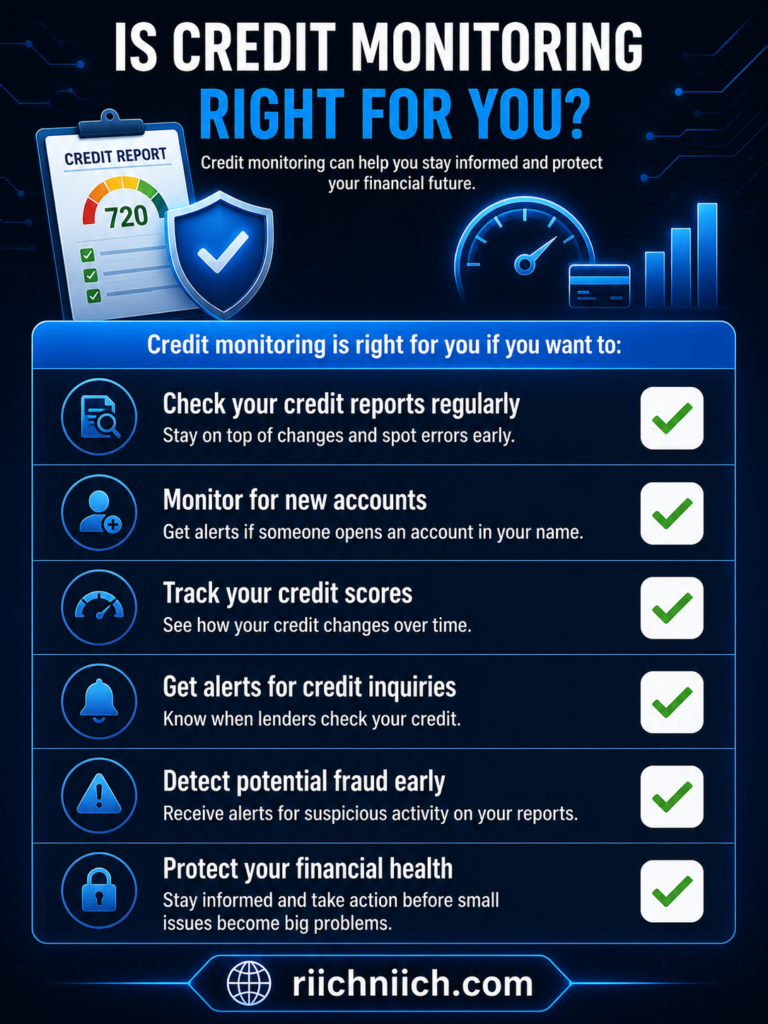
Credit Monitoring May Be Right for You If…
You Mainly Want to Protect Your Credit
If you’re concerned about someone opening a credit card, personal loan, or mortgage in your name, credit monitoring can quickly alert you when new accounts or hard credit inquiries appear on your credit report.
You Regularly Review Your Financial Accounts
People who frequently check their bank statements, credit card transactions, and online accounts may feel comfortable using credit monitoring as one part of their overall financial security routine.
You Already Have a Credit Freeze in Place
If you’re considering adding another layer of protection, learn the differences in our guide to Credit Freeze vs Credit Lock.
A credit freeze makes it much more difficult for criminals to open new credit accounts using your identity. Even with a freeze, credit monitoring remains useful because it alerts you to changes involving your existing credit file and helps verify that your freeze is working as expected.
You’re Focused on Maintaining a Healthy Credit Score
Credit monitoring can also help you keep track of changes to your credit score and identify reporting errors that could affect future loan or mortgage applications.
Who May Need More Than Credit Monitoring?
Although credit monitoring works well for many people, it may not be enough if you:
- Have been affected by a recent data breach.
- Frequently shop or bank online.
- Store sensitive personal information digitally.
- Travel often and use public Wi-Fi.
- Have multiple online financial accounts.
- Want alerts for dark web exposure or compromised personal information.
- Prefer identity restoration assistance if fraud occurs.
These situations increase your exposure to identity theft methods that don’t necessarily involve your credit report. In these cases, identity monitoring provides significantly broader protection.
Why Your Risk Level Matters
One of the biggest factors in deciding identity monitoring vs credit monitoring is your personal risk profile. Someone with only a few financial accounts and limited online activity may be well served by credit monitoring. On the other hand, someone who uses digital banking, online shopping, cloud storage, mobile payment apps, and numerous online accounts faces many more opportunities for identity theft.
As cybercriminals continue to develop new tactics, it’s important to choose protection that matches your lifestyle rather than relying on a one-size-fits-all solution.
According to the Consumer Financial Protection Bureau (CFPB), reviewing your credit reports regularly is an important part of maintaining your financial health and detecting fraudulent activity. However, if your goal is broader protection against modern identity theft, many experts recommend considering a service that combines both credit monitoring and identity monitoring.
When evaluating identity monitoring vs credit monitoring, credit monitoring remains an excellent option for people focused primarily on protecting their credit history. However, if your personal information is widely shared online or you’ve experienced a previous data breach, upgrading to a more comprehensive identity monitoring service may provide greater peace of mind and stronger overall protection.
Who Should Choose Identity Monitoring?
For many people, identity monitoring is the better choice because it provides protection beyond your credit report. When evaluating identity monitoring vs credit monitoring, identity monitoring is ideal for individuals who want early warnings about a wider range of identity theft threats, including data breaches, dark web exposure, account takeovers, and misuse of sensitive personal information.
If you rely heavily on digital services or have a large online presence, identity monitoring can provide an extra layer of security that traditional credit monitoring simply can’t match.
Identity Monitoring May Be Right for You If…
You Shop Online Frequently
Every online purchase requires you to share personal and financial information. While reputable retailers use strong security measures, data breaches can still occur. Identity monitoring can alert you if your information appears in known data breaches or is found on the dark web.
You Use Online Banking and Digital Payment Apps
Managing finances online is convenient, but it also creates additional opportunities for cybercriminals. Identity monitoring helps detect suspicious activity involving your personal information before financial fraud escalates.
You’ve Been Involved in a Data Breach
If a company you’ve done business with has experienced a data breach, your personal information may already be circulating among cybercriminals. Identity monitoring continuously scans for signs that your exposed information is being misused, helping you respond more quickly.
If you’ve recently received a breach notification, our guide on What Happens After a Data Breach explains what to expect and the steps you should take immediately.
You Want Protection Beyond Your Credit Report
One of the biggest advantages in identity monitoring vs credit monitoring is that identity monitoring covers much more than new credit accounts. It can monitor information related to your identity across multiple sources, giving you broader visibility into potential threats.
You Manage Multiple Online Accounts
The average person has dozens of online accounts containing personal information. Identity monitoring helps you stay informed if your email addresses, login credentials, or other sensitive data become compromised.
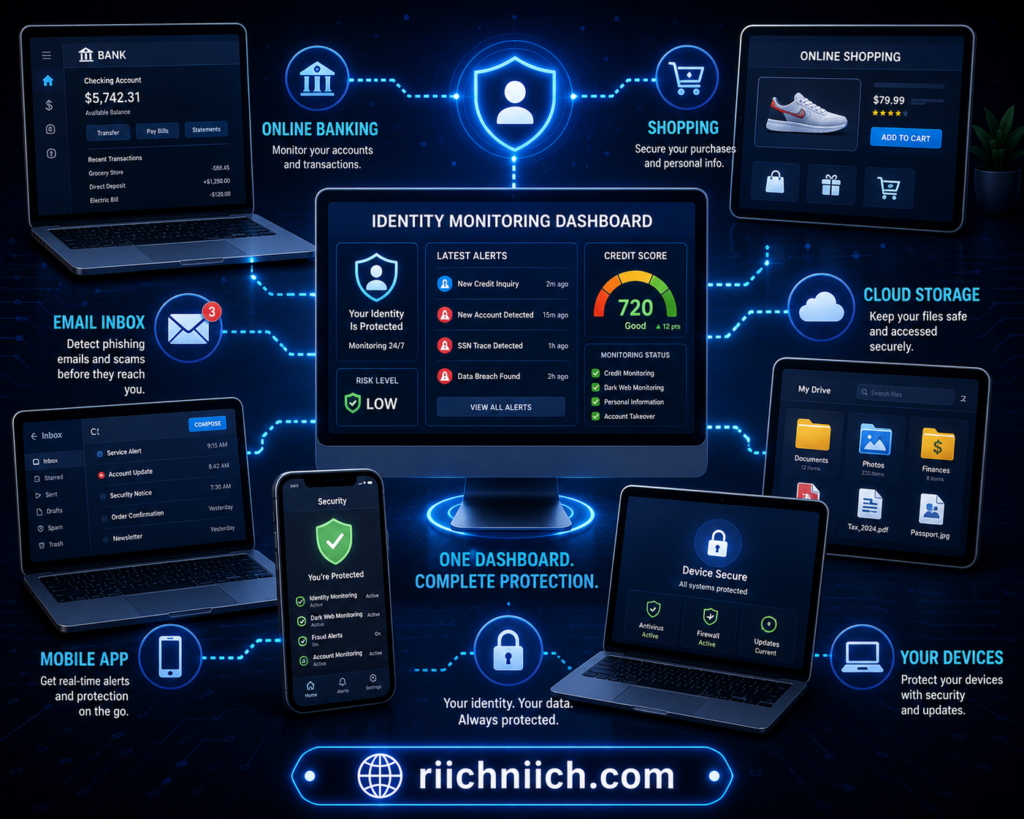
Identity Monitoring Is Especially Valuable for Families
Families often have multiple financial accounts, shared devices, and children whose identities can also become targets for fraud. Many identity theft protection services offer family plans that monitor multiple adults and children under one subscription, making identity monitoring an excellent choice for households seeking comprehensive protection.
Parents may also appreciate features such as child identity monitoring, which can help detect fraudulent use of a child’s Social Security number long before the child applies for credit as an adult.
Identity Monitoring Is a Smart Choice for Seniors
Older adults are frequently targeted by identity thieves because they often have established credit histories and valuable financial assets. Identity monitoring provides continuous alerts that can help seniors recognize suspicious activity sooner, allowing them to act before significant financial losses occur.
Why More People Are Choosing Identity Monitoring
As cybercrime becomes more sophisticated, many consumers are realizing that protecting only their credit reports is no longer enough. Modern identity theft often involves stolen login credentials, exposed personal information, phishing attacks, and account takeovers that may never appear on a credit report.
This is why many people researching identity monitoring vs credit monitoring choose identity monitoring services that combine:
- Credit monitoring
- Dark web monitoring
- Data breach notifications
- Identity restoration assistance
- Identity theft insurance
- Financial account monitoring
- Fraud alerts
Having these protections in one place simplifies identity security while providing broader coverage against evolving threats.
According to the Cybersecurity and Infrastructure Security Agency (CISA), using layered security measures and monitoring your personal information are key steps in reducing the risk of identity theft. Likewise, the Federal Trade Commission (FTC) recommends acting quickly whenever you receive alerts indicating your personal information may have been exposed or misused.
Ultimately, when deciding identity monitoring vs credit monitoring, identity monitoring is the better choice for individuals who want comprehensive protection against today’s most common identity theft threats. If you spend a significant amount of time online, manage sensitive financial information, or simply want greater peace of mind, identity monitoring offers broader coverage and earlier detection than credit monitoring alone.
Do You Need Both Identity Monitoring and Credit Monitoring?
For most people, the answer is yes. When comparing identity monitoring vs credit monitoring, the strongest protection comes from using both together rather than choosing one over the other. While each service has its own strengths, they protect different aspects of your personal and financial life.
Credit monitoring focuses on your credit reports and alerts you when changes occur, such as new accounts, hard inquiries, or collection activity. Identity monitoring goes much further by watching for signs that your personal information is being misused across multiple sources, including the dark web, data breaches, and other identity-related threats.
By combining both services, you gain broader visibility into potential fraud and increase your chances of detecting suspicious activity before it causes serious damage.
Why the Two Services Work Better Together
Think of credit monitoring and identity monitoring as two layers of protection rather than competing services.
Credit monitoring helps you detect:
- Fraudulent credit card applications
- Unauthorized loans
- Hard credit inquiries
- Changes to your credit score
- Collection accounts
Identity monitoring helps detect:
- Dark web exposure
- Data breach notifications
- Stolen personal information
- Account takeover attempts
- Suspicious identity-related activity
- Identity restoration needs
When these services are combined, you receive alerts covering a much wider range of identity theft risks.
Comprehensive Protection Is Becoming the Standard
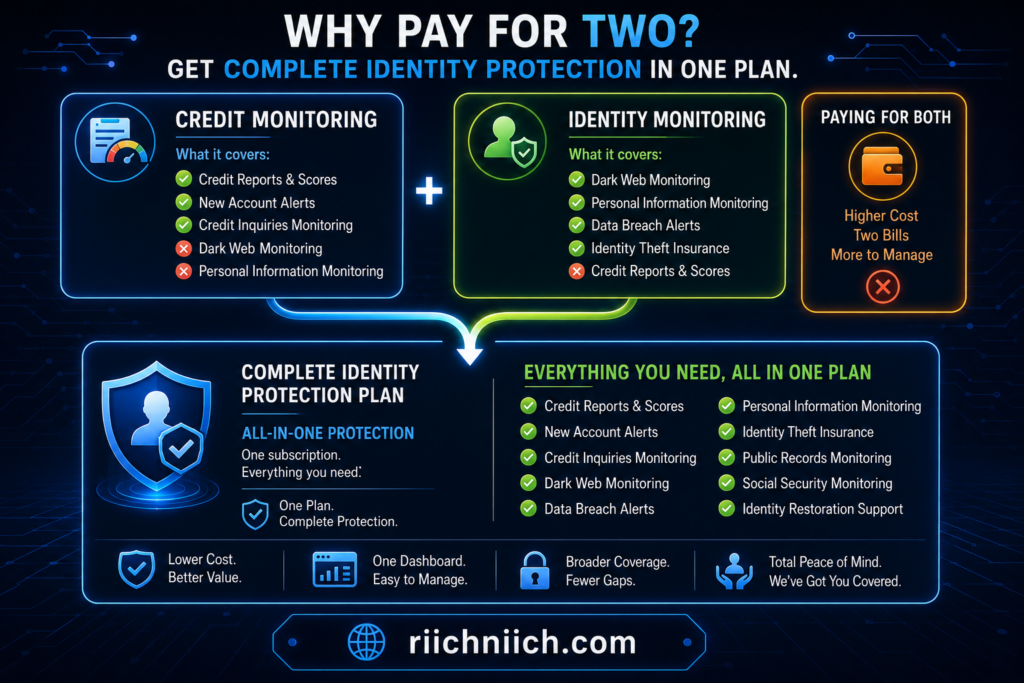
Many leading identity theft protection services no longer treat credit monitoring and identity monitoring as separate products. Instead, they bundle both into a single subscription along with additional security features, making it easier to monitor your identity from one dashboard.
These plans often include:
- Credit monitoring
- Identity monitoring
- Dark web monitoring
- Identity theft insurance
- Identity restoration specialists
- Financial account monitoring
- Data breach alerts
This all-in-one approach eliminates the need to manage multiple services while providing more complete protection.
Who Benefits Most from Having Both?
Using both services is especially beneficial if you:
- Frequently shop online.
- Use online banking or mobile payment apps.
- Have experienced a previous data breach.
- Own multiple financial accounts.
- Work remotely.
- Travel frequently.
- Manage finances for your family.
- Want faster detection of identity theft.
The more personal information you share online, the more valuable comprehensive monitoring becomes.
Is It Worth Paying for Both?
When evaluating identity monitoring vs credit monitoring, many people assume they need to purchase two separate subscriptions. Fortunately, that’s usually not the case.
Many identity theft protection providers include credit monitoring as part of their identity monitoring plans, allowing you to receive both services under one monthly subscription. This often provides better value than paying for standalone credit monitoring while offering significantly broader protection.
If you’re concerned about identity theft, fraud, or the growing number of data breaches affecting consumers each year, investing in a service that combines both types of monitoring can provide greater peace of mind and faster detection of suspicious activity.
According to the Federal Trade Commission (FTC), responding quickly to fraud alerts is one of the most effective ways to limit the damage caused by identity theft. The Cybersecurity and Infrastructure Security Agency (CISA) also encourages individuals to use layered security practices, including monitoring sensitive personal information and financial accounts.
Ultimately, when deciding identity monitoring vs credit monitoring, you don’t necessarily have to choose one over the other. For most individuals and families, using both provides the most complete protection against today’s evolving identity theft threats. If you’re looking for the best balance of convenience, security, and peace of mind, a comprehensive identity theft protection service that includes both identity monitoring and credit monitoring is often the smartest investment.
Is Free Credit Monitoring Enough?
Free credit monitoring is certainly better than having no monitoring at all, but for many people, it isn’t enough. When comparing identity monitoring vs credit monitoring, free credit monitoring typically provides only basic alerts related to your credit reports. It does not offer the broader protection needed to detect many of today’s most common forms of identity theft.
If your only goal is to receive notifications about changes to your credit file, a free service may meet your needs. However, if you’re concerned about data breaches, dark web exposure, account takeovers, or stolen personal information, relying solely on free credit monitoring can leave significant gaps in your protection.
What Free Credit Monitoring Usually Includes
Most free credit monitoring services provide basic features such as:
- Credit score updates.
- Alerts for new credit inquiries.
- Notifications when new accounts appear on your credit report.
- Monitoring of one or more credit bureau reports.
- Basic fraud notifications.
These tools can help you discover unauthorized borrowing and identify reporting errors before they seriously affect your credit.
What Free Credit Monitoring Usually Doesn’t Include
While features vary by provider, most free credit monitoring services do not include:
- Dark web monitoring.
- Data breach monitoring.
- Social Security number monitoring.
- Identity restoration specialists.
- Identity theft insurance.
- Financial account monitoring.
- Account takeover monitoring.
- Comprehensive identity monitoring.
These advanced features are commonly found in paid identity theft protection services rather than basic credit monitoring plans.
Why Free Credit Monitoring Has Limits
Identity theft doesn’t always begin with a fraudulent credit application. In many cases, criminals first obtain your personal information through phishing attacks, data breaches, malware, or stolen login credentials. They may access your existing financial accounts, misuse your Social Security number, or sell your information on the dark web before anything appears on your credit report.
This is one of the biggest reasons why identity monitoring vs credit monitoring is such an important comparison. Credit monitoring alerts you after changes reach your credit file, while identity monitoring often detects warning signs much earlier by monitoring multiple sources of personal information.
Earlier detection can give you more time to change passwords, secure financial accounts, place fraud alerts, or freeze your credit before identity thieves cause greater damage.
When Free Credit Monitoring May Be Enough
A free credit monitoring service may be sufficient if you:
- Primarily want to monitor your credit score.
- Already have a credit freeze in place.
- Review your financial accounts regularly.
- Have minimal online exposure.
- Want a basic layer of protection without a monthly subscription.
Even then, it’s important to remember that free monitoring should be viewed as one part of your overall cybersecurity strategy—not your only defense.
When You Should Consider Upgrading
If you’ve experienced a data breach, frequently shop online, use online banking, manage multiple financial accounts, or simply want broader protection, upgrading to a comprehensive identity theft protection service is often a worthwhile investment.
Many paid services combine:
- Identity monitoring.
- Credit monitoring.
- Dark web monitoring.
- Data breach alerts.
- Identity restoration assistance.
- Identity theft insurance.
Having all of these protections working together provides significantly greater coverage than free credit monitoring alone.
According to the Consumer Financial Protection Bureau (CFPB), consumers should regularly monitor their credit reports and review financial accounts for suspicious activity. The Federal Trade Commission (FTC) also recommends taking immediate action if you discover unfamiliar accounts, inquiries, or signs that your personal information has been compromised.
Ultimately, when deciding identity monitoring vs credit monitoring, free credit monitoring offers a solid starting point—but it isn’t a complete identity protection solution. If your goal is to protect more than just your credit report, a service that combines identity monitoring and credit monitoring provides much stronger protection against today’s evolving identity theft threats while giving you greater peace of mind.
Common Mistakes People Make When Choosing Monitoring Services
Choosing the right monitoring service can significantly improve your protection against identity theft—but many people make decisions based on misconceptions or incomplete information. When comparing identity monitoring vs credit monitoring, understanding these common mistakes can help you avoid gaps in your security and choose a solution that matches your needs.
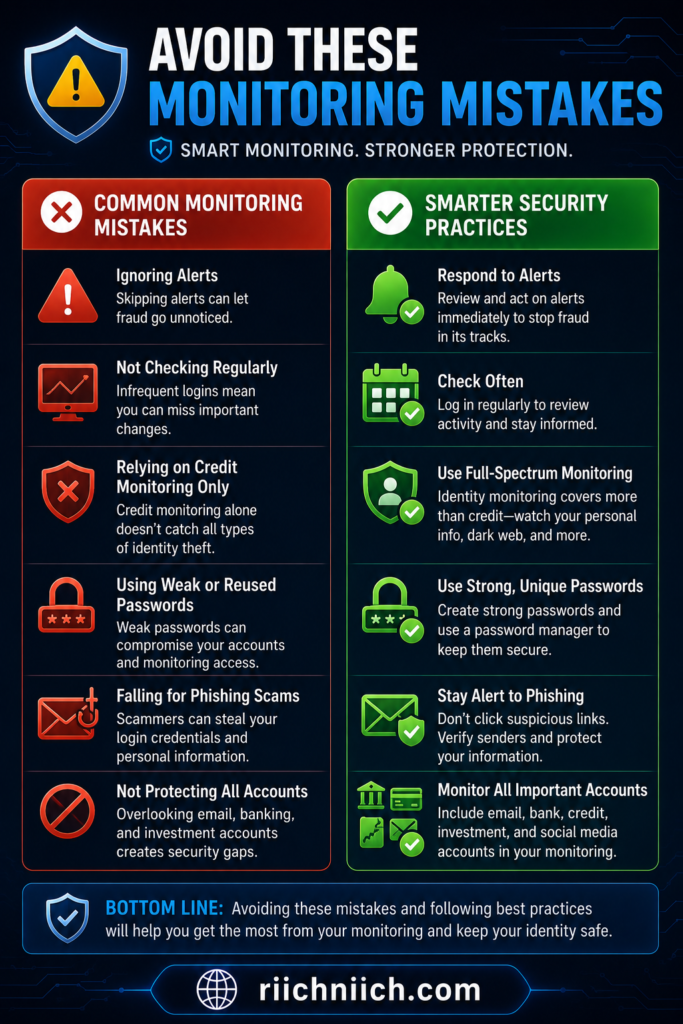
1. Assuming Credit Monitoring Protects Your Entire Identity
One of the biggest misconceptions is believing that credit monitoring protects every aspect of your identity. In reality, credit monitoring focuses primarily on changes to your credit reports.
It won’t typically alert you if:
- Your email account is compromised.
- Your personal information appears on the dark web.
- A company exposes your data in a breach.
- Someone attempts to take over your online accounts.
- Your Social Security number is misused outside of credit-related activity.
This is why many people comparing identity monitoring vs credit monitoring eventually choose a service that includes both types of monitoring.
2. Waiting Until After Identity Theft Happens
Many consumers don’t consider monitoring services until they’ve already become victims of fraud. Unfortunately, recovering from identity theft can take weeks—or even months—depending on the type of fraud involved.
Monitoring services are designed to provide early warnings so you can respond before criminals have the opportunity to cause greater financial or personal damage.
3. Choosing a Service Based Only on Price
It’s natural to compare monthly subscription costs, but the cheapest option isn’t always the best value.
Instead of focusing only on price, compare features such as:
- Identity monitoring.
- Credit monitoring.
- Dark web monitoring.
- Data breach alerts.
- Identity restoration assistance.
- Identity theft insurance.
- Family protection options.
A slightly more expensive service that offers significantly broader protection may save you much more if identity theft occurs.
4. Ignoring Identity Restoration Services
Receiving an alert is only the first step. If your identity is stolen, you’ll need to recover quickly.
Many premium identity theft protection services include dedicated identity restoration specialists who help you:
- Contact financial institutions.
- File fraud reports.
- Replace important documents.
- Restore compromised accounts.
- Navigate the recovery process.
These services can save considerable time and reduce the stress associated with identity theft.
5. Overlooking Family Protection
Many people purchase monitoring only for themselves and forget that spouses and children can also become victims of identity theft.
If multiple family members share devices, online accounts, or financial responsibilities, a family identity protection plan may provide much better overall value than purchasing separate services later.
6. Ignoring Security Habits
Even the best monitoring service can’t replace good cybersecurity practices.
To maximize your protection, continue to:
- Use strong, unique passwords.
- Enable multi-factor authentication.
- Update your devices regularly.
- Be cautious of phishing emails and text messages.
- Review financial statements frequently.
Monitoring services work best when combined with these everyday security habits.
7. Not Reading What the Service Actually Covers
Not all monitoring services offer the same features. Some focus almost entirely on credit monitoring, while others provide comprehensive identity protection that includes multiple forms of monitoring and recovery assistance.
Before subscribing, review exactly what is included so you know whether you’re paying for:
- Credit monitoring.
- Identity monitoring.
- Dark web monitoring.
- Financial account monitoring.
- Identity restoration.
- Identity theft insurance.
Understanding these differences is essential when evaluating identity monitoring vs credit monitoring and selecting the right service for your situation.
According to the Federal Trade Commission (FTC), recognizing suspicious activity early and responding quickly are key steps in limiting the damage caused by identity theft. The Cybersecurity and Infrastructure Security Agency (CISA) also encourages consumers to combine monitoring services with strong cybersecurity habits for the best overall protection.
By avoiding these common mistakes, you’ll be in a much better position to choose a monitoring service that provides meaningful protection instead of simply generating alerts. For most people researching identity monitoring vs credit monitoring, the best long-term value comes from selecting a comprehensive solution that combines identity monitoring, credit monitoring, and identity recovery services into one easy-to-manage plan.
Real-World Example: How Identity Monitoring Catches More Than Credit Fraud
To better understand identity monitoring vs credit monitoring, let’s look at a realistic example of how identity monitoring can detect threats that traditional credit monitoring may never see.
Imagine that Sarah frequently shops online, uses digital banking, and stores payment information with several online retailers. One day, a company she has an account with experiences a data breach. Her email address, password, and other personal information are exposed without her knowledge.
At this point, nothing has changed on her credit report.
If Sarah only has credit monitoring, she probably won’t receive any alerts because no one has opened a new credit account or submitted a hard inquiry.
However, if Sarah has identity monitoring, the situation unfolds very differently.
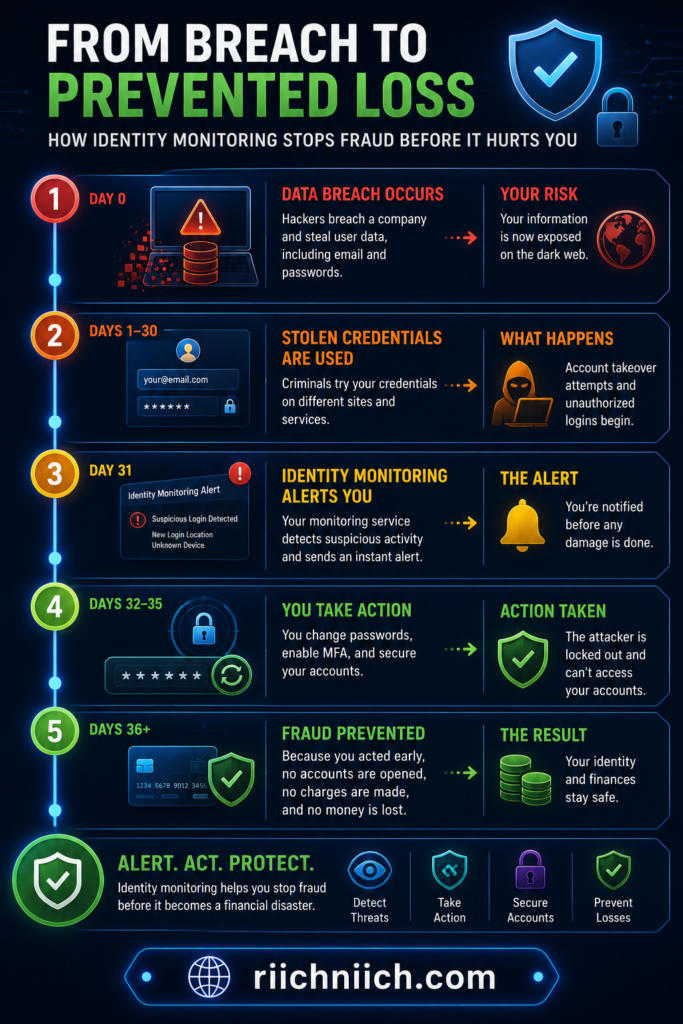
Step 1: A Data Breach Is Detected
An identity monitoring service discovers that Sarah’s email address has appeared in a newly reported data breach.
She immediately receives an alert advising her to:
- Change her password.
- Enable multi-factor authentication.
- Review recent account activity.
- Watch for suspicious login attempts.
By taking these simple steps, Sarah reduces the chances of criminals accessing her accounts.
Step 2: Stolen Credentials Are Found on the Dark Web
A few days later, the identity monitoring service detects Sarah’s compromised login credentials on a dark web marketplace.
Again, this activity has not affected her credit report.
Without identity monitoring, she likely wouldn’t know that her information was being sold to cybercriminals.
Step 3: Criminals Attempt an Account Takeover
Using Sarah’s stolen credentials, a criminal attempts to access one of her online financial accounts.
Because Sarah had already changed her password and enabled multi-factor authentication after receiving the earlier alert, the login attempt fails.
No money is stolen.
No fraudulent transactions occur.
No credit accounts are opened.
Step 4: Credit Monitoring Never Sends an Alert
Throughout this entire incident, Sarah’s credit report remains unchanged.
Since no loans, credit cards, or hard inquiries appear on her credit file, traditional credit monitoring has nothing to report.
This example highlights one of the most important differences in identity monitoring vs credit monitoring. Identity monitoring detects threats involving your personal information before they become credit-related problems.
Why Early Detection Makes a Difference
Identity theft often happens in stages rather than all at once.
Not sure whether your identity has already been compromised? Learn how to know if someone stole your identity before the damage becomes more serious.
A criminal may:
- Obtain your personal information through a data breach.
- Sell your information online.
- Attempt to access your accounts.
- Gather additional personal information.
- Eventually apply for loans or credit cards.
By the time fraudulent credit activity appears, criminals may have already compromised several of your accounts.
Identity monitoring helps interrupt this process much earlier by identifying warning signs before financial damage occurs.
The Takeaway
This example demonstrates why many consumers choose comprehensive identity protection instead of relying solely on credit monitoring.
When evaluating identity monitoring vs credit monitoring, remember that credit monitoring is designed to detect changes involving your credit file. Identity monitoring goes much further by identifying risks associated with your personal information, helping you respond before identity thieves have the opportunity to cause more serious harm.
According to the Cybersecurity and Infrastructure Security Agency (CISA), responding quickly to data breaches, changing compromised passwords, and enabling multi-factor authentication are among the most effective ways to reduce the impact of stolen personal information. The Federal Trade Commission (FTC) likewise recommends taking immediate action whenever you receive alerts indicating your identity may have been exposed.
For most people, this real-world scenario illustrates why identity monitoring provides broader protection than credit monitoring alone. By detecting threats earlier in the identity theft process, identity monitoring can help you stop fraud before it reaches your credit report or results in financial losses.
Pros and Cons of Identity Monitoring
If you’re deciding between identity monitoring vs credit monitoring, understanding the advantages and disadvantages of identity monitoring can help you determine whether it’s the right investment. While identity monitoring offers broader protection than credit monitoring, it’s important to have realistic expectations about what these services can and cannot do.
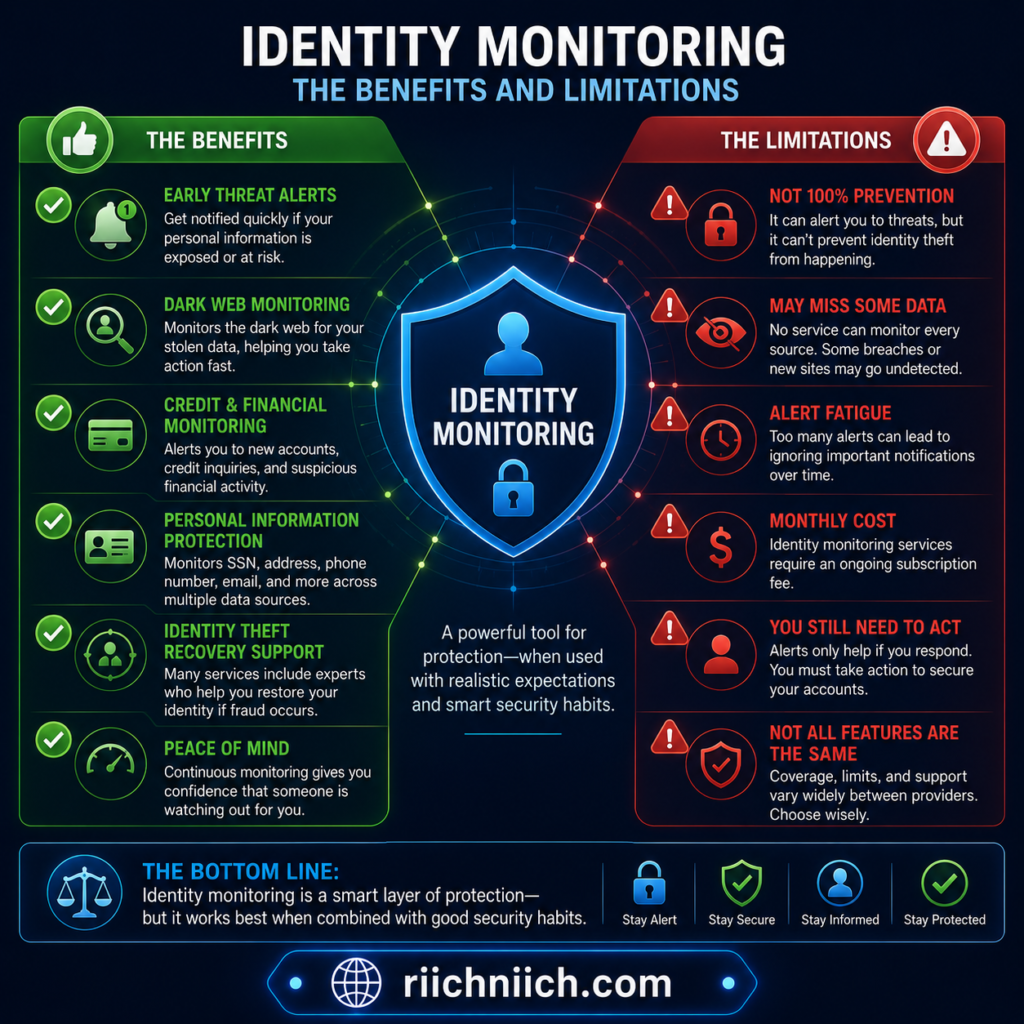
Pros of Identity Monitoring
Comprehensive Protection Beyond Your Credit Report
One of the biggest advantages of identity monitoring is that it watches for threats involving much more than your credit history. Depending on the provider, it can monitor your personal information across multiple sources, including:
- Dark web marketplaces.
- Data breach databases.
- Email addresses.
- Social Security numbers.
- Financial account activity.
- Identity-related fraud alerts.
This broader coverage helps detect threats that traditional credit monitoring may never identify.
Earlier Fraud Detection
Identity theft often begins long before criminals apply for credit in your name. Identity monitoring can alert you when your personal information has been exposed, giving you the opportunity to secure your accounts before fraud escalates.
Earlier detection often means:
- Less financial damage.
- Faster recovery.
- Reduced stress.
- Lower risk of long-term identity misuse.
Identity Restoration Assistance
Many premium identity monitoring services include dedicated recovery specialists who guide you through the identity theft recovery process.
Depending on your provider, they may assist with:
- Filing fraud reports.
- Contacting financial institutions.
- Replacing important documents.
- Recovering compromised accounts.
- Restoring your identity after fraud.
This level of support can be invaluable if your identity is ever stolen.
Identity Theft Insurance
Many comprehensive identity protection plans also include identity theft insurance that may help reimburse eligible expenses associated with recovering from identity theft, subject to the provider’s policy terms.
Convenient All-in-One Protection
Instead of subscribing to several different security services, many identity theft protection providers combine:
- Identity monitoring.
- Credit monitoring.
- Dark web monitoring.
- Data breach alerts.
- Identity restoration.
- Fraud insurance.
Having everything managed through one dashboard makes monitoring your identity much easier.
Cons of Identity Monitoring
It Cannot Prevent Identity Theft
Perhaps the biggest misconception is believing identity monitoring can stop criminals from stealing your information.
No monitoring service can prevent:
- Data breaches.
- Phishing attacks.
- Malware infections.
- Password theft.
- Human error.
Instead, identity monitoring focuses on detecting suspicious activity early so you can take action quickly.
It Usually Requires a Paid Subscription
Unlike some free credit monitoring services, comprehensive identity monitoring is typically available through paid subscriptions.
However, many users find the additional protection worthwhile because of the expanded monitoring features and recovery assistance included.
Alerts Still Require Action
Receiving an alert is only helpful if you respond promptly.
If you ignore notifications about:
- Data breaches.
- Suspicious login attempts.
- Dark web exposure.
- Fraud alerts.
…criminals may still be able to misuse your personal information.
Monitoring services provide valuable information, but your response plays an important role in limiting potential damage.
Coverage Varies Between Providers
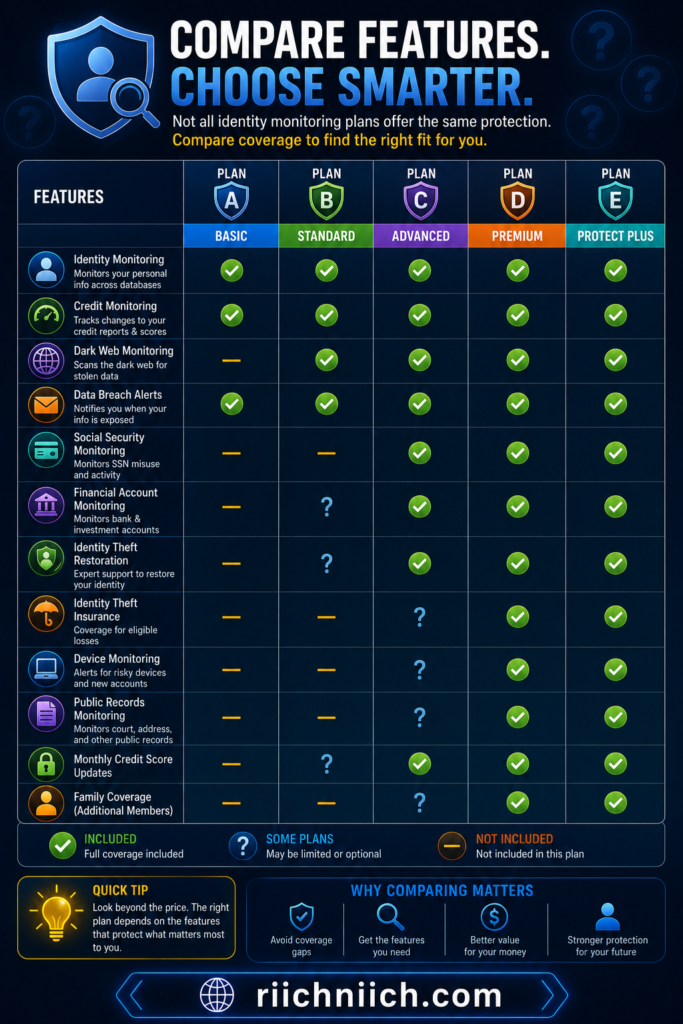
Not every identity monitoring service offers the same features.
Some plans include:
- Financial account monitoring.
- Child identity monitoring.
- Identity theft insurance.
- Social Security number monitoring.
Others may provide only basic monitoring.
For this reason, it’s important to compare features before purchasing a service.
Is Identity Monitoring Worth the Investment?
When comparing identity monitoring vs credit monitoring, identity monitoring offers significantly broader protection for people who spend a lot of time online, use digital banking, manage multiple financial accounts, or have been affected by previous data breaches.
While it does require a monthly subscription in most cases, the additional monitoring capabilities and identity recovery services can provide valuable peace of mind—especially as identity theft continues to evolve.
According to the Federal Trade Commission (FTC), acting quickly after discovering identity theft is one of the most effective ways to reduce financial losses. Likewise, the Cybersecurity and Infrastructure Security Agency (CISA) recommends monitoring sensitive personal information and using layered security practices to reduce cyber risks.
Ultimately, the advantages of identity monitoring outweigh its limitations for many consumers. When evaluating identity monitoring vs credit monitoring, identity monitoring provides broader visibility into potential identity theft threats and is often the better long-term choice for individuals seeking comprehensive protection of their personal information.
Pros and Cons of Credit Monitoring
Credit monitoring remains one of the most popular tools for protecting your financial health, but it isn’t a complete identity protection solution. When comparing identity monitoring vs credit monitoring, it’s important to understand where credit monitoring excels and where it falls short so you can make an informed decision.
Pros of Credit Monitoring
Helps Detect Credit Fraud Quickly
The primary benefit of credit monitoring is its ability to alert you when important changes appear on your credit report.
You should also learn how to check your credit report for signs of identity theft so you can recognize suspicious activity as early as possible.
These alerts may include:
- New credit card accounts.
- Personal loans.
- Mortgage applications.
- Hard credit inquiries.
- Collection accounts.
- Significant changes to your credit score.
Receiving these notifications early allows you to investigate suspicious activity before additional fraudulent accounts are opened.
Helps Protect Your Credit Score
Credit monitoring isn’t just useful for detecting fraud—it can also help you maintain a healthy credit profile.
By monitoring changes to your credit report, you can identify reporting errors, incorrect account information, or unexpected score changes that may affect future loan approvals or interest rates.
Often Available at Low or No Cost
One advantage of credit monitoring is accessibility. Many financial institutions, credit card issuers, and credit bureaus offer free or low-cost credit monitoring services, making it an affordable first step toward protecting your financial identity.
Useful for Major Financial Decisions
If you’re preparing to apply for a mortgage, auto loan, or personal loan, credit monitoring can help you stay informed about changes that could impact your creditworthiness before lenders review your credit history.
Cons of Credit Monitoring
Limited Protection Outside Your Credit Report
The biggest disadvantage of credit monitoring is its narrow focus.
It generally does not monitor:
- Dark web marketplaces.
- Data breach exposure.
- Email account compromises.
- Social Security number misuse.
- Bank account takeovers.
- Medical identity theft.
- Tax identity theft.
- Social media account hijacking.
Because these threats often occur before fraudulent credit activity appears, they may go completely undetected.
Alerts Often Come After Fraud Has Started
Credit monitoring is reactive rather than proactive.
In many cases, you’ll receive an alert only after:
- A new account has already been opened.
- A hard inquiry has been submitted.
- Fraudulent activity reaches your credit report.
By that point, criminals may have already gained access to your personal information or financial accounts.
Recovery Assistance May Be Limited
Basic credit monitoring services generally focus on notifying you about changes to your credit report. They may not include identity restoration specialists, fraud resolution assistance, or identity theft insurance that are commonly available with comprehensive identity protection plans.
Coverage Varies Between Providers
Not every credit monitoring service offers the same level of protection.
Some monitor only one credit bureau, while others monitor all three. Alert frequency, credit score updates, and included features also vary depending on the provider.
Before signing up, it’s important to understand exactly what is included.
Is Credit Monitoring Still Worth It?
Absolutely. Credit monitoring remains a valuable tool for detecting unauthorized borrowing and helping you maintain your financial health. It can provide early warning when someone attempts to use your identity to open new lines of credit.
However, when evaluating identity monitoring vs credit monitoring, it’s important to recognize that credit monitoring protects only one part of your identity. It does not monitor many of the threats that have become increasingly common, such as data breaches, credential theft, or dark web exposure.
According to the Consumer Financial Protection Bureau (CFPB), reviewing your credit reports regularly is an important step in identifying fraud and maintaining accurate credit information. The Federal Trade Commission (FTC) also recommends monitoring your credit reports as part of a broader identity theft prevention strategy.
For many people, the best solution isn’t choosing between identity monitoring vs credit monitoring—it’s selecting a comprehensive identity theft protection service that includes both. This approach provides the credit-related alerts offered by credit monitoring while adding broader identity monitoring, faster fraud detection, and recovery assistance if your personal information is ever compromised.
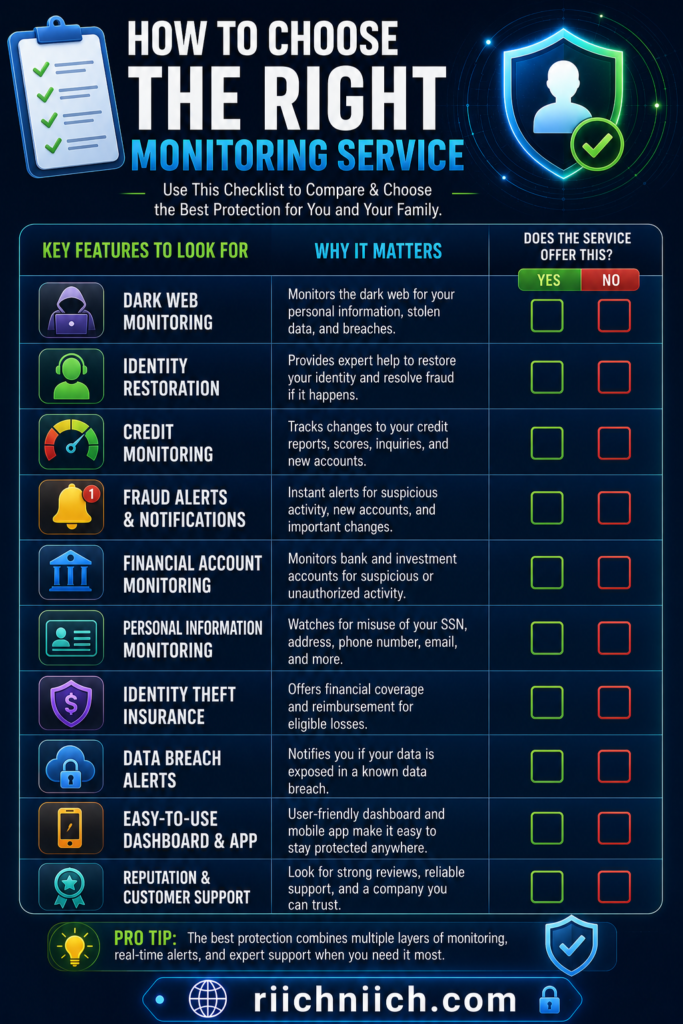
How to Choose the Right Monitoring Service
Choosing the right monitoring service depends on your personal risk level, online habits, and the type of protection you’re looking for. When comparing identity monitoring vs credit monitoring, it’s important to look beyond the monthly price and focus on the features that will best protect your personal information.
The best service isn’t necessarily the most expensive—it’s the one that provides the level of protection you actually need.
👉 If you’re comparing different providers, Identity Guard is another excellent option that offers identity monitoring, credit monitoring, and intelligent fraud detection to help protect your personal information.
1. Consider Your Online Lifestyle
The more you rely on digital services, the greater your exposure to identity theft.
Ask yourself questions like:
- Do you shop online frequently?
- Do you use online banking?
- Do you save payment information on websites?
- Do you work remotely?
- Do you use public Wi-Fi while traveling?
- Have you been involved in a previous data breach?
If you answered “yes” to several of these questions, a comprehensive identity monitoring service is likely a better fit than basic credit monitoring alone.
2. Compare the Features—Not Just the Price
Many people focus only on subscription costs, but features provide much more value than a small difference in monthly pricing.
Look for services that include:
- Identity monitoring.
- Credit monitoring.
- Dark web monitoring.
- Data breach notifications.
- Identity restoration assistance.
- Identity theft insurance.
- Financial account monitoring.
- Three-bureau credit monitoring, if available.
Choosing a service with broader protection often eliminates the need for multiple subscriptions.
3. Check the Recovery Services
Detecting fraud is only part of the equation. Recovering from identity theft can be time-consuming and stressful.
A quality identity protection service should offer access to experienced identity restoration specialists who can assist with:
- Contacting financial institutions.
- Filing fraud reports.
- Replacing government-issued documents.
- Recovering compromised accounts.
- Guiding you through the recovery process.
These services can make a significant difference if your identity is ever stolen.
4. Consider Family Coverage
If you have a spouse or children, compare plans that include family protection.
Many identity theft protection providers allow you to monitor multiple family members under one subscription, which often provides better value than purchasing separate plans.
This is especially beneficial for parents, as children’s identities can be targeted long before they begin building credit.
5. Read the Fine Print
Not every monitoring service includes the same protections.
Before subscribing, verify whether the service offers:
- Three-bureau or single-bureau credit monitoring.
- Identity monitoring.
- Dark web monitoring.
- Data breach alerts.
- Identity theft insurance.
- Identity restoration support.
- Mobile app access.
- Real-time notifications.
Understanding these details will help you avoid surprises after you sign up.
6. Think About Long-Term Value
Instead of asking, “What’s the cheapest option?” ask yourself:
- Will this service protect me against today’s identity theft threats?
- Does it provide alerts beyond my credit report?
- Will it help me recover if fraud occurs?
- Can it protect my entire family if needed?
Answering these questions will help you choose a service that continues providing value as cyber threats evolve.
Which Type of Service Is Best for Most People?
When evaluating identity monitoring vs credit monitoring, most individuals benefit from a service that combines both. Comprehensive identity theft protection plans offer the convenience of monitoring your credit reports while also watching for data breaches, dark web exposure, suspicious identity activity, and other threats that credit monitoring alone may miss.
This layered approach provides stronger protection and reduces the chances that identity theft will go unnoticed until significant damage has already occurred.
According to the Federal Trade Commission (FTC), consumers should respond quickly to fraud alerts and regularly monitor their financial information to reduce the impact of identity theft. The Cybersecurity and Infrastructure Security Agency (CISA) also recommends using layered security measures—including monitoring sensitive personal information—to strengthen your overall cybersecurity.
Ultimately, choosing the right monitoring service comes down to your individual needs. If you simply want to keep an eye on your credit report, credit monitoring may be sufficient. However, if you’re looking for comprehensive protection against today’s evolving identity theft risks, identity monitoring vs credit monitoring becomes much less of a choice and more of a combination. A service that includes both identity monitoring and credit monitoring offers the most complete protection and the greatest peace of mind for most individuals and families.
Is Identity Monitoring Worth It?
For many people, yes—identity monitoring is worth it. If you regularly shop online, use digital banking, manage multiple financial accounts, or have ever been affected by a data breach, identity monitoring can provide an extra layer of protection that basic credit monitoring simply can’t offer.
If you’re still deciding whether these services are worth paying for, read our detailed guide on Is Identity Theft Protection Worth It.
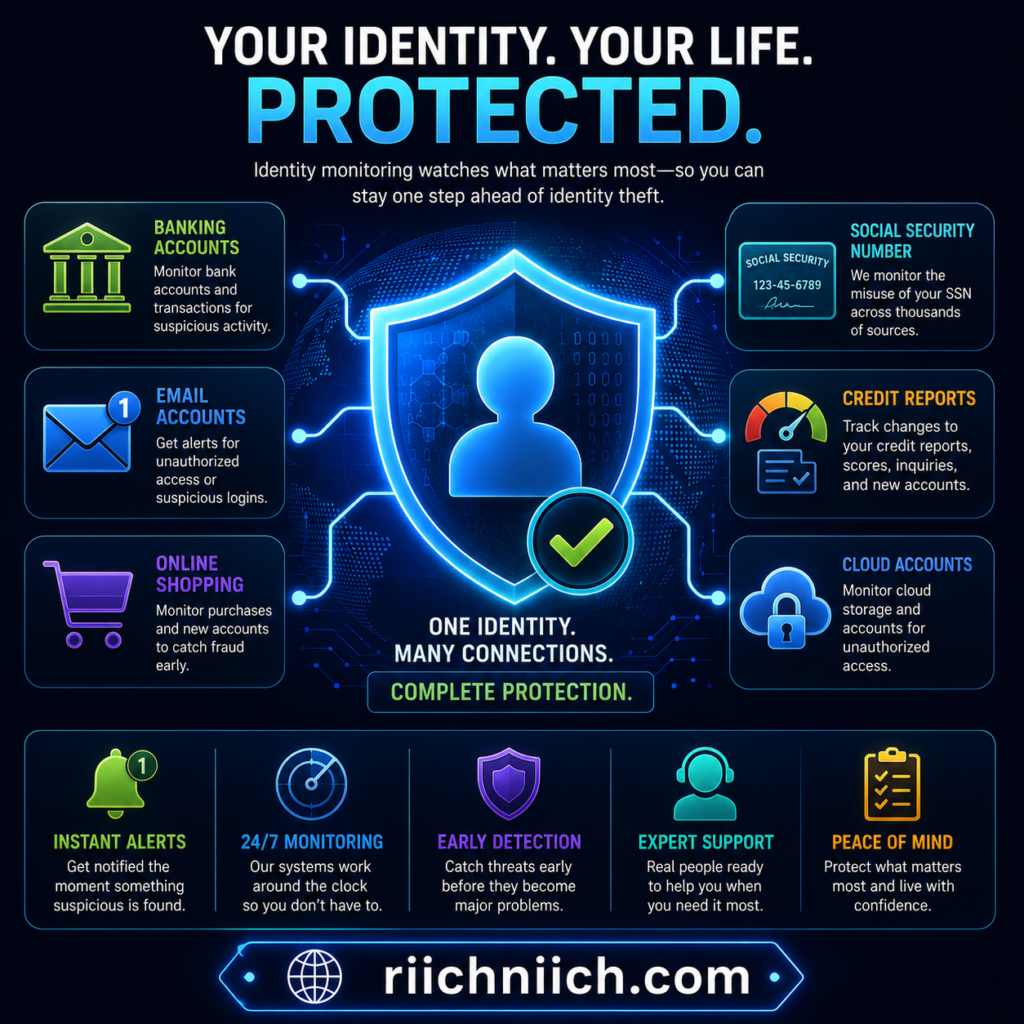
When comparing identity monitoring vs credit monitoring, the biggest advantage of identity monitoring is its broader coverage. Instead of only watching your credit reports, it monitors multiple sources where your personal information could be exposed or misused, giving you earlier warnings about potential identity theft.
Identity Monitoring Can Save You Time and Stress
Recovering from identity theft can be a long and frustrating process. You may need to:
- Contact banks and credit card companies.
- Place fraud alerts or freeze your credit.
- Replace important documents.
- Dispute fraudulent accounts.
- Change passwords across multiple accounts.
- Monitor your finances for months after the incident.
Identity monitoring helps reduce these challenges by alerting you to suspicious activity sooner, allowing you to take action before criminals cause more extensive damage.
It’s Especially Valuable After a Data Breach
Data breaches have become increasingly common, exposing millions of consumers’ personal information every year.
If your:
- Email address
- Passwords
- Social Security number
- Phone number
- Home address
- Financial information
has been exposed in a breach, identity monitoring can help notify you if that information later appears on the dark web or is connected to suspicious activity.
Earlier alerts give you valuable time to secure your accounts before criminals attempt to exploit your information.
Identity Monitoring Provides More Than Alerts
One reason many consumers choose comprehensive identity theft protection is that it often includes additional services beyond monitoring.
Depending on the provider, you may also receive:
- Credit monitoring.
- Dark web monitoring.
- Identity restoration specialists.
- Identity theft insurance.
- Financial account monitoring.
- Data breach notifications.
These features work together to provide broader protection and simplify the recovery process if identity theft occurs.
Is It Worth Paying for Instead of Using Free Credit Monitoring?
Free credit monitoring is useful for tracking changes to your credit reports, but it doesn’t monitor many of today’s most common identity theft risks.
When evaluating identity monitoring vs credit monitoring, consider what you’re trying to protect.
If your primary concern is:
- Unauthorized loans
- New credit cards
- Credit inquiries
credit monitoring may be enough.
However, if you’re concerned about:
- Data breaches
- Dark web exposure
- Stolen login credentials
- Account takeovers
- Misuse of your personal information
identity monitoring provides much broader coverage.
Who Gets the Most Value?
Identity monitoring is often worth the investment for:
- Frequent online shoppers.
- Families managing multiple financial accounts.
- Remote workers.
- Travelers.
- Seniors.
- Individuals affected by previous data breaches.
- Anyone storing sensitive information online.
The more personal information you share digitally, the more valuable identity monitoring becomes.
Our Recommendation
When deciding identity monitoring vs credit monitoring, there’s a clear winner for most people.
Credit monitoring remains an excellent tool for tracking changes to your credit report, but identity monitoring offers a much broader level of protection against modern identity theft. Because many premium identity theft protection services include both identity monitoring and credit monitoring in one plan, you don’t necessarily have to choose between them.
If your goal is simply monitoring your credit file, credit monitoring may be enough. But if you want comprehensive protection against today’s evolving identity theft threats, identity monitoring vs credit monitoring becomes much less about choosing one service over the other and more about selecting a solution that combines both. For most individuals and families, investing in a reputable identity theft protection service that includes identity monitoring and credit monitoring is well worth the cost for the added security and peace of mind.
Frequently Asked Questions About Identity Monitoring vs Credit Monitoring
Is identity monitoring the same as credit monitoring?
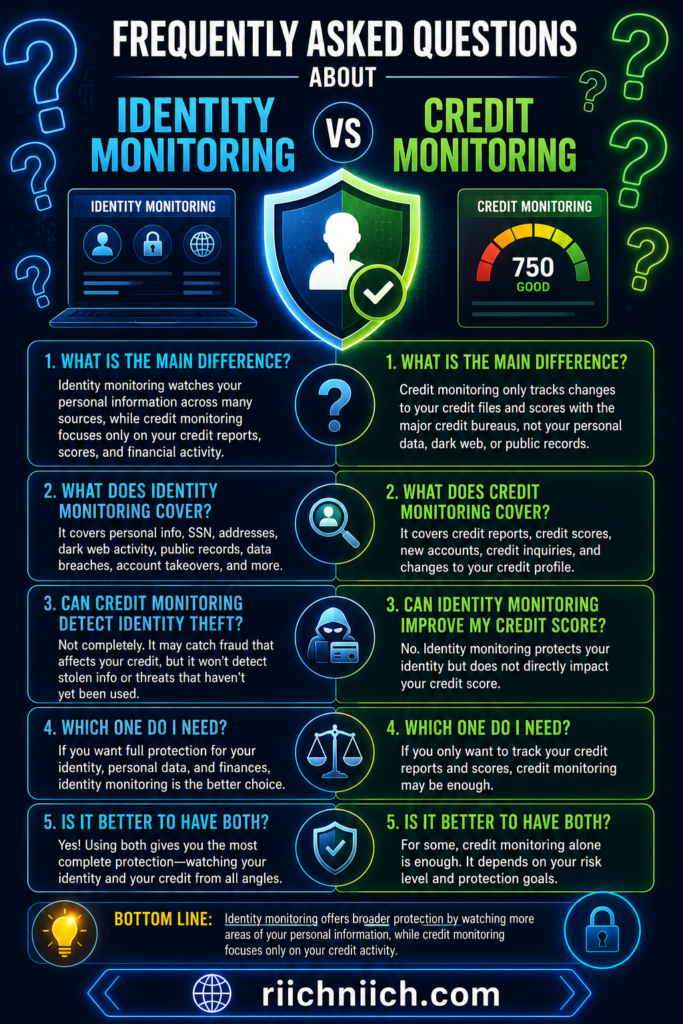
No. One of the biggest differences in identity monitoring vs credit monitoring is the scope of protection.
Credit monitoring focuses on changes to your credit reports, such as new accounts, hard inquiries, and changes to your credit score. Identity monitoring provides broader protection by monitoring your personal information for signs of misuse, including data breaches, dark web exposure, and suspicious identity-related activity.
Which is better: identity monitoring or credit monitoring?
For most people, identity monitoring is the better choice because it protects much more than your credit report. However, the ideal solution is often a comprehensive identity theft protection service that includes both identity monitoring and credit monitoring in a single plan.
This allows you to receive alerts about both credit-related fraud and other identity theft threats.
Can identity monitoring prevent identity theft?
No. Identity monitoring cannot prevent criminals from stealing your personal information.
Instead, it serves as an early warning system that alerts you when suspicious activity is detected so you can respond quickly. Taking immediate action after receiving an alert can help reduce the financial and personal impact of identity theft.
If you ever receive an alert confirming identity theft, follow our guide on what to do immediately if your identity is stolen to begin the recovery process.
Is free credit monitoring enough?
Free credit monitoring is helpful for tracking changes to your credit reports, but it doesn’t monitor many other identity theft risks.
If you’re primarily concerned about unauthorized loans or credit cards, free credit monitoring may be sufficient. However, if you want protection against data breaches, dark web exposure, account takeovers, and misuse of your personal information, a comprehensive identity monitoring service provides much broader coverage.
Still wondering whether a paid service is worth it? Read our comparison of Is Aura Better Than Free Credit Monitoring to see how free and premium protection compare.
Does identity monitoring include credit monitoring?
Many premium identity theft protection services include both identity monitoring and credit monitoring as part of the same subscription.
However, not every provider offers identical features. Before signing up, review the service to confirm whether it includes:
- Credit monitoring.
- Identity monitoring.
- Dark web monitoring.
- Identity restoration assistance.
- Identity theft insurance.
- Financial account monitoring.
Is identity monitoring worth paying for?
For many people, yes.
If you regularly shop online, use digital banking, manage multiple financial accounts, or have been affected by a previous data breach, identity monitoring provides valuable protection that goes beyond basic credit monitoring.
The added monitoring features and recovery assistance can help you detect identity theft earlier and respond more effectively if your personal information is compromised.
Should I freeze my credit if I have identity monitoring?
Yes. Identity monitoring and a credit freeze serve different purposes and work well together.
A credit freeze helps prevent criminals from opening new credit accounts in your name, while identity monitoring alerts you to suspicious activity involving your personal information.
Using both creates a stronger overall identity theft prevention strategy.
Can identity monitoring detect dark web activity?
Many identity monitoring services include dark web monitoring that scans for exposed personal information, such as:
- Email addresses.
- Passwords.
- Social Security numbers.
- Phone numbers.
- Financial information.
If your information is detected, you’ll typically receive an alert with recommended next steps to help secure your accounts.
How do I choose between identity monitoring and credit monitoring?
When deciding identity monitoring vs credit monitoring, start by considering your personal risk level.
If your main concern is monitoring your credit reports, credit monitoring may be enough.
If you want broader protection against data breaches, identity theft, account takeovers, and other cyber threats, identity monitoring is usually the better option.
For most individuals and families, choosing a service that combines both provides the most complete protection.
Understanding the answers to these common questions makes it easier to evaluate identity monitoring vs credit monitoring and choose a solution that provides the right balance of protection, convenience, and peace of mind for your specific needs.
Conclusion: Identity Monitoring vs Credit Monitoring
When comparing identity monitoring vs credit monitoring, there isn’t a one-size-fits-all answer—but for most people, identity monitoring offers significantly broader protection.
Credit monitoring is an excellent tool for tracking changes to your credit reports. It can alert you when someone opens a new account, submits a hard inquiry, or other credit-related activity occurs in your name. If your primary goal is protecting your credit history, credit monitoring is a valuable first line of defense.
However, today’s identity thieves don’t just target credit reports. They steal login credentials, exploit data breaches, take over financial accounts, misuse Social Security numbers, and sell personal information on the dark web. These threats often occur long before fraudulent activity appears on your credit report.
That’s where identity monitoring has a clear advantage.
Because identity monitoring watches multiple sources of personal information instead of focusing only on your credit file, it can provide earlier warnings and broader protection against modern identity theft tactics.
Our Recommendation
For most individuals and families, the best choice isn’t deciding between identity monitoring vs credit monitoring—it’s choosing a comprehensive identity theft protection service that includes both.
A quality service should provide:
- Identity monitoring.
- Credit monitoring.
- Dark web monitoring.
- Data breach notifications.
- Identity restoration assistance.
- Identity theft insurance.
- Real-time fraud alerts.
Having all of these features working together gives you much better visibility into suspicious activity while simplifying the process of protecting your identity.
If you’re looking for comprehensive protection, we recommend choosing a trusted identity theft protection service that combines both identity monitoring and credit monitoring instead of relying on only one type of monitoring.
👉 If you’re still researching your options, be sure to read our guide to the Best Identity Theft Protection Services, where we compare the top providers based on monitoring features, recovery assistance, pricing, and overall value.
If you’re considering one of the most popular providers, you may also find our Is Aura Worth It? review helpful before making your decision.
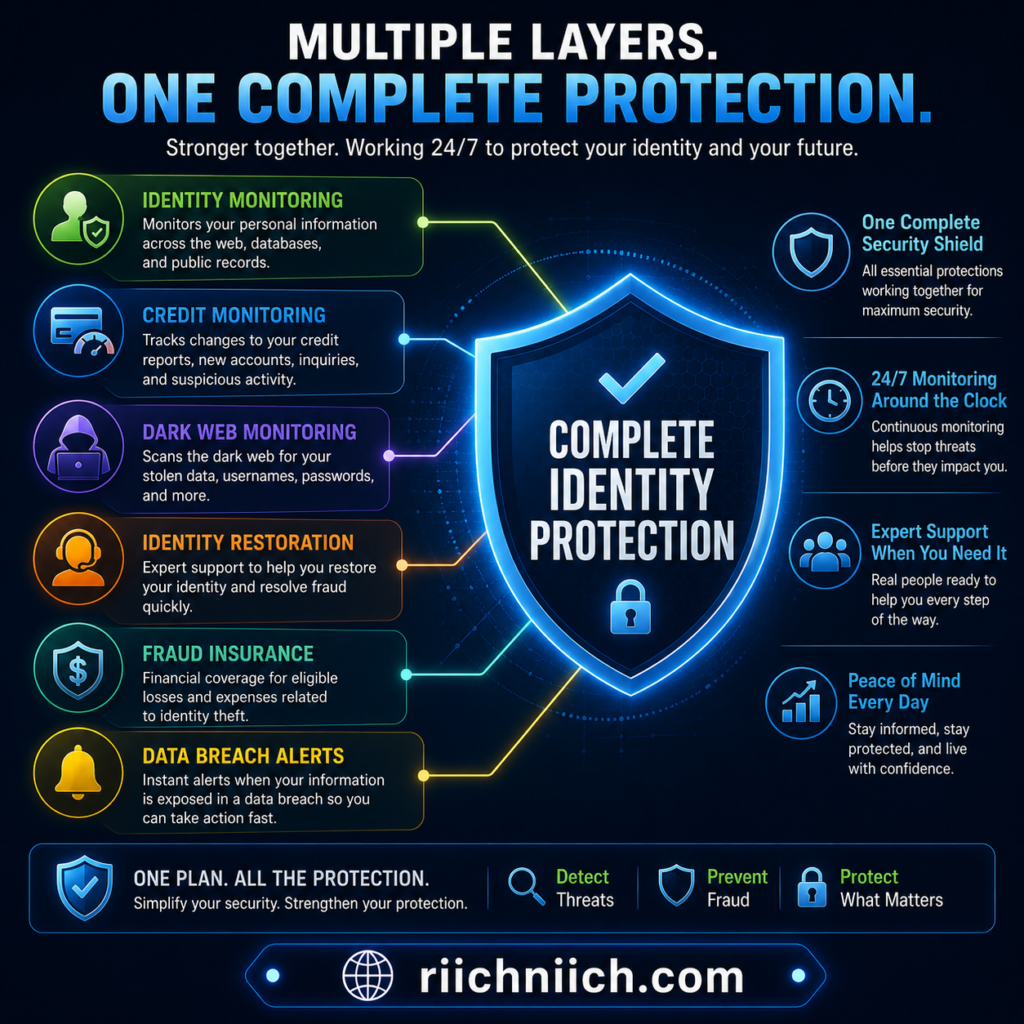
Ultimately, identity monitoring vs credit monitoring comes down to the level of protection you want. Credit monitoring remains an important financial security tool, but identity monitoring provides broader coverage against the increasingly sophisticated identity theft threats people face today.
If your goal is simply monitoring your credit report, credit monitoring may be sufficient. But if you want greater peace of mind and protection across your entire digital identity, a comprehensive service that combines identity monitoring and credit monitoring is the smartest long-term investment. It offers the strongest defense against identity theft while helping you detect, respond to, and recover from fraud as quickly as possible.