

How to stop identity theft before it happens is a question more people are asking as data breaches, phishing scams, and online fraud continue to increase. The good news is that you don’t have to wait until your identity is stolen to protect yourself. By taking a few proactive steps—such as securing your online accounts, freezing your credit, monitoring your personal information, and using trusted security tools—you can significantly reduce your risk. In this guide, you’ll learn practical strategies to help prevent identity theft, recognize common threats, and protect your financial future before criminals have the chance to strike.
Table of Contents
🔥 Quick Answer: How to Stop Identity Theft Before It Happens
The best way on how to stop identity theft before it happens is to make it as difficult as possible for criminals to access your personal information. Most identity thieves don’t “hack” individuals directly—they take advantage of weak passwords, phishing scams, data breaches, unsecured Wi-Fi networks, and information people unknowingly share online. Fortunately, many of these risks can be reduced with a few proactive security habits.
If you really want to know how to stop identity theft before it happens, you should:
- Use strong, unique passwords for every online account.
- Enable two-factor authentication (2FA) whenever possible.
- Freeze your credit if you aren’t actively applying for new loans or credit cards.
- Monitor your credit reports and financial accounts for suspicious activity.
- Be cautious of phishing emails, text messages, and phone scams.
- Protect your Social Security number and other sensitive personal information.
- Keep your devices and software updated with the latest security patches.
- Consider using a trusted identity theft protection service that provides identity monitoring, dark web monitoring, fraud alerts, and recovery assistance.
According to guidance from the Federal Trade Commission (FTC), detecting fraud early is one of the most effective ways to limit the financial and personal damage caused by identity theft. Likewise, the Cybersecurity and Infrastructure Security Agency (CISA) recommends using multi-factor authentication, maintaining strong passwords, and keeping software up to date to reduce the risk of cybercriminals gaining access to your accounts.
No single security measure can eliminate every risk, but layering multiple protections together makes you a much harder target. Whether it’s freezing your credit, securing your online accounts, or investing in a reputable identity theft protection service, taking action today is far easier—and far less expensive—than recovering after your identity has already been stolen.
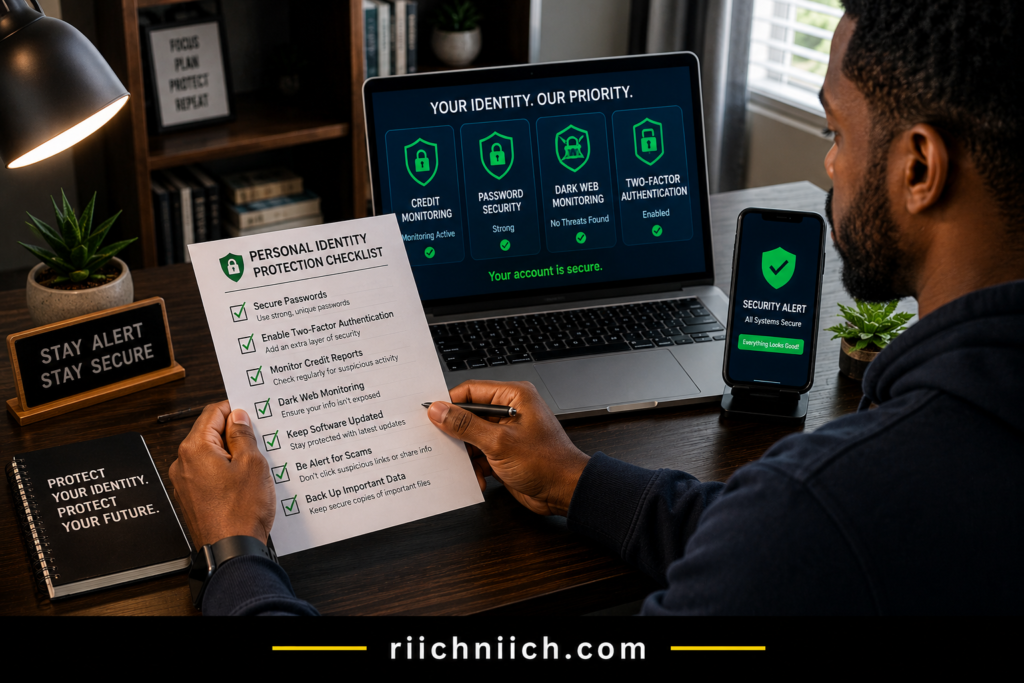
What Is Identity Theft and Why Is It So Common Today?
Identity theft occurs when someone steals your personal information and uses it without your permission for financial gain or other fraudulent purposes. This information may include your Social Security number, bank account details, credit card numbers, passwords, driver’s license number, medical insurance information, or even your email address. Once criminals have enough information, they can open new credit accounts, take over existing accounts, apply for loans, file fraudulent tax returns, or make unauthorized purchases in your name.
Understanding how identity theft works is the first step if you want to know how to stop identity theft before it happens. Criminals don’t need to know everything about you—they often only need a few key pieces of personal information to begin impersonating you.
Today, identity theft is more common than ever because people conduct much of their daily lives online. Shopping, banking, investing, paying bills, working remotely, and managing healthcare records all involve sharing sensitive information across multiple websites and devices. Every online account creates another opportunity for cybercriminals to target your personal data if proper security measures aren’t in place.
Data breaches have also become one of the biggest contributors to identity theft. Even if you use strong passwords and practice good online security, companies that store your information can still experience cyberattacks. When that happens, criminals may gain access to names, email addresses, passwords, Social Security numbers, or financial information that can later be sold on criminal marketplaces or used in phishing attacks. The Cybersecurity and Infrastructure Security Agency (CISA) recommends enabling multi-factor authentication and keeping software updated because these simple steps significantly reduce the risk of account compromise after stolen information is exposed.
Another reason identity theft continues to grow is that scammers have become much more sophisticated. Instead of relying solely on obvious scams, they now send convincing phishing emails, fake text messages, fraudulent phone calls, and realistic websites designed to trick people into voluntarily giving away sensitive information. Many victims don’t realize they’ve been targeted until unauthorized accounts are opened or suspicious charges appear on their financial statements.
Social media and public records also make it easier for criminals to gather personal details. Information such as birthdays, family relationships, addresses, employers, and phone numbers can often be pieced together from multiple sources. Combined with data obtained from breaches or data brokers, these details can help criminals answer security questions, impersonate victims, or launch highly convincing scams.
Fortunately, identity theft is often preventable. Practicing good cybersecurity habits, protecting your personal information, monitoring your financial accounts, and using identity theft protection services all work together to reduce your risk. The Federal Trade Commission (FTC) also encourages consumers to review their credit reports regularly and act quickly if they notice unfamiliar accounts or suspicious activity.
The good news is that learning how to stop identity theft before it happens doesn’t require advanced technical knowledge. By understanding how criminals obtain personal information and taking proactive steps to secure your accounts, you can greatly reduce the chances of becoming their next victim.
How Criminals Steal Your Personal Information
If you want to know how to stop identity theft before it happens, it’s important to understand how criminals get access to your personal information in the first place. Contrary to what many people believe, most identity thieves don’t need sophisticated hacking tools. Instead, they rely on everyday mistakes, large-scale data breaches, and social engineering tactics to collect enough information to impersonate their victims.
Below are the most common ways criminals steal personal information.
Data Breaches
Data breaches remain one of the leading causes of identity theft. When a company experiences a cyberattack, criminals may gain access to customer records containing names, email addresses, passwords, Social Security numbers, dates of birth, and financial information.
Even if you’ve never shared your information publicly, a single breach involving a retailer, bank, healthcare provider, or online service could expose enough data for criminals to target you. That’s why regularly monitoring your accounts and changing compromised passwords is an important part of learning how to stop identity theft before it happens.
Phishing Emails and Fake Websites
Phishing scams are designed to trick you into voluntarily giving away sensitive information. Criminals create emails, text messages, and websites that closely resemble trusted companies, making it difficult to spot the fraud.
For example, you may receive an email claiming your bank account has been locked or that a package couldn’t be delivered. Clicking the link often leads to a fake login page where criminals capture your username, password, and sometimes even your two-factor authentication code.
The Cybersecurity and Infrastructure Security Agency (CISA) recommends verifying website addresses before entering login credentials and avoiding links or attachments from unexpected messages.
Weak or Reused Passwords
Many people reuse the same password across multiple websites. If just one of those websites suffers a data breach, criminals often try the stolen username and password combination on dozens of other services, including email accounts, banking websites, and shopping platforms.
Using a password manager to generate strong, unique passwords for every account is one of the simplest ways to reduce your risk and learning how to stop identity theft before it happens.
Public Wi-Fi Networks
Unsecured public Wi-Fi can expose your internet traffic to attackers if you’re accessing sensitive accounts without proper protection. While many websites now use encryption, unsecured networks still increase the risk of account compromise, especially when combined with fake Wi-Fi hotspots created by cybercriminals.
If you must use public Wi-Fi, avoid logging into financial accounts or entering sensitive personal information unless you’re using a trusted VPN.
Social Media Oversharing
Every photo, birthday post, vacation update, and family announcement can reveal valuable information about you. Criminals often use publicly available details to answer security questions, build convincing phishing attacks, or impersonate victims.
Limiting what you share online helps protect your personal information and makes it harder for scammers to target you.
Data Brokers and People Search Websites
Many companies legally collect information from public records, marketing databases, and commercial sources before selling that data to advertisers and third parties. While these businesses aren’t identity thieves, criminals frequently use publicly available information from data broker and people search websites to gather addresses, phone numbers, relatives, and other personal details.
Reducing your digital footprint by removing your information from these websites can lower your overall exposure and strengthen your identity theft prevention strategy.
Mail Theft and Physical Document Theft
Not every identity theft scheme happens online. Criminals still steal mail containing tax documents, credit card offers, bank statements, medical records, and other paperwork with sensitive information.
Shredding documents before disposal, collecting mail promptly, and securing your mailbox are simple habits that help protect your identity offline as well.
Malware and Spyware
Malicious software can secretly record everything you type, steal saved passwords, capture banking information, or give criminals remote access to your device. Malware is often installed through fake software downloads, infected email attachments, or compromised websites.
Keeping your operating system, browser, and antivirus software updated significantly reduces the risk of malware infections.
The reality is that identity thieves don’t rely on just one method. They often combine information from data breaches, phishing scams, social media, public records, and stolen passwords to build a complete profile of their victims. Understanding these tactics is essential if you want to know how to stop identity theft before it happens. The more layers of protection you put in place, the more difficult—and less worthwhile—you become as a target.
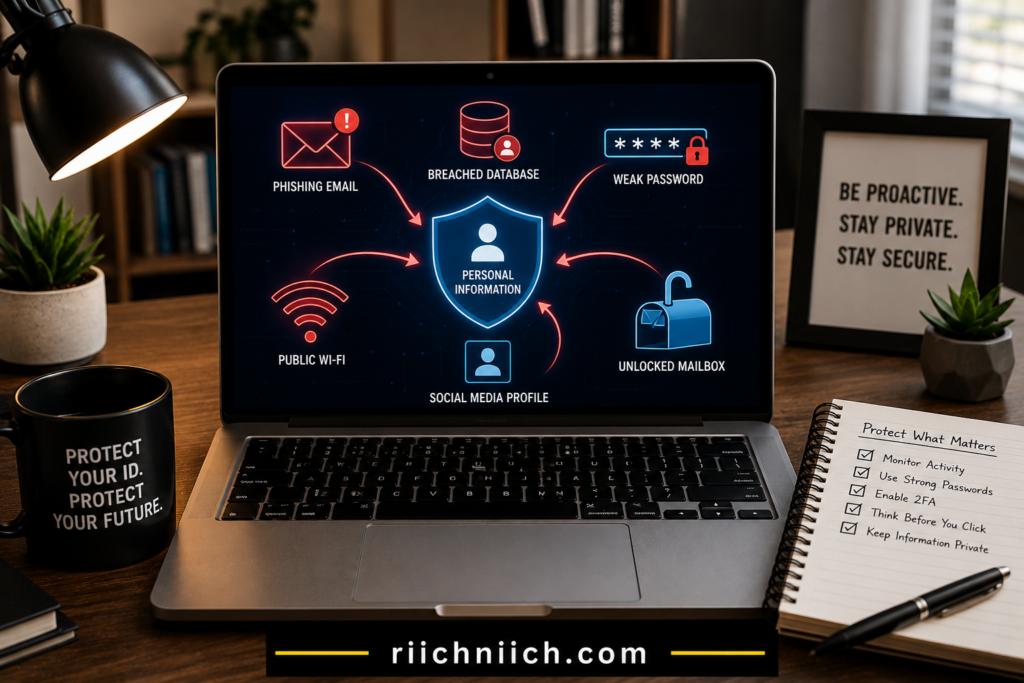
12 Proven Ways to Stop Identity Theft Before It Happens
Learning how to stop identity theft before it happens doesn’t require expensive software or advanced technical knowledge. In most cases, identity thieves succeed because they find easy opportunities—not because they have extraordinary hacking skills.
The following strategies work together to create multiple layers of protection. The more barriers you put between your personal information and criminals, the less likely you are to become a victim.
1. Use Strong, Unique Passwords for Every Account
One of the easiest ways criminals gain access to accounts is through reused passwords. If one website experiences a data breach and you’ve used that same password elsewhere, attackers can try those credentials on your email, banking, shopping, and investment accounts.
Instead:
- Create long passwords with a mix of letters, numbers, and symbols.
- Never reuse passwords across multiple websites.
- Change compromised passwords immediately after a data breach.
Using a password manager makes this process much easier by generating and storing secure passwords for every account.
2. Enable Two-Factor Authentication (2FA)
Even if someone steals your password, two-factor authentication adds another layer of security before they can access your account.
Whenever possible, enable 2FA on:
- Email accounts
- Banking apps
- Credit card accounts
- Investment platforms
- Shopping websites
- Social media accounts
According to guidance from the Cybersecurity and Infrastructure Security Agency (CISA), multi-factor authentication is one of the most effective ways to reduce unauthorized account access.
3. Freeze Your Credit
A credit freeze prevents lenders from accessing your credit report to approve new accounts.
If a criminal attempts to:
- Open a credit card
- Apply for a loan
- Finance a vehicle
- Obtain a line of credit
the application will typically be denied until you temporarily lift the freeze.
For many people, freezing their credit is one of the most powerful ways how to stop identity theft before it happens, especially after a data breach.
4. Monitor Your Credit Reports Regularly
Many victims discover identity theft months after it begins.
Review your credit reports several times a year for:
- Unknown credit cards
- Unauthorized loans
- Incorrect personal information
- Accounts you never opened
- Unexpected hard inquiries
The Federal Trade Commission (FTC) recommends checking your credit regularly so fraudulent activity can be detected early before it becomes a much larger problem.
5. Watch Your Financial Accounts Every Week
Identity theft doesn’t always begin with a large purchase.
Criminals often start with:
- Small test transactions
- Subscription charges
- Digital wallet purchases
- Unauthorized transfers
Reviewing your:
- checking account
- savings account
- credit cards
- investment accounts
each week allows you to catch suspicious activity before larger losses occur.
6. Protect Your Social Security Number
Your Social Security number is one of the most valuable pieces of personal information criminals can obtain.
Only provide it when legally required, and avoid carrying your Social Security card in your wallet.
If a company requests your Social Security number, ask:
- Why do you need it?
- Is there another form of identification I can use?
- How will my information be protected?
The fewer places your Social Security number is stored, the lower your overall risk.
7. Be Skeptical of Emails, Text Messages, and Phone Calls
Phishing scams continue to evolve every year.
Never click links simply because a message claims to come from:
- your bank
- Amazon
- PayPal
- the IRS
- a delivery company
- your employer
Instead, visit the company’s official website directly or call using a verified phone number.
Slowing down before responding to unexpected messages is one of the easiest habits on how to stop identity theft before it happens.
8. Keep Your Devices Updated
Software updates often contain important security patches that fix vulnerabilities criminals actively exploit.
Keep these updated:
- operating system
- web browser
- antivirus software
- banking apps
- password manager
- mobile apps
Automatic updates provide the best protection because they install security fixes as soon as they’re available.
9. Avoid Sharing Too Much Personal Information Online
Identity thieves frequently combine information from multiple sources.
Even seemingly harmless details like:
- birthdays
- pet names
- hometowns
- schools
- family members
- vacation plans
can help criminals answer security questions or build convincing phishing scams.
Review your social media privacy settings and think carefully before posting personal information publicly.
10. Remove Your Information From Data Broker Websites
Data broker companies collect information from public records, marketing databases, and other commercial sources before making it widely available online.
Although these companies operate legally, the information they publish can make it easier for scammers to target you.
Removing your personal information from data broker websites reduces your online exposure and makes it more difficult for criminals to build detailed profiles about you.
11. Secure Your Home Mail and Important Documents
Identity theft isn’t limited to the internet.
Protect physical documents by:
- collecting your mail daily
- shredding sensitive paperwork
- locking your mailbox when possible
- storing important documents in a secure location
Financial statements, tax forms, insurance documents, and medical records can all contain valuable personal information.
12. Use a Trusted Identity Theft Protection Service
Even people with excellent security habits can become victims after a large data breach.
A quality identity theft protection service provides continuous monitoring for threats you may never notice on your own, including:
- credit monitoring
- identity monitoring
- dark web monitoring
- fraud alerts
- account takeover alerts
- identity restoration support
- stolen wallet assistance
- insurance for eligible identity theft expenses
While no service can completely eliminate risk, identity monitoring adds another layer of protection by helping detect suspicious activity early. For many individuals and families, it’s one of the smartest long-term investments for protecting their finances and personal information.
The reality is that there’s no single solution for how to stop identity theft before it happens. The strongest protection comes from combining good cybersecurity habits, regular account monitoring, credit security, and proactive identity protection. Each layer makes it more difficult for criminals to steal your information, helping you stay one step ahead before identity theft ever becomes a costly problem.
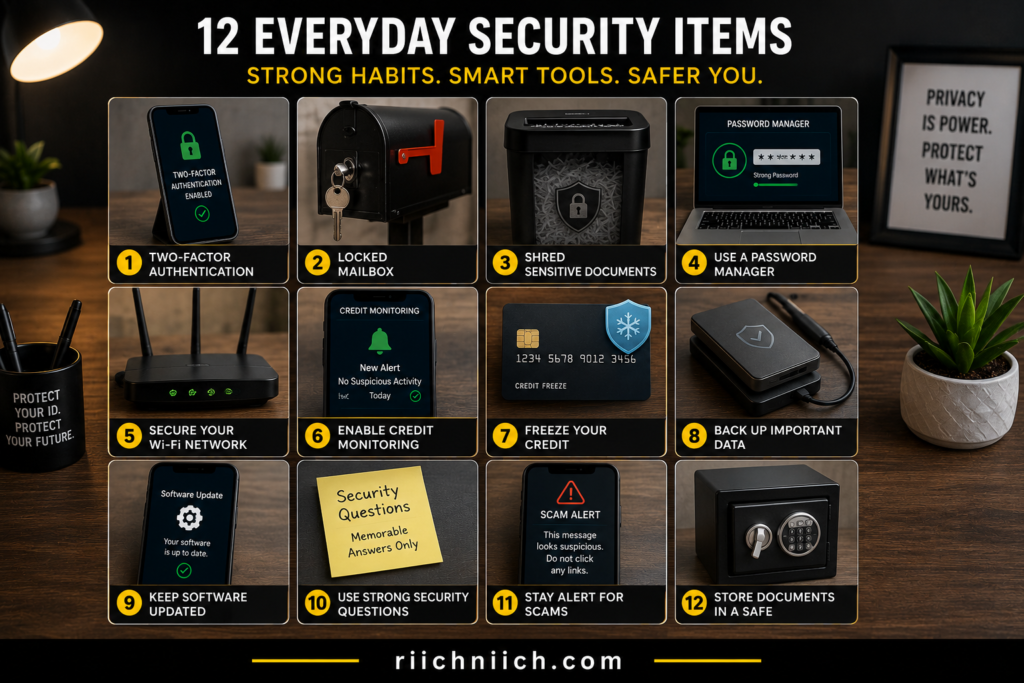
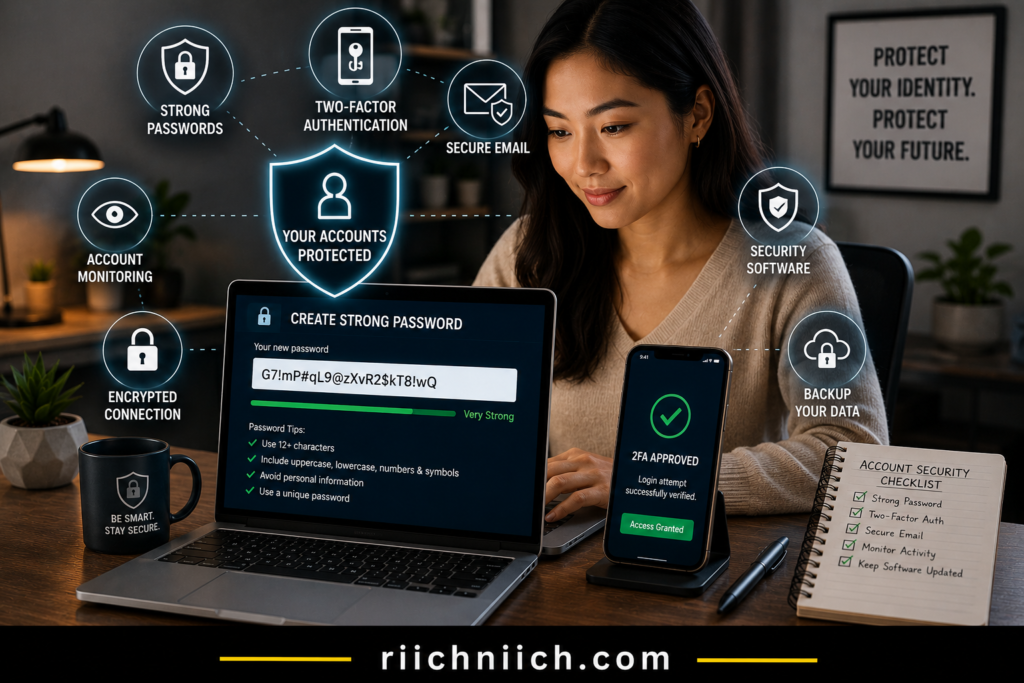
Secure Your Online Accounts With Strong Passwords and Two-Factor Authentication
Your online accounts are often the first place identity thieves try to gain access. Once a criminal compromises your email account, they can often reset passwords for your banking, shopping, social media, and investment accounts, giving them access to even more sensitive information. That’s why securing your accounts is one of the most important steps if you want to know how to stop identity theft before it happens.
Create Strong, Unique Passwords for Every Account
One of the biggest mistakes people make is reusing the same password across multiple websites. While it may seem convenient, it creates a significant security risk.
Imagine you use the same password for your favorite online store, email account, and bank. If the retailer experiences a data breach, criminals can take your stolen email address and password and automatically try that same combination on dozens—or even hundreds—of other websites. This tactic, known as credential stuffing, is one of the most common ways cybercriminals take over online accounts.
Instead, every important account should have its own unique password.
A strong password should:
- Be at least 16 characters long whenever possible.
- Include a combination of uppercase letters, lowercase letters, numbers, and special characters.
- Avoid names, birthdays, phone numbers, or common words.
- Never be reused across different websites.
Following these simple password security habits dramatically reduces your risk of unauthorized account access.
Use a Password Manager
Trying to remember dozens of complex passwords isn’t realistic for most people. That’s where a password manager becomes one of the best investments for protecting your online identity.
A password manager can:
- Generate long, random passwords automatically.
- Store login credentials securely.
- Autofill passwords on trusted websites.
- Alert you if one of your saved passwords appears in a known data breach.
- Help you replace weak or duplicate passwords quickly.
Instead of remembering dozens of passwords, you only need to remember one strong master password.
👉 Personally, we recommend NordPass if you want an easy way to create strong passwords, securely store your logins, and autofill them across all of your devices without having to remember every password yourself.
For anyone serious about how to stop identity theft before it happens, using a password manager is one of the easiest ways to improve overall account security while reducing the temptation to reuse passwords.
If you’re looking for a secure way to manage dozens of strong passwords, check out our review of the Best Password Managers to find the right solution for your needs.
Turn On Two-Factor Authentication (2FA)
Even the strongest password isn’t foolproof. Data breaches, phishing attacks, and malware can still expose your login credentials.
Two-factor authentication (2FA) adds another layer of protection by requiring a second verification step after entering your password. This usually involves:
- A code sent to an authentication app.
- A temporary code sent by text message.
- A hardware security key.
- A biometric verification such as your fingerprint or facial recognition.
Without that second verification factor, criminals usually cannot access your account—even if they already know your password.
The Cybersecurity and Infrastructure Security Agency (CISA) recommends enabling multi-factor authentication because it significantly reduces the likelihood of unauthorized account access.
Start With Your Most Important Accounts
If you can’t enable two-factor authentication on every account immediately, prioritize the ones that contain your most valuable personal information.
These include:
- Email accounts
- Banking and credit card accounts
- Investment and retirement accounts
- Healthcare portals
- Government accounts
- Cloud storage services
- Password manager accounts
Your email account should be your highest priority because it’s often used to reset passwords for many of your other online accounts.
Watch for Password Breach Notifications
Many online services now notify users when their login credentials may have been exposed during a data breach. Never ignore these alerts.
If you receive a breach notification:
- Change your password immediately.
- Create a completely new password rather than making small changes to the old one.
- Enable two-factor authentication if it isn’t already active.
- Review your account for any unauthorized activity.
- Change the password on any other account where you previously reused that password.
Responding quickly after a breach can prevent criminals from turning stolen credentials into full account takeovers.
If you’ve recently received a breach notification, our guide on What Happens After a Data Breach explains what to expect and the next steps you should take to protect yourself.
Small Security Habits Make a Big Difference
Strong passwords and two-factor authentication may seem like small steps, but together they provide one of the most effective defenses against identity theft. Most cybercriminals look for easy opportunities, and accounts protected by unique passwords and an additional verification step are far less attractive targets.
If your goal is to know how to stop identity theft before it happens, securing your online accounts should be one of the very first actions you take. Combined with credit monitoring, identity monitoring, and smart online habits, these simple security measures can dramatically reduce the chances of your personal information falling into the wrong hands.
Freeze Your Credit Before Identity Thieves Strike
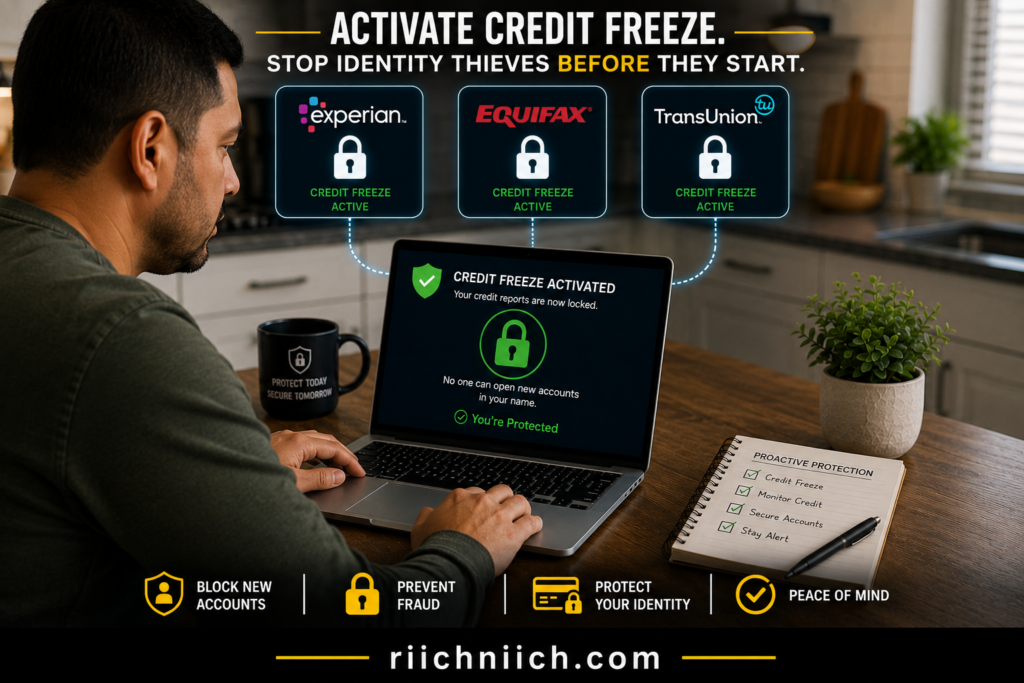
One of the most effective ways on how to stop identity theft before it happens is to place a credit freeze on your credit reports. While many people wait until after they become victims of identity theft, freezing your credit before anything happens can prevent criminals from opening new credit accounts in your name.
If identity thieves obtain your Social Security number, date of birth, and other personal information through a data breach or phishing scam, one of their first goals is often to apply for credit cards, personal loans, auto loans, or other forms of financing. A credit freeze makes that much more difficult.
What Is a Credit Freeze?
A credit freeze—also called a security freeze—restricts access to your credit report. Because most lenders review your credit before approving new credit applications, freezing your credit helps prevent unauthorized accounts from being opened in your name.
Not sure which option is right for you? Compare the differences in our guide to Credit Freeze vs Credit Lock before deciding which level of protection best fits your situation.
When your credit is frozen:
- Criminals generally cannot open new credit cards using your identity.
- Fraudulent loan applications are much more likely to be denied.
- Existing credit cards and bank accounts continue to work normally.
- Your credit score is not affected.
- You can temporarily lift or remove the freeze whenever you legitimately need to apply for credit.
According to the Federal Trade Commission (FTC), consumers can place and remove credit freezes at no cost with each of the three major credit bureaus.
What a Credit Freeze Does—and Doesn’t Do
Although a credit freeze is one of the strongest identity theft prevention tools available, it’s important to understand its limitations.
A credit freeze can help prevent:
- New credit card fraud
- Personal loan fraud
- Auto loan fraud
- Mortgage applications made in your name
- Certain “new account” identity theft schemes
However, a credit freeze does not prevent:
- Unauthorized purchases on existing credit cards
- Bank account fraud
- Tax identity theft
- Medical identity theft
- Criminals taking over existing online accounts
- Phishing scams or malware attacks
That’s why freezing your credit should be just one part of a larger strategy for how to stop identity theft before it happens.
When Should You Freeze Your Credit?
Many people believe they should only freeze their credit after becoming victims of identity theft. In reality, the best time to freeze your credit is before criminals have the opportunity to misuse your personal information.
You should strongly consider freezing your credit if:
- Your information was exposed in a data breach.
- Your Social Security number may have been compromised.
- You don’t plan to apply for new credit in the near future.
- You notice suspicious activity on your credit report.
- You simply want an extra layer of protection against identity theft.
Since lifting a freeze temporarily is straightforward, many security experts recommend keeping your credit frozen unless you’re actively applying for financing.
Don’t Forget All Three Credit Bureaus
To receive the full benefit of a credit freeze, you’ll need to place one with each of the three major credit bureaus individually.
If you freeze only one credit report, a lender may still approve an application using information from another bureau that remains unfrozen.
Taking a few extra minutes to secure all three reports provides much stronger protection against new account fraud.
Pair a Credit Freeze With Credit Monitoring
A credit freeze helps prevent new accounts from being opened, but it won’t notify you if someone attempts to misuse your existing accounts or if your personal information appears in a data breach.
That’s where credit monitoring and identity monitoring become valuable. Many identity theft protection services continuously monitor your credit files, dark web marketplaces, and personal information for suspicious activity, allowing you to respond quickly if something changes.
Using both a credit freeze and ongoing monitoring creates multiple layers of protection and significantly improves your ability to detect fraud early.
A Small Step That Can Prevent Major Financial Damage
Freezing your credit only takes a few minutes, but it can save you months of frustration if criminals ever obtain your personal information. Combined with strong passwords, two-factor authentication, account monitoring, and good cybersecurity habits, it’s one of the smartest actions you can take when learning how to stop identity theft before it happens.
Monitor Your Credit and Financial Accounts Regularly
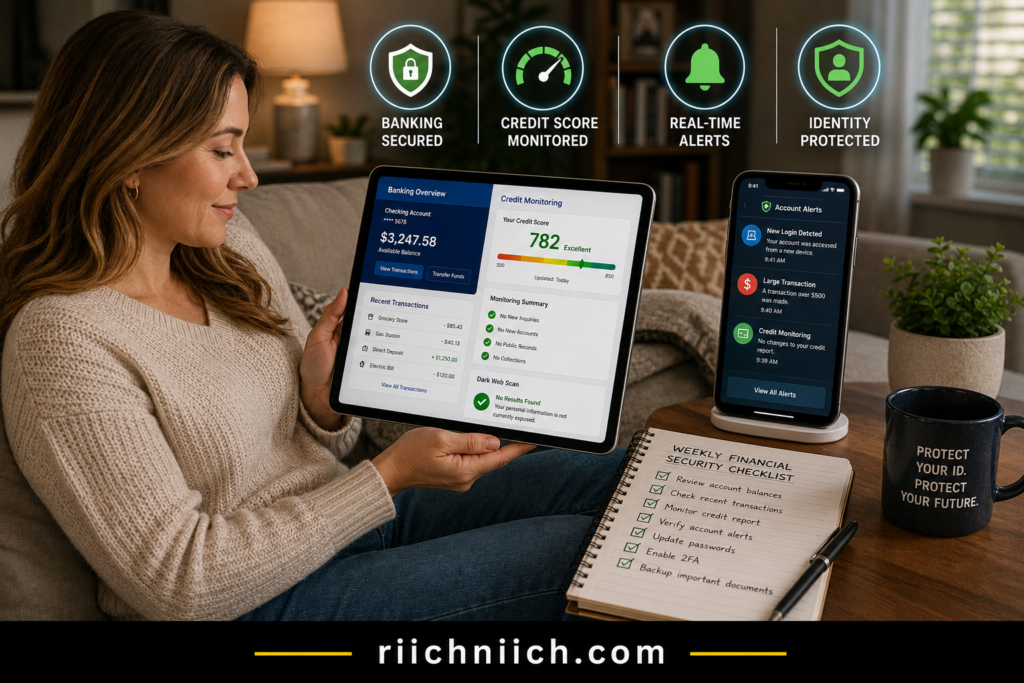
Even the strongest passwords and a credit freeze can’t protect you from every type of fraud. That’s why regularly monitoring your financial accounts is one of the most important habits if you want to know how to stop identity theft before it happens. The sooner you discover suspicious activity, the easier it is to limit financial losses and prevent a small problem from turning into a major identity theft case.
Many victims don’t realize their identity has been stolen until they receive a collection notice, are denied credit, or discover unfamiliar accounts months later. Regular monitoring helps you catch warning signs much earlier.
Review Your Credit Reports
Your credit report contains valuable information about your financial identity. Reviewing it regularly allows you to spot unauthorized activity before it causes lasting damage.
Pay close attention to:
- New credit accounts you didn’t open.
- Hard inquiries from lenders you don’t recognize.
- Incorrect personal information.
- Unexpected address changes.
- Accounts reported as delinquent that don’t belong to you.
The Federal Trade Commission (FTC) recommends reviewing your credit reports regularly because early detection is one of the best ways to reduce the impact of identity theft.
Check Your Bank and Credit Card Accounts Frequently
Don’t wait for your monthly statements to arrive.
Instead, log into your financial accounts every few days—or at least once a week—to review recent activity.
Look for:
- Small purchases you don’t recognize.
- Duplicate transactions.
- Unauthorized withdrawals.
- New payees you’ve never added.
- Online purchases you didn’t make.
- Suspicious money transfers.
Criminals often begin with inexpensive “test” purchases to determine whether an account is active before attempting much larger transactions.
Turn On Account Alerts
Most banks and credit card companies allow you to receive instant notifications whenever activity occurs on your accounts.
Consider enabling alerts for:
- Purchases above a certain dollar amount.
- Online purchases.
- International transactions.
- Password changes.
- New device logins.
- Large withdrawals.
- Wire transfers.
- Changes to your contact information.
These notifications allow you to respond immediately if someone gains unauthorized access to one of your accounts.
Monitor More Than Just Your Credit
Identity theft doesn’t always involve opening new credit cards.
Criminals may target:
- Checking accounts.
- Savings accounts.
- Retirement accounts.
- Investment portfolios.
- Health savings accounts.
- Digital payment apps.
- Cryptocurrency wallets.
Reviewing all of your financial accounts regularly provides a much more complete picture of your overall security.
Watch for Signs of Account Takeover
Sometimes criminals don’t create new accounts—they take over the ones you already have.
Warning signs include:
- Password reset emails you didn’t request.
- Login alerts from unfamiliar devices.
- Changes to your email address or phone number.
- Missing account notifications.
- Locked accounts.
- Unexpected security verification requests.
If you notice any of these warning signs, change your password immediately and contact the financial institution.
Consider Identity Monitoring for Continuous Protection
Checking your accounts manually is important, but it’s impossible to monitor your identity around the clock.
Identity monitoring services can provide an additional layer of protection by continuously scanning for:
- New credit inquiries.
- Changes to your credit reports.
- Dark web exposure.
- Compromised personal information.
- Fraud alerts.
- Account takeover attempts.
- Public records linked to your identity.
Instead of waiting until you discover fraud yourself, you’ll receive alerts when suspicious activity is detected, allowing you to act much sooner.
Early Detection Is One of Your Best Defenses
Identity theft often starts quietly. A single unfamiliar charge, an unexpected login notification, or a new inquiry on your credit report may seem insignificant, but these small warning signs can indicate that criminals are beginning to target your identity.
Making account monitoring part of your weekly routine is one of the simplest ways to learn how to stop identity theft before it happens. When combined with a credit freeze, strong passwords, two-factor authentication, and identity monitoring, you’ll greatly improve your chances of catching suspicious activity before it leads to serious financial damage.
Protect Your Social Security Number and Other Sensitive Information
Your Social Security number is one of the most valuable pieces of personal information you own. Unlike a password, you usually can’t simply change it if it’s stolen. Once criminals obtain your Social Security number, they may attempt to open credit accounts, apply for loans, file fraudulent tax returns, commit employment fraud, or even use your identity to receive government benefits. That’s why protecting this information is essential if you want to know how to stop identity theft before it happens.
While your Social Security number is one of the biggest targets, it’s far from the only information identity thieves want. Criminals often combine several pieces of personal information to build a complete profile that allows them to impersonate you.
Keep Your Social Security Number Private
Many organizations ask for your Social Security number even when it isn’t legally required.
Before providing it, ask questions such as:
- Why do you need my Social Security number?
- Is another form of identification acceptable?
- How will my information be stored and protected?
- Will my Social Security number be shared with anyone else?
If there’s no legitimate reason to provide it, consider declining or asking whether only the last four digits are necessary.
The fewer places your Social Security number is stored, the lower your risk of future identity theft.
Never Carry Your Social Security Card
One of the simplest ways to protect yourself is to leave your Social Security card at home.
If your wallet is lost or stolen while you’re carrying your Social Security card, criminals immediately gain access to one of the most sensitive pieces of your identity.
Instead, store it in a secure location such as a locked safe or fire-resistant document box where it won’t be easily lost or stolen.
Protect More Than Just Your Social Security Number
Identity thieves rarely rely on a single piece of information. They often collect data from multiple sources before attempting fraud.
Information worth protecting includes:
- Driver’s license number
- Passport number
- Date of birth
- Bank account numbers
- Credit card numbers
- Health insurance information
- Tax documents
- Employee identification numbers
- Retirement account information
Even your email address, phone number, and home address can become valuable when combined with information obtained through data breaches or phishing scams.
Be Careful When Sharing Personal Information Online
Many scams begin with criminals gathering information that people willingly post online.
Avoid publicly sharing:
- Your full birthday.
- Photos of government-issued IDs.
- Travel plans before leaving home.
- Financial documents.
- Insurance paperwork.
- Utility bills.
- Images that reveal your address or account numbers.
Review your social media privacy settings regularly and limit who can view your personal information.
Shred Sensitive Documents Before Throwing Them Away
Identity theft isn’t always digital. Criminals still search through discarded mail and trash looking for documents containing personal information.
Always shred items such as:
- Bank statements
- Credit card offers
- Medical bills
- Insurance paperwork
- Tax records
- Utility statements
- Loan documents
Destroying sensitive paperwork before disposal helps prevent criminals from obtaining valuable information through physical theft.
Store Important Documents Securely
Important records should never be left lying around your home.
Keep documents such as your:
- Social Security card
- Birth certificate
- Passport
- Tax records
- Property deeds
- Insurance policies
in a secure location that is protected from theft, fire, and water damage.
Having these documents organized also makes recovery much easier if you ever need to prove your identity after fraud.
Be Alert After a Data Breach
If a company notifies you that your personal information has been exposed during a data breach, don’t assume everything will be fine simply because your financial accounts appear normal.
Take immediate action by:
- Changing affected passwords.
- Monitoring your financial accounts closely.
- Reviewing your credit reports.
- Freezing your credit if appropriate.
- Watching for phishing emails that reference the breach.
According to the Cybersecurity and Infrastructure Security Agency (CISA), cybercriminals frequently use stolen personal information from data breaches to launch additional phishing attacks and account takeover attempts long after the initial breach occurs.
Small Precautions Can Prevent Major Problems
Most identity theft cases don’t happen because someone made one huge mistake. Instead, criminals slowly collect pieces of personal information over time until they have enough to impersonate their victim.
Protecting your Social Security number and other sensitive information makes that process much more difficult. Combined with strong passwords, credit monitoring, secure online accounts, and identity monitoring, these simple habits play a major role in helping to learn how to stop identity theft before it happens and keeping your financial identity secure for years to come.

How to Stay Safe From Phishing Scams and Fake Websites
Phishing scams are one of the most common ways identity thieves steal personal information. Instead of breaking into your accounts through sophisticated hacking, criminals often trick you into voluntarily giving them your usernames, passwords, credit card numbers, or Social Security number.
Learning how to recognize phishing attempts is one of the smartest ways in learning how to stop identity theft before it happens because it helps prevent criminals from gaining access to the information they need in the first place.
What Is a Phishing Scam?
A phishing scam is a fraudulent message designed to convince you that it’s coming from a trusted organization.
Scammers commonly impersonate:
- Banks
- Credit card companies
- Online retailers
- Delivery services
- Government agencies
- Internet providers
- Streaming services
- Employers
The goal is usually to create a sense of urgency so you’ll click a malicious link, download an infected attachment, or provide sensitive information without thinking twice.
For example, you might receive a message claiming:
- Your bank account has been locked.
- A package couldn’t be delivered.
- Your password is about to expire.
- Your account has suspicious activity.
- You need to verify your identity immediately.
These messages often look convincing, making it easy to believe they’re legitimate.
Learn to Recognize the Warning Signs
While phishing scams continue to become more sophisticated, many still share common warning signs.
Be cautious if a message:
- Pressures you to act immediately.
- Requests passwords or verification codes.
- Asks for your Social Security number.
- Contains unexpected attachments.
- Includes suspicious or shortened links.
- Uses poor grammar or awkward wording.
- Comes from an unfamiliar email address or phone number.
Even professionally designed emails can be fake, so never rely solely on appearance.
Verify Websites Before Logging In
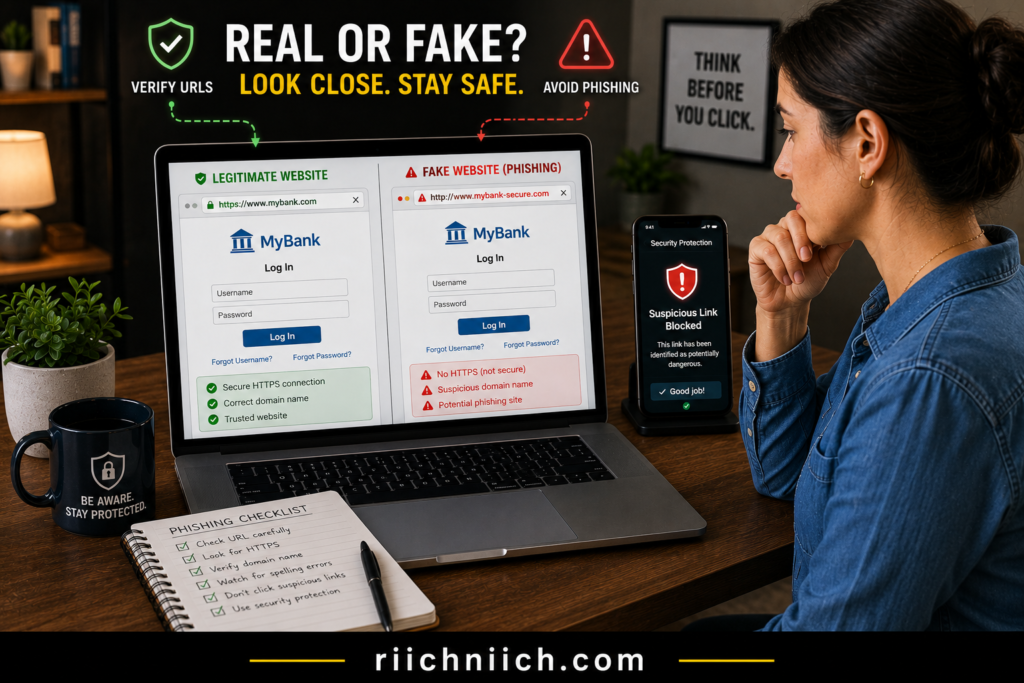
One of the most effective phishing tactics involves fake websites that closely resemble legitimate login pages.
Before entering your username or password:
- Check that the website address is spelled correctly.
- Look for unexpected words, numbers, or characters in the domain name.
- Avoid logging in through links received in unsolicited emails or text messages.
- Type the website address directly into your browser whenever possible.
- Save frequently used websites as bookmarks to reduce the risk of visiting fraudulent pages.
Taking just a few seconds to verify the website can prevent criminals from stealing your login credentials.
Never Share Verification Codes
Many people know not to share their passwords, but criminals increasingly ask victims to provide one-time verification codes sent by text message or authentication apps.
Remember:
No legitimate bank, government agency, or identity theft protection service will ask you to read back your one-time authentication code over the phone or by email.
If someone requests that code, assume it’s a scam and end the conversation immediately.
Be Careful With Attachments
Malicious attachments can install malware that secretly records your keystrokes, steals saved passwords, or gives criminals remote access to your device.
Avoid opening attachments unless:
- You were expecting the file.
- You know and trust the sender.
- You’ve confirmed the request through another communication method if something seems unusual.
When in doubt, contact the sender using a verified phone number or official website before opening the attachment.
Watch Out for Smishing and Vishing
Phishing isn’t limited to email.
Criminals also use:
- Smishing — fraudulent text messages.
- Vishing — fraudulent phone calls.
These scams often claim there’s a problem with your bank account, tax records, online shopping account, or computer.
Never provide personal information simply because someone contacts you unexpectedly. If you’re concerned the message might be legitimate, contact the company directly using the phone number listed on its official website.
Keep Your Browser and Security Software Updated
Modern web browsers and security software can help identify known phishing websites before you visit them.
Regular software updates improve protection by:
- Blocking dangerous websites.
- Detecting malicious downloads.
- Fixing security vulnerabilities.
- Improving fraud detection.
The Cybersecurity and Infrastructure Security Agency (CISA) recommends keeping browsers, operating systems, and security software fully updated to reduce the risk of phishing-related attacks.
Identity Monitoring Adds Another Layer of Protection
Even careful internet users can occasionally encounter convincing phishing scams. That’s why many people choose to combine safe browsing habits with identity monitoring services.
If criminals obtain your personal information through a phishing attack, identity monitoring may help detect suspicious activity such as:
- New credit inquiries.
- Changes to your credit file.
- Personal information appearing on the dark web.
- Account takeover attempts.
- Fraud alerts involving your identity.
Receiving these alerts early allows you to respond quickly before identity theft causes significant financial damage.
Think Before You Click
Phishing scams succeed because they rely on emotion rather than technology. They create fear, urgency, excitement, or curiosity to encourage quick decisions.
Developing the habit of slowing down, verifying messages, and thinking before clicking is one of the most effective ways of how to stop identity theft before it happens. Combined with strong passwords, two-factor authentication, credit monitoring, and identity protection, staying alert to phishing scams makes it much harder for criminals to steal your personal information.
Secure Your Devices and Home Wi-Fi Network
Your computer, smartphone, tablet, and home Wi-Fi network are the gateways to nearly every part of your digital life. They store passwords, financial records, personal photos, emails, and access to your online accounts. If one of these devices or your home network is compromised, criminals may be able to steal sensitive information without you even realizing it. That’s why securing your devices is a critical step in how to stop identity theft before it happens.
Fortunately, protecting your devices doesn’t require advanced technical skills. A few simple security habits can dramatically reduce your risk.
Keep Your Devices Updated
Software updates do much more than add new features—they often fix security vulnerabilities that cybercriminals actively exploit.
Enable automatic updates for your:
- Computer operating system
- Smartphone and tablet
- Web browsers
- Banking and financial apps
- Password manager
- Antivirus software
- Wi-Fi router firmware
According to the Cybersecurity and Infrastructure Security Agency (CISA), installing security updates promptly is one of the simplest and most effective ways to reduce cyber risks.
Lock Every Device
If your phone or laptop is lost or stolen, you don’t want a stranger to have immediate access to your personal information.
Protect every device with:
- A strong passcode.
- Fingerprint authentication.
- Facial recognition.
- Automatic screen locking after a short period of inactivity.
These features create another barrier that helps keep your personal information secure.
Install Trusted Security Software
While safe browsing habits are essential, security software provides another layer of protection against malware, ransomware, and other threats that can lead to identity theft.
A reputable security solution can help:
- Detect malicious downloads.
- Block dangerous websites.
- Identify suspicious software.
- Scan files for malware.
- Warn you about known threats.
Using trusted security software alongside good online habits helps reduce the likelihood of criminals gaining access to your devices.
Secure Your Home Wi-Fi Network
Your home Wi-Fi network connects dozens of devices, including computers, smartphones, tablets, smart TVs, gaming consoles, and even smart home devices.
To secure your network:
- Change the router’s default administrator password.
- Create a long, unique Wi-Fi password.
- Use WPA3 encryption if available, or WPA2 if WPA3 isn’t supported.
- Disable remote administration unless you specifically need it.
- Install router firmware updates whenever they’re released.
These simple changes make it much more difficult for unauthorized users to access your network.
Separate Smart Home Devices When Possible
Many smart home devices receive fewer security updates than computers and smartphones.
If your router supports it, consider placing devices such as:
- Smart speakers
- Security cameras
- Smart plugs
- Smart thermostats
- Smart televisions
on a separate guest network. This limits the potential impact if one of those devices is ever compromised.
Download Apps Only From Trusted Sources
Installing software from unofficial websites or unknown app stores increases your risk of malware infections.
Always download apps directly from:
- Official app stores.
- The software developer’s website.
- Trusted software providers.
Before installing an app, review its permissions. If a simple flashlight app requests access to your contacts, location, microphone, or financial information, that’s a warning sign that something may not be right.
Back Up Important Data Regularly
Although backups don’t prevent identity theft directly, they can protect you if malware, ransomware, or device failure causes you to lose important files.
Regularly back up:
- Financial records.
- Family photos.
- Tax documents.
- Personal files.
- Password manager backups (if supported).
- Important business documents.
Keeping secure backups allows you to recover more quickly if your device is compromised.
Secure Devices for the Whole Family
Your security is only as strong as the weakest device connected to your home network.
Encourage every member of your household to:
- Use strong passwords.
- Enable two-factor authentication.
- Install software updates promptly.
- Avoid suspicious downloads.
- Recognize phishing scams.
Creating good cybersecurity habits across your household helps protect everyone’s personal information.
Build Multiple Layers of Protection
No single security setting can eliminate the risk of identity theft. However, every protective measure adds another obstacle for cybercriminals. Strong passwords, software updates, secure Wi-Fi settings, trusted security software, and locked devices all work together to make your personal information much harder to steal.
If your goal is to know how to stop identity theft before it happens, securing your devices and home network should become part of your everyday routine. Combined with credit monitoring, identity monitoring, phishing awareness, and careful handling of personal information, these simple practices create a strong defense against many of today’s most common identity theft threats.

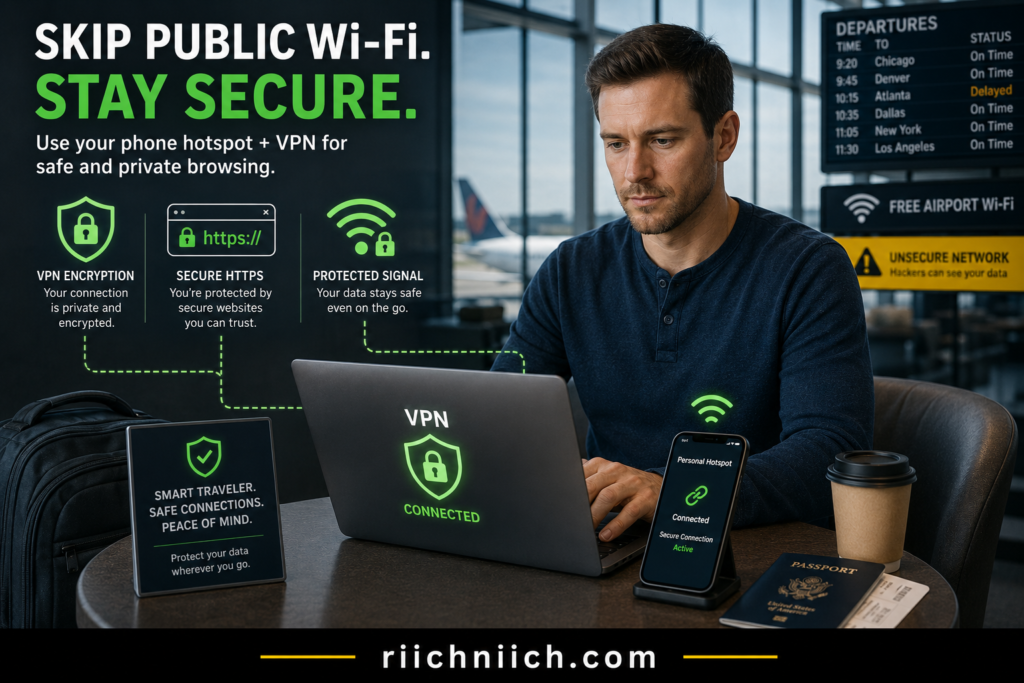
Protect Yourself When Using Public Wi-Fi
Public Wi-Fi makes it easy to stay connected while traveling, working remotely, or relaxing at your favorite coffee shop. However, these convenience networks can also create opportunities for cybercriminals to intercept your data or trick you into connecting to fraudulent hotspots. If you’re looking for how to stop identity theft before it happens, learning how to safely use public Wi-Fi is an important part of protecting your personal information.
Although many websites now use encryption, public Wi-Fi networks are still less secure than your home internet connection. Criminals often target people who connect without taking basic security precautions.
Avoid Accessing Sensitive Accounts on Public Wi-Fi
Whenever possible, avoid logging into accounts that contain sensitive personal or financial information while connected to public Wi-Fi.
This includes:
- Online banking accounts
- Investment and retirement accounts
- Credit card accounts
- Tax preparation websites
- Healthcare portals
- Government websites
- Password manager accounts
If it can wait until you’re on a trusted network, it’s usually best to postpone accessing these accounts.
Verify You’re Connecting to the Correct Network
Cybercriminals sometimes create fake Wi-Fi networks with names that closely resemble legitimate businesses.
For example, instead of:
CoffeeShop_WiFi
A scammer might create:
CoffeeShop_FreeWiFi
or
CoffeeShop_Guest
Many people connect without noticing the difference.
Before joining a network, ask an employee for the official Wi-Fi name and avoid connecting to networks with suspicious or generic names.
Use a Trusted VPN
A Virtual Private Network (VPN) encrypts your internet connection, making it much more difficult for others on the same public network to intercept your online activity.
A reputable VPN can help protect:
- Login credentials
- Personal information
- Banking activity
- Online shopping sessions
- Emails
- Browsing activity
While a VPN isn’t a replacement for good cybersecurity habits, it adds an important layer of protection, especially when using public Wi-Fi regularly.
Disable Automatic Wi-Fi Connections
Many smartphones and laptops automatically reconnect to networks you’ve previously joined.
This convenience feature can also become a security risk if your device automatically connects to an unsafe or fake network without your knowledge.
Consider disabling:
- Automatic Wi-Fi connections
- Automatic hotspot joining
- Automatic file sharing on public networks
Connecting manually gives you more control over the networks your device trusts.
Turn Off File Sharing
If file sharing is enabled while using a public network, other users on the same network may be able to discover your device.
Before connecting to public Wi-Fi:
- Turn off file sharing.
- Disable printer sharing.
- Turn off network discovery if you’re using a Windows computer.
- Disable AirDrop or similar sharing features when not in use.
These settings reduce unnecessary exposure while connected to shared networks.
Make Sure Websites Are Secure
Before entering passwords or payment information, check that the website uses an encrypted connection.
Look for:
- https:// at the beginning of the web address.
- A padlock icon in your browser’s address bar.
Although HTTPS doesn’t guarantee a website is legitimate, it does help protect information transmitted between your device and the website.
Keep Your Devices Updated
Public Wi-Fi becomes even riskier if your device contains known security vulnerabilities.
Install updates for your:
- Operating system
- Web browser
- Security software
- Banking apps
- Mobile device
According to the Cybersecurity and Infrastructure Security Agency (CISA), regularly updating software helps close security gaps that attackers commonly exploit.
Consider Using Mobile Data Instead
If you’re handling sensitive financial information and public Wi-Fi is your only option, consider using your smartphone’s mobile data connection or personal hotspot instead.
A cellular connection generally provides better protection than an open public Wi-Fi network and reduces the chances of connecting to a fraudulent hotspot.
Public Wi-Fi Doesn’t Have to Be Dangerous
Public Wi-Fi isn’t automatically unsafe, but it does require extra caution. Simple habits like verifying the network, using a trusted VPN, avoiding sensitive transactions, and keeping your devices updated can significantly reduce your risk.
If you’re serious about learning how to stop identity theft before it happens, treating every public Wi-Fi network as potentially untrusted is a smart mindset. Combined with strong passwords, two-factor authentication, identity monitoring, and regular credit monitoring, these precautions make it much harder for criminals to steal your personal information while you’re on the go.
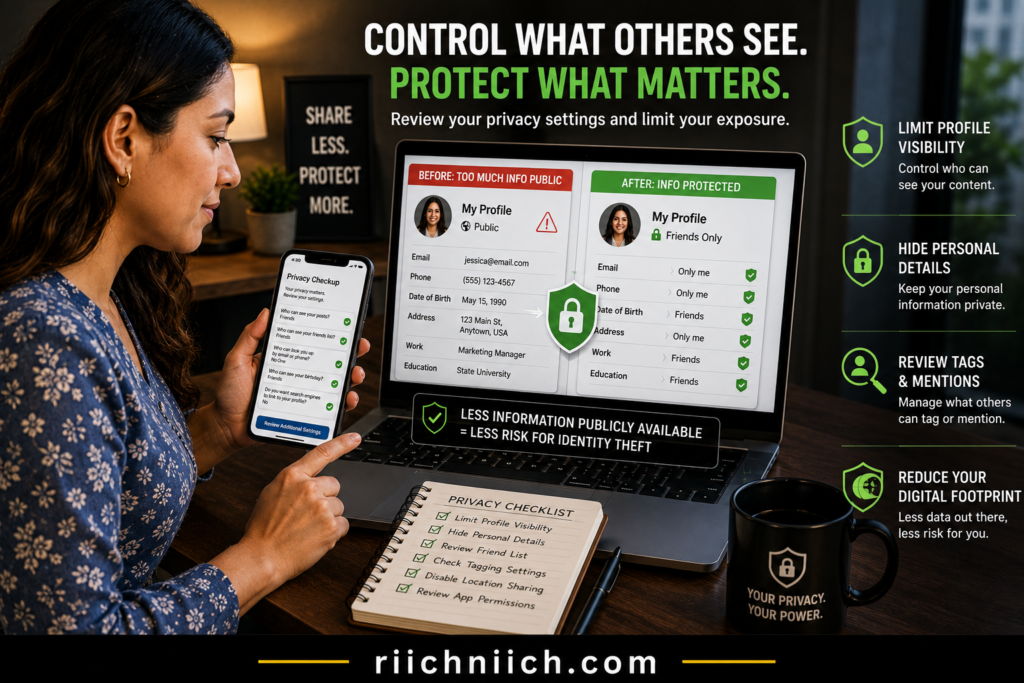
Limit the Personal Information You Share Online
One of the easiest ways criminals gather information is by collecting details that people willingly share online. Social media profiles, public records, online forums, and even comments on websites can reveal enough personal information for scammers to impersonate you, answer security questions, or launch highly convincing phishing attacks. If you’re looking for how to stop identity theft before it happens, limiting the amount of personal information you share online is one of the simplest—and most effective—steps you can take.
Many people don’t realize how quickly small pieces of information can be combined to create a detailed profile of their identity.
💡 Think Before You Post
Before sharing something online, ask yourself one simple question:
Would I be comfortable if a stranger saw this information?
If the answer is no, it’s probably best not to post it publicly.
Information that should be shared cautiously includes:
- Your full date of birth.
- Home address.
- Personal phone number.
- Email address.
- Driver’s license or passport photos.
- Boarding passes or travel documents.
- Financial documents.
- Photos showing sensitive paperwork.
Even if you trust your followers, remember that screenshots and shared posts can quickly spread beyond your intended audience.
Be Careful With Vacation Posts
Posting vacation photos while you’re still away may tell more people than you realize that your home is temporarily unoccupied.
Instead of announcing your travel plans in real time, consider waiting until you return home before sharing photos and updates.
This simple habit helps protect both your personal safety and your property.
Review Your Privacy Settings
Most social media platforms allow you to control who can see your information.
Take a few minutes to review your privacy settings and limit access to:
- Your friends list.
- Personal photos.
- Contact information.
- Birthday.
- Relationship status.
- Employer information.
- Family members.
- Location history.
Reducing the visibility of this information makes it harder for criminals to gather details about you.
Don’t Overshare in Online Quizzes and Games
Many viral quizzes and social media trends ask seemingly harmless questions such as:
- Your first pet’s name.
- The street you grew up on.
- Your favorite teacher.
- Your first car.
These questions often resemble the security questions used by banks and online accounts.
Sharing these answers publicly can give criminals valuable clues for bypassing account security.
Watch What Appears in Photos
Pictures can reveal much more than intended.
Before posting images online, check for visible:
- Credit cards.
- Driver’s licenses.
- Shipping labels.
- Prescription bottles.
- Computer screens.
- Utility bills.
- Employee badges.
- Boarding passes.
Even small details in the background can expose personal information that identity thieves can use.
Remove Old Accounts You No Longer Use
Many people have dozens of forgotten online accounts that still contain personal information.
Old shopping websites, discussion forums, gaming accounts, and social media profiles may still store:
- Your email address.
- Phone number.
- Home address.
- Payment information.
- Saved passwords.
Deleting accounts you no longer use reduces the amount of personal data available if those companies experience future data breaches.
Be Selective About Online Forms
Not every website needs your full personal profile.
Before completing online forms, ask yourself whether the requested information is truly necessary.
If a website asks for:
- Your Social Security number.
- Date of birth.
- Home address.
- Phone number.
and it isn’t required for the service you’re using, consider leaving the field blank or using only the information that’s absolutely necessary.
Sharing less personal information means there’s less data available if the company later suffers a security breach.
Your Digital Footprint Matters
Every website you join, every profile you create, and every piece of personal information you share adds to your digital footprint. While one social media post or online account may seem harmless on its own, criminals often combine information from many different sources to build a complete picture of their victims.
That’s why one of the best answers to how to stop identity theft before it happens is to become intentional about what you share online. The less personal information that’s publicly available, the harder it becomes for identity thieves to impersonate you, target you with scams, or gain unauthorized access to your accounts.
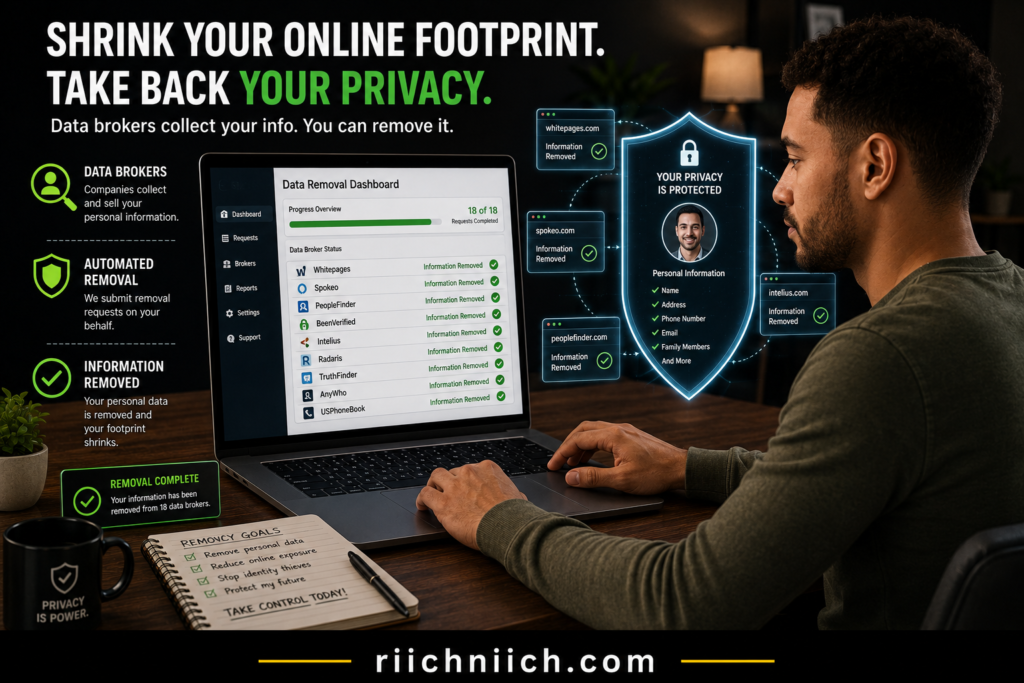
Remove Your Personal Information From Data Broker Websites
Many people focus on protecting their passwords and financial accounts but overlook another major source of identity theft risk: data broker websites. These companies collect personal information from public records, marketing databases, online activity, and other commercial sources before creating detailed profiles that are often available online. If you’re serious about learning how to stop identity theft before it happens, reducing your digital footprint by removing your information from these websites is a smart long-term strategy.
While data brokers generally operate legally, the information they collect can make it easier for identity thieves, scammers, and other bad actors to learn more about you.
What Information Do Data Brokers Collect?
Depending on the company, data broker websites may publish information such as:
- Your full name.
- Current and previous addresses.
- Phone numbers.
- Email addresses.
- Date of birth.
- Family members and relatives.
- Property ownership records.
- Employment history.
- Estimated age.
- Other publicly available information.
Individually, these details may seem harmless. However, when combined with information obtained from data breaches or phishing scams, they can help criminals build a much more complete profile of your identity.
Why Removing Your Information Matters
Identity thieves often spend time researching potential victims before attempting fraud.
Information from data broker websites may be used to:
- Personalize phishing emails.
- Answer account security questions.
- Impersonate victims during customer service calls.
- Make scam phone calls appear more convincing.
- Verify stolen personal information obtained from data breaches.
Reducing the amount of publicly available information makes these attacks more difficult and less likely to succeed.
Remove Yourself From People Search Websites
Many people search websites allow individuals to request removal of their personal information.
Although each website has its own opt-out process, removing your information typically involves:
- Finding your listing.
- Verifying your identity.
- Submitting an opt-out request.
- Confirming the removal through email.
The challenge is that there are dozens—sometimes hundreds—of websites collecting and republishing personal information, making manual removal a time-consuming process.
Consider Using a Data Removal Service
If you don’t want to spend hours submitting removal requests yourself, a reputable data removal service can automate much of the process.
Many services continuously:
- Locate your personal information across data broker websites.
- Submit opt-out requests on your behalf.
- Monitor for new listings.
- Request additional removals as your information reappears.
Since data broker websites frequently update their databases, ongoing monitoring helps keep your personal information off many of these sites over time.
For people with a large online footprint, automated data removal can save significant time while providing an additional layer of privacy protection.
👣 Keep Your Digital Footprint Small
Removing existing listings is only part of the solution. You can also reduce future exposure by limiting how much personal information you share online.
Good habits include:
- Using privacy settings on social media.
- Avoiding unnecessary online accounts.
- Opting out of marketing lists when possible.
- Being selective about information requested by websites.
- Reviewing privacy settings for apps and online services regularly.
The less personal information available online, the harder it becomes for criminals to piece together your identity.
Data Removal Works Best With Other Security Measures
Removing your information from data broker websites won’t prevent every form of identity theft. Criminals can still obtain personal information through phishing attacks, malware, stolen mail, or data breaches.
That’s why data removal works best when combined with:
- Strong, unique passwords.
- Two-factor authentication.
- Credit freezes.
- Credit monitoring.
- Identity monitoring.
- Secure online browsing habits.
Layering these protections together significantly reduces your overall risk.
Take Control of Your Personal Information
You can’t erase every trace of your personal information from the internet, but you can make yourself a much more difficult target. The less information that’s publicly available, the fewer opportunities criminals have to research, impersonate, or deceive you.
If you’re looking for how to stop identity theft before it happens, reducing your exposure on data broker websites is one of the most proactive steps you can take. Pairing a trusted data removal service with identity monitoring and strong online security habits gives you a stronger defense against both today’s scams and tomorrow’s evolving identity theft threats.
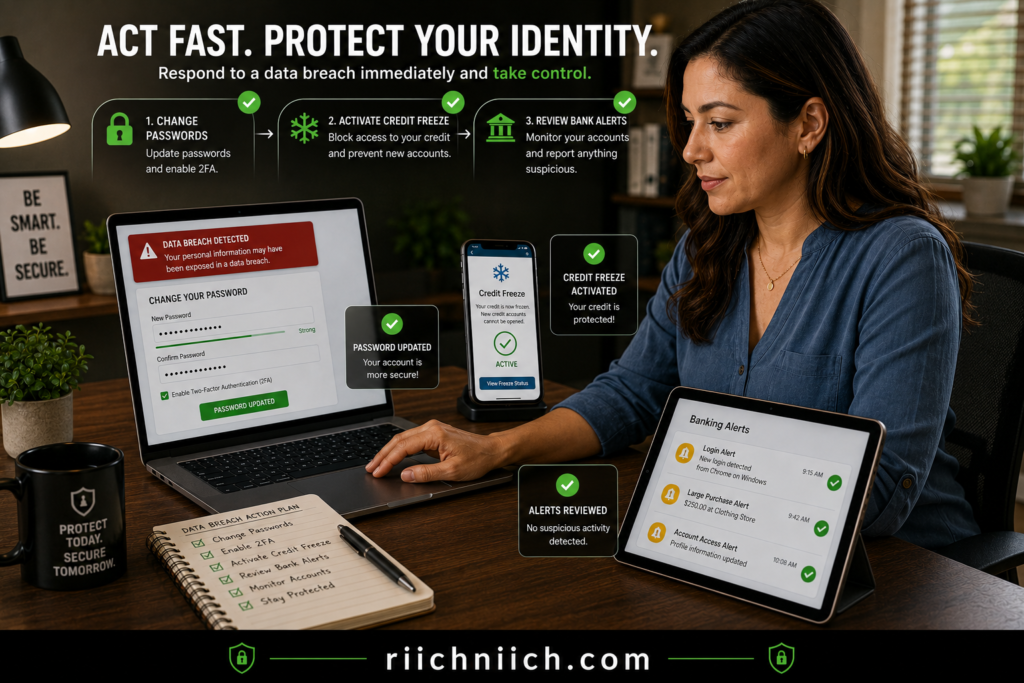
What to Do Immediately If Your Personal Information Is Exposed
Discovering that your personal information has been exposed can be stressful, but acting quickly can significantly reduce the chances of becoming an identity theft victim. Whether your information was leaked in a data breach, exposed through a phishing scam, or accidentally shared online, the first few hours and days are critical. If you’re wondering how to stop identity theft before it happens, responding immediately after your information is exposed is one of the most important steps you can take.
The goal is to make your stolen information as difficult to use as possible before criminals have the opportunity to exploit it.
Change Your Passwords Immediately
If your email address, password, or online account credentials may have been exposed, change your passwords as soon as possible.
Start with your most important accounts:
- Banking
- Credit cards
- Investment accounts
- Shopping websites
- Password manager
- Social media accounts
Create a completely new, unique password for each account and avoid making small changes to your previous password.
If you haven’t already, enable two-factor authentication to add another layer of security.
Freeze Your Credit
If your Social Security number, date of birth, or other sensitive personal information may have been exposed, consider placing a credit freeze with all three major credit bureaus.
A credit freeze helps prevent criminals from opening new credit accounts in your name while allowing you to continue using your existing accounts normally.
Freezing your credit quickly after an exposure is one of the strongest preventive measures you can take.
Review Your Financial Accounts
Log into your financial accounts and carefully review recent activity.
Check your:
- Bank accounts
- Credit cards
- Investment accounts
- Retirement accounts
- Payment apps
Look for:
- Unrecognized purchases
- Unauthorized transfers
- New payees
- Small “test” transactions
- Changes to your contact information
If you notice suspicious activity, contact the financial institution immediately.
Monitor Your Credit Reports
Exposure doesn’t always lead to immediate fraud.
Criminals sometimes wait weeks or even months before attempting to misuse stolen information.
Review your credit reports regularly for:
- New accounts
- Hard inquiries
- Incorrect personal information
- Addresses you don’t recognize
The Federal Trade Commission (FTC) recommends monitoring your credit after a data breach because early detection makes identity theft much easier to resolve.
Watch Out for Follow-Up Phishing Scams
After a data breach, criminals often launch additional phishing campaigns targeting affected individuals.
Be especially cautious of emails or text messages claiming to help you:
- Verify your identity.
- Restore your account.
- Claim compensation.
- Confirm personal information.
- Reset passwords.
Always visit the organization’s official website directly instead of clicking links contained in unexpected messages.
Secure All Connected Accounts
Many online accounts are connected through your primary email address.
If your email account was compromised, criminals may attempt to reset passwords for your:
- Banking accounts
- Shopping websites
- Streaming services
- Government accounts
- Healthcare portals
Review your account recovery settings and remove any unfamiliar phone numbers, email addresses, or devices connected to your accounts.
Consider Identity Monitoring
Even after you’ve secured your accounts, it’s impossible to monitor your identity every hour of every day.
Identity monitoring services can alert you to:
- New credit inquiries.
- Changes to your credit reports.
- Dark web exposure.
- Account takeover attempts.
- Fraud involving your personal information.
Receiving alerts early gives you the opportunity to respond before small problems become major financial losses.
Continue Monitoring for Several Months
One common mistake is assuming the danger has passed after changing a few passwords.
Unfortunately, stolen personal information can circulate among criminals for months—or even years—after it was first exposed.
Continue checking your:
- Credit reports
- Bank accounts
- Credit card activity
- Identity monitoring alerts
- Email security notifications
Maintaining these habits helps ensure you detect suspicious activity as early as possible.
Quick Action Can Make All the Difference
Having your personal information exposed doesn’t automatically mean your identity will be stolen. What matters most is how quickly you respond. By changing passwords, freezing your credit, monitoring your accounts, and staying alert for follow-up scams, you can dramatically reduce the likelihood of criminals successfully using your information.
If your goal is learning how to stop identity theft before it happens, taking immediate action after a data breach or security incident is one of the most effective ways to stay ahead of identity thieves and protect your financial future.
Common Mistakes That Increase Your Risk of Identity Theft
Many people believe identity theft only happens because of sophisticated hackers or massive data breaches. In reality, everyday habits often create opportunities for criminals to steal personal information. The good news is that most of these mistakes are easy to avoid once you recognize them. If you’re learning how to stop identity theft before it happens, avoiding these common mistakes can dramatically lower your risk.
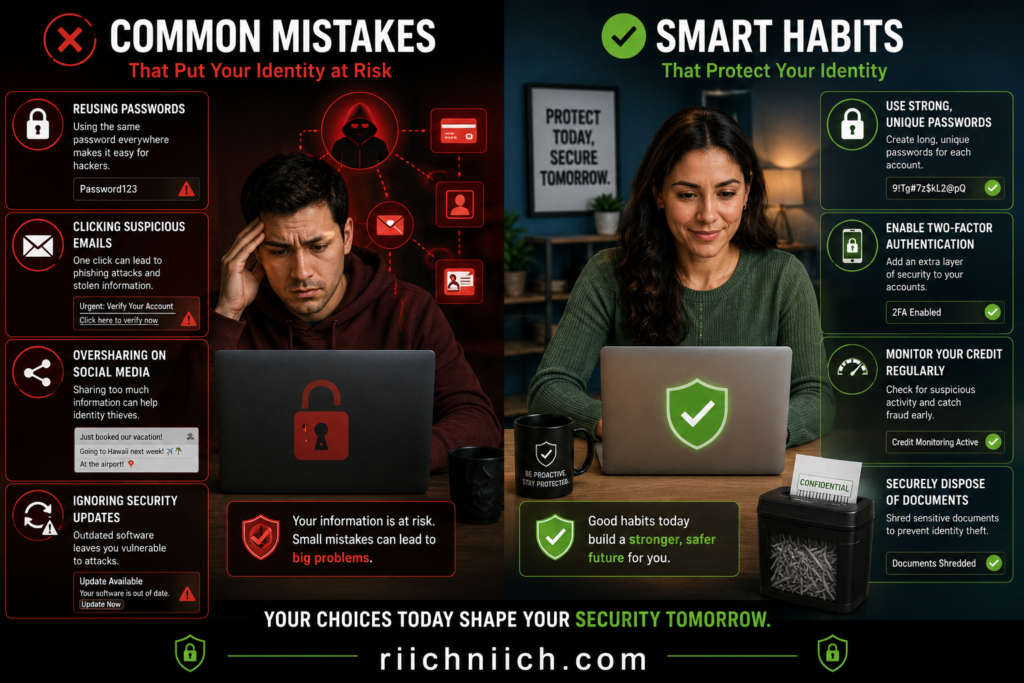
Reusing the Same Password Everywhere
Using the same password for multiple accounts is one of the biggest security mistakes people make.
If one website experiences a data breach, criminals often use automated software to test those stolen login credentials on hundreds of other websites. This technique, known as credential stuffing, can quickly lead to multiple compromised accounts.
Using a password manager to generate strong, unique passwords for every account is one of the easiest ways to improve your online security.
Ignoring Two-Factor Authentication
Many websites and financial institutions offer two-factor authentication, yet millions of people never enable it.
Without this extra layer of security, a stolen password may be all a criminal needs to access your account.
Whenever available, enable two-factor authentication for:
- Email accounts
- Banking apps
- Investment accounts
- Shopping websites
- Social media accounts
- Password manager accounts
This simple step significantly reduces the risk of unauthorized account access.
Waiting Until After Identity Theft Happens
One of the most expensive mistakes is assuming you’ll deal with identity theft only if it ever happens.
Many people don’t:
- Freeze their credit.
- Monitor their credit reports.
- Review financial accounts regularly.
- Use identity monitoring.
until after they’ve already become victims.
Taking preventive action today is almost always easier, faster, and less stressful than recovering from identity theft later.
Clicking Links Without Verifying Them
Cybercriminals continue to improve phishing emails, fake text messages, and fraudulent websites.
Before clicking any unexpected link, ask yourself:
- Was I expecting this message?
- Does the sender’s email address look legitimate?
- Does the website address match the company’s official domain?
Slowing down for just a few seconds can prevent criminals from stealing your login credentials or personal information.
Oversharing Personal Information Online
Many people unknowingly provide criminals with valuable information through social media and public online profiles.
Avoid publicly sharing:
- Your full birthday.
- Home address.
- Phone number.
- Travel plans.
- Photos of important documents.
- Answers to common security questions.
The less information available online, the more difficult it becomes for identity thieves to impersonate you.
Ignoring Data Breach Notifications
When companies notify customers about a data breach, it’s tempting to ignore the email if everything appears normal.
Unfortunately, criminals often wait weeks or months before using stolen information.
If you receive a breach notification:
- Change affected passwords immediately.
- Enable two-factor authentication.
- Review your financial accounts.
- Monitor your credit reports.
- Consider freezing your credit if sensitive information was exposed.
Responding quickly can prevent much larger problems later.
Failing to Secure Mobile Devices
Smartphones now contain banking apps, payment information, passwords, emails, and personal documents.
Leaving your phone unprotected with a weak passcode—or no passcode at all—can expose a tremendous amount of personal information if it’s lost or stolen.
Always enable:
- A strong device passcode.
- Fingerprint authentication.
- Facial recognition.
- Automatic screen locking.
- Remote device location and wipe features.
Throwing Away Sensitive Documents Without Shredding
Identity theft isn’t always digital.
Bank statements, credit card offers, tax documents, insurance paperwork, and medical records can all contain valuable personal information.
Shredding sensitive documents before disposal remains one of the simplest ways to protect your identity offline.
Believing “It Won’t Happen to Me”
Perhaps the biggest mistake of all is assuming you’re not a target.
Identity thieves don’t only target wealthy individuals or people with perfect credit. They look for opportunities wherever personal information is available.
Whether you’re a student, retiree, business owner, or working professional, everyone has personal information that criminals may attempt to exploit.
Prevention Is Always Easier Than Recovery
Most identity theft cases don’t result from one major mistake. Instead, they’re often the outcome of several small security gaps that criminals exploit over time. Fortunately, each good security habit you adopt makes you a more difficult target.
If you’re committed to learning how to stop identity theft before it happens, focus on eliminating these common mistakes before they create opportunities for fraud. Pairing smart everyday habits with identity monitoring, credit monitoring, strong passwords, and proactive security measures gives you the best chance of protecting your identity long before criminals have the opportunity to strike.
Best Tools to Help Stop Identity Theft Before It Happens
While practicing good cybersecurity habits is essential, technology can provide an additional layer of protection that works around the clock. If you’re serious about learning how to stop identity theft before it happens, the right combination of security tools can help detect suspicious activity early, secure your online accounts, and reduce your exposure to identity thieves.
Below are some of the most valuable tools to consider.
Identity Theft Protection Services
A dedicated identity theft protection service is one of the most comprehensive ways to protect your personal information. Instead of manually monitoring your credit reports and online accounts, these services continuously watch for signs of fraud and alert you if suspicious activity is detected.
Many services include features such as:
- Identity monitoring
- Credit monitoring
- Dark web monitoring
- Fraud alerts
- Account takeover alerts
- Identity restoration assistance
- Identity theft insurance (where applicable)
- Lost wallet assistance
For people who want continuous monitoring without having to check everything themselves, this is often the best overall solution.
👉 If you want an all-in-one solution that combines identity monitoring, credit monitoring, dark web monitoring, fraud alerts, and device security, Aura is my top recommendation for preventing identity theft before it starts.
Password Managers
Strong passwords remain one of the first lines of defense against identity theft.
A password manager helps you:
- Generate unique passwords.
- Store login credentials securely.
- Autofill passwords on trusted websites.
- Identify weak or reused passwords.
- Alert you when stored credentials appear in known data breaches.
Instead of remembering dozens of passwords, you only need to remember one secure master password.
Virtual Private Networks (VPNs)
If you regularly use public Wi-Fi, a VPN adds another important layer of security.
A reputable VPN encrypts your internet connection, helping protect:
- Banking sessions
- Online shopping
- Personal information
- Login credentials
- Browsing activity
While a VPN doesn’t prevent every type of identity theft, it reduces the risk of criminals intercepting your data on unsecured networks.
Data Removal Services
Data broker websites collect and publish personal information that scammers can use to build detailed profiles about potential victims.
A data removal service helps reduce your digital footprint by:
- Finding your information on data broker websites.
- Submitting opt-out requests.
- Monitoring for new listings.
- Continuing removal requests as information reappears.
Removing publicly available personal information makes it more difficult for identity thieves to gather details about you.
👉 If you don’t want to spend hours submitting opt-out requests yourself, Incogni can automatically remove your personal information from dozens of data broker websites on your behalf.
Antivirus and Internet Security Software
Modern security software provides another layer of protection against malware, spyware, ransomware, and other threats that may lead to identity theft.
Many security suites can:
- Detect malicious downloads.
- Block dangerous websites.
- Warn about phishing attempts.
- Scan files for malware.
- Protect against known security threats.
Keeping your devices protected reduces the chances of criminals gaining access to your personal information.
Credit Monitoring Services
Credit monitoring focuses specifically on changes to your credit file.
These services can notify you about:
- New credit inquiries.
- Newly opened accounts.
- Changes to personal information.
- Significant credit report updates.
Credit monitoring works especially well alongside a credit freeze by helping you quickly identify suspicious activity.
The Best Protection Comes From Layering Multiple Tools
No single product can completely eliminate the risk of identity theft. Instead, the strongest protection comes from combining several layers of security.
For example, you might use:
- An identity theft protection service for continuous monitoring.
- A password manager to secure your online accounts.
- A VPN when using public Wi-Fi.
- A data removal service to reduce your online exposure.
- Antivirus software to protect your devices.
- A credit freeze to block unauthorized credit applications.
Together, these tools create a much stronger defense than relying on any one solution alone.
Investing in Prevention Can Save You Time, Money, and Stress
Recovering from identity theft can take months and require countless hours contacting banks, creditors, government agencies, and credit bureaus. Investing in preventive tools is often far less expensive than dealing with the financial and emotional impact of identity theft after it occurs.
If your goal is learning how to stop identity theft before it happens, combining smart daily habits with trusted security tools gives you the best chance of detecting threats early and protecting your personal information before criminals have the opportunity to misuse it.
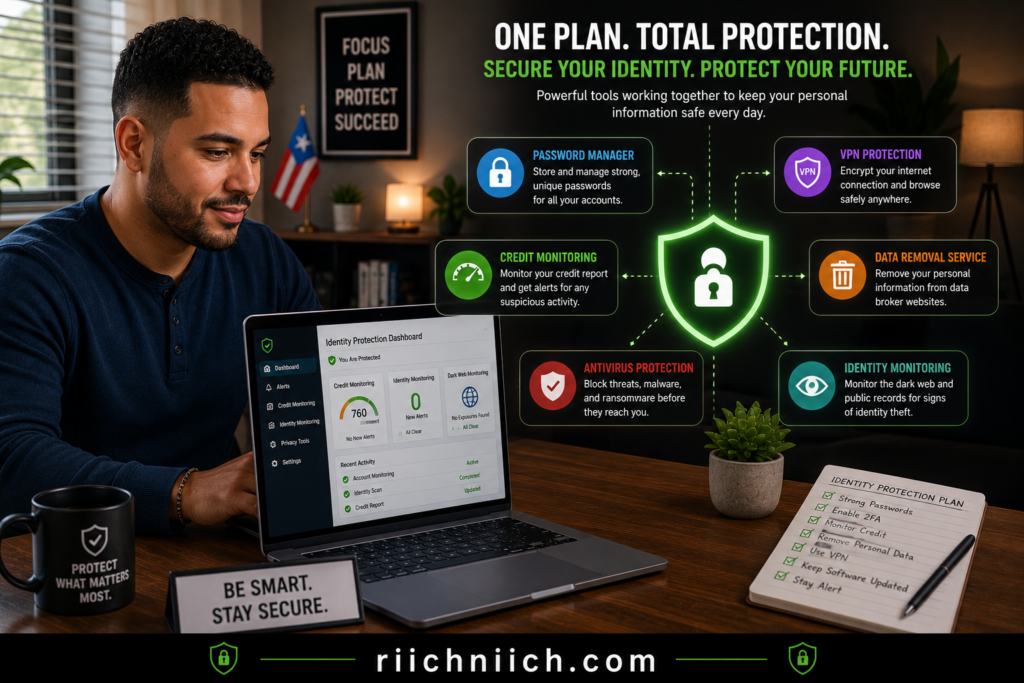
Who Should Read This Guide?
If you’ve ever wondered how to stop identity theft before it happens, this guide is for you. Identity theft can affect people of all ages and income levels, and criminals don’t just target wealthy individuals or people with excellent credit. Anyone with a Social Security number, bank account, email address, or online presence can become a target.
Whether you’re trying to prevent identity theft for the first time or strengthen your existing security habits, the strategies in this guide can help you better protect your personal information.
Individuals Who Want to Be Proactive
Many people don’t think about identity theft until after they’ve become victims.
If you want to reduce your risk before something goes wrong, this guide will help you build simple habits that strengthen your personal security, protect your online accounts, and reduce opportunities for identity thieves.
Preventive action is almost always easier than recovering from identity theft after it occurs.
People Affected by a Data Breach
If you’ve recently received a notification that your personal information was exposed during a data breach, now is the time to act.
This guide explains practical ways to:
- Secure your online accounts.
- Freeze your credit.
- Monitor your financial activity.
- Protect your Social Security number.
- Reduce your online exposure.
Taking these steps quickly can help reduce the likelihood that exposed information will be used for fraud.
👉 For ongoing peace of mind after a data breach, I recommend Coveron because it continuously monitors for new exposures and alerts you if your personal information appears in future breaches.
Families Protecting Household Information
Identity theft doesn’t only affect individuals—it can impact entire families.
Parents can use the strategies in this guide to help protect:
- Their own financial accounts.
- Their spouse’s personal information.
- Their children’s identities.
- Shared household devices.
- Home Wi-Fi networks.
Building strong cybersecurity habits as a family creates multiple layers of protection for everyone in the household.
Seniors Concerned About Fraud
Older adults are frequently targeted by scammers because criminals often believe they have accumulated savings, retirement accounts, or established credit histories.
If you’re retired or helping protect an older family member, this guide provides practical ways to reduce the risk of identity theft through stronger account security, regular monitoring, and better protection of sensitive personal information.
Frequent Online Shoppers and Digital Banking Users
If you regularly:
- Shop online.
- Pay bills electronically.
- Use mobile banking.
- Invest online.
- Store payment information in apps.
you have more digital accounts that require protection.
Following the recommendations throughout this guide can help secure those accounts and reduce your exposure to online fraud.
Anyone Using Public Wi-Fi or Working Remotely
Remote work and mobile internet access have made public Wi-Fi a part of everyday life for many people.
If you frequently work from:
- Coffee shops.
- Airports.
- Hotels.
- Libraries.
- Shared workspaces.
the security tips covered in this guide can help you better protect your personal information while using public networks.
Anyone Considering Identity Theft Protection
If you’re trying to decide whether an identity theft protection service is worth the investment, this guide explains the preventive steps you can take yourself while also showing where identity monitoring, credit monitoring, and recovery services can provide additional protection.
Understanding both approaches allows you to choose the level of protection that best fits your needs.
Prevention Is for Everyone
Identity theft isn’t limited to a specific age group, profession, or income level. As more personal information is stored and shared online, everyone benefits from improving their digital security habits.
Whether you’re just beginning to learn how to stop identity theft before it happens or you’re looking to strengthen the protections you already have in place, the strategies in this guide can help you reduce your risk, protect your financial future, and gain greater peace of mind.
If you’re ready to take the next step, our guide to the Best Identity Theft Protection Services compares the top providers to help you choose the right level of monitoring and recovery protection for your needs.
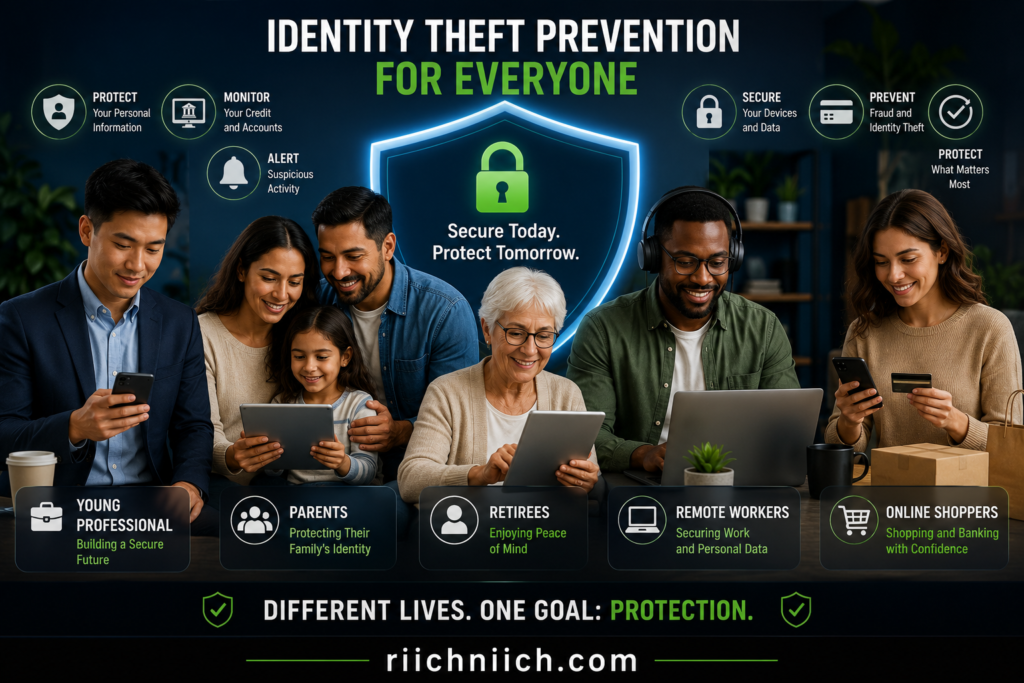
Is Identity Theft Protection Worth It for Prevention?
For many people, the answer is yes. While no identity theft protection service can guarantee that your personal information will never be exposed, the right service can help detect suspicious activity much earlier than you might on your own. If you’re researching how to stop identity theft before it happens, identity theft protection should be viewed as an additional layer of security—not a replacement for smart online habits.
Strong passwords, two-factor authentication, credit freezes, and cautious online behavior remain your first line of defense. Identity theft protection enhances those efforts by monitoring your personal information continuously and alerting you when something unusual happens.
What Can Identity Theft Protection Do?
Depending on the provider and plan you choose, identity theft protection services may include:
- Identity monitoring
- Credit monitoring
- Dark web monitoring
- Fraud alerts
- Account takeover monitoring
- Financial account monitoring
- Social Security number monitoring
- Identity restoration support
- Identity theft insurance for eligible losses and expenses
Instead of checking your accounts manually every day, these services continuously watch for warning signs and notify you if your information appears to be at risk.
Who Benefits the Most?
Although almost anyone can benefit from identity monitoring, some people have a higher risk of identity theft than others.
Identity theft protection is especially valuable if you:
- Have been affected by a data breach.
- Frequently shop or bank online.
- Use public Wi-Fi regularly.
- Have multiple financial accounts.
- Manage household finances.
- Own a business.
- Have children whose identities you want to protect.
- Have previously experienced identity theft.
The more personal information you share online and the more financial accounts you manage, the more valuable continuous monitoring becomes.
Identity Theft Protection Doesn’t Replace Good Security Habits
One of the biggest misconceptions is that subscribing to an identity theft protection service means you no longer need to think about cybersecurity.
That’s simply not true.
You should still:
- Use strong, unique passwords.
- Enable two-factor authentication.
- Freeze your credit when appropriate.
- Monitor your financial accounts.
- Avoid phishing scams.
- Keep your devices updated.
- Limit the personal information you share online.
Identity theft protection works best when combined with these everyday security practices.
Early Detection Can Reduce the Damage
One of the biggest advantages of identity theft protection is speed.
The earlier suspicious activity is detected, the sooner you can:
- Lock compromised accounts.
- Contact your financial institutions.
- Freeze your credit.
- Dispute fraudulent activity.
- Prevent additional financial losses.
Early intervention often makes identity theft much easier to resolve than discovering the fraud months later.
👉 Identity Guard is an excellent option if your priority is early fraud detection and continuous identity monitoring that helps alert you before small problems become major identity theft cases.
Is It Worth the Monthly Cost?
Whether identity theft protection is worth paying for depends on your personal situation.
If you’re comfortable monitoring your credit reports, reviewing your financial accounts frequently, and managing your own security practices, you may be able to handle much of the work yourself.
However, many people prefer the convenience of having professionals monitor their identity around the clock. The monthly cost is often small compared to the time, stress, and potential financial consequences associated with recovering from identity theft.
Still deciding whether it’s worth the investment? Read Do You Really Need Identity Theft Protection? for a detailed breakdown of who benefits most and when these services make sense.
Prevention Is Always Better Than Recovery
Identity theft can happen to anyone, even people who practice good cybersecurity. Data breaches, phishing scams, and other threats are often outside your direct control. What you can control is how prepared you are before something goes wrong.
If your goal is learning how to stop identity theft before it happens, investing in identity theft protection can be a worthwhile decision when combined with strong passwords, secure online accounts, credit freezes, and careful handling of your personal information. Together, these layers of protection provide a stronger defense against today’s most common identity theft threats.
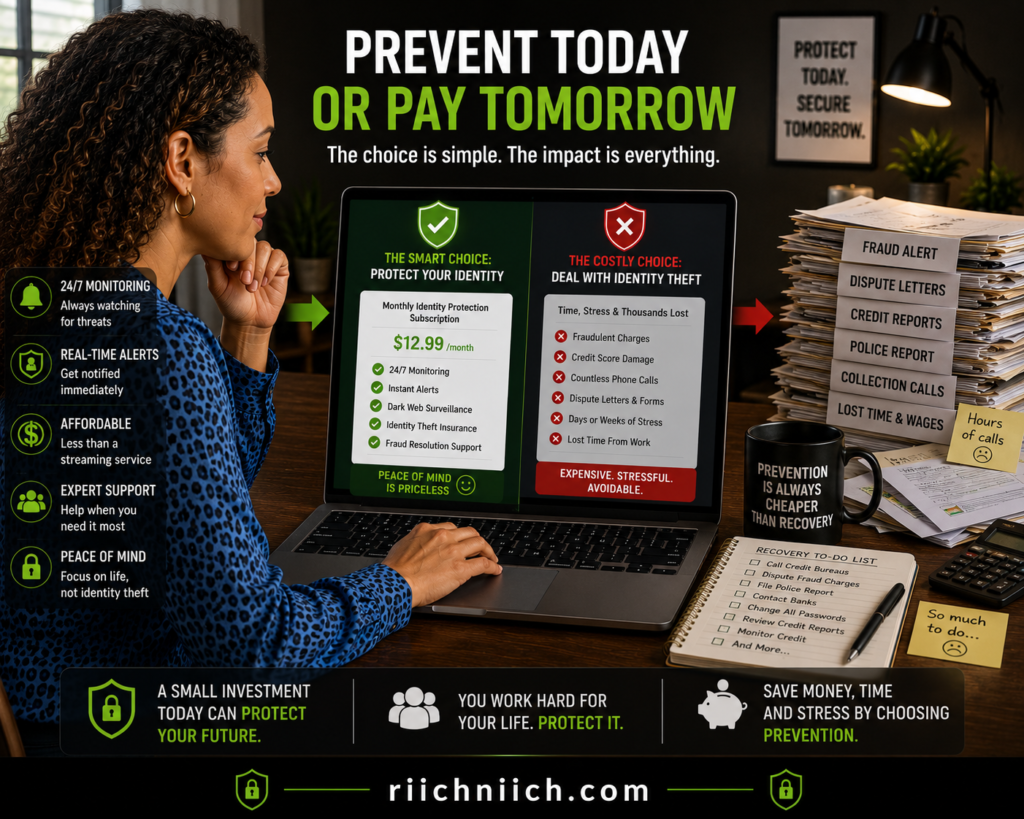
Pros and Cons of Preventing Identity Theft Yourself
If you’re researching how to stop identity theft before it happens, you may be wondering whether you can protect yourself without paying for an identity theft protection service. The answer is yes—to a certain extent. Many of the most effective identity theft prevention strategies are free or inexpensive. However, managing everything yourself also requires time, consistency, and ongoing attention.
Here’s a closer look at the advantages and disadvantages of taking the do-it-yourself approach.
Pros of Preventing Identity Theft Yourself
Lower Overall Cost
Many identity theft prevention practices cost little or nothing.
For example, you can:
- Freeze your credit.
- Enable two-factor authentication.
- Create strong passwords.
- Review your credit reports.
- Monitor your bank accounts.
- Update your devices regularly.
- Adjust your social media privacy settings.
These simple habits can significantly reduce your risk without requiring a monthly subscription.
Greater Control Over Your Security
Managing your own identity protection allows you to decide exactly how your personal information is secured.
You control:
- Which accounts receive extra security.
- How often you review financial activity.
- When to update passwords.
- Which devices and apps you trust.
- How much personal information you share online.
Many people appreciate having complete control over their own cybersecurity practices.
Better Security Awareness
Taking an active role in protecting your identity often leads to better long-term habits.
You’ll become more familiar with:
- Phishing scams.
- Fraud warning signs.
- Secure browsing.
- Password security.
- Credit monitoring.
- Online privacy.
This increased awareness helps you recognize suspicious activity much sooner.
Cons of Preventing Identity Theft Yourself
It Takes Time
Protecting your identity manually isn’t something you do once and forget.
You’ll need to regularly:
- Check credit reports.
- Review bank accounts.
- Monitor credit card activity.
- Watch for phishing attempts.
- Update passwords.
- Remove personal information from data broker websites.
Keeping up with these tasks requires ongoing effort throughout the year.
You Can’t Monitor Everything
Even the most security-conscious person can’t watch every part of their identity 24 hours a day.
For example, it can be difficult to manually monitor:
- Dark web marketplaces.
- New credit inquiries in real time.
- Identity misuse across multiple databases.
- Public records.
- Account takeover attempts.
This is where identity monitoring services often provide additional value by continuously scanning for suspicious activity.
Human Error Happens
Life gets busy.
It’s easy to:
- Miss a fraud alert.
- Forget to review your accounts.
- Delay changing a compromised password.
- Ignore a data breach notification.
- Overlook unusual activity on a financial statement.
Unfortunately, criminals often take advantage of these small oversights.
Recovery Can Be More Difficult
If identity theft does occur, you’ll likely be responsible for handling every step of the recovery process yourself.
That may include:
- Contacting financial institutions.
- Filing fraud reports.
- Disputing fraudulent accounts.
- Freezing your credit.
- Replacing important documents.
- Following up with creditors.
Many identity theft protection services provide dedicated restoration specialists who can assist with these tasks, potentially saving significant time and frustration.
Should You Protect Yourself or Use an Identity Theft Protection Service?
For many people, the best approach isn’t choosing one or the other—it’s combining both.
Practicing good cybersecurity habits remains essential, regardless of whether you subscribe to an identity theft protection service. Strong passwords, two-factor authentication, secure devices, credit freezes, and careful handling of personal information form the foundation of effective identity theft prevention.
At the same time, identity monitoring and fraud alerts can help detect threats that would otherwise be difficult to identify on your own.
If you’re committed to learning how to stop identity theft before it happens, combining proactive security habits with continuous identity monitoring offers the strongest overall protection. By layering multiple defenses together, you’ll greatly reduce your chances of becoming a victim while improving your ability to respond quickly if suspicious activity ever occurs.
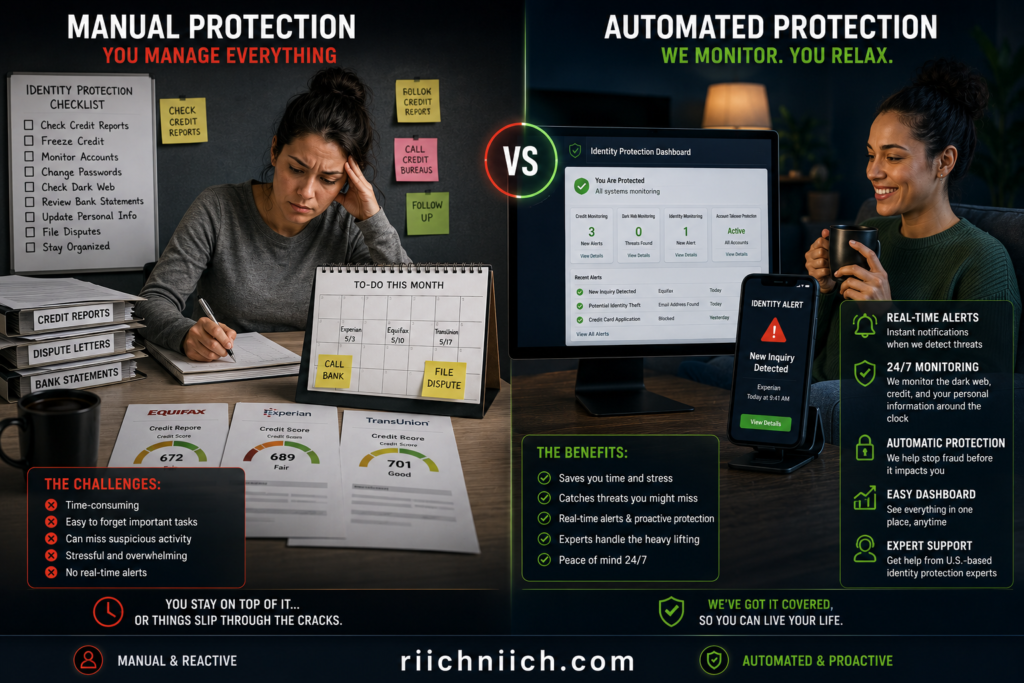
Frequently Asked Questions About How to Stop Identity Theft Before It Happens
Can identity theft really be prevented?
While no method can guarantee complete protection, you can greatly reduce your risk by following proven security practices. If you’re learning how to stop identity theft before it happens, focus on using strong passwords, enabling two-factor authentication, freezing your credit when appropriate, monitoring your financial accounts, limiting the personal information you share online, and staying alert for phishing scams. Layering these protections together makes it much harder for criminals to steal your identity.
What is the best way to prevent identity theft?
There isn’t a single solution that prevents every type of identity theft. The best approach combines several security measures, including strong password security, credit monitoring, identity monitoring, secure online accounts, software updates, and careful handling of sensitive personal information. Using multiple layers of protection provides a much stronger defense than relying on just one method.
Should I freeze my credit even if I haven’t been a victim?
For many people, the answer is yes. A credit freeze can help prevent criminals from opening new credit accounts in your name without affecting your credit score or existing credit cards. If you aren’t planning to apply for new credit in the near future, keeping your credit frozen can be one of the most effective ways to support how to stop identity theft before it happens.
Does a VPN prevent identity theft?
A VPN helps protect your internet connection by encrypting your online activity, especially when using public Wi-Fi. However, it doesn’t prevent every form of identity theft. A VPN should be viewed as one part of a broader identity theft prevention strategy that also includes strong passwords, two-factor authentication, secure devices, and identity monitoring.
Is identity theft protection worth paying for?
It depends on your individual needs and how much time you want to spend monitoring your own accounts. Identity theft protection services can provide continuous identity monitoring, credit monitoring, dark web monitoring, fraud alerts, and identity restoration assistance. Many people find these features valuable because they help detect suspicious activity earlier than manual monitoring alone.
How often should I check my credit reports?
It’s a good idea to review your credit reports regularly throughout the year, especially after a data breach or if your personal information has been exposed. Regular reviews can help you identify unfamiliar accounts, unauthorized inquiries, or incorrect personal information before the damage becomes more serious.
What personal information do identity thieves want most?
Identity thieves commonly target:
- Social Security numbers
- Driver’s license numbers
- Bank account information
- Credit card numbers
- Email addresses
- Passwords
- Dates of birth
- Health insurance information
Even smaller pieces of personal information can become valuable when combined with data obtained from breaches, phishing scams, or public records.
What should I do if my personal information is exposed?
Act as quickly as possible. Change any affected passwords, enable two-factor authentication, review your financial accounts, monitor your credit reports, and consider placing a credit freeze if sensitive information such as your Social Security number was exposed. Responding quickly can significantly reduce the likelihood that criminals will successfully misuse your information.
Can someone steal my identity without my Social Security number?
Yes. Although a Social Security number is one of the most valuable pieces of personal information, criminals can still commit certain types of fraud using your name, email address, phone number, banking credentials, or other personal details. This is why protecting all sensitive information—not just your Social Security number—is an important part of how to stop identity theft before it happens.
What’s the biggest mistake people make when trying to prevent identity theft?
One of the most common mistakes is waiting until after something goes wrong before taking action. Many people don’t secure their accounts, freeze their credit, or monitor their identity until they’ve already become victims. Building good cybersecurity habits before an incident occurs is almost always easier than recovering from identity theft afterward.
Final Verdict: How to Stop Identity Theft Before It Happens
Learning how to stop identity theft before it happens isn’t about finding one perfect solution—it’s about building multiple layers of protection that work together. Criminals are constantly looking for easy targets, but simple habits like using strong passwords, enabling two-factor authentication, freezing your credit, protecting your Social Security number, keeping your devices updated, and staying alert for phishing scams can dramatically reduce your risk.
No one can completely eliminate the possibility of identity theft. Data breaches, stolen credentials, and sophisticated scams can expose personal information even when you’ve done everything right. That’s why combining proactive security habits with ongoing identity monitoring gives you the best chance of detecting suspicious activity before it turns into a much larger problem.
If you’ve been wondering how to stop identity theft before it happens, don’t wait until your identity has already been stolen to take action. Start by securing your online accounts, reviewing your financial information regularly, limiting the personal information you share online, and removing unnecessary personal data from public data broker websites. These preventive steps are often far easier—and far less stressful—than recovering from identity theft after the damage has been done.
For added peace of mind, many people also choose an identity theft protection service that provides continuous identity monitoring, credit monitoring, dark web monitoring, fraud alerts, and identity restoration support. While these services cannot prevent every attack, they can help identify suspicious activity much sooner and make recovery significantly easier if fraud does occur.
Ultimately, the best strategy for how to stop identity theft before it happens is to stay proactive instead of reactive. By combining smart cybersecurity habits with the right security tools, you’ll be better prepared to protect your personal information, your finances, and your credit for years to come.
Pingback: What Is Dark Web Monitoring and Is It Worth It? - Riich Niich
Pingback: How to Opt Out of Data Brokers (Step-by-Step Guide) - Riich Niich